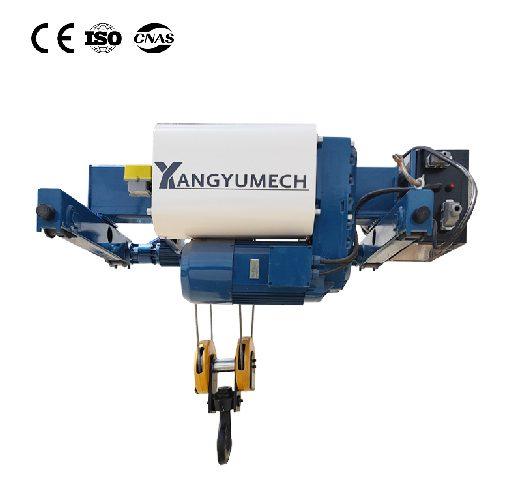
European Standard Electric Hoists (Euro hoists) represent the pinnacle of lifting technology, combining precision engineering, stringent safety protocols, and energy-efficient performance. Designed to meet rigorous EU directives and global certifications (CE, IECEx, ATEX), these hoists deliver unparalleled reliability in industries ranging from automotive manufacturing to port logistics. With modular designs, intelligent controls, and compliance with the latest IEC 60204-32:2023 safety standards , Euro hoists are redefining material handling worldwide.
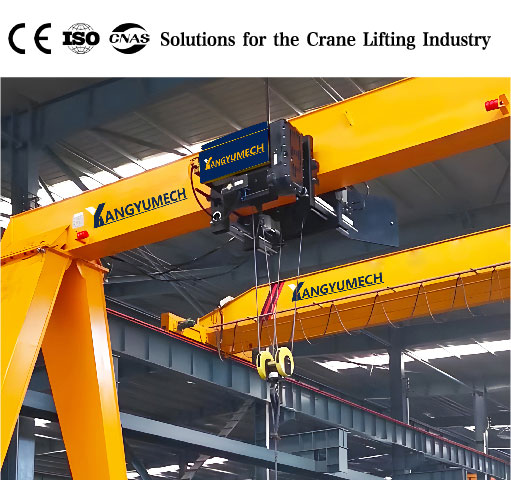
Core Design Principles & Technical Advantages
Compact Modular Construction:
Euro hoists integrate motors, gearboxes, and drums into unified modules, reducing footprint by 15–30% compared to conventional hoists. This “low headroom” design maximizes vertical workspace—critical for facilities with height constraints . High-strength aluminum or alloy steel housings ensure durability while minimizing deadweight.Advanced Drive Systems:
German-engineered motors and SEW-brand reducers provide smooth power transmission, supporting dual-speed lifting (e.g., 5/0.8 m/min or 4/0.7 m/min) for precision placement .
Frequency-controlled travel minimizes load sway through soft starts/stops, enhancing operational accuracy .
Redundant Safety Mechanisms:
Dual braking systems (primary + emergency) prevent free-falling during power loss .
Automatic wear compensation adjusts brake pads in real-time, maintaining stopping torque integrity .
Adjustable rotary limit switches and overload limiters comply with IEC 60204-32:2023 requirements for emergency stops and circuit protection .
Smart Control Integration:
Options include pendant controls, wireless remotes, and IoT-enabled interfaces for real-time diagnostics. Schneider or Siemens PLCs enable programmable logic for automated workflows .
Technical Specifications & Configurations
Table 1: Performance Parameters of Standard Euro Hoists
| Parameter | Range | Applications |
|---|---|---|
| Capacity | 1–80 tons | Workshops (1–20t), Ports (20–80t) |
| Lifting Speed | 0.35–11.3 m/min | Dual-speed for precision (e.g., 8/0.8 m/min) |
| Lifting Height | 6–30 meters | Customizable for silos, shipyards |
| Duty Class | M3–M6 (A5–A7) | M5/M6 for heavy-cycle industries |
| Ambient Tolerance | -25°C to +45°C | With IP55/IP65 protection for dust/moisture |
| Power Supply | 220V–460V, 50/60Hz | Global voltage compatibility |
Table 2: Safety & Certification Compliance
| Standard | Scope | Hoist Requirements |
|---|---|---|
| IEC 60204-32:2023 | Electrical safety for hoisting machinery | Fault-tolerant circuits, emergency stops |
| ATEX 2014/34/EU | Explosion-proofing (Zone 1/21, 2/22) | Ex d/e/i components for gas/dust environments |
| FEM 1.001 | Structural design | Rigorously tested girders and trolleys |
| ISO 4301 | Duty cycle classification | Validated M5/M6 performance |
Industry Applications & Sector-Specific Solutions
Automotive Manufacturing: Dual-speed hoists (e.g., 5/0.8 m/min) enable precise engine positioning on assembly lines. Low headroom designs preserve factory space .
Bulk Material Handling: 10–20-ton models with orange peel grabs transfer scrap metal or ore in foundries .
Explosive Environments: ATEX-certified hoists with Ex d motors and intrinsic safety barriers handle solvents in pharmaceutical plants .
Port Logistics: High-capacity (50–80-ton) Euro hoists load cargo ships using CE-certified wire ropes and anti-sway systems .
Construction: Weather-shielded hoists (IP65) with 30m lifting heights assemble structural frameworks .
Safety Innovations Driven by IEC 60204-32:2023
The 2023 update to IEC 60204-32 mandates revolutionary protections:
Dual-Channel Safety Circuits: Critical commands (e.g., braking, limit switches) require two independent signal paths to prevent single-point failures .
Energy Absorption Systems: Brakes must dissipate 150% of rated load kinetic energy to prevent free-fall during mechanical faults .
Real-Time Monitoring: Integrated sensors track motor temperature, rope tension, and brake wear, triggering alerts before failures occur .
Economic & Operational Benefits
Energy Savings: High-efficiency motors reduce power consumption by 20% versus traditional hoists, slashing operational costs .
Reduced Downtime: Modular components allow field replacement in <2 hours. Automatic lubrication extends service intervals .
Lifecycle Durability: FEM-standard steel girders and hardened gears support 20+ years of A6/A7 duty cycles .
Selecting the Right Euro Hoist: Key Criteria
Duty Cycle Alignment:
M3 (Light): <500 lifts/year (e.g., maintenance workshops)
M6 (Heavy): 200+ lifts/day (e.g., steel mills)
Environmental Factors:
Corrosive sites require stainless steel components or epoxy coatings.
Dusty grain silos need IP65 sealing and anti-explosion ratings .
Control Systems:
Radio remotes for hazardous zones (ATEX/IECEx certified)
Cabin controls for cranes >32m span
Future Trends: Smart Hoisting 4.0
Euro hoists are evolving into IoT-enabled assets:
Predictive Maintenance: Vibration sensors forecast bearing failures 3–4 weeks in advance .
Digital Twins: Simulation software optimizes lift paths and detects collisions before execution.
Green Technologies: Regenerative braking feeds energy back into grids, achieving net-zero operations.
Conclusion: The Gold Standard in Industrial Lifting
European Standard Electric Hoists fuse safety, efficiency, and innovation into a single package. By adhering to IEC 60204-32:2023 protocols 57 and leveraging modular German engineering, they deliver 30% faster cycle times, 50% lower maintenance costs, and zero-compromise safety. As industries prioritize automation and sustainability, Euro hoists will remain indispensable for lifting operations where precision and reliability are non-negotiable.