Tag: double girder cranes

  • Five Minutes to Understand the Gantry Crane

    Five Minutes to Understand the Gantry Crane

    What is a Gantry Crane?

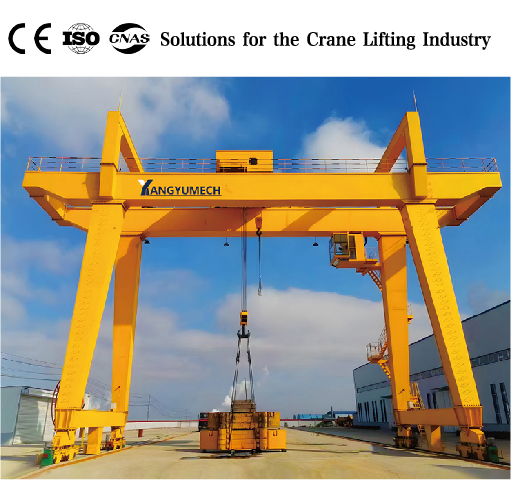
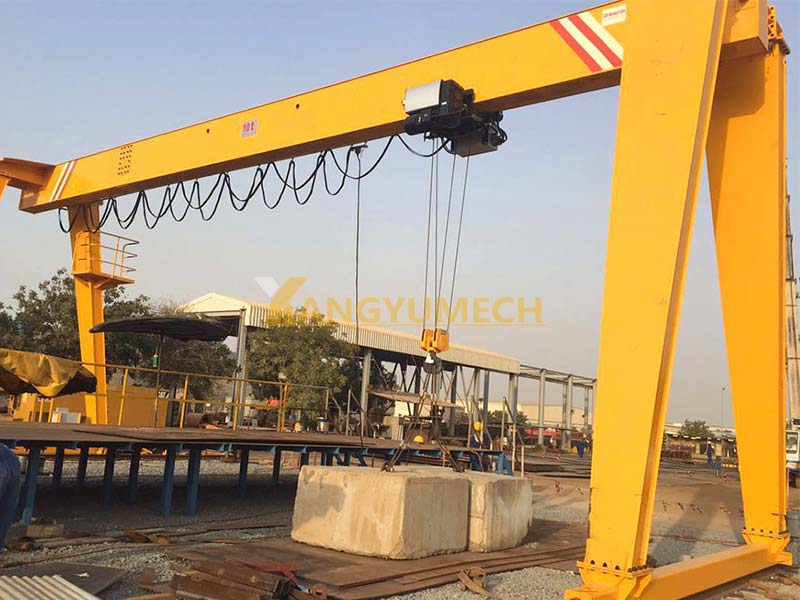
    The portal crane, often called a gantry crane, is large-scale lifting equipment whose structure resembles a movable “gate”. It consists of a portal frame (including legs and upper crossbeam), a hoisting trolley, a traveling mechanism for the main girder and an electrical control system. It can perform three-dimensional movements longitudinally, laterally and vertically on fixed tracks or specific sites. This type of overhead crane does not rely on the building structure of the factory. It has strong outdoor operation capabilities and large-span working characteristics, making it a backbone equipment in the field of heavy material handling.
    From an engineering perspective, the core advantage of a gantry crane lies in its self-supporting structure design. It directly transfers the load to the ground track or foundation through stable legs, a feature that makes it particularly suitable for open spaces without overhead support. Whether it is handling hundreds of tons of prefabricated components or standard containers, the gantry crane can provide reliable and efficient solutions.
    gantry-crane-suppliers

    The Main Types Of Gantry Cranes And Their Technical Features

    The diverse designs of gantry cranes enable them to adapt to various site conditions and operational requirements. They can mainly be classified into the following categories:

    1. Full-Girder Cranes and Semi-Girder Cranes
    Full-girder cranes have both sides of their legs running directly on ground tracks, forming a complete “door” shape structure, providing the most extensive working coverage and stability. They are commonly found in large storage yards and ports.
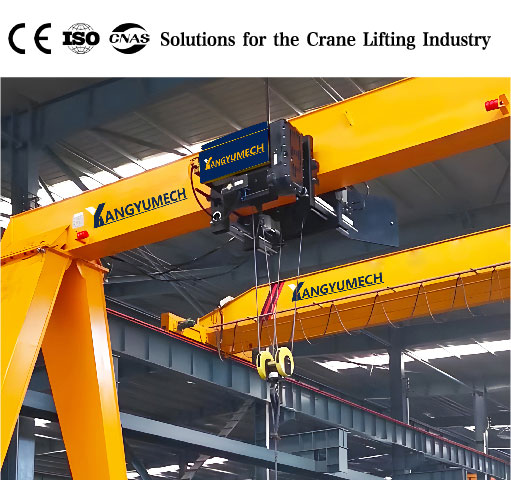
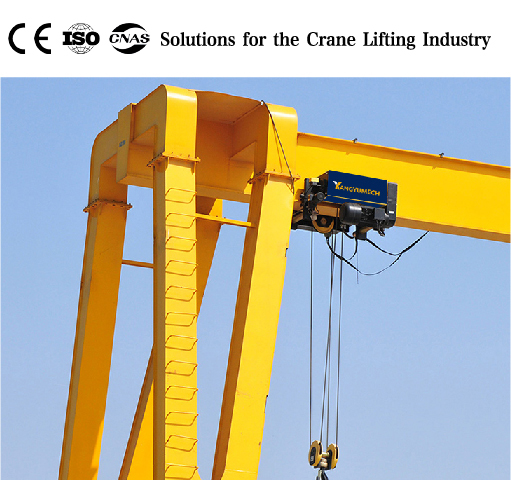
    Semi-girder cranes have one side of their legs running on tracks while the other side is supported by factory columns or specific foundations. They are particularly suitable for operation areas along the edges of buildings, effectively saving space.

    2. Single-Girder Cranes and Double-Girder Cranes
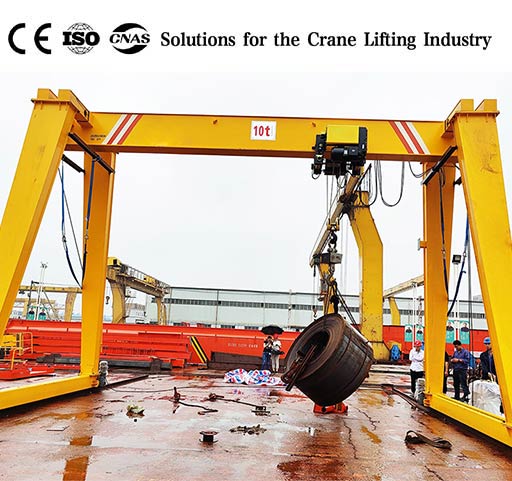
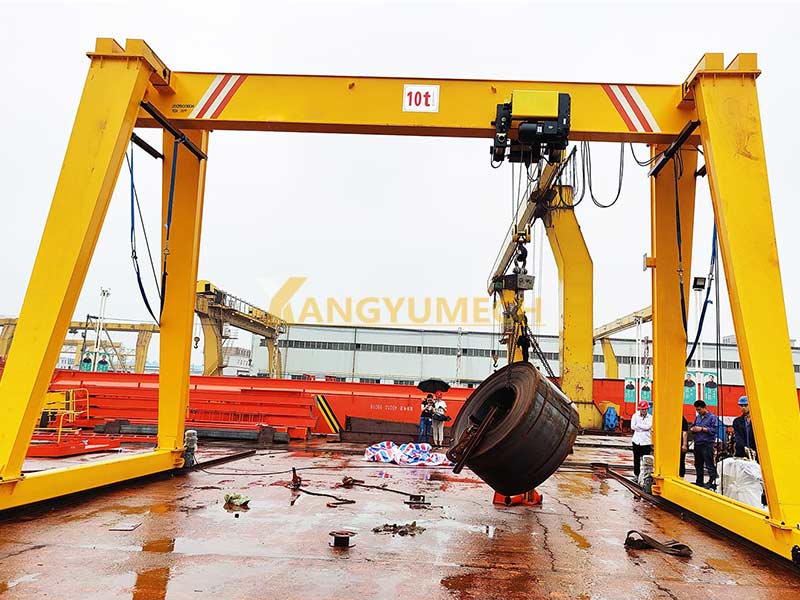
    The single-girder structure is relatively light in self-weight and has a lower manufacturing cost. It is suitable for applications with smaller lifting capacities (typically not exceeding 50 tons) and medium spans, such as general cargo yards or the periphery of workshops.
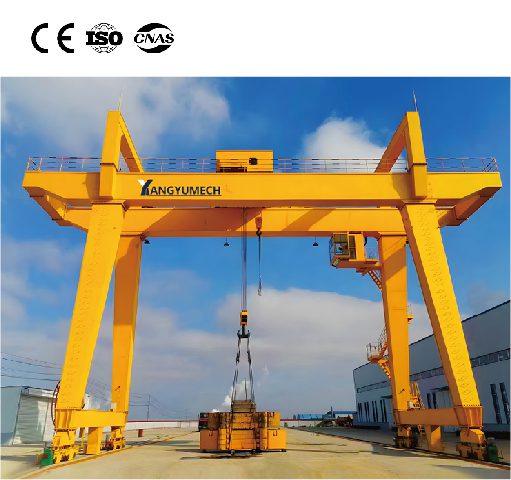
    The double-girder structure, on the other hand, offers greater rigidity and strength, capable of handling heavier loads (up to hundreds or even thousands of tons) and larger spans. It is the preferred choice for large power stations, heavy equipment manufacturing, and major infrastructure projects.

    3. Tyre-Mounted Cranes and Rail-Mounted Gantry Cranes
    Rail-mounted gantry cranes run along fixed steel rails laid down, offering precise positioning, smooth operation and convenient power supply. They are the standard configuration for most fixed material transfer areas.
    Tyre-mounted gantry cranes stand out for their high mobility. They do not require fixed rails and can move and turn flexibly on flat and solid ground. They play an irreplaceable role in container yards and can quickly adjust their positions according to operational needs.
    In addition, there are specialized variants for specific needs, such as shipyard cranes with extremely high lifting heights for shipyards, and container quay cranes that combine the functions of cranes and loading bridges.

    The Wide Range Of Applications Of Portal Cranes

    The application of gantry cranes runs through almost all the important links of modern industry and logistics:

    Port terminals and container yards: This is the main battlefield for rubber-tyred gantry cranes (RTG) and rail-mounted gantry cranes (RMG), responsible for unloading containers from ships, stacking them, and loading them onto trucks. Their operational efficiency directly determines the port’s throughput capacity.

    Large logistics warehouses and railway freight stations: They are used for loading and unloading packaged goods, wood, steel, and large containers, facilitating the rapid turnover of goods between trucks, storage yards, and warehouses.

    Power stations and heavy equipment manufacturing plants: In thermal, hydro, and nuclear power projects, they are used to lift core heavy components such as generator rotors and boiler drums; in heavy machinery factories, they are used for the assembly and transportation of large structural components.

    Shipbuilding and marine engineering: Giant shipbuilding gantry cranes have extremely high lifting heights and large lifting capacities, capable of hoisting hundreds of tons of ship sections, making them key equipment in modern shipbuilding.

    Large infrastructure construction sites: They are used for lifting and transporting prefabricated bridge segments and concrete components, supporting the rapid construction of high-speed railways, highways, and other projects.
    single-girder-overhead-crane-for-sale

    Choose Reliable Global Partners: Yangyumech

    In the global industrial equipment market, it is crucial to choose a gantry crane manufacturer with solid technology, rich experience, and a reliable reputation. 

    We are well aware that a high-quality gantry crane is not merely a combination of steel but rather a result of exquisite craftsmanship, rigorous engineering, and reliable components. Yangyumech insists on controlling quality from the design stage, using advanced finite element analysis for structural optimization to ensure that each crane not only has outstanding strength but also is economically viable. Our product line includes various types of gantry cranes, and we can provide flexible customized solutions based on the specific site conditions, process requirements, and budget of our customers.

    Our strength is not only reflected on the production line, but has also been widely verified in the international market. Yangyumech’s lifting equipment has been successfully exported to dozens of countries around the world, from infrastructure construction in Asia to logistics centers in Europe, from industrial plants in the Americas to energy projects in Africa. Our products are operating stably all over the world, helping customers improve efficiency and create value. This global footprint demonstrates the outstanding adaptability, reliability and cost-effectiveness of our products.

    We firmly believe that successful business relationships are built on a foundation of mutual benefit. Yangyumech looks forward to working hand in hand with our customers and partners. Whether it’s providing a standard crane or jointly designing a complex material handling system, we will offer professional technical support and comprehensive services to ensure the success of your projects.
    Welcome to contact us at any time to start our journey of win-win cooperation.
  • Custom Double Girder Crane Solutions: Maximizing Efficiency, Safety, and ROI in Industrial Lifting

    Custom Double Girder Crane Solutions: Maximizing Efficiency, Safety, and ROI in Industrial Lifting

    Custom double girder cranes represent the pinnacle of modern industrial material handling, engineered to overcome spatial constraints, handle extreme loads, and integrate seamlessly with specialized workflows. Unlike off-the-shelf solutions, these cranes leverage precision engineering, adaptive structural design, and intelligent controls to deliver unmatched performance in complex environments—from aerospace manufacturing to power generation facilities. This guide explores the technical innovations, industry-specific applications, and strategic benefits driving the global demand for bespoke lifting systems.

    Custom double girder cranes
    Custom double girder cranes

    1. Core Engineering Innovations in Custom Double Girder Cranes

    1.1 Space Optimization Technologies

    • Low-Headroom Designs: Utilizing cantilevered crab systems and compact hoists, these cranes reclaim 15–40% vertical clearance in facilities with ceilings as low as 12m. Features include recessed trolleys and minimized hook approach distances .

    • Slim-Profile Girders: Laser-cut trapezoidal box girders reduce deadweight by 20–30% while maintaining FEM 1.001 fatigue resistance for 500,000+ cycles. Ideal for narrow aisles and retrofits .

    • Under-Running Configurations: For facilities with roof-support limitations, underhung cranes mount directly to ceiling structures, eliminating runway columns and freeing floor space .

    1.2 Structural & Material Advancements

    • High-Strength Alloys: Q345B steel girders with 140μm epoxy zinc coatings withstand corrosive environments (e.g., chemical plants, ports), extending service life by 40% vs. standard carbon steel .

    • Hybrid Girder Geometries: Combining box girders for torsional rigidity and truss designs for wind resistance (up to 23% better stability in outdoor applications) .

    • Modular Components: Bolt-together end trucks and standardized hoist interfaces enable rapid reconfiguration for evolving production lines .

    1.3 Intelligent Control Systems

    • Precision Positioning: Variable frequency drives (VFDs) enable ±1mm accuracy with acceleration control at 0.1 m/s, eliminating load swing in high-precision tasks .

    • Automation Integration: IoT sensors monitor bearing temperature, rope tension, and motor health, predicting 82% of failures via AI-driven analytics. PLC systems interface with MES for hands-free operation .

    • Remote Operation: Explosion-proof wireless remotes and cabinless controls allow operation in hazardous zones (ATEX Zone 1/2 certified) .


    2. Customization Parameters: Tailoring Cranes to Operational DNA

    Table: Key Design Variables for Custom Double Girder Cranes

    ParameterStandard RangeSpecialized OptionsEngineering Considerations
    Lifting Capacity5–200 tonsUp to 500+ tons25% safety margin for dynamic loads
    Span5–40mUp to 46m+Wind load analysis for spans >30m
    Lifting Height6–30mUp to 160mRope reeling technology for high heights
    Duty ClassificationA3–A7 (ISO)A8 for continuous severe duty3.73×10⁵ fatigue cycle verification
    Environmental Specs-20°C to +40°C-40°C Arctic/-50°C foundriesMaterial embrittlement testing
    Power Systems380V 50Hz 3-phaseDiesel-hybrid, solar-readyRegenerative drives for 25% energy recovery 

    Critical Customization Workflow:

    1. Site Assessment: Laser scans map facility obstacles, headroom, and runway support points.

    2. FEA Simulation: ANSYS validates girder deflection (<Span/1000) and stress distribution under 125% load .

    3. Compliance Mapping: Adherence to FEM, ISO 9001, CMAA 70, and ATEX standards based on regional/industry needs.


    3. Industry-Specific Solutions & Real-World Applications

    3.1 Aerospace & Defense

    • Challenge: Positioning 80-ton rocket fuselage sections with ±2mm accuracy.

    • Solution: A8-duty cranes with magnetic particle brakes, anti-sway AI, and VR-assisted operator training.

    • Outcome: 40% faster assembly cycles at China’s Space Academy IV facility .

    3.2 Power Generation

    • Challenge: Handling turbine rotors (120+ tons) in confined turbine halls.

    • Solution: Low-headroom double girders with under-running trolleys and 160m lifting height.

    • Outcome: Eliminated structural retrofits at Indonesian thermal plants, saving $500K+ .

    3.3 Waste-to-Energy & Recycling

    • Challenge: Corrosion from acidic vapors and 24/7 heavy-duty cycles.

    • Solution: IP65-rated cranes with stainless steel wire ropes and automated grabbers.

    • Outcome: 35% longer component life in slag processing facilities .


    4. ROI-Driven Benefits of Customization

    • Space Utilization: Under-running designs reduce column footprints by 60%, increasing storage density .

    • Productivity Gains: Precision controls cut load transfer times by 40% in automotive production lines .

    • Lifecycle Cost Reduction: Modular components slash downtime by 50%; regenerative drives lower energy costs by 18–25% .

    • Safety & Compliance: Integrated tilt sensors, mechanical locks, and emergency descent systems reduce accidents by 32% .


    5. Selecting a Manufacturer: 5 Critical Criteria

    1. Design Expertise: Prioritize teams with FEM/CMAA-certified engineers (e.g., Kuangshan’s 300+ engineers) .

    2. Production Capabilities: Robotic welding (AWS D1.1 standards) ensures <0.5mm dimensional tolerances .

    3. Certifications: Mandatory ISO 9001, CE, and industry-specific marks (e.g., DNV/GL for marine cranes) .

    4. Speed-to-Market: 10–20-day design cycles with 3D BIM models for client validation .

    5. Lifecycle Support: IoT-enabled predictive maintenance and global spare parts networks.


    6. Future Trends: Smart & Sustainable Lifting

    • AI Optimization: Machine learning algorithms adjust lifting paths in real-time, reducing cycle times by 15% .

    • Green Technologies: Solar-hybrid power units and biodegradable hydraulic fluids cut carbon footprints by 40% .

    • Digital Twins: Virtual replicas simulate load scenarios pre-installation, eliminating design flaws .


    Conclusion: Engineering Tomorrow’s Efficiency Today

    Custom double girder cranes transform material handling from a logistical challenge into a competitive advantage. By aligning structural design, control intelligence, and duty specifications to operational realities, businesses achieve 30–50% lower lifecycle costs, OSHA-compliant safety, and future-ready adaptability. As Industry 4.0 reshapes manufacturing, partnering with certified manufacturers with their 190+ patents and 680,000m² production bases—ensures your lifting infrastructure evolves at the speed of innovation .


    FAQs: Addressing High-Intent Commercial Queries

    Q1: What’s the price range for a custom 50-ton double girder crane?

    Systems start at $47,650 for standard models, rising to $150,000+ for A8-duty cranes with automation. ROI typically realized in 18–36 months via productivity gains .

    Q2: Can double girder cranes operate in -40°C environments?

    Yes! Arctic-grade steels and cold-resistant hydraulics maintain performance at -40°C, while heated cabs ensure operator comfort .

    Q3: How long does custom crane design take?

    10 days for simple configurations; 20 days for complex systems with ANSYS FEA validation .

    Q4: Do custom cranes require building modifications?

    Under-running and low-headroom designs eliminate structural retrofits in 90% of installations

  • European Double Girder Crane: The Ultimate Guide to Efficiency, Design & Industrial Applications

    European Double Girder Crane: The Ultimate Guide to Efficiency, Design & Industrial Applications

    European double girder cranes represent the pinnacle of modern overhead lifting technology, combining lightweight construction, precision control, and energy-efficient operation. Engineered to exceed FEM, DIN, and ISO standards, these cranes achieve 15-30% weight reduction and 10-35% lower wheel pressure compared to conventional designs—dramatically cutting structural costs for industrial facilities 15. With applications spanning automotive manufacturing, power plants, and high-density warehousing, they deliver unmatched ROI through space optimization and lifecycle cost savings.

    European double girder cranes
    European double girder cranes

    Core Engineering Innovations

    1. Lightweight Structural Design

    European cranes utilize high-strength steel (Q235B/345B) and laser-cut box girders optimized via Finite Element Analysis (FEA). This reduces deadweight while maintaining capacities up to 200 tons—enabling smaller support structures and 20-35% lower construction costs .

    2. Low Headroom Configuration

    Compact cantilever crab systems and short-chain hoists maximize vertical clearance, operating efficiently in facilities with ceiling heights as low as 12m. This design reclaims up to 40% of wasted overhead space .

    3. Intelligent Control Systems

    • Precision Movement: Frequency inverters enable 1:10 variable speed control (0.1–20 m/min) and ±1mm positioning accuracy .

    • Automated Safety: PLC-based monitoring with HMI interfaces detects overloads, tilt, and collisions, reducing accidents by 32% .

    • Control Options: Wireless remote, pendant, or ergonomic cabin operation .

    4. Green Manufacturing

    Automated welding, seamless cutting, and epoxy zinc-rich coatings (140μm thickness) extend service life while reducing environmental impact .


    European Double Girder Crane Applications: Solving Industry Pain Points

    1. High-Density Warehousing

    • Customizable spans (5–46m) bridge trailer gaps, cutting loading times by 35% .

    • IP54-rated electronics withstand dust/humidity in logistics hubs .

    2. Heavy Manufacturing

    • Automotive: 100-ton models position presses with millimeter precision .

    • Metals & Machinery: Explosion-proof (ATEX) variants handle molten metal in foundries .

    3. Specialized Environments

    • Power Plants: Regenerative drives capture descent energy, slashing grid consumption by 25% .

    • Paper Mills: Corrosion-resistant truss girders endure steam and chemical exposure .


    Technical Specifications & Selection Guide

    Table: European Double Girder Crane Configurations

    ParameterStandard RangeSpecialized OptionsSelection Guidance
    Lifting Capacity5–200 tonsUp to 320 tonsAdd 25% safety margin
    Span5–40mUp to 46mMatch bay width + 20% clearance
    Lifting Height9–32mUp to 40mInclude operator reach (1.5–2m)
    Lifting Speed0.1–8.8 m/minVariable-frequencySlower for delicate loads
    Work DutyA3–A8 (ISO)M8 for heavy cyclesHigher class = longer lifespan
    Power Supply3P 380V 50HzDiesel/hybridVerify facility infrastructure

    Critical Selection Factors:

    • Headroom Constraints: Opt for low-profile hoists when clearances are <15m .

    • Control Systems: Choose wireless remotes for hazardous areas or cabin controls for 8+ hr shifts .

    • Certifications: Prioritize CE, ISO 9001, and industry-specific marks (e.g., DNV/GL for marine) .


    European Double Girder Crane Benefits

    1. Cost Efficiency

    • Lower Construction Costs: Reduced wheel pressure enables lighter runway beams, saving $15–$50/sq.m .

    • Energy Savings: Regenerative drives cut power consumption by 18–25% versus hydraulic systems .

    2. Productivity & Safety

    • Faster Material Flow: Speeds up to 58 m/min decrease transfer times by 40% 1.

    • OSHA Compliance: Tilt sensors, mechanical locks, and emergency stops reduce accidents by 32% .

    3. Lifecycle Advantages

    • Modular Components: Standardized parts (e.g., ABM hoists) slash downtime by 50% .

    • IoT Readiness: Vibration sensors predict 82% of failures before breakdowns .


    Maintenance & Lifecycle Management

    Proactive protocols prevent 85% of failures :

    • Daily: Inspect wire ropes, fluid levels, and structural integrity

    • Monthly: Test brakes, limit switches, and PLC safety functions

    • Annually: Conduct full-load testing and epoxy coating reapplications

    • Predictive Tools: Vibration analysis and hydraulic fluid monitoring


    Future Innovations & Industry Integration

    • AI Diagnostics: Machine learning algorithms predict bearing failures 500+ hours in advance .

    • Green Technologies:  power units and biodegradable hydraulic fluids cut carbon footprints by 40% .

    • Automated Cranes: LiDAR-guided systems synchronize with factory AGVs for hands-free logistics .


    Manufacturing Excellence: Global Leaders

    Chinese manufacturers like Henan Yangyu CRANE  deliver ISO-certified cranes. With 22 fully automated production lines and 85%+ automation rates, they achieve 8–16-week lead times for custom units .


    FAQs (Addressing High-Commercial-Intent Queries)

    Q1: What is the price range for European double girder cranes?
    Prices range from ¥134,000 ($18,500) for a 5-ton model to ¥1.5M+ ($207,000) for a 100-ton customized unit. ROI typically achieved in 18–36 months .

    Q2: How do European cranes reduce operating costs?
    Their 15–30% lighter weight decreases structural support costs, while regenerative drives cut energy use by 25%. Modular components also reduce maintenance expenses by 40% .

    Q3: What certifications are critical?
    Prioritize CE, ISO 9001, FEM 1.001, and industry-specific marks (ATEX for explosives, DNV/GL for marine) .

    Q4: Can they operate in extreme conditions?
    Yes! IP54-rated electronics withstand dust/moisture, while specialized steels function at -25°C to 50°C