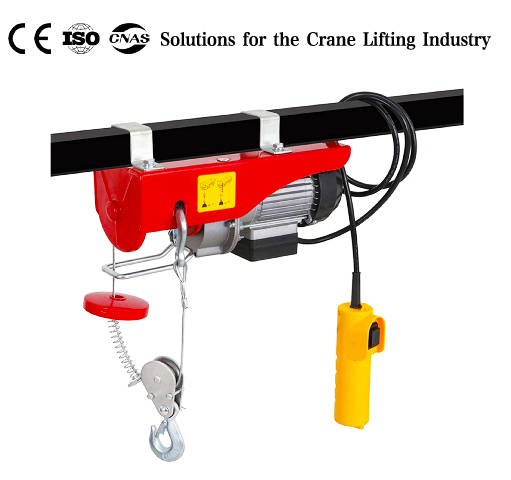
In light-duty lifting scenarios—from home workshops and retail stockrooms to on-site maintenance and small-scale industrial tasks—the Micro Electric Hoist emerges as a compact, portable, and cost-effective solution. Unlike heavy-duty wire rope or chain hoists (designed for large loads), micro electric hoists specialize in lifting lightweight items (typically ≤2T) with ease, making them indispensable for scenarios where space, portability, and simplicity matter most. This comprehensive guide breaks down everything you need to know about micro electric hoists, including key types, real-world applications, and how to choose the right model—with insights from trusted manufacturers like Henan Yangyumech Co., Ltd.

What Is a Micro Electric Hoist?
A Micro Electric Hoist is a small-scale powered lifting device that uses a lightweight motor, compact chain, or wire rope to lift, lower, and position loads up to 2 tons. Its core design prioritizes portability (often weighing 5-20 kg) and ease of use, eliminating the need for manual labor or bulky equipment. Whether you’re hanging a ceiling fan at home, lifting inventory in a small warehouse, or repairing HVAC systems on-site, a micro electric hoist streamlines tasks that would otherwise require physical effort or larger hoists.
Key Components of a Reliable Micro Electric Hoist
Every high-quality micro electric hoist (such as those from Yangyumech, a supplier with CE, ISO, and CNAS certifications) includes these essential parts:
- Miniature electric motor: Powers lifting operations—usually 0.1-0.5 kW, optimized for low energy consumption (ideal for home or small business use).
- Lifting medium: Lightweight alloy steel chain (for 0.1-1T loads) or thin wire rope (for 1-2T loads), with corrosion-resistant coatings (e.g., galvanization) for durability.
- Compact brake system: Electromagnetic or mechanical brake to secure loads instantly—prevents slipping during power cuts, complying with safety standards like EN 13157 (for EU markets).
- User-friendly controls: Simple pendant switches (with 24V low voltage for safety) or wireless remotes (for flexible operation in tight spaces).
- Portable mounting: Hooks, clamps, or small trolleys for easy attachment to beams, ceilings, or even portable stands—no permanent installation required.
Core Benefits of Choosing a Micro Electric Hoist
Compared to manual hoists, heavy-duty electric hoists, or even hand tools, micro electric hoists offer unique advantages for light-duty tasks:
1. Ultra-Portable & Space-Saving
Most micro electric hoists weigh less than 20 kg (some as light as 5 kg) and fit in toolboxes or storage closets. Unlike large wire rope hoists (which require dedicated crane beams), they can be transported between job sites or stored in small spaces—perfect for mobile maintenance teams or home users.
2. Easy to Operate (No Expert Training Needed)
With simple on/off and up/down controls, micro electric hoists require minimal training. Even first-time users can operate them safely, thanks to low-voltage controls (reducing electric shock risk) and built-in safety features (e.g., overload protection).
3. Cost-Effective for Light-Duty Tasks
Micro electric hoists are significantly cheaper than heavy-duty hoists (starting at $200-$300) and eliminate the need for hiring labor or renting large equipment. For small businesses or homeowners, this translates to lower upfront costs and faster return on investment.
4. Versatile Across Scenarios
From home DIY projects to small-scale industrial tasks, micro electric hoists adapt to diverse needs: lifting tools, hanging decorations, moving inventory, or repairing equipment—all without sacrificing performance.
5. Safe & Compliant
Top-tier micro electric hoists (like Yangyumech’s) meet global safety standards:
- Overload protection: Shuts down the hoist if the load exceeds the rated capacity (prevents chain/rope snapping).
- Emergency stop: Instantly cuts power in critical situations (e.g., load instability).
- CE/ISO certification: Ensures legal use in markets like the EU, North America, and Asia—avoiding safety violations or fines.
Common Types of Micro Electric Hoists (With Use Cases)
Micro electric hoists are categorized by power source, lifting medium, and application. Below are the most widely used types—including industry-leading models from Yangyumech, tailored to specific user needs.
1. Corded Micro Electric Hoist (AC-Powered)
The most common type, Corded Micro Electric Hoists run on standard AC power (110V/220V), making them ideal for fixed locations with power access. Key features:
- Load capacity: 0.1T to 2T (most popular: 0.5T-1T).
- Lifting speed: 1-3 m/min (slow enough for precision, fast enough for efficiency).
- Pros: No battery charging needed; consistent power for extended use.
- Best for: Home workshops, retail stockrooms, and small factories (e.g., lifting boxes, tools, or small machinery parts).
2. Battery-Powered Micro Electric Hoist (Cordless)
For scenarios without power outlets (e.g., outdoor maintenance or remote job sites), Battery-Powered Micro Electric Hoists are a game-changer. Key specs:
- Battery life: 2-4 hours of continuous use (lithium-ion batteries, rechargeable in 1-2 hours).
- Load capacity: 0.1T to 1T (lighter than corded models for portability).
- Pros: Fully wireless; easy to carry to outdoor or off-grid locations.
- Best for: On-site HVAC repairs, outdoor event setup (hanging lights/speakers), and construction small tasks (e.g., lifting nails or small tools).
3. Chain-Driven Micro Electric Hoist
Using lightweight alloy steel chains, Chain-Driven Micro Electric Hoists excel at precise, low-noise lifting. Key features:
- Chain length: 2m to 10m (customizable for taller spaces).
- Pros: Smooth operation; less likely to tangling than wire rope; ideal for indoor use.
- Best for: Home DIY (hanging ceiling fans, curtains), cleanrooms (small pharmaceutical parts), and offices (moving file cabinets).
4. Wire Rope-Driven Micro Electric Hoist
For slightly heavier loads (1T-2T), Wire Rope-Driven Micro Electric Hoists use thin, high-strength wire rope for added durability. Key specs:
- Rope diameter: 3-6 mm (thin enough for compact design, strong enough for 2T loads).
- Pros: Handles heavier loads than chain-driven models; suitable for damp environments (rust-resistant rope).
- Best for: Small warehouses (lifting pallets under 2T), garages (hoisting bikes or tools), and outdoor light tasks (e.g., lifting garden equipment).
5. Trolley-Mounted Micro Electric Hoist
For horizontal movement (e.g., moving loads along a beam), Trolley-Mounted Micro Electric Hoists pair a micro hoist with a small manual or electric trolley. Key benefits:
- Trolley type: Manual (for 0.1T-0.5T loads, pushed by hand) or electric (for 0.5T-2T loads, remote-controlled).
- Beam compatibility: Fits standard I-beams or KBK tracks (common in small factories).
- Best for: Assembly lines (moving small parts between stations), retail backrooms (shifting inventory along ceiling beams), and workshops (positioning tools over workbenches).
How to Select the Right Micro Electric Hoist (Step-by-Step)
Choosing the wrong micro electric hoist can lead to safety risks, inefficiency, or unnecessary costs. Follow this guide to match the hoist to your needs:
Step 1: Define Load Requirements
- Rated Load Capacity: Choose a hoist with a capacity 10-20% higher than your heaviest load (e.g., if you need to lift 400 kg, select a 0.5T hoist) to avoid overloading.
- Lifting Height: Measure the vertical distance from the hoist’s mounting point to the lowest load position (e.g., 2m for home use, 5m for small warehouses). Ensure the chain/rope length meets this need (add 0.5m extra for safety).
Step 2: Consider Power Source & Location
- Indoor/Fixed Location: Corded micro electric hoists (AC-powered) are ideal—no battery limits, consistent performance.
- Outdoor/Mobile Tasks: Battery-powered (cordless) models are better—no need for extension cords, easy to carry.
- Damp Environments: Wire rope-driven models (with rust-resistant rope) or chain-driven models with galvanized chains (prevent corrosion).
Step 3: Evaluate Control & Movement Needs
- Control Type: Pendant controls for fixed workstations (e.g., stockrooms); wireless remotes for flexible use (e.g., outdoor setup or hard-to-reach areas).
- Horizontal Movement: If you need to move loads side-to-side, add a trolley (manual for light loads, electric for heavier ones).
Step 4: Check Safety & Compliance
- Certifications: Ensure the hoist has CE (for EU), ISO 9001 (quality), and CNAS (testing) certifications—critical for safety and legal use.
- Safety Features: Look for overload protection, emergency stop, and low-voltage controls (reduces shock risk).
Step 5: Verify Brand Reliability
Choose suppliers like Henan Yangyumech Co., Ltd. that offer:
- Proven Quality: CE, ISO, and CNAS certifications to guarantee performance.
- Diverse Models: Corded, battery-powered, chain-driven, and trolley-mounted options to cover all needs.
- After-Sales Support: Replacement parts (chains, batteries, controls), technical support, and warranty (usually 1-2 years).
Maintenance Tips for Micro Electric Hoists
To extend your hoist’s lifespan (typically 5-8 years with proper care) and ensure safety, follow these simple practices:
1. Regular Inspections (Quick & Easy)
- Before Each Use: Check the chain/rope for fraying, kinks, or corrosion; test the brake and emergency stop (takes 1-2 minutes).
- Monthly: Wipe the motor with a dry cloth to remove dust; tighten loose screws or bolts (prevents vibrations).
- Every 6 Months: Lubricate the chain/rope with manufacturer-recommended oil (e.g., light machine oil for chains) to reduce wear.
2. Battery Care (For Cordless Models)
- Charge Properly: Avoid overcharging (unplug once fully charged, usually 1-2 hours); store batteries in a cool, dry place (prevents degradation).
- Replace When Needed: Lithium-ion batteries last 2-3 years—replace if charging time doubles or runtime drops by 50%.
3. Avoid Overloading (Critical for Safety)
Never exceed the hoist’s rated capacity—even for short periods. Overloading damages the motor, stretches the chain/rope, and increases the risk of accidents. Most micro hoists have built-in overload protection, but it’s better to err on the side of caution.
4. Store Correctly
- Corded Models: Wrap the power cord neatly (avoid kinks) and store in a dry closet or toolbox.
- Cordless Models: Remove the battery and store separately; keep the hoist away from moisture or extreme temperatures (-10°C to 40°C).
5. Use Genuine Spare Parts
If parts break (e.g., a frayed chain or faulty control), use Yangyumech’s genuine replacements. Non-compliant parts (e.g., cheap generic chains) void certifications, reduce safety, and shorten the hoist’s lifespan.
FAQ: Micro Electric Hoists
Q1: Can a micro electric hoist lift a car?
A: No—most micro hoists max out at 2T, while cars weigh 1.5T-2.5T (and require even more capacity for safe lifting). Use a heavy-duty wire rope hoist for car lifting.
Q2: Is a micro electric hoist safe for home use?
A: Yes—if you choose a certified model (like Yangyumech’s) with low-voltage controls and overload protection. Always follow the user manual (e.g., don’t stand under the load).
Q3: How long does a battery-powered micro hoist last on one charge?
A: 2-4 hours of continuous use (e.g., lifting 0.5T loads every few minutes). For intermittent use (e.g., home DIY), it can last a full day.
Q4: Can I use a micro electric hoist outdoors?
A: Yes—choose a battery-powered model with IP54 ingress protection (dust and water-resistant). Avoid using corded models outdoors (risk of electric shock from rain).
Q5: How much does a micro electric hoist cost?
A: Prices vary by type: Corded models ($200-$800), battery-powered models ($300-$1,000), trolley-mounted models ($500-$1,200). Contact Yangyumech for customized quotes.
Final Thoughts
The Micro Electric Hoist is a versatile, user-friendly tool for light-duty lifting—simplifying tasks for homeowners, small businesses, and mobile teams alike. Whether you need a corded model for your workshop, a battery-powered one for on-site repairs, or a trolley-mounted variant for inventory movement, prioritize certified suppliers like Henan Yangyumech Co., Ltd. Their CE, ISO, and CNAS-marked micro hoists guarantee safety, durability, and value for money.
For personalized recommendations (e.g., matching a hoist to your specific task or location) or to request a quote, contact Yangyumech’s team today—they’ll help you find the perfect micro electric hoist for your needs.