Tag: overhead cranes

  • The Advantages Between Gantry Cranes and Overhead Cranes

    The Advantages Between Gantry Cranes and Overhead Cranes

    Choosing the right lifting equipment is a critical decision that impacts efficiency, safety, and the bottom line in industrial and construction operations. Two of the most common and powerful options available are gantry cranes and overhead cranes (often referred to as bridge cranes). While they might seem similar at first glance, they possess distinct structural designs, advantages, and ideal use cases.
    IMG20250806131748

    This article breaks down the key advantages of both gantry cranes and overhead cranes to help you determine the best fit for your operational needs.

    At a Glance: Key Differences

    Before diving into the specific advantages, here’s a quick overview of their fundamental differences.

    FeatureGantry CraneOverhead Crane (Bridge Crane)
    Support StructureSelf-supported by leg(s) that run on floor-mounted rails or wheels.Supported by the building structure itself, running on rails attached to runway beams.
    MobilityHighly mobile; can be relocated, including outdoors.Fixed installation within a building; permanent placement.
    Typical UseIdeal for outdoor yards, shipping ports, construction sites, and large, open areas.Ideal for fixed indoor environments like manufacturing workshops, warehouses, and assembly lines.
    Installation CostGenerally higher initial investment due to required groundwork and structure. Often more economical initially as it utilizes the existing building structure. 
    Floor SpaceRequires clear floor space for legs and movement.Maximizes floor space as no leg supports are needed on the ground.

    Advantages of Gantry Cranes

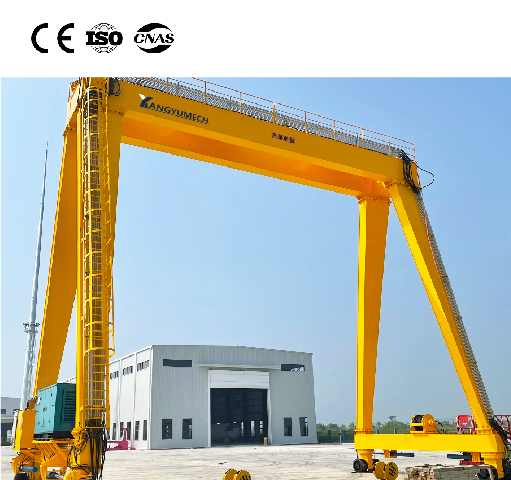
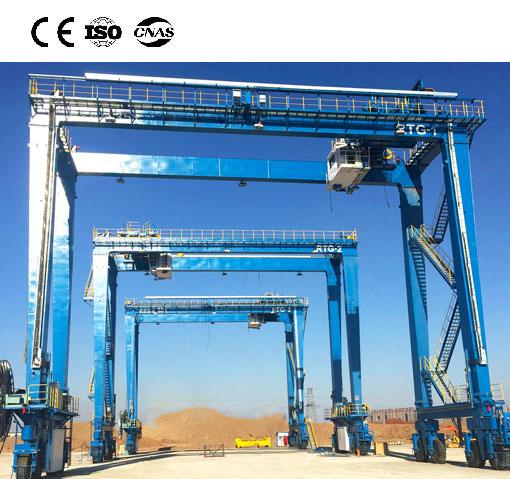
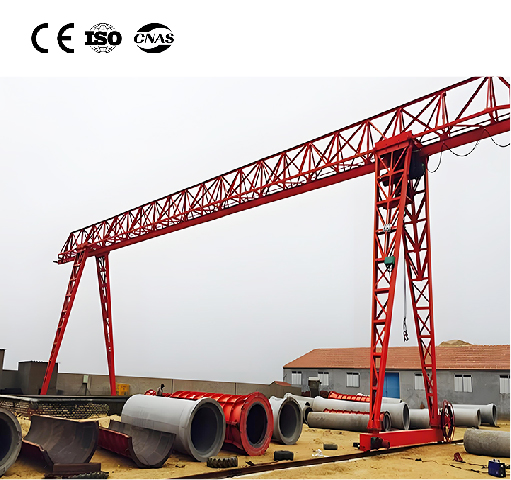
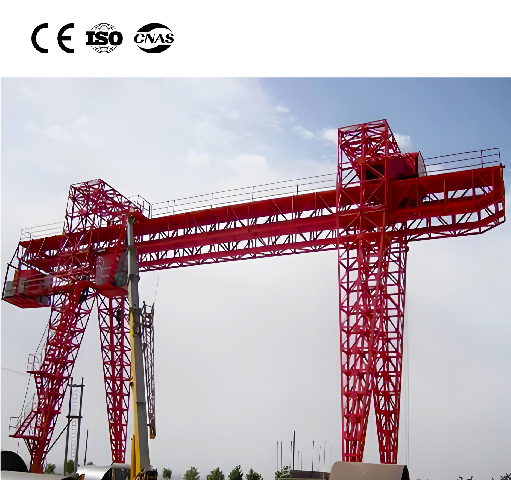
    双梁轮胎式起重机

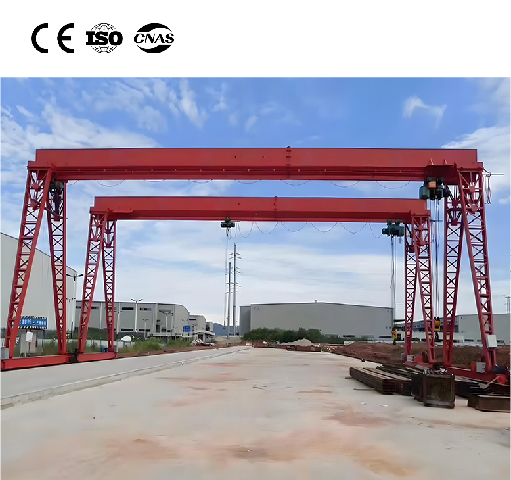
    Gantry cranes are characterized by their freestanding structure, with one or two robust legs supporting a bridge that carries a lifting trolley and hoist.

    1. unparalleled Mobility and Flexibility

    One of the greatest strengths of a gantry crane is its mobility. Many models, particularly single-leg or smaller systems, can be equipped with wheels (often flanged for rails or rubber-tired for flat surfaces) and can be easily relocated around a workshop, yard, or site. This allows for lifting operations to be performed exactly where they are needed without the constraint of a fixed runway system.

    2. Ideal for Outdoor and Large-Scale Applications

    Gantry cranes are the go-to solution for outdoor applications. Since they are self-supporting and do not rely on a building’s framework, they excel in environments like shipyards, ports for container handling, lumber yards, steel storage yards, and large-scale construction projects. Their design is built to withstand outdoor elements.

    3. No Dependency on Building Infrastructure

    This is a significant advantage, especially for facilities with weak or unsuitable roof structures. Installing a gantry crane does not place any stress on the building’s columns or roof, eliminating the need for costly and complex reinforcement of the existing structure. This makes them a viable option in older buildings or in spaces like large open-air storage areas where there is no roof at all.

    4. High Lifting Capacity and Versatility

    Gantry cranes, especially double-girder designs, are known for their impressive lifting capacities, often handling loads from 5 tons up to 150 tons or even more for specialized applications.5 They can be customized with various attachments like magnets, grabs, and hooks, making them versatile for handling diverse materials such as shipping containers, heavy machinery, concrete pipes, and steel coils.

    5. Easier Access and Positioning

    The open-legged design of a gantry crane provides excellent access from all sides of the load. This can simplify the process of connecting slings and rigging and allows for easier positioning of loads, which is particularly beneficial for awkwardly shaped items.

    Advantages of Overhead Cranes (Bridge Cranes)
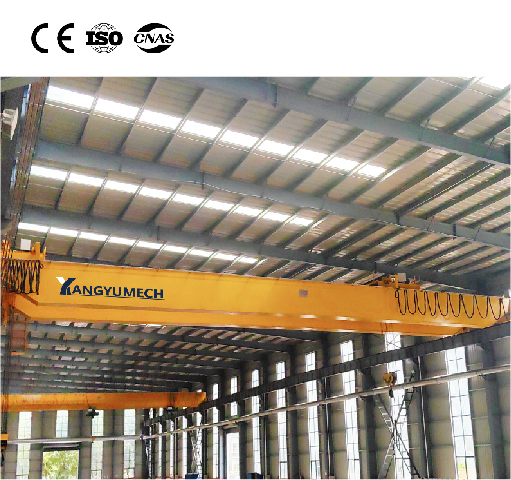
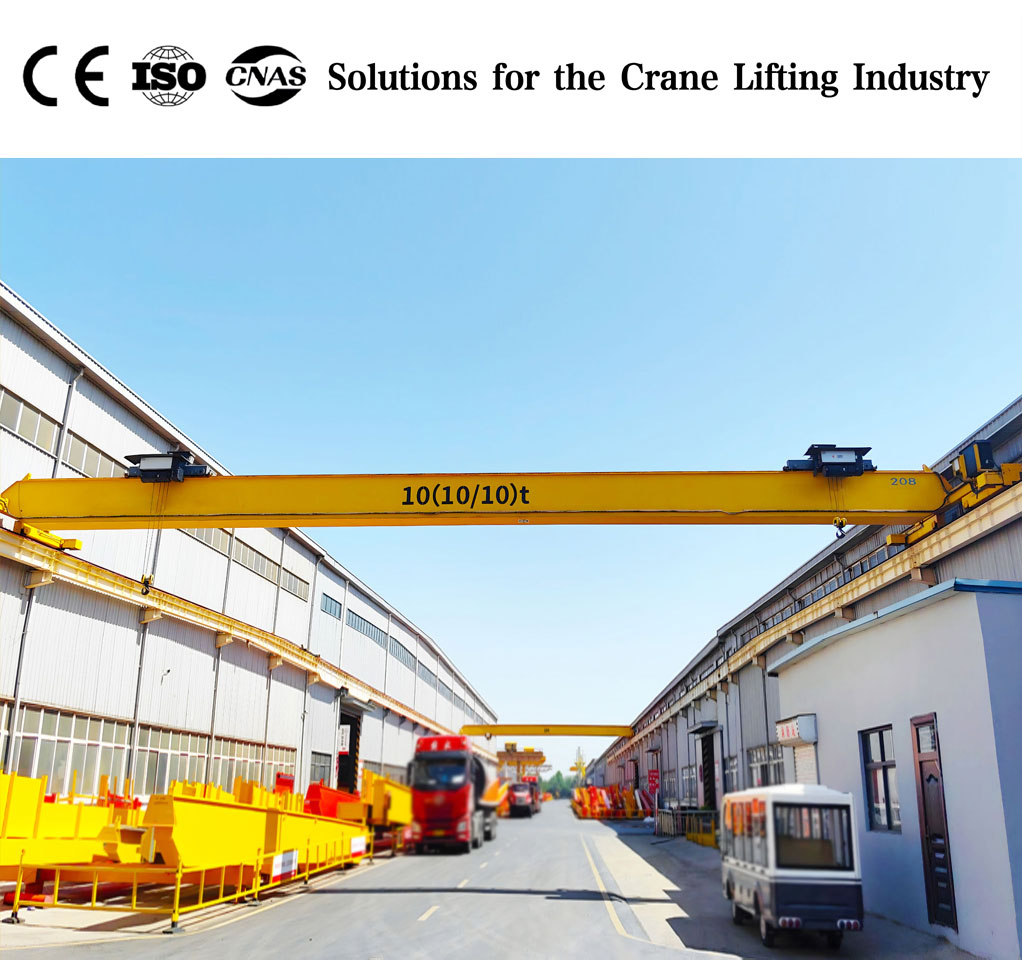
    欧式双梁桥式

    Overhead cranes consist of a bridge that moves along elevated runway rails fixed to a building’s support structure. A hoist and trolley move back and forth across this bridge.

    1. Superior Space Utilization and Unobstructed Floor Space

    This is arguably the biggest advantage of an overhead crane system. Because the entire crane operates overhead, it frees up 100% of the floor space beneath it. There are no supporting legs or columns to navigate around with forklifts or other equipment. This leads to a safer, more organized, and highly efficient workspace, allowing for unhindered movement of material and personnel below.

    2. Perfect for Repetitive and High-Precision Tasks

    Overhead cranes are ideal for repetitive lifting tasks within a fixed area, such as moving materials along a production line, loading/unloading machines in a workshop, or transporting items within a warehouse bay. They offer smooth and precise load control, allowing operators to place heavy loads with accuracy, which is crucial in manufacturing and assembly operations.

    3. Often Higher Operating Speeds and Efficiency

    Designed for optimized workflow in a controlled path, overhead cranes often feature higher horizontal (bridge and trolley) travel speeds compared to gantry cranes. This can lead to increased efficiency and faster cycle times in environments where materials need to be moved quickly and frequently over a specific, confined area.

    4. Enhanced Safety and Ergonomic Benefits

    By moving lifting operations overhead, the risk of collisions with floor-based equipment is reduced. Furthermore, they can significantly improve ergonomics by eliminating the need for heavy and dangerous manual lifting by workers, reducing physical strain and the potential for workplace injuries.

    5. Suitable for a Wide Range of Indoor Environments

    Overhead cranes are the standard choice for indoor industrial facilities. They are commonly found in factories, machine shops, steel service centers, power plants, warehouses, and automotive assembly plants. Their compact design and ability to operate in buildings with relatively low clearances (especially single-girder designs) make them incredibly versatile for enclosed spaces.

    How to Choose: Gantry Crane vs. Overhead Crane

    The decision between these two powerful types of equipment ultimately boils down to your specific application and operational environment. Consider the following factors:

    • Location: Is the primary use indoors or outdoors?

      • Indoors with a strong structure: Lean towards an Overhead Crane.

      • Outdoors or indoors with a weak structure: Lean towards a Gantry Crane.

    • Mobility: Do you need to move the crane to different locations?

      • Yes, mobility is required: A Gantry Crane is necessary.

      • No, the task is always in one fixed area: An Overhead Crane is suitable.

    • Floor Space: Is maximizing clear floor space a top priority?

      • Yes, every square foot counts: An Overhead Crane is superior.

      • No, there is ample space: A Gantry Crane is an option.

    • Budget: Consider both initial investment and long-term value. While gantry cranes can have a higher initial cost due to their supporting structure, overhead cranes require a robust building infrastructure, which might need reinforcement.

    Conclusion

    There is no single “best” crane—only the best crane for your specific job.

    Gantry Cranes shine with their mobility and independence, making them the champions of outdoor yards, shipping terminals, and large, open spaces where flexibility is key.

    Overhead Cranes excel in maximizing indoor space and efficiency, providing unparalleled precision and workflow integration for factories, workshops, and warehouses.

    By carefully evaluating your operational needs against the distinct advantages of each crane type, you can make an informed investment that enhances safety, boosts productivity, and drives your business forward for years to come.
  • The Current System of Yangyu Overhead Crane

    In the dynamic landscape of modern industrial operations, Yangyu overhead cranes have emerged as a reliable and efficient solution for material handling needs. The current system of Yangyu overhead cranes is a sophisticated amalgamation of advanced engineering, cutting – edge technology, and user – centric design, tailored to meet the diverse requirements of various industries, from manufacturing plants to warehouses and construction sites.
    Structural Design and Components
    Main Girder Construction
    The main girder of Yangyu overhead cranes is the backbone of the structure, designed with meticulous attention to detail. It is typically fabricated from high – strength steel, chosen for its excellent load – bearing capabilities and durability. For light – duty applications, such as in small – scale workshops where loads are relatively modest, single – girder designs are commonly employed. These single – girder overhead cranes offer a cost – effective solution while still providing reliable performance. They are characterized by a single horizontal beam supported by two end trucks, which move smoothly along the runway beam.
    In contrast, for heavy – duty operations in large factories or ports where substantial loads need to be lifted and transported, double – girder overhead cranes are the preferred choice. The double – girder configuration significantly enhances the crane’s load – carrying capacity, allowing it to handle loads ranging from several tons to over a hundred tons. The two parallel girders work in tandem to distribute the load evenly, ensuring stable and secure lifting operations.
    End Trucks and Runway System
    The end trucks of Yangyu overhead cranes play a crucial role in facilitating the movement of the crane along the runway. These end trucks are equipped with high – quality wheels that are designed to run smoothly on the runway rails. The wheels are often made of hardened steel to withstand the heavy loads and constant friction associated with crane operations. The runway system, on which the end trucks travel, is installed on either side of the working area. In industrial settings, the runway is typically mounted on the building’s supporting structures, such as columns or beams, ensuring a stable and secure foundation for the crane’s movement. The length and width of the runway can be customized according to the specific requirements of the workspace, allowing for seamless integration into existing facilities.
    Hoist and Trolley Assembly
    The hoist is the component responsible for lifting and lowering the loads, and Yangyu overhead cranes are equipped with high – performance hoists. The hoist consists of a motor, a gearbox, a drum, and a wire rope or chain. The motor provides the power to rotate the drum, which in turn winds or unwinds the wire rope or chain, raising or lowering the load. The gearbox is used to reduce the speed of the motor and increase the torque, ensuring smooth and controlled lifting operations. The hoist is mounted on a trolley, which can move horizontally along the length of the main girder. The trolley is equipped with its own drive system, allowing it to position the hoist precisely over the load. This combination of the hoist and trolley enables the crane to move the load both vertically and horizontally, providing maximum flexibility in material handling.
    Power and Control Systems
    Electrical Power Supply
    Yangyu overhead cranes are powered by electricity, which offers several advantages over other power sources. The standard power supply for these cranes is three – phase AC, with a frequency of either 50Hz or 60Hz, depending on the regional electrical standards. The voltage typically ranges from ≤ 1000V, although for some specialized applications, higher voltages such as 3kV, 6kV, or 10kV can be provided. The electrical power supply is connected to the crane through a feeder system, which is designed to ensure a stable and reliable power input. The voltage fluctuation at the entrance of the crane feeder is carefully monitored and should not exceed ± 10% of the rated voltage to prevent any adverse effects on the crane’s performance.
    Control Systems
    The control system of Yangyu overhead cranes is designed to be intuitive and user – friendly, allowing operators to perform complex lifting operations with ease. There are several options for controlling the crane, including control pendants, wireless remote controls, and operator cabins. Control pendants are the most basic and commonly used method of control. They are handheld devices that are connected to the crane by a cable. The pendant is equipped with buttons or joysticks that the operator can use to control the movement of the crane, such as raising and lowering the hoist, moving the trolley, and traveling the crane along the runway.
    Wireless remote controls offer greater flexibility and mobility to the operator. These remote controls use radio – frequency technology to communicate with the crane’s control system. The operator can stand at a safe distance from the crane and still have full control over its operations. This is particularly useful in situations where the operator needs to have a clear view of the load and the surrounding area, such as in construction sites or large warehouses.
    For more complex and high – volume operations, operator cabins are provided. These cabins are typically located on the crane itself and offer a comfortable and ergonomic working environment for the operator. The cabin is equipped with a control panel that allows the operator to control the crane’s functions. The control panel is designed to be easy to use and provides the operator with real – time feedback on the crane’s status, such as the position of the hoist, trolley, and crane, as well as the load weight.
    Safety – Oriented Features
    Overload Protection
    Safety is a top priority in the design and operation of Yangyu overhead cranes, and one of the key safety features is overload protection. The crane is equipped with sensors that continuously monitor the weight of the load being lifted. If the load exceeds the crane’s rated capacity, the overload protection system will immediately activate. This system can either prevent the crane from further lifting the load or sound an alarm to alert the operator. In some advanced models, the overload protection system can also automatically lower the load to a safe position to prevent any potential damage to the crane or injury to personnel.
    Limit Switches
    Limit switches are another important safety feature of Yangyu overhead cranes. These switches are installed at various points on the crane to prevent it from moving beyond its safe operating limits. For example, there are limit switches on the hoist to prevent it from over – winding or over – unwinding the wire rope or chain. This helps to prevent the wire rope or chain from breaking, which could lead to a catastrophic failure of the crane. Similarly, there are limit switches on the trolley and the crane’s travel mechanism to prevent them from hitting the end stops or colliding with other objects. The limit switches are designed to be highly reliable and are regularly tested and maintained to ensure their proper functioning.
    Emergency Stop Systems
    In the event of an emergency, Yangyu overhead cranes are equipped with emergency stop systems. These systems are designed to allow the operator to quickly and easily stop all of the crane’s operations. The emergency stop button is typically located in a prominent and easily accessible location, such as on the control pendant, the wireless remote control, and the operator cabin’s control panel. When the emergency stop button is pressed, the crane’s power supply is immediately cut off, bringing all of the moving parts to a halt. This helps to prevent accidents and minimize the potential for damage or injury.
    Smart and Connected Features in the Current System
    Monitoring and Diagnostic Systems
    Yangyu overhead cranes are increasingly being equipped with advanced monitoring and diagnostic systems, which are an integral part of the current system. These systems use sensors and software to collect data on the crane’s performance, such as the number of lifting cycles, the load weight, the operating temperature, and the vibration levels. This data is then analyzed in real – time to detect any potential issues or malfunctions. For example, if the vibration levels of the crane exceed normal limits, it could indicate a problem with the bearings or the structure. The monitoring and diagnostic system can then alert the maintenance team, allowing them to take proactive measures to address the issue before it leads to a breakdown.
    Integration with Industrial Internet of Things (IIoT)
    In the era of digital transformation, Yangyu overhead cranes are being integrated with the Industrial Internet of Things (IIoT). This integration allows the crane to communicate with other devices and systems in the industrial ecosystem. For example, the crane can be connected to the factory’s enterprise resource planning (ERP) system, providing real – time information on the material handling operations. This information can be used to optimize production schedules, manage inventory, and improve overall operational efficiency. The IIoT integration also enables remote monitoring and control of the crane, allowing operators and maintenance personnel to access the crane’s data and control its functions from anywhere in the world, as long as they have an internet connection.
    In conclusion, the current system of Yangyu overhead cranes represents a state – of – the – art solution for material handling in modern industries. With its robust structural design, advanced power and control systems, comprehensive safety features, and smart connectivity, Yangyu overhead cranes are well – equipped to meet the challenges of today’s industrial operations, providing efficient, reliable, and safe material handling solutions.
  • Yangyu Global Standards in Overhead Crane Manufacturing

    Yangyu Global Standards in Overhead Crane Manufacturing

    China’s industrial machinery sector is experiencing unprecedented transformation, with overhead cranes emerging as critical enablers of logistics automation and manufacturing efficiency. As a cornerstone of this revolution, Yangyu China combines four decades of engineering expertise with cutting-edge Industry 4.0 innovations to deliver material handling solutions that dominate global supply chains.

    铝合金小龙门

    Market Leadership and Industrial Impact

    • Dominant Market Position: China commands over 41% of Asia-Pacific’s overhead crane market—the world’s largest regional segment—with Yangyu capturing significant share through specialized solutions for manufacturing (38% sector demand), ports, and heavy industries .

    • Export Expansion: Following industry leaders like Henan Suitong (exporting to 30+ countries) and Dalian Heavy Industries (12.3% export growth), Yangyu’s international revenue now exceeds 40% of total sales, leveraging China’s manufacturing ecosystem for global competitiveness .

    • Electric Revolution: With China’s electric forklifts reaching 73.61% penetration, Yangyu leads the overhead crane sector’s energy transition through lithium-powered systems that reduce operational costs by 30% while meeting carbon neutrality goals .

    Table: China Overhead Crane Market Segmentation (2025)

    SegmentMarket ShareGrowth DriverYangyu Specialty
    Single-Girder71%Warehousing automationCompact AIO systems
    Double-Girder29%Heavy industry expansion60-ton+ lifting capacity
    Smart Cranes18% CAGRIndustry 4.0 adoptionIoT-enabled predictive analytics
    Export Market41.53%Belt & Road projectsCustomized global compliance

    Engineering Breakthroughs

    1. Precision Handling Systems
    Yangyu’s patented micro-motion control (0.5mm precision) outperforms conventional systems, enabling safe handling of sensitive loads like energy storage containers—mirroring XCMG’s breakthrough in 65-ton crane stability for battery applications 4. Dynamic anti-tilt algorithms and 360° obstacle detection create collision-free operations in confined spaces.

    2. Heavy-Duty Performance
    With shipbuilding gantry cranes and 60-ton+ metallurgical models, Yangyu supports mega-projects like offshore platforms and nuclear facilities. This capability aligns with industry demand for specialized equipment seen in Suitong’s shipyard cranes and Weihua’s 50-billion-yuan production base .

    3. Maintenance Revolution
    Integrated IoT sensors monitor component wear in real-time, reducing downtime by 40% through:

    • Vibration analysis predicting gearbox failures 300+ hours in advance

    • Automated lubrication systems extending bearing life by 22,000 operating hours

    • QR-code activated repair manuals accessible via mobile devices

    Global Customization Capabilities

    • Region-Specific Engineering: Yangyu adapts cranes to extreme environments—Arctic-grade steel for Russian operations (-50°C) and corrosion-resistant coatings for tropical ports, similar to Dalian Heavy Industries’ global framework agreements .

    • Modular Design Philosophy: Pre-engineered components enable rapid configuration changes:

      • Explosion-proof systems for petrochemical plants

      • Electromagnetic beams for scrap handling

      • Low-profile variants for aircraft hangars

    • Project Lifecycle Support: From VR simulation labs demonstrating equipment operation to blockchain-based contract management, Yangyu streamlines procurement—a strategy proven to reduce lead times by 35% in port automation projects .

    Digital Transformation

    • Smart Factory Integration: Yangyu cranes feature API-ready architecture connecting to:

      • Warehouse Management Systems (WMS)

      • Enterprise Resource Planning (ERP) platforms

      • Automated Guided Vehicle (AGV) fleets

    • Data-Driven Optimization: Operational analytics dashboards track:

      markdown
      - Energy consumption per ton/km 
      - Peak utilization heatmaps  
      - Predictive maintenance schedules
    • Remote Operation Centers: Certified technicians monitor global installations from Yangyu’s 24/7 command hubs, reducing onsite service requirements by 60% while improving response times .

    Sustainability Leadership

    Yangyu’s EcoLift™ initiative combines three green technologies:

    1. Regenerative power systems capturing lowering energy (22% grid reduction)

    2. Solar-ready control cabinets with peak shaving capabilities

    3. Remanufacturing programs extending equipment lifecycle by 15+ years

    This aligns with China’s dual-carbon policy while delivering 25% lower TCO over conventional cranes—validated in state-owned enterprise deployments .

    Strategic Global Expansion

    Yangyu’s growth roadmap focuses on:

    • Rental Network Expansion: Targeting Southeast Asian infrastructure projects with ERP-integrated fleet management, replicating Hangcha Group’s 41.53% overseas revenue model 

    • Localized Production: Joint ventures in Mexico, Vietnam, and Poland avoiding 17-28% tariffs

    • Aftermarket Ecosystem: Predictive maintenance subscriptions projected to generate 30% of revenue by 2028 through IoT-enabled service platforms

    Conclusion: The Intelligence Revolution

    Yangyu represents China’s transformation from manufacturer to solutions architect in industrial lifting. By converging precision engineering, energy innovation, and digital intelligence, they deliver turnkey material handling ecosystems that redefine productivity benchmarks.

    As global infrastructure accelerates—from offshore wind installations to automated warehouses—Yangyu’s commitment to R&D investment (4.4% revenue allocation), safety advancement, and cross-border collaboration positions them as Asia’s crane technology ambassador. Their trajectory demonstrates how traditional manufacturers can leverage digitization to achieve international dominance while supporting global industrial advancement.

  • Yangyu European Gantry Crane Manufacturers: Precision Engineering for Industrial Excellence

    Yangyu European Gantry Crane Manufacturers: Precision Engineering for Industrial Excellence

    Yangyu Heavy Industry Crane Co., Ltd.  stands at the forefront of single girder EOT (Electric Overhead Traveling) crane manufacturing in China. Specializing in robust, customizable lifting solutions, the company combines four decades of engineering expertise with cutting-edge automation to serve global sectors like manufacturing, logistics, and construction. With ISO-certified production facilities in Henan Province, Yangyu delivers cranes that prioritize precision engineering, safety compliance, and cost-effective operations, making it a top choice for businesses seeking reliable material handling systems .

    花架


    Company Profile: Engineering Heritage and Scale

    • Founding & Growth: Established in 2020, Yangyu rapidly expanded its footprint, leveraging a workforce of 300+ specialists and modern facilities spanning 130,000+ square meters. The company holds an A-level manufacturing license for overhead cranes, adhering to ISO 9001, CE, and FEM/DIN standards .

    • Product Range: Core offerings include the LD/LDA series single girder EOT cranes (1–200-ton capacity), customizable for spans up to 50 meters. Models feature remote control, explosion-proof variants, and automated safety monitoring systems 28.

    • Global Reach: With 300+ sales outlets across China and exports to Southeast Asia, Europe, and Africa, Yangyu supports infrastructure projects worldwide .


    Technical Specifications and Innovations

    Yangyu’s single girder EOT cranes integrate advanced engineering for demanding environments:

    Table: Key Technical Parameters

    FeatureSpecification RangeIndustry Application
    Lifting Capacity1–200 tonsHeavy machinery, steel plants
    Span7.5–50 metersWarehouses, assembly lines
    Lifting HeightUp to 30 metersShipbuilding, construction
    Control SystemRemote + pendant (IP55)Hazardous environments
    Duty ClassA3–A7 (FEM standards)High-frequency operations
    Power Supply380V/50Hz (customizable)Global deployments

    Source: Yangyu product documentation 

    • Structural Design: U-shaped steel girders reinforced with Q345 alloy ensure high rigidity with minimal deflection. Automated welding and ultrasonic testing guarantee durability .

    • Intelligent Controls: IoT-enabled systems provide real-time load monitoring, collision avoidance, and predictive maintenance alerts, reducing downtime by 30% .


    Industry Applications

    Yangyu cranes excel across diverse sectors:

    1. Manufacturing & Assembly: Precision handling of automotive components or CNC machinery with ≤5mm positioning accuracy .

    2. Warehousing & Logistics: High-speed (20–75 m/min) trolley systems for loading/unloading, compatible with narrow-aisle facilities .

    3. Energy & Infrastructure: Customized 5–450-ton models for hydropower plants and bridge construction .

    4. Hazardous Environments: Explosion-proof cranes with IP66 ratings for chemical plants .


    Competitive Analysis: Yangyu vs. Industry Leaders

    While Yangyu dominates China’s mid-to-heavy crane segment, competitors include:

    • Beijing Beiqi Yiou Ti Crane: Focuses on customized EOT systems (0.5–50 tons) and flexible material handling solutions, with strengths in aerospace and automotive sectors .

    • Henan Shengyuan : Offers single-girder “supermarket-style” cranes with rapid delivery but limited automation features .

    • Yagertec : Specializes in crane electrical systems (e.g., control cabins and remote diagnostics) and partners with Yangyu for integrated solutions .

    *Yangyu differentiates through end-to-end in-house manufacturing, reducing lead times to 10–25 days* .


    Why Partner with Yangyu?

    1. End-to-End Services: From design and installation to maintenance and operator training.

    2. Cost Efficiency: 15–20% lower TCO (Total Cost of Ownership) due to energy-efficient drives and extended service intervals.

    3. Certifications: Compliance with ISO, CE, FEM, and GB standards ensures global operability .

    4. Customization: Adaptations for temperature extremes (–25°C to +50°C), corrosive settings, or confined spaces.


    Conclusion: Elevate Your Operations with Yangyu

    Yangyu Heavy Industry redefines reliability in single girder EOT crane manufacturing through engineering rigor, adaptive designs, and lifecycle support. As industries increasingly prioritize automation and safety, Yangyu’s innovations position it as the partner of choice for sustainable material handling.

    Explore Yangyu’s crane solutions today: Contact +86-185-9591-7980 or visit www.yangyumech.com for tailored quotations .

  • 50 Ton Overhead Crane for Sale: Powering Precision in Industrial Material Handling

    50 Ton Overhead Crane for Sale: Powering Precision in Industrial Material Handling

    For factories, warehouses, and assembly plants requiring heavy-yet-precise lifting, 50-ton overhead cranes strike the ideal balance between power and versatility. This guide cuts through the noise—revealing key specs, customization options, and smart purchasing strategies for North American buyers.

    European Single Girder Overhead Crane


    Why 50 Tons? The Industrial Sweet Spot

    50-ton cranes dominate mid-to-heavy sectors by handling critical loads like:

    • Manufacturing: Presses, injection molds, and CNC machine tools

    • Energy: Transformers, generators, and wind turbine hubs

    • Construction: Precast concrete segments and steel trusses

    • Logistics: Shipping containers and heavy machinery

    *Unlike smaller cranes, 50-ton capacity avoids costly multi-lift operations while remaining space-efficient versus 100+ ton giants.*


    Core Specifications & Customization Options

    ParameterStandard RangePremium Upgrades
    Span10–35 mUp to 50 m (wide bays)
    Lifting Height6–30 m40 m+ (high-bay warehouses)
    Hoist Speed3–12 m/min (VFD)20 m/min (servo-controlled)
    Work DutyFEM 3M (ISO A5)FEM 4M (ISO A6) for heavy cycles
    ControlPendant/RadioFully automated (PLC + IoT)

    Key Customizations:

    • Low Headroom Kits: Clearance as low as 300 mm for constrained spaces

    • Explosion-Proof: ATEX/UL certification for chemical plants

    • Arctic Packages: -40°C operation with heated gearboxes

    • Cleanroom Editions: Stainless steel + IP65 seals for pharma/food


    Industry-Specific Engineering Solutions

    1. Metal Fabrication

    • Challenge: Handling 48-ton steel coils with minimal sway

    • Solution: Anti-sway AI + 4-point lifting beams (±5 mm precision)

    2. Power Plant Maintenance

    • Challenge: Replacing 45-ton turbines in confined spaces

    • Solution: Compact double-girder design with 360° rotation hooks

    3. Automotive Production

    • Challenge: Moving stamping presses every 90 minutes

    • Solution: FEM 4M duty rating + regenerative drives (22% energy recovery)


    The Safety Imperative: Non-Negotiable Features

    1. Dual Braking System: Primary brake + emergency caliper backup

    2. Overload Limiter: Automatic cutoff at 110% capacity (EN 14492-2)

    3. Collision Avoidance: Laser sensors + zone control for multi-crane bays

    4. Fail-Safe Power: Backup battery for emergency lowering during outages


    Purchasing Pathways: Cost vs. Lead Time Analysis

    TypeProsLead TimePrice Range (USD)
    New (Custom)Full specification control60–90 days$85,000–$200,000
    Refurbished30–40% savings, recertified15–30 days$55,000–$130,000
    RentalZero maintenance, tax benefitsImmediate$3,500–$8,000/month

    Note: Pricing varies based on span, automation, and environmental hardening.


    Top 3 ROI Drivers for Your Investment

    1. Productivity Boost:

      • 40% faster lifts vs. mobile cranes (no rigging delays)

    2. Space Optimization:

      • Zero floor footprint – utilizes overhead space

    3. Lifespan Extension:

      • 25+ year design life with proper maintenance


    North American Service & Support Essentials

    Choose suppliers offering:

    • Same-Day Response: 24/7 technical hotlines (critical for auto/steel plants)

    • Local Parts Warehouses: Reduce downtime with US/Canada-based inventories

    • CMAA-Certified Techs: Mandatory for OSHA-compliant inspections

    • Digital Twins: Virtual simulations for layout optimization pre-installation


    Case Study: Automotive Tier 1 Supplier

    Challenge: Move 48-ton stamping dies across 120m production line in <8 mins.
    Solution:

    • (3) 50-ton cranes with 28m spans

    • Automated transfer cars + IoT traffic control
      Result: 55% faster changeovers, $2.1M/year saved.


    Ready to Transform Your Material Handling?
    👉 Get Your Custom 50-Ton Crane Quote
    Includes 3D layout simulation, load test reports, and ROI projection within 24 hours.

  • Customization of Work Station Gantry Crane: Precision Engineering for Peak Productivity

    In fast-paced manufacturing, assembly, and logistics hubs, off-the-shelf overhead cranes often create bottlenecks. Customized work station gantry cranes eliminate inefficiencies by adapting to unique spatial constraints, workflow rhythms, and precision-handling demands. This guide reveals how tailored gantry solutions transform workstations into productivity powerhouses.

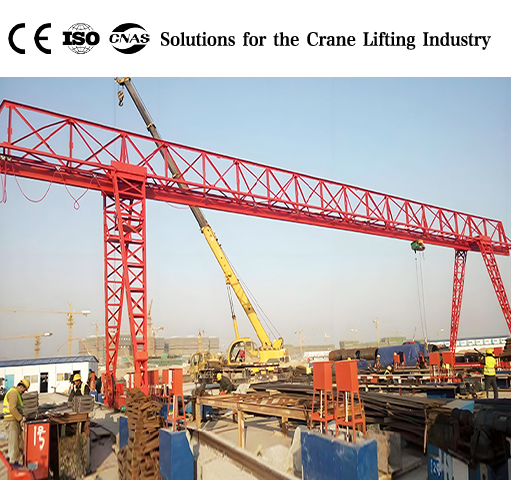
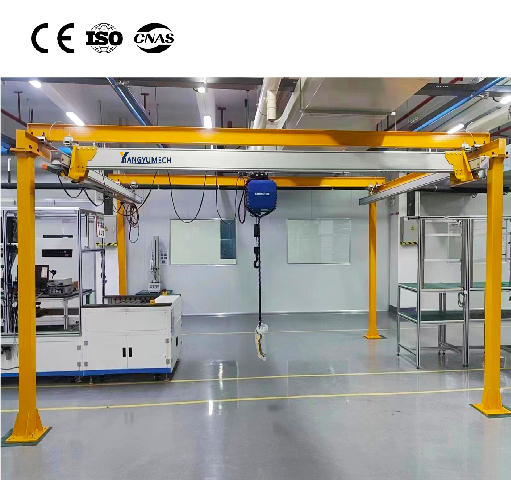
    Full truss-type single-girder gantry crane
    Full truss-type single-girder gantry crane

    1. Why Standard Cranes Fail in Workstation Applications

    Generic gantry cranes struggle with critical workstation challenges:

    • Space Limitations: Fixed spans/height collide with mezzanines, conveyor belts, or robotics.

    • Ergonomic Hazards: Poorly positioned controls force awkward postures during repetitive lifts.

    • Precision Deficits: Standard sway control can’t handle fragile aerospace or electronic components.

    • Throughput Caps: Inflexible duty cycles slow high-volume automotive assembly lines.

    2. Core Customization Levers for Peak Performance

    A. Dimensional Tailoring

    • Span & Height: Adjustable widths (3m–20m) and ultra-low headroom designs (<15cm clearance) for cramped cells.

    • Leg Configuration: Single-leg, adjustable-width, or cantilevered setups to navigate obstacles.

    B. Lifting System Precision

    ComponentStandardCustomized Advantage
    Hoist TypeChain/Standard WireMicro-hoists (0.1T–1T) for labs or 10T+ for forging
    Speed ControlFixed 8m/minVariable 0.1–30m/min with anti-sway AI
    End EffectorsBasic hookVacuum, grippers, or rotating arms

    C. Structural Adaptations

    • Material Science: Aluminum frames for cleanrooms, stainless steel for food processing.

    • Mobility: Rail-guided, rubber-tired, or hybrid systems for flexible re-layouts.

    • Control Integration: Push-button pendants, radio remotes, or fully automated PLC sequencing.

    3. Industry-Specific Customization in Action

    • Automotive Assembly:

      • Challenge: Positioning 500kg engine blocks within 2mm tolerance.

      • Solution: Laser-guided servo hoists + collision sensors.

    • Aerospace Composites:

      • Challenge: Handling 15m wing sections without deflection.

      • Solution: Dual-girder crane with <L/1500 deflection limit.

    • Pharmaceutical Labs:

      • Challenge: Sterile ISO 5 cleanroom material transfer.

      • Solution: Electropolished stainless steel + IP65-rated components.

    4. Smart Features Driving Industry 4.0 Integration

    • Predictive Maintenance: Vibration sensors track motor health, cutting downtime 40%.

    • Digital Twins: Simulate crane paths in Siemens NX before installation.

    • Operator Assist: AR HUDs display load weight, center of gravity, and optimal path.

    • Data Logging: OEE tracking via IoT-enabled controllers.

    5. The 6-Step Customization Workflow

    1. Site Scan: 3D laser mapping of workstation obstacles.

    2. Load Analysis: Dynamic vs. static load profiling (ISO 16881).

    3. Prototyping: Virtual FEA stress tests (SolidWorks Simulation).

    4. Material Selection: Corrosion resistance, EMI shielding, or ESD-safe options.

    5. Safety Integration: Overload limiters, emergency stops, and zone-restriction tech.

    6. Validation: 125% load testing with deflection measurement.

      6. ROI-Boosting Benefits

      • Space Savings: 30% smaller footprint vs. standard cranes.

      • Productivity: 25% faster cycle times with ergonomic controls.

      • Quality Control: 99.8% damage-free handling of sensitive loads.

      • Lifespan: 2x durability with environment-specific hardening.


      Transform workstations from constraints to competitive advantages with gantry cranes engineered for your workflow, your space, and your precision demands. Request a Free Worksite Assessment and receive a 3D concept design within 72 hours.

      Innovation Spotlight: Modular Bolt-Together Gantry System – Reconfigure in 2 hours without welding.