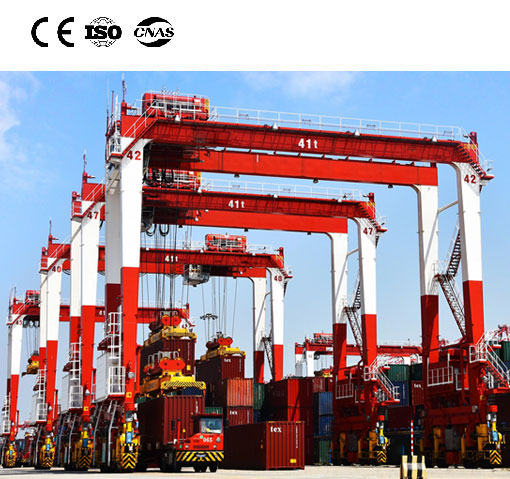
In the fast-paced world of container logistics, rail mounted container gantry cranes (RMG) have emerged as a game-changer for high-volume yards and terminals. Unlike their rubber-tired counterparts, RMGs operate on fixed steel rails, delivering unmatched stability, speed, and consistency—critical for handling thousands of containers daily. Whether you’re managing a busy intermodal terminal or a large port yard, understanding RMGs’ design, benefits, and best practices is key to optimizing your operations. This guide breaks down everything you need to know about rail mounted container gantry cranes.

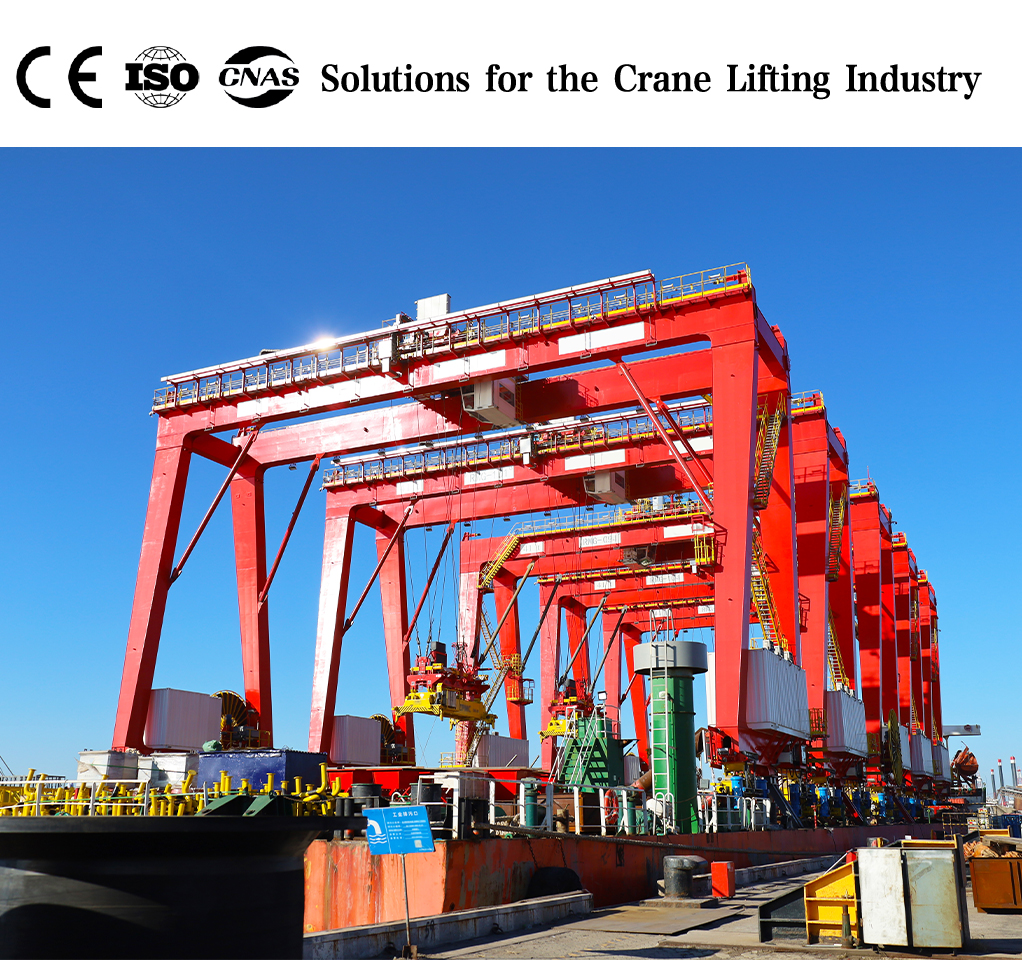
What Are Rail Mounted Container Gantry Cranes (RMG)?
A rail mounted container gantry crane (RMG) is a heavy-duty lifting system specifically engineered for container handling in yards and terminals. It features a rigid gantry frame supported by legs that run on pre-installed steel rails—typically laid parallel to the container stacking lanes. The crane’s trolley, equipped with a container spreader, moves along the gantry’s main beam to lift, transfer, and stack 20ft, 40ft, or 45ft standard containers.
Key structural components of RMGs include:
- Fixed Steel Rails: Provide a stable, precise path for the crane’s movement, eliminating deviations during operation.
- Rigid Gantry Frame: Ensures minimal sway even when lifting full 40ft containers (up to 80 tons), critical for safety and accuracy.
- Motorized Trolley: Moves horizontally along the gantry beam at speeds of 30–50 meters per minute, reducing transfer time between stacks.
- Adjustable Spreader: Automatically adapts to different container sizes, with locking mechanisms that secure containers via their corner castings.
Unlike rubber-tired gantry cranes (RTGs), RMGs are tied to their rail system—this trade-off for mobility is offset by superior efficiency in high-volume, fixed-layout yards.
Core Advantages of Rail Mounted Container Gantry Cranes
For terminals prioritizing speed, stability, and long-term cost savings, rail mounted container gantry cranes offer distinct benefits that make them a top choice. Here are their most impactful advantages:
1. Higher Operational Speed & Throughput
RMGs operate at consistent, fast speeds thanks to their rail-guided movement. The trolley and crane travel (along the rails) are powered by high-torque electric motors, enabling:
- Container transfer speeds of 2–3 cycles per minute (vs. 1–2 cycles for RTGs).
- Daily throughput of 800–1,200 containers per crane—ideal for busy intermodal yards handling rail-to-truck or ship-to-yard transfers.
This speed directly translates to reduced dwell time for containers, a key metric for logistics efficiency.
2. Superior Stability & Precision
The fixed rail system eliminates the “wheel slippage” or “path deviation” common with RTGs, especially in wet or uneven conditions. This stability ensures:
- Precise container placement (within ±50mm of the target), reducing the risk of stack collapses or damage.
- Safe operation even in high winds (up to 25 m/s for most models), a critical advantage for outdoor ports.
For yards stacking containers 4–6 levels high, this precision is non-negotiable.
3. Lower Long-Term Maintenance Costs
While RMGs have higher initial installation costs (for rails), their maintenance needs are significantly lower than RTGs:
- No tire replacements (a major RTG expense—tires last 1–2 years and cost
10,000 each).
- Fewer moving parts in the travel system (rails have minimal wear compared to rubber tires on concrete).
- Electric power systems (vs. diesel for some RTGs) require less frequent servicing and have fewer mechanical failures.
Studies show RMGs reduce annual maintenance costs by 30–40% compared to RTGs over a 10-year lifespan.
4. Energy Efficiency & Sustainability
Most modern rail mounted container gantry cranes are fully electric, drawing power from the grid or on-site renewable sources (solar, wind). This offers two key benefits:
- Lower energy costs (electricity is 50–70% cheaper than diesel per hour of operation).
- Zero on-site emissions, helping terminals comply with strict environmental regulations (e.g., IMO 2025, EU Emissions Trading System).
Some RMG models also include regenerative braking systems, which feed energy back to the grid when slowing down—further reducing energy waste.
Ideal Applications for Rail Mounted Container Gantry Cranes
RMGs are not a one-size-fits-all solution—their design is optimized for specific operational scenarios. Here are the environments where rail mounted container gantry cranes deliver the most value:
1. Large Intermodal Terminals
Intermodal yards handling rail-to-truck or truck-to-rail transfers rely on fixed, high-throughput operations. RMGs excel here because:
- They align with the linear layout of rail tracks, enabling seamless container transfer between trains and stacks.
- Their high throughput matches the volume of containers moving between modes (e.g., 1,000+ containers per day per crane).
Examples include North America’s Chicago Rail Yard and Europe’s Rotterdam Intermodal Terminal, both of which use RMGs to handle 50,000+ containers monthly.
2. High-Volume Port Yards
Port yards storing containers before/after ship unloading (via STS cranes) need efficient stacking and retrieval. RMGs are ideal because:
- Their fixed rails fit the grid-like layout of port yards, maximizing space utilization (stacking 5–6 containers high).
- They integrate easily with automated systems (e.g., IoT sensors, AI scheduling) to coordinate with STS cranes and trucks.
Singapore’s PSA Tuas Port, one of the world’s largest automated ports, uses over 100 RMGs to handle 65 million TEUs (twenty-foot equivalent units) annually.
3. Terminals with Fixed Layouts
Yards with unchanging stacking lanes (no need for reconfiguring paths) benefit most from RMGs. Unlike RTGs (which can reposition for layout changes), RMGs thrive in:
- Long-term terminal designs with permanent rail and stack alignments.
- Yards focused on “high-density storage” (maximizing containers per square meter).
For example, inland container depots (ICDs) that serve a fixed set of customers often choose RMGs for their reliability in static layouts.
How Does a Rail Mounted Container Gantry Crane Work?
The operation of an RMG follows a standardized, automated sequence—designed to minimize human error and maximize speed. Here’s a step-by-step breakdown of its workflow:
Step 1: Receiving the Container (e.g., from a Truck or Train)
- The crane’s control system (manual or automated) receives a signal to pick up a container from a truck or railcar, which is positioned along the rail line.
- The RMG travels along its rails to align with the container’s location (guided by GPS or rail encoders for precision).
Step 2: Spreader Alignment & Lifting
- The trolley moves along the gantry beam to position the spreader directly above the container.
- The spreader adjusts its width to match the container size (20ft/40ft) and lowers to clamp onto the container’s corner castings using hydraulic locks.
- The hoist system lifts the container to a safe height (clear of the truck/railcar and any obstacles—typically 3–5 meters).
Step 3: Transfer to the Target Stack
- The RMG travels along its rails to the target stacking lane, while the trolley moves horizontally to align with the exact stack position.
- The control system uses sensors (laser or camera) to verify the stack’s height and position, ensuring no collisions.
Step 4: Lowering & Securing the Container
- The hoist lowers the container gently onto the stack (or directly onto a truck for outbound delivery).
- The spreader releases its clamps, and the trolley retracts to prepare for the next cycle.
Step 5: Automated Reporting (for Smart Yards)
- Post-operation, the RMG’s system updates the terminal’s inventory management software (e.g., TOS—Terminal Operating System) with the container’s new location.
- This real-time data sharing ensures visibility for all stakeholders (truck drivers, shipping lines, customs).
Key Factors to Consider When Choosing a Rail Mounted Container Gantry Crane
Selecting the right rail mounted container gantry crane requires aligning the crane’s specs with your yard’s unique needs. Here are the critical factors to evaluate:
1. Load Capacity
- Choose a capacity based on the heaviest containers you handle:
- Standard 40ft containers (loaded): 40–50 ton capacity.
- Heavy-duty containers (refrigerated, hazardous): 60–80 ton capacity.
- Ensure the crane’s spreader can handle oversize containers (e.g., 45ft) if needed.
2. Span & Stack Height
- Span: The distance between the crane’s rails (determines how many container rows it can cover). For example:
- 20-meter span: Covers 4–5 rows of containers (standard for most yards).
- 30-meter span: For large yards needing wider coverage.
- Stack Height: The maximum number of containers the crane can stack. Most RMGs handle 4–6 levels, but high-density yards may opt for 7–8 levels (requires reinforced gantry frames).
3. Automation Level
RMGs are available in three automation tiers—choose based on your labor goals and budget:
- Manual: Operator in a cabin controls all functions (best for small yards with low volume).
- Semi-Automated: Trolley and travel are automated, but the operator oversees lifting/stacking (balances cost and efficiency).
- Fully Automated: AI and sensors control the entire process (no operator needed), ideal for 24/7 operations (e.g., Singapore’s Tuas Port).
4. Rail System Compatibility
- Ensure the crane’s rail gauge (distance between rails) matches your yard’s existing or planned rail system. Standard gauges are 1.435m (global) or 1.524m (some European yards).
- Consider rail material: High-carbon steel rails (more durable) are better for high-volume yards, while mild steel works for lower-volume sites.
5. Environmental Compliance
- If your terminal is in a regulated area (e.g., EU, California), choose electric RMGs over diesel models to meet emissions standards.
- Look for certifications like ISO 14001 (environmental management) or CE (for European markets) to ensure compliance.
Maintenance Tips for Rail Mounted Container Gantry Cranes
Proper maintenance is critical to keeping RMGs running at peak efficiency and avoiding costly downtime. Here’s a practical maintenance checklist:
1. Daily Inspections
- Rail System: Check for rail damage (cracks, loose bolts) or debris (dirt, gravel) that could block movement.
- Spreader: Inspect clamps for wear, hydraulic lines for leaks, and sensors for dirt (clean if needed).
- Safety Systems: Test emergency stops, overload sensors, and anti-collision devices to ensure they work.
2. Weekly Maintenance
- Lubrication: Apply grease to trolley wheels, hoist chains, and rail guides—use high-temperature grease for outdoor cranes.
- Electrical Systems: Check wiring, connectors, and motor windings for signs of overheating (discoloration, burning smells).
- Brake System: Inspect brake pads for wear (replace if less than 5mm thick) and adjust brake tension for smooth stopping.
3. Monthly/Quarterly Servicing
- Rail Alignment: Use laser alignment tools to check if rails are straight (deviations >5mm can cause premature wear).
- Spreader Calibration: Adjust the spreader’s width and clamping force to ensure a secure grip on containers.
- Hoist System: Inspect cables for fraying (replace if 10% of strands are broken) and test the hoist’s speed and lifting capacity.
4. Annual Overhaul
- Conduct a full load test (using a dummy container at 125% of rated capacity) to verify structural integrity.
- Replace worn parts (e.g., trolley bearings, rail clips) and repaint the gantry frame to prevent corrosion (critical for coastal yards).
- Update software for automated RMGs to ensure compatibility with the latest TOS systems.
The Future of Rail Mounted Container Gantry Cranes
As container volumes grow (projected to reach 1.2 billion TEUs by 2030), rail mounted container gantry cranes are evolving to meet new demands. Here are the key trends shaping their future:
1. Full Automation & AI Integration
More terminals are adopting “zero-operator” RMGs, powered by:
- AI scheduling (to optimize crane movement and reduce idle time).
- Computer vision (to detect container damage or misalignment in real time).
- 5G connectivity (for faster data transfer between RMGs, TOS, and cloud platforms).
2. Green Technology Advancements
- Hydrogen-powered RMGs: Being tested in ports like Hamburg (Germany) to eliminate reliance on grid electricity.
- Solar panels on gantry frames: Small-scale solar systems to power auxiliary functions (sensors, lights), reducing grid demand.
3. Modular Design for Flexibility
To address the “fixed rail” limitation, manufacturers are developing modular RMGs:
- Removable rail sections (for temporary yards or layout changes).
- Adjustable spans (to adapt to changing stack widths) via telescoping gantry beams.
4. Predictive Maintenance with IoT
IoT sensors embedded in RMGs (on bearings, motors, and rails) collect real-time data to:
- Predict failures before they occur (e.g., alerting teams to replace a bearing when vibration levels rise).
- Reduce unplanned downtime by 50% (per industry reports) compared to reactive maintenance.
Conclusion
Rail mounted container gantry cranes (RMG) are the gold standard for high-volume, efficient container yards. Their speed, stability, and low long-term costs make them indispensable for intermodal terminals, large ports, and fixed-layout depots. By understanding their advantages, ideal applications, and maintenance needs, you can select an RMG that aligns with your operational goals—whether that’s increasing throughput, reducing costs, or meeting sustainability targets.
For terminals planning to upgrade their equipment, the key is to balance initial investment (rails + crane) with long-term savings (lower maintenance, energy efficiency). With the rise of automation and green technology, RMGs will only become more critical to the future of global container logistics.
If you’re ready to invest in an RMG, start by assessing your yard’s volume, layout, and compliance needs—this will help you partner with a manufacturer (e.g., Konecranes, Liebherr, ZPMC) to build a custom solution.

