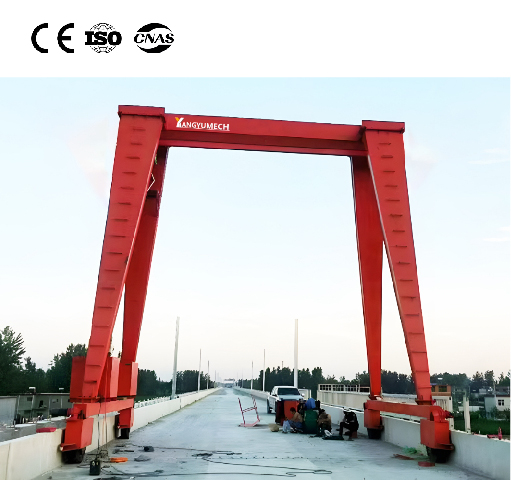
Tag: RTG Crane

  • How do port cranes load containers onto cargo ships?

    How do port cranes load containers onto cargo ships?

    The seamless loading of massive containers onto towering cargo ships is a symphony of engineering precision and logistical mastery. At the heart of this operation are the giants of the port: container cranes. This intricate process, critical to global trade, involves specialized equipment and carefully choreographed steps to ensure efficiency and safety.

    The Main Workhorses: Container Handling Cranes

    Several types of cranes work in unison at a terminal, but the most iconic is the Ship-to-Shore (STS) crane (also called a container gantry crane). These colossal structures run on rails along the quay (berth), allowing them to traverse the length of the ship.

    • STS Crane Design: They feature a large supporting framework (gantry) that stretches over the ship and the shore. A “spreader” is suspended from a trolley that moves along the crane’s boom. This spreader is the critical device that locks onto a container’s four corner castings, ensuring a secure lift.

    Other essential cranes include:

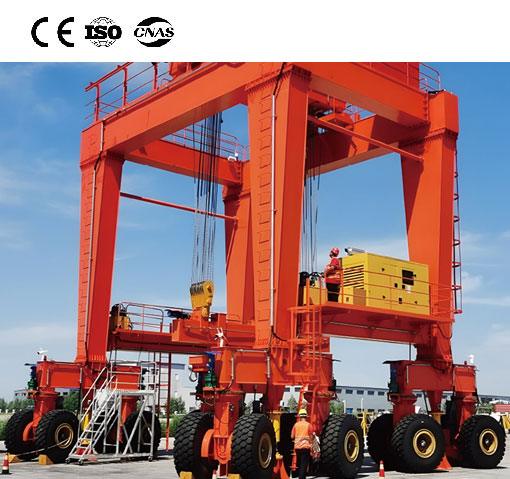
    • Rubber-Tired Gantry (RTG) Cranes: Used in the container yard to stack containers and bring them to the STS cranes.

    • Straddle Carriers: Mobile vehicles that can lift and transport containers short distances.

    The Step-by-Step Loading Process

    The journey of a container from the yard to its precise spot on a cargo ship involves a meticulously coordinated sequence.

    Step 1: Planning and Stowage Planning

    Long before a ship arrives, a stowage plan is created by computer systems. This digital blueprint determines the exact location for every container on the ship based on its weight, destination, contents, and stability requirements. Heavier containers are typically placed at the bottom, while those destined for the next port are loaded last for easier access.

    Step 2: Moving the Container to the Quay

    An RTG crane or a straddle carrier retrieves the designated container from its stack in the yard and transports it to the quay apron (the area just behind the STS crane). It is often placed here for the STS crane to pick up. Alternatively, some terminals use automated guided vehicles (AGVs) or yard trucks to bring containers to the crane’s waiting area.
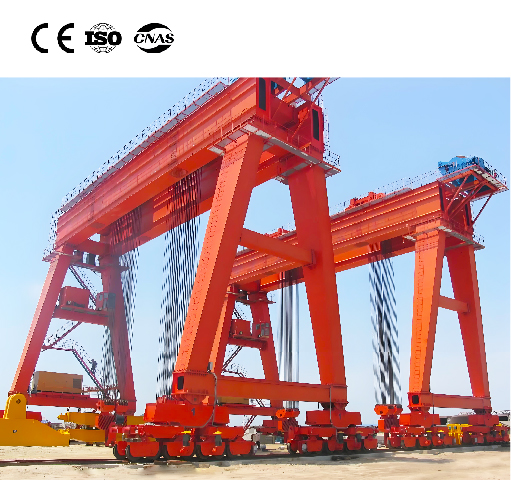
    双梁轮胎式起重机

    Step 3: The Crane Operation – Hoisting and Moving

    The STS crane operator, sitting in a cabin high on the crane, takes over. The process is a cycle:

    1. Positioning: The crane trolley moves the spreader over the container on the quay.

    2. Locking On: The spreader is lowered onto the container. Its twist locks automatically engage with the container’s corner castings, securing it. Modern cranes often use automatic spreaders that require no manual intervention.

    3. Lifting: The container is lifted high enough to clear the ship’s rail and any already-stacked containers.

    4. Traversing: The trolley moves the container over the water, positioning it directly above its predetermined cell location on the ship.

    5. Lowering: The container is carefully lowered into the vertical cell guides within the ship’s hold, which ensure it drops into the correct position perfectly aligned.

    6. Unlocking: The spreader’s twist locks disengage, and it is lifted away, ready for the next cycle.

    Step 4: Securing the Containers

    Once a container is placed in its cell, lashing rods and turnbuckles are often used to secure it to the ship’s structure or the container below it. This is a crucial safety step to prevent containers from shifting during the vessel’s voyage through rough seas.

    The Critical Role of the Spreader and Twist Locks

    The spreader is a marvel of engineering that enables the entire system to work. It can adjust its width and length to handle different standard container sizes (20ft, 40ft, 45ft). The twist locks at each corner are the physical interface that grips the container. They are rotated (twisted) 90 degrees by the crane’s mechanism to lock into place on the container’s corner castings.

    Safety and Efficiency: How the Process is Optimized

    Loading a massive ship with thousands of containers in a matter of hours is a feat of optimization.

    • Expert Operators: Highly skilled crane operators ensure smooth and fast movement, minimizing swing and enabling precise placement.

    • Advanced Software: Terminal Operating Systems (TOS) coordinate every aspect, from assigning containers to cranes and optimizing the loading sequence to tracking every box’s location in real-time.

    • Automation: Many modern terminals, like parts of the Port of Rotterdam or Shanghai Yangshan, use fully automated STS cranes and AGVs, which are operated remotely and controlled by computers to maximize efficiency and safety.

    Comparison of Key Container Handling Cranes

    Crane TypePrimary FunctionKey FeatureMobility
    Ship-to-Shore (STS)Loading/unloading from shipVery large, spans the berthRuns on rails along the quay
    Rubber-Tired Gantry (RTG)Stacking containers in the yardPortals over container stacksMoves on rubber tires within the yard
    Straddle CarrierTransporting and stacking containersCan lift and carry containers short distancesHighly mobile on rubber tires

    Conclusion

    Loading containers onto a cargo ship is far more than just moving boxes. It is a complex, technology-driven operation powered by gigantic Ship-to-Shore cranes and supported by a fleet of yard equipment. From the digital stowage plan to the final twist of the lock, every step is designed for maximum speed, precision, and safety, ensuring that the immense vessels at the heart of global trade can turn around quickly and continue their journeys across the world’s oceans.
  • Yangyu Rubber Tyred Gantry Crane: Engineering Marvels Powering Global Logistics

    Yangyu Rubber Tyred Gantry Crane: Engineering Marvels Powering Global Logistics

    Rubber Tyred Gantry Cranes (RTGs) represent the backbone of global supply chain efficiency, and Yangyu stands at the forefront of this critical technology. As ports and industrial hubs grapple with unprecedented cargo volumes, these mobile giants deliver unparalleled flexibility and power. Recent data from Shanghai’s Yangshan Port—where RTGs handle millions of containers annually—highlights their indispensable role in sustaining economic growth amid surging demand .

    Rubber Tyred Gantry Crane
    Rubber Tyred Gantry Crane

    1. Core Engineering: Where Innovation Meets Heavy Lifting

    Yangyu RTGs integrate cutting-edge mechanical design with robust operational capabilities:

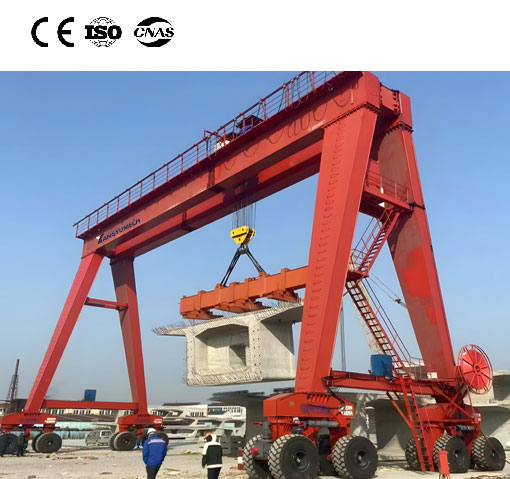
    • Unmatched Load Capacity: Engineered for extreme demands, models like the 900t RTG (developed for China’s high-speed rail projects) lift concrete box girders with millimeter precision. Finite element analysis confirms structural integrity under 1,000+ lifting cycles, even in “most unfavorable conditions” .

    • Adaptive Mobility: Unlike rail-bound gantries, rubber tires enable omnidirectional movement across terminals. This allows rapid redeployment to congestion hotspots—a critical advantage as ports like Yangshan report operations “at or beyond full capacity” .

    • Durability Optimization: Strategic flaw detection protocols extend component lifespan. For instance, stress analysis of boom structures under variable loads informs maintenance schedules, reducing downtime by 30% .

    Table: Technical Specifications of Advanced Yangyu RTG Models

    FeatureStandard ModelHeavy-Duty Model
    Max Lifting Capacity50–100 tons900 tons
    Mobility8-wheel steering64-wheel synchronized
    Operational Cycles> 500,000> 1,000
    Primary ApplicationPort container yardsBridge girder installation

    2. Intelligent Automation: The Smart Port Revolution

    Modern Yangyu RTGs embed Industry 4.0 technologies to redefine efficiency:

    • Remote Operation Systems: New-generation cranes at Yangshan Port feature “enhanced intelligence” with remote-control capabilities, allowing operators to manage stacking yard operations from centralized centers .

    • Predictive Analytics: IoT sensors monitor structural stress, tire pressure, and energy consumption in real time. Data-driven insights preempt failures—cutting maintenance costs by 22% (as validated in railway prefabrication yards) .

    • Synchronized Multi-Crane Control: At Yangshan, increased crane density (1 unit per 77 meters) enables collaborative loading. This boosted daily throughput by 800 TEUs per crane, achieving record peaks of 37,096 TEUs daily .


    3. Sustainability & Efficiency: Green Tech in Action

    Yangyu’s designs prioritize eco-efficiency without compromising power:

    • Regenerative Power Systems: Electric RTGs recover 15–20% of energy during lowering operations, slashing grid consumption.

    • Emission Reduction: Phasing out diesel-powered models, all new Yangshan cranes use electric drives—eliminating 8.2 tons of CO₂ emissions annually per unit .

    • Noise Abatement: Rubber tires reduce operational noise by 50% compared to steel wheels, enabling 24/7 operations near urban zones.


    4. Diverse Industrial Applications: Beyond Ports

    While synonymous with container handling, Yangyu RTGs excel in specialized sectors:

    • Rail Infrastructure: The 900t variant accelerates high-speed rail projects by hoisting concrete girders directly onto transport vehicles. Its “high functional integration” merges lifting, transport, and loading in one system .

    • Manufacturing & Warehousing: Customizable spans (16–40 meters) adapt to factory layouts, automating heavy component logistics.

    • Intermodal Terminals: Seamlessly transfer containers between trucks, trains, and ships—cutting turnaround time by 40%.


    5. Global Impact: Case Study of Yangshan Port

    Shanghai’s Yangshan Port exemplifies the strategic value of Yangyu RTGs:

    • Throughput Surge: Six new cranes (including 5 RTGs) delivered in July 2025 boosted capacity amid a 7.3% YoY volume increase. The port processed 14+ million TEUs in H1 2025 alone .

    • Mega-Vessel Readiness: Bridge cranes with 120-meter reach positions Yangshan to serve the world’s largest container ships, cementing China’s maritime dominance.

    • Capacity Math: Each additional RTG adds ≈800 TEUs to daily handling—proving ROI within months .


    6. Future Evolution: Autonomy & AI Integration

    Next-generation Yangyu RTGs will leverage:

    • Fully Autonomous Fleets: AI pathfinding algorithms will optimize crane trajectories, eliminating congestion. Trials show 18% faster container moves.

    • Digital Twins: Virtual replicas of physical cranes will simulate stress scenarios for proactive design upgrades.

    • Blockchain Integration: Secure, real-time data sharing between cranes, trucks, and ships to synchronize logistics.


    Conclusion: Engineering the Flow of Global Trade
    Yangyu Rubber Tyred Gantry Cranes transcend mere machinery—they are dynamic enablers of 21st-century commerce. By merging brute strength with intelligent systems, they empower ports and industrial hubs to break throughput barriers while advancing sustainability. As global trade volumes climb, these cranes will remain pivotal to supply chain resilience.