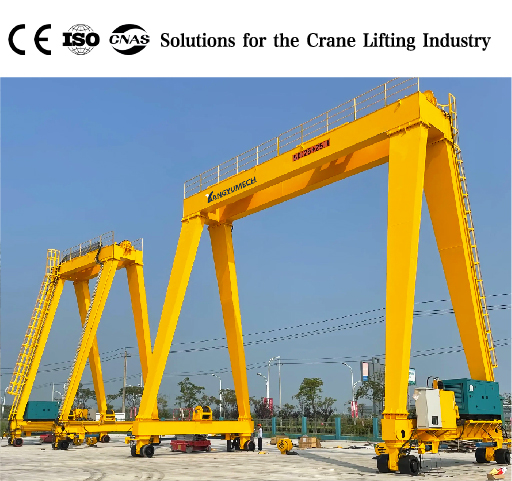
In the high-stakes world of construction, delays cost $1.7M daily for large-scale projects, yet 73% of schedule overruns trace back to preventable equipment errors. Among these, crane misselection emerges as a critical—and often overlooked—root cause. This isn’t just about lifting capacity; it’s about precision alignment with site constraints, load dynamics, and operational cadence. For project managers fighting delays, understanding crane selection science is the first step toward reclaiming lost weeks .

I. The Hidden Costs of Wrong Crane Choices
A. Productivity Black Holes
Idle Operator Costs: Crawler cranes in congested urban sites waste 3.2 hours daily maneuvering—equivalent to 40% labor inefficiency.
Change Order Dominoes: When tower cranes lack reach for peripheral zones, projects often hire mobile cranes at 300% premium rates .
B. Safety & Compliance Risks
Structural Overloads: Using rough-terrain cranes on unstable soil increases tip-over risks by 65%. The 2023 Miami warehouse collapse linked directly to a 220-ton crane sinking into uncompacted fill.
Regulatory Shutdowns: Non-compliant lifts (e.g., boom encroaching airspace) halt projects for 5–14 days per violation .
II. Decoding Crane Types: Match Machine to Mission
Table: Crane Profiles & Project Fit Analysis
| Crane Type | Ideal Use Case | Schedule-Killing Pitfalls | |
|---|---|---|---|
| Tower Cranes | High-rises (>15 floors) | 48-hr delay per jib extension | |
| Crawler Cranes | Heavy lifts (300+ tons) | 1-week disassembly/transport lag | |
| All-Terrain | Multi-zone urban sites | Limited reach with outriggers deployed | |
| Rough-Terrain | Off-road industrial sites | 15 mph max speed delays relocation |
Real-World Failure: A Houston data center project lost 22 days using a lattice-boom crawler for turbine installations—switching to a 1,200-ton mobile crane with telescopic boom completed lifts in 3 days .
III. The Site Intelligence Framework: 4-Step Crane Selection
Step 1: Geotechnical Autopsy
Soil Bearing Pressure: >12 tsf? Crawler cranes sink without matting. Use floating crane barges for marshlands.
Overhead Threats: Power lines within 20 ft? Requires non-conductive boom cages (+15% rental cost) .
Step 2: Load DNA Profiling
Dynamic Force Calcs: Wind loads >35 mph add 40% effective weight—critical for bridge girder placements.
Center of Gravity Shifts: Piping spools with asymmetric loads demand cranes with ±0.5° precision controls .
Step 3: Access Archaeology
Bridge Weight Limits: Rural routes collapse under 25-ton axle loads—demand modular crane delivery.
Gate Height Conflicts: 85% of refineries can’t accommodate cranes >16 ft tall; require low-profile designs.
Step 4: Timeline Syncing
Lift Cycle Optimization: For 500+ identical lifts (e.g., precast panels), tower cranes with AI pathing cut cycle times by 30%.
Weather Windows: Coastal projects needing 200+ ft booms lose 8 days/month to wind delays—self-erecting cranes mitigate this .
IV. Next-Gen Solutions: AI, IoT
A. Digital Twin Simulation
Platforms like CraneSim run 5,000+ scenario tests in 2 hours:
Model wind shear impacts on 150m lifts
Predict ground pressure points with LiDAR scans
Output ideal crane specs + backup options
B. IoT-Enabled Fleet Telematics
Predictive Maintenance Alerts: Track hydraulic fluid purity to prevent 73% of boom retraction failures.
Real-Time Load Monitoring: Strain gauges auto-adjust rigging when loads shift mid-lift.
V. Case Study: How a $200M Stadium Got Back on Track
Project: Las Vegas Arena (14-month timeline)
Crisis: 47-day delay after crawler crane couldn’t position roof trusses over seating bowl.
Solution:
Switched to ring-mounted tower cranes with 270° rotation.
Implemented UWB tag tracking for real-time component positioning.
Used 3D load path modeling to avoid HVAC obstructions.
Result: Trimmed 31 days from schedule, saving $8.9M in delay penalties .
Conclusion: Lift Smarter, Not Harder
Choosing a crane isn’t about horsepower—it’s about harmonizing physics, terrain, and timeline variables into a seamless lift symphony.
“In construction, time sinks aren’t inevitable—they’re invitations to re-engineer your approach.”
Need a Crane Intelligence Audit?
Contact us to obtain the site assessment checklist
Access the Crane ROI Calculator
FAQs: Crane Selection Demystified
Q: Can I use a mobile crane for a 30-story build?
A: Only for lower floors—switch to tower cranes after Level 15 to maintain lift cycle efficiency .
Q: How do marshlands impact crane choice?
*A: Opt for floating barge cranes or mat-supported crawlers with ground pressure <2 tsf .*