The LB Explosion-Proof Single Girder Overhead Traveling Crane stands as a purpose-engineered solution, integrating specialized materials, advanced electrical systems, and rigorous safety protocols to enable safe material handling in these high-risk zones. Combining robust structural engineering with comprehensive explosion-proofing, these cranes are indispensable assets across petrochemical, pharmaceutical, grain processing, and mining industries where operational safety is non-negotiable.
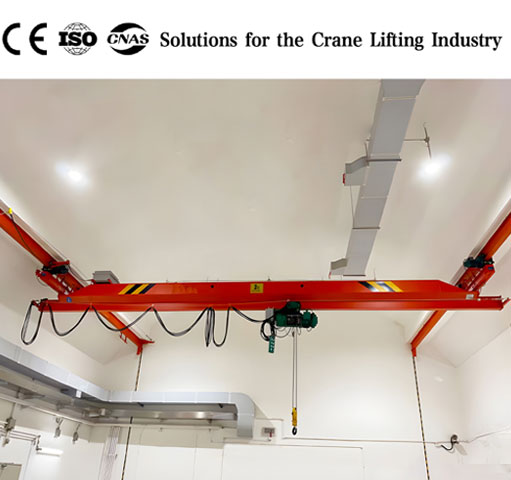
Core Explosion-Proofing Technologies and Design Features
Comprehensive Hazard Mitigation Systems: Unlike conventional overhead cranes, LB models incorporate flameproof enclosures (Ex d) and intrinsic safety barriers (Ex i) across all electrical components—including motors, controls, and limit switches. These enclosures contain internal explosions, preventing ignition of external atmospheres . Critical mechanical components like wheels, hooks, and bumper rollers utilize non-sparking alloys (e.g., copper-bronze or stainless steel) to eliminate friction-induced ignition risks during movement or collision .
Specialized Hoist Integration: LB cranes typically pair with EXdllBT4/IICT4-rated electric hoists, featuring explosion-proof motors, brakes, and electrical gear. These hoists offer dual-speed lifting (e.g., 8 m/min full load; 0.8 m/min precision) and comply with GB3836.1-2000 standards for explosive atmospheres . An additional safety brake acts as a failsafe on the hoist’s low-speed shaft, engaging automatically during power loss or primary brake failure—critical for preventing dropped loads in gas-rich zones .
Operational Control and Environmental Resilience: Operators control the crane via certified explosion-proof pendants or wireless remote systems with intrinsically safe circuits. The crane functions reliably in temperatures from -25°C to +40°C, making it suitable for unheated warehouses or foundries. However, it is unsuitable for highly corrosive or wet environments where electrical sealing could be compromised .
Technical Specifications and Configurations
Table 1: LB Crane Performance Parameters
| Parameter | Range/Value | Notes |
|---|---|---|
| Capacity | 1–20 tons | Higher capacities (up to 32t) possible with custom designs |
| Span | 7.5–35.5 meters | Adaptable to building layouts |
| Lifting Speed | 3.5–11.3 m/min | Dual-speed for precision placement |
| Travel Speed | 20–25 m/min | Limited for reduced spark risk |
| Work Duty Class | A3–A5 | Medium to heavy-duty cycles |
| Power Supply | 3P, 380V, 50Hz | Custom voltages available |
| Explosion Rating | Ex de IIC T4 / DIP A21 TA,T4 | For gas (IIB/IIC) and dust environments |
Table 2: Hazard Zone Applicability
| Zone Type | Risk Definition | LB Suitability |
|---|---|---|
| Zone 0/20 | Continuous explosive atmosphere | Not Suitable |
| Zone 1/21 | Likely explosive atmosphere during normal operation | Suitable |
| Zone 2/22 | Explosive atmosphere unlikely/short-duration | Suitable |
Industry Applications and Use Cases
Petrochemical Plants: Handling drums of solvents, pipeline valves, or reactor parts in refineries where Group IIB (ethylene) or IIC (hydrogen) gases may exist .
Grain Processing & Flour Mills: Transporting bulk materials in silos prone to combustible dust explosions (Group DIP A21) .
Pharmaceutical Manufacturing: Moving alcohol-based solvents or powdered APIs within Class I, Division 1 (Zone 1) areas .
Aircraft Maintenance Hangars: Servicing fuel system components where residual vapors require IIC T4 protection .
Compliance and Certification Frameworks
LB cranes adhere to globally recognized explosion-protection standards, including:
ATEX Directive 2014/34/EU (EU): For Group II equipment in gaseous atmospheres .
IECEx System (International): Certification for global market access .
GB3836.1-4 (China): Mandating flameproof (d), increased safety (e), and intrinsic safety (i) principles .
Installation and Maintenance Best Practices
Pre-Installation Planning: Specify exact parameters: span, lifting height, explosion group (IIB vs. IIC), and ambient conditions. Outdoor units require weather shields .
Power Delivery Safety: Flexible cable reels or conductor bar systems with anti-spark collectors replace standard festooning to prevent arcing .
Lifecycle Maintenance: Conduct quarterly inspections of brake linings, electrical seals, and mechanical stoppers. Use OEM parts to maintain certification validity .
Conclusion: Elevating Safety in Critical Operations
The LB Explosion-Proof Single Girder Overhead Crane transcends conventional material handling by merging structural reliability with rigorously tested anti-detonation technologies. For industries where flammable hazards are inherent, this crane transforms high-risk lifting tasks into controlled, compliant operations. As regulations like ATEX and IECEx evolve, LB systems continue to integrate advancements—such as frequency-controlled travel for smoother starts/stops and embedded gas sensors—proactively mitigating risks before they escalate. Investing in these cranes isn’t just about productivity; it’s a commitment to operational integrity and human safety where failure is not an option.