Tag: Cantilever Cranes

  • Introduction to jib cranes

    Introduction to jib cranes

    Jib cranes, also known as cantilever cranes, are lightweight boom cranes designed for light-duty applications. Types include column-mounted, wall-mounted, wall-traveling, mobile, and folding-arm models.
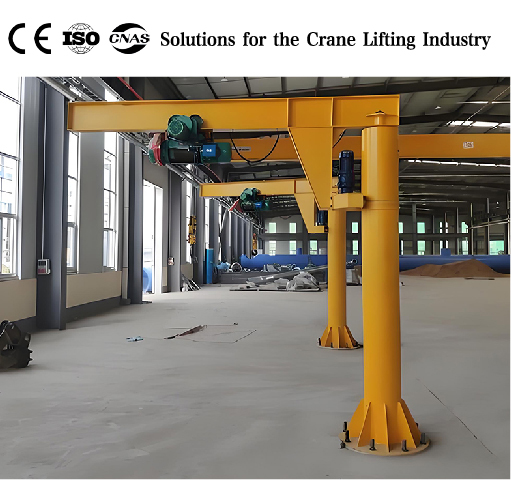
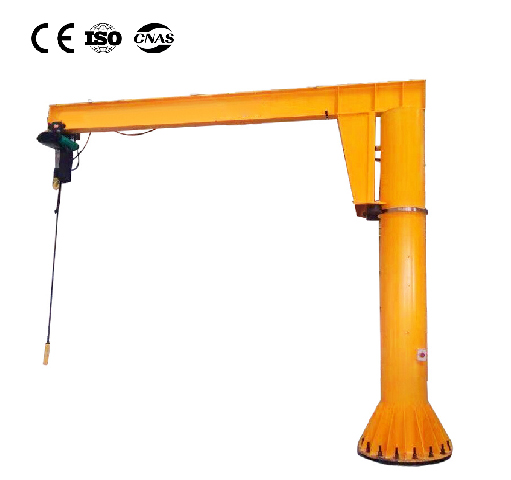
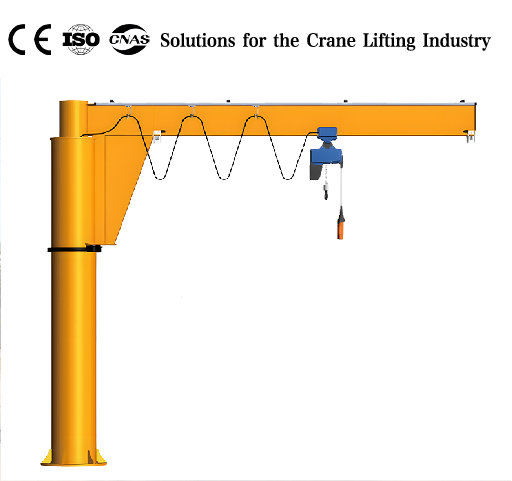
    The column-mounted cantilever crane consists of a column, slewing arm, slewing drive unit, and electric hoist. The lower end of the column is anchored to a concrete foundation via anchor bolts. It offers high efficiency, energy savings, and a compact footprint, with simple operation and maintenance. It is particularly suitable for short-distance, high-frequency, and intensive lifting operations.
    The column serves as the foundational support for the entire jib crane. It bears radial and axial forces via single-row tapered roller bearings, ensuring stable operation of the rotating arm. The column’s steel structure is typically fabricated from welded steel pipes and flange plates, while the rotating arm’s steel structure combines welded I-beams with support arms.
    The slewing mechanism is positioned at the support arm. Together with the gear reducer, the support arm provides essential structural support for the rotating arm, enhancing its bending resistance and strength.
    The gear reducer drives the roller to achieve electric rotation of the jib, significantly improving operational flexibility.
    The wire rope electric hoist and chain hoist form the core components for lifting heavy loads. They enable horizontal movement of the load, serving as the key to efficient hoisting operations. This ensures stability during lifting and boosts overall work efficiency.
    The electrical system serves as the brain of the cantilever crane. Typically employing a C-track with flat cable power supply, it operates via low-voltage, interlocked safety voltage. Handheld control buttons manage functions including fast/slow lifting, lowering, trolley travel, and left/right rotation of the cantilever. Slip rings ensure continuous power supply during any rotation of the cantilever.
    Maintenance of jib cranes is relatively straightforward. Since major components undergo meticulous design and rigorous testing, routine upkeep focuses on standard items. Their clean aesthetics and compact structure also facilitate storage and transportation. Whether for new projects or retrofitting existing equipment, jib cranes deliver efficient, stable performance to meet diverse demands.
    Looking ahead, the development prospects for cantilever cranes will expand significantly with ongoing technological advancements and growing application demands. For instance, integrating IoT technology and big data analytics enables real-time monitoring and intelligent control, further boosting production efficiency and equipment utilization while paving the way for AI-powered intelligent hoists. Simultaneously, as environmental awareness intensifies, energy conservation and emissions reduction will become key future development directions for cantilever cranes.
  • A comprehensive and detailed introduction to column-mounted jib cranes

    A comprehensive and detailed introduction to column-mounted jib cranes

    1. Column-mounted jib crane introduction


    Column-mounted jib cranes are lightweight lifting and handling equipment used in conjunction with electric hoists, chain hoists, and hand hoists.


    2. Column-mounted jib crane parameters


    1. Specifications: 0.5 ton, 1 ton, 2 ton, 3 ton, 5 ton, and 10 ton lifting capacities (T) can be customized.
    2. Boom length: 6 m, 9 m, 10 m, 16 m, and 20 m, and can be customized.
    3. Column height: 5 m, 6 m, 9 m, 10 m, and 18 m, and can be customized.
    4. Trolley operation mode: Manual or electric.

    5. Slewing mode: Electric slewing.
    6. Slewing angle: Maximum 360 degrees (infinite slewing).


    3. Selecting Structural Beams for Column-Type Jib Cranes


    Cantilever cranes typically use I-beams or KBK rails for their structural beams. Large-tonnage cantilever cranes use box beams.
    1. Structural beam selection generally depends on the customer’s desired trolley operation method. Manual trolleys typically use KBK structures, while electric trolleys typically use I-beams (I-beams are easier to install with electric trolleys).
    2. Different structural beams require different power distribution methods. Generally, I-beams use C-rails, flat cables, and pulleys for power distribution. KBK rails are simpler to install and relatively inexpensive. A rail pulley and flat cable method is used for power distribution.

    4. Column-Type Jib Crane Structure


    A column-type cantilever crane consists of a column assembly, slewing mechanism, jib assembly, and electric chain hoist. It primarily includes an upper column, lower column, main beam, main beam tie rods, a lifting mechanism (electric chain hoist), a slewing mechanism, an electrical system, a ladder, and a maintenance platform. The lower end of the column is fixed to the concrete foundation, and the jib pivots according to user needs. The slewing mechanism is available in manual or electric configurations. An electric chain hoist is mounted on the jib track and is used to lift heavy objects.


    5. Purchasing Instructions for a Column-Type Jib Crane


    1. Rated Lifting Capacity
    2. Jib Swing Radius (Note: Swing radius and arm length are two different concepts. Swing radius is the distance from the arm’s pivot point to the far end of the wall, while arm length refers to the length of the arm alone.)
    3. Lifting Height (the distance from the hook to the bottom of the hoist).
    4. Clearance Height of the Jib Crane Workshop
    5. Whether the jib pivots manually or electrically (usually recommended for loads under 500kg, manual for loads under 1t, and electric for loads over 1t).
    Whether the hoist trolley is manually or electrically operated (usually recommended for loads over 1t, with an electric trolley).
  • There are so many models of cantilever cranes, each with its own advantages

    In the dynamic world of material handling, cantilever cranes stand out for their unique ability to lift, move, and place loads in spaces where traditional overhead cranes might struggle. Unlike their bridge-style counterparts, cantilever cranes feature a single arm that extends horizontally from a fixed support point, creating unparalleled flexibility for specific tasks.

    Wall Mounted Jib Crane

    The true strength of this crane category lies in its remarkable diversity. From compact workshop jibs to massive gantry systems, there is a model designed for nearly every conceivable application. Each type offers a distinct set of advantages, making the selection process less about finding the “best” crane and more about identifying the perfect match for your operational needs, space constraints, and budget.

    This article explores the various models of cantilever cranes, highlighting their unique benefits to help you make an informed decision.


    The Fundamental Design: Why Cantilevers Are Unique

    All cantilever cranes share a common principle: a horizontal jib arm is supported at only one end. This design frees up the entire area beneath and around the arm, allowing for obstruction-free lifting and precise positioning of loads. This is a key advantage overhead bridge cranes, which require runways and support structures that can interfere with floor space.

    The variations arise in how the arm is supported and mounted, leading to different models optimized for specific environments and tasks.


    A Spectrum of Models: Finding Your Perfect Fit

    Here’s a breakdown of the most common cantilever crane models and the specific advantages they offer.

    1. Wall-Mounted Cantilever Cranes

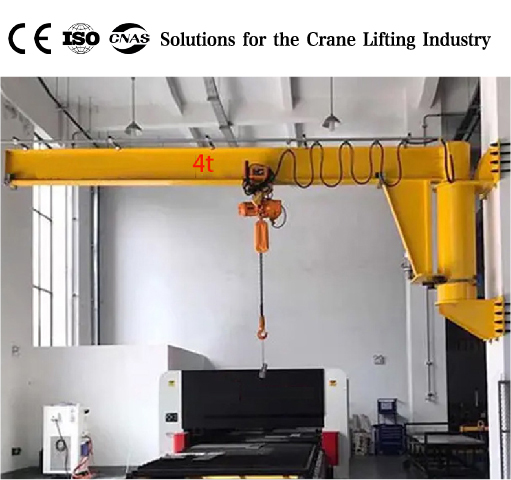
    Wall-mounted cranes are affixed directly to an existing, sturdy load-bearing wall or structural column. Their jib arm typically rotates 180 degrees or less.

    • Key Advantages:

      • Space Savers: Their most significant benefit is that they occupy zero floor space. This makes them ideal for cramped workshops, along production lines, or in storage areas where every square foot counts.

      • Cost-Effective Installation: They often require no dedicated foundation,
        potentially reducing initial installation time and cost compared to floor-mounted models.

      • Ideal for Perimeter Work: Perfect for loading/unloading machinery against a wall, servicing workstations, or handling materials in tight alleyways.

    • Ideal For: Workstations against sturdy walls, repair bays, manufacturing cells, and areas with limited floor space.

    2. Column-Mounted (or Freestanding) Cantilever Cranes

    This model features a single vertical column anchored to a heavy concrete foundation in the floor. The jib arm rotates a full 360 degrees around this central column.

    • Key Advantages:

      • Full Rotation: The 360-degree coverage provides maximum flexibility in a circular work area, allowing the operator to serve multiple points around the crane.

      • Structural Independence: It doesn’t rely on the strength of a wall or building structure. Its capacity and stability are derived from its own foundation, making it suitable for open areas and buildings with weaker walls.

      • High Capacity & Durability: Designed to be robust, often handling heavier loads and more frequent use cycles with stability.

    • Ideal For: Open shop floors, foundries, staging areas, and any application where loads need to be moved and positioned throughout a circular area.

    3. Wall-Traveling Jib Cranes

    A specialized variant of the wall-mounted crane, where the entire crane apparatus moves along a track fixed to a long wall.

    • Key Advantages:

      • Linear Mobility: Combines the space-saving of a wall mount with the ability to serve multiple workstations along the length of the wall. This is far more efficient than having multiple fixed cranes.

      • Enhanced Coverage: Drastically increases the service area without taking up floor space, perfect for long production or assembly lines.

    • Ideal For: Long assembly lines, packaging areas, and warehouses where processes are linear and parallel to a wall.

    4. Cantilever Gantry Cranes

    These are large, wheeled structures that run on ground-level tracks or floors. They feature one or two vertical legs supporting a long horizontal bridge, with a jib arm extending from one or both ends.

    • Key Advantages:

      • Massive Coverage and Capacity: Designed for very heavy loads and large span capabilities, often outdoors. They can easily span over railways, truck beds, or storage piles.

      • Outdoor Flexibility: Their mobility and lack of overhead building requirements make them perfect for shipyards, lumber yards, and steel storage areas.

      • Obstacle Clearance: The extended jib can reach over obstacles like fences or other equipment, a unique capability among crane types7.

    • Ideal For: Steel service centers, shipping ports, large-scale construction projects, and any outdoor heavy-lifting application.

    5. Portable/Mobile Cantilever Cranes

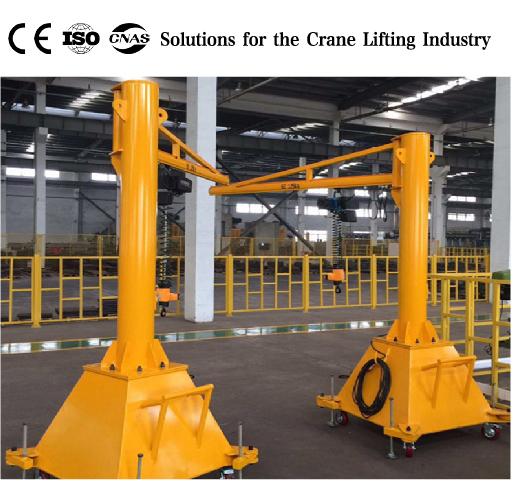
    These are smaller, self-contained cranes often mounted on a wheeled base or trailer. They may be manually operated or use electric/pneumatic power.

    • Key Advantages:

      • Ultimate Flexibility: The biggest advantage is go-anywhere mobility. They can be easily moved to where the work is, making them indispensable for maintenance, repair, and job sites with changing needs.

      • Rapid Deployment: Require little to no setup or installation; they are ready to use almost immediately.

      • Cost-Effective for Intermittent Use: Eliminate the need for a permanent installation at every potential lift point.

    • Ideal For: Maintenance departments, construction sites, loading docks, and facilities with diverse, changing lifting needs.

    6. Telescopic Cantilever Cranes

    These cranes feature a jib arm that can extend and retract, much like a telescope. This can be found on various mounts, including truck-mounted cranes.

    • Key Advantages:

      • Adjustable Reach: The telescoping mechanism allows the operator to vary the reach of the crane dynamically, providing incredible precision in positioning loads and adapting to different spatial constraints3.

      • Compact Storage: When retracted, the crane takes up less space, which is beneficial for storage and transport on mobile units.

    • Ideal For: Applications requiring variable reach, such as logistics, truck loading, and situations with obstacles at different distances.

    7. Light-Duty Workshop Jib Cranes (A Subset)

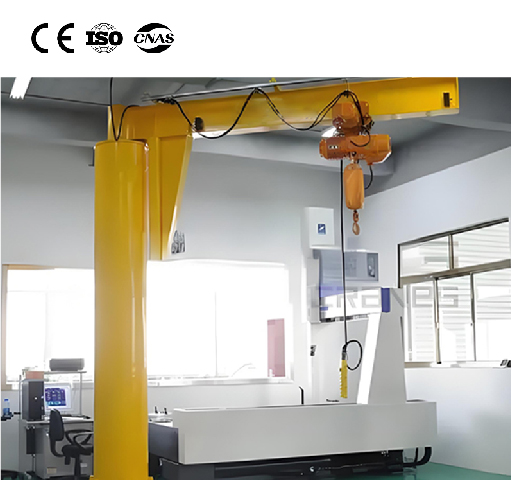
    Often referred to as “small cantilever cranes,” these are lightweight versions, often found in machine shops, workshops, and assembly areas2.

    • Key Advantages:

      • Economic Efficiency: They are a cost-effective solution for frequent, light-duty lifting tasks2.

      • Ease of Use: Designed for simple operation, often manual, allowing for quick and easy movement of components, tools, or products2.

      • Ergonomics: Improve workplace safety and reduce worker fatigue by handling repetitive lifting tasks with precision.

    • Ideal For: Machine shops, small assembly stations, CNC machine feeding, and any area where small, frequent lifts are needed.


    Comparison Table of Cantilever Crane Models

    ModelPrimary AdvantageBest Suited EnvironmentTypical Rotation
    Wall-MountedSaves all floor spaceAgainst sturdy walls, tight spaces≤ 180°
    Column-MountedFull 360° rotationOpen shop floors, independent workstations360°
    Wall-TravelingMobility along a wallLong production/assembly lines≤ 180°
    GantrySpans large, outdoor areasShipyards, steel yards, lumber yardsVaries
    PortableComplete mobilityMaintenance, multiple job sites360°
    TelescopicAdjustable reachVariable distance lifting, logisticsVaries
    Workshop JibCost-effective for light dutyMachine shops, small workstations180° – 360°

    Key Advantages to Consider When Choosing

    Beyond the model-specific benefits, here are the universal advantages of cantilever cranes that make them so popular:

    • Obstruction-Free Lifting: The single-arm design provides clear access to the load from above and the sides.

    • Precision Handling: Most models allow for very fine control in positioning loads, both horizontally and vertically.

    • Space Optimization: They efficiently utilize often-wasted vertical and perimeter space, especially wall-mounted models2.

    • Versatility: With various mounts, capacities, and reaches available, there’s a solution for almost any industry.

    • Improved Safety: By mechanizing lifting, they reduce the risk of musculoskeletal injuries among workers from manual handling.

    • Increased Productivity: Drastically reduce the time and labor required to move heavy items, accelerating workflow8.


    How to Select the Right Model for Your Needs

    Choosing the right cantilever crane involves a careful assessment of your requirements:

    1. Application & Workflow: What are you lifting? How often? What is the path the load needs to take?

    2. Available Space: Is floor space available, or must the crane be mounted on a wall? Are there height restrictions?

    3. Structural Support: Do you have a strong, load-bearing wall (for wall-mounted), or can you pour a foundation (for column-mounted)?

    4. Rotation Requirement: Do you need 180-degree coverage or full 360-degree service?

    5. Capacity & Reach: Determine the maximum weight and the required horizontal distance from the support point.

    6. Mobility: Does the crane need to be stationary, or does it need to move to different locations?

    7. Budget: Consider both the initial investment and long-term maintenance costs.

    Conclusion

    The world of cantilever cranes is indeed vast, with so many models, each boasting its own unique advantages. There is no one-size-fits-all solution. The powerful column-mounted crane offers unrivaled rotation in an open area, while the space-conscious wall-mounted crane is the champion of tight spaces. The mobile gantry rules the outdoor yard, and the humble workshop jib keeps small shops running efficiently.

    The key to unlocking the benefits of this versatile equipment is to thoroughly analyze your specific needs and match them to the strengths of the different models. By understanding the distinct advantages each type of cantilever crane offers, you can invest in a material handling solution that enhances safety, boosts productivity, and provides a strong return on investment for years to come. When in doubt, consulting with a qualified crane engineer is always the best step to ensure a safe and optimal selection.
  • Advantages of Cantilever Cranes Compared with Mobile Cantilever Cranes

    Advantages of Cantilever Cranes Compared with Mobile Cantilever Cranes

    In the realm of industrial material handling, selecting the right lifting equipment—whether cantilever cranes or mobile cantilever cranes—is pivotal for optimizing efficiency, safety, and cost-effectiveness. While both share the distinctive cantilever arm design enabling extended reach and overhead lifting, their structural support and mobility differ fundamentally. Fixed cantilever cranes are permanently installed, often bolted to the floor or building structure, whereas mobile cantilever cranes feature wheeled bases or tracks for relocation. Understanding the unique advantages of fixed cantilever cranes is essential for making an informed investment. This article explores why fixed cantilever cranes often outperform their mobile counterparts in specific industrial scenarios, focusing on stability, lifting capacity, cost efficiency, precision, and suitability for repetitive tasks.

    手动立柱式悬臂吊起重机

    1. Superior Stability and Structural Integrity
    Fixed cantilever cranes are renowned for their exceptional stability, a direct result of their permanent installation onto robust foundations or building structures.

    • Enhanced Load-Bearing Security: Their anchored design provides a solid base, making them inherently more stable under load. This reduces sway and swing during lifting operations, which is critical for handling delicate, unbalanced, or very heavy items.

    • Reduced Safety Risks: The inherent stability minimizes the risk of tipping or shifting during operation, a crucial safety advantage especially when lifting loads near their capacity limit.

    2. Higher Load Capacity and Performance
    The rigid, fixed support structure allows these cranes to handle significantly heavier loads compared to most mobile cantilever models.

    • Designed for Heavy-Duty Applications: Fixed cantilever cranes can be engineered to lift loads ranging from a few hundred kilograms to several hundred tons, depending on their design and build. For instance, some rigid systems can handle up to 2000kg or more.

    • Consistent Performance: Without the constraints of a mobile base’s weight distribution and balance, fixed cranes can maintain performance consistency even at or near their maximum rated capacity.

    3. Cost-Effectiveness and Lower Total Ownership Cost
    For operations within a fixed area, cantilever cranes often present a more economical solution over time.

    • Lower Initial Investment: Permanent installations typically require less complex hardware than mobile equivalents, which need integrated mobility systems (wheels, brakes, steering). This can lead to a lower upfront cost.

    • Reduced Maintenance and Longer Lifespan: With fewer moving parts related to mobility (like axles, tires, mobile steering mechanisms), fixed cranes generally experience less wear and tear. This translates to lower long-term maintenance costs, less downtime, and a longer operational lifespan. Their simplified design also often makes maintenance routines more straightforward.

    4. Precision Handling and Control
    The stability of a fixed foundation directly contributes to superior control during load manipulation.

    • Accurate Positioning: Minimal sway allows operators to place loads with high precision. This is invaluable in assembly operations, machining centers, or when working in tight spaces where millimeter accuracy is required.

    • Smoother Operation: The fixed point of operation can contribute to smoother acceleration and deceleration of the hoist and trolley, enabling finer control and reducing the risk of load damage.

    5. Ideal for Repetitive Tasks in Fixed Locations
    When the lifting need is consistently in the same location, fixed cantilever cranes are unparalleled in efficiency.

    • Optimized Workflow: They are perfect for dedicated tasks within a specific workstation, such as loading/unloading a specific machine, feeding a production line, or transferring materials between fixed points in a process.

    • Ergonomic Benefits: They can be perfectly positioned to eliminate manual lifting in a designated area, reducing physical strain on workers and improving overall ergonomics.

    6. Space Efficiency and Customization
    Fixed cranes can be configured to maximize available space without sacrificing functionality.

    • Custom Arms and Reach: The boom length and height can be tailored to the exact needs of the workspace, ensuring optimal coverage without unnecessary obstruction.

    • Mounting Flexibility: They can be installed as freestanding units or wall-mounted (wall-mounted jib cranes), which is an excellent space-saving solution for working along walls or in corners, freeing up valuable floor space below.

    7. Enhanced Safety for Stationary Operations
    The predictability and permanence of fixed cranes contribute to a safer work environment in their zone of operation.

    • Clear Operational Zone: Everyone in the facility knows the crane’s fixed coverage area, allowing for better traffic management of personnel and other equipment outside this zone.

    • Reduced Collision Risk: Unlike mobile cranes that move around the facility, a fixed crane eliminates the risk of colliding with other equipment, infrastructure, or people in adjacent areas during transit.

    Comparison Table: Fixed Cantilever Crane vs. Mobile Cantilever Crane

    FeatureFixed Cantilever CraneMobile Cantilever Crane
    MobilityStationary; fixed operational areaMobile; can be relocated as needed
    StabilityVery High (anchored foundation)Moderate (depends on base and surface)
    Typical Load CapacityHigher (e.g., up to 2000kg+ for some rigid systems)Generally Lower (constrained by mobile base stability)
    Precision & ControlSuperior (minimal sway, accurate positioning)Good, but can be affected by movement and surface
    Initial CostOften lower (simpler structure)Often higher (added cost of mobility system)
    MaintenanceGenerally lower (fewer complex moving parts)Generally higher (maintenance for wheels, brakes, etc.)
    Ideal Use CaseRepetitive tasks in a fixed locationTasks requiring frequent location changes
    Floor Space ImpactPermanent footprintMobile, but requires storage and transit aisles
    SafetyHigh (fixed hazard zone)Requires vigilance during movement and operation

    Conclusion: Choosing the Right Tool for the Task
    The choice between a fixed cantilever crane and a mobile cantilever crane hinges on a precise evaluation of your operational needs.

    Movable JIB Crane

    Fixed cantilever cranes are the undisputed champions of stability, lifting capacity, and cost-efficient precision for repetitive tasks in a dedicated location. Their robust, anchored design makes them the safer, more powerful, and more reliable choice for applications where the lifting need does not move.

    Mobile cantilever cranes, conversely, offer invaluable flexibility and adaptability for facilities where loads need to be lifted and transported across multiple locations or where workstations are frequently reconfigured.

    For operations prioritizing raw lifting power, unwavering stability, precision handling, and long-term value within a fixed area, the advantages of a fixed cantilever crane are clear and compelling. By investing in the right type of crane for your specific workflow, you maximize productivity, enhance safety, and ensure a strong return on investment.