The Significance in Modern Industries
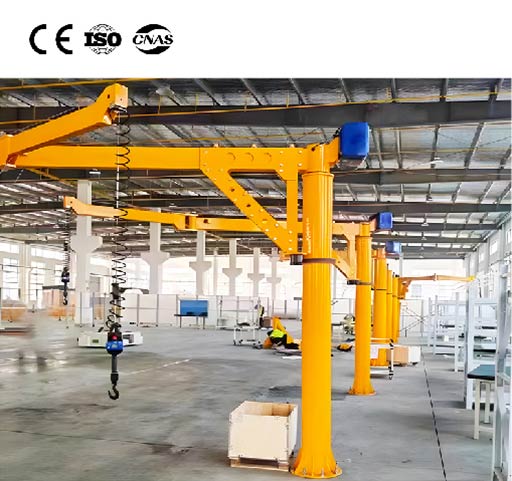
In the landscape of modern industries, column mounted jib cranes have emerged as indispensable assets, playing a pivotal role in various sectors such as manufacturing, logistics, and warehousing. These cranes are highly valued for their ability to optimize space utilization, enhance operational efficiency, and improve safety standards in material handling processes. In manufacturing plants, especially those with high – volume production lines, column mounted jib cranes facilitate the seamless movement of raw materials, components, and finished products. For instance, in an automotive manufacturing factory, these cranes can precisely position heavy engine blocks onto the assembly line, reducing the need for manual labor and minimizing the risk of product damage during transportation. This not only speeds up the production process but also ensures the quality and consistency of the end – products.

In the logistics and warehousing industry, where space is at a premium, column mounted jib cranes are a boon. They can be installed in tight spaces, such as between storage racks, to efficiently load and unload goods. Their compact design and 360 – degree rotation capability enable operators to access different areas of the warehouse easily, maximizing the use of vertical and horizontal space. This leads to increased storage capacity and faster inventory turnover, ultimately contributing to the overall competitiveness of logistics enterprises.
Moreover, in terms of safety, column mounted jib cranes are equipped with a range of safety features like overload protection systems, emergency stop buttons, and anti – collision devices. These features significantly reduce the likelihood of workplace accidents related to material handling, protecting both employees and valuable assets. Given their far – reaching importance in modern industrial operations, a deep – dive into the design of Yang yu column mounted jib cranes becomes crucial, as it directly impacts their performance, functionality, and cost – effectiveness.
Structure and Components
Column: The Sturdy Foundation
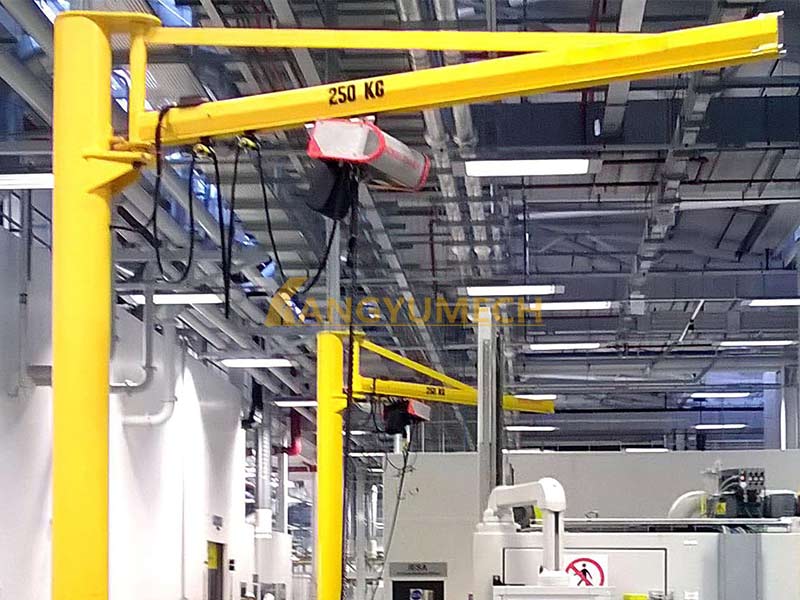
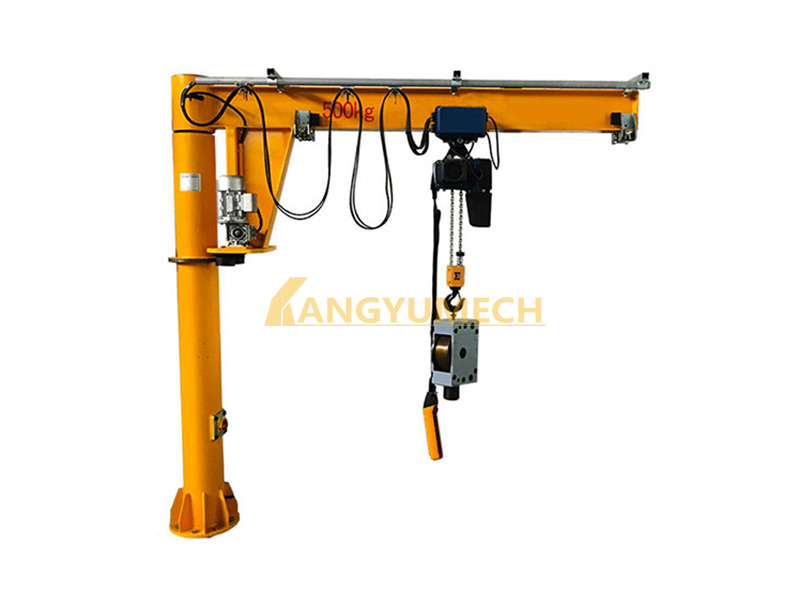
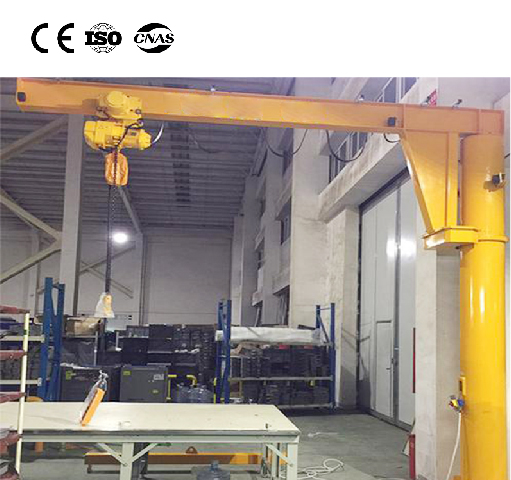
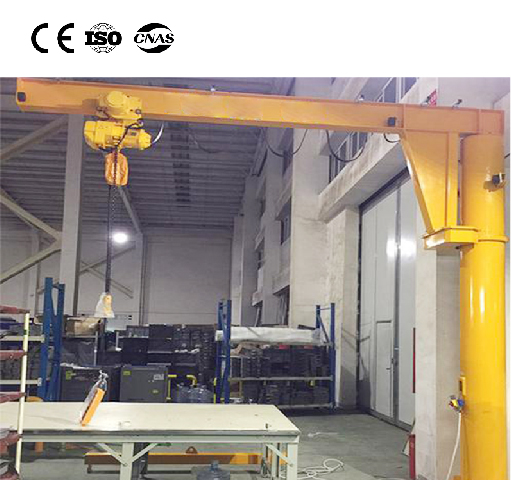
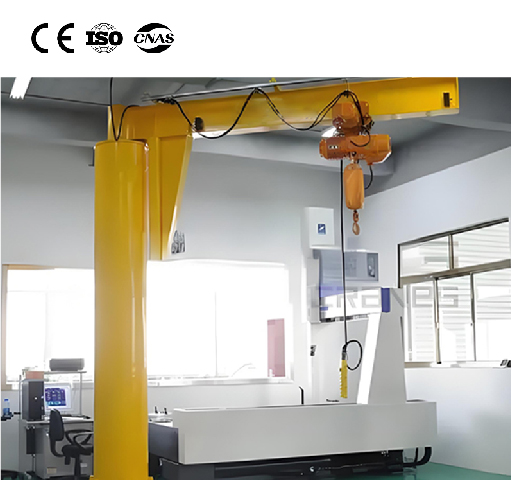
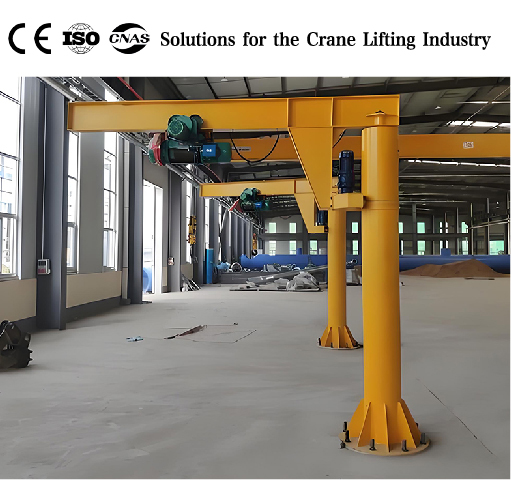
The column of a Yang yu column mounted jib crane serves as the fundamental support structure, and its design is crucial for the overall stability and functionality of the crane. Typically, high – strength steel, such as Q345 or higher – grade alloys, is chosen for the column material. This type of steel offers excellent tensile and compressive strength, enabling the column to withstand substantial vertical and lateral forces exerted during crane operations.
Structurally, the column is often a cylindrical or square – shaped hollow section. A cylindrical column provides uniform stress distribution in all directions, which is beneficial when the crane experiences loads from various angles during rotation. Square – shaped columns, on the other hand, can offer better resistance to bending moments in specific directions and are sometimes preferred for their ease of connection with other components. For example, in industrial settings where the crane’s movement pattern is more predictable, a square – shaped column might be optimized to resist the dominant bending forces.
The column is firmly anchored to the ground or a supporting structure, such as a concrete foundation. The anchoring system usually consists of high – strength bolts or a grouting mechanism. The bolts are carefully sized and torqued according to engineering specifications to ensure a secure connection. Grouting, when used, fills the gaps between the column base and the foundation, providing additional stability by distributing the load more evenly. This robust anchoring not only supports the entire weight of the crane, including the jib, lifting trolley, and drive unit but also withstands the dynamic forces generated during the lifting and moving of heavy loads. In a busy manufacturing workshop, the column of a Yang yu column mounted jib crane must remain steadfast as it repeatedly hoists and transports heavy machinery parts, day in and day out.
Jib: The Flexible Arm
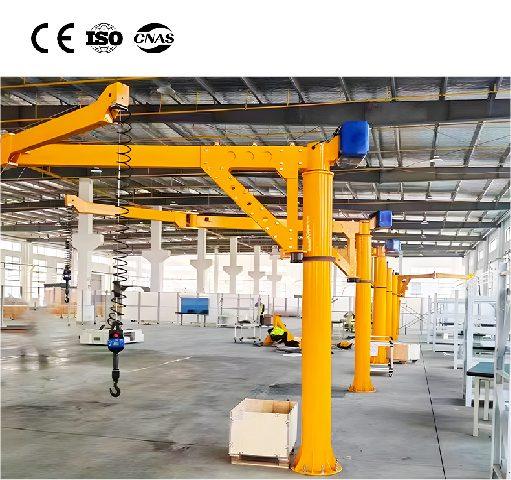
The jib of a Yang yu column mounted jib crane is a key component that determines the crane’s reach and operational flexibility. It is designed with several notable features to meet diverse material – handling requirements. One common design feature is the ability to be telescopic. Telescopic jibs are made up of multiple nested sections that can be extended or retracted. This functionality allows the crane to adjust its working radius as needed. For instance, in a warehouse with varying storage rack heights and distances, a telescopic jib can be extended to reach items stored in the deeper sections of the racks and retracted when operating in more confined spaces.
Another important feature is the jib’s rotational capability. Most Yang yu column mounted jib cranes are designed to rotate either 270 degrees or a full 360 degrees around the column. This rotational freedom significantly expands the crane’s working area. In a production facility with a circular layout of workstations, a 360 – degree rotating jib can efficiently transfer materials to different work areas without the need for repositioning the entire crane.
The jib is constructed using lightweight yet strong materials, often high – strength aluminum alloys or steel with optimized cross – sectional shapes. Aluminum alloys are favored for their high strength – to – weight ratio, which reduces the overall weight of the jib while maintaining its structural integrity. This results in lower energy consumption during operation and allows for faster movement of the jib. Steel jibs, on the other hand, are chosen for applications that require extremely high load – bearing capacities. The cross – sectional shape of the jib, such as an I – beam or a box – shaped section, is carefully engineered to withstand bending moments and shear forces generated when lifting and moving loads.
During the 吊运 process, the jib acts as a lever, with the column serving as the pivot point. The length of the jib and the position of the load on the jib determine the magnitude of the moment acting on the column. To ensure safe operation, the crane’s control system takes into account these factors and limits the load capacity based on the jib’s position and extension. This way, the jib can effectively and safely handle a wide range of loads within its designed parameters, making it an indispensable part of the column mounted jib crane.
Lifting Trolley and Drive Unit
The lifting trolley of a Yang yu column mounted jib crane is a mobile component that travels along the jib and is responsible for the vertical movement of the load. It typically consists of a frame, wheels, a hoist mechanism, and a hook or other lifting attachments. The frame of the lifting trolley is constructed to be lightweight yet rigid, often made from steel or high – strength plastics. The wheels are designed to run smoothly along the jib’s track, with precision – engineered bearings to reduce friction and ensure easy movement.
The hoist mechanism within the lifting trolley is the heart of the lifting operation. It usually includes an electric motor, a reducer, a drum, and a wire rope or chain. When the electric motor is activated, it drives the reducer, which in turn rotates the drum. As the drum rotates, the wire rope or chain winds or unwinds, causing the hook to move up or down. This simple yet effective mechanism allows for precise control of the load’s vertical position. For example, in a precision manufacturing process, the lifting trolley can accurately position small components with millimeter – level accuracy.
The drive unit of the Yang yu column mounted jib crane provides the necessary power for the movement of all the components. It consists of electric motors, control panels, and power distribution systems. The electric motors are sized according to the load – carrying capacity and the speed requirements of the crane. For smaller capacity cranes, single – phase motors might be sufficient, while larger industrial cranes typically use three – phase motors for higher power output.
The control panel is the operator’s interface with the drive unit. It allows the operator to control the speed, direction, and acceleration of the lifting trolley, jib rotation (if applicable), and other functions. Advanced control panels may also incorporate features such as load monitoring, safety interlocks, and remote operation capabilities. The power distribution system ensures that the electric motors and other electrical components receive the appropriate voltage and current. It includes transformers, circuit breakers, and wiring, all of which are designed and installed according to strict electrical safety standards. Overall, the lifting trolley and drive unit work in harmony to ensure the smooth and reliable operation of the Yang yu column mounted jib crane, enabling efficient material handling in various industrial settings.
Design Principles
Mechanical Design
In the mechanical design of Yang yu column mounted jib cranes, several fundamental mechanical principles are applied to ensure the crane’s stability, load – bearing capacity, and smooth operation.
Firstly, the principle of statics is crucial. When the crane is in operation, all the forces acting on it, including the weight of the load, the self – weight of the components, and the dynamic forces during movement, must be in a state of equilibrium. For example, the column of the crane must be able to withstand the vertical force exerted by the load and the jib, as well as the lateral forces generated during jib rotation. By calculating the magnitude and direction of these forces using static analysis methods, engineers can determine the appropriate size, shape, and material of the column to ensure its structural integrity.
Secondly, the concept of stress and strain is central to the design. Different components of the crane, such as the jib and the column, experience various stress states when loaded. The jib, for instance, is mainly subjected to bending stress as it extends and supports the load. To prevent excessive stress and potential failure, the cross – sectional area and shape of the jib are carefully designed. High – strength materials with good mechanical properties are selected to ensure that the stress levels within the components are within the allowable range. This not only guarantees the safety of the crane during operation but also extends its service life.
Moreover, the design also takes into account the principle of mechanical transmission. The lifting trolley’s movement along the jib and the rotation of the jib around the column are achieved through mechanical transmission mechanisms. These mechanisms, such as gears, pulleys, and chains, are designed to efficiently transfer power and motion. The selection of appropriate transmission ratios and the design of the transmission components ensure smooth and precise movement of the crane’s parts. For example, the gear ratio of the lifting mechanism is calculated based on the required lifting speed and the torque needed to lift the maximum load, enabling the crane to operate with the desired performance.
Electrical Design
The electrical design of Yang yu column mounted jib cranes is focused on achieving accurate control, high – efficiency operation, and reliable safety features.
The core of the electrical system is the control system, which is often based on programmable logic controllers (PLCs) or advanced microcontroller – based systems. These control systems are responsible for regulating the operation of the electric motors that drive the lifting trolley, jib rotation, and other movements. For example, when an operator gives an instruction to lift a load, the control system sends signals to the motor of the lifting trolley. The control system precisely adjusts the voltage and frequency supplied to the motor according to the load weight and the desired lifting speed. This is typically achieved through variable – frequency drives (VFDs). VFDs can change the frequency of the electrical power supplied to the motor, allowing for smooth acceleration and deceleration of the motor, and thus precise control of the lifting trolley’s movement. This not only ensures the safe and stable lifting of the load but also reduces wear and tear on the mechanical components due to sudden starts and stops.
In terms of the control of the jib’s movement, the electrical system uses sensors to monitor the position and orientation of the jib. Encoders, for example, are often installed on the jib’s rotation axis and the telescopic mechanism (if applicable). These encoders send real – time position feedback to the control system. Based on this feedback, the control system can accurately control the jib’s rotation angle and extension length. This allows the crane to precisely position the load at the desired location, which is essential in applications where high – precision material handling is required, such as in precision manufacturing or assembly processes.
Safety is also a top priority in the electrical design. The crane is equipped with multiple safety – related electrical components. Emergency stop buttons are directly connected to the control system’s power circuit. When pressed, they immediately cut off the power supply to all motors, halting the crane’s operation in case of an emergency. Overload protection sensors are installed in the electrical system to monitor the current drawn by the motors. If the load exceeds the crane’s rated capacity, the sensors detect the abnormal current increase and send a signal to the control system. The control system then stops the motor operation to prevent overloading and potential damage to the crane. Additionally, the electrical system is designed with proper grounding and insulation to protect operators from electric shock hazards, ensuring a safe working environment.
Features
Compact Design and Space – Saving
One of the most prominent features of Yang yu column mounted jib cranes is their compact design, which makes them an ideal choice for facilities with limited space. Unlike large – scale overhead cranes that require extensive overhead clearance and a large footprint, Yang yu column mounted jib cranes can be installed in relatively small areas. Their vertical column – based structure means they take up minimal floor space, often only the area directly beneath the column itself. This allows for better utilization of the available space in workshops, warehouses, or storage facilities. For example, in a small – scale precision electronics manufacturing workshop where every square meter is precious, a Yang yu column mounted jib crane can be placed in a corner or between workstations to efficiently handle small – scale component transfers without interfering with other operations.
Moreover, their compact design also contributes to easier installation and relocation. Since they don’t require complex infrastructure like runway beams or large – scale concrete foundations (in most cases), they can be quickly set up and, if necessary, moved to a different location within the facility. This flexibility is highly beneficial for businesses that may need to reconfigure their workspaces according to changing production needs or expansion plans.
Multiple Lifting Capacities
Yang yu column mounted jib cranes are available in a wide range of lifting capacities to meet diverse industrial requirements. Whether it’s a small – scale operation that needs to lift lightweight components, such as in a jewelry manufacturing workshop where parts may weigh only a few grams, or a medium – sized manufacturing plant that deals with heavier items like metal sheets weighing several hundred kilograms, there is a suitable Yang yu crane model.
Typical lifting capacities can range from as low as 100 kilograms for very light – duty applications to several tons for more heavy – duty operations. This wide spectrum of lifting capacities makes these cranes versatile across different industries. In the automotive aftermarket, for instance, a Yang yu column mounted jib crane with a lifting capacity of around 1 – 2 tons can be used to lift engines during vehicle repairs, while in a furniture manufacturing factory, a lower – capacity crane (e.g., 500 kilograms) can be used to handle wooden panels and other components. The availability of multiple lifting capacities allows businesses to select the most appropriate crane for their specific material – handling needs, optimizing both performance and cost – effectiveness.
High Operational Efficiency
Yang yu column mounted jib cranes are engineered to deliver high operational efficiency. Their design enables quick and precise movement of materials, reducing the time spent on each lifting and transportation task. The smooth – running lifting trolley, which can move along the jib at a variable speed, allows for efficient positioning of the load. For example, in a fast – paced assembly line, the operator can rapidly move the lifting trolley to pick up a component from a storage area and then quickly transport it to the assembly point, minimizing idle time between operations.
The jib’s rotation, whether it’s a 270 – degree or 360 – degree rotation, also significantly contributes to the crane’s efficiency. It enables the operator to access different areas within the crane’s working radius without having to reposition the entire crane. In a circular – layout warehouse, a 360 – degree rotating jib can serve multiple storage aisles, making the process of loading and unloading goods much faster. Additionally, the advanced control systems of Yang yu column mounted jib cranes, such as those with variable – frequency drives for motor control, allow for precise control of the crane’s movements. This precision not only ensures the safe handling of the load but also enables faster operation as the operator can accurately position the load with fewer adjustments, ultimately leading to increased productivity in material – handling operations.
Applications
Manufacturing Industry
In the manufacturing industry, Yang yu column mounted jib cranes are widely used across various sub – sectors. In automotive manufacturing, they play a crucial role in the assembly process. For example, during the engine assembly stage, these cranes are used to precisely lift and position heavy engine components onto the engine blocks. The high – precision control and 360 – degree rotation of the jib allow workers to access different parts of the assembly line easily, ensuring that the components are installed accurately and efficiently. This not only speeds up the production cycle but also improves the quality of the assembled engines.
In mechanical 加工 factories, Yang yu column mounted jib cranes are used for handling large – sized mechanical parts. When manufacturing heavy – duty machinery such as construction equipment, the cranes can lift and transport massive steel components, like the booms of excavators or the frames of bulldozers. Their ability to handle heavy loads with ease and provide flexible movement within a limited space makes them an essential tool in the production process.
In the electronics manufacturing industry, where components are often small but require precise handling, Yang yu column mounted jib cranes are also highly valued. They can be used to lift and place delicate circuit boards, semiconductor chips, and other small – scale components during the assembly process. The smooth and precise movement of the lifting trolley ensures that these sensitive components are not damaged during transportation, contributing to the high – quality production of electronic products.
Logistics and Warehousing
In logistics and warehousing facilities, Yang yu column mounted jib cranes are instrumental in optimizing the movement and storage of goods. In a typical warehouse, they are installed between storage racks to facilitate the loading and unloading of items. For instance, when pallets of goods need to be moved from the receiving area to the storage racks, the crane’s lifting trolley can be used to pick up the pallets and transport them along the jib. The jib’s rotation capability allows the operator to access different aisles and levels of the storage racks, making the process of storing and retrieving goods much more efficient.
In addition, for warehouses with high – density storage systems, such as narrow – aisle racking, Yang yu column mounted jib cranes are an ideal choice. Their compact design enables them to operate in the narrow spaces between the racks, while still providing the necessary lifting capacity to handle the stored goods. This helps warehouses make the most of their available space, increasing the overall storage capacity and reducing the need for additional storage facilities.
Construction Sites
On construction sites, Yang yu column mounted jib cranes are used for a variety of tasks related to the of building materials and equipment. They can lift and transport heavy construction materials such as steel beams, concrete blocks, and large – sized pipes. For example, when constructing a multi – story building, the crane can be used to lift steel beams to the upper floors, where they are then assembled to form the building’s framework. The crane’s ability to rotate and extend its jib allows it to reach different areas of the construction site, even in tight or hard – to – access locations.
Moreover, Yang yu column mounted jib cranes are also useful for handling construction equipment. They can be used to lift and position small – to – medium – sized construction machinery, such as generators, compressors, and concrete mixers, at the required work areas on the construction site. This helps to improve the efficiency of construction operations and ensures that the necessary equipment is in place when needed, contributing to the smooth progress of construction projects.
Safety Design
Overload Protection
Safety is a paramount consideration in the design of Yang yu column mounted jib cranes, and one of the key safety features is the overload protection system. This system is designed to safeguard both the crane and the operators by preventing the crane from lifting loads beyond its rated capacity.
The overload protection system in Yang yu column mounted jib cranes typically consists of a load – sensing device, such as a strain – gauge – based load cell, which is installed on the lifting mechanism, usually near the hook or within the hoist unit. As the crane begins to lift a load, the load – sensing device continuously measures the force exerted on the lifting mechanism. The load – sensing device then sends real – time data to a control unit, which compares the measured load with the crane’s pre – set rated capacity.
If the measured load approaches the rated capacity, the control unit may first trigger an alarm. This alarm can be in the form of a visual signal, such as a flashing light on the crane’s control panel, and an audible signal, like a loud beep. The alarm serves as an early warning to the operator, allowing them to take corrective action, such as reducing the load or adjusting the lifting operation.
When the load exceeds the rated capacity, the overload protection system takes immediate action to stop the lifting operation. The control unit sends a signal to the electric motor that drives the lifting mechanism, cutting off the power supply to the motor. This automatic shutdown prevents the crane from further lifting the overloaded load, which could otherwise lead to serious mechanical failures, such as a broken wire rope, a damaged hoist mechanism, or even structural damage to the crane itself. For example, in a manufacturing plant where the Yang yu column mounted jib crane is regularly used to lift heavy machinery parts, if an operator accidentally attempts to lift a part that is heavier than the crane’s rated capacity, the overload protection system will quickly detect the overload and halt the lifting process, preventing potential accidents and equipment damage.
Limit Switches
Another crucial safety component in Yang yu column mounted jib cranes is the limit switches, which play a vital role in preventing accidents caused by excessive movement of the crane’s components.
Limit switches are installed at strategic locations on the crane to monitor the movement of the jib. For the jib’s rotation, limit switches are typically placed at the maximum and minimum rotation angles. When the jib rotates towards the maximum rotation limit, a cam or a similar mechanical actuator on the jib’s rotation mechanism comes into contact with the limit switch. This contact triggers a change in the electrical state of the limit switch, which sends a signal to the crane’s control system. The control system then responds by cutting off the power to the motor that drives the jib’s rotation. This stops the jib from rotating further, preventing it from colliding with surrounding structures, equipment, or other obstacles. In a busy warehouse environment, where there are multiple storage racks and other machinery in close proximity, the limit switches on the jib’s rotation ensure that the crane can operate safely within its designated area without causing damage to the surrounding infrastructure.
For telescopic jibs, limit switches are also installed to control the extension and retraction of the jib. These limit switches are located at the fully extended and fully retracted positions of the telescopic sections. As the jib extends, when the outermost telescopic section reaches the fully extended position, the limit switch is activated. It sends a signal to the control system, which stops the motor that drives the telescopic mechanism, preventing the jib from over – extending. Over – extension could lead to structural failure of the jib or cause the load to be placed in an unstable position, increasing the risk of accidents. Similarly, when the jib is being retracted, the limit switch at the fully retracted position ensures that the retraction process stops at the appropriate point, preventing damage to the telescopic mechanism due to over – retraction. In a construction site scenario, where the Yang yu column mounted jib crane is used to lift building materials to different heights, the limit switches on the telescopic jib ensure that the jib can be adjusted safely and accurately, reducing the risk of accidents during the material – handling process.
Maintenance Considerations in Design
Regular Inspection Points
In the design of Yang yu column mounted jib cranes, several key areas are designated as regular inspection points to ensure the crane’s continuous safe and efficient operation.
The electrical system is a crucial inspection area. This includes components such as the control panels, variable – frequency drives (VFDs), motors, and wiring. The control panels should be inspected regularly for any signs of loose connections, damaged switches, or malfunctioning indicators. For example, if the indicator lights on the control panel are flickering or not functioning properly, it could indicate an underlying electrical issue. VFDs need to be checked for overheating, as overheating can lead to reduced performance and potential failure. The motors should be inspected for abnormal noises, vibrations, and temperature rise. Any unusual sound from the motor might suggest problems with the bearings or the winding. Wiring should be examined for signs of wear, fraying, or insulation damage, as these issues can pose a serious safety risk, including the possibility of electric shock or short – circuits.
Mechanical 传动部件 are also primary inspection points. The lifting trolley’s wheels and bearings are subject to significant wear and tear during operation. Regular inspection of the wheels involves checking for flat spots, excessive wear on the tread, and proper alignment. Worn – out wheels can cause the lifting trolley to move unevenly, affecting the accuracy of the load positioning. Bearings in the wheels and other moving parts of the lifting trolley, such as the hoist mechanism, should be inspected for smooth rotation. A bearing that is difficult to rotate or makes a grinding noise may need to be replaced promptly to prevent further damage to the mechanical system.
The jib’s joints and connections, especially in telescopic jibs, are important to inspect. These areas can loosen over time due to the repeated stress and movement during crane operation. Regular inspection involves checking the tightness of bolts, nuts, and other fasteners. Any signs of looseness should be addressed immediately, as loose connections can compromise the structural integrity of the jib and lead to potential accidents during lifting operations.
Easy – to – Clean and Lubricate Structures
The design of Yang yu column mounted jib cranes takes into account the ease of cleaning and lubrication, which are essential for maintaining the crane’s performance and extending its service life.
The surfaces of the crane components are designed to be smooth and free from hard – to – reach crevices or complex geometries that can trap dirt, dust, and debris. For example, the column, jib, and the frame of the lifting trolley have smooth outer surfaces that can be easily wiped down with cleaning tools. This not only keeps the crane looking clean but also prevents the accumulation of contaminants that could potentially cause corrosion or interfere with the movement of mechanical parts.
In terms of lubrication, the design provides accessible lubrication points for all moving parts. The bearings in the wheels of the lifting trolley, the pivot points of the jib’s rotation mechanism, and the joints in telescopic jibs are all equipped with lubrication nipples or similar devices. These points are strategically located so that they can be easily reached with a grease gun or other lubrication tools. Regular lubrication at these points reduces friction between moving parts, minimizes wear and tear, and ensures smooth operation. For instance, lubricating the bearings in the lifting trolley’s wheels at regular intervals can significantly reduce the energy required to move the trolley along the jib, making the crane more energy – efficient. Additionally, the use of high – quality lubricants that are suitable for the operating conditions of the crane further enhances the effectiveness of the lubrication process and contributes to the overall reliability of the crane.
Future Trends in Design
Technological Upgrades
In the future, Yang yu column mounted jib cranes are likely to witness significant technological upgrades. One of the major trends will be the integration of technologies. For example, the incorporation of artificial intelligence (AI) and the Internet of Things (IoT) will enable these cranes to operate in a more autonomous and intelligent manner. AI – powered control systems can analyze real – time data from sensors installed on the crane, such as load weight, jib position, and motor performance. Based on this analysis, the system can automatically adjust the crane’s operation parameters to optimize efficiency and safety. For instance, if the AI system detects that the load is not evenly distributed during lifting, it can automatically adjust the speed and position of the lifting trolley to ensure a stable lift.
The application of IoT technology will allow for remote monitoring and control of the crane. Operators will be able to monitor the crane’s status, including its working condition, maintenance needs, and operational data, from a remote location through a mobile device or a computer. This not only improves the convenience of operation but also enables timely maintenance and troubleshooting, reducing downtime.
Another area of technological upgrade will be in the use of . Advanced composite materials with high strength – to – weight ratios, such as carbon fiber – reinforced polymers, may be increasingly used in the construction of crane components. These materials can significantly reduce the weight of the crane while maintaining or even enhancing its structural strength. A lighter crane requires less energy to operate, which is beneficial for energy – conservation and cost – reduction. Additionally, new types of smart materials that can self – adjust their properties according to the load and environmental conditions may also find their way into crane design, further improving the performance and durability of Yang yu column mounted jib cranes.
Adaptation to New Industrial Demands
As industries continue to evolve, Yang yu column mounted jib cranes will need to adapt to new industrial demands. The rise of the high – tech manufacturing industry, such as the production of semiconductors and aerospace components, requires cranes with ultra – high precision. Future designs may focus on improving the positioning accuracy of the lifting trolley and the jib, perhaps through the use of advanced servo – control systems and high – resolution sensors. This will enable the cranes to handle delicate and high – value components with the utmost precision, meeting the strict requirements of high – tech manufacturing processes.
In the context of the growing trend towards sustainable manufacturing, Yang yu column mounted jib cranes may be designed to be more energy – efficient and environmentally friendly. This could involve the use of energy – recovery systems, such as regenerative braking technology for the motors. When the lifting trolley descends or the jib rotates, the energy generated during the deceleration process can be captured and stored for later use, reducing the overall energy consumption of the crane.
Moreover, as the e – commerce industry expands, logistics and warehousing operations are becoming more complex. Yang yu column mounted jib cranes may be redesigned to better integrate with automated storage and retrieval systems (AS/RS). They could be equipped with features that allow for seamless communication and cooperation with other automated equipment in the warehouse, such as conveyor belts and automated guided vehicles (AGVs), to create a highly efficient and automated material – handling ecosystem. This adaptation to new industrial demands will ensure that Yang yu column mounted jib cranes remain relevant and competitive in the ever – changing industrial landscape.
Conclusion
In conclusion, the design of Yang yu column mounted jib cranes is a harmonious blend of advanced engineering principles, user – friendly features, and a focus on safety and maintenance. The careful selection of components, such as the robust column, flexible jib, and efficient lifting trolley, forms the structural backbone of these cranes, enabling them to handle a wide range of industrial tasks with precision and reliability.
The design principles, both mechanical and electrical, ensure that the cranes operate smoothly, safely, and with high efficiency. Mechanical principles like statics, stress – strain analysis, and mechanical transmission are applied to optimize the structure and movement of the crane, while the electrical design, centered around intelligent control systems and safety – related components, provides accurate control and reliable operation.
The features of Yang yu column mounted jib cranes, including their compact design, multiple lifting capacities, and high operational efficiency, make them highly adaptable to various industrial environments. They can be seamlessly integrated into manufacturing plants, logistics centers, and construction sites, enhancing productivity and streamlining material – handling processes.
Safety is a non – negotiable aspect of their design, with features like overload protection and limit switches safeguarding both the equipment and the operators. Additionally, the design considerations for maintenance, such as regular inspection points and easy – to – clean and lubricate structures, contribute to the crane’s long – term reliability and cost – effectiveness.
Looking ahead, with the continuous development of technology and the evolution of industrial demands, Yang yu column mounted jib cranes are poised to embrace new technological upgrades and adapt to emerging industrial trends. The integration of technologies and the use of will further enhance their performance, while their ability to meet the demands of high – tech manufacturing, sustainable production, and automated logistics operations will ensure their continued importance in the industrial landscape. Overall, Yang yu column mounted jib cranes are an essential and dynamic part of modern industrial material – handling solutions, with a bright future filled with innovation and growth.