Tag: JIB Crane

  • Yangyu Column Mounted Jib Crane Factory: Your Trusted Partner for High-Quality Lifting Solutions

    Yangyu Column Mounted Jib Crane Factory: Your Trusted Partner for High-Quality Lifting Solutions

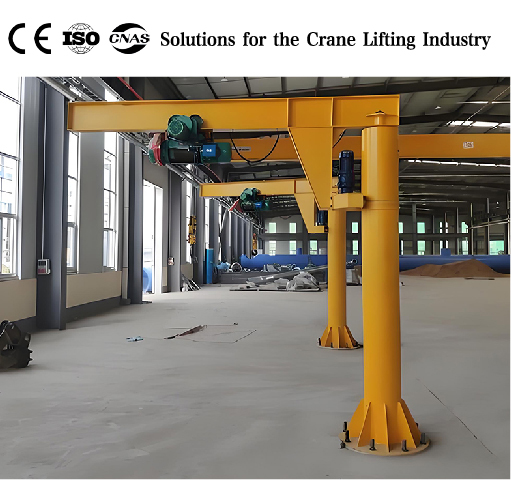
    When it comes to sourcing reliable column mounted jib cranes—equipment critical for workshops, warehouses, and manufacturing facilities—choosing the right factory is as important as selecting the crane itself. Yangyu Column Mounted Jib Crane Factory, a leading manufacturer with over 15 years of experience in lifting equipment, stands out as a top choice for global buyers. Specializing in the design, production, and customization of column mounted jib cranes (1-10 tons capacity), Yangyu’s factory combines advanced technology, strict quality control, and customer-centric service to deliver cranes that meet diverse industrial needs. Whether you’re a small business owner needing a compact 2-ton crane for a workshop or a large enterprise requiring custom 10-ton models for heavy-duty operations, this guide will take you inside Yangyu’s factory—exploring its production capabilities, quality standards, customization process, and why it’s the preferred partner for buyers worldwide.
    手动立柱式悬臂吊起重机

    Why Choose Yangyu Column Mounted Jib Crane Factory?

    In a market flooded with generic crane manufacturers, Yangyu’s factory differentiates itself through four core strengths that address buyers’ key pain points:
    1. 15+ Years of Specialization in Column Mounted Jib Cranes
    Unlike factories that produce a wide range of lifting equipment with limited focus, Yangyu has dedicated over a decade to perfecting column mounted jib cranes. This specialization means:
    • Deep expertise in solving industry-specific challenges (e.g., designing cranes for narrow workshops or corrosion-resistant models for coastal warehouses).
    • A product line tailored to diverse needs: from standard 360° rotating models to custom low-headroom versions for facilities with limited ceiling height.
    • Continuous innovation—Yangyu’s R&D team files 5+ patents annually for crane components (e.g., anti-sway hoists, quick-install columns) to improve performance and safety.
    2. State-of-the-Art Production Facilities
    Yangyu’s factory spans 20,000+ square meters in China’s manufacturing hub (Jiangsu Province), equipped with advanced machinery to ensure precision and efficiency:
    • Cutting & Welding: CNC plasma cutting machines (accuracy ±0.5mm) for steel plates and robotic welding arms (99% weld integrity) for column and jib structures—reducing human error and ensuring structural strength.
    • Heat Treatment: Automated heat treatment lines for jib beams and columns, enhancing steel hardness (up to 250 HB) and resistance to wear.
    • Assembly & Testing: Dedicated assembly bays with laser alignment tools (error ≤1mm/m) to ensure crane components fit perfectly, plus a 1,000-square-meter testing area for load and safety verification.
    The factory’s production capacity exceeds 500 column-mounted jib cranes per month—enough to meet large bulk orders while maintaining lead times of 7-15 days for standard models.
    3. Strict Quality Control from Raw Materials to Final Delivery
    Yangyu’s factory adheres to international quality standards (ISO 9001, CE, OSHA) with a 5-step quality control (QC) process that leaves no room for defects:
    1. Raw Material Inspection: All steel (Q235/Q345 grade) and components (hoists, motors) are tested for tensile strength and durability—only materials passing 100% inspection enter production.
    1. In-Process QC: Inspectors check welds, dimensions, and component alignment at every production stage (e.g., verifying jib beam straightness after cutting).
    1. Load Testing: Every crane undergoes a 125% overload test (e.g., a 5-ton crane lifts 6.25 tons) and a 1,000-cycle no-load test to ensure stability.
    1. Safety Compliance Check: Verify safety features (overload protection, limit switches) meet ISO 4301 and regional standards (e.g., CE for Europe, OSHA for the U.S.).
    1. Final Inspection: A comprehensive check of appearance, paint quality (powder-coated for corrosion resistance), and documentation (certificates, user manuals) before shipment.
    This rigorous process results in a product defect rate of less than 0.5%—far below the industry average of 3%.
    4. Global Service & Customization Capabilities
    Yangyu’s factory doesn’t just sell cranes—it provides end-to-end support for global buyers:
    • Customization: 70% of Yangyu’s orders are custom. The factory’s engineering team works with buyers to design cranes for unique needs, such as:
    • Low-headroom models (minimum 2.5m ceiling height) for old workshops.
    • Galvanized cranes for outdoor use in humid or coastal areas.
    • Explosion-proof cranes for chemical or oil refinery facilities.
    • Global Logistics: Partner with leading freight forwarders to deliver cranes to 80+ countries, with door-to-door service and customs clearance support.
    • After-Sales Service: 24-hour technical support (via phone, email, or video call), 2-year warranties on main components (columns, jibs), and local maintenance partners in 50+ countries (e.g., the U.S., Germany, Brazil).

    Inside Yangyu’s Column Mounted Jib Crane Production Process

    Understanding Yangyu’s production workflow helps buyers trust the quality and efficiency of its cranes. Here’s a step-by-step breakdown of how a column mounted jib crane is made at Yangyu’s factory:
    Step 1: Design & Engineering
    After receiving a buyer’s order (standard or custom), Yangyu’s R&D team creates 3D models (using SolidWorks) and detailed blueprints. For custom orders, engineers may conduct on-site surveys (via video or in-person) to confirm workspace dimensions, load requirements, and safety standards. The design is reviewed and approved by the buyer before production begins.
    Step 2: Raw Material Preparation
    Steel plates (Q235/Q345) are cut into column, jib, and base plate components using CNC plasma cutting machines. The cut parts are then cleaned to remove rust and debris—critical for ensuring strong welds.
    Step 3: Welding & Forming
    Robotic welding arms (KUKA brand) weld column and jib components, ensuring uniform welds with no gaps. After welding, the structures undergo stress relief heat treatment (at 600-650°C) to eliminate internal stress and prevent deformation during use.
    Step 4: Machining & Finishing
    • Machining: The column’s top and bottom surfaces are precision-machined to ensure flatness (error ≤0.1mm), allowing the jib to rotate smoothly.
    • Painting/Coating: Components are sandblasted to remove rust, then coated with electrostatic powder (available in RAL colors per buyer request) for corrosion resistance. For outdoor models, an extra galvanized layer is added.
    Step 5: Assembly
    Workers assemble the column, jib, and lifting hoist (Yangyu’s own YH series or branded hoists like Konecranes) in dedicated bays. The trolley rail is installed on the jib, and the control system (wireless remote or pendant) is connected. Laser alignment tools ensure the jib rotates 360° without 卡顿 (stiffness).
    Step 6: Testing & Quality Verification
    The crane is moved to the testing area for:
    • No-Load Test: Running the hoist and jib rotation for 1,000 cycles to check for smooth operation.
    • Load Test: Lifting 125% of rated capacity for 10 minutes, monitoring for deflection (must be ≤L/500, where L = jib length).
    • Safety Test: Triggering overload protection and limit switches to confirm they work as designed.
    Step 7: Packaging & Shipment
    Passed cranes are disassembled (if needed for shipping) and packaged in wooden crates with foam padding to prevent damage. Documentation (QC reports, certificates, user manuals) is included, and the factory coordinates with freight forwarders to deliver the order on time.

    Real-World Success Stories: Yangyu Factory’s Global Partners

    Yangyu’s column mounted jib cranes have been trusted by buyers across industries worldwide. Here are three case studies highlighting the factory’s impact:
    Case 1: Automotive Repair Shop (U.S.)
    A family-owned auto repair shop in Texas needed a compact 2-ton column mounted jib crane to lift engines. The shop had limited ceiling height (3m), so Yangyu’s factory designed a low-headroom custom model. Result:
    • The crane fit perfectly in the 3m space, with a lifting height of 2.2m.
    • Installation was completed in 1 day (Yangyu provided video guidance).
    • The shop reduced engine lifting time from 45 minutes to 10 minutes, improving productivity by 350%.
    Case 2: Electronics Factory (Vietnam)
    A Vietnam-based electronics factory needed 10 units of 3-ton column mounted jib cranes for its circuit board assembly line. The factory required corrosion-resistant cranes (due to high humidity) and fast delivery (2 weeks). Yangyu’s factory:
    • Produced galvanized cranes with IP55 hoists to resist humidity.
    • Completed production in 10 days and shipped via air freight to meet the deadline.
    • The cranes have operated without defects for 2 years, with zero maintenance issues.
    Case 3: Logistics Warehouse (Germany)
    A German logistics warehouse needed 5-ton column mounted jib cranes with 360° rotation to move pallets between racks. The warehouse required CE compliance and local after-sales support. Yangyu’s factory:
    • Provided CE-certified cranes with wireless remotes for safe operation.
    • Partnered with a local maintenance company in Germany to offer 24-hour service.
    • The warehouse increased pallet handling efficiency by 25%, reducing labor costs by €15,000 annually.

    How to Order from Yangyu Column Mounted Jib Crane Factory

    Ordering a column mounted jib crane from Yangyu’s factory is a straightforward, customer-centric process:
    Step 1: Share Your Requirements
    Contact Yangyu’s sales team via email (sales@yangyucrane.com) or phone (+86-18595917980) to share:
    • Load capacity (1-10 tons).
    • Jib length (3-8m, custom available).
    • Workspace details (ceiling height, indoor/outdoor use).
    • Special needs (e.g., corrosion resistance, explosion-proof).
    • Quantity and delivery deadline.
    Step 2: Receive a Custom Quote & Design
    Yangyu’s team will provide a detailed quote (including price, production time, and shipping costs) within 24 hours. For custom orders, the engineering team will share 3D designs for your approval within 3-5 days.
    Step 3: Confirm Order & Payment
    Once you approve the quote and design, sign the contract and make a 30% advance payment (Yangyu accepts T/T, L/C, or PayPal). The factory will start production immediately.
    Step 4: Track Production & Inspect
    Yangyu provides weekly production updates (photos/videos) so you can monitor progress. Before shipment, you can request a video inspection of the crane’s load test and quality checks.
    Step 5: Delivery & Installation Support
    Yangyu coordinates shipping to your location, and provides:
    • Detailed installation manuals and video guides.
    • 24-hour technical support during installation.
    • For large orders, Yangyu can send engineers to your site for on-site installation (additional cost applies).
    Step 6: After-Sales Service
    After installation, Yangyu’s team follows up to ensure the crane operates smoothly. The 2-year warranty covers main components, and local maintenance partners are available for repairs or maintenance.

    FAQs About Yangyu Column Mounted Jib Crane Factory

    Q1: What is the lead time for standard vs. custom cranes?
    A: Standard cranes (1-5 tons, 3-6m jib length) have a lead time of 7-10 days. Custom cranes typically take 12-15 days to manufacture, depending on their complexity.
    Q2: Does Yangyu’s factory provide CE/OSHA certificates?
    A: Yes—all cranes are tested to meet CE (Europe), OSHA (U.S.), and ISO 4301 standards. The factory provides certificates with every order.
    Q3: Can Yangyu’s factory help with installation?
    A: Yes—Yangyu offers video installation guidance for free. For large or complex orders, the factory can send certified engineers to your site for on-site installation (cost varies by location).
    Q4: What is the warranty period for Yangyu’s column-mounted jib cranes?
    A: Yangyu offers a 2-year warranty on main components (columns, jibs, base plates) and a 1-year warranty on electrical parts (hoists, motors, controls).
    Q5: Does Yangyu’s factory accept small orders (1-2 units)?
    A: Yes—Yangyu serves both small businesses and large enterprises. Even single-unit orders receive the same level of quality and service as bulk orders.

    Conclusion

    Yangyu Column Mounted Jib Crane Factory is more than a manufacturer—it’s a trusted partner for businesses seeking high-quality, reliable lifting solutions. With its 15+ years of specialization, state-of-the-art facilities, strict quality control, and global service, the factory delivers cranes that meet diverse industrial needs while ensuring efficiency, safety, and cost-effectiveness. Whether you need a standard model for a workshop or a custom crane for a complex industrial environment, Yangyu’s factory has the expertise and capabilities to exceed your expectations.
    Ready to source your column mounted jib crane from a factory you can trust? Contact Yangyu’s sales team today for a free quote and custom design. With Yangyu, you’re not just buying a crane—you’re investing in a long-term solution that boosts productivity and ensures safe operation for years to come.
  • 2 Ton Column Mounted Jib Crane: The Ultimate Guide for Small to Medium-Scale Lifting Needs

    2 Ton Column Mounted Jib Crane: The Ultimate Guide for Small to Medium-Scale Lifting Needs

    In warehouses, workshops, and manufacturing facilities where space is limited but efficient lifting is non-negotiable, the 2 ton column mounted jib crane has emerged as a game-changing solution. Designed to handle moderate loads (up to 2 tons) with precision and flexibility, this crane type is tailored for small to medium-scale operations—from lifting machine parts in a garage to moving inventory in a distribution center. Whether you’re a facility manager planning to upgrade equipment or a business owner researching cost-effective lifting solutions, this guide will break down everything you need to know about the 2 ton column mounted jib crane: its key features, benefits, applications, installation tips, and how to choose the right model for your needs.

    What Is a 2 Ton Column Mounted Jib Crane?

    手动立柱式悬臂吊起重机
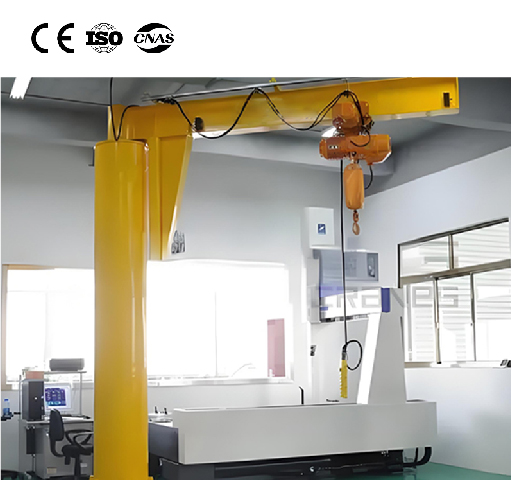
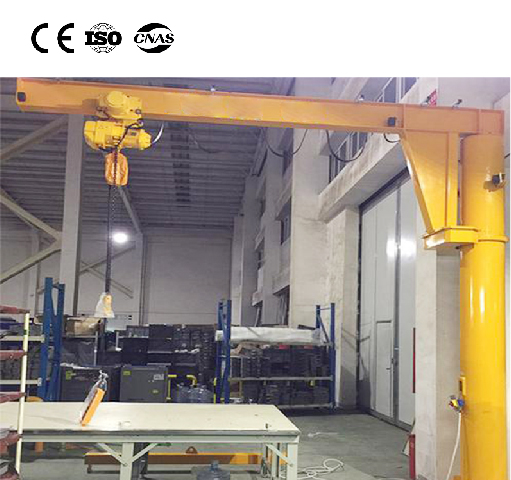
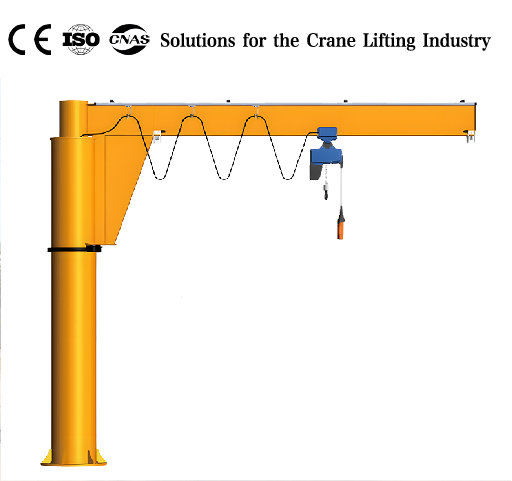
    A 2 ton column mounted jib crane is a compact, fixed-position lifting device that consists of three core components: a vertical column (mounted to the floor or a concrete foundation), a horizontal jib (arm) that rotates around the column, and an electric hoist (or manual chain hoist) attached to the jib for lifting loads. Unlike overhead cranes that require extensive runway systems, this crane is self-contained—its column design eliminates the need for ceiling or wall support, making it ideal for spaces where overhead infrastructure is unavailable or impractical.
    The “2 ton” rating refers to its maximum safe lifting capacity, which balances power and portability: it’s strong enough to handle common industrial loads (e.g., metal sheets, engine parts, or packed pallets) but lightweight enough to avoid excessive strain on your facility’s structure. Most models also feature a 180° or 360° rotating jib, allowing operators to cover a wide working radius without repositioning the entire crane.

    Key Features of a High-Quality 2 Ton Column Mounted Jib Crane

    Not all 2 ton column mounted jib cranes are created equal. To ensure reliability, safety, and long-term value, look for these essential features when evaluating models:
    1. Sturdy Column & Jib Construction
    The column and jib are the crane’s “backbone”—they must withstand heavy loads and repeated use. Top-tier models use high-strength steel (e.g., Q235 or Q345 grade) for these components, which resists bending, corrosion, and wear. The column should also have a thickened base plate (at least 10mm thick) to distribute weight evenly across the foundation, preventing sinking or tilting during operation.
    2. Smooth Rotation Mechanism
    A 360° rotating jib is a must for maximizing workspace coverage. Look for cranes with precision ball bearings or roller bearings in the jib-column connection—this ensures the jib rotates smoothly with minimal effort, even when carrying full loads. Some advanced models also include a locking mechanism to fix the jib in a specific position (e.g., 90° or 180°) for tasks that require stable, repeatable lifting.
    3. Reliable Lifting Hoist
    The hoist is the crane’s “workhorse,” so choose a model with a durable electric or manual hoist. For most industrial applications, an electric hoist (220V/380V) is preferred—it offers faster lifting speeds (typically 8-12 m/min) and reduces operator fatigue. Look for hoists with:
    • Overload protection: Automatically stops lifting if the load exceeds 2 tons, preventing crane damage or accidents.
    • Emergency stop button: Immediately cuts power to the hoist in case of malfunctions.
    • IP54/IP55 protection rating: Shields the hoist from dust and water, suitable for indoor and semi-outdoor use.
    4. Safety Compliance
    Safety is non-negotiable for lifting equipment. Ensure the crane meets international standards such as ISO 4301 (crane safety) and CE (for European markets) or OSHA (for North American markets). Additional safety features to prioritize:
    • Limit switches: Prevent the hoist from traveling too high or too low, avoiding collisions with the jib or floor.
    • Anti-sway design: Reduces load 摆动 (sway) during lifting, minimizing the risk of damage to goods or nearby equipment.

    Why Choose a 2 Ton Column Mounted Jib Crane?

    For small to medium-scale lifting needs, this crane type offers unique advantages over other solutions (e.g., overhead cranes, forklifts, or manual jacks):
    1. Space-Saving Design
    The column-mounted structure means the crane only occupies a small footprint on the floor—no need for overhead runways, ceiling beams, or wall brackets. This makes it perfect for:
    • Small workshops or garages with limited square footage.
    • Existing facilities where retrofitting overhead infrastructure is too costly.
    • Areas with low ceilings (most models have a minimum headroom requirement of 3-4 meters).
    2. Cost-Effective Operation

    Compared to overhead cranes (which can cost

    3,000 to $8,000, depending on features. Additionally:

    • Lower installation costs: No need for complex runway systems; installation typically takes 1-2 days with a small team.
    • Reduced maintenance: Fewer moving parts than overhead cranes mean lower annual maintenance costs (usually

      500/year).

    3. Flexible & Easy to Operate
    Even with minimal training, operators can master the crane’s controls. The rotating jib allows for precise load placement—whether you’re moving parts from a workbench to a assembly line or stacking pallets in a warehouse. Many models also include a wireless remote control, letting operators stand at a safe distance while adjusting the hoist or jib position.
    4. Versatile for Multiple Industries
    The 2 ton capacity is ideal for a wide range of applications, making this crane a versatile investment:
    • Manufacturing: Lifting engine blocks, gearboxes, or metal components on assembly lines.
    • Warehousing: Moving pallets of inventory, boxes, or tools between storage racks.
    • Automotive Repair: Hoisting engines or transmissions in garages or body shops.
    • Construction: Lifting small building materials (e.g., bricks, drywall) in confined job sites.

    Real-World Applications of 2 Ton Column Mounted Jib Cranes

    To understand how this crane adds value in practice, let’s look at two common use cases:
    Case 1: Small Automotive Workshop
    A family-owned auto repair shop in Texas needed a solution to lift engines (weighing 1.5-2 tons) from cars without relying on expensive forklifts. They installed a 2 ton column mounted jib crane with a 360° rotating jib and electric hoist. The result:
    • Reduced engine lifting time from 45 minutes (with a manual jack) to 10 minutes.
    • Eliminated the risk of operator injury from heavy lifting.
    • Freed up floor space (the crane’s column only occupied a 1m x 1m area) for other tools.
    Case 2: Electronics Manufacturing Plant
    A Chinese electronics plant used a 2 ton column mounted jib crane to move circuit board racks (weighing 800kg-1.2 tons) between production stations. The crane’s precision controls ensured the racks were placed exactly on the assembly line, reducing damage to delicate components. The plant reported:
    • A 25% increase in production efficiency (fewer delays from misaligned loads).
    • Zero component damage related to lifting (down from 5 incidents/month before).

    How to Choose the Right 2 Ton Column Mounted Jib Crane

    To select a model that fits your needs, follow these 4 steps:
    Step 1: Define Your Workspace Requirements
    • Jib Length: Measure the maximum distance you need to cover (e.g., 3m, 5m, or 6m). Most 2 ton cranes offer jib lengths from 3m to 8m—longer jibs reduce lifting capacity slightly (e.g., a 6m jib may have a 1.8 ton capacity at full extension), so balance length with load needs.
    • Rotation Angle: 360° rotation is best for full coverage; 180° is sufficient if you only need to lift loads within a half-circle.
    • Headroom: Ensure your facility’s ceiling height is at least 30cm higher than the crane’s maximum lifting height (most models lift up to 4-6 meters).
    Step 2: Select the Right Hoist Type
    • Electric Hoist: Ideal for frequent use (5+ lifts/day) or heavy loads (1-2 tons). Choose a voltage that matches your facility’s power supply (220V for small shops, 380V for industrial sites).
    • Manual Hoist: Suitable for occasional use (1-2 lifts/day) or areas without electricity. Note that manual hoists are slower and require more operator effort.
    Step 3: Check Safety & Compliance
    Verify that the crane meets local standards (e.g., CE for Europe, OSHA for the U.S., GB for China). Ask the manufacturer for a certificate of compliance and test reports for key components (hoist, column, jib).
    Step 4: Compare Manufacturers
    Look for reputable brands with a track record in lifting equipment (e.g., Konecranes, Demag, or Yangyu). Read customer reviews to assess reliability and after-sales service—prioritize manufacturers that offer a 1-2 year warranty and local maintenance support.
    Installation & Maintenance Tips for Longevity
    Proper installation and maintenance are critical to ensuring your 2 ton column mounted jib crane operates safely for 10+ years:
    Installation Best Practices
    • Foundation Preparation: The column must be mounted to a concrete foundation (minimum 30cm thick) to support the crane’s weight and loads. Use anchor bolts (M20 or larger) to secure the column—torque the bolts to the manufacturer’s specifications (usually 300-400 N·m).
    • Leveling: Use a spirit level to ensure the column is perfectly vertical (error margin ≤ 1mm/m). An unlevel column can cause the jib to rotate unevenly and increase wear on bearings.
    • Test Run: After installation, conduct a no-load test (rotate the jib, lift the empty hoist) and a 100% load test (lift a 2 ton weight) to confirm smooth operation.
    Maintenance Schedule
    • Weekly Checks: Inspect the hoist cable for fraying, the jib rotation for stiffness, and the emergency stop button for functionality.
    • Monthly Maintenance: Lubricate the jib’s bearing points with lithium grease and check the hoist’s brake system (adjust if the hoist slips when holding a load).
    • Annual Inspection: Hire a certified technician to inspect the crane’s structural integrity (column, jib) and electrical components (hoist motor, wiring). Replace worn parts (e.g., cables, bearings) immediately.

    Common FAQs About 2 Ton Column Mounted Jib Cranes

    Q1: Can a 2 ton column mounted jib crane be used outdoors?
    A: Yes, but choose a model with weatherproofing (e.g., IP65 hoist, galvanized steel column/jib) to resist rain and corrosion. Avoid using it in strong winds (≥ 10 m/s) to prevent load sway.
    Q2: Do I need a license to operate this crane?
    A: Requirements vary by country. In the U.S., OSHA requires operators to complete training (but no formal license) for cranes under 5 tons. In the EU, operators need a “Crane Operator Certificate” (Category C1) for all lifting equipment.
    Q3: Can I upgrade the hoist later?
    A: Yes, most cranes allow you to replace a manual hoist with an electric hoist (or upgrade to a faster hoist) as your needs grow. Ensure the new hoist’s weight and lifting capacity match the crane’s specifications.

    Conclusion

    The 2 ton column mounted jib crane is a versatile, cost-effective solution for small to medium-scale lifting needs. Its space-saving design, easy operation, and safety features make it ideal for workshops, warehouses, and manufacturing facilities where efficiency and reliability matter. By following this guide—from understanding key features to choosing the right model and maintaining it properly—you can invest in a crane that boosts productivity, reduces costs, and keeps your team safe.
    If you’re ready to find the perfect 2-ton column-mounted jib crane for your facility, start by assessing your workspace and load requirements, then compare models from trusted manufacturers. With the right crane, you’ll transform how you handle lifting tasks—saving time, reducing effort, and unlocking new levels of efficiency.
  • the Design Secrets of Yang yu Column Mounted Jib Crane

    the Design Secrets of Yang yu Column Mounted Jib Crane

    The Significance in Modern Industries

    In the landscape of modern industries, column mounted jib cranes have emerged as indispensable assets, playing a pivotal role in various sectors such as manufacturing, logistics, and warehousing. These cranes are highly valued for their ability to optimize space utilization, enhance operational efficiency, and improve safety standards in material handling processes.
    In manufacturing plants, especially those with high – volume production lines, column mounted jib cranes facilitate the seamless movement of raw materials, components, and finished products. For instance, in an automotive manufacturing factory, these cranes can precisely position heavy engine blocks onto the assembly line, reducing the need for manual labor and minimizing the risk of product damage during transportation. This not only speeds up the production process but also ensures the quality and consistency of the end – products.
    手动立柱式悬臂吊起重机
    In the logistics and warehousing industry, where space is at a premium, column mounted jib cranes are a boon. They can be installed in tight spaces, such as between storage racks, to efficiently load and unload goods. Their compact design and 360 – degree rotation capability enable operators to access different areas of the warehouse easily, maximizing the use of vertical and horizontal space. This leads to increased storage capacity and faster inventory turnover, ultimately contributing to the overall competitiveness of logistics enterprises.
    Moreover, in terms of safety, column mounted jib cranes are equipped with a range of safety features like overload protection systems, emergency stop buttons, and anti – collision devices. These features significantly reduce the likelihood of workplace accidents related to material handling, protecting both employees and valuable assets. Given their far – reaching importance in modern industrial operations, a deep – dive into the design of Yang yu column mounted jib cranes becomes crucial, as it directly impacts their performance, functionality, and cost – effectiveness.

    Structure and Components

    Column: The Sturdy Foundation

    The column of a Yang yu column mounted jib crane serves as the fundamental support structure, and its design is crucial for the overall stability and functionality of the crane. Typically, high – strength steel, such as Q345 or higher – grade alloys, is chosen for the column material. This type of steel offers excellent tensile and compressive strength, enabling the column to withstand substantial vertical and lateral forces exerted during crane operations.
    Structurally, the column is often a cylindrical or square – shaped hollow section. A cylindrical column provides uniform stress distribution in all directions, which is beneficial when the crane experiences loads from various angles during rotation. Square – shaped columns, on the other hand, can offer better resistance to bending moments in specific directions and are sometimes preferred for their ease of connection with other components. For example, in industrial settings where the crane’s movement pattern is more predictable, a square – shaped column might be optimized to resist the dominant bending forces.
    The column is firmly anchored to the ground or a supporting structure, such as a concrete foundation. The anchoring system usually consists of high – strength bolts or a grouting mechanism. The bolts are carefully sized and torqued according to engineering specifications to ensure a secure connection. Grouting, when used, fills the gaps between the column base and the foundation, providing additional stability by distributing the load more evenly. This robust anchoring not only supports the entire weight of the crane, including the jib, lifting trolley, and drive unit but also withstands the dynamic forces generated during the lifting and moving of heavy loads. In a busy manufacturing workshop, the column of a Yang yu column mounted jib crane must remain steadfast as it repeatedly hoists and transports heavy machinery parts, day in and day out.

    Jib: The Flexible Arm

    The jib of a Yang yu column mounted jib crane is a key component that determines the crane’s reach and operational flexibility. It is designed with several notable features to meet diverse material – handling requirements. One common design feature is the ability to be telescopic. Telescopic jibs are made up of multiple nested sections that can be extended or retracted. This functionality allows the crane to adjust its working radius as needed. For instance, in a warehouse with varying storage rack heights and distances, a telescopic jib can be extended to reach items stored in the deeper sections of the racks and retracted when operating in more confined spaces.
    Another important feature is the jib’s rotational capability. Most Yang yu column mounted jib cranes are designed to rotate either 270 degrees or a full 360 degrees around the column. This rotational freedom significantly expands the crane’s working area. In a production facility with a circular layout of workstations, a 360 – degree rotating jib can efficiently transfer materials to different work areas without the need for repositioning the entire crane.
    The jib is constructed using lightweight yet strong materials, often high – strength aluminum alloys or steel with optimized cross – sectional shapes. Aluminum alloys are favored for their high strength – to – weight ratio, which reduces the overall weight of the jib while maintaining its structural integrity. This results in lower energy consumption during operation and allows for faster movement of the jib. Steel jibs, on the other hand, are chosen for applications that require extremely high load – bearing capacities. The cross – sectional shape of the jib, such as an I – beam or a box – shaped section, is carefully engineered to withstand bending moments and shear forces generated when lifting and moving loads.
    During the 吊运 process, the jib acts as a lever, with the column serving as the pivot point. The length of the jib and the position of the load on the jib determine the magnitude of the moment acting on the column. To ensure safe operation, the crane’s control system takes into account these factors and limits the load capacity based on the jib’s position and extension. This way, the jib can effectively and safely handle a wide range of loads within its designed parameters, making it an indispensable part of the column mounted jib crane.

    Lifting Trolley and Drive Unit

    The lifting trolley of a Yang yu column mounted jib crane is a mobile component that travels along the jib and is responsible for the vertical movement of the load. It typically consists of a frame, wheels, a hoist mechanism, and a hook or other lifting attachments. The frame of the lifting trolley is constructed to be lightweight yet rigid, often made from steel or high – strength plastics. The wheels are designed to run smoothly along the jib’s track, with precision – engineered bearings to reduce friction and ensure easy movement.
    The hoist mechanism within the lifting trolley is the heart of the lifting operation. It usually includes an electric motor, a reducer, a drum, and a wire rope or chain. When the electric motor is activated, it drives the reducer, which in turn rotates the drum. As the drum rotates, the wire rope or chain winds or unwinds, causing the hook to move up or down. This simple yet effective mechanism allows for precise control of the load’s vertical position. For example, in a precision manufacturing process, the lifting trolley can accurately position small components with millimeter – level accuracy.
    The drive unit of the Yang yu column mounted jib crane provides the necessary power for the movement of all the components. It consists of electric motors, control panels, and power distribution systems. The electric motors are sized according to the load – carrying capacity and the speed requirements of the crane. For smaller capacity cranes, single – phase motors might be sufficient, while larger industrial cranes typically use three – phase motors for higher power output.
    The control panel is the operator’s interface with the drive unit. It allows the operator to control the speed, direction, and acceleration of the lifting trolley, jib rotation (if applicable), and other functions. Advanced control panels may also incorporate features such as load monitoring, safety interlocks, and remote operation capabilities. The power distribution system ensures that the electric motors and other electrical components receive the appropriate voltage and current. It includes transformers, circuit breakers, and wiring, all of which are designed and installed according to strict electrical safety standards. Overall, the lifting trolley and drive unit work in harmony to ensure the smooth and reliable operation of the Yang yu column mounted jib crane, enabling efficient material handling in various industrial settings.

    Design Principles

    Mechanical Design

    In the mechanical design of Yang yu column mounted jib cranes, several fundamental mechanical principles are applied to ensure the crane’s stability, load – bearing capacity, and smooth operation.
    Firstly, the principle of statics is crucial. When the crane is in operation, all the forces acting on it, including the weight of the load, the self – weight of the components, and the dynamic forces during movement, must be in a state of equilibrium. For example, the column of the crane must be able to withstand the vertical force exerted by the load and the jib, as well as the lateral forces generated during jib rotation. By calculating the magnitude and direction of these forces using static analysis methods, engineers can determine the appropriate size, shape, and material of the column to ensure its structural integrity.
    Secondly, the concept of stress and strain is central to the design. Different components of the crane, such as the jib and the column, experience various stress states when loaded. The jib, for instance, is mainly subjected to bending stress as it extends and supports the load. To prevent excessive stress and potential failure, the cross – sectional area and shape of the jib are carefully designed. High – strength materials with good mechanical properties are selected to ensure that the stress levels within the components are within the allowable range. This not only guarantees the safety of the crane during operation but also extends its service life.
    Moreover, the design also takes into account the principle of mechanical transmission. The lifting trolley’s movement along the jib and the rotation of the jib around the column are achieved through mechanical transmission mechanisms. These mechanisms, such as gears, pulleys, and chains, are designed to efficiently transfer power and motion. The selection of appropriate transmission ratios and the design of the transmission components ensure smooth and precise movement of the crane’s parts. For example, the gear ratio of the lifting mechanism is calculated based on the required lifting speed and the torque needed to lift the maximum load, enabling the crane to operate with the desired performance.

    Electrical Design

    The electrical design of Yang yu column mounted jib cranes is focused on achieving accurate control, high – efficiency operation, and reliable safety features.
    The core of the electrical system is the control system, which is often based on programmable logic controllers (PLCs) or advanced microcontroller – based systems. These control systems are responsible for regulating the operation of the electric motors that drive the lifting trolley, jib rotation, and other movements. For example, when an operator gives an instruction to lift a load, the control system sends signals to the motor of the lifting trolley. The control system precisely adjusts the voltage and frequency supplied to the motor according to the load weight and the desired lifting speed. This is typically achieved through variable – frequency drives (VFDs). VFDs can change the frequency of the electrical power supplied to the motor, allowing for smooth acceleration and deceleration of the motor, and thus precise control of the lifting trolley’s movement. This not only ensures the safe and stable lifting of the load but also reduces wear and tear on the mechanical components due to sudden starts and stops.
    In terms of the control of the jib’s movement, the electrical system uses sensors to monitor the position and orientation of the jib. Encoders, for example, are often installed on the jib’s rotation axis and the telescopic mechanism (if applicable). These encoders send real – time position feedback to the control system. Based on this feedback, the control system can accurately control the jib’s rotation angle and extension length. This allows the crane to precisely position the load at the desired location, which is essential in applications where high – precision material handling is required, such as in precision manufacturing or assembly processes.
    Safety is also a top priority in the electrical design. The crane is equipped with multiple safety – related electrical components. Emergency stop buttons are directly connected to the control system’s power circuit. When pressed, they immediately cut off the power supply to all motors, halting the crane’s operation in case of an emergency. Overload protection sensors are installed in the electrical system to monitor the current drawn by the motors. If the load exceeds the crane’s rated capacity, the sensors detect the abnormal current increase and send a signal to the control system. The control system then stops the motor operation to prevent overloading and potential damage to the crane. Additionally, the electrical system is designed with proper grounding and insulation to protect operators from electric shock hazards, ensuring a safe working environment.

    Features

    Compact Design and Space – Saving

    One of the most prominent features of Yang yu column mounted jib cranes is their compact design, which makes them an ideal choice for facilities with limited space. Unlike large – scale overhead cranes that require extensive overhead clearance and a large footprint, Yang yu column mounted jib cranes can be installed in relatively small areas. Their vertical column – based structure means they take up minimal floor space, often only the area directly beneath the column itself. This allows for better utilization of the available space in workshops, warehouses, or storage facilities. For example, in a small – scale precision electronics manufacturing workshop where every square meter is precious, a Yang yu column mounted jib crane can be placed in a corner or between workstations to efficiently handle small – scale component transfers without interfering with other operations.
    Moreover, their compact design also contributes to easier installation and relocation. Since they don’t require complex infrastructure like runway beams or large – scale concrete foundations (in most cases), they can be quickly set up and, if necessary, moved to a different location within the facility. This flexibility is highly beneficial for businesses that may need to reconfigure their workspaces according to changing production needs or expansion plans.
    Multiple Lifting Capacities
    Yang yu column mounted jib cranes are available in a wide range of lifting capacities to meet diverse industrial requirements. Whether it’s a small – scale operation that needs to lift lightweight components, such as in a jewelry manufacturing workshop where parts may weigh only a few grams, or a medium – sized manufacturing plant that deals with heavier items like metal sheets weighing several hundred kilograms, there is a suitable Yang yu crane model.
    Typical lifting capacities can range from as low as 100 kilograms for very light – duty applications to several tons for more heavy – duty operations. This wide spectrum of lifting capacities makes these cranes versatile across different industries. In the automotive aftermarket, for instance, a Yang yu column mounted jib crane with a lifting capacity of around 1 – 2 tons can be used to lift engines during vehicle repairs, while in a furniture manufacturing factory, a lower – capacity crane (e.g., 500 kilograms) can be used to handle wooden panels and other components. The availability of multiple lifting capacities allows businesses to select the most appropriate crane for their specific material – handling needs, optimizing both performance and cost – effectiveness.

    High Operational Efficiency

    Yang yu column mounted jib cranes are engineered to deliver high operational efficiency. Their design enables quick and precise movement of materials, reducing the time spent on each lifting and transportation task. The smooth – running lifting trolley, which can move along the jib at a variable speed, allows for efficient positioning of the load. For example, in a fast – paced assembly line, the operator can rapidly move the lifting trolley to pick up a component from a storage area and then quickly transport it to the assembly point, minimizing idle time between operations.
    The jib’s rotation, whether it’s a 270 – degree or 360 – degree rotation, also significantly contributes to the crane’s efficiency. It enables the operator to access different areas within the crane’s working radius without having to reposition the entire crane. In a circular – layout warehouse, a 360 – degree rotating jib can serve multiple storage aisles, making the process of loading and unloading goods much faster. Additionally, the advanced control systems of Yang yu column mounted jib cranes, such as those with variable – frequency drives for motor control, allow for precise control of the crane’s movements. This precision not only ensures the safe handling of the load but also enables faster operation as the operator can accurately position the load with fewer adjustments, ultimately leading to increased productivity in material – handling operations.

    Applications

    Manufacturing Industry

    In the manufacturing industry, Yang yu column mounted jib cranes are widely used across various sub – sectors. In automotive manufacturing, they play a crucial role in the assembly process. For example, during the engine assembly stage, these cranes are used to precisely lift and position heavy engine components onto the engine blocks. The high – precision control and 360 – degree rotation of the jib allow workers to access different parts of the assembly line easily, ensuring that the components are installed accurately and efficiently. This not only speeds up the production cycle but also improves the quality of the assembled engines.
    In mechanical 加工 factories, Yang yu column mounted jib cranes are used for handling large – sized mechanical parts. When manufacturing heavy – duty machinery such as construction equipment, the cranes can lift and transport massive steel components, like the booms of excavators or the frames of bulldozers. Their ability to handle heavy loads with ease and provide flexible movement within a limited space makes them an essential tool in the production process.
    In the electronics manufacturing industry, where components are often small but require precise handling, Yang yu column mounted jib cranes are also highly valued. They can be used to lift and place delicate circuit boards, semiconductor chips, and other small – scale components during the assembly process. The smooth and precise movement of the lifting trolley ensures that these sensitive components are not damaged during transportation, contributing to the high – quality production of electronic products.
    Logistics and Warehousing
    In logistics and warehousing facilities, Yang yu column mounted jib cranes are instrumental in optimizing the movement and storage of goods. In a typical warehouse, they are installed between storage racks to facilitate the loading and unloading of items. For instance, when pallets of goods need to be moved from the receiving area to the storage racks, the crane’s lifting trolley can be used to pick up the pallets and transport them along the jib. The jib’s rotation capability allows the operator to access different aisles and levels of the storage racks, making the process of storing and retrieving goods much more efficient.
    In addition, for warehouses with high – density storage systems, such as narrow – aisle racking, Yang yu column mounted jib cranes are an ideal choice. Their compact design enables them to operate in the narrow spaces between the racks, while still providing the necessary lifting capacity to handle the stored goods. This helps warehouses make the most of their available space, increasing the overall storage capacity and reducing the need for additional storage facilities.

    Construction Sites

    On construction sites, Yang yu column mounted jib cranes are used for a variety of tasks related to the of building materials and equipment. They can lift and transport heavy construction materials such as steel beams, concrete blocks, and large – sized pipes. For example, when constructing a multi – story building, the crane can be used to lift steel beams to the upper floors, where they are then assembled to form the building’s framework. The crane’s ability to rotate and extend its jib allows it to reach different areas of the construction site, even in tight or hard – to – access locations.
    Moreover, Yang yu column mounted jib cranes are also useful for handling construction equipment. They can be used to lift and position small – to – medium – sized construction machinery, such as generators, compressors, and concrete mixers, at the required work areas on the construction site. This helps to improve the efficiency of construction operations and ensures that the necessary equipment is in place when needed, contributing to the smooth progress of construction projects.

    Safety Design

    Overload Protection

    Safety is a paramount consideration in the design of Yang yu column mounted jib cranes, and one of the key safety features is the overload protection system. This system is designed to safeguard both the crane and the operators by preventing the crane from lifting loads beyond its rated capacity.
    The overload protection system in Yang yu column mounted jib cranes typically consists of a load – sensing device, such as a strain – gauge – based load cell, which is installed on the lifting mechanism, usually near the hook or within the hoist unit. As the crane begins to lift a load, the load – sensing device continuously measures the force exerted on the lifting mechanism. The load – sensing device then sends real – time data to a control unit, which compares the measured load with the crane’s pre – set rated capacity.
    If the measured load approaches the rated capacity, the control unit may first trigger an alarm. This alarm can be in the form of a visual signal, such as a flashing light on the crane’s control panel, and an audible signal, like a loud beep. The alarm serves as an early warning to the operator, allowing them to take corrective action, such as reducing the load or adjusting the lifting operation.
    When the load exceeds the rated capacity, the overload protection system takes immediate action to stop the lifting operation. The control unit sends a signal to the electric motor that drives the lifting mechanism, cutting off the power supply to the motor. This automatic shutdown prevents the crane from further lifting the overloaded load, which could otherwise lead to serious mechanical failures, such as a broken wire rope, a damaged hoist mechanism, or even structural damage to the crane itself. For example, in a manufacturing plant where the Yang yu column mounted jib crane is regularly used to lift heavy machinery parts, if an operator accidentally attempts to lift a part that is heavier than the crane’s rated capacity, the overload protection system will quickly detect the overload and halt the lifting process, preventing potential accidents and equipment damage.

    Limit Switches

    Another crucial safety component in Yang yu column mounted jib cranes is the limit switches, which play a vital role in preventing accidents caused by excessive movement of the crane’s components.
    Limit switches are installed at strategic locations on the crane to monitor the movement of the jib. For the jib’s rotation, limit switches are typically placed at the maximum and minimum rotation angles. When the jib rotates towards the maximum rotation limit, a cam or a similar mechanical actuator on the jib’s rotation mechanism comes into contact with the limit switch. This contact triggers a change in the electrical state of the limit switch, which sends a signal to the crane’s control system. The control system then responds by cutting off the power to the motor that drives the jib’s rotation. This stops the jib from rotating further, preventing it from colliding with surrounding structures, equipment, or other obstacles. In a busy warehouse environment, where there are multiple storage racks and other machinery in close proximity, the limit switches on the jib’s rotation ensure that the crane can operate safely within its designated area without causing damage to the surrounding infrastructure.
    For telescopic jibs, limit switches are also installed to control the extension and retraction of the jib. These limit switches are located at the fully extended and fully retracted positions of the telescopic sections. As the jib extends, when the outermost telescopic section reaches the fully extended position, the limit switch is activated. It sends a signal to the control system, which stops the motor that drives the telescopic mechanism, preventing the jib from over – extending. Over – extension could lead to structural failure of the jib or cause the load to be placed in an unstable position, increasing the risk of accidents. Similarly, when the jib is being retracted, the limit switch at the fully retracted position ensures that the retraction process stops at the appropriate point, preventing damage to the telescopic mechanism due to over – retraction. In a construction site scenario, where the Yang yu column mounted jib crane is used to lift building materials to different heights, the limit switches on the telescopic jib ensure that the jib can be adjusted safely and accurately, reducing the risk of accidents during the material – handling process.

    Maintenance Considerations in Design

    Regular Inspection Points

    In the design of Yang yu column mounted jib cranes, several key areas are designated as regular inspection points to ensure the crane’s continuous safe and efficient operation.
    The electrical system is a crucial inspection area. This includes components such as the control panels, variable – frequency drives (VFDs), motors, and wiring. The control panels should be inspected regularly for any signs of loose connections, damaged switches, or malfunctioning indicators. For example, if the indicator lights on the control panel are flickering or not functioning properly, it could indicate an underlying electrical issue. VFDs need to be checked for overheating, as overheating can lead to reduced performance and potential failure. The motors should be inspected for abnormal noises, vibrations, and temperature rise. Any unusual sound from the motor might suggest problems with the bearings or the winding. Wiring should be examined for signs of wear, fraying, or insulation damage, as these issues can pose a serious safety risk, including the possibility of electric shock or short – circuits.
    Mechanical 传动部件 are also primary inspection points. The lifting trolley’s wheels and bearings are subject to significant wear and tear during operation. Regular inspection of the wheels involves checking for flat spots, excessive wear on the tread, and proper alignment. Worn – out wheels can cause the lifting trolley to move unevenly, affecting the accuracy of the load positioning. Bearings in the wheels and other moving parts of the lifting trolley, such as the hoist mechanism, should be inspected for smooth rotation. A bearing that is difficult to rotate or makes a grinding noise may need to be replaced promptly to prevent further damage to the mechanical system.
    The jib’s joints and connections, especially in telescopic jibs, are important to inspect. These areas can loosen over time due to the repeated stress and movement during crane operation. Regular inspection involves checking the tightness of bolts, nuts, and other fasteners. Any signs of looseness should be addressed immediately, as loose connections can compromise the structural integrity of the jib and lead to potential accidents during lifting operations.

    Easy – to – Clean and Lubricate Structures

    The design of Yang yu column mounted jib cranes takes into account the ease of cleaning and lubrication, which are essential for maintaining the crane’s performance and extending its service life.
    The surfaces of the crane components are designed to be smooth and free from hard – to – reach crevices or complex geometries that can trap dirt, dust, and debris. For example, the column, jib, and the frame of the lifting trolley have smooth outer surfaces that can be easily wiped down with cleaning tools. This not only keeps the crane looking clean but also prevents the accumulation of contaminants that could potentially cause corrosion or interfere with the movement of mechanical parts.
    In terms of lubrication, the design provides accessible lubrication points for all moving parts. The bearings in the wheels of the lifting trolley, the pivot points of the jib’s rotation mechanism, and the joints in telescopic jibs are all equipped with lubrication nipples or similar devices. These points are strategically located so that they can be easily reached with a grease gun or other lubrication tools. Regular lubrication at these points reduces friction between moving parts, minimizes wear and tear, and ensures smooth operation. For instance, lubricating the bearings in the lifting trolley’s wheels at regular intervals can significantly reduce the energy required to move the trolley along the jib, making the crane more energy – efficient. Additionally, the use of high – quality lubricants that are suitable for the operating conditions of the crane further enhances the effectiveness of the lubrication process and contributes to the overall reliability of the crane.
    Future Trends in Design

    Technological Upgrades

    In the future, Yang yu column mounted jib cranes are likely to witness significant technological upgrades. One of the major trends will be the integration of  technologies. For example, the incorporation of artificial intelligence (AI) and the Internet of Things (IoT) will enable these cranes to operate in a more autonomous and intelligent manner. AI – powered control systems can analyze real – time data from sensors installed on the crane, such as load weight, jib position, and motor performance. Based on this analysis, the system can automatically adjust the crane’s operation parameters to optimize efficiency and safety. For instance, if the AI system detects that the load is not evenly distributed during lifting, it can automatically adjust the speed and position of the lifting trolley to ensure a stable lift.
    The application of IoT technology will allow for remote monitoring and control of the crane. Operators will be able to monitor the crane’s status, including its working condition, maintenance needs, and operational data, from a remote location through a mobile device or a computer. This not only improves the convenience of operation but also enables timely maintenance and troubleshooting, reducing downtime.
    Another area of technological upgrade will be in the use of . Advanced composite materials with high strength – to – weight ratios, such as carbon fiber – reinforced polymers, may be increasingly used in the construction of crane components. These materials can significantly reduce the weight of the crane while maintaining or even enhancing its structural strength. A lighter crane requires less energy to operate, which is beneficial for energy – conservation and cost – reduction. Additionally, new types of smart materials that can self – adjust their properties according to the load and environmental conditions may also find their way into crane design, further improving the performance and durability of Yang yu column mounted jib cranes.

    Adaptation to New Industrial Demands

    As industries continue to evolve, Yang yu column mounted jib cranes will need to adapt to new industrial demands. The rise of the high – tech manufacturing industry, such as the production of semiconductors and aerospace components, requires cranes with ultra – high precision. Future designs may focus on improving the positioning accuracy of the lifting trolley and the jib, perhaps through the use of advanced servo – control systems and high – resolution sensors. This will enable the cranes to handle delicate and high – value components with the utmost precision, meeting the strict requirements of high – tech manufacturing processes.
    In the context of the growing trend towards sustainable manufacturing, Yang yu column mounted jib cranes may be designed to be more energy – efficient and environmentally friendly. This could involve the use of energy – recovery systems, such as regenerative braking technology for the motors. When the lifting trolley descends or the jib rotates, the energy generated during the deceleration process can be captured and stored for later use, reducing the overall energy consumption of the crane.
    Moreover, as the e – commerce industry expands, logistics and warehousing operations are becoming more complex. Yang yu column mounted jib cranes may be redesigned to better integrate with automated storage and retrieval systems (AS/RS). They could be equipped with features that allow for seamless communication and cooperation with other automated equipment in the warehouse, such as conveyor belts and automated guided vehicles (AGVs), to create a highly efficient and automated material – handling ecosystem. This adaptation to new industrial demands will ensure that Yang yu column mounted jib cranes remain relevant and competitive in the ever – changing industrial landscape.

    Conclusion

    In conclusion, the design of Yang yu column mounted jib cranes is a harmonious blend of advanced engineering principles, user – friendly features, and a focus on safety and maintenance. The careful selection of components, such as the robust column, flexible jib, and efficient lifting trolley, forms the structural backbone of these cranes, enabling them to handle a wide range of industrial tasks with precision and reliability.
    The design principles, both mechanical and electrical, ensure that the cranes operate smoothly, safely, and with high efficiency. Mechanical principles like statics, stress – strain analysis, and mechanical transmission are applied to optimize the structure and movement of the crane, while the electrical design, centered around intelligent control systems and safety – related components, provides accurate control and reliable operation.
    The features of Yang yu column mounted jib cranes, including their compact design, multiple lifting capacities, and high operational efficiency, make them highly adaptable to various industrial environments. They can be seamlessly integrated into manufacturing plants, logistics centers, and construction sites, enhancing productivity and streamlining material – handling processes.
    Safety is a non – negotiable aspect of their design, with features like overload protection and limit switches safeguarding both the equipment and the operators. Additionally, the design considerations for maintenance, such as regular inspection points and easy – to – clean and lubricate structures, contribute to the crane’s long – term reliability and cost – effectiveness.
    Looking ahead, with the continuous development of technology and the evolution of industrial demands, Yang yu column mounted jib cranes are poised to embrace new technological upgrades and adapt to emerging industrial trends. The integration of  technologies and the use of  will further enhance their performance, while their ability to meet the demands of high – tech manufacturing, sustainable production, and automated logistics operations will ensure their continued importance in the industrial landscape. Overall, Yang yu column mounted jib cranes are an essential and dynamic part of modern industrial material – handling solutions, with a bright future filled with innovation and growth.
  • High Rise Luffing Jib Crane Rental: Elevating Urban Construction Efficiency with Certified Solutions

    High Rise Luffing Jib Crane Rental: Elevating Urban Construction Efficiency with Certified Solutions

    Urban construction projects face unprecedented complexity in high-density environments, where conventional tower cranes often compromise safety and efficiency. Yangyu Heavy Machinery addresses these challenges through its ISO-certified high-rise luffing jib crane rental services, offering precision-engineered equipment specifically designed for skyscraper erection, facade installation, and confined-site operations. Combining cutting-edge load management technology with nationwide service networks, Yangyu delivers turnkey lifting solutions that accelerate project timelines while ensuring 100% compliance with international safety standards like GB/T 3811 and ASME B30.3 

    手动立柱式悬臂吊起重机

    Why Luffing Jib Cranes Dominate Urban Construction

    Unlike standard hammerhead cranes, luffing jib configurations provide critical advantages in constrained settings:

    • Obstacle Avoidance: 75° variable jib angles prevent collisions with adjacent structures

    • High-Density Deployment: 40% smaller swing radius enables multi-crane synchronization

    • Wind Resistance: Aerodynamic profiles maintain stability at 200m+ heights during 20m/s gusts

    • Pinpoint Load Control: Precision hoisting within 50mm tolerance for curtain wall installation

    Table: Yangyu Luffing Jib Performance Specifications

    ParameterLY-220TLY-160TLY-100T
    Max Load Capacity220 tons160 tons100 tons
    Jib Length55m50m45m
    Hook Height Range36-240m32-210m28-180m
    Tower Section Dimensions2.0×2.0m1.8×1.8m1.6×1.6m
    Power Configuration380V/50Hz380V/50Hz380V/50Hz

    Yangyu’s Technical Innovations: Beyond Standard Rentals

    1. Smart Load Management System

    • Real-time strain gauge monitoring detects structural stress within ±2% accuracy

    • Anti-collision radar creates 15m exclusion zones around power lines

    • Automated moment limiters prevent overload through predictive torque algorithms

    2. Eco-Efficiency Packages

    • Regenerative drives convert lowering energy into 18kW reusable power

    • LED tower-top aviation lights reduce power consumption by 70% vs. incandescent systems

    3. Modular Assembly Technology

    • Self-climbing hydraulics enable 15m/day autonomous height growth

    • Bolt-free connection systems reduce installation time by 40% 

    Strategic Service Network: Nationwide Coverage with Localized Support

    Yangyu maintains 12 regional hubs across China’s major economic corridors, ensuring rapid deployment:

    • 24/7 Technical Hotlines: Multilingual engineers provide remote diagnostics

    • Modular Component Stocking: Critical spares (slewing bearings, wire ropes) pre-positioned at provincial warehouses

    • On-Site Maintenance Crews: Certified technicians stationed at project sites for daily inspections

    • Customized Logistics Planning: Route optimization for oversize components using BIM-enabled transport simulations 

      Safety Protocol Integration: Beyond Compliance

      Yangyu’s operational framework exceeds ISO 14001 and OHSAS 18001 requirements through:

      1. Pre-Rental Engineering Audits: Finite element analysis verifying foundation suitability

      2. Daily Digital Checklists: Blockchain-verified inspection records

      3. Operator Certification: Simulator-based training on emergency procedures

      4. Seismic Response Kits: Hydraulic dampeners reducing seismic shock transmission by 65% 

      Measurable Project Outcomes: Yangyu Cranes in Action

      Case: Shenzhen 380m Mixed-Use Tower (2024)

      • Challenge: 7m proximity to subway tunnels with 5mm vibration limits

      • Solution: LY-160T cranes with active mass dampeners

      • Results:

        • 22% faster core construction vs. project baseline

        • Zero safety incidents during 17-month rental period

        • 98.6% mechanical availability through predictive bearing replacements

      Rental Cost-Benefit Analysis: Ownership vs. Yangyu Flexible Plans

      Cost FactorOwnershipYangyu Elite Rental
      Upfront Investment$1.2M+$0 deposit
      Maintenance15-20% of CAPEX/yrIncluded
      Technology Updates5-7 year cyclesContinuous upgrades
      Idle Cost Risk100% exposureUsage-based billing
      Insurance$18K+/yearBundled coverage

      Conclusion: Strategic Lifting Partnerships for Vertical Construction

      Yangyu redefines high-rise crane rental through integrated engineering support, digital transparency, and risk-mitigated operational models. By choosing Yangyu’s luffing jib solutions, construction firms gain:

      • 30% faster project completion through optimized lift cycles

      • 25% lower total lifting costs via usage-based pricing

      • Zero compliance risks with full certification documentation

      Explore Customized Rental Solutions
      Request a site-specific crane integration proposal with 72-hour turnaround:

      • Hotline: +86 18595917980 (24/7 Project Support)

      • Online Configurator: https://www.yangyumech.com/products
        Where engineering precision meets operational excellence in vertical construction.

    • Fixed Jib Crane: The Essential Compact, Efficient Lifting

      Fixed Jib Crane: The Essential Compact, Efficient Lifting

      Looking for a reliable, cost-effective lifting solution for your workshop, warehouse, or production line? The Yangyu Fixed Jib Crane often emerges as a contender, promising robust performance in a compact design. But what exactly is it, and is it the right fit for your needs? 

      手动立柱式悬臂吊起重机

      Understanding the Yangyu Fixed Jib Crane

      While “Yangyu” may not be a globally dominant brand like some European or American manufacturers, it typically represents a range of fixed jib cranes often sourced from or manufactured within specific regional markets, particularly in Asia. These cranes are designed to offer:

      • Affordable Lifting Power: Providing a significant cost advantage compared to larger overhead cranes or more complex lifting systems.

      • Simplicity & Reliability: Featuring straightforward mechanical designs with fewer moving parts, leading to easier maintenance and dependable operation.

      • Space Efficiency: Perfect for areas where installing a full overhead crane is impractical or too expensive. They require minimal headroom and floor space.

      • Versatility: Ideal for repetitive lifting tasks within a defined circular work area.

      Core Features of a Typical Yangyu Fixed Jib Crane

      1. Robust Construction: Built from high-tensile steel (typically Q235B or equivalent) for strength and durability under load.

      2. Fixed Mast (Column): The vertical support column is securely anchored to the floor (floor-mounted) or bolted to an existing structure (wall-mounted or wall-braced).

      3. Rotating Boom (Jib Arm): The horizontal arm pivots around the mast, providing a 180° to 360° rotation (depending on mounting type and model). The boom length varies significantly.

      4. Lifting Mechanism:

        • Manual Chain Hoist: The most common and economical option (e.g., 1-ton, 2-ton capacities). Operated by hand chain.

        • Electric Chain Hoist: Provides motorized lifting for heavier loads and reduced operator fatigue. Requires power supply.

      5. Load Capacity: Yangyu Fixed Jib Cranes typically range from 0.25 tons (250 kg) up to 10 tons (10,000 kg), with 1-ton, 2-ton, 3-ton, and 5-ton models being very popular.

      6. Reach (Boom Length): Booms commonly range from 2 meters (6.5 ft) to 6 meters (20 ft) or more, defining the working radius.

      7. Mounting Options:

        • Floor-Mounted (Freestanding): Most common, offering full 360° rotation. Requires a solid concrete foundation.

        • Wall-Mounted: Attached directly to a load-bearing wall, providing 180° rotation. Saves floor space.

        • Wall-Braced (Cantilever): Column is floor-mounted but also braced against a wall, offering increased stability for longer booms or heavier capacities, usually with 180°-200° rotation.

      8. Safety Features: Standard inclusions typically involve mechanical load limiting devices (like friction overload clutches on hoists) and structural safety factors compliant with regional standards (like GB in China, though specific certification should be verified).

      Key Advantages of Choosing a Yangyu Fixed Jib Crane

      • Significant Cost Savings: Lower initial purchase price and installation costs compared to larger crane systems.

      • Quick Installation: Simpler structure means faster setup and commissioning.

      • Low Maintenance: Simple design translates to fewer components needing regular service.

      • Improved Workflow: Eliminates manual handling, speeding up material movement within its zone.

      • Space Optimization: Fits perfectly into tight spaces or existing work cells.

      • Ease of Use: Operators require minimal training, especially for manual models.

      Common Applications for Yangyu Fixed Jib Cranes

      • Machine Shops: Loading/unloading CNC machines, lathes, milling machines.

      • Warehouses & Loading Docks: Moving pallets, drums, or machinery components.

      • Assembly Lines: Positioning parts or sub-assemblies.

      • Maintenance Bays: Lifting engines, gearboxes, or heavy equipment parts.

      • Foundries & Forging: Handling molds or castings.

      • Packaging Lines: Moving heavy packaged goods.

      • Construction Material Workshops: Handling steel beams, pipes, or precast elements.

      Yangyu Fixed Jib Crane Specifications & Pricing Guide (Typical Ranges)

      FeatureCommon Yangyu Fixed Jib Crane RangeNotes
      Lifting Capacity0.25 Ton – 10 Tons1T, 2T, 3T, 5T are most prevalent
      Boom Length (Reach)2m – 6m+ (6.5ft – 20ft+)Determines work radius; longer booms reduce max capacity
      Rotation180° (Wall Mounted) – 360° (Floor Mounted)Wall-braced often 180°-200°
      Lifting HeightCustomizable (e.g., 3m – 6m / 10ft – 20ft)Depends on column height and hoist lift height
      Hoist TypeManual Chain Hoist, Electric Chain HoistElectric adds cost but improves efficiency
      Mast MountingFloor-Mounted, Wall-Mounted, Wall-BracedChoice depends on space, load, and wall strength
      Estimated New Price (USD – Hoist Dependent)$1,000 – $15,000+*Manual 1T/2m:* $1,000-$2,500; *Elec. 2T/4m:* $4,000-$8,000; *5T/5m Elec:* $8,000-$15,000+
      Estimated Used Price$500 – $8,000+Highly dependent on age, condition, capacity, and included hoist

      Critical Considerations Before Buying a Yangyu Fixed Jib Crane

      1. Verify Specifications & Standards: Ensure the crane’s stated capacity, materials, and design meet relevant safety standards for your location (e.g., OSHA, CE, AS, GB). Request detailed test certificates and compliance documentation.

      2. Assess Build Quality: While cost-effective, quality can vary. Inspect welding, machining tolerances, and component quality (especially the hoist). Look for reputable dealers.

      3. Hoist Compatibility & Quality: The hoist is critical. Ensure the Yangyu crane is compatible with quality hoists (they may come bundled or separately). Consider reputable hoist brands even if the crane structure is Yangyu.

      4. Installation Requirements: Floor-mounted types need a substantial concrete foundation. Wall-mounted/braced require verified load-bearing walls. Professional installation is mandatory.

      5. Supplier Reputation & Support: Research the supplier or dealer. Do they offer warranties? Can they provide spare parts? Is technical support available?

      6. Total Cost of Ownership (TCO): Factor in installation, potential foundation work, training, inspections, and future maintenance/parts.

      Yangyu vs. Other Brands: The Value Proposition

      Yangyu cranes primarily compete on price and simplicity. They offer a solid entry point for businesses needing basic, reliable lifting within a budget. While they may lack some advanced features or the premium finish of top-tier brands (like Spanco, Gorbel, or Demag), they fulfill the core function effectively for many applications. The key is aligning expectations: they are workhorses, not luxury items.

      Conclusion: Is a Yangyu Fixed Jib Crane Right for You?

      The Yangyu Fixed Jib Crane presents a compelling solution for businesses seeking affordable, space-efficient, and reliable material handling within a defined area. Its simplicity, low maintenance, and versatility make it a popular choice across numerous industries.

      Before purchasing:

      • Precisely define your load weight, required reach, lifting height, and rotation needs.

      • Rigorously verify the crane’s specifications, build quality, and compliance with your local safety regulations.

      • Choose a reputable supplier who offers support and stands behind the product.

      • Factor in all costs, including installation and future maintenance.

      When chosen wisely and installed correctly, a Yangyu Fixed Jib Crane can be a highly productive and cost-effective asset for years to come, significantly improving workflow and safety in your operational zone.

      Ready to explore Yangyu Fixed Jib Crane options? Contact local material handling dealers or reputable online suppliers for specific quotes tailored to your requirements.

    • Small Crane Prices in 2025

      Small Crane Prices in 2025

      Key Factors Driving Small Crane Prices

      Movable JIB Crane

      The cost of a small crane isn’t a single number; it’s a spectrum influenced by several critical elements:

      1. Crane Type & Design:

        • Mobile Cranes (Truck-Mounted, Rough Terrain, All-Terrain): Prices vary massively based on lifting capacity (e.g., 5-ton vs. 25-ton), boom length, chassis type (standard truck vs. specialized), and features like telescopic booms or jibs. Expect $50,000 to $250,000+ for new units.

        • Mini/Micro Cranes: Highly compact, often electric or hydraulic, designed for confined spaces (e.g., Spider Cranes, Compact Crawlers). Prices range from $15,000 to $100,000+ depending on capacity (1-5 tons common) and reach.

        • Fixed Cranes (Jib Cranes, Wall Cranes, Gantry Cranes): Simpler design, often lower cost. Prices start around $1,000 for very small capacity manual jib cranes and can reach $50,000+ for larger, powered gantry systems.

        • Articulating Cranes (Knuckle Booms): Known for flexibility in tight spaces. New prices typically start around $30,000 for smaller models and exceed $150,000 for higher capacity units.

      2. Lifting Capacity & Reach:

        • The most fundamental driver. A 1-ton capacity jib crane costs significantly less than a 10-ton capacity mini crawler crane. Similarly, a crane with a 20-foot max lift height is cheaper than one with a 60-foot reach.

      3. Power Source & Features:

        • Electric vs. Diesel/Hydraulic: Electric cranes (common in warehouses/mini cranes) often have lower operating costs but may be priced comparably or higher initially than simple hydraulic models. Diesel offers more power for mobile applications.

        • Manual vs. Powered: Manual chain hoists are cheaper than electric or hydraulic hoists.

        • Controls: Basic pendant controls vs. advanced radio remote systems add cost.

        • Safety Features: Load moment indicators (LMI), overload protection, and advanced stability systems increase price.

      4. Brand Reputation & Quality:

        • Established global brands (Liebherr, Tadano, Terex, Manitowoc/Grove) command premium prices due to engineering, durability, and support.

        • Mid-tier and regional brands offer more budget-friendly options, balancing cost and reliability.

        • Lesser-known brands or generic imports may have the lowest initial prices but potentially higher long-term costs due to maintenance and parts availability.

      5. New vs. Used:

        • New: Highest initial cost, full warranty, latest tech, predictable maintenance start.

        • Used: Significantly lower purchase price (often 30-60% of new). Requires thorough inspection for condition, remaining lifespan, and potential repair costs. Availability varies.

      6. Region & Market Conditions:

        • Import duties, taxes, and local market demand significantly impact final price.

        • Shipping costs for large equipment add to the total investment.

        • Local economic factors influence both new and used markets.

      Estimated Price Ranges for Small Cranes (General Guide – USD)

      Crane TypeTypical Capacity RangeNew Price Range (Approx.)Used Price Range (Approx.)Primary Use Cases
      Fixed Jib Crane0.25 – 5 tons$1,000 – $20,000$500 – $12,000Workshops, Loading Bays, Assembly Lines
      Gantry Crane1 – 20 tons$5,000 – $50,000+$2,500 – $30,000Warehouses, Workshops, Outdoor Yards
      Mini/Micro Crawler1 – 6 tons$25,000 – $100,000+$15,000 – $60,000Indoor Construction, Tight Spaces, Landscaping
      Knuckle Boom (Small)1 – 10 tons$30,000 – $150,000+$20,000 – $90,000Utilities, Roofing, Confined Sites
      Small Truck Mounted8 – 25 tons$80,000 – $250,000+$50,000 – $150,000General Construction, Light Infrastructure

      Beyond Purchase Price: Total Cost of Ownership (TCO)

      Remember, the “Yangyu price” is just the start. Factor in:

      • Delivery & Installation: Especially for fixed cranes or large mobile units.

      • Training: Operator certification is essential for safety and efficiency.

      • Maintenance & Repairs: Regular servicing, parts replacement, potential breakdowns.

      • Insurance: Liability and equipment insurance are mandatory.

      • Certification & Inspections: Regular safety inspections required by law in most regions.

      • Fuel/Electricity: Ongoing operational cost.

      • Storage: Secure storage when not in use.

      Renting vs. Buying: An Alternative to the “Yangyu Price”

      For infrequent use, specialized projects, or limited budgets, renting a small crane is often a smart alternative. Rental costs vary based on crane type, capacity, rental duration, and location, but it eliminates large upfront capital expenditure, maintenance overhead, and storage concerns.

      Getting the Best Value: Smart Buying Tips

      1. Define Needs Precisely: What max weight? What height/reach? Where will it operate? How often?

      2. Research Thoroughly: Compare brands, models, and specifications. Read reviews.

      3. Get Multiple Quotes: Obtain detailed quotes from reputable dealers or manufacturers.

      4. Consider Total Cost (TCO): Don’t just look at the sticker price.

      5. Inspect Used Cranes Meticulously: Hire a qualified inspector. Check maintenance records.

      6. Factor in Support: Choose a brand/dealer with good local parts and service support.

      7. Explore Financing: If buying, financing options can ease the initial burden.

      Conclusion: Navigating the Investment

      The “Yangyu price of small cranes” represents the entry point into a significant investment for enhancing lifting capabilities. By understanding the diverse factors – crane type, capacity, features, brand, condition, and operational costs – you can make an informed decision that aligns with your specific needs and budget. Whether you opt for a new purchase, a reliable used machine, or the flexibility of renting, prioritizing safety, quality, and total cost of ownership will ensure your crane investment delivers long-term value and productivity. Thorough research and careful planning are key to unlocking the right lifting solution at the right price.

    • Portable Jib Crane on Wheels: Ultimate Workshop Mobility for Precision Lifting

      Portable Jib Crane on Wheels: Ultimate Workshop Mobility for Precision Lifting

      Transform confined workspaces with the Yangyu Portable Jib Crane on Wheels – the industry’s most maneuverable solution for precision lifting in tight areas. Engineered for instant deployment and 360° access, this crane redefines flexibility in maintenance bays, assembly lines, and multi-station workshops.

      Movable JIB Crane

      Why Mobile Jib Cranes Outperform Fixed Systems

      Yangyu’s patented wheel system solves critical limitations of traditional jibs:

      • Instant Relocation: Move between workstations in < 30 seconds (no bolting/unbolting)

      • 270° Pivoting Boom: Reach around obstacles fixed jibs can’t access

      • Zero Floor Space Sacrifice: 1.5m×1.5m footprint vs. 4m+ for gantries

      • 10x Cost Efficiency: Avoid structural reinforcements ($15K+ savings)

      Technical Innovations:

      • Steerable Dual-Lock Casters: 4-position brake system prevents drift during lifts

      • Modular Counterweight System: Adjustable ballast for 0.5T–5T capacity

      • Tool-Free Height Adjustment: Hydraulic mast extends from 2.2m–4.5m in 20 seconds


      Performance Specifications

      ModelYJ-2TWYJ-3TWYJ-5TW
      Capacity2000 lb3000 lb5000 lb
      Max Reach2.4m3.0m3.6m
      Rotation270°270°240°
      Footprint1.2m²1.5m²1.8m²
      Key FeatureLaser alignmentIoT load sensorsDual-hoist mount

      7 Revolutionary Applications

      1. CNC Machine Tending
        Position 1-ton molds with 0.5mm accuracy at multiple stations

      2. Automotive Repair Bays
        Lift transmissions without overhead rails (fits standard 4m ceilings)

      3. Aerospace Assembly
        Rotate turbine housings 270° for ergonomic access

      4. Warehouse Loading
        Maneuver through 1.8m aisles to load skids at dock doors

      5. Plastic Injection Shops
        Swap 3-ton molds during production runs (no downtime)

      6. Maintenance Workcells
        Service 5-ton pumps in corners unreachable by bridge cranes

      7. Laboratory Settings
        Electrically insulated version for high-voltage equipment handling


      Why Yangyu Dominates the Category

      ✅ Instant Mobility
      Spring-loaded outriggers auto-deploy when lifting initiates

      ✅ Precision Control

      • Variable-speed wireless remote (0.1–5 m/min)

      • Laser positioning guides for millimeter accuracy

      ✅ Rugged Adaptability

      • Arctic Package: -50°C hydraulic fluid + heated controls

      • Marine Edition: Salt-spray resistant zinc-nickel plating

      • Explosive Environments: ATEX-certified non-sparking version

      ✅ Safety by Design

      • Dual-locking casters + tilt sensors + overload cutoff

      • CE/FEM 1.005 & OSHA compliant


      Real-World ROI Examples

      Toyota Supplier (Kentucky):
      *Reduced part transfer time by 70% using 3 YJ-3TW units across 12 workcells*

      German Shipyard:
      Saved €140K avoiding structural modifications for fixed jibs


      Get Your Mobility Solution

      Free Virtual Assessment:
      ⇨ Upload your floor plan for crane placement simulation

      Try Risk-Free:

      • 30-day onsite trial (Global shipping included)

      • Rent-to-own financing: $1,200/month

      Contact Yangyu Now:
      🌐 https://www.yangyumech.com/movable-jib-crane.html
      📞 +86 18595917980 (24/7 support)
      📧 sales@yangyumech.com
      🏭 Weizhuang Town, Changyuan City, Xinxiang City, Henan Province

    • Manual Column-Mounted Jib Crane

      Among the various lifting solutions available, the manual column-mounted jib crane stands out as a versatile, cost-effective, and easy-to-operate option. Designed for light to medium-duty lifting tasks, this type of crane offers flexibility in confined spaces, making it a popular choice across multiple industries. In this guide, we’ll explore the key features, benefits, applications, and considerations of manual column-mounted jib cranes to help you determine if it’s the right fit for your needs.

      What is a Manual Column-Mounted Jib Crane?

      A manual column-mounted jib crane is a lifting device consisting of a horizontal jib (arm) mounted on a vertical column, operated entirely by hand. Unlike electric or hydraulic cranes, it relies on manual force to rotate the jib, lift, and lower loads, making it ideal for environments where power access is limited or where precision handling of small to medium loads is required.


      The core components include:


      • Column: A sturdy vertical structure that anchors the crane to the floor, providing stability and support.
      • Jib Arm: A horizontal beam that rotates (typically 180° or 360°) around the column, extending the lifting range.
      • Hoist: A manual chain or wire rope hoist attached to the jib, used to lift and lower loads.
      • Slewing Mechanism: Allows smooth rotation of the jib arm, often with ball bearings for easy maneuvering.

      Key Benefits of Manual Column-Mounted Jib Cranes

      1. Cost-Effective: Without the need for motors, electrical systems, or complex controls, these cranes are more affordable to purchase, install, and maintain compared to powered alternatives.
      2. Space-Saving Design: The column-mounted structure eliminates the need for overhead runway systems, making it perfect for small workshops or areas with limited ceiling height. The jib arm’s rotation ensures coverage of a circular work area without 占用 excess floor space.
      3. Easy Operation: Simple manual controls mean minimal training is required for operators. Workers can quickly learn to rotate the jib and operate the hoist, reducing downtime.
      4. Versatility: Suitable for lifting loads ranging from a few hundred kilograms to 5 tons (depending on the model), it adapts to various tasks, from moving tools and components to loading/unloading small machinery.
      5. Reliability: With fewer moving parts and no reliance on power sources, manual jib cranes are less prone to breakdowns, ensuring consistent performance in demanding environments.
      6. Portability (in some models): Compact designs allow for easy relocation if needed, though permanent column mounting is more common for stability.

      Applications of Manual Column-Mounted Jib Cranes

      These cranes excel in industries and settings where precise, low-volume lifting is required:


      • Workshops & Garages: Used for lifting engines, tools, or vehicle parts during repairs and maintenance.
      • Manufacturing Facilities: Handling raw materials, components, or finished products on assembly lines.
      • Warehouses & Storage Areas: Loading/unloading pallets, moving inventory, or organizing goods in tight spaces.
      • Construction Sites: Lifting small building materials in areas where heavy machinery can’t reach.
      • Laboratories & Clean Rooms: Where electric equipment may pose contamination risks or power usage is restricted.
      • Agricultural Settings: Moving feed, equipment, or harvested goods in barns or storage sheds.

      Factors to Consider When Choosing a Manual Column-Mounted Jib Crane

      1. Load Capacity: Determine the maximum weight you need to lift. Cranes are rated for specific capacities, and exceeding this can lead to accidents or equipment damage.
      2. Jib Length & Rotation: Choose a jib length that covers your work area. Rotation range (180° vs. 360°) depends on whether obstacles (like walls or machinery) limit movement.
      3. Column Stability: Ensure the column is mounted on a solid foundation (concrete floor) to prevent tipping, especially when lifting near the jib’s maximum reach.
      4. Hoist Type: Manual chain hoists are durable and suitable for heavy loads, while wire rope hoists offer smoother operation for lighter loads.
      5. Safety Features: Look for cranes with overload protection, safety latches on hooks, and smooth slewing mechanisms to prevent sudden movements.
      6. Compliance: Ensure the crane meets industry standards (e.g., ISO, OSHA) for safety and performance, especially in regulated sectors like manufacturing or construction.

      Maintenance Tips for Longevity

      To keep your manual column-mounted jib crane in optimal condition:


      • Regular Inspections: Check for wear on chains, hooks, and slewing mechanisms. Replace damaged parts immediately.
      • Lubrication: Apply lubricant to moving parts (bearings, hoist gears) to reduce friction and extend lifespan.
      • Cleaning: Remove dust, debris, and corrosion from metal components to prevent rust.
      • Operator Training: Ensure workers understand safe lifting practices, including avoiding overloads and proper load balancing.

      Conclusion

      The manual column-mounted jib crane is a practical, economical solution for light to medium-duty material handling needs. Its compact design, ease of use, and reliability make it a valuable asset in workshops, warehouses, and manufacturing facilities. By considering factors like load capacity, jib length, and safety features, you can select the right model to enhance efficiency and safety in your workplace.


      Whether you’re looking to streamline small-scale lifting tasks or need a cost-effective alternative to powered cranes, the manual column-mounted jib crane delivers consistent performance where it matters most.
    • Movable Jib Crane: The Ultimate Flexible Lifting Solution for Modern Industries

      Movable Jib Crane: The Ultimate Flexible Lifting Solution for Modern Industries

      A Movable Jib Crane offers unparalleled flexibility, allowing businesses to transport heavy loads safely and efficiently across different workspaces. This article explores the features, benefits, applications, and advantages of movable jib cranes, making them an essential tool for various industries.

      Movable JIB Crane
      Movable JIB Crane

      What is a Movable Jib Crane?

      A Movable Jib Crane (also known as a Portable Jib Crane) is a versatile lifting system mounted on a mobile base, such as casters or wheels, enabling easy relocation. Unlike fixed jib cranes (wall-mounted or floor-mounted), these cranes can be moved to different workstations, providing on-demand lifting power wherever needed.

      Key Features of Movable Jib Cranes

      1. Mobility & Flexibility – Equipped with heavy-duty casters or wheels for easy movement.

      2. Adjustable Height & Reach – Some models feature telescopic or adjustable booms for varying load requirements.

      3. Compact Design – Ideal for facilities with limited space or changing workflow needs.

      4. High Load Capacity – Supports weights from 250 kg up to 5,000 kg, depending on the model.

      5. 360° Rotation – Full or limited rotation for precise load positioning.

      6. Manual or Electric Operation – Available in both hand-operated and motorized versions.

      7. Quick Setup – No permanent installation required, reducing downtime.

      Applications of Movable Jib Cranes

      Movable jib cranes are widely used in industries where flexibility and mobility are crucial:

      • Manufacturing Plants – Moving parts between assembly stations.

      • Warehouses & Logistics – Loading/unloading goods in different zones.

      • Construction Sites – Transporting materials in temporary work areas.

      • Automotive Workshops – Handling engines, transmissions, and heavy components.

      • Maintenance & Repair Facilities – Assisting in equipment servicing.

      Advantages Over Fixed Jib Cranes

       No Permanent Installation Needed – Can be relocated as needed.
       Cost-Effective – Eliminates the need for multiple fixed cranes.
       Space Optimization – Ideal for facilities with limited floor space.
       Versatility – Suitable for both indoor and outdoor use (with appropriate models).

      Why Choose a Movable Jib Crane?

      Businesses prefer movable jib cranes because they provide:
       Enhanced Productivity – Reduces manual handling and speeds up operations.
       Improved Safety – Minimizes worker strain and injury risks.
       Scalability – Can be moved to different workstations as production demands change.
       Easy Maintenance – Simple design ensures long-lasting performance with minimal upkeep.

      Conclusion

      The Movable Jib Crane is an indispensable tool for industries that require adaptable, efficient, and space-saving lifting solutions. Its portability, ease of use, and robust performance make it a smart investment for workshops, warehouses, and production facilities.

      Looking for a High-Quality Movable Jib Crane?

      Explore our range of durable and customizable portable jib cranes designed to meet your material handling needs. Contact us today for expert recommendations!

    • Column Mounted Jib Crane: A Versatile and Space-Efficient Lifting Solution

      Column Mounted Jib Crane: A Versatile and Space-Efficient Lifting Solution

      A Column Mounted Jib Crane is a robust and flexible lifting solution designed to optimize workspace while providing reliable load movement. This article explores its features, benefits, applications, and why it’s a preferred choice for many industries.

      Column Mounted Jib Crane
      Column Mounted Jib Crane

      What is a Column Mounted Jib Crane?

      A Column Mounted Jib Crane is a freestanding lifting system supported by a vertical column anchored to the floor. It consists of a rotating boom (jib arm) that allows for precise load positioning within a defined work area. Unlike wall-mounted jib cranes, this type does not rely on existing structures, offering greater flexibility in placement.

      Key Features of Column Mounted Jib Cranes

      1. Freestanding Design – Does not require wall or ceiling support, making it ideal for open workspaces.

      2. High Load Capacity – Typically supports 500 kg to 10,000 kg, depending on model and design.

      3. 360° Rotation – Provides full rotation for maximum coverage and maneuverability.

      4. Durable Construction – Made from high-grade steel for long-lasting performance in harsh environments.

      5. Smooth Operation – Features low-friction slewing bearings for effortless manual or motorized rotation.

      6. Customizable Options – Adjustable boom length, height, and mounting configurations to suit specific needs.

      Applications of Column Mounted Jib Cranes

      This type of crane is widely used across industries where precise, heavy lifting is required:

      • Manufacturing Facilities – For assembly lines, machine maintenance, and part handling.

      • Warehouses & Logistics – Loading and unloading goods in distribution centers.

      • Construction Sites – Moving materials in workshops or outdoor settings.

      • Shipbuilding & Repair – Handling heavy components in docks and shipyards.

      • Automotive Industry – Assisting in engine and part installations.

      Advantages Over Other Jib Crane Types

       Independent Installation – No need for existing walls or support structures.
       Greater Mobility – Can be placed anywhere with a solid foundation.
       Higher Load Capacity – Often stronger than wall-mounted alternatives.
       Wider Coverage – Full 360° rotation maximizes operational range.

      Why Choose a Column Mounted Jib Crane?

      Businesses opt for column-mounted jib cranes because they offer:
       Enhanced Flexibility – Ideal for dynamic work environments.
       Improved Safety – Engineered to meet industry safety standards (ISO, OSHA, etc.).
       Cost-Effective – Reduces the need for multiple cranes by covering a large work area.
       Low Maintenance – Sturdy design minimizes wear and tear.

      Conclusion

      The Column Mounted Jib Crane is a powerful and adaptable lifting solution, perfect for industries that require heavy load handling with maximum flexibility. Its freestanding design, high load capacity, and full rotation make it a valuable asset in workshops, warehouses, and production facilities.

      Looking for a Reliable Column Mounted Jib Crane?

      Explore top-quality jib cranes designed for durability and performance. Contact us today for customized solutions that fit your operational needs!

    • Wall Mounted Jib Crane: A Compact and Efficient Lifting Solution

      Wall Mounted Jib Crane: A Compact and Efficient Lifting Solution

      The Yangyu Wall Mounted Jib Crane is a versatile and space-saving solution designed for precise material handling in confined areas. This article explores its features, benefits, applications, and why it stands out in the market.

      What is a Yangyu Wall Mounted Jib Crane?

      Wall Mounted Jib Crane
      Wall Mounted Jib Crane

      A wall mounted jib crane is a compact lifting system attached to a wall or column, offering a rotating boom for moving loads within a specific radius. The Yangyu Wall Mounted Jib Crane is engineered for durability, flexibility, and ease of use, making it ideal for workshops, assembly lines, and loading docks.

      Key Features of Yangyu Wall Mounted Jib Crane
      Space-Saving Design – Mounts directly to walls or columns, freeing up floor space.

      High Load Capacity – Supports weights ranging from 250 kg to 5,000 kg, catering to various industrial needs.

      360° Rotation – Provides full or limited rotation for precise load positioning.

      Robust Construction – Made from high-quality steel for long-term durability.

      Smooth Operation – Equipped with low-friction slewing bearings for effortless manual or electric rotation.

      Customizable Options – Adjustable boom length, height, and mounting configurations.

      Applications of Yangyu Wall Mounted Jib Crane
      This crane is widely used in industries where space is limited but lifting efficiency is essential:

      Manufacturing Plants – For assembly lines and machine maintenance.

      Warehouses – Loading/unloading goods in tight spaces.

      Workshops – Handling heavy tools and materials.

      Construction Sites – Assisting in material movement where floor cranes are impractical.

      Advantages Over Freestanding Jib Cranes
      No Floor Obstruction – Doesn’t require a floor foundation, maximizing workspace.

      Cost-Effective – Lower installation and maintenance costs compared to freestanding models.

      Easy Installation – Can be mounted on existing sturdy walls or columns.

      Why Choose Yangyu Wall Mounted Jib Crane?
      Yangyu cranes are known for:
      ✔ Reliability – Built to withstand rigorous industrial use.
      ✔ Safety Compliance – Meets international lifting standards.
      ✔ Custom Solutions – Tailored designs to fit specific operational needs.

      Conclusion
      The Yangyu Wall Mounted Jib Crane is an excellent choice for businesses seeking an efficient, space-saving lifting solution. Its robust construction, flexibility, and cost-effectiveness make it a preferred option across multiple industries.

      Looking for a Wall Mounted Jib Crane?
      Contact Yangyu today for high-quality, customized jib cranes that enhance productivity while optimizing workspace!

    • Column Mounted Jib Crane | Workshop & Assembly Solutions

      Column Mounted Jib Crane | Workshop & Assembly Solutions

      the Yangyu Column Mounted Jib Crane delivers unmatched precision lifting within a minimal footprint. Engineered for capacities from 250 kg to 10,000 kg, these robust systems eliminate overhead obstructions while providing 360° rotation for ergonomic material handling. Trusted by automotive, machining, and assembly operations globally, Yangyu’s patented column technology transforms static workstations into dynamic productivity hubs.

      Column Mounted Jib Crane
      Column Mounted Jib Crane

      1. Engineering Breakthroughs & Structural Advantages

      Self-Supporting Column Design

      • Flange-Mounted Foundation: Requires 0.8m² concrete base (vs. 3m²+ for freestanding cranes), cutting installation costs by 40% .

      • Modular Height Options: Standard 3–8m columns with telescopic extensions for 12m+ clearance in high-bay facilities .

      Advanced Rotation Mechanics

      • Frictionless Slewing: Maintenance-free IGUS® polymer bearings enable 360° smooth rotation with <2 N·m manual effort at max load .

      • Reinforced Boom Geometry: High-tensile S355JR steel booms resist deflection (<1.5° at full extension), maintaining ±1mm positioning accuracy .

      Space-Optimized Configuration

      • Low-Headroom Kits: Overhead clearance as low as 300mm for facilities with piping/ductwork constraints .

      • Wall-Clearance Design: 200mm proximity to walls enables installation alongside CNC lines or storage racks .


      2. Technical Specifications & Performance Data

      Table: Yangyu Column Jib Crane Configuration Matrix

      ModelSWL (kg)Boom Length (m)Rotation AngleMax Headroom (m)Duty Class
      YCJ-2502502.5–4360°6.2ISO M3
      YCJ-20002,0003.5–6200°–360°8.1ISO M4
      YCJ-5000-HD5,0004–7360°10.5ISO M5
      YCJ-10000-XT10,0005–9180°–360°12.7ISO M6

      Performance Enhancements:

      • Vibration Dampers: Reduce harmonic resonance by 70% during high-speed hoisting .

      • Corrosion Resistance: Hot-dip galvanizing (550g/m²) or marine-grade aluminum options for chemical/offshore environments .


      3. Industry-Specific Applications

      Automotive Assembly

      • Position engines onto chassis with laser-guided alignment (±0.5mm repeatability) .

      • Rotate welding fixtures between stations via motorized slewing drives .

      Machining & Fabrication

      • Load 3-ton CNC lathes using 180° jibs with integrated tool balancers .

      • Service press brakes within 1m² footprint using wall-mounted variants .

      Warehouse Logistics

      • Package handling systems with 8m columns spanning conveyor aisles .

      • Integrate scales for simultaneous weighing during transfer .


      4. Safety & Compliance Architecture

      Yangyu’s multi-layered protection system includes:

      • Structural Safeguards:

        • Shear pins fracture at 130% SWL to prevent column overload

        • Anti-drop brakes engage during hydraulic/power failure

      • Operational Protections:

        • IP65-rated pendant controls with emergency stop

        • Radar-based collision avoidance for multi-crane cells

      • Global Certifications: CE, ISO 4301, FEM 1.001, GOST R (Russia), and AS 1418 (Australia) .


      5. ROI & Operational Economics

      • Installation Savings: $15K–$40K vs. overhead bridge cranes (no roof reinforcement) .

      • Productivity Metrics:

        • 55% faster part transfer vs. forklifts

        • 30% reduction in worker fatigue-related errors

        • 8-month average payback period .

      • Maintenance Advantage: Sealed-for-life bearings and 10-year structural warranty .


      6. Smart Customization Ecosystem

      Tailor your system with Yangyu’s modular upgrades:

      • Automation Packages:

        • Programmable positioning via PLC controls

        • RFID load tracking for Industry 4.0 integration

      • Ergonomic Attachments:

        • Vacuum lifters for sheet metal/glass

        • Balanced tool holders for power tools

      • Environmental Kits:

        • -40°C Arctic-grade hydraulics
          | ATEX-certified components for explosive atmospheres


      Conclusion: Precision Engineered for Tomorrow’s Workshops
      The Yangyu Column Mounted Jib Crane epitomizes innovation through constraint—delivering maximal utility within minimal space. By combining certified structural integrity with intelligent modularity, it empowers manufacturers to achieve new levels of operational fluidity. As lean manufacturing demands intensify, Yangyu’s continuous advancements in AI-assisted control and carbon-neutral materials position these cranes as indispensable assets.

      Ready to optimize your workflow? Request a free site assessment from Yangyu’s engineering team. Leverage our 3D configurator to design your ideal column jib system—delivered in 15 days with lifetime technical support .


      Disclaimer: Specifications valid as of 2025. SWL (Safe Working Load) requires annual certification. Consult factory for seismic zone or cyclone region adaptations.

    • Movable JIB Crane: Revolutionizing On-Site Material Handling Efficiency

      Movable JIB Crane: Revolutionizing On-Site Material Handling Efficiency

       the Yangyu Movable JIB Crane stands at the forefront of innovation, combining unmatched portability, robust lifting capacity, and intelligent control systems. Designed for workshops, construction sites, ports, and warehouses, this crane redefines operational agility by delivering precise load positioning without fixed infrastructure. With capacities reaching 10 tons and heights up to 17.2 meters, Yangyu’s engineering empowers industries to tackle heavy-load challenges while optimizing floor space and labor costs.

      Movable JIB Crane
      Movable JIB Crane

      1. Core Engineering Innovations

      Modular Mobility System

      • Tool-Free Reconfiguration: Patented pin-lock mechanisms enable boom length adjustments from 3.3m to 15m in under 15 minutes, adapting to dynamic workspaces .

      • Integrated Transport Design: Weighing only 3,765 kg, the crane features a compact nude packaging format for rapid containerization and global logistics .

      Hydraulic Precision Control

      • Four-Arm Boom Mechanics: High-tensile steel booms with 4-section telescoping achieve a 75° lifting arc, enabling precise vertical placement even in confined areas .

      • 360° Continuous Rotation: Industrial-grade slewing bearings support full-circle operation with ±0.5° positioning accuracy, eliminating dead zones .

      Smart Stability Architecture

      • Adaptive Outrigger System: Extendable supports (2.28m–5.58m span) auto-level on uneven terrain, distributing loads up to 25 T·m while reducing ground pressure by 40% .

      • Anti-Sway Algorithm: AI-driven payload stabilization counters pendulum effects during high-wind outdoor lifts, improving safety margins by 30% .


      2. Technical Specifications & Performance Data

      Table: Yangyu Movable JIB Crane Operational Parameters

      ParameterValueIndustry Benchmark
      Max. Lifting Capacity10,000 kg5,000–8,000 kg
      Max. Height17.2 m12–15 m
      Working Radius2.5–13 m3–10 m
      Rotation Speed2 rpm1–1.5 rpm
      Hydraulic Pressure26 MPa18–22 MPa
      Power Recovery SystemRegenerative brakingConventional hydraulics

      Advanced Performance Features:

      • Energy Recovery: Active inverter technology converts kinetic energy into reusable electricity, cutting grid consumption by 22% .

      • All-Terrain Mobility: Pneumatic tire variants with crab steering navigate confined spaces (e.g., ship decks, narrow aisles) with 1.5m turning radii .


      3. Industry-Specific Applications

      Port Logistics & Heavy Haulage

      • Container Handling: Lift 10-ton ISO containers directly from trailers using spreader attachments, reducing dock turnover time by 50% .

      • Shipyard Flexibility: Corrosion-resistant marine-grade aluminum booms withstand saltwater exposure while servicing vessels up to Panamax class .

      Construction & Infrastructure

      • Precast Component Installation: Position bridge segments or reactor vessels within 5mm tolerance using laser-guided placement 16.

      • High-Rise Modular Projects: Overlap coverage with tower cranes via 16m minimum out-of-service radius, accelerating structural assembly 116.

      Manufacturing & Maintenance

      • Workshop Ergonomics: Serve multiple stations with 360° coverage, eliminating forklift congestion in CNC machining cells 18.

      • Field Service Efficiency: Mounted on service trucks with wireless remote controls for one-person operation in HVAC or wind turbine repairs 612.


      4. Safety & Compliance Engineering

      Yangyu integrates multi-layered protection systems:

      • AI-Powered Risk Mitigation:

        • Overload cutoffs trigger at 110% capacity

        • Real-time wind speed monitoring with auto-brake

        • Anti-collision laser scanners 

      • Certifications: CE, ISO 9001, FEM 9.755, and ANSI B30.11 compliance for global operational legality .

      Critical Maintenance Protocols:

      1. Monthly structural bolt torque verification

      2. Hydraulic fluid purity testing (<10 μm particles)

      3. Annual load testing at 125% capacity .


      5. ROI & Operational Economics

      • Cost Savings vs. Fixed Cranes:     。 $24,000–$35,000 lower CAPEX with no foundation requirements .

      • Productivity Gains:

        • 65% faster repositioning vs. gantry systems

        • 2-person crew reduction for 5-ton lifts

        • 30% extended equipment lifespan through reduced fatigue stresses .


      6. Customization & Smart Upgrades

      Tailor your crane to application demands:

      • Attachment Ecosystem:

        • Radio-controlled grabs for bulk materials

        • Personnel baskets with tilt sensors

        • Auger drives for piling work 

      • Industry 4.0 Integration:

        • Potain Connect telematics for predictive maintenance alerts

        • VR-assisted operator training simulators

        • IoT load sensors synced to ERP systems .


      Conclusion: The Future of Adaptive Lifting

      The Yangyu Movable JIB Crane transcends traditional material handling limitations through its fusion of hydraulic power, modular mobility, and digital intelligence. As industries increasingly prioritize scalable automation, Yangyu’s roadmap—including hydrogen fuel cell power packs and autonomous pathfinding—positions it as the cornerstone of next-generation intralogistics.

      Ready to transform your lifting operations? Contact Yangyu’s engineering team for a site-specific configuration analysis and demonstration. Leverage our 40-year manufacturing legacy to build a safer, smarter workflow today .


      Notice: *Specifications may vary by model. All lifting operations must comply with local safety regulations. Consult factory for corrosive environment packages or extreme temperature variants (-30°C to +55°C).*