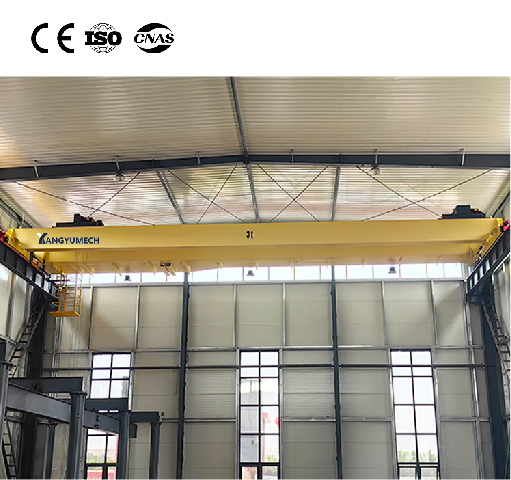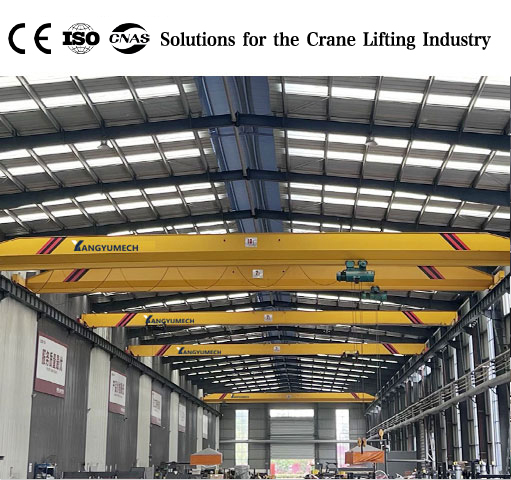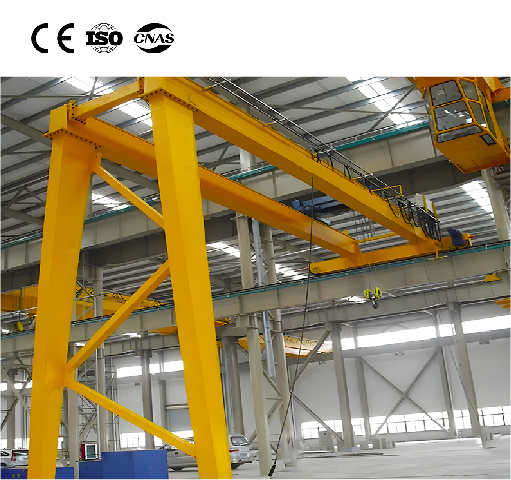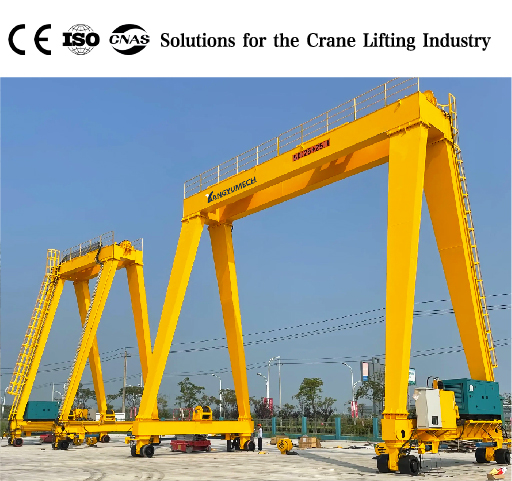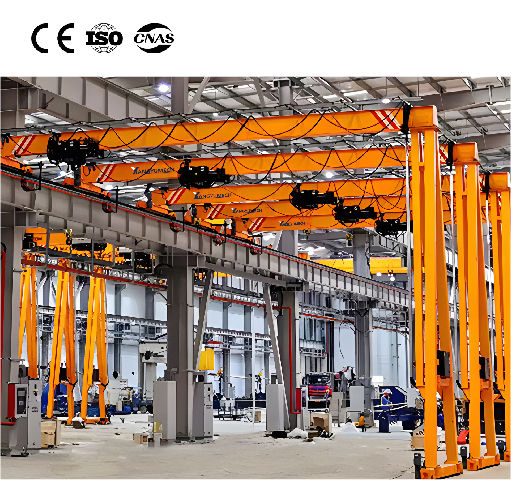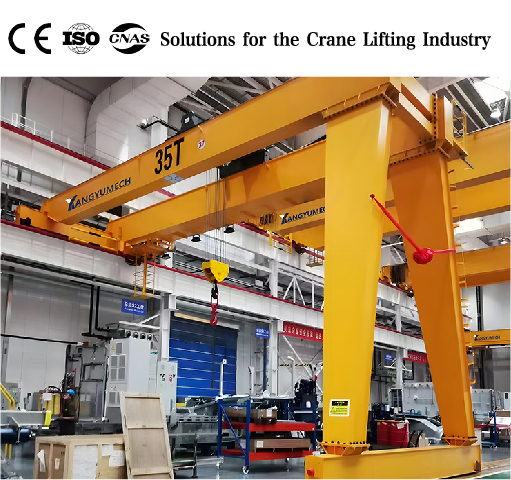
In industrial settings—from factories and warehouses to shipyards and construction sites—efficient lifting of heavy loads often requires a balance between flexibility, stability, and space efficiency. This is where the semi gantry crane shines. Unlike full gantry cranes (with two supporting legs) or overhead bridge cranes (suspended from building beams), semi gantry cranes combine the best of both worlds: one leg runs on a fixed rail along the ground, while the other is supported by an existing building structure (e.g., columns or walls). This unique design makes them ideal for sites where space is limited or full gantry rails are impractical. Below is a complete guide to understanding semi gantry cranes, including their design, benefits, applications, and best practices.


What Is a Semi Gantry Crane?
A semi gantry crane (also called a “semi-goliath crane”) is a heavy-duty lifting system designed for horizontal and vertical movement of loads in industrial environments. Its defining feature is its asymmetric support structure:
- One ground-mounted leg: Equipped with wheels or rollers that run on a dedicated steel rail laid along the floor. This rail provides stability and guides the crane’s linear movement.
- One structure-mounted beam: The opposite end of the crane’s main girder is supported by a trolley that travels along a fixed beam attached to the building’s columns, walls, or existing overhead structure.
Key components of a semi gantry crane include:
- Main Girder: A rigid beam (typically box-shaped or I-beam) that spans between the ground leg and the structure-mounted support, carrying the trolley and hoist.
- Trolley: Moves horizontally along the main girder, carrying the hoist and load.
- Hoist System: Electric or hydraulic device that lifts and lowers loads, with a hook or attachment (e.g., spreader, magnet) for securing cargo.
- Control System: Manual (operator cabin or pendant) or semi-automated, allowing precise control of movement and lifting.
Unlike full gantry cranes (which require two ground rails) or overhead cranes (dependent on building strength), semi gantry cranes adapt to existing site conditions—making them a cost-effective choice for retrofits or constrained spaces.
Core Advantages of Semi Gantry Cranes
For businesses seeking a lifting solution that balances performance and adaptability, semi gantry cranes offer distinct benefits that set them apart from other crane types. Here are their most impactful advantages:
1. Space Efficiency
Semi gantry cranes eliminate the need for a second ground rail, freeing up floor space for other equipment, storage, or workflow. This is critical for:
- Narrow factories or warehouses where two parallel rails would crowd operations.
- Retrofit projects where existing buildings can’t accommodate full gantry infrastructure.
- Outdoor yards (e.g., shipyards, construction sites) where space is shared with trucks, containers, or other machinery.
For example, a small manufacturing plant with a single wall of support columns can install a semi gantry crane to cover the entire production area without blocking access to loading docks.
2. Lower Installation Costs
Compared to full gantry cranes (which require extensive rail installation and site preparation) or overhead bridge cranes (which may need building reinforcement), semi gantry cranes reduce upfront expenses:
- No need to lay a second ground rail—only one rail is required for the ground leg.
- Leverages existing building structures (columns, beams) for support, avoiding the cost of building new steel frames.
- Faster installation time (typically 30–50% quicker than full gantry cranes), minimizing downtime for operations.
Studies show that semi gantry cranes can reduce installation costs by 20–35% compared to full gantry cranes for similar lifting capacities.
3. Flexible Load Coverage
Semi gantry cranes offer versatile coverage, adapting to irregular or long-span areas:
- Can span distances from 10 meters to 50 meters (or more, with reinforced girders), covering large work zones.
- The ground rail can be curved or straight, allowing the crane to follow the layout of the site (e.g., around production lines or storage bays).
- Ideal for “partial coverage” needs—e.g., lifting loads from a truck to a specific workstation, without requiring full overhead coverage.
In a shipyard, for instance, a semi gantry crane can run along the edge of a dock (ground rail) while the other end is supported by the shipyard’s warehouse columns, covering both the dock and the adjacent storage area.
4. Strong Stability & Safety
Despite their asymmetric design, semi gantry cranes deliver reliable stability, thanks to:
- Heavy-duty ground rails (typically made of high-carbon steel) that prevent tipping or shifting during lifting.
- Reinforced main girders that distribute load weight evenly between the ground leg and structure support.
- Built-in safety features (overload sensors, emergency stops, anti-collision devices) that meet global standards (e.g., ISO 4301, OSHA).
Most semi gantry cranes can handle loads from 5 tons to 100 tons, with stability comparable to full gantry cranes for loads within their rated capacity.
5. Easy Adaptation to Existing Sites
Semi gantry cranes are designed to work with what you already have, making them ideal for:
- Older factories with limited structural capacity (no need to reinforce the entire building, only the support points for the crane).
- Outdoor yards with uneven terrain (the ground rail can be leveled independently, while the structure-mounted end stays stable).
- Sites with temporary lifting needs (the crane can be disassembled and relocated if operations change).
Ideal Applications for Semi Gantry Cranes
Semi gantry cranes are not a one-size-fits-all solution—their design excels in specific industrial scenarios where space, cost, and flexibility are top priorities. Here are the environments where semi gantry cranes deliver the most value:
1. Manufacturing Facilities
Factories producing heavy equipment (e.g., machinery, automotive parts, steel components) rely on semi gantry cranes for:
- Lifting raw materials (e.g., steel plates, castings) from delivery trucks to production lines.
- Moving finished products between assembly stations or to storage.
- Working alongside existing machinery (e.g., CNC machines, presses) without blocking access.
A heavy machinery factory in Germany, for example, uses a 20-ton semi gantry crane to move engine blocks between assembly bays, leveraging the factory’s existing column structure to avoid installing a second ground rail.
2. Warehouses & Distribution Centers
Large warehouses storing heavy pallets, containers, or industrial goods benefit from semi gantry cranes’ space efficiency:
- Covering long aisles without crowding storage racks (the ground rail runs along one side of the aisle, while the other end is supported by warehouse columns).
- Loading and unloading heavy items from trucks or railcars parked along the warehouse’s exterior.
- Handling oversized loads (e.g., large appliances, industrial parts) that standard forklifts can’t lift.
In Asia, a electronics distribution center uses a 10-ton semi gantry crane to move 40ft containers from outdoor yards to indoor storage, reducing the need for expensive full gantry infrastructure.
3. Shipyards & Ports
Shipyards and small ports use semi gantry cranes for maintenance, repair, and loading operations:
- Lifting ship components (e.g., propellers, engines) during vessel repair.
- Loading/unloading cargo from small ships or barges docked along the waterfront (the ground rail runs parallel to the dock, while the other end is supported by the shipyard’s workshop structure).
- Working in tight spaces between docks and buildings, where full gantry cranes would be too large.
A small port in the Mediterranean uses a 50-ton semi gantry crane to load construction materials onto barges, avoiding the cost of building a full quay crane.
4. Construction Sites
Temporary or permanent construction projects (e.g., building bridges, power plants, industrial facilities) use semi gantry cranes for:
- Lifting heavy construction materials (e.g., steel beams, concrete panels) to upper levels.
- Working in confined construction zones (e.g., between existing buildings or along roadways).
- Adapting to changing site layouts (the ground rail can be extended or repositioned as construction progresses).
A bridge construction project in the U.S. used a 30-ton semi gantry crane to lift concrete segments into place, leveraging the bridge’s temporary support columns to avoid installing a full gantry system.
5. Scrap Yards & Recycling Facilities
Scrap yards and recycling centers handling large volumes of metal scrap, old machinery, or waste materials use semi gantry cranes with magnetic attachments for:
- Picking up and sorting metal scrap from large piles.
- Loading scrap into shredders or transport trucks.
- Working in outdoor yards with uneven terrain (the ground rail is leveled to ensure stability, even on rough ground).
A scrap yard in the UK uses a 15-ton semi gantry crane with a magnetic hoist to sort steel scrap, reducing labor costs and improving efficiency compared to manual loading.
How Does a Semi Gantry Crane Work?
The operation of a semi gantry crane follows a straightforward, safe sequence—designed to handle heavy loads with precision. Here’s a step-by-step breakdown of its workflow:
Step 1: Pre-Operation Check
- The operator inspects the crane: checks the ground rail for debris (e.g., dirt, rocks) or damage, verifies the hoist’s cable condition, and tests safety systems (overload sensors, emergency stops).
- For electric cranes, the operator ensures power is connected and the control system (pendant or cabin) is functioning.
Step 2: Positioning the Crane
- The operator moves the semi gantry crane along the ground rail to align with the load’s location (e.g., a truck, storage pile, or production station).
- The trolley moves horizontally along the main girder to position the hoist directly above the load.
Step 3: Lifting the Load
- The operator lowers the hoist’s hook or attachment (e.g., magnet, spreader) to secure the load. For magnetic hoists, the operator activates the magnet to grip metal loads; for hooks, the load is secured with slings or chains.
- The hoist lifts the load to a safe height (clear of obstacles, typically 1–3 meters above the ground) at a controlled speed (0.5–5 meters per minute, depending on load weight).
Step 4: Transferring the Load
- The operator moves the crane along the ground rail to the target location (e.g., a production line, storage area).
- The trolley adjusts horizontally along the main girder to align the load with the target (e.g., a pallet rack, assembly station).
Step 5: Lowering the Load
- The operator lowers the load gently onto the target surface (e.g., the floor, a pallet, or a truck bed) at a slow, controlled speed.
- For magnetic hoists, the operator deactivates the magnet to release the load; for hooks, slings or chains are removed.
Step 6: Post-Operation Reset
- The operator moves the crane to a designated parking position (clear of work zones or traffic).
- The hoist is raised to a safe height, and the control system is shut down.
- A final inspection is conducted to check for any damage or wear (e.g., cable fraying, rail damage) before the next use.
Key Factors to Consider When Choosing a Semi Gantry Crane
Selecting the right semi gantry crane requires aligning the crane’s specifications with your site’s unique needs, load requirements, and safety standards. Here are the critical factors to evaluate:
1. Load Capacity
- Choose a capacity based on the heaviest loads you’ll handle:
- Light-duty (5–10 tons): For warehouses, small factories, or light manufacturing.
- Medium-duty (10–50 tons): For shipyards, heavy manufacturing, or construction sites.
- Heavy-duty (50–100+ tons): For steel mills, large shipyards, or power plants.
- Ensure the crane’s hoist and trolley can handle peak loads (e.g., occasional heavier items) without exceeding the rated capacity.
2. Span & Coverage
- Span: The distance between the ground leg and the structure-mounted support (determines how much area the crane can cover). For example:
- 10–20 meters: Ideal for small factories or warehouses.
- 20–50 meters: For large manufacturing facilities, shipyards, or ports.
- Custom spans (50+ meters): Available for specialized projects (requires reinforced main girders).
- Coverage Length: The length of the ground rail (determines how far the crane can travel along the site). Choose a length that covers your entire work zone (e.g., a 100-meter rail for a long factory aisle).
3. Power & Drive Type
Semi gantry cranes are available in two main drive types—choose based on your site’s power access and needs:
- Electric Drive: Most common, powered by a 3-phase electrical supply. Benefits include lower operating costs, zero on-site emissions, and quieter operation (ideal for indoor use).
- Hydraulic Drive: Used for heavy-duty or outdoor applications where electricity is limited. Benefits include higher torque for lifting heavy loads, but higher maintenance costs and emissions.
4. Control System
Select a control system based on operator preference, safety needs, and load precision:
- Pendant Control: A handheld device with buttons for lifting, lowering, and moving the crane. Ideal for small cranes or operations where the operator needs to be near the load.
- Cabin Control: An operator cabin mounted on the main girder or trolley, providing a clear view of the load. Best for large cranes, heavy loads, or long-distance transfers.
- Semi-Automated Control: Integrates sensors (e.g., laser, camera) to assist with load alignment, reducing human error. Used in high-precision applications (e.g., manufacturing, electronics).
5. Safety Features
Ensure the semi gantry crane meets global safety standards (e.g., ISO 4301, OSHA, CE) and includes essential safety features:
- Overload Protection: Stops the hoist if the load exceeds the crane’s rated capacity (prevents structural damage or tipping).
- Emergency Stop Buttons: Located on the control system and along the crane’s path, allowing immediate shutdown in case of danger.
- Anti-Collision Devices: Sensors that prevent the crane from colliding with other machinery, walls, or obstacles.
- Limit Switches: Stop the trolley or crane travel at preset limits (e.g., end of the rail or main girder) to avoid overtravel.
6. Environmental Conditions
Consider your site’s environment to choose a crane with appropriate durability:
- Indoor Use: Standard paint and components (no need for weatherproofing).
- Outdoor Use: Weatherproofed electrical systems, corrosion-resistant paint (for coastal or humid areas), and heated components (for cold climates).
- Harsh Environments (e.g., scrap yards, chemical plants): Heat-resistant components, dust-proof enclosures, and magnetic shielding (for magnetic hoists).
Maintenance Tips for Semi Gantry Cranes
Proper maintenance is critical to keeping semi gantry cranes running safely, efficiently, and avoiding costly downtime. Here’s a practical maintenance checklist:
1. Daily Maintenance
- Rail Inspection: Check the ground rail for debris (dirt, rocks), loose bolts, or damage (cracks, dents). Clean the rail with a brush or air compressor to remove obstacles.
- Hoist & Cable Check: Inspect the hoist cable for fraying, kinks, or wear (replace if 10% of strands are broken). Check the hook for cracks or deformation.
- Safety System Test: Activate emergency stops, overload sensors, and anti-collision devices to ensure they work. Verify that limit switches stop the crane at preset limits.
- Control System Check: Test pendant or cabin controls for smooth operation (no stuck buttons or delayed responses).
2. Weekly Maintenance
- Lubrication: Apply grease to the trolley wheels, main girder rails, and ground rail rollers. Use high-quality lubricant suitable for your environment (e.g., lithium grease for indoor use, waterproof grease for outdoor use).
- Electrical System Inspection: Check electrical connections (wires, plugs, motors) for loose connections, corrosion, or overheating (signs include discoloration or burning smells). Tighten loose bolts and clean corrosion with a wire brush.
- Brake System Check: Inspect brake pads for wear (replace if thickness is less than 5mm). Adjust brake tension to ensure smooth, controlled stopping.
3. Monthly Maintenance
- Structural Inspection: Check the main girder, ground leg, and structure-mounted support for cracks, bending, or corrosion. Tighten loose bolts on the girder or support brackets.
- Hoist Motor Service: Clean the hoist motor’s cooling fan and check for unusual noise or vibration (signs of bearing wear). Replace motor bearings if needed.
- Alignment Check: Use a laser alignment tool to verify that the ground rail is straight and level (deviations over 3mm can cause premature wear). Adjust the rail’s support blocks if necessary.
4. Quarterly/Annual Maintenance
- Load Testing: Conduct a load test with a certified weight (125% of the crane’s rated capacity) to verify structural integrity. Hire a professional inspector to perform this test.
- Paint & Corrosion Protection: Touch up chipped or worn paint on the main girder, ground leg, and support structure to prevent corrosion. For outdoor cranes, apply a fresh coat of weatherproof paint annually.
- Full System Overhaul: Hire a qualified technician to inspect the entire crane, including motors, gears, and electrical systems. Replace worn parts (e.g., trolley wheels, brake pads, sensors) and update software for semi-automated cranes.
- Documentation: Record all maintenance activities (date, tasks performed, parts replaced) in a maintenance log. This helps track the crane’s condition and comply with safety regulations (e.g., OSHA inspections).
The Future of Semi Gantry Cranes
As industrial operations evolve toward greater efficiency, automation, and sustainability, semi gantry cranes are adapting to meet new demands. Here are the key trends shaping their future:
1. Increased Automation
- Full Automation: Manufacturers are developing fully automated semi gantry cranes controlled by AI and IoT sensors. These cranes can operate 24/7 without human intervention, using computer vision to detect loads and avoid obstacles.
- Remote Operation: Operators can control semi gantry cranes from a central control room (instead of on-site cabins), using real-time video feeds and joysticks. This improves safety for operators working in hazardous environments (e.g., scrap yards, chemical plants).
2. Sustainability & Energy Efficiency
- Electric & Hybrid Drives: More semi gantry cranes are using electric drives with regenerative braking systems, which feed energy back to the grid when slowing down. Hybrid models (electric + battery) are also emerging for sites with intermittent power access.
- Lightweight Materials: Manufacturers are using high-strength, lightweight materials (e.g., carbon fiber, aluminum alloys) for main girders and components, reducing the crane’s weight and energy consumption.
3. Smart Monitoring & Predictive Maintenance
- IoT Sensors: Embedded sensors in the crane’s motors, bearings, and rails collect real-time data on temperature, vibration, and load stress. This data is sent to a cloud platform, where AI algorithms predict potential failures (e.g., bearing wear, cable damage) before they occur.
- Remote Diagnostics: Technicians can access the crane’s data remotely to diagnose issues, reducing the need for on-site visits. This speeds up repairs and minimizes downtime.
4. Customization for Niche Applications
- Specialized Attachments: Manufacturers are developing custom hoists and attachments for niche industries, such as:
- Magnetic hoists for scrap yards and steel plants.
- Vacuum hoists for fragile loads (e.g., glass panels, electronics).
- Spreader bars for lifting containers or oversized items.
- Modular Designs: Modular semi gantry cranes allow businesses to expand or reconfigure the crane as their needs change (e.g., extending the ground rail, increasing load capacity).
Conclusion
The semi gantry crane is a versatile, cost-effective lifting solution that bridges the gap between full gantry cranes and overhead bridge cranes. Its unique design—leveraging existing site structures and a single ground rail—makes it ideal for industrial settings where space, cost, and flexibility are critical. Whether you’re operating a factory, warehouse, shipyard, or construction site, a semi gantry crane can handle your heavy lifting needs while adapting to your existing infrastructure.
To choose the right semi gantry crane, focus on aligning its load capacity, span, and features with your site’s specific needs—from load weight and coverage area to environmental conditions and safety requirements. And with proper maintenance (daily checks, lubrication, and periodic inspections), your semi gantry crane will deliver reliable performance for decades.
As automation and sustainability drive the future of industrial lifting, semi gantry cranes will continue to evolve—offering smarter, more efficient, and eco-friendly solutions for businesses worldwide. If you’re ready to invest in a semi gantry crane, partner with a reputable manufacturer (e.g., Konecranes, Demag, ABUS) that can provide custom designs and ongoing support to meet your unique needs.