Tag: overhead bridge crane

  • Why Choose Yangyu Overhead Bridge Cranes?

    Why Choose Yangyu Overhead Bridge Cranes?

    If you work in an industrial setting, you may have seen a bridge crane in action. But what exactly is this powerful piece of equipment, and why is it so crucial to modern manufacturing, logistics, and construction? A bridge crane is not merely a tool for lifting heavy objects; it is a sophisticated system designed for precision, efficiency, and maximizing the utility of the workspace.

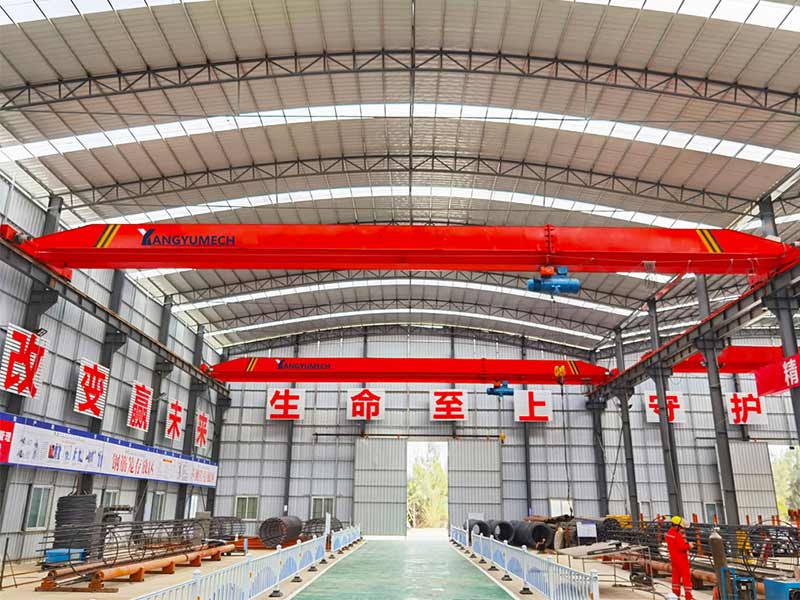
    The core of a gridge bridge crane consists of a horizontal beam or “bridge” that runs between two parallel rails fixed to the building’s support structure. The hoist and trolley mechanisms travel along this bridge, providing full three-dimensional movement within a defined working area. This simple yet outstanding design enables operators to lift, lower, and transport heavy loads with a level of control that is unattainable by manual methods.
    top-running-bridge-cranes

    Why Choose Yangyu Overhead Bridge Cranes?

    The widespread adoption of top-running bridge cranes is no accident. It is driven by a series of compelling advantages that directly impact productivity and safety.
    – Unparalleled space efficiency: Unlike mobile cranes that occupy valuable ground space, overhead cranes operate entirely in the air. This keeps the ground clear for personnel, machines, and other vehicles, optimizing the layout of the entire facility.
    – Outstanding load capacity and stability: These cranes are designed for heavy-duty cycles and can handle incredibly heavy loads ranging from a few tons to hundreds of tons. The double-girder design, in particular, provides tremendous strength and rigidity, preventing dangerous sway and ensuring stable load handling.
    – Enhanced workplace safety: By mechanizing the lifting of heavy objects, bridge cranes significantly reduce the risk of musculoskeletal injuries to workers. Controlled and predictable movement paths also minimize the chances of collisions and accidents.
    – Precision and control: Modern cranes feature sophisticated control systems, including variable speed drives and even wireless remote operation. This enables operators to position loads with millimeter accuracy, which is crucial for precise assembly lines or placing objects in tight spaces.
    – Proven durability and low life-cycle cost: Made from high-strength steel and equipped with industrial-grade components, well-maintained overhead cranes offer an extremely long service life. Although the initial investment may be substantial, the return on investment over decades of reliable service is exceptional.

    What are The Application Scenarios Of Gantry Bridge Cranes?

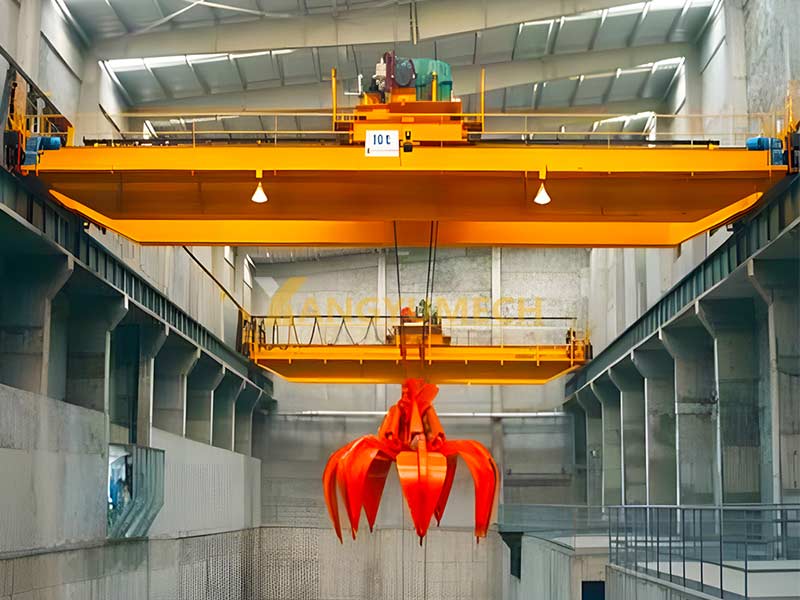
    The versatility of industrial bridge cranes means that their applications in heavy industry are almost unlimited. Common scenarios include:
    – Manufacturing and automotive plants: Move raw materials, engine blocks and chassis along assembly lines.
    – Steel mills and metal manufacturing: Handle molten metal in ladles, transport metal coil, position large structural beams.
    – Shipping ports and intermodal yards: Specifically, large versions such as rubber-tired gantry (RTG) cranes are used to stack and move containers.
    – Power generation: Lift turbines, generators and transformers during maintenance and installation.
    – Warehouses and distribution centers: Efficiently manage heavy palletized goods in storage racks.
    industrial-bridge-crane

    Which are The World’s Top Bridge Overhead Crane Manufacturers?

    When purchasing heavy-duty overhead cranes, many purchasing managers turn their attention to well-known global brands. Companies such as Konecranes (Finland), Demag (Germany, now part of Konecranes), and Terex (USA) are often cited for their extensive product portfolios and global service networks. Chinese manufacturers like ZPMC are dominant forces in the port equipment sector, while Liebherr (Germany/Switzerland) is renowned for its superior engineering across all types of cranes.

    However, focusing solely on the largest corporate entities sometimes means overlooking powerful and agile manufacturers that offer significant value. This is where companies like Yangyumech come into the picture. As a professional manufacturer specializing in material handling solutions, Yangyumech has built a reputation for providing robust and reliable cranes, which are typically associated with well-known enterprises. They represent a growing trend of expert-level manufacturers effectively competing in terms of quality, customization, and cost-effectiveness.

    Why Choose Yangyumech When Buying a Gantry Crane?

    So, what sets Yangyumech apart in the crowded market? The answer lies in their strategic focus on providing uncompromising value. They understand that operating budgets are tight, but performance cannot be sacrificed. Yangyumech is a partner for high-value lifting solutions.
    Yangyumech’s advantage is built on a straightforward promise: to provide high-quality engineering at competitive prices. They achieve this by streamlining the production process and maintaining a direct-to-customer approach. Don’t mistake affordability for compromise. Their cranes are manufactured to recognized international standards and can be customized according to specific operational needs, whether it’s a standard workshop crane or a specialized container handling RTG.

    Our product range demonstrates this commitment to practical innovation, featuring durable wire rope hoists and versatile boom cranes, designed specifically for the real-world industrial challenges. For businesses seeking to enhance material handling capabilities without incurring excessive capital expenditure, Yangyu Technology offers a compelling and sensible choice.
    Are you ready to enhance your operational efficiency? If you are in search of a durable and high-performance bridge overhead crane solution that respects your budget, we encourage you to get in touch. Contact Yangyumech right away to learn how our lifting solutions can be tailored to drive your success.
  • Differences and Advantages between Gantry Cranes and Semi-Gantry Cranes

    Differences and Advantages between Gantry Cranes and Semi-Gantry Cranes

    In the world of material handling and heavy lifting, gantry cranes and semi-gantry cranes are two pivotal workhorses. While their names sound similar, their structural designs, capabilities, and ideal applications differ significantly. Understanding these differences is crucial for selecting the right equipment to optimize efficiency, safety, and cost-effectiveness in industrial, construction, and warehouse settings. This article delves into the distinct characteristics, advantages, and use cases of both gantry and semi-gantry cranes.


    1. Fundamental Structural Differences

    The core distinction lies in their support structures and mobility.

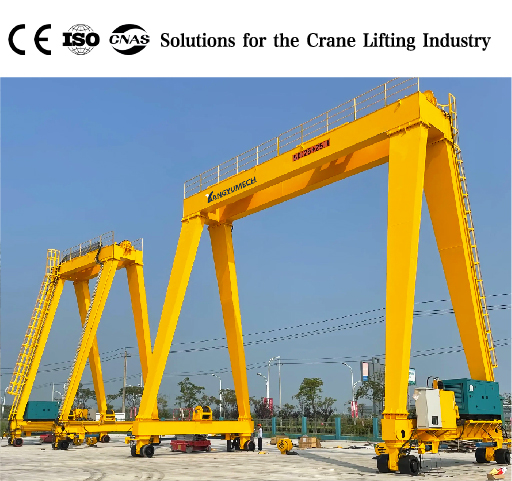
    • Gantry Cranes: These are freestanding structures supported by legs that run on floor-mounted rails or wheels. They typically have two sets of legs, forming a complete “bridge” or “gantry” over the load. This design makes them independent of any external building support.

    双梁轮胎式起重机

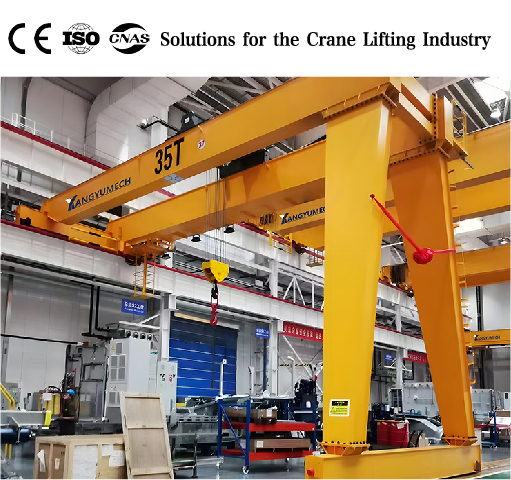
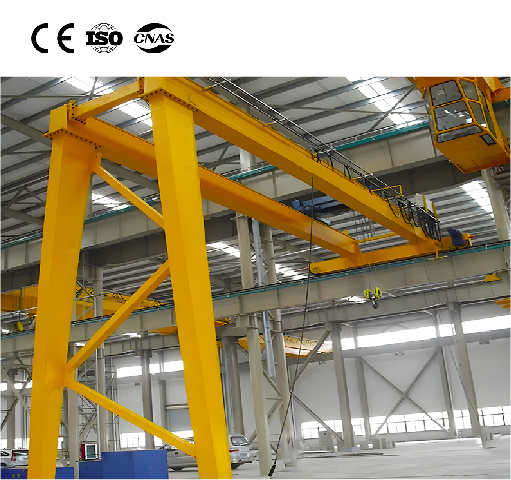
    • Semi-Gantry Cranes: As the name suggests, they are a hybrid design. One side of the bridge is supported by a leg (or legs) that moves on a ground rail or runway. The other side of the bridge is supported by a runway beam attached to the building structure or an elevated track, much like an overhead bridge crane.

    Semi Gantry Crane

    This structural difference is the primary factor influencing all their subsequent advantages and limitations.


    2. Key Advantages of Gantry Cranes

    Gantry cranes offer unparalleled flexibility and are ideal for heavy-duty outdoor applications.

    • Complete Mobility and Independence: Their self-supporting design allows them to be used anywhere with a suitable foundation, especially outdoors in shipyards, ports for container handling, lumber yards, and large-scale construction sites. They place no stress on the building’s infrastructure.

    • High Lifting Capacity: Designed for robust applications, especially double-girder gantry cranes, they can handle extremely heavy loads, often ranging from 5 tons up to 150 tons or more for specialized models.

    • Excellent Accessibility: The open-legged design provides superior access from all sides of the load, simplifying rigging and positioning awkwardly shaped items.

    • Adaptability to Large Areas: They are perfect for covering vast, open areas where installing fixed runways is impractical or too expensive.


    3. Key Advantages of Semi-Gantry Cranes

    Semi-gantry cranes offer a smart compromise, blending the benefits of both gantry and overhead bridge cranes.

    • Superior Space Utilization (Compared to Full Gantry): By utilizing the existing building column for support on one side, they require less floor space than a full gantry crane, which needs clear space for both legs. This leads to a less obstructed work area.

    • Cost-Effectiveness: The semi-gantry design often requires less structural steel and foundational work for the runway on the building-supported side, potentially resulting in a lower initial investment compared to a full gantry system of similar capacity.

    • Ideal for Specific Layouts: They are perfectly suited for applications where one side of the work area is against a wall or a line of building columns, such as in workshops, loading bays, or storage areas along a facility’s perimeter.

    • Good Load Capacity: They retain a significant portion of the lifting capacity of full gantry cranes, making them suitable for many heavy-lifting tasks within industrial facilities.


    4. Comparison Table: Gantry vs. Semi-Gantry Cranes

    FeatureGantry CraneSemi-Gantry Crane
    Support StructureSelf-supported by legs on both sides.One side supported by a leg, the other by a building structure.
    Mobility & LocationHighly mobile; ideal for outdoor use.Fixed path; best for indoor or covered areas against a wall.
    Floor Space UsageRequires clear space for legs; can obstruct floor.Utilizes building support; generally less floor obstruction.
    Installation CostGenerally higher due to more structure and groundwork.Often more economical due to using building support.
    Load CapacityVery high (e.g., 5 tons to 150+ tons).High, but may be less than a full gantry of equivalent size.
    Typical Use CaseShipyards, container terminals, open storage yards.Workshops, warehouses, loading bays, fabrication shops.

    5. How to Choose: Which One is Right for Your Project?

    Selecting the right crane depends on a thorough analysis of your needs:

    • Location (Indoor vs. Outdoor): This is the primary deciding factor. For outdoor applications, a full gantry crane is almost always the necessary choice. For indoor applications where one side can be anchored to the building, a semi-gantry crane is often sufficient and more efficient.

    • Required Floor Space: If maximizing clear, unobstructed floor space is a critical priority (e.g., for forklift traffic), the semi-gantry’s design is advantageous. If the work is in an open area where legs aren’t a hindrance, a full gantry works well.

    • Load Weight and Span: For the very heaviest loads and extremely wide spans, a robust double-girder gantry crane is typically required9. Semi-gantry cranes are better for moderate to heavy loads within a specific bay width.

    • Budget Considerations: Evaluate both the initial investment and long-term value. While a semi-gantry might have a lower initial cost, a full gantry’s complete independence could offer more long-term flexibility for layout changes.


    Conclusion

    There is no universal “best” crane—only the best crane for your specific operational requirements, facility layout, and budget.

    Gantry Cranes are the champions of outdoor mobility and heavy-lifting independence, excelling where no overhead support exists.
    Semi-Gantry Cranes are the masters of efficient space utilization indoors, providing a powerful and often more economical lifting solution where building support is available on one side.

    By carefully weighing the distinct differences and advantages outlined above, you can make an informed decision that enhances safety, boosts productivity, and provides an optimal return on investment for your material handling operations.