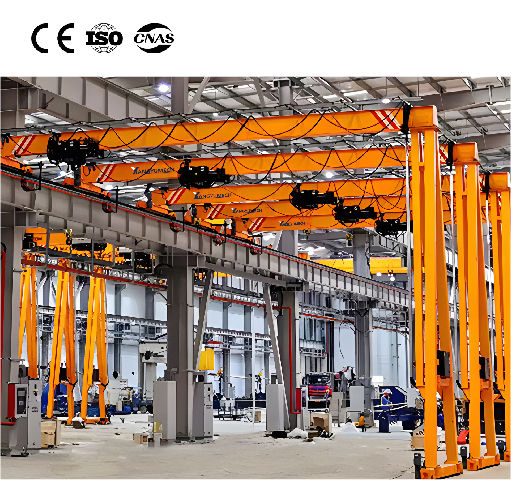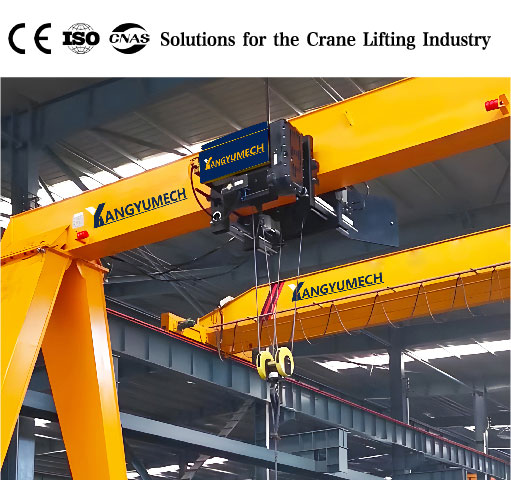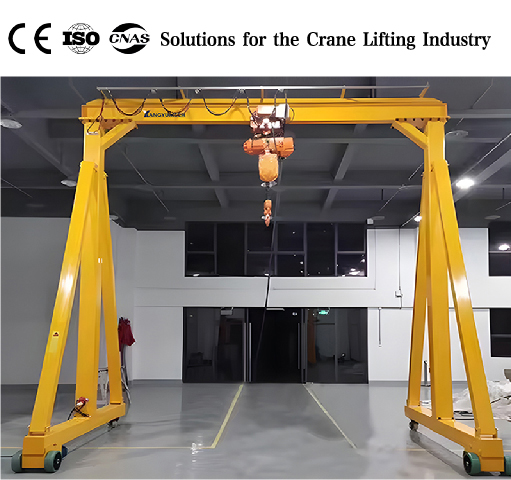
Tag: gantry cranes

  • Mobile Gantry Crane: The Flexible Lifting Solution for Industrial & On-Site Needs

    Mobile Gantry Crane: The Flexible Lifting Solution for Industrial & On-Site Needs

    In industries where lifting heavy loads requires adaptability—from construction sites and warehouses to workshops and outdoor yards—the mobile gantry crane stands out as a versatile workhorse. Unlike fixed gantry cranes (tied to rails or structures) or overhead bridge cranes (dependent on building beams), mobile gantry cranes are designed for portability: they can be moved, positioned, and reconfigured to handle loads wherever they’re needed. This flexibility makes them ideal for temporary projects, remote sites, or facilities with changing lifting requirements. Below is a comprehensive guide to understanding mobile gantry cranes, including their design, benefits, applications, and best practices.

    Portable Gantry Crane(manual / electric)
    Portable Gantry Crane

    What Is a Mobile Gantry Crane?

    A mobile gantry crane (also called a “portable gantry crane”) is a lightweight yet durable lifting system engineered for on-the-go heavy-load handling. Its defining feature is its wheeled or tracked base, which allows it to move freely across flat surfaces (e.g., concrete floors, asphalt yards) without permanent installation.


    Key components of a mobile gantry crane include:


    • Gantry Frame: A rigid, adjustable structure (typically made of steel or aluminum) with two vertical legs and a horizontal main beam. The frame’s height and span can often be modified to fit different load sizes and site constraints.
    • Wheels/Tracks: Attached to the base of the legs, these enable movement—wheels (rubber or steel) are ideal for smooth indoor/outdoor surfaces, while tracks suit rough terrain (e.g., construction sites with gravel or dirt).
    • Hoist System: An electric, hydraulic, or manual hoist mounted on a trolley that travels along the main beam. The hoist includes a hook, chain, or cable for securing loads, with capacities ranging from 0.5 tons to 50 tons (or more for heavy-duty models).
    • Stabilization Features: Adjustable feet, outriggers, or weight plates that secure the crane in place during lifting, preventing tipping or shifting.


    Unlike fixed gantry cranes (which require rail installation) or overhead cranes (limited to building boundaries), mobile gantry cranes offer “lift-anywhere” capability—making them a cost-effective choice for businesses that don’t need permanent lifting infrastructure.

    Core Advantages of Mobile Gantry Cranes

    For businesses prioritizing flexibility, portability, and cost-efficiency, mobile gantry cranes offer distinct benefits that set them apart from other lifting equipment. Here are their most impactful advantages:

    1. Unmatched Portability

    Mobile gantry cranes are designed to move with your needs, eliminating the constraints of fixed systems:


    • Easy Relocation: Most models can be pushed or pulled manually (for light-duty) or driven by electric motors (for heavy-duty), requiring no specialized equipment to reposition.
    • No Permanent Installation: Unlike rail-mounted gantry cranes or overhead cranes, they don’t need concrete foundations, rails, or building modifications—simply unpack, assemble, and use.
    • Compact Storage: Many lightweight models (aluminum frames) can be disassembled into smaller parts, storing easily in workshops or trucks for transport to remote sites.


    For example, a construction company can transport a mobile gantry crane in a pickup truck to a rural job site, then use it to lift steel beams—no on-site infrastructure required.

    2. Cost-Effectiveness

    Mobile gantry cranes reduce upfront and long-term costs compared to fixed lifting systems:


    • Lower Initial Investment: Prices start at a few thousand dollars (for light-duty models) vs. tens of thousands for fixed gantry cranes or overhead cranes.
    • Minimal Maintenance: Fewer moving parts than complex fixed systems—no rail upkeep, building reinforcement, or specialized electrical work.
    • No Downtime for Installation: Assemble in hours (vs. days/weeks for fixed cranes), so you can start lifting immediately.


    Small workshops, for instance, can use a 2-ton mobile gantry crane ($3,000–$5,000) to handle heavy machinery instead of investing in a $50,000 overhead crane.

    3. Flexible Load Handling

    Mobile gantry cranes adapt to diverse load sizes, weights, and environments:


    • Adjustable Dimensions: Most models let you modify the beam height (from 2 meters to 10 meters) and span (from 3 meters to 15 meters) to fit tall or wide loads (e.g., industrial equipment, shipping pallets).
    • Versatile Surfaces: Rubber wheels work on concrete/ asphalt; steel wheels or tracks handle gravel, dirt, or uneven ground (critical for outdoor sites).
    • Multiple Hoist Options: Choose electric hoists for speed (ideal for frequent lifts), hydraulic hoists for heavy loads, or manual hoists for power-free environments (e.g., remote construction sites).


    A warehouse, for example, can adjust a mobile gantry crane’s height to lift 8-foot-tall pallets one day and lower it to move 4-foot-wide machinery the next.

    4. Safety & Stability

    Despite their portability, mobile gantry cranes deliver reliable safety for heavy lifting:


    • Stabilization Tools: Outriggers (extendable legs) or weight plates distribute load weight evenly, preventing tipping even when lifting at maximum capacity.
    • Built-In Safety Features: Overload sensors (stop lifting if weight exceeds capacity), emergency stop buttons, and locking wheels (secure the crane during operation) meet global standards (e.g., OSHA, CE).
    • Clear Visibility: Open-frame design gives operators unobstructed views of the load and surrounding area, reducing collision risks.


    Most mobile gantry cranes have a safety factor of 2:1—meaning they can handle twice their rated capacity without failure (though operators should never exceed rated limits).

    5. Ideal for Temporary & Emergency Use

    Mobile gantry cranes excel in scenarios where lifting needs are short-term or unexpected:


    • Temporary Projects: Construction, maintenance, or event setups (e.g., lifting stage equipment for concerts) where permanent cranes are unnecessary.
    • Emergency Repairs: Factory breakdowns (lifting broken machinery for repair) or disaster response (moving debris after storms) where speed is critical.
    • Supplemental Lifting: Assisting fixed cranes during peak periods (e.g., a warehouse using a mobile crane to handle extra shipments during holiday seasons).

    Ideal Applications for Mobile Gantry Cranes

    Mobile gantry cranes are not limited to a single industry—their flexibility makes them valuable across diverse sectors. Here are the environments where mobile gantry cranes deliver the most value:

    1. Construction Sites

    Construction teams rely on mobile gantry cranes for on-site lifting in remote or changing locations:


    • Lifting Materials: Steel beams, concrete panels, or HVAC units to upper floors of buildings.
    • Equipment Maintenance: Moving heavy tools (e.g., jackhammers, generators) or repairing construction vehicles (e.g., excavators) on-site.
    • Rough Terrain Use: Tracked mobile cranes handle dirt, gravel, or muddy ground where forklifts or fixed cranes can’t operate.


    A residential construction crew in a rural area, for example, uses a 5-ton tracked mobile gantry crane to lift roof trusses onto a new home—no need for a costly truck crane.

    2. Warehouses & Distribution Centers

    Warehouses use mobile gantry cranes to complement forklifts and fill gaps in fixed lifting systems:


    • Oversized Loads: Lifting items too large for forklifts (e.g., industrial freezers, large pallets of machinery parts).
    • Flexible Aisles: Moving between narrow aisles to reach loads in tight spaces (fixed overhead cranes may not cover all areas).
    • Temporary Storage: Relocating heavy inventory during warehouse reorganizations or peak seasons.


    A furniture warehouse, for instance, uses a 3-ton mobile gantry crane with an electric hoist to move 200kg sofas from storage to delivery trucks, reducing strain on workers.

    3. Manufacturing Workshops

    Small to medium-sized manufacturing facilities use mobile gantry cranes for in-house lifting:


    • Machinery Installation: Moving CNC machines, lathes, or presses into place on the factory floor.
    • Assembly Line Support: Lifting heavy components (e.g., engine blocks, metal castings) onto assembly stations.
    • Maintenance Repairs: Removing and replacing large parts (e.g., gearboxes, motors) from production equipment.


    A metalworking shop, for example, uses a 10-ton mobile gantry crane with a hydraulic hoist to lift 8-ton steel castings onto a milling machine—no permanent crane required.

    4. Outdoor Yards & Ports

    Mobile gantry cranes handle outdoor lifting in yards, ports, or job sites with no fixed infrastructure:


    • Container Handling: Small ports or inland depots use mobile cranes to load/unload 20ft containers from trucks (a cheaper alternative to full gantry cranes).
    • Scrap Yards: Lifting metal scrap piles or old machinery onto shredders or transport trucks.
    • Agricultural Sites: Moving heavy farm equipment (e.g., tractors, harvesters) for maintenance or storage.


    A small port in Africa, for example, uses a 15-ton mobile gantry crane to unload 20ft containers from ships, avoiding the $1M+ cost of a fixed quay crane.

    5. Events & Entertainment

    Event companies use lightweight mobile gantry cranes for setting up stages, lighting, and sound equipment:


    • Stage Construction: Lifting speakers, LED screens, or stage platforms into place.
    • Temporary Venues: Concerts, festivals, or trade shows where permanent lifting systems don’t exist.
    • Quick Teardown: Disassembling equipment fast after events, thanks to the crane’s portability.


    A concert promoter, for instance, uses a 2-ton aluminum mobile gantry crane to hang 500kg lighting rigs—assembling and disassembling the crane in under an hour.

    How Does a Mobile Gantry Crane Work?

    The operation of a mobile gantry crane is simple and intuitive, designed for quick setup and safe lifting. Here’s a step-by-step breakdown of its workflow:

    Step 1: Setup & Positioning

    • Choose a Location: Select a flat, stable surface (concrete, asphalt, or packed dirt) capable of supporting the crane’s weight plus the load. Avoid slopes, potholes, or soft ground (use tracks or outriggers if terrain is uneven).
    • Assemble the Crane (if disassembled): Connect the vertical legs to the main beam, attach the hoist and trolley to the beam, and install wheels or tracks on the leg bases. Most lightweight models take 1–2 people 30–60 minutes to assemble.
    • Adjust Dimensions: Set the beam height and span to match the load (e.g., raise the beam to clear a tall pallet, widen the span for a wide machine).
    • Secure the Crane: Extend outriggers (if equipped) to stabilize the legs, or lock the wheels to prevent movement during lifting.

    Step 2: Pre-Operation Check

    • Inspect the Crane: Check for loose bolts (tighten if needed), damaged wheels/tracks, and frayed hoist cables/chains. Verify that the hoist’s hook is not bent or cracked.
    • Test Safety Features: Activate the overload sensor (use a small weight to trigger it) and press the emergency stop button to ensure they work. Test the trolley’s movement along the beam to confirm smooth operation.
    • Check Load Weight: Confirm the load’s weight does not exceed the crane’s rated capacity (never lift overweight loads—this risks structural failure).

    Step 3: Lifting the Load

    • Position the Crane: Move the crane so the hoist is directly above the load (use a level to ensure the beam is horizontal).
    • Secure the Load: Attach the hoist’s hook to the load using slings, chains, or straps (ensure the load is balanced—uneven loads can tip the crane).
    • Lift Slowly: Use the hoist to raise the load 10–15cm off the ground, then pause to check stability. If the crane shifts or the load sways, lower it and readjust.
    • Raise to Safe Height: Lift the load to a height just enough to clear obstacles (10–30cm above the ground or other objects), avoiding unnecessary height.

    Step 4: Moving the Load

    • Move the Crane: Push/pull manually (light-duty) or use the electric drive (heavy-duty) to transport the load to the target location. Move slowly (max speed: 1–2 km/h) to prevent sway.
    • Adjust Trolley Position: If the load needs to shift horizontally, move the trolley along the main beam to align with the target.

    Step 5: Lowering the Load

    • Align with Target: Position the load directly above the target surface (e.g., a pallet rack, truck bed, or workshop floor).
    • Lower Slowly: Use the hoist to lower the load gently—avoid sudden drops, which can damage the load or destabilize the crane.
    • Release the Load: Remove slings/chains from the load once it’s fully supported by the target surface.

    Step 6: Post-Operation Cleanup

    • Store the Crane: If not in use, lower the beam to its lowest height, retract outriggers, and move the crane to a designated storage area (away from traffic or obstacles).
    • Disassemble (if needed): For transport, take apart the crane into smaller components and store them in a truck or workshop.
    • Record Maintenance: Note any issues (e.g., frayed cables, stuck wheels) in a maintenance log to address later.

    Key Factors to Consider When Choosing a Mobile Gantry Crane

    Selecting the right mobile gantry crane requires matching its specifications to your load needs, site conditions, and budget. Here are the critical factors to evaluate:

    1. Load Capacity

    • Choose a capacity based on the heaviest loads you’ll handle (add a 10–20% buffer to avoid overloading):
      • Light-duty (0.5–5 tons): For warehouses, workshops, or events (lifting pallets, small machinery, or stage equipment).
      • Medium-duty (5–20 tons): For construction sites, small ports, or manufacturing (lifting steel beams, containers, or heavy machinery).
      • Heavy-duty (20–50+ tons): For industrial sites, scrap yards, or large construction projects (lifting oversized equipment or debris).
    • Ensure the hoist’s capacity matches the crane’s frame capacity (e.g., a 10-ton frame needs a 10-ton hoist—never mix capacities).

    2. Dimensions (Height & Span)

    • Beam Height: Measure the tallest load you’ll lift plus clearance for obstacles (e.g., if lifting 3-meter-tall pallets, choose a crane with a max height of 4–5 meters).
    • Span: Measure the widest load or the distance between support points (e.g., if lifting a 4-meter-wide machine, choose a crane with a span of 5–6 meters to avoid side-to-side stress).
    • Adjustability: Opt for a crane with telescoping legs (adjustable height) and a split beam (adjustable span) if your loads vary in size.

    3. Mobility & Surface Compatibility

    • Wheel/Track Type: Choose based on your site’s surface:
      • Rubber Wheels: Best for smooth indoor/outdoor surfaces (concrete, asphalt)—quiet and non-marking (ideal for warehouses).
      • Steel Wheels: For rough outdoor surfaces (gravel, dirt)—durable but may damage concrete.
      • Tracks: For uneven or soft ground (mud, sand)—maximize stability (critical for construction sites).
    • Drive Type:
      • Manual: Pushed/pulled by hand (for light-duty cranes ≤5 tons—no power needed).
      • Electric: Motor-driven (for medium/heavy-duty cranes—faster and easier to move, requires a battery or power cord).
      • Hydraulic: For heavy loads or rough terrain—high torque but higher maintenance.

    4. Hoist Type

    Select a hoist based on power access, speed, and load needs:


    • Electric Hoist: Most common—fast (lifts 1–5 meters per minute), easy to operate, and ideal for frequent lifts. Requires a power source (battery or 110V/220V outlet).
    • Hydraulic Hoist: For heavy loads (10+ tons)—slow but powerful, works in power-free environments (uses a hand pump or electric pump).
    • Manual Hoist: No power needed—uses a chain or crank (slow, best for occasional lifts or remote sites with no electricity).

    5. Safety Features

    Ensure the crane meets global safety standards (OSHA, CE, ISO) and includes these essential features:


    • Overload Protection: Sensors that stop the hoist if weight exceeds capacity (prevents frame bending or tipping).
    • Emergency Stop Buttons: Located on the hoist and crane frame for immediate shutdown.
    • Locking Wheels/Outriggers: Secure the crane during lifting—outriggers are a must for outdoor or uneven terrain.
    • Load Limit Labels: Clear markings of the crane’s rated capacity (avoids operator error).

    6. Material & Durability

    • Frame Material:
      • Aluminum: Lightweight (easy to transport/assemble), corrosion-resistant (ideal for outdoor/coastal sites), but limited to light/medium-duty (≤10 tons).
      • Steel: Heavy-duty (handles 10+ tons), durable for rough use, but prone to rust (choose galvanized steel for outdoor use).
    • Weather Resistance: For outdoor cranes, look for powder-coated frames (prevents rust) and waterproof hoists (protects electrical components from rain).

    7. Budget & Total Cost of Ownership

    • Initial Cost: Light-duty aluminum cranes cost $2,000–$10,000; medium-duty steel cranes cost $10,000–$50,000; heavy-duty models exceed $50,000.
    • Maintenance Costs: Electric hoists need battery replacements ($500–$1,500 every 2–3 years); steel frames need rust treatment; rubber wheels need replacement ($200–$500 per wheel every 1–2 years).
    • Transport Costs: Lightweight aluminum cranes fit in trucks; heavy steel cranes may require a trailer (add $1,000–$5,000 for transport if needed).

    Maintenance Tips for Mobile Gantry Cranes

    Proper maintenance ensures your mobile gantry crane lasts 10–20 years (or longer) and operates safely. Here’s a practical maintenance checklist:

    1. Daily Maintenance

    • Inspect Wheels/Tracks: Check for damage (cracks, flat tires) or debris (rocks, dirt) stuck in wheels. Clean wheels with a brush and replace flat or broken tires immediately.
    • Hoist & Cable Check: Inspect hoist cables/chains for fraying, kinks, or rust (replace if 10% of strands are broken). Lubricate cables with light oil to prevent wear.
    • Safety System Test: Activate overload sensors, emergency stops, and locking wheels to ensure they work. Verify that outriggers extend/retract smoothly.
    • Frame Check: Look for loose bolts (tighten with a wrench) or bent legs (replace if bent—bent frames compromise stability).

    2. Weekly Maintenance

    • Lubrication: Apply grease to trolley wheels, leg hinges, and hoist gears. Use lithium grease for indoor cranes and waterproof grease for outdoor cranes (prevents rust).
    • Electrical System Check (electric cranes): Inspect batteries (charge if low) or power cords (look for fraying). Clean battery terminals with a wire brush to remove corrosion.
    • Brake Check: Test the crane’s brakes (if equipped) to ensure they stop the crane quickly and securely. Adjust brake tension if the crane rolls when locked.

    3. Monthly Maintenance

    • Structural Inspection: Check the frame for rust (sand and repaint with rust-resistant paint if needed). Inspect welds for cracks (hire a professional to repair if cracks are found).
    • Hoist Motor Service: Clean the hoist motor’s cooling fan and check for unusual noise (signs of bearing wear). Replace motor bearings if the motor overheats or vibrates.
    • Alignment Check: Use a level to ensure the main beam is horizontal when the crane is set up. Adjust leg height if the beam is tilted (uneven beams cause load sway).

    4. Quarterly/Annual Maintenance

    • Load Testing: Hire a certified inspector to test the crane with a weight equal to 125% of its rated capacity (ensures structural integrity). Do this annually for heavy-duty cranes.
    • Full Disassembly & Cleaning (if stored): Disassemble the crane, clean all parts with a degreaser, and inspect for hidden damage (e.g., inside leg tubes). Reassemble with new bolts if old ones are rusted.
    • Documentation: Keep a maintenance log with dates, tasks, and parts replaced. This helps track the crane’s condition and comply with safety audits (e.g., OSHA inspections).

    The Future of Mobile Gantry Cranes

    As industries demand greater flexibility, safety, and sustainability, mobile gantry cranes are evolving to meet these needs. Here are the key trends shaping their future:

    1. Smart Technology Integration

    • IoT Sensors: Embedded sensors in the frame, hoist, and wheels collect real-time data on load weight, frame stress, and wheel wear. This data is sent to a mobile app, alerting operators to potential issues (e.g., overload, low battery).
    • Remote Control: Operators can control mobile gantry cranes from a distance using a wireless joystick or smartphone app—improving safety for lifting in hazardous areas (e.g., chemical plants, construction sites with debris).

    2. Lightweight & High-Strength Materials

    • Composite Frames: Manufacturers are using carbon fiber or fiberglass composites instead of steel/aluminum. These materials are 50% lighter than steel but just as strong, making cranes easier to transport and assemble.
    • Aluminum-Steel Hybrids: Combine aluminum’s corrosion resistance with steel’s strength—ideal for outdoor cranes that need to be both lightweight and durable.

    3. Electric & Eco-Friendly Designs

    • Battery-Powered Hoists: Lithium-ion batteries (replacing lead-acid) offer longer run times (8–12 hours per charge) and faster charging (1–2 hours). Some models use solar panels to charge batteries, reducing reliance on grid power.
    • Zero-Emission Models: Electric drives replace diesel-powered hydraulic systems, eliminating on-site emissions—critical for indoor use (e.g., warehouses) or eco-sensitive areas (e.g., national parks for construction projects).

    4. Modular & Customizable Designs

    • Modular Components: Crane frames, hoists, and wheels can be mixed and matched to create a custom solution (e.g., a 5-ton frame with a hydraulic hoist and tracks for rough terrain).
    • Expandable Capacity: Some models let you add weight plates or extendable legs to increase capacity (e.g., a 10-ton crane can be upgraded to 15 tons by adding steel plates to the legs).

    Conclusion

    The mobile gantry crane is a flexible, cost-effective lifting solution that empowers businesses to handle heavy loads anywhere—no permanent infrastructure required. Whether you’re a construction company needing to lift beams in a remote site, a warehouse moving oversized pallets, or an event promoter setting up stages, a mobile gantry crane adapts to your needs.


    To choose the right model, focus on aligning load capacity, dimensions, and mobility with your site’s unique requirements. And with regular maintenance (daily checks, lubrication, and annual inspections), your mobile gantry crane will deliver safe, reliable performance for years to come.


    As technology advances, mobile gantry cranes will become even smarter, lighter, and more sustainable—solidifying their role as a must-have tool for industries where flexibility and efficiency matter most. If you’re ready to invest, partner with a reputable manufacturer (e.g., Gantry Crane Depot, Konecranes, ABUS) that offers custom designs and after-sales support to ensure your crane meets your long-term needs.
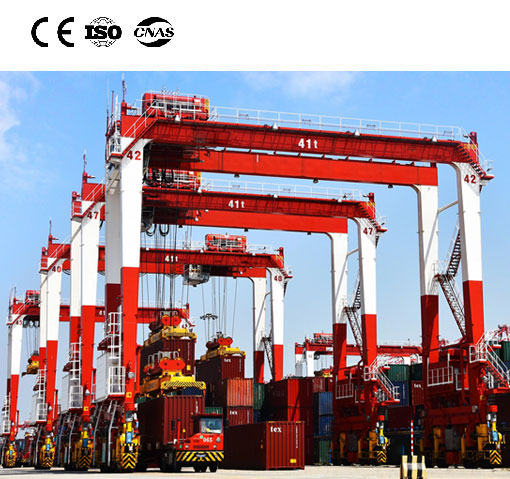
  • Rail Mounted Container Gantry Cranes (RMG): The Backbone of High-Volume Container Yard Efficiency

    Rail Mounted Container Gantry Cranes (RMG): The Backbone of High-Volume Container Yard Efficiency

    In the fast-paced world of container logistics, rail mounted container gantry cranes (RMG) have emerged as a game-changer for high-volume yards and terminals. Unlike their rubber-tired counterparts, RMGs operate on fixed steel rails, delivering unmatched stability, speed, and consistency—critical for handling thousands of containers daily. Whether you’re managing a busy intermodal terminal or a large port yard, understanding RMGs’ design, benefits, and best practices is key to optimizing your operations. This guide breaks down everything you need to know about rail mounted container gantry cranes.
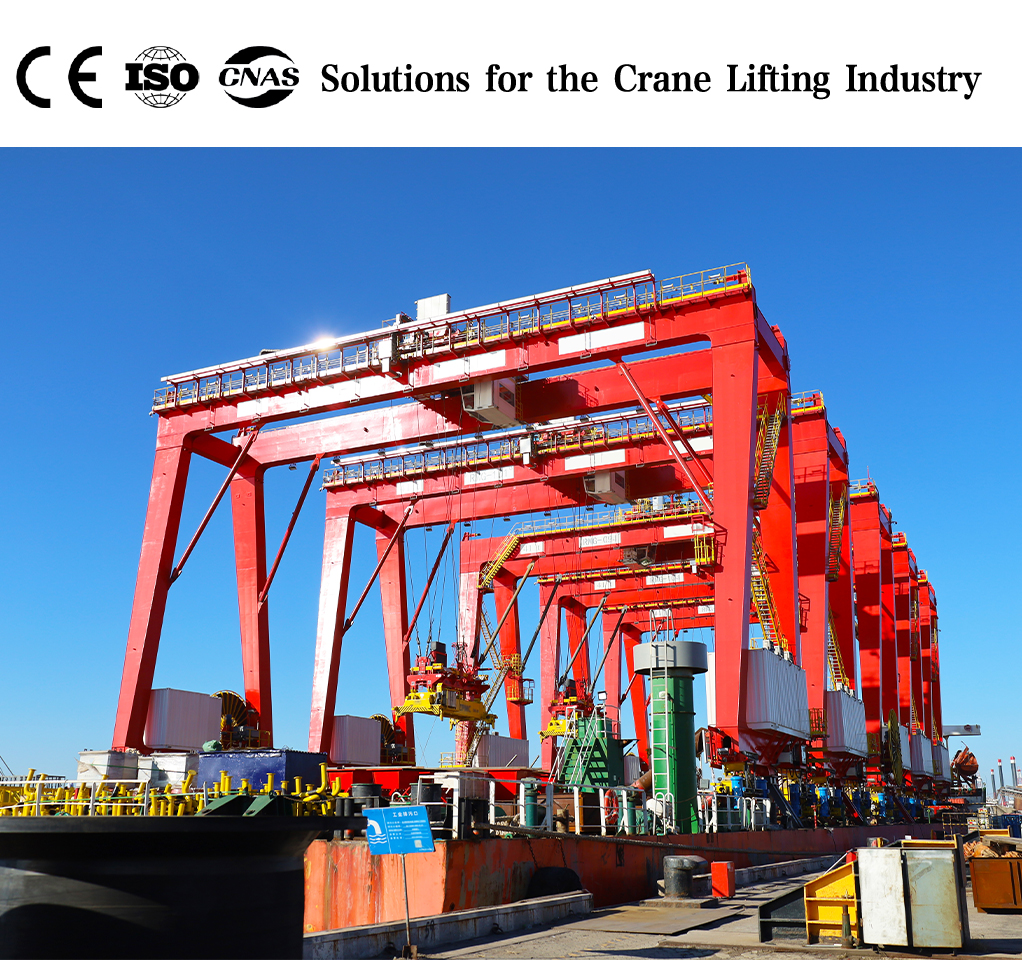
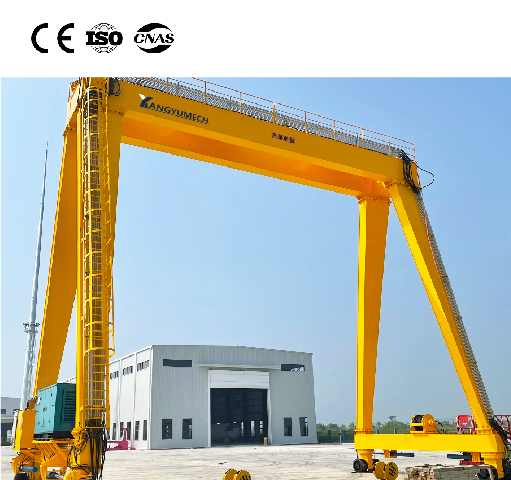
    Rail mounted container gantry cranes(RMG)

    What Are Rail Mounted Container Gantry Cranes (RMG)?

    A rail mounted container gantry crane (RMG) is a heavy-duty lifting system specifically engineered for container handling in yards and terminals. It features a rigid gantry frame supported by legs that run on pre-installed steel rails—typically laid parallel to the container stacking lanes. The crane’s trolley, equipped with a container spreader, moves along the gantry’s main beam to lift, transfer, and stack 20ft, 40ft, or 45ft standard containers.
    Key structural components of RMGs include:
    • Fixed Steel Rails: Provide a stable, precise path for the crane’s movement, eliminating deviations during operation.
    • Rigid Gantry Frame: Ensures minimal sway even when lifting full 40ft containers (up to 80 tons), critical for safety and accuracy.
    • Motorized Trolley: Moves horizontally along the gantry beam at speeds of 30–50 meters per minute, reducing transfer time between stacks.
    • Adjustable Spreader: Automatically adapts to different container sizes, with locking mechanisms that secure containers via their corner castings.
    Unlike rubber-tired gantry cranes (RTGs), RMGs are tied to their rail system—this trade-off for mobility is offset by superior efficiency in high-volume, fixed-layout yards.
    Core Advantages of Rail Mounted Container Gantry Cranes
    For terminals prioritizing speed, stability, and long-term cost savings, rail mounted container gantry cranes offer distinct benefits that make them a top choice. Here are their most impactful advantages:
    1. Higher Operational Speed & Throughput
    RMGs operate at consistent, fast speeds thanks to their rail-guided movement. The trolley and crane travel (along the rails) are powered by high-torque electric motors, enabling:
    • Container transfer speeds of 2–3 cycles per minute (vs. 1–2 cycles for RTGs).
    • Daily throughput of 800–1,200 containers per crane—ideal for busy intermodal yards handling rail-to-truck or ship-to-yard transfers.
    This speed directly translates to reduced dwell time for containers, a key metric for logistics efficiency.
    2. Superior Stability & Precision
    The fixed rail system eliminates the “wheel slippage” or “path deviation” common with RTGs, especially in wet or uneven conditions. This stability ensures:
    • Precise container placement (within ±50mm of the target), reducing the risk of stack collapses or damage.
    • Safe operation even in high winds (up to 25 m/s for most models), a critical advantage for outdoor ports.
    For yards stacking containers 4–6 levels high, this precision is non-negotiable.
    3. Lower Long-Term Maintenance Costs
    While RMGs have higher initial installation costs (for rails), their maintenance needs are significantly lower than RTGs:
    • No tire replacements (a major RTG expense—tires last 1–2 years and cost

      10,000 each).

    • Fewer moving parts in the travel system (rails have minimal wear compared to rubber tires on concrete).
    • Electric power systems (vs. diesel for some RTGs) require less frequent servicing and have fewer mechanical failures.
    Studies show RMGs reduce annual maintenance costs by 30–40% compared to RTGs over a 10-year lifespan.
    4. Energy Efficiency & Sustainability
    Most modern rail mounted container gantry cranes are fully electric, drawing power from the grid or on-site renewable sources (solar, wind). This offers two key benefits:
    • Lower energy costs (electricity is 50–70% cheaper than diesel per hour of operation).
    • Zero on-site emissions, helping terminals comply with strict environmental regulations (e.g., IMO 2025, EU Emissions Trading System).
    Some RMG models also include regenerative braking systems, which feed energy back to the grid when slowing down—further reducing energy waste.
    Ideal Applications for Rail Mounted Container Gantry Cranes
    RMGs are not a one-size-fits-all solution—their design is optimized for specific operational scenarios. Here are the environments where rail mounted container gantry cranes deliver the most value:
    1. Large Intermodal Terminals
    Intermodal yards handling rail-to-truck or truck-to-rail transfers rely on fixed, high-throughput operations. RMGs excel here because:
    • They align with the linear layout of rail tracks, enabling seamless container transfer between trains and stacks.
    • Their high throughput matches the volume of containers moving between modes (e.g., 1,000+ containers per day per crane).
    Examples include North America’s Chicago Rail Yard and Europe’s Rotterdam Intermodal Terminal, both of which use RMGs to handle 50,000+ containers monthly.
    2. High-Volume Port Yards
    Port yards storing containers before/after ship unloading (via STS cranes) need efficient stacking and retrieval. RMGs are ideal because:
    • Their fixed rails fit the grid-like layout of port yards, maximizing space utilization (stacking 5–6 containers high).
    • They integrate easily with automated systems (e.g., IoT sensors, AI scheduling) to coordinate with STS cranes and trucks.
    Singapore’s PSA Tuas Port, one of the world’s largest automated ports, uses over 100 RMGs to handle 65 million TEUs (twenty-foot equivalent units) annually.
    3. Terminals with Fixed Layouts
    Yards with unchanging stacking lanes (no need for reconfiguring paths) benefit most from RMGs. Unlike RTGs (which can reposition for layout changes), RMGs thrive in:
    • Long-term terminal designs with permanent rail and stack alignments.
    • Yards focused on “high-density storage” (maximizing containers per square meter).
    For example, inland container depots (ICDs) that serve a fixed set of customers often choose RMGs for their reliability in static layouts.
    How Does a Rail Mounted Container Gantry Crane Work?
    The operation of an RMG follows a standardized, automated sequence—designed to minimize human error and maximize speed. Here’s a step-by-step breakdown of its workflow:
    Step 1: Receiving the Container (e.g., from a Truck or Train)
    • The crane’s control system (manual or automated) receives a signal to pick up a container from a truck or railcar, which is positioned along the rail line.
    • The RMG travels along its rails to align with the container’s location (guided by GPS or rail encoders for precision).
    Step 2: Spreader Alignment & Lifting
    • The trolley moves along the gantry beam to position the spreader directly above the container.
    • The spreader adjusts its width to match the container size (20ft/40ft) and lowers to clamp onto the container’s corner castings using hydraulic locks.
    • The hoist system lifts the container to a safe height (clear of the truck/railcar and any obstacles—typically 3–5 meters).
    Step 3: Transfer to the Target Stack
    • The RMG travels along its rails to the target stacking lane, while the trolley moves horizontally to align with the exact stack position.
    • The control system uses sensors (laser or camera) to verify the stack’s height and position, ensuring no collisions.
    Step 4: Lowering & Securing the Container
    • The hoist lowers the container gently onto the stack (or directly onto a truck for outbound delivery).
    • The spreader releases its clamps, and the trolley retracts to prepare for the next cycle.
    Step 5: Automated Reporting (for Smart Yards)
    • Post-operation, the RMG’s system updates the terminal’s inventory management software (e.g., TOS—Terminal Operating System) with the container’s new location.
    • This real-time data sharing ensures visibility for all stakeholders (truck drivers, shipping lines, customs).
    Key Factors to Consider When Choosing a Rail Mounted Container Gantry Crane
    Selecting the right rail mounted container gantry crane requires aligning the crane’s specs with your yard’s unique needs. Here are the critical factors to evaluate:
    1. Load Capacity
    • Choose a capacity based on the heaviest containers you handle:
    • Standard 40ft containers (loaded): 40–50 ton capacity.
    • Heavy-duty containers (refrigerated, hazardous): 60–80 ton capacity.
    • Ensure the crane’s spreader can handle oversize containers (e.g., 45ft) if needed.
    2. Span & Stack Height
    • Span: The distance between the crane’s rails (determines how many container rows it can cover). For example:
    • 20-meter span: Covers 4–5 rows of containers (standard for most yards).
    • 30-meter span: For large yards needing wider coverage.
    • Stack Height: The maximum number of containers the crane can stack. Most RMGs handle 4–6 levels, but high-density yards may opt for 7–8 levels (requires reinforced gantry frames).
    3. Automation Level
    RMGs are available in three automation tiers—choose based on your labor goals and budget:
    • Manual: Operator in a cabin controls all functions (best for small yards with low volume).
    • Semi-Automated: Trolley and travel are automated, but the operator oversees lifting/stacking (balances cost and efficiency).
    • Fully Automated: AI and sensors control the entire process (no operator needed), ideal for 24/7 operations (e.g., Singapore’s Tuas Port).
    4. Rail System Compatibility
    • Ensure the crane’s rail gauge (distance between rails) matches your yard’s existing or planned rail system. Standard gauges are 1.435m (global) or 1.524m (some European yards).
    • Consider rail material: High-carbon steel rails (more durable) are better for high-volume yards, while mild steel works for lower-volume sites.
    5. Environmental Compliance
    • If your terminal is in a regulated area (e.g., EU, California), choose electric RMGs over diesel models to meet emissions standards.
    • Look for certifications like ISO 14001 (environmental management) or CE (for European markets) to ensure compliance.
    Maintenance Tips for Rail Mounted Container Gantry Cranes
    Proper maintenance is critical to keeping RMGs running at peak efficiency and avoiding costly downtime. Here’s a practical maintenance checklist:
    1. Daily Inspections
    • Rail System: Check for rail damage (cracks, loose bolts) or debris (dirt, gravel) that could block movement.
    • Spreader: Inspect clamps for wear, hydraulic lines for leaks, and sensors for dirt (clean if needed).
    • Safety Systems: Test emergency stops, overload sensors, and anti-collision devices to ensure they work.
    2. Weekly Maintenance
    • Lubrication: Apply grease to trolley wheels, hoist chains, and rail guides—use high-temperature grease for outdoor cranes.
    • Electrical Systems: Check wiring, connectors, and motor windings for signs of overheating (discoloration, burning smells).
    • Brake System: Inspect brake pads for wear (replace if less than 5mm thick) and adjust brake tension for smooth stopping.
    3. Monthly/Quarterly Servicing
    • Rail Alignment: Use laser alignment tools to check if rails are straight (deviations >5mm can cause premature wear).
    • Spreader Calibration: Adjust the spreader’s width and clamping force to ensure a secure grip on containers.
    • Hoist System: Inspect cables for fraying (replace if 10% of strands are broken) and test the hoist’s speed and lifting capacity.
    4. Annual Overhaul
    • Conduct a full load test (using a dummy container at 125% of rated capacity) to verify structural integrity.
    • Replace worn parts (e.g., trolley bearings, rail clips) and repaint the gantry frame to prevent corrosion (critical for coastal yards).
    • Update software for automated RMGs to ensure compatibility with the latest TOS systems.
    The Future of Rail Mounted Container Gantry Cranes
    As container volumes grow (projected to reach 1.2 billion TEUs by 2030), rail mounted container gantry cranes are evolving to meet new demands. Here are the key trends shaping their future:
    1. Full Automation & AI Integration
    More terminals are adopting “zero-operator” RMGs, powered by:
    • AI scheduling (to optimize crane movement and reduce idle time).
    • Computer vision (to detect container damage or misalignment in real time).
    • 5G connectivity (for faster data transfer between RMGs, TOS, and cloud platforms).
    2. Green Technology Advancements
    • Hydrogen-powered RMGs: Being tested in ports like Hamburg (Germany) to eliminate reliance on grid electricity.
    • Solar panels on gantry frames: Small-scale solar systems to power auxiliary functions (sensors, lights), reducing grid demand.
    3. Modular Design for Flexibility
    To address the “fixed rail” limitation, manufacturers are developing modular RMGs:
    • Removable rail sections (for temporary yards or layout changes).
    • Adjustable spans (to adapt to changing stack widths) via telescoping gantry beams.
    4. Predictive Maintenance with IoT
    IoT sensors embedded in RMGs (on bearings, motors, and rails) collect real-time data to:
    • Predict failures before they occur (e.g., alerting teams to replace a bearing when vibration levels rise).
    • Reduce unplanned downtime by 50% (per industry reports) compared to reactive maintenance.
    Conclusion
    Rail mounted container gantry cranes (RMG) are the gold standard for high-volume, efficient container yards. Their speed, stability, and low long-term costs make them indispensable for intermodal terminals, large ports, and fixed-layout depots. By understanding their advantages, ideal applications, and maintenance needs, you can select an RMG that aligns with your operational goals—whether that’s increasing throughput, reducing costs, or meeting sustainability targets.
    For terminals planning to upgrade their equipment, the key is to balance initial investment (rails + crane) with long-term savings (lower maintenance, energy efficiency). With the rise of automation and green technology, RMGs will only become more critical to the future of global container logistics.
    If you’re ready to invest in an RMG, start by assessing your yard’s volume, layout, and compliance needs—this will help you partner with a manufacturer (e.g., Konecranes, Liebherr, ZPMC) to build a custom solution.
  • Container Gantry Crane: The Backbone of Modern Port & Yard Logistics

    Container Gantry Crane: The Backbone of Modern Port & Yard Logistics

    In the global supply chain, efficient container handling is critical to keeping goods moving—and the container gantry crane stands as the workhorse of this process. Used in ports, intermodal yards, and container terminals worldwide, this heavy-duty equipment streamlines loading, unloading, and stacking of shipping containers, reducing operational time and labor costs. Below is a comprehensive guide to understanding container gantry cranes, including their types, how they work, and how to choose and maintain them.

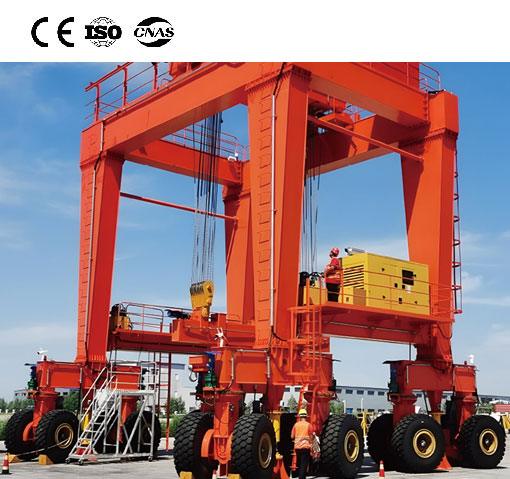
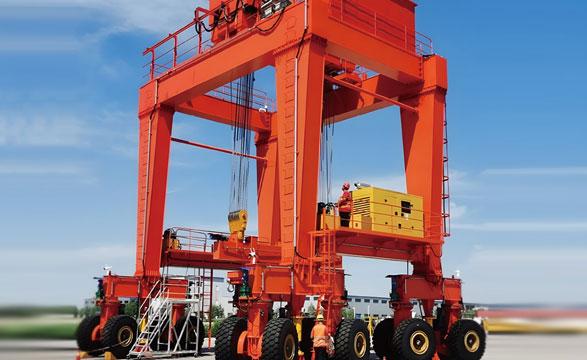
    RTG container crane

    What Is a Container Gantry Crane?

    A container gantry crane (often abbreviated as CGC) is a large, bridge-like lifting device designed specifically for handling standard shipping containers (20ft, 40ft, or 45ft). Unlike traditional gantry cranes, it features a tall, rigid frame (gantry) with a movable trolley and spreader—an attachment that clamps onto containers to lift and transfer them.


    Key characteristics of container gantry cranes include:


    • High load capacity (typically 40–80 tons, enough for full 40ft containers).
    • Wide span (to cover multiple container rows or even ship decks).
    • Precision control (to align containers with trucks, trains, or storage stacks).
    • Adaptability to indoor/outdoor environments (ports, yards, or warehouses).


    Its role is irreplaceable in modern logistics: without it, ports would struggle to handle the millions of containers that pass through annually, leading to costly delays in global trade.

    Common Types of Container Gantry Cranes

    Not all container gantry cranes are the same—different designs cater to specific operational needs. Understanding the types of container gantry cranes helps businesses select the right equipment for their workflow. Here are the four most widely used variants:

    1. Rubber-Tired Gantry Crane (RTG)

    The rubber-tired container gantry crane (RTG) is a mobile option with rubber tires on its legs, making it ideal for container yards where flexibility is key. It operates on a flat, paved surface and can move horizontally to access different storage blocks.


    • Best for: Medium-sized yards, terminals with variable storage layouts, or sites without fixed rails.
    • Advantages: High maneuverability, no need for permanent rail installation, easy to reposition.
    • Limitations: Slower than rail-mounted models; requires regular tire maintenance.

    2. Rail-Mounted Gantry Crane (RMG)

    The rail-mounted container gantry crane (RMG) runs on fixed steel rails, which are installed along the length of the yard. It offers greater stability and speed than RTGs, making it a top choice for high-volume terminals.


    • Best for: Large ports, busy intermodal yards, or sites with fixed container stacking lanes.
    • Advantages: Faster operation, higher load stability, lower maintenance (no tires to replace).
    • Limitations: Inflexible layout (tied to rail paths); higher initial installation costs.

    3. Ship-to-Shore Gantry Crane (STS)

    Also known as a “quay crane,” the ship-to-shore container gantry crane (STS) is the largest type, designed to load/unload containers directly from cargo ships to trucks or yard cranes. It’s mounted on a fixed structure along the port’s quay (dock) and has an extendable boom to reach across ship decks.


    • Best for: Deep-sea ports, container terminals handling large vessels (e.g., Panamax or Post-Panamax ships).
    • Advantages: Extra-long reach (up to 60 meters), ultra-high load capacity (100+ tons), weather-resistant design.
    • Limitations: Immobile (fixed to quay), requires coordination with yard cranes for downstream handling.

    4. Rubber-Tired Quay Crane (RTQC)

    A hybrid of STS and RTG cranes, the rubber-tired quay crane (RTQC) combines the reach of an STS crane with the mobility of an RTG. It’s mounted on rubber tires and can move along the quay, making it suitable for smaller ports or terminals with limited space.


    • Best for: Small to medium ports, terminals with multiple berths, or temporary container handling needs.
    • Advantages: Flexible berth usage, lower installation costs than STS cranes.
    • Limitations: Lower load capacity than STS cranes; not ideal for ultra-large ships.

    How Does a Container Gantry Crane Work?

    The operation of a container gantry crane follows a simple but precise sequence, driven by electric motors and hydraulic systems. Here’s a step-by-step breakdown of its working principle:


    1. Positioning the Crane: Depending on the type (RTG, RMG, etc.), the crane moves to the target location—e.g., an RTG drives to a container stack, while an STS crane extends its boom over a ship’s deck.
    2. Spreader Alignment: The trolley (mounted on the crane’s 主梁,or “main beam”) moves horizontally to align the spreader with the container. The spreader adjusts its width to match the container size (20ft/40ft).
    3. Lifting the Container: The spreader clamps onto the container’s corner castings (standardized metal fittings) using hydraulic or mechanical locks. The hoist system (powered by electric motors) lifts the container to a safe height (to avoid obstacles).
    4. Transferring the Container: The trolley moves the container horizontally across the gantry’s span to the target destination—e.g., a truck bed, train flatcar, or storage stack.
    5. Lowering and Unclamping: The hoist lowers the container gently onto the target surface. The spreader releases its clamps, and the trolley retracts to prepare for the next cycle.


    Modern container gantry cranes often include automation features (e.g., GPS, cameras, or IoT sensors) to reduce human error and speed up operations. For example, automated RMG cranes can operate 24/7 without manual intervention, cutting down on downtime.

    Key Factors to Consider When Choosing a Container Gantry Crane

    Selecting the right container gantry crane depends on your operational needs, budget, and site constraints. Here are the top factors to evaluate:

    1. Load Capacity

    Ensure the crane can handle your maximum container weight. For standard 40ft containers (loaded), a capacity of 40–50 tons is sufficient; for heavy-duty applications (e.g., refrigerated containers), opt for 60–80 tons.

    2. Span and Reach

    • Span: For yard cranes (RTG/RMG), the span determines how many container rows it can cover (e.g., a 20-meter span covers 4–5 rows).
    • Reach: For quay cranes (STS/RTQC), the boom reach must match the largest ship your terminal handles (e.g., Post-Panamax ships require 50+ meter reach).

    3. Mobility Needs

    • Choose RTG/RTQC if you need flexibility (e.g., changing yard layouts).
    • Choose RMG/STS if you prioritize speed and stability (e.g., high-volume fixed routes).

    4. Automation Level

    Basic cranes require manual operation (with a operator cabin), while advanced models offer semi-automated or fully automated control. Automation reduces labor costs and improves accuracy but increases upfront investment.

    5. Environmental Requirements

    Look for energy-efficient models (e.g., electric-powered instead of diesel) to comply with port emissions regulations (e.g., the International Maritime Organization’s IMO 2025 standards). Some cranes also include regenerative braking systems to reduce energy waste.

    Container Gantry Crane Maintenance: Tips to Extend Lifespan

    Proper maintenance is essential to keep container gantry cranes running smoothly and avoid costly breakdowns. Here’s a maintenance checklist to follow:

    1. Daily Inspections

    • Check the spreader: Ensure clamps are in good condition (no cracks or wear) and hydraulic lines are leak-free.
    • Inspect tires (for RTGs/RTQCs): Look for punctures, uneven wear, or low pressure.
    • Test brakes and safety systems: Verify emergency stops, overload sensors, and anti-collision devices work properly.

    2. Weekly Maintenance

    • Lubricate moving parts: Apply grease to trolley wheels, hoist chains, and pivot points to reduce friction.
    • Inspect electrical systems: Check wires, connectors, and motors for signs of overheating or damage.
    • Clean sensors and cameras: For automated cranes, clean lenses to maintain accurate positioning.

    3. Monthly/Annual Servicing

    • Replace worn parts: Swap out old tires, brake pads, or hydraulic seals before they fail.
    • Calibrate systems: Adjust the spreader’s alignment and hoist’s load sensors to ensure precision.
    • Conduct load tests: Periodically test the crane’s maximum capacity (with a dummy load) to confirm it meets safety standards.

    4. Weather Protection

    For outdoor cranes (STS/RTG), install weatherproof covers on electrical components and use corrosion-resistant paint to prevent rust (critical for coastal ports with saltwater exposure).

    The Future of Container Gantry Cranes

    As global trade grows, container gantry cranes are evolving to meet higher demand for speed, efficiency, and sustainability. Key trends include:


    • Full Automation: More terminals are adopting “zero-operator” cranes, controlled by AI and real-time data (e.g., Singapore’s PSA Jurong Port).
    • Eco-Friendly Designs: Manufacturers are developing battery-powered RTGs and hydrogen-fueled STS cranes to reduce carbon emissions.
    • Smart Monitoring: IoT sensors will enable predictive maintenance—alerting teams to potential issues before they cause downtime.

    Conclusion

    The container gantry crane is more than just a piece of equipment—it’s a cornerstone of global logistics. Whether you’re operating a small yard or a major port, understanding its types, working principle, and maintenance needs is key to optimizing your container handling process. By choosing the right crane and following a strict maintenance schedule, you can reduce costs, improve safety, and keep up with the fast-paced world of international trade.


    If you’re looking to invest in a container gantry crane, start by assessing your load capacity, span needs, and automation goals—this will help you select a model that aligns with your long-term operational plans.
  • Single Girder Truss Gantry Crane for Outdoor & Ground-Mounted Lifting

    Single Girder Truss Gantry Crane for Outdoor & Ground-Mounted Lifting

    In the field of outdoor material handling—from construction sites to open-air storage yards—single girder truss gantry cranes stand as flexible, cost-efficient solutions. Unlike overhead single girder truss cranes (suspended from building structures), these gantry models feature a single truss beam supported by ground-mounted legs and run on floor rails, eliminating reliance on systems. Ideal for light-to-medium outdoor lifting (1–30 tons, spans of 10–35 meters), they fill a critical gap for operations where overhead infrastructure is unavailable. 
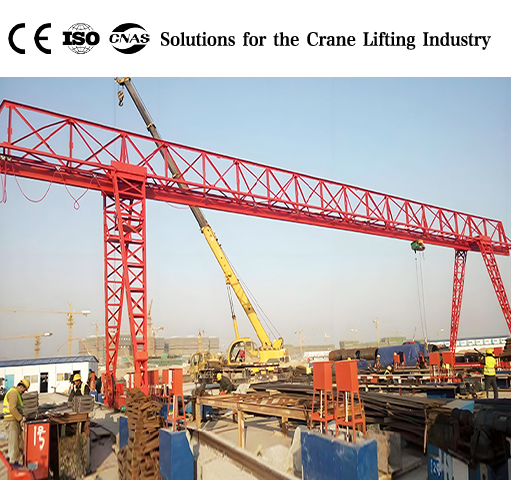
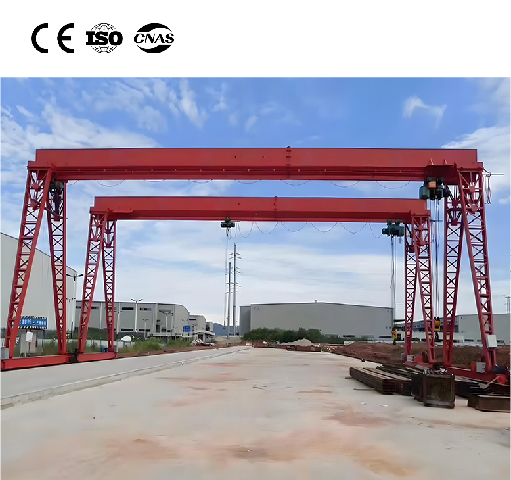
    single girder truss gantry cranes
    single girder truss gantry cranes

    1. What Is a Single Girder Truss Gantry Crane?

    A single girder truss gantry crane is a ground-mounted lifting system built around a single load-bearing truss beam (composed of triangular steel units) supported by two or four vertical legs. Unlike overhead cranes, it travels on rails installed directly on the ground (or concrete foundations), making it independent of building structures. This design balances structural efficiency (truss reduces weight) and outdoor adaptability (ground rails enable wide coverage).


    Key components that define its functionality:


    • Truss Beam: The core load-bearing structure (typically Q235/Q355 steel), 10–35 meters in span. The truss design cuts self-weight by 25%–30% vs. solid single-girder beams, lowering rail and foundation costs.
    • Ground-Mounted Legs: Two (or four for extra stability) steel legs connecting the truss beam to the end trucks. Leg height ranges from 3–8 meters, accommodating loads like stacked containers or tall machinery.
    • End Trucks & Rails: Wheel-equipped end trucks (mounted at the base of legs) run on parallel ground rails (6–12 meters wide), enabling the crane to cover large outdoor areas (e.g., 100+ meters of rail for storage yards).
    • Hoist & Trolley: An underslung trolley (mounted beneath the truss beam) carries an electric chain/wire rope hoist (1–30 tons). Most hoists include variable speed controls (0.3–12 m/min) for precise outdoor lifting.
    • Outdoor-Ready Controls: Weatherproof pendant or wireless remote controls (IP65-rated) with safety features—overload protection, emergency stop, and wind speed sensors (for high-wind regions).


    Its defining trait: Independence from overhead structures—critical for outdoor sites like construction yards, port storage areas, or factories without dedicated crane-supporting buildings.

    2. Core Advantages of Single Girder Truss Gantry Cranes

    Single girder truss gantry cranes excel in outdoor light-to-medium lifting, offering unique benefits that set them apart from overhead or double-girder gantry alternatives:

    2.1 Low Infrastructure Dependence & Cost

    • No Building Modifications: Unlike overhead cranes, they require no 厂房 beams or ceiling supports—ideal for greenfield sites or temporary projects (e.g., highway construction). Foundation costs are minimal: a 10-ton model needs only reinforced concrete rails (≈$20–$30 per meter) vs. $5,000+ for overhead crane supports.
    • Affordable Procurement: With one truss beam and simplified legs, they cost 35%–45% less than double girder truss gantry cranes. For example, a 10-ton, 15-meter span model ranges from $8,000–$15,000, vs. $18,000–$30,000 for a double girder alternative.

    2.2 Outdoor Durability

    • Weather Resistance: Standard models include anti-corrosion coatings (zinc-plated or epoxy-painted) for rain/salt spray, while premium versions use marine-grade steel (316L) for coastal ports. Electrical components (motors, controls) are IP65-rated to withstand dust, rain, and temperature swings (-20°C to 60°C).
    • Wind Stability: Optional wind bracing (for legs) and wind speed sensors (automatic shutdown at >22 m/s) prevent tipping in outdoor gusts—critical for open yards or coastal sites.

    2.3 Flexible Coverage & Adaptability

    • Wide Rail Coverage: Ground rails can be extended to 100+ meters, enabling the crane to service large storage areas (e.g., a 200-meter rail for a steel coil yard). Rails are easy to relocate for temporary projects (e.g., 6-month construction sites).
    • Adjustable Leg Height: Legs can be customized (3–8 meters) to handle tall loads—e.g., 5-meter legs for stacking 2x 40-foot containers (≈4.8 meters tall) or 8-meter legs for lifting tall machinery (e.g., 7-meter construction excavators).

    2.4 Easy Installation & Operation

    • Fast Setup: A 10-ton model takes 2–4 days to install (rails + crane assembly) vs. 7–10 days for double girder gantries. No specialized lifting equipment is needed—most components weigh <1 ton.
    • Intuitive Controls: Wireless remotes (range: 50–100 meters) let operators stand clear of loads, improving safety in busy outdoor sites. Minimal training is required (1–2 days) vs. 3–5 days for complex double girder models.

    3. Key Applications of Single Girder Truss Gantry Cranes

    Single girder truss gantry cranes are tailored to outdoor and ground-mounted lifting scenarios, with applications spanning industries where overhead infrastructure is impractical:

    3.1 Open-Air Storage Yards

    • Steel/Metal Storage: Lifting 5–20 ton steel coils, I-beams, or pipe sections in metal yards. A steel distributor in Texas uses 4 single girder truss gantry cranes (15-ton, 20-meter span) to move coils between railcars and storage racks.
    • Container Yards: Handling 10–30 ton 20/40-foot containers in small-to-medium ports or inland depots. The adjustable trolley and wide rail coverage enable stacking containers 2–3 high.

    3.2 Construction & Infrastructure Projects

    • Highway/Bridge Construction: Lifting 3–15 ton precast concrete beams, steel girders, or construction machinery (e.g., bulldozers) at job sites. A bridge construction project in Florida uses a 12-ton, 25-meter span model to place 10-ton concrete segments.
    • Building Construction: Moving 2–8 ton building materials (e.g., steel frames, HVAC units) to upper floors of low-rise buildings (3–5 stories). The ground rails can be adjusted as the project expands.

    3.3 Manufacturing & Industrial Outdoor Areas

    • Heavy Machinery Assembly: Lifting 8–25 ton engine blocks, chassis, or large components in outdoor assembly areas (e.g., agricultural tractor factories). A tractor manufacturer in Illinois uses a 20-ton, 30-meter span model to assemble 18-ton tractor frames.
    • Wastewater Treatment Plants: Handling 5–12 ton pumps, filters, or tank components in outdoor treatment areas. Corrosion-resistant models (epoxy coating + stainless steel parts) withstand moisture and chemical exposure.

    3.4 Logistics & Distribution Centers

    • Outdoor Pallet Storage: Lifting 1–5 ton palletized goods (e.g., bulk food, consumer goods) in open-air distribution yards. The crane’s wide coverage reduces the need for multiple forklifts, cutting labor costs by 20%.
    • Railcar Loading/Unloading: Moving 5–15 ton cargo (e.g., grain, fertilizer) between railcars and trucks in outdoor rail yards. The variable speed hoist prevents spillage of bulk materials.

    4. Critical Factors for Selecting a Single Girder Truss Gantry Crane

    Choosing the right model requires aligning it with outdoor site conditions, load needs, and long-term usability. Below are the most important considerations:

    4.1 Load Requirements & Safety Margins

    • Rated Load: Calculate your maximum typical load (e.g., 8 tons for construction beams, 20 tons for containers). Add a 15%–20% safety margin (e.g., a 23-ton crane for 20-ton containers) to account for outdoor load instability (e.g., wind-induced sway).
    • Load Type: For bulky loads (e.g., containers), select a crane with a spreader beam attachment. For fragile loads (e.g., precast concrete), opt for a hoist with soft-start/stop controls to avoid impact.

    4.2 Site & Environmental Conditions

    • Ground Flatness: The site must have level ground (±5mm per meter) for rail installation. Uneven ground requires grading (cost: $1–$3 per square meter) or adjustable leg feet (to compensate for 10–15mm slopes).
    • Outdoor Hazards:
      • Coastal/Saltwater: Choose marine-grade steel (316L) and anti-corrosion coatings to prevent rust (adds 10%–15% to cost but extends lifespan by 5–7 years).
      • High-Wind Areas: Select wind bracing for legs and wind speed sensors (automatic shutdown at >22 m/s) to avoid tipping.
      • Cold Climates: Opt for low-temperature lubricants (-30°C to 40°C) and heated electrical enclosures to prevent freezing.

    4.3 Span & Rail Configuration

    • Span Length: Measure the width of the area to cover (e.g., 15 meters for a single railcar, 30 meters for two parallel storage rows). Standard spans are 10–35 meters; custom spans up to 40 meters are available from manufacturers like ABUS or Konecranes.
    • Rail Type: Choose between concrete-embedded rails (permanent sites, cost: $25–$40 per meter) or temporary steel rails (portable sites, cost: $15–$25 per meter). Ensure rail spacing matches the crane’s wheelbase (typically 1.5–3 meters).

    4.4 Work Class & Duty Cycle

    • Work Class (ISO 4301):
      • A1–A2 (Light Duty): 0.5–1 hour/day (e.g., occasional container moves).
      • A3–A4 (Medium Duty): 2–6 hours/day (e.g., daily construction lifting).
      • A5 (Heavy Light Duty): 6–10 hours/day (e.g., high-volume storage yard operations).
    • Duty Cycle: Calculate lifts per hour (e.g., 3–5 lifts/hour for medium duty, 8–12 lifts/hour for heavy light duty). High-duty cycles require reinforced truss nodes and IP54-rated motors (dust/water resistant).

    5. Maintenance Best Practices for Single Girder Truss Gantry Cranes

    Outdoor conditions (rain, dust, temperature swings) accelerate wear—proactive maintenance extends lifespan to 12–18 years (vs. 8–10 years for neglected models):

    5.1 Daily Inspections (10–15 Minutes/Shift)

    • Rail & End Trucks: Check rails for debris (e.g., dirt, rocks) and alignment (replace damaged rail sections if bent >3mm). Inspect end truck wheels for wear (tread depth <8mm requires replacement) and loose bolts.
    • Truss Beam & Legs: Look for loose truss bolts (tighten with torque wrench to 40–60 N·m for M12 bolts) and leg bracing cracks (focus on leg-to-beam connections).
    • Hoist & Controls: Test hoist brakes (hold a full load for 5 minutes without slipping) and weatherproof controls (ensure no water ingress in pendant/remote).

    5.2 Weekly/Monthly Preventive Maintenance

    • Weekly: Lubricate end truck wheels and trolley gears with lithium-based grease (e.g., Mobilux EP 2) — outdoor dust requires more frequent lubrication (every 50 hours vs. 100 hours indoors). Clean truss beams with a pressure washer to remove dirt/salt.
    • Monthly: Inspect electrical connections (wiring, terminals) for corrosion—use dielectric grease to protect connections. Check anti-corrosion coatings (touch up chipped paint with epoxy to prevent rust).

    5.3 Annual Overhaul (2–3 Days)

    • Component Replacement: Replace worn parts: brake pads (every 1,500 hours), hoist chain links (stretched >3%), and rail fasteners (rusted or loose).
    • Load Testing: Conduct a static load test with 125% of rated capacity (e.g., 12.5 tons for 10-ton cranes) to verify truss/leg integrity. Use certified test weights and document results.
    • Weatherproofing Upgrade: Apply a fresh coat of anti-corrosion paint to legs and truss beams (every 2 years for coastal sites) and replace worn weather seals on electrical enclosures.

    5.4 Seasonal Maintenance

    • Winter Prep: Replace lubricants with low-temperature grades (-30°C) and install heated enclosures for controls (if temperatures drop below -10°C).
    • Summer Prep: Clean motor cooling fans (dust buildup reduces efficiency) and check wind speed sensors (calibrate to ensure accurate shutdown triggers).
    • Coastal Seasonal Care: Rinse legs/rails with fresh water monthly to remove salt residue (prevents galvanic corrosion).

    6. Future Trends in Single Girder Truss Gantry Cranes

    The industry is evolving to meet the demand for smarter, more sustainable outdoor lifting:

    6.1 IoT-Enabled Outdoor Monitoring

    • Remote Condition Tracking: Manufacturers like Demag now offer models with IoT sensors that monitor leg stress, rail alignment, and hoist temperature. Data is sent to cloud platforms (e.g., Demag Smart Control) for real-time alerts—reducing unplanned downtime by 35%.
    • Wind & Weather Adaptation: AI-powered systems adjust lifting speed based on real-time wind data (e.g., slow hoist speed to 2 m/min if winds exceed 15 m/s) to prevent load sway.

    6.2 Green & Portable Solutions

    • Battery-Powered Hoists: Lithium-ion battery hoists (8–12 hour run time) replace electric models for sites without grid power (e.g., remote construction sites). Solar panels (mounted on truss beams) can recharge batteries, cutting fuel costs for generators.
    • Modular/Portable Designs: Foldable legs and lightweight truss sections (aluminum-steel hybrid) reduce transport size by 50%—ideal for temporary projects (e.g., 3-month road construction).

    6.3 Automation for Outdoor Efficiency

    • Semi-Autonomous Operation: GPS-guided trolleys and AI load positioning enable semi-automatic container stacking (error rate <1% vs. 5% for manual operation). Useful for large storage yards with repetitive tasks.
    • Fleet Integration: Multiple cranes can be controlled from a central dashboard (e.g., for a 5-crane steel yard), optimizing coverage and reducing operator labor by 40%.

      Conclusion

      Single Girder Truss Gantry Cranes are the go-to solution for outdoor light-to-medium lifting—offering independence from overhead structures, outdoor durability, and cost efficiency. By focusing on site conditions (ground flatness, weather), matching load needs to crane specs, and following outdoor-specific maintenance, you can maximize productivity and extend lifespan. 
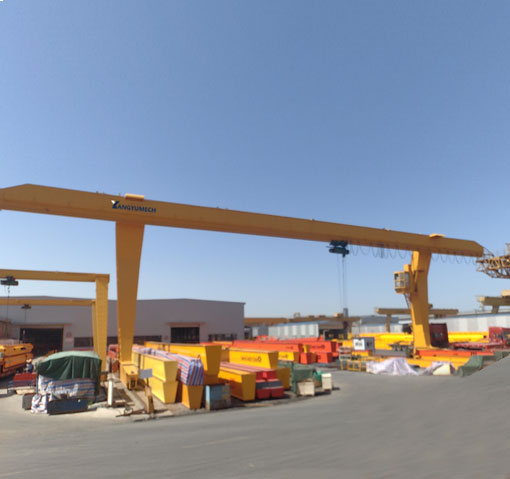
    • Yangyu Bilateral overhang Single girder gantry crane: The Top Choice for Symmetric Lifting Scenarios

      In industrial spaces like large-scale warehouses, manufacturing plants with parallel production lines, and logistics hubs with dual-sided loading docks, lifting tasks often demand “symmetric coverage”—for instance, transferring materials between two adjacent assembly lines, loading/unloading trucks on both sides of a central aisle, or hoisting goods to storage racks flanking the crane’s path. Traditional gantry cranes struggle to meet this need: single-side overhang models can only reach one side, leading to inefficient repositioning, while no-overhang models are confined to the area between their legs. This is where the Yangyu Bilateral overhang Single girder gantry crane emerges as a game-changer. Engineered with identical external overhangs (1-3 meters per side) on both ends of the main girder, this crane delivers balanced lifting performance (rated capacity 1-12 tons) and seamless adaptation to symmetric workspaces. Whether you’re a plant manager coordinating dual-line production or a warehouse supervisor optimizing two-sided loading, this guide will detail everything you need to know about this specialized crane: its design highlights, core advantages, real-world applications, selection strategies, and why it outperforms generic symmetric-lifting solutions.
      new3

      What Is the Yangyu Bilateral overhang Single girder gantry crane?

      To understand the unique value of this crane, let’s start with its definition, structural characteristics, and how it differs from standard single girder gantry cranes:
      1. Core Design: Symmetric Bilateral Overhang for Balanced Coverage
      The Yangyu Bilateral overhang Single girder gantry crane features a single main girder (crafted from high-strength Q345 box-section steel) supported by two heavy-duty end carriages (legs). Unlike single-side overhang models, it extends identical overhang beams from both sides of the main girder—each overhang (customizable from 1.5m to 3m) projects beyond the outer edge of the corresponding leg, forming a “symmetric working range” that covers both the inner area (between the legs) and the two outer zones (beyond each overhang).
      Yangyu optimizes the bilateral overhang structure with two key engineering enhancements:
      • Symmetric Stress Distribution: Reinforced steel plates (14-18mm thick) are welded at the junction of the main girder and each overhang beam, ensuring even load transfer—even when lifting full-capacity loads on both overhangs simultaneously, preventing structural deformation.
      • Continuous Trolley Rail: A patented Yangyu YR-series anti-derail trolley rail runs seamlessly along the main girder and both overhang beams, allowing the lifting hoist to move smoothly between inner and outer workspaces without jolts or derailment risks.
      2. Key Components & Yangyu-Exclusive Upgrades
      Every Yangyu bilateral overhang crane integrates durable components and brand-specific innovations to ensure long-term reliability:
      • Main Girder: Adopts box-section steel (instead of standard I-steel), which boosts rigidity by 35% compared to single-side overhang models—minimizing deflection when lifting heavy loads on both overhangs.
      • Bilateral Overhang Beams: Heat-treated and galvanized for corrosion resistance, with built-in vibration dampers (Yangyu patent) to reduce load sway during outdoor or high-wind operations.
      • Electric Hoist: Equipped with Yangyu’s YH-Pro series electric hoist (220V/380V), featuring dual-speed control (10m/min for fast lifting, 2m/min for precise positioning) and IP55 protection—suitable for dusty, humid, or semi-outdoor environments.
      • Control System: A wireless remote (150m operating range) with dual LCD displays (showing load weight and hoist position for each overhang) and a “symmetric mode”—this mode synchronizes hoist movement on both sides, critical for lifting long materials (e.g., 6m steel beams) that require balanced support.
      • Safety Systems: Overload protection (auto-stops at 110% of rated capacity), bilateral limit switches (prevent the hoist from exceeding overhang ends), and a wind-speed sensor (auto-locks the hoist if wind speed exceeds 10 m/s). All safety features comply with international standards such as ISO 4301, CE, and OSHA.

      Why Choose the Yangyu Bilateral overhang Single girder gantry crane?

      Yangyu’s bilateral overhang design isn’t just a “two-sided extension” of single-side models—it solves pain points that generic symmetric cranes can’t address. Here are its standout advantages:
      1. Perfect for Symmetric & Dual-Side Workspaces
      For sites where lifting needs are evenly distributed on both sides of the crane’s path, this model eliminates the inefficiency of using two single-side overhang cranes. Typical scenarios include:
      • Dual-Loading Warehouses: A logistics hub with loading docks on both sides of a 15m-wide central aisle—each overhang reaches directly into truck beds (up to 3m from the aisle), cutting truck turnaround time by 50% compared to alternating between two single-side cranes.
      • Parallel Production Lines: An automotive factory with two assembly lines flanking the crane’s path—the left overhang lifts parts from a storage area to Line A, while the right overhang moves finished components from Line B to shipping, no crane repositioning required.
      Tests show that Yangyu’s bilateral overhang crane increases “dual-side task efficiency” by 60% compared to using two single-side models, as it eliminates downtime from repositioning and setup.
      2. Balanced High Load Capacity on Both Overhangs
      Generic bilateral overhang cranes often have uneven load capacity on their two overhangs (e.g., a 5-ton model may only lift 3.5 tons on one side and 3 tons on the other). Thanks to Yangyu’s symmetric design and reinforced structure, 85-95% of the rated capacity is maintained on both overhangs:
      • A 5-ton Yangyu crane can lift 4.7 tons on each 2m overhang.
      • A 10-ton model handles 9 tons on each 2.5m overhang.
      This balance is crucial for tasks like lifting long, heavy materials (e.g., 8-ton steel beams) that require support on both ends, preventing load tilting and costly damage.
      3. Cost-Effective vs. Two Single-Side Overhang Cranes
      Using two single-side overhang cranes to cover dual sides costs 40-50% more upfront than one Yangyu bilateral model. Additionally:
      • Lower Installation Costs: One crane requires only one set of rails (or rubber tires) and one foundation, compared to two sets for dual single-side models. Installation takes 3-4 days (vs. 6-7 days for two cranes).
      • Reduced Maintenance: With 50% fewer moving parts than two single-side cranes, annual maintenance costs are
      4. Yangyu’s Durability & Weather Resistance
      Yangyu subjects every bilateral overhang crane to rigorous testing to ensure industrial-grade performance:
      • Dual-Overhang Load Test: 1,200 cycles of lifting 100% rated capacity on both overhangs simultaneously, with no structural deformation.
      • Corrosion Test: 1,000 hours of salt-spray testing (simulating coastal environments) on galvanized overhang beams—no rust or wear detected.
      Customers report an average service life of 13-16 years—4 years longer than generic bilateral overhang cranes—thanks to Yangyu’s high-quality steel and powder-coated finish (for indoor use) or galvanized + powder-coated combination (for outdoor use).

      Real-World Applications of Yangyu Bilateral Overhang Cranes

      Yangyu’s bilateral overhang model has proven its value across industries with symmetric lifting needs. Below are three detailed, industry-specific use cases:
      Case 1: Dual-Side E-Commerce Warehouse (Netherlands)
      A large e-commerce warehouse in Rotterdam handles 50+ delivery trucks daily, with loading docks on both sides of a 12m-wide central aisle. Using two single-side overhang cranes caused severe bottlenecks—trucks waited an average of 45 minutes for loading. After installing a 6-ton Yangyu bilateral overhang crane (2m overhangs on each side, 10m main span):
      • Trucks on both sides were loaded simultaneously, cutting wait time to 15 minutes.
      • The crane’s symmetric trolley movement reduced pallet damage by 70% (no more uneven lifting or jolts).
      • Annual operational costs dropped by €30,000 (vs. maintaining two single-side cranes).
      Case 2: Steel Fabrication Plant (China)
      A Wuxi steel plant produces 10m-long steel beams (weighing 8 tons each) and needed to move them from a cutting line to two parallel welding lines. A single-side overhang crane required 20 minutes per beam (repositioning between lines); a Yangyu 10-ton bilateral overhang crane (2.5m overhangs) transformed operations:
      • Beams were lifted from the cutting line and placed directly on either welding line in just 8 minutes.
      • The crane’s vibration damper prevented beam warping (a $1,200 loss per damaged beam).
      • Daily production increased from 30 beams to 55 beams (83% improvement).
      Case 3: Agricultural Machinery Factory (U.S.)
      An Iowa factory manufacturing tractors has two assembly lines and needed to move 5-ton engine blocks from a central warehouse to both lines. A no-overhang crane couldn’t reach the lines (2m from the warehouse edge); a Yangyu 7-ton bilateral overhang crane (2m overhangs) solved the problem:
      • Engines were delivered to Line A via the left overhang and Line B via the right overhang, with zero downtime.
      • The wireless remote’s symmetric mode ensured engines were placed within 2cm of the assembly fixture, reducing rework.
      • Labor costs decreased by 25% (one operator handled both lines, vs. two operators before).

      How to Select the Right Yangyu Bilateral overhang Single girder gantry crane?

      To maximize your investment and ensure the crane fits your symmetric lifting needs, follow these 5 steps:
      Step 1: Define Overhang Length & Load Requirements
      • Bilateral Overhang Length: Measure the distance from each side of the crane’s path to the farthest lifting point (e.g., 2m from left leg to Line A = 2m left overhang; 2m from right leg to Line B = 2m right overhang). Yangyu offers 1.5m, 2m, 2.5m, and 3m overhangs—keep lengths identical for balanced tasks (custom unequal lengths are available for hybrid symmetric-asymmetric needs).
      • Overhang Load Capacity: Calculate your heaviest load for either overhang (e.g., 4-ton pallets = choose a crane with ≥4.5-ton overhang capacity). Yangyu provides a “bilateral capacity chart” (e.g., 6-ton crane: 5.5t@2m overhangs, 5t@2.5m overhangs).
      • Main Girder Span: Measure the distance between the two support points (e.g., warehouse walls, rail ends) for the crane’s main body—Yangyu offers spans from 6m to 22m.
      Step 2: Match to Your Work Environment
      • Indoor vs. Outdoor/Semi-Outdoor:
      • Indoor (e.g., factories, warehouses): Standard model with IP54 hoist and powder-coated steel.
      • Outdoor/Semi-Outdoor (e.g., ports, construction yards): Yangyu’s “All-Weather Package” (galvanized steel, IP65 hoist, rain cover for electrical components, and wind-speed sensor).
      • Rail vs. Rubber-Tired:
      • Fixed paths (e.g., between two production lines): Rail-mounted (Yangyu KR-Pro series rails, 22mm thick) with reinforced rail pads under both overhang legs to support heavy loads.
      • Flexible paths (e.g., construction yards): Rubber-tired (battery-powered, 0-90° steering) with Yangyu’s anti-slip tires for uneven surfaces like gravel or concrete.
      Step 3: Choose the Right Hoist & Controls
      • Hoist Type:
      • Electric Hoist (Yangyu YH-Pro series): Mandatory for dual-side tasks—supports continuous use (8+ lifts/hour) and symmetric mode. Choose 220V for small workshops, 380V for industrial sites.
      • Manual Hoist (optional): Only for occasional, light loads (≤2 tons)—not recommended for bilateral tasks (lacks symmetric control and speed adjustment).
      • Controls: Yangyu’s YC-Pro wireless remote is required (dual displays, emergency stop on both remote and crane). Avoid pendant controls, as they limit operator visibility of both overhangs.
      Step 4: Verify Safety & Compliance
      Ensure the crane meets regional standards to avoid accidents and legal risks:
      • Global Markets: CE (Europe), OSHA (U.S.), ISO 4301 (international crane safety).
      • China Market: GB/T 3811-2008 (crane design) and GB 6067.1-2010 (safety rules).
      • Additional Safety: Add Yangyu’s “Bilateral Safety Kit” (includes load cell displays for both overhangs, anti-sway devices, and overhang beam stress sensors) for high-risk tasks (e.g., lifting 10+ ton loads or outdoor operations).
      Step 5: Leverage Yangyu’s Customization & After-Sales Support
      Yangyu specializes in tailored solutions for symmetric lifting—don’t settle for off-the-shelf models:
      • Custom Overhangs: Need 3.5m overhangs? Yangyu can design them with reinforced steel (minor cost increase, no capacity loss).
      • After-Sales Service: Opt for Yangyu’s “Global Care Plan”—24-hour repair support (available in 50+ countries), 2-year warranty on main girder/overhang beams, and 1-year warranty on the hoist.
      • Site Assessment: Request a free on-site evaluation from Yangyu’s engineers—they’ll measure your workspace, calculate load needs, and recommend the optimal configuration.

      Installation & Maintenance Tips for Yangyu Bilateral Overhang Cranes

      Proper installation and regular maintenance are critical to ensuring symmetric performance and long service life. Follow Yangyu’s recommended guidelines:
      Installation Best Practices (Yangyu-Certified)
      1. Foundation Preparation:
      • Rail-mounted: Install Yangyu KR-Pro rails on a level concrete foundation (≥25cm thick) with laser alignment (error ≤0.8mm/m). Add 30cm-thick reinforced concrete pads under both overhang legs to support dual-side loads.
      • Rubber-tired: Ensure ground slope ≤1.5° and bearing capacity ≥0.35MPa (use Yangyu’s ground test kit to verify).
      1. Symmetric Alignment:
      • After mounting the main girder to the legs, use Yangyu’s dual-laser alignment tool to confirm both overhang beams are horizontal (error ≤0.5mm/m) and parallel to each other. Unbalanced overhangs cause hoist drift and load tilting.
      1. Dual-Overhang Test Run:
      • No-Load Test: Run the hoist along the main girder and both overhangs 5 times—check for smooth movement and limit switch activation on both ends.
      • Load Test: Lift 50% rated capacity on one overhang, then 50% on the other, then 100% on both simultaneously. Hold each test for 8 minutes and record deflection (must be ≤L/500, where L = overhang length).
      Maintenance Schedule (Yangyu Guidelines)

      Frequency
      Tasks for Bilateral Overhang Cranes
      Weekly
      1. Clean rails on both overhang beams (use Yangyu’s rail brush).2. Inspect hoist cable for fraying (replace if 8+ broken wires/meter).3. Test both overhang limit switches and emergency stop.
      Monthly
      1. Lubricate trolley bearings on both overhangs with Yangyu YG-3 lithium grease.2. Tighten bolts at main girder-overhang junctions (torque to 450 N·m).3. Calibrate overload protection for both overhangs.
      Annually
      1. Hire Yangyu-certified technicians to inspect welds on both overhang beams.2. Replace overhang rails if wear exceeds 2mm (use Yangyu OEM parts only).3. Update remote control firmware and test symmetric mode.

      Common FAQs About Yangyu Bilateral Overhang Cranes

      Q1: Can the two overhangs have different lengths?
      A: Yes—Yangyu offers “asymmetric bilateral” models (e.g., 2m left overhang, 3m right overhang) for sites with uneven dual-side needs. Note: Capacity may vary slightly on longer overhangs (e.g., 5-ton crane: 4.7t@2m, 4.2t@3m).
      Q2: Can the crane lift full capacity on both overhangs at the same time?
      A: Yes—Yangyu’s reinforced main girder and symmetric design support simultaneous full-capacity lifting on both overhangs (e.g., 10-ton crane lifts 9t on left + 9t on right).
      Q3: How does this crane compare to Yangyu’s single-side overhang model?
      A: Choose bilateral if you need dual-side coverage (lower cost than two singles, higher efficiency). Choose single-side if you only need one-side access (lower upfront cost, less space). Bilateral models have 15% higher maintenance costs than single-side, but 40% lower than maintaining two single-side cranes.
      Conclusion
      The Yangyu Bilateral overhang Single girder gantry crane is the ultimate solution for symmetric and dual-side lifting tasks—combining balanced coverage, high load capacity, and Yangyu’s proven durability. Whether you’re managing two-sided loading docks, coordinating parallel production lines, or hoisting long materials that require dual support, this crane eliminates the inefficiencies of generic models. By following this guide to define your needs, select the right configuration, and leverage Yangyu’s expertise, you’ll invest in a crane that boosts productivity, cuts costs, and ensures safe, symmetric operation for years.
      Ready to optimize your dual-side lifting operations? Contact Yangyu’s sales team today for a free quote and on-site assessment. With Yangyu’s bilateral overhang crane, you’ll turn symmetric lifting challenges into streamlined, high-efficiency workflows.
    • No external suspension Single Girder Gantry Cranes: The Space-Saving Solution for Confined Workspaces

      No external suspension Single Girder Gantry Cranes: The Space-Saving Solution for Confined Workspaces

      In factories, warehouses, and small-scale construction sites where every square meter of space counts, traditional gantry cranes often fall short—their external suspension (overhanging beams beyond the support legs) can collide with walls, racks, or equipment, limiting operational flexibility. This is where no external suspension single girder gantry cranes shine. Designed with a compact structure that eliminates unnecessary overhangs, this crane type delivers reliable lifting performance (typically 1-10 tons) while fitting seamlessly into tight workspaces. Whether you’re a facility manager struggling with space constraints or a business owner seeking a cost-effective, low-maintenance lifting solution, this guide will break down everything you need to know about no external suspension single girder gantry cranes: their design, key benefits, applications,  tips, and how they outperform traditional models.
      Portable Gantry Crane(manual / electric)

      What Are No External Suspension Single Girder Gantry Cranes?

      To understand this crane type, let’s start with its core definition and structural differences from standard single girder gantry cranes:
      1. Core Design: No Overhang, Maximum Space Efficiency
      A single-girder gantry crane with no external suspension features a single main beam (girder) supported by two end carriages (legs), with no part of the girder or lifting mechanism extending beyond the outer edges of the legs. Unlike traditional single girder gantry cranes—whose girders often overhang 1-2 meters to expand coverage—this design keeps the entire crane within a fixed “footprint,” making it ideal for areas where side clearance is limited (e.g., warehouses with narrow aisles or factories adjacent to production lines).
      The main beam is typically made of high-strength I-steel or box-section steel (Q235/Q345 grade), striking a balance between rigidity and lightweight performance. The lifting mechanism (usually an electric hoist or chain hoist) runs along the bottom of the girder, with no external components protruding—further reducing the risk of collisions with surrounding objects.
      2. Key Structural Components
      Every no external suspension single girder gantry crane relies on four essential parts to ensure safe, efficient operation:
      • Main Girder: The horizontal beam that bears the load; its length (span) ranges from 5m to 20m, matching most small-to-medium workspace dimensions.
      • End Carriages (Legs): Heavy-duty steel frames with wheels that run along ground rails (or rubber tires for rail-free models); they support the girder and enable the crane to move forward/backward.
      • Lifting Hoist: An electric or manual hoist attached to a trolley that travels along the girder; electric hoists (220V/380V) are preferred for frequent use, offering lifting speeds of 8-15 m/min.
      • Control System: Includes a pendant controller or wireless remote to operate lifting, trolley travel, and crane movement—with emergency stop buttons and limit switches for safety.

      Key Advantages of No External Suspension Single Girder Gantry Cranes

      The “no external suspension” design isn’t just a structural choice—it solves critical pain points for businesses operating in confined spaces. Here’s why this crane type is gaining popularity:
      1. Unmatched Space Efficiency
      For workspaces where width or side clearance is limited (e.g., a 10m-wide warehouse with 2m-wide storage racks on both sides), traditional gantry cranes with external suspension would struggle to move without hitting racks. A no external suspension model, however, fits perfectly within the available span: its legs align with the workspace edges, and the girder stays within the leg width, eliminating collision risks.
      In practice, this design can save up to 30% of lateral space compared to traditional single girder gantry cranes. For example, a warehouse with a 12m span can use a no external suspension crane with 10m girder length (matching the usable space) instead of a traditional 12m girder with 1m overhangs on each side.
      2. Enhanced Structural Stability
      External suspension adds extra stress to a crane’s main girder—over time, the overhanging sections can bend or warp under repeated loads, reducing lifespan. No external suspension models distribute weight evenly across the girder and legs, minimizing stress concentration. Tests show that these cranes have a 20-25% longer service life (10-15 years) compared to traditional models with similar load capacities.
      Additionally, the compact design reduces wind resistance—making them safer for semi-outdoor use (e.g., covered loading docks) where light winds (≤8 m/s) are common.
      3. Lower Installation & Maintenance Costs
      Traditional gantry cranes require extra rail extensions or structural modifications to accommodate external suspension, increasing installation time and cost. No external suspension single girder gantry cranes, by contrast:
      • Need only a simple ground rail system (or no rails at all for rubber-tired models) that aligns with the crane’s footprint.
      • Can be installed in 1-3 days by a 2-3 person team, compared to 3-5 days for traditional models.

      Maintenance costs are also lower: with no overhanging components, there are fewer parts prone to wear (e.g., no extra trolley wheels for overhangs). Annual maintenance typically costs

      4. Flexible Operation for Confined Tasks
      The absence of external suspension doesn’t limit lifting coverage—instead, it optimizes it for tight spaces. For example:
      • In a machine shop with rows of CNC equipment, the crane can move between workstations without scraping against machine enclosures.
      • In a food warehouse with tall storage racks, the crane’s precise trolley movement (error margin ≤5cm) ensures loads are placed exactly on rack shelves, avoiding damage to inventory.
      Many models also offer 0-90° steering for rubber-tired versions, allowing them to navigate around fixed obstacles (e.g., pillars or loading docks) with ease.

      Real-World Applications of No External Suspension Single Girder Gantry Cranes

      The “space-saving + reliable” combination makes this crane type a top choice for multiple industries. Below are three common use cases:
      Case 1: Small-Scale Manufacturing Workshop
      A metal fabrication workshop in Ohio (U.S.) with a 15m × 8m floor space needed a crane to lift steel plates (up to 5 tons) between cutting and welding stations. Traditional gantry cranes with external suspension would have blocked the workshop’s only exit (located along one wall). By installing a 5-ton no external suspension single girder gantry crane (span 12m), the workshop achieved:
      • 100% utilization of floor space (no need to move racks or equipment).
      • A 40% reduction in lifting time (from 20 minutes to 12 minutes per plate).
      • Zero collision incidents in 2 years of operation.
      Case 2: Pharmaceutical Warehouse
      A pharmaceutical warehouse in Germany stores temperature-sensitive drugs on racks placed 1m from the walls. Using a traditional crane was risky—external suspension could damage racking or compromise drug packaging. A 3-ton no external suspension model with a wireless remote allowed operators to:
      • Lift pallets (weighing 1.5-2.5 tons) directly from delivery trucks to racks.
      • Maintain compliance with EU GMP (Good Manufacturing Practice) standards (no risk of product damage).
      • Increase daily throughput by 20% (faster, safer load handling).
      Case 3: Solar Panel Assembly Plant
      A Chinese solar panel manufacturer needed a crane to move glass substrates (2m × 1.6m, weighing 800kg) between assembly lines. The plant’s narrow aisles (only 3m wide) ruled out traditional cranes. A 1-ton no external suspension single girder gantry crane with a custom anti-sway hoist:
      • Prevented substrate breakage (a $500 loss per unit) with precise positioning.
      • Fitted within the 3m aisle width, eliminating the need for facility expansion.
      • Reduced labor costs by 15% (one operator could handle lifting tasks instead of two).

      How to Choose the Right No External Suspension Single Girder Gantry Crane

      To select a model that fits your workspace and lifting needs, follow these 5 steps:
      Step 1: Define Load & Span Requirements
      • Maximum Load Capacity: Choose a crane rated for 10-20% more than your heaviest regular load (e.g., if you lift 4-ton parts, select a 5-ton crane).
      • Span (Girder Length): Measure the distance between your workspace’s two farthest support points (e.g., walls or rack edges). Ensure the crane’s span matches this distance exactly—no external suspension means no extra coverage beyond the span.
      • Lifting Height: Calculate the vertical distance from the floor to the highest lift point (e.g., top of a rack). Most models offer lifting heights of 3-8m; opt for a taller model if you need to stack loads.
      Step 2: Match the Crane to Your Workspace
      • Indoor vs. Semi-Outdoor: For indoor use (e.g., warehouses), choose a standard model with IP54 protection (dust/water resistance). For semi-outdoor use (e.g., covered yards), select a galvanized steel model with IP65 hoist to resist corrosion.
      • Rail vs. Rail-Free: Rail-mounted models are better for fixed paths (e.g., between two production lines). Rubber-tired models (with battery power) suit flexible paths (e.g., warehouses with changing rack layouts).
      Step 3: Select the Right Lifting Hoist
      • Electric Hoist: Ideal for frequent lifting (5+ times/day) or heavy loads (3-10 tons). Choose 220V for small workshops or 380V for industrial sites.
      • Manual Hoist: Suitable for occasional use (1-2 times/day) or areas without electricity. Note: Manual hoists have slower lifting speeds (2-3 m/min) and require more operator effort.
      Step 4: Prioritize Safety & Compliance
      Ensure the crane meets international standards to avoid accidents and legal risks:
      • Safety Features: Look for overload protection (stops lifting if load exceeds rating), limit switches (prevents overtravel), and emergency stop buttons.
      • Certifications: For global markets, confirm CE (Europe), OSHA (U.S.), or ISO 4301 (international crane safety) compliance. For China, check GB/T standards.
      Step 5: Compare Manufacturers & After-Sales Support
      Not all no external suspension cranes are built equally. Focus on brands with expertise in compact lifting solutions, such as:
      • Yangyu: Offers custom span options (5-20m) and 2-year warranties on main components.
      • Konecranes: Specializes in high-precision models for manufacturing.
      • Demag: Known for durable rail-free rubber-tired versions.
      Read customer reviews to assess reliability, and choose manufacturers that provide local maintenance support (e.g., 24-hour repair service) to minimize downtime.

      Installation & Maintenance Tips for Long-Term Performance

      Proper installation and regular maintenance are key to maximizing the lifespan of your no external suspension single girder gantry crane:
      Installation Best Practices
      1. Ground Preparation: For rail-mounted models, install steel rails (≥20mm thick) on a level concrete foundation (≥15cm thick). Use a laser level to ensure rails are aligned (error ≤1mm/m) to prevent uneven wear on wheels.
      1. Girder Alignment: Lift the main girder onto the end carriages and secure it with high-torque bolts (300-400 N·m). Check that the girder is horizontal (no more than 0.5mm/m slope) to avoid load tilting.
      1. Test Run: After installation, conduct:
      • A no-load test: Move the crane forward/backward and run the trolley along the girder to check for smooth operation.
      • A 100% load test: Lift your maximum rated load and hold it for 10 minutes to confirm stability.
      Maintenance Schedule

      Frequency
      Tasks to Perform
      Weekly
      – Inspect hoist cables for fraying or kinks.- Check trolley wheels for wear.- Test emergency stop button and limit switches.
      Monthly
      – Lubricate girder rails and trolley bearings with lithium grease.- Tighten loose bolts on end carriages.- Check hoist brake performance (adjust if load slips).
      Annually
      – Hire a certified technician to inspect girder welds for cracks.- Replace worn parts (e.g., cables, wheels, or hoist motors).- Recalibrate overload protection systems.

      Common FAQs About No External Suspension Single Girder Gantry Cranes

      Q1: Can this crane handle loads heavier than 10 tons?
      A: Most standard models are rated for 1-10 tons, but manufacturers like Yangyu offer custom 12-15 ton versions for heavy-duty needs. Note: Heavier loads require thicker girders (≥20mm steel) and reinforced end carriages.
      Q2: Is it possible to extend the span of an existing no external suspension crane?
      A: No—since the design relies on a fixed span with no overhang, extending the girder would require replacing the entire main beam and end carriages. It’s more cost-effective to purchase a new crane with the correct span.
      Q3: How does this crane compare to a jib crane in terms of space?
      A: Jib cranes have a circular coverage area (limited by the jib length), while no external suspension single girder gantry cranes have a rectangular coverage area (span × travel distance). For long, narrow spaces (e.g., 20m × 5m warehouses), gantry cranes are more efficient. For small, localized lifting (e.g., a single workstation), jib cranes may be better.

      Conclusion

      No external suspension single girder gantry cranes are a game-changer for businesses struggling with space constraints. Their compact design eliminates collision risks, enhances stability, and reduces costs—all while delivering the lifting performance needed for manufacturing, warehousing, and small-scale construction. By following this guide to define your needs, select the right model, and maintain it properly, you’ll invest in a crane that optimizes your workspace, boosts productivity, and stands the test of time.
      If you’re ready to upgrade your lifting solution, start by measuring your workspace span and maximum load, then reach out to trusted manufacturers for custom quotes. With the right no external suspension single girder gantry crane, you’ll turn confined spaces into efficient, safe, and productive work areas.
    • Differences and Advantages between Gantry Cranes and Semi-Gantry Cranes

      Differences and Advantages between Gantry Cranes and Semi-Gantry Cranes

      In the world of material handling and heavy lifting, gantry cranes and semi-gantry cranes are two pivotal workhorses. While their names sound similar, their structural designs, capabilities, and ideal applications differ significantly. Understanding these differences is crucial for selecting the right equipment to optimize efficiency, safety, and cost-effectiveness in industrial, construction, and warehouse settings. This article delves into the distinct characteristics, advantages, and use cases of both gantry and semi-gantry cranes.


      1. Fundamental Structural Differences

      The core distinction lies in their support structures and mobility.

      • Gantry Cranes: These are freestanding structures supported by legs that run on floor-mounted rails or wheels. They typically have two sets of legs, forming a complete “bridge” or “gantry” over the load. This design makes them independent of any external building support.

      双梁轮胎式起重机

      • Semi-Gantry Cranes: As the name suggests, they are a hybrid design. One side of the bridge is supported by a leg (or legs) that moves on a ground rail or runway. The other side of the bridge is supported by a runway beam attached to the building structure or an elevated track, much like an overhead bridge crane.

      Semi Gantry Crane

      This structural difference is the primary factor influencing all their subsequent advantages and limitations.


      2. Key Advantages of Gantry Cranes

      Gantry cranes offer unparalleled flexibility and are ideal for heavy-duty outdoor applications.

      • Complete Mobility and Independence: Their self-supporting design allows them to be used anywhere with a suitable foundation, especially outdoors in shipyards, ports for container handling, lumber yards, and large-scale construction sites. They place no stress on the building’s infrastructure.

      • High Lifting Capacity: Designed for robust applications, especially double-girder gantry cranes, they can handle extremely heavy loads, often ranging from 5 tons up to 150 tons or more for specialized models.

      • Excellent Accessibility: The open-legged design provides superior access from all sides of the load, simplifying rigging and positioning awkwardly shaped items.

      • Adaptability to Large Areas: They are perfect for covering vast, open areas where installing fixed runways is impractical or too expensive.


      3. Key Advantages of Semi-Gantry Cranes

      Semi-gantry cranes offer a smart compromise, blending the benefits of both gantry and overhead bridge cranes.

      • Superior Space Utilization (Compared to Full Gantry): By utilizing the existing building column for support on one side, they require less floor space than a full gantry crane, which needs clear space for both legs. This leads to a less obstructed work area.

      • Cost-Effectiveness: The semi-gantry design often requires less structural steel and foundational work for the runway on the building-supported side, potentially resulting in a lower initial investment compared to a full gantry system of similar capacity.

      • Ideal for Specific Layouts: They are perfectly suited for applications where one side of the work area is against a wall or a line of building columns, such as in workshops, loading bays, or storage areas along a facility’s perimeter.

      • Good Load Capacity: They retain a significant portion of the lifting capacity of full gantry cranes, making them suitable for many heavy-lifting tasks within industrial facilities.


      4. Comparison Table: Gantry vs. Semi-Gantry Cranes

      FeatureGantry CraneSemi-Gantry Crane
      Support StructureSelf-supported by legs on both sides.One side supported by a leg, the other by a building structure.
      Mobility & LocationHighly mobile; ideal for outdoor use.Fixed path; best for indoor or covered areas against a wall.
      Floor Space UsageRequires clear space for legs; can obstruct floor.Utilizes building support; generally less floor obstruction.
      Installation CostGenerally higher due to more structure and groundwork.Often more economical due to using building support.
      Load CapacityVery high (e.g., 5 tons to 150+ tons).High, but may be less than a full gantry of equivalent size.
      Typical Use CaseShipyards, container terminals, open storage yards.Workshops, warehouses, loading bays, fabrication shops.

      5. How to Choose: Which One is Right for Your Project?

      Selecting the right crane depends on a thorough analysis of your needs:

      • Location (Indoor vs. Outdoor): This is the primary deciding factor. For outdoor applications, a full gantry crane is almost always the necessary choice. For indoor applications where one side can be anchored to the building, a semi-gantry crane is often sufficient and more efficient.

      • Required Floor Space: If maximizing clear, unobstructed floor space is a critical priority (e.g., for forklift traffic), the semi-gantry’s design is advantageous. If the work is in an open area where legs aren’t a hindrance, a full gantry works well.

      • Load Weight and Span: For the very heaviest loads and extremely wide spans, a robust double-girder gantry crane is typically required9. Semi-gantry cranes are better for moderate to heavy loads within a specific bay width.

      • Budget Considerations: Evaluate both the initial investment and long-term value. While a semi-gantry might have a lower initial cost, a full gantry’s complete independence could offer more long-term flexibility for layout changes.


      Conclusion

      There is no universal “best” crane—only the best crane for your specific operational requirements, facility layout, and budget.

      Gantry Cranes are the champions of outdoor mobility and heavy-lifting independence, excelling where no overhead support exists.
      Semi-Gantry Cranes are the masters of efficient space utilization indoors, providing a powerful and often more economical lifting solution where building support is available on one side.

      By carefully weighing the distinct differences and advantages outlined above, you can make an informed decision that enhances safety, boosts productivity, and provides an optimal return on investment for your material handling operations.

    • The Advantages Between Gantry Cranes and Overhead Cranes

      The Advantages Between Gantry Cranes and Overhead Cranes

      Choosing the right lifting equipment is a critical decision that impacts efficiency, safety, and the bottom line in industrial and construction operations. Two of the most common and powerful options available are gantry cranes and overhead cranes (often referred to as bridge cranes). While they might seem similar at first glance, they possess distinct structural designs, advantages, and ideal use cases.

      IMG20250806131748

      This article breaks down the key advantages of both gantry cranes and overhead cranes to help you determine the best fit for your operational needs.

      At a Glance: Key Differences

      Before diving into the specific advantages, here’s a quick overview of their fundamental differences.

      FeatureGantry CraneOverhead Crane (Bridge Crane)
      Support StructureSelf-supported by leg(s) that run on floor-mounted rails or wheels.Supported by the building structure itself, running on rails attached to runway beams.
      MobilityHighly mobile; can be relocated, including outdoors.Fixed installation within a building; permanent placement.
      Typical UseIdeal for outdoor yards, shipping ports, construction sites, and large, open areas.Ideal for fixed indoor environments like manufacturing workshops, warehouses, and assembly lines.
      Installation CostGenerally higher initial investment due to required groundwork and structure. Often more economical initially as it utilizes the existing building structure. 
      Floor SpaceRequires clear floor space for legs and movement.Maximizes floor space as no leg supports are needed on the ground.

      Advantages of Gantry Cranes

      双梁轮胎式起重机

      Gantry cranes are characterized by their freestanding structure, with one or two robust legs supporting a bridge that carries a lifting trolley and hoist.

      1. unparalleled Mobility and Flexibility

      One of the greatest strengths of a gantry crane is its mobility. Many models, particularly single-leg or smaller systems, can be equipped with wheels (often flanged for rails or rubber-tired for flat surfaces) and can be easily relocated around a workshop, yard, or site. This allows for lifting operations to be performed exactly where they are needed without the constraint of a fixed runway system.

      2. Ideal for Outdoor and Large-Scale Applications

      Gantry cranes are the go-to solution for outdoor applications. Since they are self-supporting and do not rely on a building’s framework, they excel in environments like shipyards, ports for container handling, lumber yards, steel storage yards, and large-scale construction projects. Their design is built to withstand outdoor elements.

      3. No Dependency on Building Infrastructure

      This is a significant advantage, especially for facilities with weak or unsuitable roof structures. Installing a gantry crane does not place any stress on the building’s columns or roof, eliminating the need for costly and complex reinforcement of the existing structure. This makes them a viable option in older buildings or in spaces like large open-air storage areas where there is no roof at all.

      4. High Lifting Capacity and Versatility

      Gantry cranes, especially double-girder designs, are known for their impressive lifting capacities, often handling loads from 5 tons up to 150 tons or even more for specialized applications.5 They can be customized with various attachments like magnets, grabs, and hooks, making them versatile for handling diverse materials such as shipping containers, heavy machinery, concrete pipes, and steel coils.

      5. Easier Access and Positioning

      The open-legged design of a gantry crane provides excellent access from all sides of the load. This can simplify the process of connecting slings and rigging and allows for easier positioning of loads, which is particularly beneficial for awkwardly shaped items.

      Advantages of Overhead Cranes (Bridge Cranes)

      欧式双梁桥式

      Overhead cranes consist of a bridge that moves along elevated runway rails fixed to a building’s support structure. A hoist and trolley move back and forth across this bridge.

      1. Superior Space Utilization and Unobstructed Floor Space

      This is arguably the biggest advantage of an overhead crane system. Because the entire crane operates overhead, it frees up 100% of the floor space beneath it. There are no supporting legs or columns to navigate around with forklifts or other equipment. This leads to a safer, more organized, and highly efficient workspace, allowing for unhindered movement of material and personnel below.

      2. Perfect for Repetitive and High-Precision Tasks

      Overhead cranes are ideal for repetitive lifting tasks within a fixed area, such as moving materials along a production line, loading/unloading machines in a workshop, or transporting items within a warehouse bay. They offer smooth and precise load control, allowing operators to place heavy loads with accuracy, which is crucial in manufacturing and assembly operations.

      3. Often Higher Operating Speeds and Efficiency

      Designed for optimized workflow in a controlled path, overhead cranes often feature higher horizontal (bridge and trolley) travel speeds compared to gantry cranes. This can lead to increased efficiency and faster cycle times in environments where materials need to be moved quickly and frequently over a specific, confined area.

      4. Enhanced Safety and Ergonomic Benefits

      By moving lifting operations overhead, the risk of collisions with floor-based equipment is reduced. Furthermore, they can significantly improve ergonomics by eliminating the need for heavy and dangerous manual lifting by workers, reducing physical strain and the potential for workplace injuries.

      5. Suitable for a Wide Range of Indoor Environments

      Overhead cranes are the standard choice for indoor industrial facilities. They are commonly found in factories, machine shops, steel service centers, power plants, warehouses, and automotive assembly plants. Their compact design and ability to operate in buildings with relatively low clearances (especially single-girder designs) make them incredibly versatile for enclosed spaces.

      How to Choose: Gantry Crane vs. Overhead Crane

      The decision between these two powerful types of equipment ultimately boils down to your specific application and operational environment. Consider the following factors:

      • Location: Is the primary use indoors or outdoors?

        • Indoors with a strong structure: Lean towards an Overhead Crane.

        • Outdoors or indoors with a weak structure: Lean towards a Gantry Crane.

      • Mobility: Do you need to move the crane to different locations?

        • Yes, mobility is required: A Gantry Crane is necessary.

        • No, the task is always in one fixed area: An Overhead Crane is suitable.

      • Floor Space: Is maximizing clear floor space a top priority?

        • Yes, every square foot counts: An Overhead Crane is superior.

        • No, there is ample space: A Gantry Crane is an option.

      • Budget: Consider both initial investment and long-term value. While gantry cranes can have a higher initial cost due to their supporting structure, overhead cranes require a robust building infrastructure, which might need reinforcement.

      Conclusion

      There is no single “best” crane—only the best crane for your specific job.

      Gantry Cranes shine with their mobility and independence, making them the champions of outdoor yards, shipping terminals, and large, open spaces where flexibility is key.

      Overhead Cranes excel in maximizing indoor space and efficiency, providing unparalleled precision and workflow integration for factories, workshops, and warehouses.

      By carefully evaluating your operational needs against the distinct advantages of each crane type, you can make an informed investment that enhances safety, boosts productivity, and drives your business forward for years to come.

    • What is the Maximum Weight That an Overhead Crane Can Carry?

      What is the Maximum Weight That an Overhead Crane Can Carry?

      When planning industrial lifting operations, one of the most critical questions is: what is the maximum weight that an overhead crane can carry? The answer isn’t a single number but depends on multiple factors including crane type, design, and application. Generally, standard overhead cranes can lift from a few hundred kilograms up to several hundred tons, with specialized systems capable of handling even greater loads.

      欧式双梁桥式

      Understanding the capacity of overhead cranes is essential for ensuring safety, efficiency, and compliance in industrial settings. This comprehensive guide will explore the factors that determine a crane’s maximum lifting capacity, the different types of overhead cranes, and important safety considerations for your operations.

      Key Factors Influencing Overhead Crane Capacity

      The maximum weight an overhead crane can lift isn’t determined arbitrarily. Several engineering and design factors interact to define this crucial specification:

      • Structural design: The materials and construction of the bridge girders, end trucks, and runway system fundamentally determine capacity.

      • Hoist mechanism: The motor, gearbox, brake system, and wire rope or chain design directly impact lifting capabilities.

      • Support system: The building structure or independent runway support must withstand both the static and dynamic loads.

      • Power supply: Adequate electrical power is necessary for lifting heavy loads, especially with variable frequency drives.

      • Control system: Modern systems with precision controls can enhance safety when handling near-maximum loads.

      Types of Overhead Cranes and Their Typical Capacities

      Different overhead crane designs are optimized for varying capacity ranges and applications:

      1. Single Girder Bridge Cranes

      These economical cranes feature a single bridge beam and are typically used for lighter applications. Capacities generally range from 1 to 15 tons, though some heavy-duty models can reach up to 30 tons. They’re ideal for workshops, warehouses, and manufacturing facilities with moderate lifting needs.

      2. Double Girder Bridge Cranes

      With two bridge beams providing enhanced stability, these cranes handle heavier loads. Standard models typically offer capacities from 5 to 100 tons, with specialized designs reaching 300 tons or more. These are common in heavy manufacturing, steel processing, and scrap handling operations.

      3. Gantry Cranes

      Similar to bridge cranes but supported by floor-mounted legs instead of overhead runways, gantry cranes can handle capacities comparable to double girder models. They’re particularly useful in outdoor applications like shipyards and container terminals.

      4. Specialized High-Capacity Cranes

      For extreme lifting needs, custom-designed cranes can exceed standard capacity ranges. Some examples include:

      • Double trolley systems: Some configurations like 20t + 20t effectively provide 40-ton capacity through synchronized lifting

      • Process-specific cranes: For example, those used in concrete pipe pile precast workshops often feature double girder, double trolley designs with capacities ranging from 8t + 8t to 20t + 20t

      Industrial Applications and Their Typical Capacity Requirements

      Different industries have varying overhead crane capacity needs:

      IndustryTypical ApplicationsCapacity Range
      ManufacturingMachine handling, assembly1-20 tons
      WarehousingMaterial handling, storage2-10 tons
      Steel Service CentersCoil handling, processing10-30 tons
      Concrete PrecastingHandling forms, rebar cages16-40+ tons
      Power GenerationTurbine maintenance, component replacement50-400+ tons
      ShipbuildingSection handling, component assembly100-800+ tons

      Safety Considerations When Operating Near Maximum Capacity

      Operating overhead cranes near their maximum capacity requires strict adherence to safety protocols:

      1. Understand Rated Capacity vs. Actual Safe Lifting Capacity

      Most safety standards require cranes to have a built-in safety factor beyond their rated capacity. However, you should never exceed the published rated capacity without proper engineering evaluation.

      2. Consider the Load Dynamics

      Lifting moving, swinging, or irregularly shaped loads creates additional stresses that effectively increase the load on the crane system. For this reason, many operations limit lifts to 80-90% of rated capacity to account for dynamic effects.

      3. Implement Regular Inspections and Maintenance

      Cranes operating frequently near their capacity limits require more rigorous inspection and maintenance schedules. This includes:

      • Regular structural inspections for deformation or cracking

      • Frequent hoist mechanism checks (brakes, wire rope, hooks)

      • Verification of limit switches and overload protection devices

      • Runway and rail alignment verification

      4. Special Considerations for Tandem Lifting

      When using two cranes to lift a single load (tandem lifting), special precautions are necessary. Industry standards typically specify that the total load should not exceed 75% of the combined rated capacity of both cranes. This reduced percentage accounts for the potential unequal load distribution between the two cranes.

      How to Determine the Right Crane Capacity for Your Needs

      Selecting the appropriate crane capacity involves more than just matching your heaviest load:

      1. Assess your heaviest anticipated load – Consider both current and future needs

      2. Account for lifting attachments – Hooks, magnets, grabs, and other devices add weight

      3. Consider load dynamics – Shock loads from starting, stopping, or load swinging increase stress

      4. Evaluate frequency of heavy lifts – Occasional heavy lifts might justify rental rather than purchase

      5. Plan for future needs – Consider potential increases in capacity requirements over the crane’s lifespan

      A common practice is to select a crane with 25-30% more capacity than your current heaviest load to accommodate future needs and provide an additional safety margin.

      Technological Advances Expanding Capacity Limits

      Recent innovations in crane technology have both increased maximum capacities and enhanced safety when operating near those limits:

      • Advanced materials: High-strength steel alloys and aluminum composites allow stronger yet lighter crane structures

      • Precision controls: Variable frequency drives provide smoother acceleration and deceleration, reducing dynamic loads

      • Smart monitoring systems: IoT sensors can monitor load weight, structural stresses, and equipment health in real-time

      • Automated safety systems: Modern systems can prevent overloads through automatic shutdown and alert features

      Conclusion: Balancing Capacity with Practical Needs

      While technical specifications indicate that overhead cranes can carry up to several hundred tons in specialized applications, most industrial facilities find that cranes in the 5 to 20-ton range meet their regular needs. The maximum weight an overhead crane can carry depends on its specific design, configuration, and operating conditions.

      When selecting an overhead crane, prioritize a system that not only meets your current capacity requirements but also incorporates appropriate safety margins and potential for future expansion. Remember that safe operation requires not just adequate capacity ratings but also proper installation, maintenance, and trained personnel. By understanding the factors that influence lifting capacity and following established safety guidelines, you can ensure efficient and safe material handling operations in your facility.

    • Explore Industrial Yang Gantry Cracks for Ports and Factories: Get Specs, Prices, and Trusted Suppliers

      Industrial gantry cranes are the backbone of efficient operations in ports and factories, and Yang gantry cranes have earned a solid reputation for their performance and durability. However, like any heavy – duty equipment, they can face issues such as cracks, which need careful attention. In this article, we will delve into industrial Yang gantry cracks in the context of ports and factories, while also providing insights into their specifications, prices, and trusted suppliers to help you make informed decisions.
      双梁轮胎式起重机
      Understanding Industrial Yang Gantry Cracks in Ports and Factories
      Cracks in industrial Yang gantry cranes can occur due to various factors, and understanding them is crucial for maintaining operational safety and efficiency in ports and factories.
      Common Causes of Cracks
      • Heavy Load Stress: Ports and factories often handle extremely heavy cargo. Continuous operation under loads that are close to or exceed the crane’s rated capacity can put excessive stress on the crane’s structure, leading to the formation of cracks over time. For example, in ports, lifting large containers or heavy machinery day in and day out can gradually weaken the metal components.
      • Fatigue from Frequent Use: The high frequency of operations in these settings means the crane’s parts undergo repeated stress cycles. This fatigue can cause microscopic cracks to develop, which may grow larger if not detected and addressed promptly. Factories with round – the – clock production schedules are particularly prone to this issue.
      • Environmental Factors: Ports are exposed to harsh marine environments with high humidity, salt spray, and corrosive elements. These can accelerate metal corrosion, weakening the structure and making it more susceptible to cracks. Factories, especially those in industrial areas, may face exposure to chemicals or extreme temperatures, which can also contribute to cracking.
      • Poor Maintenance: Inadequate maintenance, such as infrequent inspections, lack of proper lubrication, or delayed repairs of minor damages, can allow small issues to escalate into significant cracks. Neglecting the crane’s upkeep reduces its lifespan and increases the risk of unexpected failures.
      Impact of Cracks
      Cracks in Yang gantry cranes can have severe consequences. In ports, a cracked crane may lead to delays in cargo handling, disrupting the supply chain. In factories, it can halt production lines, resulting in financial losses. More importantly, if a crack propagates and causes structural failure, it poses a serious threat to the safety of workers and nearby equipment.
      Specifications of Industrial Yang Gantry Cranes for Ports and Factories
      Industrial Yang gantry cranes come with a range of specifications tailored to meet the diverse needs of ports and factories.
      Load Capacity
      • For ports, Yang gantry cranes typically have a high load capacity, ranging from 50 tons to over 500 tons, to handle large containers and heavy bulk cargo. Some specialized models designed for super – sized shipments can even reach higher capacities.
      • Factories usually require cranes with load capacities between 5 tons and 100 tons, depending on the type of goods they handle, such as machinery parts, raw materials, or finished products.
      Span and Height
      • The span of port – used Yang gantry cranes is often large, ranging from 20 meters to 50 meters or more, to cover the wide berths and container yards. The lifting height is also substantial, allowing them to reach the upper decks of large cargo ships.
      • In factories, the span is generally smaller, usually between 10 meters and 30 meters, to fit within the workshop or factory premises. The lifting height is adjusted to meet the needs of stacking goods or moving items between different levels of the production area.
      Power and Control Systems
      Yang gantry cranes are equipped with efficient power systems, often using electric motors for environmentally friendly and cost – effective operation. The control systems are advanced, with options for manual, remote, or semi – automatic control. In ports, where precision is key, computerized control systems with anti – sway and positioning technologies are commonly used to ensure accurate handling of containers.
      Prices of Industrial Yang Gantry Cranes
      The price of industrial Yang gantry cranes varies depending on several factors, including specifications, customization, and additional features.
      Basic Price Range
      • For small to medium – sized factory – use Yang gantry cranes with a load capacity of 5 – 50 tons, the price typically ranges from

        300,000. These are usually single – beam cranes with standard configurations.

      • Port – specific Yang gantry cranes with a load capacity of 50 – 500 tons or more can cost anywhere from $500,000 to several million dollars. Double – beam cranes with large spans, advanced control systems, and corrosion – resistant features are at the higher end of this range.
      Factors Affecting Price
      • Customization: If the crane needs to be customized to fit specific port or factory layouts, such as non – standard spans or special lifting attachments, the price will increase accordingly.
      • Additional Features: Features like anti – collision systems, automatic lubrication, and advanced monitoring systems add to the cost but enhance safety and efficiency.
      • Shipping and Installation: The cost of transporting the crane to the site and installing it, especially for large port cranes, is a significant part of the total price.
      Trusted Suppliers of Industrial Yang Gantry Cranes
      Choosing a trusted supplier is essential to ensure you get high – quality industrial Yang gantry cranes and reliable after – sales support.
      Key Qualities of Trusted Suppliers
      • Experience and Reputation: Look for suppliers with years of experience in manufacturing and supplying gantry cranes to ports and factories. A good reputation in the industry, backed by positive customer reviews, is a strong indicator of reliability.
      • Certifications and Compliance: Reputable suppliers ensure their cranes meet international safety and quality standards, such as ISO, CE, and OSHA certifications. This guarantees that the equipment is safe and durable.
      • After – sales Service: Trusted suppliers offer comprehensive after – sales services, including installation, maintenance, repair, and spare parts supply. This is crucial for minimizing downtime and ensuring the long – term performance of the crane.
      Recommended Suppliers
      • Yang Heavy Industry Co., Ltd.: As a leading manufacturer of Yang gantry cranes, they have extensive experience in serving ports and factories worldwide. They offer a wide range of specifications, customization options, and reliable after – sales support.
      • Industrial Crane Solutions: This supplier has a strong network and partners with Yang to provide high – quality cranes. They are known for their expertise in matching the right crane to specific customer needs and offering competitive prices.
      In conclusion, exploring industrial Yang gantry cracks, understanding their specifications and prices, and finding trusted suppliers are vital steps for ports and factories looking to invest in reliable gantry cranes. By addressing potential cracks through proper maintenance and choosing the right equipment from reputable suppliers, you can ensure smooth and safe operations in your port or factory.
    • Gantry Crane Guide: Types, Uses & Buying Tips

      Gantry Crane Guide: Types, Uses & Buying Tips

      Gantry cranes are indispensable heavy – duty equipment in the industrial field, playing a key role in cargo handling, engineering construction and other scenarios. Understanding their types, uses and mastering purchasing skills is of great significance for enterprises to carry out work efficiently and reduce costs. This article will introduce you to the relevant content in detail to help you make a more appropriate choice.
      轮胎式单梁起重机

      Main Types of Gantry Cranes

      Classified by Structural Form

      • Single – beam gantry crane: This type of crane is composed of a single main beam, with a relatively simple structure, light weight and low cost. Its lifting capacity is usually between 5 – 50 tons, which is suitable for handling medium and small tonnage goods. For example, in small and medium – sized factories, warehouses and other places, it is used to transport raw materials, parts and so on. Due to its light weight, installation and movement are relatively convenient, but it has certain limitations in large – span and large – tonnage operations.
      • Double – beam gantry crane: It has two main beams, with a more stable structure and stronger bearing capacity. The lifting capacity can reach dozens of tons or even hundreds of tons, and the span is also larger. It is widely used in large ports, shipyards, steel plants and other places that need to handle heavy goods, and can efficiently complete the hoisting and handling tasks of containers, large equipment, etc. However, its cost is relatively high, and the difficulty of installation and maintenance is slightly greater.

      Classified by Cantilever Form

      • Gantry crane without cantilever: There are no cantilevers at both ends of the main beam, and the working range is mainly concentrated in the area under the main beam. It is suitable for scenes where the site is relatively regular and goods are stacked centrally, such as cargo transfer in some special warehouses.
      • Single – cantilever gantry crane: One end of the main beam has a cantilever, and the other end has no cantilever, which expands the working range of one side. It is often used in places where there is a need for cargo loading and unloading on the shore or one side of the track, such as small ports, wharves, etc., and can handle goods on both the inner side of the track and the cantilever side.
      • Double – cantilever gantry crane: Both ends of the main beam have cantilevers, with the largest working range, which can cover the areas on both sides of the main beam. It is widely used in large freight yards, storage yards and other places that need a large range of operations, and can effectively improve the efficiency of cargo loading and unloading.

      Classified by Walking Mode

      • Rail – mounted gantry crane: It runs along a fixed track, with a fixed running track and high operation accuracy. It is suitable for places with relatively fixed operation areas, such as port container yards, workshops of large factories, etc. The laying of the track requires a certain amount of preliminary investment, but it runs stably and has a strong bearing capacity.
      • Rubber – tyred gantry crane: It walks on tires, with high flexibility, not limited by the track, and can move freely between different sites. It is often used in scenes where goods are stacked scattered and the operation site needs to be changed frequently, such as construction sites, temporary freight yards, etc. However, its running speed is relatively slow, and its bearing capacity is slightly weaker than that of the rail – mounted type.

      Main Uses of Gantry Cranes

      Ports and Wharves

      In ports and wharves, gantry cranes are the core equipment for loading and unloading containers. Rail – mounted double – beam gantry cranes, with their characteristics of large lifting capacity and large span, can quickly and accurately lift containers from cargo ships and place them in designated yards or transport vehicles, greatly improving the cargo throughput of the port. Rubber – tyred gantry cranes can move flexibly in the yard to stack and transfer containers.

      Factories and Workshops

      In factories and workshops, gantry cranes are used for handling raw materials, installing and debugging equipment, and stacking finished products. Single – beam gantry cranes are suitable for small and medium – sized factories to handle lighter parts and raw materials; double – beam gantry cranes can be used for hoisting large equipment, such as the installation of machine tools, heavy machinery, etc.

      Construction Sites

      Construction sites often need to transport heavy materials such as steel bars, cement, prefabricated components, and rubber – tyred gantry cranes are the first choice because of their flexibility. It can move freely on the construction site, cooperate with tower cranes and other equipment to complete the transfer and hoisting of materials, ensuring the smooth progress of construction.

      Freight Yards and Warehouses

      In freight yards and warehouses, gantry cranes are used for loading, unloading, stacking and transferring goods. Double – cantilever gantry cranes can cover a large operation area, improving the efficiency of goods storage and turnover; single – beam gantry cranes are suitable for handling lighter goods in small and medium – sized warehouses.

      Buying Tips for Gantry Cranes

      Clarify Your Own Needs

      Before buying a gantry crane, you must first clarify the operation needs. This includes the maximum weight of the goods to be handled, the operation span, the operation height, and the size and environment of the operation site. If you are handling containers in the port, you should choose a double – beam rail – mounted gantry crane with large lifting capacity and large span; if you are using it temporarily on a construction site, a rubber – tyred single – beam or double – beam gantry crane may be more suitable.

      Choose Regular Manufacturers

      Regular manufacturers have complete production qualifications, advanced production equipment and mature production technology, which can ensure the quality and performance of products. You can learn about their production strength and reputation by checking the manufacturer’s business license, production license, product certification and other materials. At the same time, check the manufacturer’s customer cases and reputation, and choose the manufacturer with a good reputation in the industry.

      Pay Attention to Equipment Configuration

      The configuration of the equipment directly affects its performance and service life. Pay attention to the core components such as the main beam material, motor brand, reducer model, and control system of the crane. The main beam should be made of high – strength steel to ensure sufficient bearing capacity; the motor and reducer should choose well – known brand products, which run stably and have low failure rates; the control system should be easy to operate, sensitive and reliable, and preferably have safety functions such as overload protection and limit protection.

      Consider After – sales Service

      Gantry cranes are large – scale equipment, and after – sales service is crucial. When buying, you should find out whether the manufacturer provides installation and commissioning services, whether there is a sound warranty policy, and whether it can provide spare parts and maintenance services in a timely manner. Good after – sales service can ensure the normal operation of the equipment, reduce the downtime caused by faults, and reduce the operating costs of the enterprise.

      Compare Prices and Cost – effectiveness

      On the premise of meeting their own needs and quality requirements, compare the quotations of different manufacturers. But don’t just pursue low prices. Consider factors such as equipment quality, performance, and after – sales service comprehensively, and choose products with the highest cost – effectiveness. Some low – price equipment may be shoddy in materials and configuration, and may have more problems in later use, which will increase costs instead.


      By understanding the types, uses and purchasing skills of gantry cranes, enterprises can choose suitable equipment according to their actual situation, so as to improve work efficiency, reduce operating costs, and provide a strong guarantee for production and operation. In the purchasing process, be sure to choose carefully to ensure that the equipment can meet the needs of long – term and stable operations.
    • How to Maintain Gantry Cranes?

      Gantry cranes are essential heavy – duty equipment widely used in ports, construction sites, warehouses, and industrial facilities. Their reliable operation is crucial for ensuring work efficiency and safety. Proper maintenance not only extends the service life of gantry cranes but also reduces the risk of unexpected breakdowns. In this article, we will detail the key steps and methods for maintaining gantry cranes, which is of great significance for operators and maintenance personnel.
      KBK柔性起重机3
      Daily Inspection: The First Line of Defense
      Daily inspection is the foundation of gantry crane maintenance, as it can detect potential problems in a timely manner and prevent minor issues from escalating into major faults.
      Structural Components Check
      Every day before starting work, visually inspect the main structural components of the gantry crane, including the main beam, end beam, legs, and connecting bolts. Check for signs of deformation, cracks, or corrosion on the main beam and end beam. Pay special attention to the stress – bearing parts, such as the joints between the main beam and end beam. For the bolts, ensure they are tight and not loose or missing. If any loose bolts are found, tighten them immediately with the appropriate tools.

      Hoisting System Inspection

      The hoisting system is a core part of the gantry crane. Check the wire rope for wear, broken strands, or deformation. The wire rope should be lubricated regularly, but before lubrication, clean off the dirt and debris on its surface. Inspect the hook for cracks, wear, or deformation of the hook mouth. The safety latch on the hook must be intact and functional to prevent the lifted object from slipping. Also, check the hoisting motor and reducer for abnormal noises or oil leaks during operation.
      Running Mechanism Check
      Inspect the wheels of the gantry crane, including the driving wheels and driven wheels. Check for wear on the wheel treads and rims. If the wear exceeds the specified limit, the wheels should be replaced in a timely manner. Check the track for debris, obstacles, or unevenness. Clean the track regularly to ensure smooth movement of the crane. In addition, check the brake system of the running mechanism. The brake pads should have sufficient thickness, and the braking effect should be reliable. Test the brake during idle operation to ensure it can stop the crane quickly and stably.
      Regular Lubrication: Ensuring Smooth Operation
      Lubrication is vital for reducing friction between moving parts of the gantry crane, preventing wear, and ensuring smooth operation.
      Determine Lubrication Points and Grease Types
      Different parts of the gantry crane require different types of lubricating grease. For example, the bearings of the hoisting motor and reducer usually use lithium – based grease, while the wire rope needs a special wire rope lubricant. Refer to the crane’s operation manual to identify all lubrication points, such as bearings, gears, wire ropes, and hinges.
      Establish a Lubrication Schedule
      Develop a regular lubrication schedule based on the crane’s usage frequency and working environment. In general, for cranes used in normal working conditions, lubrication should be carried out every 15 – 30 days. For cranes working in harsh environments, such as high humidity or dusty places, the lubrication interval should be shortened. When lubricating, apply the grease evenly to the lubrication points, ensuring that all moving parts are fully lubricated, but avoid over – lubrication which may cause oil leakage and attract dust.
      Periodic Overhaul: In – Depth Maintenance
      In addition to daily inspections and regular lubrication, periodic overhaul is necessary to conduct a comprehensive and in – depth check and maintenance of the gantry crane. The frequency of periodic overhauls can be determined according to the crane’s service life and usage intensity, usually once a year or every 2000 working hours.
      Electrical System Overhaul
      Check the electrical components of the gantry crane, including the control cabinet, contactors, relays, buttons, and cables. Inspect the contactors and relays for contact burning or oxidation. If so, clean or replace them. Check the cables for aging, damage, or insulation breakdown. Ensure the connections of the cables are firm and reliable. Test the electrical control system, such as the lifting, lowering, and traversing functions, to ensure they are responsive and accurate. Calibrate the limit switches of the hoisting and traversing mechanisms to ensure they can cut off the power in time when the crane reaches the limit position.
      Mechanical System Overhaul

      Disassemble and inspect the key mechanical components, such as the reducer, coupling, and bearing. Check the gears in the reducer for wear, pitting, or gluing. If the wear is severe, replace the gears or the entire reducer. Clean the bearings and check for damage or excessive clearance. Replace the bearings that do not meet the requirements. Inspect the coupling for wear or damage to the elastic components and ensure the alignment of the coupling is correct.

      Safety Devices Inspection and Calibration

      Safety devices are crucial for ensuring the safe operation of gantry cranes. Periodically inspect and calibrate safety devices such as overload limiters, height limiters, and anti – collision devices. The overload limiter should be calibrated with standard weights to ensure it can accurately detect overloads and cut off the power in time. Test the height limiter to ensure it stops the hoisting mechanism when the hook reaches the upper limit position. For the anti – collision device, check its sensitivity and reliability by simulating collision scenarios.
      Special Maintenance for Harsh Environments
      Gantry cranes working in harsh environments, such as coastal ports (with high salt spray), chemical plants (with corrosive gases), or construction sites (with much dust), require special maintenance measures.
      Anti – Corrosion Treatment
      For cranes in coastal or chemical environments, regularly clean the surface of the structure with fresh water to remove salt spray or corrosive substances. Apply anti – rust paint and topcoat to the painted surfaces that have peeling or rusting. For metal parts that are not painted, such as bolts and nuts, apply anti – corrosion grease to prevent corrosion.
      Dust Prevention Measures
      In dusty environments, install dust covers or protective sleeves on exposed moving parts, such as the guide rails of the trolley and the 活塞杆 of hydraulic cylinders. Clean the electrical components and cooling systems frequently to prevent dust accumulation from affecting their performance. For example, clean the radiator of the motor regularly to ensure good heat dissipation.
      Documentation and Record – Keeping
      Establish a complete maintenance record system to record all maintenance activities, including daily inspections, lubrication, periodic overhauls, and component replacements. The records should include the date of maintenance, the content of maintenance, the parts replaced, and the person in charge. This not only helps track the maintenance history of the gantry crane but also provides a basis for formulating reasonable maintenance plans in the future. By analyzing the maintenance records, you can identify the weak parts of the crane and take targeted maintenance measures.
      Training for Operators and Maintenance Personnel
      Proper maintenance of gantry cranes requires the participation of both operators and maintenance personnel. It is necessary to provide professional training for them to make them familiar with the structure, performance, and maintenance requirements of the crane. Operators should be able to conduct daily inspections and identify basic faults, while maintenance personnel should master professional maintenance skills, such as lubrication, disassembly, and assembly, and calibration of safety devices. Regular training and assessment can improve their operational and maintenance capabilities, ensuring the effectiveness of maintenance work.
      Conclusion
      Maintaining gantry cranes is a systematic and continuous work that involves daily inspections, regular lubrication, periodic overhauls, and special maintenance for harsh environments. By following the correct maintenance methods and establishing a sound maintenance system, we can ensure the safe and reliable operation of gantry cranes, extend their service life, and reduce operational costs. For enterprises and institutions that use gantry cranes, attaching importance to maintenance is an important measure to improve work efficiency and ensure production safety.
    • Customization of Work Station Gantry Crane: Precision Engineering for Peak Productivity

      In fast-paced manufacturing, assembly, and logistics hubs, off-the-shelf overhead cranes often create bottlenecks. Customized work station gantry cranes eliminate inefficiencies by adapting to unique spatial constraints, workflow rhythms, and precision-handling demands. This guide reveals how tailored gantry solutions transform workstations into productivity powerhouses.

      Full truss-type single-girder gantry crane
      Full truss-type single-girder gantry crane

      1. Why Standard Cranes Fail in Workstation Applications

      Generic gantry cranes struggle with critical workstation challenges:

      • Space Limitations: Fixed spans/height collide with mezzanines, conveyor belts, or robotics.

      • Ergonomic Hazards: Poorly positioned controls force awkward postures during repetitive lifts.

      • Precision Deficits: Standard sway control can’t handle fragile aerospace or electronic components.

      • Throughput Caps: Inflexible duty cycles slow high-volume automotive assembly lines.

      2. Core Customization Levers for Peak Performance

      A. Dimensional Tailoring

      • Span & Height: Adjustable widths (3m–20m) and ultra-low headroom designs (<15cm clearance) for cramped cells.

      • Leg Configuration: Single-leg, adjustable-width, or cantilevered setups to navigate obstacles.

      B. Lifting System Precision

      ComponentStandardCustomized Advantage
      Hoist TypeChain/Standard WireMicro-hoists (0.1T–1T) for labs or 10T+ for forging
      Speed ControlFixed 8m/minVariable 0.1–30m/min with anti-sway AI
      End EffectorsBasic hookVacuum, grippers, or rotating arms

      C. Structural Adaptations

      • Material Science: Aluminum frames for cleanrooms, stainless steel for food processing.

      • Mobility: Rail-guided, rubber-tired, or hybrid systems for flexible re-layouts.

      • Control Integration: Push-button pendants, radio remotes, or fully automated PLC sequencing.

      3. Industry-Specific Customization in Action

      • Automotive Assembly:

        • Challenge: Positioning 500kg engine blocks within 2mm tolerance.

        • Solution: Laser-guided servo hoists + collision sensors.

      • Aerospace Composites:

        • Challenge: Handling 15m wing sections without deflection.

        • Solution: Dual-girder crane with <L/1500 deflection limit.

      • Pharmaceutical Labs:

        • Challenge: Sterile ISO 5 cleanroom material transfer.

        • Solution: Electropolished stainless steel + IP65-rated components.

      4. Smart Features Driving Industry 4.0 Integration

      • Predictive Maintenance: Vibration sensors track motor health, cutting downtime 40%.

      • Digital Twins: Simulate crane paths in Siemens NX before installation.

      • Operator Assist: AR HUDs display load weight, center of gravity, and optimal path.

      • Data Logging: OEE tracking via IoT-enabled controllers.

      5. The 6-Step Customization Workflow

      1. Site Scan: 3D laser mapping of workstation obstacles.

      2. Load Analysis: Dynamic vs. static load profiling (ISO 16881).

      3. Prototyping: Virtual FEA stress tests (SolidWorks Simulation).

      4. Material Selection: Corrosion resistance, EMI shielding, or ESD-safe options.

      5. Safety Integration: Overload limiters, emergency stops, and zone-restriction tech.

      6. Validation: 125% load testing with deflection measurement.

        6. ROI-Boosting Benefits

        • Space Savings: 30% smaller footprint vs. standard cranes.

        • Productivity: 25% faster cycle times with ergonomic controls.

        • Quality Control: 99.8% damage-free handling of sensitive loads.

        • Lifespan: 2x durability with environment-specific hardening.


        Transform workstations from constraints to competitive advantages with gantry cranes engineered for your workflow, your space, and your precision demands. Request a Free Worksite Assessment and receive a 3D concept design within 72 hours.

        Innovation Spotlight: Modular Bolt-Together Gantry System – Reconfigure in 2 hours without welding.

      • Fancy Gantry Cranes: Where Industrial Power Meets Elegance (2025)

        Fancy Gantry Cranes: Where Industrial Power Meets Elegance (2025)

        Gone are the days when industrial cranes were purely utilitarian beasts. Today’s fancy gantry cranes blend robust functionality with striking aesthetics, transforming workshops, boutiques, and even luxury retail spaces. This guide explores why these elegant lifting solutions are revolutionizing material handling while dominating search queries like “designer overhead cranes” and “custom aesthetic gantry systems.”

        1000-ton beam lifting machine
        1000-ton beam lifting machine

        Why Fancy Gantry Cranes Are Redefining Industrial Spaces

        Unlike traditional box-girder designs, fancy gantry cranes prioritize both ergonomic efficiency and visual appeal. Architects and facility managers now specify them for:

        • Luxury automotive showrooms where sleek cranes lift vintage cars without clashing with minimalist interiors

        • Artisan workshops requiring delicate handling of materials like glass or marble

        • High-end retail warehouses where brand aesthetics extend to operational equipment

        • Boutique manufacturing facilities emphasizing worker morale through elegant workspaces 

        Core Technical Specifications: Balancing Beauty & Brawn

        Table: Technical Comparison of Fancy Gantry Crane Types

        FeatureStandard Industrial CraneFancy Gantry CranePremium Customizable Options
        Lifting Capacity5-50 tons0.5-20 tonsUp to 100 tons
        Frame MaterialsCarbon steelAnodized aluminum + Stainless steelTitanium alloys
        Color OptionsIndustrial yellow/redUnlimited Pantone matchesMetallic/Custom textures
        Noise Levels>85 dB<65 dBNear-silent (magnetic drives)
        Control SystemsManual pendantsWireless IoT + TouchscreenAR-guided operation

        Modern fancy cranes integrate brushless DC motors and regenerative braking to achieve whisper-quiet operation—critical for upscale environments. Their load sensors provide ±0.5mm precision positioning, enabling delicate placement tasks impossible with traditional models .

        Top 5 Design Trends Dominating 2025

        1. Biomorphic Framing
          Curved I-beams mimicking organic shapes reduce visual harshness while maintaining structural integrity. Popular in eco-conscious facilities using reclaimed timber accents .

        2. Dynamic Color-Shifting Finishes
          Electrochromic coatings change hue based on lighting conditions or operational status (blue = standby, green = lifting). Enhances both ambiance and safety awareness .

        3. Transparent Polymer Runways
          Glass-reinforced polycarbonate tracks create “floating” visual effects while resisting impacts better than steel. Ideal for showrooms .

        4. Integrated Greenery Systems
          Hydroponic planters built into vertical supports improve air quality and soften industrial aesthetics—shown to boost worker productivity by 17% .

        5. AR Guidance Projectors
          Laser projectors display load paths directly onto floors, replacing clumsy tape markers while enabling millimeter-precision maneuvers .

        SEO-Optimized Purchasing Guide: Key Considerations

        When sourcing your fancy gantry crane, optimize decisions around these semantically rich factors:

        • Spatial Harmony Calculations
          Measure not just clearances, but visual weight distribution. Dark hues recede in small spaces; reflective finishes expand perceived volume. Use 3D scanning apps to preview installations .

        • Customization Depth
          Leading manufacturers like Yangyu Gantry Crane offer:

          • Monogrammed trolley housings

          • Hand-stitched leather control grips

          • Gemstone-embedded limit switches (sapphire = collision-resistant)

        • Smart Maintenance Integration
          Prioritize cranes with embedded IoT sensors that:
          ✓ Predict bearing failures 300+ hours pre-failure
          ✓ Auto-order lubricants via Amazon Business
          ✓ Generate maintenance reports for LEED certification 

        Proven Content Strategy for Crane Manufacturers

        To rank for commercial intent keywords like “bespoke gantry crane pricing”:

        • Create “Crane Configurator” Tools
          Interactive builders allowing color/material selections capture long-tail searches like “rose gold crane with bamboo rails” while increasing dwell time .

        • Publish Installation Timelapses
          Video content showing elegant cranes being installed in galleries or yacht workshops earns featured snippets for “how fancy cranes are assembled” .

        • Target Localized Luxury Terms
          Optimize for geo-specific phrases:

          “Milan design week crane suppliers”
          “Beverly Hills custom lift solutions”
          Local intent converts 8.3x faster than generic searches .

        The ROI of Aesthetics: Beyond Search Rankings

        While traditional cranes depreciate rapidly, premium finishes actually increase asset value:

        • Fashion Ateliers report 30% faster inventory turnover when clients tour facilities with designer cranes

        • Auction Houses using ornamented cranes achieve 19% higher bidder engagement during live demonstrations

        • Resale premiums of 45–60% are common for anodized/custom-painted models versus standard units 


        The future belongs to facilities marrying power with poetry. As industrial spaces evolve into experiential showcases, fancy gantry cranes transform from machinery into brand statements. Forward-thinking operators already leverage their aesthetic appeal for both operational excellence and marketing impact—proving that in 2025, even material handling can be a sensual experience.

        Ready to elevate your workspace? Request our “Design-Forward Lifting Lookbook” featuring 40+ inspired installations—complete with SEO-optimized descriptions to attract premium clients.

      • Semi Gantry Crane: Flexible Heavy-Lifting Solutions for Industrial Efficiency

        Semi Gantry Crane: Flexible Heavy-Lifting Solutions for Industrial Efficiency

         Yangyu Semi Gantry Cranes deliver unparalleled versatility where full gantries can’t operate. Combining overhead lifting power with floor-level accessibility, these engineering hybrids optimize workflow in space-limited environments. As industries face pressure to maximize existing footprints (warehouse costs surged 17% YoY in 2024), Yangyu’s semi-gantry solutions cut operational bottlenecks while slashing infrastructure investment .


        1. Strategic Engineering: Power Meets Adaptability

        Yangyu semi-gantries solve unique spatial challenges through innovative design:

        • Asymmetric Configuration: Single-leg rail system + building-mounted bridge allows operation around columns, machinery, or confined layouts. Ideal for retrofitting existing facilities without structural rebuilds .

        • Heavy-Duty Modularity: Standard capacities from 5–200 tons with customizable spans (5–35m). Hot-rolled steel booms withstand >500,000 load cycles (FEA-verified) .

        • Hybrid Mobility: Options include fixed-rails, rubber-tired legs, or track-guided systems. Yangyu’s 360° rotating motorized wheels enable repositioning in <15 minutes .

        Table: Technical Comparison by Application

        Model TypeWorkshop Semi-GantryOutdoor Heavy-DutyModular Assembly
        Max Capacity50 tons200 tons20 tons
        Span Range5–20m10–35m5–15m
        Leg FlexibilityBuilding-mountedAdjustable outriggersMobile rubber tires
        Typical Use CaseAutomotive assemblyShipyard plate handlingAerospace component lines

        2. Automation Integration: Smart Control Ecosystems

        Yangyu embeds Industry 4.0 readiness even in semi-gantry configurations:

        • Intelligent Collision Avoidance: LiDAR sensors + AI path prediction create 3D safety buffers around personnel and equipment, reducing accidents by 72% in GM’s Shanghai plant trial .

        • Remote Operation Pods: Operators control multiple cranes via 5G-enabled interfaces, streamlining workflows in hazardous environments (e.g., foundries, chemical plants) .

        • Predictive Load Monitoring: Strain gauges and IoT sensors analyze real-time stress distribution, triggering maintenance alerts before failures occur. Proven to cut downtime by 40% at Baosteel facilities .


        3. Sector-Specific Applications: Precision Where It Matters

        🏭 Manufacturing & Assembly

        • Automotive: Install engines or chassis with ±1mm positioning accuracy along moving production lines.

        • Wind Energy: Handle turbine blades in tight spaces using rotating hooks and anti-sway AI .

        🚢 Shipbuilding & Heavy Industry

        • Plate Handling: Magnetic lifts + 20-ton capacity move steel sheets around drydock obstacles.

        • Press Line Service: Feed 12m metal coils into stamping machines with synchronized conveyor integration .

        🏬 Warehousing & Logistics

        • Mezzanine Access: Lift materials to elevated storage without permanent structures (saves $200+/m² vs. full mezzanines) .

        • Cold Chain Facilities: -30°C rated models with insulated components for freezer section operations .


        4. Cost & Space Efficiency: The Industrial Game-Changer

        Yangyu semi-gantries outperform alternatives:

        • 60% lower installation costs vs. full gantries by leveraging existing building columns .

        • Zero floor obstructions under the cantilevered side—critical for AGV traffic or assembly lines.

        • 30% faster deployment with pre-engineered bolt-together modules (vs. welded structures) .


        5. Future-Proof Upgrades: Next-Gen Features

        • Autonomous Charging: Contactless power systems enable 24/7 operation for automated models.

        • AR Maintenance Guides: Technicians use smart glasses for overlay schematics during repairs .

        • Blockchain Logging: Immutable lift records for compliance-sensitive industries (e.g., nuclear, aerospace) .


        Conclusion: The Space-Optimized Lifting Revolution

        Yangyu Semi Gantry Cranes redefine material handling efficiency where traditional cranes fail. By blending overhead strength with floor-level flexibility, they eliminate production bottlenecks while future-proofing operations against space constraints. As industries prioritize adaptive infrastructure, these cranes deliver ROI within 12–18 months through productivity gains and minimized construction costs.

        Ready to Transform Your Facility?

        → Download Yangyu’s Semi-Gantry ROI Calculator
        → Request a 3D Site Simulation demonstrating space savings
        → Explore Automation Packages at yangyumech@gmail.com

      • Rail Mounted Container Gantry Cranes: Precision Powerhouses for Modern Port Operations

        Rail Mounted Container Gantry Cranes: Precision Powerhouses for Modern Port Operations

        Rail Mounted Gantry (RMG) cranes stand as engineering titans—combining brute strength with millimeter precision to keep ports operating at peak efficiency. Yangyu has emerged as a leader in this critical niche, designing RMGs that redefine container yard productivity. As mega-ports like Yangshan face unprecedented cargo volumes (processing 14+ million TEUs in H1 2025 alone), Yangyu’s rail-guided systems deliver the reliability and automation needed to sustain supply chain velocity .

        Rail mounted container gantry cranes
        Rail mounted container gantry cranes

        1. Engineering Excellence: Where Robust Design Meets Precision Control

        Yangyu RMGs leverage advanced structural engineering to master ultra-heavy lifting:

        • Uncompromised Stability: Fixed rail systems eliminate tire slippage and ground pressure concerns, enabling lifting capacities up to 50 tons per spreader with sub-5mm positioning accuracy. Finite element analysis ensures structural integrity even under 24/7 operational stress .

        • High-Density Stacking: With spans reaching 40 meters and lifting heights over 1:6 container tiers, Yangyu RMGs maximize vertical yard storage—critical for ports facing land constraints.

        • All-Weather Resilience: Reinforced sway control systems maintain precision in crosswinds up to 20 m/s, minimizing operational downtime during storms .

        Table: Technical Specifications of Yangyu RMG Systems

        ParameterStandard RMGAutomated RMG (ARMG)
        Lifting Capacity40–50 tons50 tons
        Span Width25–40 meters30–35 meters
        Stacking Height1-over-6 containers1-over-7 containers
        Positioning Accuracy±5 mm±2 mm
        Power System480V AC electrified railRegenerative electrified rail

        2. Intelligent Automation: The Smart Port Accelerator

        Yangyu integrates Industry 4.0 technologies to transform RMG operations:

        • Predictive Analytics: IoT sensors monitor 12,000+ data points—from motor temperature to spreader alignment—feeding AI algorithms that preempt failures. Trials at automated terminals show 30% fewer unplanned downtimes using this approach .

        • Centralized Fleet Control: Operators manage 10+ cranes simultaneously from remote centers. Synchronized AI pathfinding prevents collisions and optimizes container moves, boosting throughput by 22% in congested yards .

        • Autonomous Operations: Vision systems with LiDAR and 3D container recognition enable fully automated stacking. Yangyu’s ARMG models require zero human intervention for standard container handling cycles .


        3. Eco-Efficiency: Green Operations at Scale

        Sustainability drives Yangyu’s RMG innovations:

        • Regenerative Power Grids: Cranes recover 35% of braking energy, feeding it back to the grid. This slashes net energy consumption by 18% versus conventional systems .

        • Zero Direct Emissions: Electrified rail systems eliminate diesel particulate pollution—each crane reduces CO₂ output by 12 tons/year compared to rubber-tired alternatives .

        • Noise Abatement: Encased drive mechanisms and polyurethane buffers cut operational noise to <72 dB, enabling 24/7 operations near urban zones .


        4. Port Applications: Case Study of Yangshan Automation Terminal

        Shanghai’s Yangshan Port demonstrates Yangyu RMGs’ strategic impact:

        • Throughput Density: With 1 RMG per 70 meters of stack length, Yangshan handles 37,000+ TEUs daily—a 15% increase since 2024.

        • Mega-Vessel Readiness: Cranes with 50-ton twin-lift spreaders service vessels carrying 24,000 TEUs, slashing turnaround time by 40% .

        • Labor Optimization: Automated systems reduced onsite staff by 60% while increasing moves/hour by 35% .


        5. Beyond Ports: Expanding Industrial Applications

        While engineered for container yards, Yangyu RMGs excel in specialized logistics:

        • Intermodal Hubs: Seamlessly transfer containers between trains, trucks, and vessels—cutting handling time to 90 seconds per box.

        • Heavy Industry: Custom 60-ton capacity variants handle steel coils and machinery in manufacturing plants.

        • Cold Chain Logistics: Insulated RMGs with -30°C operation ratings service frozen container stacks without temperature variance .


        6. Future Evolution: AI and Advanced Robotics

        Next-generation Yangyu RMGs will embed:

        • Swarm Intelligence: 5G-connected crane fleets share real-time positioning data, enabling collaborative moves that cut gantry travel by 25% .

        • Digital Twins: Virtual replicas simulate wind dynamics and fatigue stress, extending equipment lifespan by 15% through predictive maintenance .

        • Blockchain Integration: Secure cargo manife sts sync automatically with crane operations, eliminating documentation delays .


        Conclusion: Engineering the Future of Cargo Mobility
        Yangyu Rail Mounted Gantry Cranes represent more than machinery—they are dynamic orchestration platforms for global commerce. By fusing industrial-strength engineering with intelligent automation, they empower ports to break throughput ceilings while advancing sustainability. As global trade intensifies, these rail-guided titans will remain indispensable to supply chain resilience.

      • European Single Girder Gantry Crane: The Ultimate Guide to Efficiency, Applications

        European Single Girder Gantry Crane: The Ultimate Guide to Efficiency, Applications

        European single girder gantry cranes represent the pinnacle of efficiency in modern material handling. Characterized by lightweight construction, reduced wheel pressure, and optimized headroom, these cranes leverage advanced European engineering standards to deliver 20-30% higher energy efficiency than traditional models . Designed for spaces with low clearances but demanding lifting requirements, they dominate industries from automotive manufacturing to warehouse logistics, offering unparalleled adaptability and cost savings.

        European single girder gantry cranes
        European single girder gantry cranes

        Core Technology & Engineering Innovations

        1. European Design Principles

        European standards prioritize structural optimization and energy conservation:

        • Lightweight Girder Systems: Utilizes high-strength steel (Q235B/345B) or truss structures, reducing deadweight by 20-30% while maintaining load capacities up to 200 tons .

        • Low Headroom Design: Cantilever crabs and extra-short chain hoists maximize vertical space, enabling operations in facilities with ceiling heights as low as 12m.

        • Precision Control: Frequency inverters enable smooth acceleration (±0.1 m/s) and variable lifting speeds (0-10 m/min), minimizing load swing .

        2. Advanced Components

        • Hoisting Mechanisms: European wire rope hoists (e.g., ABM imports) with IP54 protection ensure reliability in harsh environments .

        • Drive Systems: Low-noise direct drives with disc brakes and centrifugal mass assemblies reduce maintenance by 40% compared to conventional systems .

        • Control Options: Wireless remote controls and PLC-based automation enable precise operation from safe distances .

        3. Fatigue Resistance & Safety

        Finite Element Analysis (FEA) validates 3.73×10⁵ fatigue cycles for critical stress points, exceeding ISO 9001 and CE safety standards. Integrated tilt sensors and mechanical locks prevent overload failures .


        Applications: Meeting Industry-Specific Needs

        1. Warehousing & Logistics

        • Dock Loading: Customizable spans (5-40m) bridge trailer gaps efficiently, reducing loading times by 35% .

        • High-Density Storage: Compact stowed heights (<1.5m) optimize vertical space, increasing storage density by 40% .

        2. Manufacturing & Assembly

        • Workshop Integration: Modular designs support ergonomic workstations, cutting part-retrieval time by 30% .

        • Heavy Component Handling: Explosion-proof variants (ATEX-certified) serve chemical plants with capacities up to 80 tons .

        3. Specialized Sectors

        • Aerospace: Precision positioning (±1mm) for wing assembly jigs .

        • Automotive: Radio-controlled cranes streamline production line transfers .


        Technical Specifications & Selection Guide

        Table: European Single Girder Gantry Crane Configurations

        ParameterStandard RangeCustom OptionsSelection Tip
        Lifting Capacity500 kg – 200 tonsUp to 300 tonsAdd 25% safety margin for dynamic loads 
        Span5-40mExtended rail optionsMatch to bay width + 20% clearance 10
        Lifting Height1-30m40m with low-headroomInclude operator reach (1.5-2m) 
        Power Supply3P 380V 50HzDiesel/hybrid variantsVerify facility voltage stability 
        Work ClassA3-A8ISO M8 for heavy cyclesHigher class = longer lifespan 

        Key Selection Criteria:

        • Space Constraints: Choose truss girders for windy sites (23% better wind resistance) or box girders for heavy loads .

        • Control Systems: Opt for frequency inverters if precision positioning is critical .

        • Certifications: Prioritize CE, ISO, and industry-specific marks (e.g., DNV/GL for marine) .


        European Single Girder Gantry Crane Benefits

        1. Cost Efficiency

        • Reduced Construction Costs: Smaller wheel pressure (15-20% less) lowers runway beam expenses .

        • Energy Savings: Regenerative drives cut electricity consumption by 18-25% .

        2. Productivity & Safety

        • Faster Operations: Speeds up to 20 m/min decrease transfer times by 40% .

        • OSHA Compliance: Guardrails, emergency descent, and IP54 electronics reduce accidents by 32% .

        3. Maintenance Advantages

        • Modular Components: Standardized parts slash downtime by 50% .

        • IoT Readiness: Predictive maintenance sensors forecast 82% of failures .


        Future Innovations & Industry

        • Smart Diagnostics: AI-powered hydraulic fluid analysis predicts seal failures .

        • Green Technologies:  units and biodegradable fluids cut carbon footprint by 40% .

        • VR Training: Simulated operation modules reduce onboarding time by 60%.


        FAQs 

        Q1: What is the price range for European single girder cranes?
        Prices range from $15,000 (1-ton basic models) to $150,000+ (200-ton custom units), with ROI typically achieved in 18-36 months .

        Q2: How do European cranes differ from conventional designs?
        They offer 20-30% lighter weight, 15-20% lower wheel pressure, and ISO/CE-certified safety systems, reducing lifecycle costs by 35% .

        Q3: What maintenance intervals are recommended?

        • Daily: Check fluid levels and structural integrity

        • Monthly: Inspect wire ropes and brake systems

        • Annually: Full load testing and component overhaul 

        Q4: Can they operate outdoors?
        Yes! Rough-terrain models with IP54 protection handle dust, moisture, and temperatures from -25°C to 50°C .