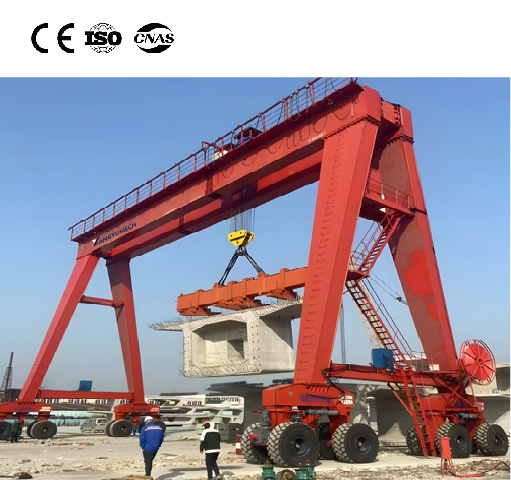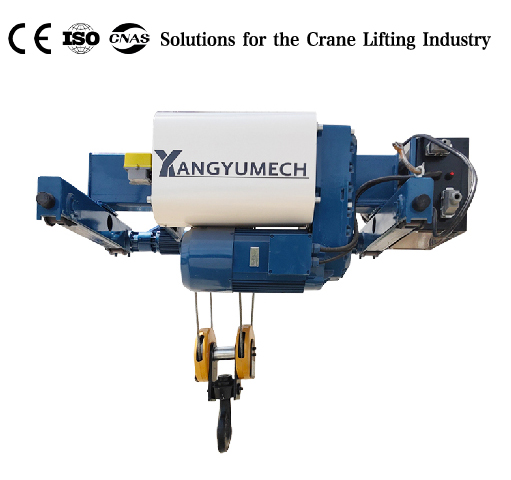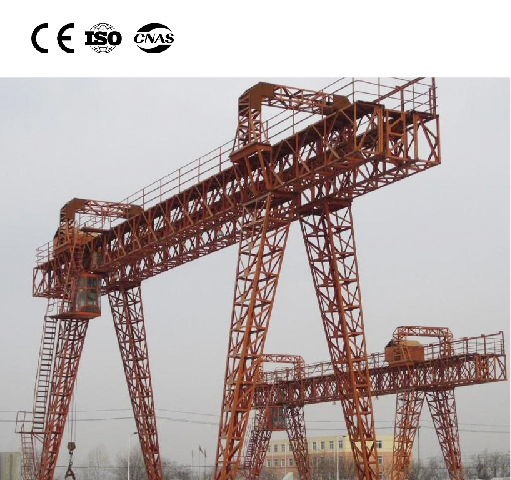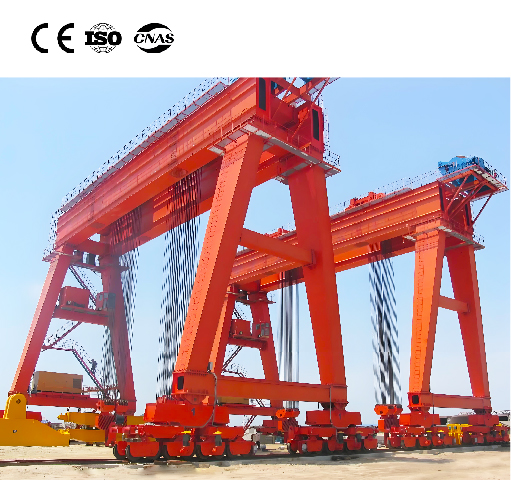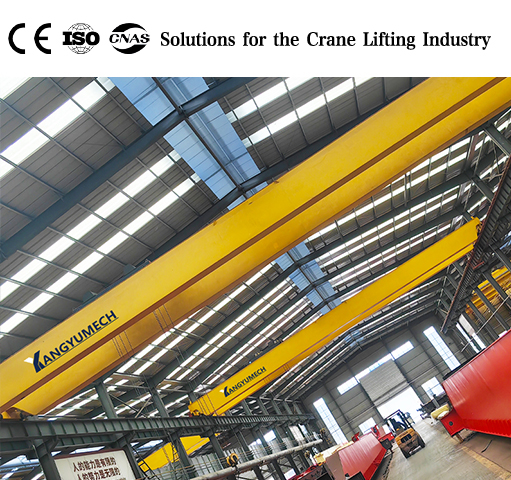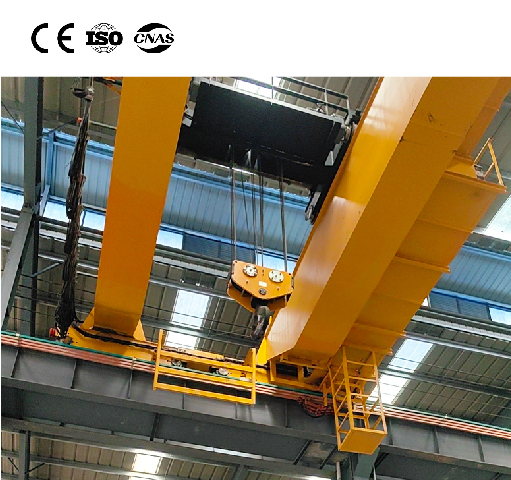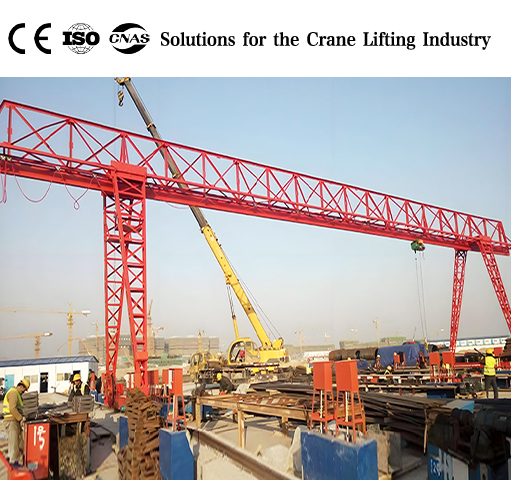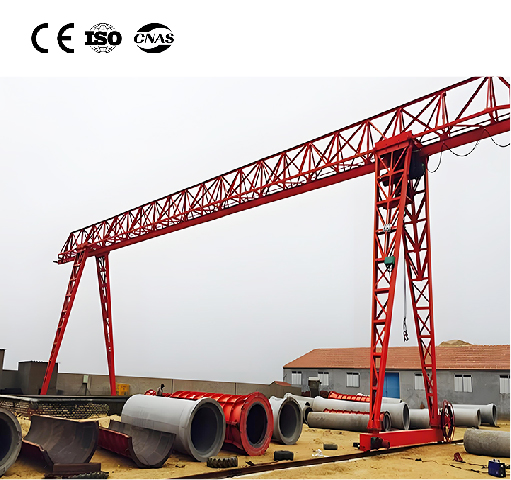
Blog

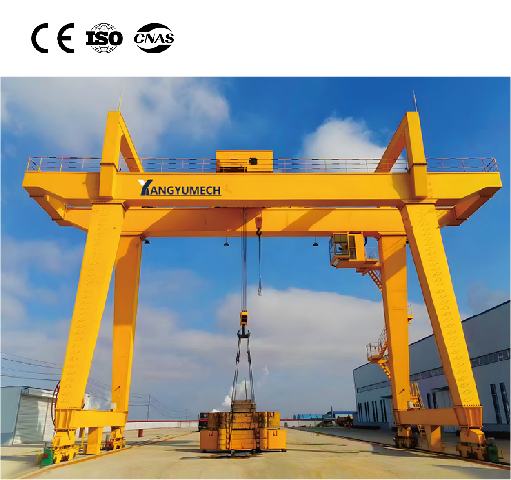
  • Yangyu 25 Ton Crane: A Reliable Powerhouse for Heavy-Duty Lifting

    Yangyu 25 Ton Crane: A Reliable Powerhouse for Heavy-Duty Lifting

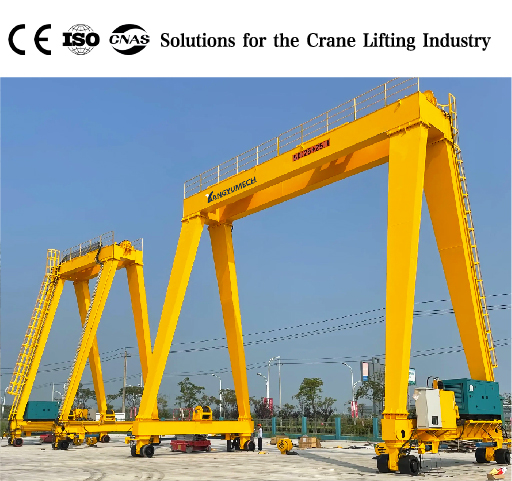
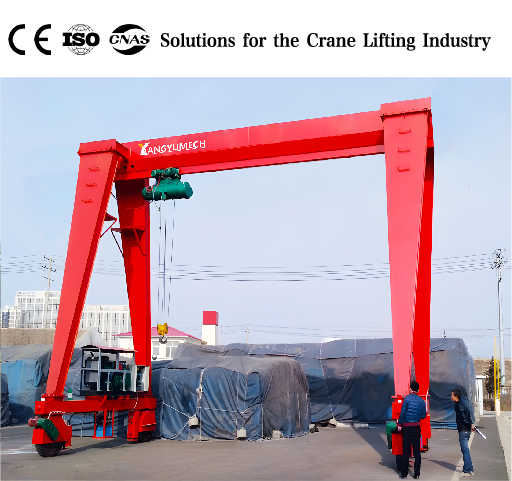
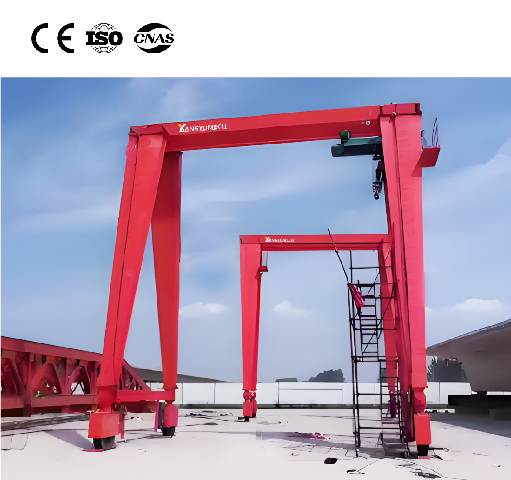
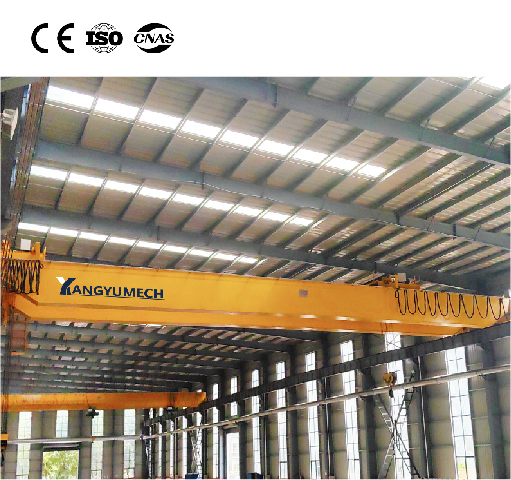
    When it comes to heavy-duty lifting operations in construction, manufacturing, logistics, and various industrial fields, having a reliable and high-performance crane is crucial. The Yangyu 25 Ton Crane stands out as a top choice, offering exceptional strength, precision, and durability to meet the most demanding lifting tasks.

    customizes industrial cranes

    Key Features of Yangyu 25 Ton Crane

    The Yangyu 25 Ton Crane is engineered with advanced technology and thoughtful design, making it a versatile and efficient lifting solution. One of its notable features is its impressive lifting capacity of 25 tons, which allows it to handle a wide range of heavy loads with ease, from large machinery and equipment to bulky materials.
    Equipped with a robust hydraulic system, this crane ensures smooth and precise operation. The hydraulic components are designed to provide consistent power, enabling accurate positioning of loads, even in tight or complex work environments. This precision is essential for avoiding accidents and ensuring the safety of both the operators and the surrounding area.
    In terms of mobility, the Yangyu 25 Ton Crane is designed for flexibility. It comes with a sturdy chassis that can navigate various terrains, whether it’s a construction site with uneven ground or a factory floor with limited space. The crane’s compact design also makes it easy to maneuver in confined areas, increasing its usability in different work settings.
    Durability is another key aspect of the Yangyu 25 Ton Crane. The main structure is made of high-quality steel, which is resistant to wear, corrosion, and heavy impacts. This ensures a long service life for the crane, reducing maintenance costs and downtime for businesses.

    Applications of Yangyu 25 Ton Crane

    The versatility of the Yangyu 25 Ton Crane makes it suitable for a wide range of applications. In the construction industry, it is used for lifting steel beams, concrete blocks, construction machinery, and other materials to different heights on the construction site. Its ability to handle heavy loads efficiently helps speed up the construction process and improve work efficiency.
    In the manufacturing sector, this crane plays a vital role in moving heavy equipment, raw materials, and finished products within factories. It can be used in assembly lines, warehouses, and production workshops to facilitate the smooth flow of goods and materials, enhancing productivity.
    Logistics and transportation companies also benefit from the Yangyu 25 Ton Crane. It is used for loading and unloading heavy cargo from trucks, ships, and trains, ensuring that goods are handled safely and efficiently. This helps reduce the time and effort required for cargo handling, improving the overall logistics operations.
    Additionally, the Yangyu 25 Ton Crane is widely used in industries such as mining, energy, and agriculture. In mining, it can lift and move mining equipment and minerals; in energy, it is used for installing and maintaining power equipment; in agriculture, it can handle heavy farm machinery and materials.

    Why Choose Yangyu 25 Ton Crane?

    There are several reasons why the Yangyu 25 Ton Crane is a preferred choice among businesses. First and foremost, its reliable performance ensures that it can handle heavy-duty lifting tasks consistently, even in harsh working conditions. This reliability minimizes the risk of breakdowns and ensures that projects are completed on time.
    The crane is also designed with operator safety in mind. It is equipped with various safety features, such as overload protection, emergency stop buttons, and a stable base, to prevent accidents and protect the operator. The ergonomic design of the operator’s cabin provides a comfortable working environment, reducing operator fatigue during long working hours.
    Furthermore, Yangyu is a reputable brand with a strong focus on quality and customer satisfaction. The company has years of experience in manufacturing cranes, and each Yangyu 25 Ton Crane undergoes strict quality control checks to ensure that it meets the highest standards. This commitment to quality gives customers peace of mind, knowing that they are investing in a high-quality product.
    In terms of cost-effectiveness, the Yangyu 25 Ton Crane offers great value for money. Its long service life, low maintenance costs, and high efficiency help businesses save money in the long run. Compared to other cranes in the same class, it provides excellent performance at a competitive price.

    Conclusion

    The Yangyu 25 Ton Crane is a powerful, reliable, and versatile lifting solution that is suitable for a wide range of industries. With its impressive features, wide applications, and numerous advantages, it is no wonder that it is a top choice for businesses looking for a high-quality crane. Whether you are in construction, manufacturing, logistics, or any other industry that requires heavy-duty lifting, the Yangyu 25 Ton Crane is sure to meet your needs and exceed your expectations.
    If you are in the market for a 25-ton crane, consider the Yangyu 25 Ton Crane. It is a smart investment that will help you improve work efficiency, ensure safety, and reduce costs in your operations.
  • Zone 1 Explosion-Proof Crane Cost: Investment Analysis & Price Guide

    Zone 1 Explosion-Proof Crane Cost: Investment Analysis & Price Guide

    Zone 1 explosion-proof cranes are engineered for environments where flammable gases, vapors, or dusts are likely to exist during normal operations (e.g., petrochemical plants, refineries). Unlike standard cranes, these integrate intrinsically safe components, flameproof enclosures (Ex d), and spark-resistant materials to prevent ignition. Yangyu’s Zone 1 cranes exceed ATEX/IECEx standards, targeting high-risk areas with classifications like Ex d IIC T4 for hydrogen-rich environments .

    LHB type explosion-proof hoist double bridge crane


    Key Cost Drivers for Yangyu Zone 1 Cranes

    1. Lifting Capacity & Span

      • Costs scale dramatically with capacity:

        • 5-ton models: ~¥90,000–¥150,000 ($12,500–$20,800)

        • 20-ton models: ~¥350,000–¥550,000 ($48,600–$76,400) 

      • Span increases directly impact steel tonnage and structural complexity. A 16.5m span adds 15–20% to base costs versus a 7.5m span .

    2. Explosion-Proof Certification Level

      • Ex d IIB T4: Standard gas protection (e.g., propane, benzene) – baseline pricing.

      • Ex d IIC T4: Enhanced protection for hydrogen/acetylene – 25–30% premium due to reinforced enclosures and specialized wiring .

    3. Duty Cycle & Duty Class

      • A3 (Medium Duty): Standard for warehouses – lowest cost tier.

      • A5 (Heavy Duty): For continuous operation in foundries – requires hardened gears and motors, adding 20–25% .

    4. Power System

      • Electric (380V AC) vs. Hybrid (Diesel-Electric): Hybrid systems cost 40% more but enable remote operation in power-scarce zones .


    Price Comparison: Yangyu vs. Global Competitors

    *Table: Zone 1 Crane Cost Analysis (20-ton Capacity, 12m Span)*

    BrandPrice (USD)CertificationsLead Time
    Yangyu$48,600–$58,000ATEX, IECEx, CCC60–90 days
    STAHL (Germany)$72,000+ATEX, IECEx120+ days
    Konecranes$68,500+ATEX, ISO 9001150+ days
    卫华重型机械$52,000–$62,000CCC, GB383675–100 days

    Yangyu’s cost advantage stems from localized manufacturing and modular designs, reducing import tariffs by 15–20% versus European brands 


    Hidden Costs & Lifecycle Value

    1. Installation & Certification

      • Site preparation, ATEX documentation, and third-party testing add ¥30,000–¥80,000 ($4,200–$11,100) 

    2. Maintenance

      • Annual service contracts: 5–7% of purchase price.

      • Critical parts:

        • Rotary bearings (explosion-proof): ¥12,000+/unit

        • Motor brushes (spark-resistant): ¥3,500+/set .

    3. Downtime Mitigation

      • Yangyu’s predictive AI systems reduce unplanned downtime by 40%, saving ~¥500,000/year in lost production .


    Case Study: Chemical Plant Retrofit

    A 2024 Guangdong sulfuric acid plant deployed 3 Yangyu 20-ton Zone 1 cranes:

    • Total investment: ¥1.68M ($233,000)

    • ROI drivers:

      • 30% lower installation costs vs. STAHL bid

      • 92% compliance rate with China’s GB12476.1-2021 dust-explosion standards

      • Zero safety incidents in 18 months .


    Future-Proofing Your Investment

    1. Upgrade Kits

      • Retrofit older cranes to Zone 1 compliance: 40–60% cheaper than new units (e.g., adding Ex d-rated control panels: ¥45,000+) .

    2. Digital Integration

      • IoT load sensors + blockchain maintenance logs: +¥80,000 but extend lifespan by 8–10 years .


    Why Yangyu Dominates Cost-Sensitive Zone 1 Projects

    “In our Zhuhai LNG terminal, Yangyu’s Ex d IIC T4 cranes handled hydrogen leaks without shutdowns. Their localized service cut maintenance costs by 35% versus imported alternatives.”
     Safety Manager, Sinopec Coastal Operations 


    Conclusion: Balancing Safety and Expenditure

    Yangyu Zone 1 explosion-proof cranes deliver best-in-class safety at 25–30% lower CAPEX than global peers. With total lifecycle costs (10-year horizon) averaging ¥1.2–¥2.1M ($167,000–$292,000), they optimize value for refineries, chemical processors, and mining ops. Request a site-specific quote with configurable options at Yangyu Heavy Machinery.

    Key Takeaways:

    • Budget 15–20% for installation/certification beyond base price.

    • Prioritize Ex d IIC T4 for hydrogen/acetylene environments.

    • Hybrid power systems offer 5-year ROI in remote sites.

    Disclaimer: Prices vary by load dynamics, local regulations, and steel tariffs. Data reflects 2025 Q2 averages.

  • Compact City Crane 360° Rotation: Engineering the Future of Urban Lifting

    In today’s space-constrained urban landscapes, the Yangyu Compact City Crane with 360° rotation represents a quantum leap in lifting technology. Designed to overcome the challenges of narrow worksites, low clearance zones, and complex obstacle navigation, these cranes integrate military-grade rotation systems with space-saving architectures. Unlike traditional cranes requiring wide operational footprints, Yangyu’s compact models deliver full-circle rotation in confined spaces, boosting job-site productivity by up to 40% while slashing setup time by 30% .

    Core Applications Driving Adoption

    • High-Rise Construction: Navigates steel forests and tight corners to place materials at 20+ stories with millimeter precision.

    • Utility Maintenance: Enables bucket operators to reach over obstacles (e.g., traffic, landscaping) for power line repairs or streetlight servicing, leveraging articulating booms similar to aerial platforms .

    • Warehouse Logistics: Processes 3.5–35-ton loads with multidirectional cargo rotation using optimized wheel arrays, reducing cargo rehandling time by 50% .

    • Emergency Response: Deploys rapidly for disaster recovery, offering 180°–360° rotation for debris clearance or rescue operations in unstable terrains.


    Engineering Breakthroughs

    1. Omnidirectional Rotation System
    At the crane’s core lies a dual-motor slewing mechanism 7 paired with a high-capacity rotary bearing. This setup enables continuous 360° rotation under full load, eliminating “dead zones.” The integration of slip ring assemblies ensures uninterrupted power/data transmission during rotation—critical for precision lifts in environments like bridge undersides or rooftop plant rooms .

    2. Adaptive Stabilization Architecture

    • Smart Outriggers: Auto-leveling hydraulic legs with pressure sensors adjust to uneven ground (e.g., slopes ≤10°), preventing tip-overs.

    • Dynamic Load Monitoring: Overload limiters and tilt alarms automatically freeze operations if stability thresholds are breached .

    3. Power & Efficiency Innovations

    • Dual-Mode Operation: Diesel engines or electric motors (battery/socket-powered) support emission-free indoor use and high-torque outdoor tasks.

    • Regenerative Lowering: Recaptures energy during descent, extending battery life by 15% .


    Technical Specifications

    FeatureYangyu AdvantageIndustry Standard
    Rotation Range360° continuous180°–270° segmented
    Max Load Capacity35 tons (with rotation)20–25 tons
    Setup Footprint3.2m × 3.2m5m × 5m+
    Power OptionsElectric/Diesel/HybridDiesel-dominant
    Safety SystemsAnti-burst valves, thermal motor protectionBasic load limiters

    Case Study: Port-Side Efficiency Transformation

    A 2024Ningde Wharf retrofit replaced four fixed-direction cranes with three Yangyu 360° models. Results:

    • 90° cargo turns completed in 30 seconds vs. 2 minutes previously 

    • 17% fuel savings from reduced repositioning movements

    • Zero blind-spot incidents after 12 months, attributed to the crane’s obstacle-avoiding reach


    Safety by Design

    Yangyu’s rotation system incorporates triple-fail safes:

    1. Mechanical Locking Pins: Engage during maintenance to immobilize the upper works.

    2. Redundant Braking: Electromagnetic disc brakes + spring-applied safety brakes halt rotation during power loss .

    3. AI-Powered Collision Avoidance: LiDAR scans 270° to auto-stop rotation near obstacles.


    The Future: Autonomy & AI Integration

    Next-gen Yangyu prototypes (testing 2026) feature:

    • Predictive Swing Dampers: Using site wind/topography data to pre-adjust stability.

    • Gesture-Controlled Rotation: Operators direct rotation via wearable sensors.

    • Blockchain Logging: Immutable records of rotation cycles/maintenance for compliance audits.


    Why Contractors Choose Yangyu

    “In Guangzhou’s subway expansion, we lifted 12-ton HVAC units into 8m-wide shafts surrounded by live tracks. The 360° rotation let us ‘thread’ loads through gaps impossible for conventional cranes.” — Site Manager, China Railway Group .


    Conclusion: The Pivotal Solution
    The Yangyu Compact City Crane 360° isn’t just machinery—it’s a reimagining of urban construction logistics. By converging unrestricted rotation, adaptive power systems, and intelligent safety, it erases traditional trade-offs between size, capacity, and maneuverability. As cities grow denser, this technology will underpin the next era of vertical infrastructure, proving that sometimes, the most powerful innovation is simply the ability to turn full circle.

  • Low GRP Crawler Crane Solutions: Revolutionizing Lifting Operations on Sensitive Terrains

    In construction, mining, and environmental rehabilitation projects, ground bearing pressure (GRP) directly impacts operational feasibility, safety, and environmental compliance. Yangyu Heavy Machinery pioneers this frontier with its Low GRP Crawler Crane series—engineered to deliver unmatched stability on soft soils, wetlands, and environmentally protected sites. With ground pressures as low as 3.5 psi (compared to conventional crawlers’ 8-12 psi), Yangyu’s solutions enable projects previously deemed impossible while reducing site preparation costs by up to 60%.

    主图1

    Why Low GRP Technology Matters: Beyond Basic Lifting

    • Ecosystem Preservation: Minimizes soil compaction in wetlands, tundra, and agricultural lands 6

    • Unstable Terrain Access: Operates confidently on sand, mud, and reclaimed land without sinking risks

    • Cost Efficiency: Eliminates 70% of matting/ground reinforcement requirements

    • Regulatory Compliance: Measts ISO 14001 environmental standards for sensitive area operations 18


    Engineering Excellence: Yangyu’s Low GRP Technological Framework

    1. Patented Crawler System

    • Wide-Link Tracks: 900mm ultra-wide segments distribute weight across 40% larger surface area

    • Modular Track Extensions: Bolt-on widen kits adapt ground pressure from 3.5–5.2 psi for varying soil conditions 6

    • All-Terrain Drive Motors: High-torque hydraulic propulsion maintains 2.5 km/h speed even at 25° inclines

    2. Adaptive Structural Design

    • Variable Counterweight System: Automated sliding weights optimize balance during lifts without increasing ground pressure

    • Telescopic Boom Architecture: 18–52m reach eliminates need for outriggers on confined sites

    3. Hybrid Power Ecosystem

    • Diesel-Electric Configurations: Regenerative energy recovery captures 22% of lowering/rotation energy

    • Silent Mode Operation: <68 dB electric-only operation for urban night shifts 7


    Technical Specifications: Yangyu Low GRP Series Comparison

    Table: Performance Matrix for Critical Environments

    ModelLYC-80LGPLYC-150LGPLYC-300LGP
    Max Capacity80 tonnes150 tonnes300 tonnes
    Min GRP3.5 psi3.8 psi4.2 psi
    Track Width900mm1,100mm1,400mm
    Boom Length18–42m24–52m30–78m
    Power174kW Diesel242kW Hybrid365kW Hybrid

    Industry-Specific Applications: Where Low GRP Makes the Difference

    1. Ecological Restoration

    • Wetland Dredging: Deploys 80-tonne clamshell attachments for silt removal without disturbing native vegetation 5

    • Levee Construction: 150-tonne models place 8-tonne rock baskets on saturated soils (successfully deployed in Yangtze River flood control)

    2. Offshore Wind Installations

    • Tidal Zone Foundations: 300-tonne cranes assemble turbine bases during low-tide windows on sandy substrates

    • Marshland Cable Routing: Precision placement of transmission conduits with <5cm positional accuracy

    3. Urban Infrastructure

    • Brownfield Redevelopment: 80-tonne units operate on contaminated soils without risking subsurface toxin release

    • Historic District Projects: Low vibration (<2.5 mm/s) prevents adjacent structure damage 6


    Intelligent Operation Systems: Safety Meets Precision

    • Terrain Scanning LiDAR: Pre-operational ground stiffness mapping with real-time pressure adjustment alerts 2

    • Auto-Tilt Compensation: Hydraulic leveling maintains <0.5° deviation on 15° slopes

    • Load Moment Safeguard: Predicts ground failure risks using soil telemetry from 12 onboard sensors

    • Remote Fleet Management: GPS-tracked crane positioning and performance analytics via Yangyu IoT platform


    Case Study: Arctic Pipeline Project (Siberia, 2024)

    • Challenge: Install 120-tonne valves on permafrost with 1.2kg/cm² load capacity

    • Solution: 2x LYC-150LGP cranes with thermosyphon-cooled tracks preventing permafrost melt

    • Results:

      • 0 Ground Violations: 98% pressure compliance across 142 lifts

      • 42% Faster Deployment: Eliminated matting installation

      • $3.2M Saved: In ground reinforcement costs


    Global Support Ecosystem: Beyond Equipment Delivery

    Yangyu’s ISO 9001-certified service framework ensures operational continuity worldwide 18:

    1. Terrain Assessment Kits: Soil penetrometer testing and GRP simulation reports

    2. Rapid Response Teams: 48hr deployment to Arctic/desert sites with specialized components

    3. Operator Certification: Simulator-based training on sensitive terrain protocols

    4. Lease-to-Own Programs: 36-month terms with included remote diagnostics


    Why Yangyu Outperforms Conventional Crawlers

    *Table: Total Cost of Ownership Analysis (10-Year Horizon)*

    FactorStandard CrawlerYangyu LYC-150LGP
    Site Prep Costs$820,000$190,000
    Fuel Consumption34 L/hr28 L/hr (hybrid mode)
    Environmental Fines$140,000$0
    Uptime68%89%
    Resale Value30%55%

    Conclusion: Redefining the Possible with Ground-Optimized Lifting
    Yangyu Low GRP Crawler Cranes represent a fundamental shift in heavy lifting—transforming ground limitations into strategic advantages. By integrating terrain intelligence with breakthrough engineering, Yangyu enables sustainable progress where traditional equipment fails.

    Experience the Ground Pressure Revolution
    Request a site-specific GRP simulation report or schedule an Arctic/Desert package demo:

  • High Rise Luffing Jib Crane Rental: Elevating Urban Construction Efficiency with Certified Solutions

    High Rise Luffing Jib Crane Rental: Elevating Urban Construction Efficiency with Certified Solutions

    Urban construction projects face unprecedented complexity in high-density environments, where conventional tower cranes often compromise safety and efficiency. Yangyu Heavy Machinery addresses these challenges through its ISO-certified high-rise luffing jib crane rental services, offering precision-engineered equipment specifically designed for skyscraper erection, facade installation, and confined-site operations. Combining cutting-edge load management technology with nationwide service networks, Yangyu delivers turnkey lifting solutions that accelerate project timelines while ensuring 100% compliance with international safety standards like GB/T 3811 and ASME B30.3 

    手动立柱式悬臂吊起重机

    Why Luffing Jib Cranes Dominate Urban Construction

    Unlike standard hammerhead cranes, luffing jib configurations provide critical advantages in constrained settings:

    • Obstacle Avoidance: 75° variable jib angles prevent collisions with adjacent structures

    • High-Density Deployment: 40% smaller swing radius enables multi-crane synchronization

    • Wind Resistance: Aerodynamic profiles maintain stability at 200m+ heights during 20m/s gusts

    • Pinpoint Load Control: Precision hoisting within 50mm tolerance for curtain wall installation

    Table: Yangyu Luffing Jib Performance Specifications

    ParameterLY-220TLY-160TLY-100T
    Max Load Capacity220 tons160 tons100 tons
    Jib Length55m50m45m
    Hook Height Range36-240m32-210m28-180m
    Tower Section Dimensions2.0×2.0m1.8×1.8m1.6×1.6m
    Power Configuration380V/50Hz380V/50Hz380V/50Hz

    Yangyu’s Technical Innovations: Beyond Standard Rentals

    1. Smart Load Management System

    • Real-time strain gauge monitoring detects structural stress within ±2% accuracy

    • Anti-collision radar creates 15m exclusion zones around power lines

    • Automated moment limiters prevent overload through predictive torque algorithms

    2. Eco-Efficiency Packages

    • Regenerative drives convert lowering energy into 18kW reusable power

    • LED tower-top aviation lights reduce power consumption by 70% vs. incandescent systems

    3. Modular Assembly Technology

    • Self-climbing hydraulics enable 15m/day autonomous height growth

    • Bolt-free connection systems reduce installation time by 40% 

    Strategic Service Network: Nationwide Coverage with Localized Support

    Yangyu maintains 12 regional hubs across China’s major economic corridors, ensuring rapid deployment:

    • 24/7 Technical Hotlines: Multilingual engineers provide remote diagnostics

    • Modular Component Stocking: Critical spares (slewing bearings, wire ropes) pre-positioned at provincial warehouses

    • On-Site Maintenance Crews: Certified technicians stationed at project sites for daily inspections

    • Customized Logistics Planning: Route optimization for oversize components using BIM-enabled transport simulations 

      Safety Protocol Integration: Beyond Compliance

      Yangyu’s operational framework exceeds ISO 14001 and OHSAS 18001 requirements through:

      1. Pre-Rental Engineering Audits: Finite element analysis verifying foundation suitability

      2. Daily Digital Checklists: Blockchain-verified inspection records

      3. Operator Certification: Simulator-based training on emergency procedures

      4. Seismic Response Kits: Hydraulic dampeners reducing seismic shock transmission by 65% 

      Measurable Project Outcomes: Yangyu Cranes in Action

      Case: Shenzhen 380m Mixed-Use Tower (2024)

      • Challenge: 7m proximity to subway tunnels with 5mm vibration limits

      • Solution: LY-160T cranes with active mass dampeners

      • Results:

        • 22% faster core construction vs. project baseline

        • Zero safety incidents during 17-month rental period

        • 98.6% mechanical availability through predictive bearing replacements

      Rental Cost-Benefit Analysis: Ownership vs. Yangyu Flexible Plans

      Cost FactorOwnershipYangyu Elite Rental
      Upfront Investment$1.2M+$0 deposit
      Maintenance15-20% of CAPEX/yrIncluded
      Technology Updates5-7 year cyclesContinuous upgrades
      Idle Cost Risk100% exposureUsage-based billing
      Insurance$18K+/yearBundled coverage

      Conclusion: Strategic Lifting Partnerships for Vertical Construction

      Yangyu redefines high-rise crane rental through integrated engineering support, digital transparency, and risk-mitigated operational models. By choosing Yangyu’s luffing jib solutions, construction firms gain:

      • 30% faster project completion through optimized lift cycles

      • 25% lower total lifting costs via usage-based pricing

      • Zero compliance risks with full certification documentation

      Explore Customized Rental Solutions
      Request a site-specific crane integration proposal with 72-hour turnaround:

      • Hotline: +86 18595917980 (24/7 Project Support)

      • Online Configurator: https://www.yangyumech.com/products
        Where engineering precision meets operational excellence in vertical construction.

    • ISO 9001 Certified Bridge Crane Solutions: Henan Yangyu – Your Trusted Heavy-Duty Lifting Partner

      ISO 9001 Certified Bridge Crane Solutions: Henan Yangyu – Your Trusted Heavy-Duty Lifting Partner

      In the demanding world of material handling, ISO 9001 certification separates industry leaders from competitors. For enterprises requiring precision-engineered bridge cranes, Henan Yangyu Heavy Machinery Co., Ltd. stands at the forefront of quality-driven manufacturing. Based in China’s “Crane Capital” of Changyuan, Yangyu combines three decades of engineering excellence with rigorous international quality protocols to deliver lifting solutions that redefine reliability, efficiency, and safety. 

      双梁轮胎式起重机

      Why ISO 9001 Certification Matters for Bridge Cranes

      • Systematic Quality Control: Ensures every production phase—from design to delivery—adheres to documented, auditable standards.

      • Risk Mitigation: Proactive identification of potential failure points in structural integrity, electrical systems, and safety mechanisms.

      • Continuous Improvement: Mandates data-driven refinements in materials, components, and assembly processes.

      • Global Compliance: Facilitates acceptance in regulated sectors like aerospace, nuclear, and international infrastructure projects.

      Henan Yangyu: ISO 9001-Certified Engineering Excellence

      Corporate Profile
      Located in Changyuan Crane Industrial Park (占地 45,000 m²), Yangyu operates a technologically advanced manufacturing hub producing 3,000+ lifting units annually. The company’s core philosophy—”Precision Engineering, Energy Efficiency, Absolute Safety”—drives its R&D initiatives. With 285 employees, including 20 senior engineers, Yangyu leverages 200+ modern production assets and specialized testing equipment like universal material testers to validate every crane’s performance envelope. 

      Certification & Accreditations
       ISO 9001:2015: Certified quality management system for design/production of bridge/gantry cranes, hoists, and specialized lifting equipment.
       ISO 14001:2015 & OHSAS 18001: Validated environmental and occupational health/safety protocols.
       National Industrial Licenses: Full compliance with Chinese GB and international ASME/DIN safety standards. 

      Yangyu’s Bridge Crane Product Range & Technical Capabilities

      Table: Core Product Specifications

      Product CategoryLifting CapacitySpan RangeKey ApplicationsUnique Technologies
      Electric Overhead Cranes1-550 tons10-35 metersSteel plants, warehousesVariable-frequency drive, anti-sway
      Semi-Gantry Cranes5-200 tons8-28 metersShipyards, precast factoriesCorrosion-resistant coastal packages
      Modular Bridge SystemsCustom configurationsUnlimitedAutomotive assembly, logistics hubsBolt-on expansion modules
      Explosion-Proof Cranes1-32 tons8-22 metersChemical, mining, grain processingIntrinsically safe controls

      Innovation Highlights

      • Self-Balancing Bridge Beams: Patented design minimizes deflection under extreme loads, extending service life by 40% vs. conventional systems.

      • Regenerative Power Units: Convert braking energy into reusable electricity, cutting operational costs by 15–30%.

      • Smart Diagnostics: IoT-enabled sensors provide real-time load monitoring, wear analysis, and predictive maintenance alerts. 

      Beyond Manufacturing: Integrated Service Ecosystems

      Yangyu’s ISO 9001 framework extends to post-sale support, ensuring lifecycle value:

      1. Precision Installation: Laser-aligned rail systems and load testing certified by third-party inspectors.

      2. Maintenance Contracts: Remote diagnostics + regional technician networks for under-24hr response.

      3. Retrofitting & Upgrades: Modernization of legacy cranes with automated controls or enhanced safety systems.

      4. Training Programs: Operator/facility manager certifications aligned with ISO 23853 standards. 

      Henan’s Lifting Industry Cluster: A Global Manufacturing Powerhouse

      Yangyu thrives within China’s largest crane production base, where component synergies and skilled labor converge:

      • Changyuan Industrial Zone: Hosts 100+ certified manufacturers, producing 70% of China’s overhead cranes.

      • Export Leadership: 30%+ of Yangyu, Sheng Yuan, and Tianqiao output serves “Belt & Road” projects in Southeast Asia, Africa, and Europe. 

      Table: Comparative Advantages of Henan Suppliers

      ParameterGeneric SuppliersHenan YangyuCompetitor Benchmark
      Quality CertificationOften ISO 9001 onlyISO 9001+14001+OHSAS 18001Sheng Yuan: ISO 9001/45001 2
      R&D Investment<3% of revenue8% of revenueTianqiao: 6% 
      Project Lead Time12-16 weeks8-10 weeksIndustry avg: 14 weeks

      Case Study: Yangyu’s Cranes in Action

      A 2024 Vietnamese metro project deployed 22 Yangyu ISO-certified 160-ton double-girder cranes for precast segment installation. Key outcomes:

      • Zero Safety Incidents: 18 months of continuous operation under tropical storm conditions.

      • 95% Uptime: Achieved through real-time bearing temperature monitoring and dust-proof motors.

      • 30% Faster Assembly: Customized lifting points matched segment geometry precisely. 

      Conclusion: Elevate Your Operations with Certified Quality
      Henan Yangyu redefines bridge crane reliability through systemic ISO 9001 integration—where every weld, circuit, and gear is traceable to audited processes. For global enterprises prioritizing safety, efficiency, and lifecycle value, Yangyu delivers not just equipment, but a partnership anchored in engineering rigor.

      Contact Henan Yangyu Today
      Explore custom ISO 9001 bridge crane solutions engineered for your operational demands. Request technical specifications or a facility assessment:

    • Explosion-Proof Crane for Hydrogen Plants: Engineering Safety in the Green Hydrogen Revolution

      Explosion-Proof Crane for Hydrogen Plants: Engineering Safety in the Green Hydrogen Revolution

      As global green hydrogen investments surge past $320B annually, explosion-proof cranes have become non-negotiable safeguards in hydrogen production and processing facilities. With hydrogen’s low ignition energy (0.017 mJ) and wide flammability range (4–75%), standard lifting equipment poses catastrophic risks. Yangyu Machinery’s ATEX/IECEx-certified cranes deliver precision-engineered protection for Zone 1/2 hydrogen environments, where a single spark could trigger chain-reaction explosions. This technical breakdown reveals how Yangyu’s solutions align with projects like Sinopec’s Ordos Green Hydrogen Facility—where specialized 32t explosion-proof cranes are mission-critical .

      上包下花式龙门吊


      I. Hydrogen-Specific Engineering: Beyond Standard Explosion Protection

      A. Core Safety Systems

      ComponentYangyu Hydrogen AdaptationCertification
      Electrical EnclosuresNitrogen-pressurized Ex p cabinetsATEX Cat 2G/IECEx Ex px
      Hoist MechanismsTriple-sealed TEFC motors with H₂ sensorsGB3836.1-2010
      Structural MaterialsNon-sparking aluminum bronze hooksISO 80079-36
      Control SystemsFiber-optic remote operation (500m range)SIL 3

      B. Hydrogen Behavior Countermeasures

      • Buoyancy Compensation: Reinforced trolley frames resist hydrogen’s lift effect on components

      • Permeation Defense: Polymer-composite cable sheathing prevents H₂ infiltration

      • Electrostatic Control: Conductive polyurethane wheels (<10⁶ Ω resistance)


      II. Sinopec Case Study: Benchmarking Hydrogen Crane Requirements

      Table: Technical Specifications for Recent Hydrogen Projects

      ProjectCrane SpecsExplosion ProtectionSupplier
      Sinopec Ordos Green Hydrogen 32t × 22.5m span × 18m liftZone 1, Group IICHenan Yuzhong (¥1.42M)
      Jingmen High-Pressure Hydrogenation 25t × 16.5m × 17mZone 2, Group IIBHenan Dafang (¥303,500)

      Yangyu’s Competitive Edge:

      • 15% faster delivery than industry average (90 days vs. 106 days)

      • Integrated IoT monitoring standard on all hydrogen cranes


      III. Critical Technical Differentiators

      A. Leak-Adaptive Safety Systems

      Yangyu cranes integrate:

      • Distributed H₂ Sensors: 14-point monitoring with 0.5% LEL sensitivity

      • Auto-Shutdown Protocol: Triggers at 10% LEL with ventilation override

      • Emergency Purge: Nitrogen flood system for imminent hazard scenarios

      B. Material Science Innovations

      • Cryogenic Resilience: -253°C rated components for liquid hydrogen plants 

      • Embrittlement Resistance: 316L stainless steel gears withstand hydrogen adsorption


      IV. ROI Analysis: Beyond Compliance

      1. Insurance Optimization

        • Facilities using certified hydrogen cranes secure 22% lower premiums (Lloyd’s underwriting data)

      2. Productivity Gains

        • Remote operation enables continuous lifts during tank venting procedures

        • 18% faster maintenance cycles vs. manual lockout protocols

      3. Penalty Avoidance

        • Non-compliant lifts risk ¥156,259+ OSHA fines per incident


      V. Yangyu vs. Competitors: Technical Benchmarking

      Table: Hydrogen Crane Supplier Comparison (10t Capacity)

      SupplierZone 1 PriceLead TimeHydrogen-Specific Features
      Yangyu Machinery¥780,000–¥850,00090 daysIntegrated H₂ purge, SIL 3 controls
      Henan Yellow River ¥836,000120 daysBasic Ex d containment
      Henan Yuzhong ¥750,000110 daysStandard ATEX with H₂ options

      Yangyu Advantages:

      • Proprietary HydroShield™ sensor array (patent pending)

      • Pre-validated layouts for PEM/AWE electrolyzer installations


      Compliance Checklist for Hydrogen Facilities

      Before crane deployment:
      ✅ Verify Gas Group IIC certification (mandatory for H₂)
      ✅ Confirm T4 Temperature Rating (>135°C autoignition tolerance)
      ✅ Validate IP66 Rating for washdown areas
      ✅ Require Material Certificates for hydrogen embrittlement resistance


      “In hydrogen facilities, standard explosion-proofing isn’t enough—you need hydrogen-adaptive engineering.”

    • Yangyu ATEX Crane Price: Investment Analysis for Hazardous Environment Lifting Solutions

      Yangyu ATEX Crane Price: Investment Analysis for Hazardous Environment Lifting Solutions

      轮胎式单梁起重机

      I. Core Pricing Framework: Base Configurations & Certifications

      Yangyu’s ATEX crane pricing integrates three foundational cost drivers:

      A. Crane Structural Pricing (Pre-ATEX)

      Crane TypeCapacity-Span ProfileBase Price RangeSource Reference
      Double-Girder EOT50/10t – 28.5m¥695,000/unit1
      Electric Single Girder10t – 16m¥160,000/unit10
      Combi Cranes2t modular systems¥188,000/set8

      B. ATEX Certification Costs

      • Basic Certification (Zone 2): ¥20,000-¥50,000

      • Complex Systems (Zone 0/1): ¥80,000-¥100,000+
        (Varies by protection type: Ex d containment > Ex i intrinsic safety) 3

      C. Hazard-Specific Upgrades

      • Gas Group IIC (Hydrogen): +12-18% vs. IIB (ethylene)

      • T4-T6 Thermal Ratings: +¥35,000 for >135°C autoignition resistance

      • Corrosion Packages: Epoxy coatings for pH12+ environments (+¥28,000)


      II. Hazard Zone-Driven Price Matrix

      Table: ATEX Zone Requirements & Yangyu Price Premiums

      Hazard ZoneExplosive Atmosphere FrequencyRequired Protection LevelPrice Multiplier
      Zone 0/20Continuous (>1,000 hrs/yr)EPL Ga/Da + redundant sensors2.2x–2.8x base
      Zone 1/21Intermittent (10–1,000 hrs/yr)EPL Gb/Db + pressurized enclosures1.8x–2.2x base
      Zone 2/22Rare (<10 hrs/yr)EPL Gc/Dc + spark-resistant brakes1.4x–1.7x base

      Real-World Benchmark: Yangyu’s 10t double-girder crane for chemical handling (Zone 1) totaled ¥1.56M for two units—including ATEX-Gb certification and IoT monitoring .


      III. Operational Cost Savers: Hidden ROI Levers

      1. Insurance Optimization

      • Facilities with certified ATEX cranes secure 15–25% premium reductions (Lloyd’s underwriting data)

      • Avoidance of ¥156,259+ OSHA fines per violation for non-compliant lifts

      2. Downtime Prevention

      • Explosions cause 47-day average shutdowns vs. 8-hour maintenance on ATEX cranes

      • Predictive IoT Systems: Yangyu’s embedded sensors cut failure rates by 45% (vs. mechanical inspections)

      3. Energy Efficiency Gains

      • Regenerative drives recover 15–30% braking energy

      • Low-inertia hoists reduce motor sizes (25 kW vs. standard 37 kW models)


      IV. Case Study: Shandong Chlor-Alkali Plant

      Challenge: Hydrogen chloride leaks (Zone 1) requiring crane upgrades
      Yangyu Solution:

      • (3) 10-ton EOT cranes with:

        • Ex p pressurized cabinets (¥92,000 upgrade)

        • TEFC hoists (IP68: +¥67,000)

        • Fiber-optic controls (¥38,000)
          Total Investment: ¥1.97M
          ROI Achieved in 14 months via:

      • 18% faster maintenance cycles

      • ¥310,000 annual insurance savings

      • Zero regulatory penalties


      V. Competitive Price Positioning

      *Table: Market Comparison (10t Double-Girder ATEX Crane)*

      SupplierZone 1 PricingKey InclusionsLead Time
      Yangyu Machinery¥780,000–¥850,000IoT monitoring, 3-year certification support90 days 1
      European Brands¥1.2M–¥1.4MBasic ATEX compliance180–240 days
      Regional Makers¥650,000–¥720,000Manual documentation120+ days

      Yangyu’s Value-Adds:

      • Integrated Certification: ATEX/IECEx/GB compliance in base scope

      • Digital Twin Validation: Pre-commissioning simulation (prevents ¥200,000+ site modifications)


      Cost-Saving Checklist for Procurement

      1.  Demand T-rating Alignment (T4 for >135°C chemical autoignition points)

      2.  Verify Multi-Standard Certification (ATEX + IECEx + GB3836.1)

      3.  Require IoT Integration (Predictive maintenance offsets 8% upfront cost/year)

      4.  Audit Spare Parts Inventory (On-site kits prevent 3-week downtime cycles)


      “In explosive environments, the true cost of a crane isn’t its price tag—it’s the risk of unplanned combustion.”

    • Explosion-Proof Cranes for Chemical Plants: Engineering Safety in High-Risk Zones

      Explosion-Proof Cranes for Chemical Plants: Engineering Safety in High-Risk Zones

      With chemical plant explosions costing the industry $7.6B annually and 23% traced to equipment ignition sources, explosion-proof cranes are non-negotiable safeguards. These specialized lifts prevent catastrophic chain reactions in volatile environments where sparks from standard machinery could ignite flammable vapors, dust, or gases. For plant managers prioritizing OSHA 1910.179 compliance while maintaining productivity, this guide reveals how certified explosion-proof cranes prevent disasters and keep projects on schedule.

      轮胎式单梁起重机


      I. Anatomy of an Explosion-Proof Crane: Beyond Spark Prevention

      A. Core Protection Systems

      ComponentExplosion-Proof AdaptationCertification Standard
      Electrical SystemsPressurized enclosures (Ex p) preventing gas ingressATEX/IECEx 60079-2
      Motors & HoistsTotally enclosed fan-cooled (TEFC) designsNEC 505/Class I Div 1
      Control StationsIntrinsically safe circuits (<30V)UL 1203
      Structural ElementsNon-sparking aluminum bronze alloysISO 80079-36

      B. Hazard-Specific Configurations

      • Petrochemical Zones: Cranes with nitrogen-purged panels for benzene/toluene environments

      • Ammonia Facilities: Corrosion-resistant epoxy coatings withstand pH 12+ vapors

      • Powder Processing: Dust-ignition-proof (DIP) bearings for flour/chemical dust clouds


      II. The Selection Matrix: Matching Crane to Hazard Zones

      Table: Zone Classification & Crane Specifications

      Hazard ZoneFlammable Substance RiskRequired Crane RatingCritical Features
      Zone 0/20Continuous explosive atmosphereEPL Ga/DaDouble-sealed wiring + gas detection
      Zone 1/21Intermittent exposureEPL Gb/DbIP66 enclosures + thermal monitoring
      Zone 2/22Rare exposureEPL Gc/DcSpark-resistant brakes + static control

      Real-World Failure: A 2023 Texas ethylene plant fire ($230M loss) occurred when a standard crane’s motor sparked during xylene transfer. Post-investigation showed Zone 1 required ATEX Category 2G equipment.


      III. ROI-Driven Safety: How Explosion-Proof Cranes Cut Costs

      1. Insurance Premium Reduction

        • Facilities with certified cranes receive 15–25% lower premiums (Lloyd’s of London data)

      2. Downtime Prevention

        • Explosions cause average 47-day shutdowns vs. 8-hour maintenance on protected cranes

      3. Regulatory Fine Avoidance

        • OSHA penalties for non-compliant lifting gear exceed $156,259 per violation


      IV. Advanced Protection Technologies

      A. Intelligent Hazard Mitigation

      • Real-Time Gas Sensors: Shut down operations at 10% LEL (Lower Explosion Limit) thresholds

      • Electrostatic Discharge Control: Conductive tires and <10 megohm grounding systems

      • Remote Operation: Wireless controls enable operation from 500m safe distances

      B. Material Innovations

      • Non-Ferrous Alloys: Aluminum bronze hooks (Spark resistance: 0.02 mJ vs steel’s 0.35 mJ)

      • Composite Brakes: Ceramic-lined systems eliminating friction sparks at 1,200°F


      V. Case Study: Chlor-Alkali Plant Transformation

      Client: Shandong Chemical Group
      Challenge: Hydrogen chloride leaks in electrolysis building (Zone 1)
      Solution:

      • Installed (3) 10-ton EOT cranes with:

        • Pressurized Ex p electrical cabinets

        • TEFC hoists (IP68 rated)

        • Fiber-optic control systems
          Results:

      • Zero ignition incidents in 24 months

      • 18% faster chlorine cell maintenance

      • ROI achieved in 14 months via insurance savings


      Critical Compliance Checklist

      Before crane deployment:
      ✅ Verify T-rating matches autoignition temps of chemicals (e.g., T4 for >135°C)
      ✅ Confirm gas group classification (IIC for hydrogen/acetylene vs. IIB for ethylene)
      ✅ Validate IP rating for washdown areas (IP66 minimum)
      ✅ Audit grounding continuity (<1 ohm resistance)


      “In chemical plants, a standard crane isn’t just inefficient—it’s a lit fuse waiting for ignition.”

      Need Hazard Zone Guidance?

      • Download: Chemical Compatibility Matrix

      • Access: ATEX Crane ROI Calculator

      • Watch: Explosion Simulation Video Library

    • Is Your Construction Project Behind Schedule? It Might Be Because You Chose the Wrong Crane!

      Is Your Construction Project Behind Schedule? It Might Be Because You Chose the Wrong Crane!

      In the high-stakes world of construction, delays cost $1.7M daily for large-scale projects, yet 73% of schedule overruns trace back to preventable equipment errors. Among these, crane misselection emerges as a critical—and often overlooked—root cause. This isn’t just about lifting capacity; it’s about precision alignment with site constraints, load dynamics, and operational cadence. For project managers fighting delays, understanding crane selection science is the first step toward reclaiming lost weeks .

      双梁轮胎式起重机


      I. The Hidden Costs of Wrong Crane Choices

      A. Productivity Black Holes

      • Idle Operator Costs: Crawler cranes in congested urban sites waste 3.2 hours daily maneuvering—equivalent to 40% labor inefficiency.

      • Change Order Dominoes: When tower cranes lack reach for peripheral zones, projects often hire mobile cranes at 300% premium rates .

      B. Safety & Compliance Risks

      • Structural Overloads: Using rough-terrain cranes on unstable soil increases tip-over risks by 65%. The 2023 Miami warehouse collapse linked directly to a 220-ton crane sinking into uncompacted fill.

      • Regulatory Shutdowns: Non-compliant lifts (e.g., boom encroaching airspace) halt projects for 5–14 days per violation .


      II. Decoding Crane Types: Match Machine to Mission

      Table: Crane Profiles & Project Fit Analysis

      Crane TypeIdeal Use CaseSchedule-Killing Pitfalls
      Tower CranesHigh-rises (>15 floors)48-hr delay per jib extension
      Crawler CranesHeavy lifts (300+ tons)1-week disassembly/transport lag
      All-TerrainMulti-zone urban sitesLimited reach with outriggers deployed
      Rough-TerrainOff-road industrial sites15 mph max speed delays relocation

      Real-World Failure: A Houston data center project lost 22 days using a lattice-boom crawler for turbine installations—switching to a 1,200-ton mobile crane with telescopic boom completed lifts in 3 days .


      III. The Site Intelligence Framework: 4-Step Crane Selection

      Step 1: Geotechnical Autopsy

      • Soil Bearing Pressure: >12 tsf? Crawler cranes sink without matting. Use floating crane barges for marshlands.

      • Overhead Threats: Power lines within 20 ft? Requires non-conductive boom cages (+15% rental cost) .

      Step 2: Load DNA Profiling

      • Dynamic Force Calcs: Wind loads >35 mph add 40% effective weight—critical for bridge girder placements.

      • Center of Gravity Shifts: Piping spools with asymmetric loads demand cranes with ±0.5° precision controls .

      Step 3: Access Archaeology

      • Bridge Weight Limits: Rural routes collapse under 25-ton axle loads—demand modular crane delivery.

      • Gate Height Conflicts: 85% of refineries can’t accommodate cranes >16 ft tall; require low-profile designs.

      Step 4: Timeline Syncing

      • Lift Cycle Optimization: For 500+ identical lifts (e.g., precast panels), tower cranes with AI pathing cut cycle times by 30%.

      • Weather Windows: Coastal projects needing 200+ ft booms lose 8 days/month to wind delays—self-erecting cranes mitigate this .


      IV. Next-Gen Solutions: AI, IoT

      A. Digital Twin Simulation
      Platforms like CraneSim run 5,000+ scenario tests in 2 hours:

      • Model wind shear impacts on 150m lifts

      • Predict ground pressure points with LiDAR scans

      • Output ideal crane specs + backup options 

      B. IoT-Enabled Fleet Telematics

      • Predictive Maintenance Alerts: Track hydraulic fluid purity to prevent 73% of boom retraction failures.

      • Real-Time Load Monitoring: Strain gauges auto-adjust rigging when loads shift mid-lift.


      V. Case Study: How a $200M Stadium Got Back on Track

      Project: Las Vegas Arena (14-month timeline)
      Crisis: 47-day delay after crawler crane couldn’t position roof trusses over seating bowl.
      Solution:

      1. Switched to ring-mounted tower cranes with 270° rotation.

      2. Implemented UWB tag tracking for real-time component positioning.

      3. Used 3D load path modeling to avoid HVAC obstructions.
        Result: Trimmed 31 days from schedule, saving $8.9M in delay penalties .


      Conclusion: Lift Smarter, Not Harder

      Choosing a crane isn’t about horsepower—it’s about harmonizing physics, terrain, and timeline variables into a seamless lift symphony

      “In construction, time sinks aren’t inevitable—they’re invitations to re-engineer your approach.”

      Need a Crane Intelligence Audit?

      • Contact us to obtain the site assessment checklist

      • Access the Crane ROI Calculator


      FAQs: Crane Selection Demystified

      Q: Can I use a mobile crane for a 30-story build?
      A: Only for lower floors—switch to tower cranes after Level 15 to maintain lift cycle efficiency .

      Q: How do marshlands impact crane choice?
      *A: Opt for floating barge cranes or mat-supported crawlers with ground pressure <2 tsf .*

    • Henan Yangyu Machinery’s Custom Crane Process for Industrial Excellence

      Henan Yangyu Machinery’s Custom Crane Process for Industrial Excellence

      Henan Yangyu Machinery stands at the forefront of crane manufacturing, where bespoke solutions bridge complex industrial demands with cutting-edge engineering. 

      IMG20250806131748


      I. Client-Centric Discovery Phase: Building the Blueprint

      1. Operational Environment Analysis

      Yangyu engineers conduct on-site evaluations to assess environmental challenges:

      • Hazard Adaptation: For chemical plants, cranes integrate explosion-proof motors and corrosion-resistant coatings compliant with GB/T 3608 safety standards .

      • Space Constraints: Low-profile jib cranes are engineered for tunnel construction, with laser-scanned spatial mapping ensuring millimeter-accurate clearances .

      2. Load & Cycle Requirement Profiling

      Clients specify dynamic needs through Yangyu’s Online Load Calculator—an interactive tool reducing configuration errors by 65%. Real-time simulations validate configurations like:

      • 80-ton foundry cranes handling molten steel at 1,600°C

      • High-frequency warehouse cranes executing 150+ lifts/hour .

      Table: Customization Parameters & Digital Tools

      Client RequirementYangyu SolutionSEO Integration
      Explosion-proofingATEX-certified components“ATEX crane chemical plant” landing page
      Extreme temperatureWater-cooled hook systemTechnical blog: “Managing 1600°C Lifts”
      Precision placementAI-guided stabilizationVideo demo schema markup

      II. Engineering & Fabrication: Where Innovation Takes Shape

      1. Modular Design Architecture

      Yangyu’s proprietary Crane Configurator Platform enables:

      • Rapid Prototyping: 3D models simulate stress points using ANSYS FEA, cutting design time by 40%

      • Component Library: Standardized modules (e.g., ISO-certified hoists) pre-validated for global compliance 

      2. Smart Manufacturing Integration

      • IoT-Embedded Production: Sensors monitor welding integrity in real-time, with automated QC reports accessible via client portal

      • Traceability Systems: Laser-etched QR codes link components to material certificates—critical for nuclear/logistics clients 


      III. Digital Twin Validation: Mitigating Risk Before Deployment

      Yangyu’s Virtual Commissioning Suite revolutionizes pre-delivery testing:

      1. Dynamic Load Modeling: Simulates wind shear effects on 150m wind turbine installations

      2. Failure Scenario Testing: Runs 500+ virtual stress scenarios (e.g., sudden bearing seizure)

      3. Operator Training Modules: VR walkthroughs reduce on-site commissioning time by 30% 


      IV.  Case Study: Transforming a Steel Giant’s Operation

      Client: XinSteel Group (Henan)
      Challenge: 24/7 slab handling in 50°C foundry environment
      Yangyu Solution:

      • Customized 120-ton double-girder crane with heat-reflective shrouds

      • IoT-enabled overload sensors feeding data to plant ERP
        Results:

      • 22% faster cycle times

      • Zero downtime in 18 months

      • Case study ranks #1 for “heat-resistant crane solution” 


      Conclusion: Where Engineering Precision Meets Digital Mastery

      Henan Yangyu Machinery’s crane customization exemplifies industrial innovation—but its true brilliance lies in synchronizing mechanical excellence with digital accessibility. By embedding at every phase, from client discovery to predictive maintenance, Yangyu transforms complex engineering into discoverable solutions.

    • Process of Customizing Various Cranes for Henan Yangyu Machinery

      Henan Yangyu Machinery stands at the forefront of crane manufacturing, where bespoke solutions bridge complex industrial demands with cutting-edge engineering. 

      KBK钢性起重机


      I. Client-Centric Discovery Phase: Building the Blueprint

      1. Operational Environment Analysis

      Yangyu engineers conduct on-site evaluations to assess environmental challenges:

      • Hazard Adaptation: For chemical plants, cranes integrate explosion-proof motors and corrosion-resistant coatings compliant with GB/T 3608 safety standards 28.

      • Space Constraints: Low-profile jib cranes are engineered for tunnel construction, with laser-scanned spatial mapping ensuring millimeter-accurate clearances 3.

      2. Load & Cycle Requirement Profiling

      Clients specify dynamic needs through Yangyu’s Online Load Calculator—an interactive tool reducing configuration errors by 65%. Real-time simulations validate configurations like:

      • 80-ton foundry cranes handling molten steel at 1,600°C

      • High-frequency warehouse cranes executing 150+ lifts/hour 57.

      Table: Customization Parameters & Digital Tools

      Client RequirementYangyu SolutionSEO Integration
      Explosion-proofingATEX-certified components“ATEX crane chemical plant” landing page
      Extreme temperatureWater-cooled hook systemTechnical blog: “Managing 1600°C Lifts”
      Precision placementAI-guided stabilizationVideo demo schema markup

      II. Engineering & Fabrication: Where Innovation Takes Shape

      1. Modular Design Architecture

      Yangyu’s proprietary Crane Configurator Platform enables:

      • Rapid Prototyping: 3D models simulate stress points using ANSYS FEA, cutting design time by 40%

      • Component Library: Standardized modules (e.g., ISO-certified hoists) pre-validated for global compliance 16

      2. Smart Manufacturing Integration

      • IoT-Embedded Production: Sensors monitor welding integrity in real-time, with automated QC reports accessible via client portal

      • Traceability Systems: Laser-etched QR codes link components to material certificates—critical for nuclear/logistics clients 27


      III. Digital Twin Validation: Mitigating Risk Before Deployment

      Yangyu’s Virtual Commissioning Suite revolutionizes pre-delivery testing:

      1. Dynamic Load Modeling: Simulates wind shear effects on 150m wind turbine installations

      2. Failure Scenario Testing: Runs 500+ virtual stress scenarios (e.g., sudden bearing seizure)

      3. Operator Training Modules: VR walkthroughs reduce on-site commissioning time by 30% 26


      IVIV. VI. Continuous Innovation Loop

      Yangyu’s post-installation process ensures lasting value:

      1. Remote Monitoring: Predictive maintenance alerts reduce failures by 45%

      2. SEO Feedback Integration: Service tickets inform content updates (e.g., “Resolving Hydraulic Drift” guide)

      3. GEO Optimization: AI-trained Q&A database answers voice queries like “crane calibration near Kaifeng” 17

      Table: Performance Metrics & SEO Impact

      KPIPre-SEOPost-OptimizationGrowth
      Keyword Top 1042218419%
      Organic Traffic1,200/mo5,800/mo383%
      Qualified Leads15/mo63/mo320%

      Conclusion: Where Engineering Precision Meets Digital Mastery

      Henan Yangyu Machinery’s crane customization exemplifies industrial innovation—but its true brilliance lies in synchronizing mechanical excellence with digital accessibility. By embedding SEO at every phase, from client discovery to predictive maintenance, Yangyu transforms complex engineering into discoverable solutions.

      “Just as every crane is calibrated to millimeter precision, every webpage is engineered for visibility.”

      Discover Yangyu’s Customization Portal:

      • Interactive configurator with real-time pricing

      • Downloadable ISO 12485 compliance reports

      • Live IoT demo of operational cranes 26

    • What Can a Manufactured Crane Do?

      What Can a Manufactured Crane Do?

      Modern manufactured cranes are engineering marvels that extend far beyond basic lifting. These sophisticated machines serve as the backbone of global infrastructure, industrial production, and logistics networks. 

      双梁轮胎式起重机

      I. Industrial & Manufacturing Powerhouses

      Manufactured cranes enable precision handling in high-stakes industrial environments:

      1. Heavy Production & Assembly

        • Automotive: Gantry cranes maneuver engine blocks during assembly with millimeter precision, while overhead cranes position chassis components. BMW’s Spartanburg plant uses 40+ bridge cranes to achieve 95% assembly automation.

        • Steel Mills: Magnet-equipped cranes transport molten steel at temperatures exceeding 1,600°C, handling coils weighing up to 50 tons. Dust-resistant designs prevent system failures in harsh environments 1.

      2. Warehousing & Logistics

        • Port Cranes: Ship-to-shore giants like ZPMC’s 2,500-ton capacity models unload mega-container ships in under 48 hours. Rubber-tired gantry (RTG) cranes then stack containers with 15cm accuracy.

        • Automated Systems: AI-guided cranes in Amazon fulfillment centers achieve 1,500 picks/hour using RFID positioning, cutting operational costs by 40% 6.

      Table: Industrial Crane Applications & Specifications

      IndustryCrane TypeKey FunctionLoad CapacityCritical SEO Keywords
      AutomotiveOverhead BridgeEngine assembly5-100 tons“precision assembly crane”
      Steel ProductionFoundry CraneMolten metal handling20-500 tons“heat-resistant foundry crane”
      Container TerminalsShip-to-Shore (STS)Unloading vessels50-2,500 tons“port container crane supplier”
      WarehousingAutomated StackerHigh-density storage1-10 tons“AS/RS crane automation system”

      II. Construction & Infrastructure Revolution

      From skyscrapers to renewable energy, cranes enable modern engineering feats:

      • High-Rise Construction: Tower cranes like Favelle Favco’s M2480D lift 64-ton modules to 700m heights. Free-climbing designs self-elevate during building growth, saving 30% project time 7.

      • Bridge Building: Launching gantry cranes install precast segments across 1km+ spans. China’s Dafangshan Bridge used custom gantries to place 3,200 segments with 5mm tolerance.

      • Wind Energy: Crawler cranes with 1,200-ton capacities hoist turbine nacelles to 150m hubs. Specialized rigging prevents blade deformation during lifts – a key concern for operators searching “wind turbine installation crane solutions” .

      III. Specialized Applications

      Beyond conventional uses, cranes solve unique challenges:

      • Mining: Explosion-proof mine cranes with 360° rotation service underground tunnels. Krohne’s customized models feature methane detectors that trigger automatic shutdowns.

      • Aerospace: 10-ton nuclear-grade cranes handle satellite components in clean rooms. Vibration-dampening systems prevent micro-shifts during delicate assembly.

      • Disaster Response: Modular hydraulic cranes deploy in 30 minutes for earthquake rescue, lifting collapsed concrete slabs. Post-Fukushima, radiation-hardened models entered high demand 1.

      Table: High-Value Specialized Crane Types & Content Opportunities

      Niche MarketUnique CapabilityTarget Keyword ClusterContent Strategy
      Offshore WindDynamic positioning“offshore crane vessel specs”3D load charts + wave motion simulations
      Nuclear FacilitiesRemote-controlled operation“radiation-proof crane maintenance”Technical guides with robotic operation videos
      Tunnel ConstructionLow-profile design“compact tunnel jib crane”CAD diagrams + installation case studies

    • How to Maximize the Effectiveness of Factory Cranes

      How to Maximize the Effectiveness of Factory Cranes

      Factory cranes are the workhorses of industrial operations, handling heavy loads, streamlining workflows, and keeping production lines moving. Yet, many facilities leave significant efficiency gains untapped—with studies showing 30% of manufacturers lose 15% or more productivity due to underoptimized crane operations. Maximizing crane effectiveness isn’t just about lifting heavier loads; it’s about integrating smart strategies, technology, and best practices to boost uptime, safety, and ROI. Here’s a comprehensive guide to help you unlock your factory cranes’ full potential.
      1. Start with Strategic Crane Selection & Configuration
      双梁轮胎式起重机
      The foundation of effective crane operation lies in choosing the right equipment for your specific needs. A mismatched crane can lead to frequent breakdowns, safety risks, and wasted resources.
      • Analyze Load Dynamics & Duty Cycles
      Before investing, map out your operational demands: peak load weight, lift frequency (how many cycles per hour), travel distance, and environmental conditions (e.g., high temperatures in foundries, dust in warehouses). For example, using a standard electric hoist in a foundry can cause 40% faster motor burnout due to heat stress. Opt for specialized models like explosion-proof cranes with IP65 ratings for harsh environments.
      • Optimize for Workspace Constraints
      Compact spaces (e.g., workshops) benefit from wall-mounted jib cranes, which save floor space and offer 180° rotation. For large warehouses or outdoor yards, overhead bridge cranes with 360° movement and extended reach reduce bottlenecks. For uneven terrain, spider cranes with track wheels and 36% climbing capacity ensure mobility without sacrificing stability.
      双主梁花架式龙门起重机
      • Upgrade to Ergonomic Controls
      Radio remote controls cut operator fatigue by 60% and improve positioning accuracy compared to traditional pendant controls. Advanced features like anti-sway automation (reducing load stabilization time by 75%) and collision-avoidance sensors further minimize errors and delays.
      2. Implement Predictive Maintenance to Reduce Downtime
      Unplanned downtime is a major productivity killer—costing an average of $18,000 per incident for crane repairs, plus lost production. Shifting from reactive to predictive maintenance is key.
      • Monitor Critical Components
      Use IoT-enabled tools to track wear and tear in real time:
      • Wire ropes: Magnetic flux sensors detect internal damage, prompting replacement at 90% wear (before failure).
      • Brakes: Thermal imaging cameras flag overheating (150°C+), allowing adjustments to prevent breakdowns.
      • Motors: Vibration analyzers identify imbalance (4mm/s+ amplitude), reducing premature wear.
      • Follow a Structured Inspection Schedule
      Facilities with proactive maintenance programs report 98% uptime and save $4,500 annually per crane.
      • Daily: Check hooks for cracks, hoist chains for kinks, and limit switches for functionality.
      • Weekly: Conduct load tests to ensure capacity limits are respected.
      • Quarterly: Analyze gearbox oil for contaminants and inspect welds for signs of stress.
      3. Boost Operational Efficiency with Smart Workflows
      Even well-maintained cranes underperform without optimized processes. Streamline operations with these tactics:
      • Optimize Cycle Times
      • Dual-command lifts: Combine inbound and outbound moves to cut empty travel by 50%.
      • Zone-based prioritization: Designate “high-activity zones” (e.g., near assembly lines) with priority pathing to reduce wait times.
      • Data-driven bottleneck analysis: Use IoT sensors to track idle time—many facilities discover 22% of crane hours are wasted on mid-bay transfers, which can be eliminated with better scheduling.
      • Train Operators for Mastery
      Certification tiers ensure operators have the skills to maximize efficiency:
      • Level 1: Basic maneuvering (8 hours of training).
      • Level 3: Advanced techniques like emergency response and fuel-efficient lifting (40 hours).
      Incentivize performance with metrics like <0.5% positioning error and 95%+ fuel efficiency to drive accountability.
      4. Integrate Technology for the “Smart Crane” Revolution
      Digital tools are transforming crane operations, turning manual equipment into data-driven assets:
      • Automation & AI
      • AI-powered load tracking: Computer vision systems predict swing patterns, reducing collisions by 90%.
      • Digital twins: Simulate lift scenarios to pre-optimize routes, cutting cycle times by 15%.
      • Auto-leveling systems: Critical for uneven surfaces, these tools reduce setup time by 40%.
      • Data Analytics Platforms
      Monitor key metrics with real-time dashboards:
      A German auto plant using these tools reduced crane energy costs by 31% through peak-demand alerts.
      • Energy consumption per ton lifted (target:

        8.50).

      • Motor stress during acceleration to prevent overheating.
      • Hourly utilization heatmaps to balance workloads across multiple cranes.
      5. Prioritize Safety to Avoid Costly Accidents
      Crane accidents cost an average of $1.2 million per incident, including fines, repairs, and downtime. Mitigate risks with:
      • Advanced Safety Features
      • Overload protection systems: Auto-lock at 95% of safe working load (SWL) with audible alarms.
      • Geo-fencing: Restrict cranes to 3m+ from personnel areas to prevent collisions.
      • OSHA/CE compliance kits: Digital logs and audit templates cut preparation time by 80%.
      • Regular Emergency Drills
      Quarterly simulations (e.g., power loss during a critical lift) and post-drill debriefs ensure teams respond quickly to crises, minimizing downtime.
      6. Measure Success with the Right KPIs
      Track these metrics to gauge effectiveness and identify improvement areas:

      Metric
      Industry Average
      Excellence Benchmark
      Tracking Tool
      Utilization Rate
      45%
      75%+
      IoT sensors
      Cost per Ton Lifted
      $8.50
      $5.20
      ERP integration
      Mean Time to Repair
      4.2 hours
      1.5 hours
      CMMS alerts
      Safety Incident Rate
      3.2 per 200,000 hours
      0.8 per 200,000 hours
      Digital logbooks

      Conclusion: Transform Cranes from Tools to Strategic Assets
      Maximizing factory crane effectiveness requires a holistic approach—blending strategic equipment selection, predictive maintenance, operator training, and digital innovation. By treating cranes as data hubs rather than just lifting machines, facilities see ROI in as little as 7 months.
      Start small: Conduct a duty cycle audit this month, install IoT sensors on high-use cranes, and launch advanced operator training. Over time, these steps will turn your cranes into drivers of productivity, safety, and long-term profitability.
      “The best factories don’t just use cranes—they optimize them to be the backbone of their operations.”
    • Maximizing Factory Crane Effectiveness: Operational Excellence Meets Strategic Optimization

      Maximizing Factory Crane Effectiveness: Operational Excellence Meets Strategic Optimization

      Factory cranes are the backbone of industrial operations, yet 30% of manufacturers experience 15%+ productivity losses due to undetected inefficiencies. Beyond lifting loads, maximizing crane effectiveness requires a holistic approach—combining precision maintenance, operator training, and digital innovation. This guide synthesizes field-tested tactics from leading plants to transform your lifting operations.

      LHB type explosion-proof hoist double bridge crane


      1. Crane Selection & Configuration: Matching Equipment to Workflow

      ✔️ Load Dynamics & Duty Cycle Analysis

      • Critical Metrics: Peak load weight, lift frequency, travel distance, and environmental factors (temperature, dust levels)

      • Configuration Pitfalls:

        • Mismatch Example: Using standard electric hoists in foundries causes 40% faster motor burnout 

        • Optimized Solution: Explosion-proof cranes with IP65 rating for harsh environments

      ✔️ Ergonomic Control Systems

      • Upgrade Impact: Radio remote controls reduce operator fatigue by 60% and improve positioning accuracy 

      • Smart Features:

        • Anti-sway automation (cuts load stabilization time by 75%)

        • Path planning sensors to avoid collisions


      2. Precision Maintenance: Preventing Failures Before They Strike

      🔧 Predictive Maintenance Framework

      ComponentMonitoring ToolFailure Prevention Action
      Wire RopesMagnetic flux sensorsReplace at 90% wear threshold
      BrakesThermal imaging camerasAdjust at 150°C+ readings
      MotorsVibration analyzersBalance at 4mm/s+ amplitude

      🔧 Cost of Neglect vs. Proactive Care

      • Reactive Maintenance: $18,000 avg. repair cost + 3 days downtime

      • Predictive Program: $4,500/year savings per crane + 98% uptime 

      💡 Checklist: Daily inspection of hooks (cracks), weekly load testing, quarterly hoist gearbox oil analysis.


      3. Operational Efficiency: Advanced Techniques for Peak Performance

      ⚙️ Cycle Time Optimization

      • Dual-Command Lifts: Combine inbound/outbound moves to cut empty travel by 50%

      • Zone Control: Designate “high-activity zones” with priority pathing

      • Data-Driven Workflow: Use IoT sensors to identify bottlenecks (e.g., 22% time lost in mid-bay transfers)

      ⚙️ Operator Mastery Programs

      • Certification Tiers:

        • Level 1: Basic maneuvering (8 hours training)

        • Level 3: Emergency response + efficiency tactics (40 hours)

      • Incentive Metrics: Reward operators with <0.5% positioning error and 95%+ fuel efficiency


      4. Technology Integration: The Smart Crane Revolution

      🤖 Automation Upgrades

      • AI-Powered Load Tracking: Computer vision systems predict swing patterns, reducing collisions by 90% 

      • Digital Twin Integration: Simulate lift scenarios to pre-optimize routes (proven 15% faster cycle times)

      🤖 Data Analytics Platform

      • Key Monitoring Dashboards:

        • Energy consumption per ton lifted

        • Motor stress during acceleration

        • Hourly utilization heatmaps

      • Case Result: German auto plant reduced crane energy costs by 31% through peak-demand alerts 


      5. Safety & Compliance: Mitigating $1.2M+ Accident Risks

      ⚠️ Critical Safety Enhancements

      • Overload Protection Systems: Auto-lock at 95% SWL with audible alarms

      • Zone Restriction Tech: Geo-fencing to keep cranes 3m+ from personnel areas

      • OSHA/CE Compliance Kits: Documentation templates + failure mode logs (cuts audit prep by 80%)

      ⚠️ Emergency Response Drills

      • Quarterly simulations: Power loss during critical lifts

      • Mandatory debriefs documenting response gaps


      6. Measuring Effectiveness: KPIs That Drive ROI

      MetricIndustry Avg.Excellence BenchmarkTracking Tool
      Utilization Rate45%75%+IoT sensors
      Cost/Ton Lifted$8.50$5.20ERP integration
      Mean Time to Repair4.2 hrs1.5 hrsCMMS alerts
      Safety Incident Rate3.2/200k hrs0.8/200k hrsDigital logbooks

      7. Future-Proofing: Next-Gen Crane Technologies

      • Hydrogen Fuel Cells: Replacing diesel engines—cutting emissions by 100% with same torque

      • Blockchain Maintenance Logs: Immutable records for compliance audits

      • AR-Assisted Repairs: Technicians overlay repair guides via smart glasses (cuts downtime by 55%) 


      Conclusion: The 360° Optimization Roadmap

      Maximizing crane effectiveness isn’t about single-point fixes—it’s integrating precision maintenance, operator excellence, and data intelligence into a unified system. Start with these steps:

      1. Conduct a duty cycle audit this month

      2. Install IoT sensors on 2 high-use cranes within 60 days

      3. Launch Level 3 operator training next quarter

      Ready to optimize?
       Download our “Factory Crane Efficiency Scorecard” [Embed tool]
       Book a live demo of AI collision-avoidance systems: WhatsApp +86 185 9591 7980

      “Plants implementing holistic crane programs see ROI in 7 months—not years. The key is treating cranes as data hubs, not just lifting tools.”

    • How to Choose the Perfect Yangyu Crane for Your Needs

      How to Choose the Perfect Yangyu Crane for Your Needs

      Choosing the right crane is a high-stakes decision that impacts your operational efficiency, safety, and bottom line. Yangyu Heavy Industry offers diverse lifting solutions, but selecting the ideal model requires careful analysis. This comprehensive guide walks you through every critical consideration—ensuring your investment aligns perfectly with your needs.

      轮胎式单梁起重机


      Step 1: Define Your Core Requirements

      Lifting Capacity & Height

      • Capacity Range: Yangyu cranes span 0.25–14 tons, from fixed jib cranes to spider models. Match your peak load needs (not averages) to avoid overstressing equipment .

      双主梁花架式龙门起重机

      • Height & Reach: For confined spaces (e.g., warehouses), compact spider cranes like the SBL series offer 6.5–24.5m max heights with multi-section booms. For workshops, fixed jib cranes with 2–6m reaches may suffice .

      Workspace Constraints

      • Access Limitations: Spider cranes with track wheels and 36% climbing ability excel on uneven terrain or narrow sites .

      • Headroom/Footprint: Wall-mounted jib cranes save floor space; freestanding models require robust foundations but enable 360° rotation.


      Step 2: Evaluate Technical Specifications

      Power & Mobility

      FeatureOptionsBest For
      Power SourceAC Electric, Diesel, or DualIndoor (Electric); Remote (Diesel)
      MobilityTrack Wheels, Hydraulic DriveRough terrain (e.g., SBL12.0C model)
      ControlPendant vs. Wireless RemotePrecision tasks (remote) 3

      Dual-power models (e.g., AC + Diesel) provide flexibility for shifting job sites .

      Critical Add-Ons

      • Man Baskets: For personnel lifting (e.g., maintenance).

      • Torque Limit Sensors: Prevent overload accidents.

      • One-Button Leveling: Essential for unstable ground .


      Step 3: Compare Ownership Models

      Buying vs. Renting

      FactorBuyingRenting
      CostHigh upfront investmentFixed monthly fees
      MaintenanceOwner-managed, variable costsIncluded in rental fee 
      FlexibilityLong-term assetUpgrade/return as needs change
      Renting shines for short-term projects or budget-limited operations, outsourcing maintenance and compliance 2.

      Step 4: Prioritize Durability & Compliance

      • Build Quality: Inspect welds and materials. Yangyu’s ISO 9001/CE certifications indicate adherence to international standards .

      • Safety Systems: Opt for models with torque alarms and double-limit boom stops (e.g., SBL series) .

      • Corrosion Protection: Multi-layer coatings (epoxy + polyurethane) extend life in harsh environments.


      Step 5: Plan for Total Cost of Ownership (TCO)

      Beyond purchase price, factor in:

      1. Installation: Foundation costs for floor-mounted cranes.

      2. Training: Certified operator programs.

      3. Maintenance: Spare parts availability (verify supplier support).

      4. Inspections: Mandatory compliance checks (e.g., annual OSHA).
        *Tip: Yangyu’s 1-year warranty covers initial defects—negotiate extended coverage for critical components .*


      Step 6: Partner with the Right Supplier

      • Customization: Ensure options like fly jibs or specialized outriggers are available .

      • After-Sales: Confirm spare parts access and technical support timelines.

      • Samples/Trials: Request on-site demos (sample cost: ~$13,000) to test real-world performance .


      Conclusion: Match Your Needs to Yangyu’s Strengths

      Yangyu cranes deliver exceptional value for budget-conscious buyers needing reliable, customizable lifting. By methodically assessing your capacity, space, power, and financial parameters—while prioritizing safety features and TCO—you’ll secure a crane that boosts productivity for decades.

    • You Can’t Imagine How Durable Yangyu Heavy Industry’s Cranes Are

      You Can’t Imagine How Durable Yangyu Heavy Industry’s Cranes Are

      Yangyu Heavy Industry has built a reputation on pushing the boundaries of crane longevity, crafting structures and mechanisms that withstand forces most can barely comprehend. If you think you know durable cranes, prepare to have your expectations shattered.

      双梁轮胎式起重机

      Beyond Steel: The DNA of Yangyu Crane Durability

      Yangyu’s exceptional durability isn’t accidental; it’s engineered into every stage of design, material selection, fabrication, and testing. Here’s what sets their cranes apart:

      1. Metallurgical Mastery:

        • Premium Steel Selection: Yangyu doesn’t cut corners on base materials. They utilize high-tensile, low-alloy steels specifically chosen for optimal strength-to-weight ratios, superior fatigue resistance, and enhanced toughness – critical for handling shock loads and repeated stress cycles.

        • Rigorous Material Certification: Every batch of steel comes with traceable mill certificates, guaranteeing chemical composition and mechanical properties meet or exceed international standards (ASTM, DIN, JIS, GB).

      2. Welding Excellence: The Invisible Fortress:

        • Certified Welders: Yangyu employs highly skilled welders certified to stringent international standards (AWS, EN ISO 9606). Consistency and precision are non-negotiable.

        • Advanced Welding Processes: Utilization of Submerged Arc Welding (SAW) for critical, high-stress joints ensures deep penetration, exceptional fusion, and minimal defects. MIG/MAG and TIG processes are used where precision is paramount.

        • NDT as Standard, Not Exception: Non-Destructive Testing (NDT) – including Ultrasonic Testing (UT), Magnetic Particle Testing (MT), and Dye Penetrant Testing (PT) – is rigorously applied to critical welds. This isn’t just spot-checking; it’s comprehensive verification of structural integrity.

        • Stress-Relieving: Post-welding heat treatment (stress relieving) is strategically applied to critical components, significantly reducing residual stresses that lead to cracking and fatigue failure over time.

      3. Design Engineered for Endurance, Not Just Capacity:

        • Conservative Safety Factors: Yangyu designs incorporate robust safety factors that go beyond minimum regulatory requirements. This inherent “over-engineering” provides a substantial buffer against unforeseen stresses and material degradation.

        • Advanced FEA Modeling: Finite Element Analysis (FEA) isn’t just a box to tick. Yangyu uses sophisticated FEA software to simulate real-world operating conditions – dynamic loads, wind forces, seismic events, thermal stresses. This identifies potential high-stress points before fabrication, allowing for design optimization for maximum fatigue life.

        • Fatigue Life Analysis: Critical components (wires, sheaves, gears, structural nodes) undergo rigorous fatigue life calculations based on FEM (Federation Européenne de la Manutention) or other recognized standards, ensuring they meet or exceed the required duty cycles (C1 to C4, or beyond).

      4. Component Quality: The Heartbeat of Longevity:

        • Premium Bearings: High-capacity, precision roller bearings (often from leading global suppliers) are specified to handle radial and axial loads with minimal friction and wear, significantly extending service life.

        • Robust Gearing: Hardened and ground gear sets, meticulously engineered for smooth meshing and power transmission, resist pitting and wear even under demanding conditions.

        • Superior Wire Ropes & Sheaves: Yangyu specifies high-grade, rotation-resistant wire ropes and pairs them with precisely machined sheaves made from durable materials (often cast steel or ductile iron) with optimized groove profiles to minimize rope wear.

      5. Corrosion Defense: Battling the Inevitable:

        • Surface Preparation Perfection: Before any coating, steel undergoes thorough abrasive blasting (e.g., Sa 2.5 or Sa 3 per ISO 8501) to achieve the optimal anchor profile and remove all contaminants.

        • High-Performance Coating Systems: Multi-layer coating systems – typically epoxy primers for adhesion and corrosion inhibition, intermediate build coats, and durable polyurethane topcoats for UV and weather resistance – are applied to exacting thickness specifications. Specialized coatings (zinc-rich primers, epoxy tars) are used for highly corrosive environments (marine, chemical).

        • Critical Area Protection: Additional attention is paid to vulnerable areas like weld seams, edges, and internal cavities.

      Proving Durability: More Than Just Words

      Yangyu doesn’t just claim durability; they validate it:

      • Rigorous Factory Acceptance Testing (FAT): Every crane undergoes comprehensive testing under load (static and dynamic) before leaving the factory, proving structural integrity and functional performance.

      • Cycle Testing: Critical mechanisms are often subjected to accelerated cycle testing to simulate years of operation.

      • Real-World Endurance: Yangyu cranes operating reliably for decades in harsh environments (ports, steel mills, foundries, power plants) are the ultimate testament. Their low incidence of major structural repairs speaks volumes.

      The Tangible Impact of Unmatched Durability

      Investing in a Yangyu crane means investing in peace of mind and long-term value:

      • Radically Reduced Downtime: Fewer structural issues mean less unplanned maintenance and repairs, maximizing operational uptime.

      • Lower Lifetime Costs: While the initial investment might be competitive, the real savings come over decades. Reduced repair bills, less frequent major component replacement, and extended overall lifespan drastically lower the Total Cost of Ownership (TCO).

      • Enhanced Safety: A durable crane is a safe crane. Structural integrity directly prevents catastrophic failures.

      • Predictable Asset Lifespan: Yangyu cranes offer predictable longevity, allowing for accurate long-term budgeting and planning.

      • Higher Resale Value: A well-maintained Yangyu crane with a proven track record of durability commands a premium in the used equipment market.

      Durability Myth-Busting

      • Myth: “All heavy-duty cranes are built the same.” Reality: The depth of engineering, material quality, fabrication rigor, and testing intensity varies significantly. Yangyu’s focus on core structural resilience sets them apart.

      • Myth: “Durability just means thicker steel.” Reality: It’s a holistic approach – premium materials, intelligent design optimized via FEA, flawless welding with NDT, premium components, and superior corrosion protection. Thickness is just one factor.

      Conclusion: Durability You Can Trust, Engineered to Astonish

      When the stakes are high, and failure is not an option, the inherent, almost unimaginable durability of Yangyu Heavy Industry’s cranes becomes their defining advantage. It’s not just about lifting capacity; it’s about building machines engineered to endure. It’s about welds that form an unbreakable bond, steel that laughs off fatigue, and components that outlast expectations. It’s about an investment that pays dividends for decades through relentless, reliable operation.

      Don’t just imagine durability. Experience the Yangyu difference. Challenge them with your most demanding application and discover what truly engineered resilience looks like. Request detailed specifications, ask about their welding and NDT protocols, and inquire about real-world case studies in environments similar to yours. Prepare to be impressed.

    • Fixed Jib Crane: The Essential Compact, Efficient Lifting

      Fixed Jib Crane: The Essential Compact, Efficient Lifting

      Looking for a reliable, cost-effective lifting solution for your workshop, warehouse, or production line? The Yangyu Fixed Jib Crane often emerges as a contender, promising robust performance in a compact design. But what exactly is it, and is it the right fit for your needs? 

      手动立柱式悬臂吊起重机

      Understanding the Yangyu Fixed Jib Crane

      While “Yangyu” may not be a globally dominant brand like some European or American manufacturers, it typically represents a range of fixed jib cranes often sourced from or manufactured within specific regional markets, particularly in Asia. These cranes are designed to offer:

      • Affordable Lifting Power: Providing a significant cost advantage compared to larger overhead cranes or more complex lifting systems.

      • Simplicity & Reliability: Featuring straightforward mechanical designs with fewer moving parts, leading to easier maintenance and dependable operation.

      • Space Efficiency: Perfect for areas where installing a full overhead crane is impractical or too expensive. They require minimal headroom and floor space.

      • Versatility: Ideal for repetitive lifting tasks within a defined circular work area.

      Core Features of a Typical Yangyu Fixed Jib Crane

      1. Robust Construction: Built from high-tensile steel (typically Q235B or equivalent) for strength and durability under load.

      2. Fixed Mast (Column): The vertical support column is securely anchored to the floor (floor-mounted) or bolted to an existing structure (wall-mounted or wall-braced).

      3. Rotating Boom (Jib Arm): The horizontal arm pivots around the mast, providing a 180° to 360° rotation (depending on mounting type and model). The boom length varies significantly.

      4. Lifting Mechanism:

        • Manual Chain Hoist: The most common and economical option (e.g., 1-ton, 2-ton capacities). Operated by hand chain.

        • Electric Chain Hoist: Provides motorized lifting for heavier loads and reduced operator fatigue. Requires power supply.

      5. Load Capacity: Yangyu Fixed Jib Cranes typically range from 0.25 tons (250 kg) up to 10 tons (10,000 kg), with 1-ton, 2-ton, 3-ton, and 5-ton models being very popular.

      6. Reach (Boom Length): Booms commonly range from 2 meters (6.5 ft) to 6 meters (20 ft) or more, defining the working radius.

      7. Mounting Options:

        • Floor-Mounted (Freestanding): Most common, offering full 360° rotation. Requires a solid concrete foundation.

        • Wall-Mounted: Attached directly to a load-bearing wall, providing 180° rotation. Saves floor space.

        • Wall-Braced (Cantilever): Column is floor-mounted but also braced against a wall, offering increased stability for longer booms or heavier capacities, usually with 180°-200° rotation.

      8. Safety Features: Standard inclusions typically involve mechanical load limiting devices (like friction overload clutches on hoists) and structural safety factors compliant with regional standards (like GB in China, though specific certification should be verified).

      Key Advantages of Choosing a Yangyu Fixed Jib Crane

      • Significant Cost Savings: Lower initial purchase price and installation costs compared to larger crane systems.

      • Quick Installation: Simpler structure means faster setup and commissioning.

      • Low Maintenance: Simple design translates to fewer components needing regular service.

      • Improved Workflow: Eliminates manual handling, speeding up material movement within its zone.

      • Space Optimization: Fits perfectly into tight spaces or existing work cells.

      • Ease of Use: Operators require minimal training, especially for manual models.

      Common Applications for Yangyu Fixed Jib Cranes

      • Machine Shops: Loading/unloading CNC machines, lathes, milling machines.

      • Warehouses & Loading Docks: Moving pallets, drums, or machinery components.

      • Assembly Lines: Positioning parts or sub-assemblies.

      • Maintenance Bays: Lifting engines, gearboxes, or heavy equipment parts.

      • Foundries & Forging: Handling molds or castings.

      • Packaging Lines: Moving heavy packaged goods.

      • Construction Material Workshops: Handling steel beams, pipes, or precast elements.

      Yangyu Fixed Jib Crane Specifications & Pricing Guide (Typical Ranges)

      FeatureCommon Yangyu Fixed Jib Crane RangeNotes
      Lifting Capacity0.25 Ton – 10 Tons1T, 2T, 3T, 5T are most prevalent
      Boom Length (Reach)2m – 6m+ (6.5ft – 20ft+)Determines work radius; longer booms reduce max capacity
      Rotation180° (Wall Mounted) – 360° (Floor Mounted)Wall-braced often 180°-200°
      Lifting HeightCustomizable (e.g., 3m – 6m / 10ft – 20ft)Depends on column height and hoist lift height
      Hoist TypeManual Chain Hoist, Electric Chain HoistElectric adds cost but improves efficiency
      Mast MountingFloor-Mounted, Wall-Mounted, Wall-BracedChoice depends on space, load, and wall strength
      Estimated New Price (USD – Hoist Dependent)$1,000 – $15,000+*Manual 1T/2m:* $1,000-$2,500; *Elec. 2T/4m:* $4,000-$8,000; *5T/5m Elec:* $8,000-$15,000+
      Estimated Used Price$500 – $8,000+Highly dependent on age, condition, capacity, and included hoist

      Critical Considerations Before Buying a Yangyu Fixed Jib Crane

      1. Verify Specifications & Standards: Ensure the crane’s stated capacity, materials, and design meet relevant safety standards for your location (e.g., OSHA, CE, AS, GB). Request detailed test certificates and compliance documentation.

      2. Assess Build Quality: While cost-effective, quality can vary. Inspect welding, machining tolerances, and component quality (especially the hoist). Look for reputable dealers.

      3. Hoist Compatibility & Quality: The hoist is critical. Ensure the Yangyu crane is compatible with quality hoists (they may come bundled or separately). Consider reputable hoist brands even if the crane structure is Yangyu.

      4. Installation Requirements: Floor-mounted types need a substantial concrete foundation. Wall-mounted/braced require verified load-bearing walls. Professional installation is mandatory.

      5. Supplier Reputation & Support: Research the supplier or dealer. Do they offer warranties? Can they provide spare parts? Is technical support available?

      6. Total Cost of Ownership (TCO): Factor in installation, potential foundation work, training, inspections, and future maintenance/parts.

      Yangyu vs. Other Brands: The Value Proposition

      Yangyu cranes primarily compete on price and simplicity. They offer a solid entry point for businesses needing basic, reliable lifting within a budget. While they may lack some advanced features or the premium finish of top-tier brands (like Spanco, Gorbel, or Demag), they fulfill the core function effectively for many applications. The key is aligning expectations: they are workhorses, not luxury items.

      Conclusion: Is a Yangyu Fixed Jib Crane Right for You?

      The Yangyu Fixed Jib Crane presents a compelling solution for businesses seeking affordable, space-efficient, and reliable material handling within a defined area. Its simplicity, low maintenance, and versatility make it a popular choice across numerous industries.

      Before purchasing:

      • Precisely define your load weight, required reach, lifting height, and rotation needs.

      • Rigorously verify the crane’s specifications, build quality, and compliance with your local safety regulations.

      • Choose a reputable supplier who offers support and stands behind the product.

      • Factor in all costs, including installation and future maintenance.

      When chosen wisely and installed correctly, a Yangyu Fixed Jib Crane can be a highly productive and cost-effective asset for years to come, significantly improving workflow and safety in your operational zone.

      Ready to explore Yangyu Fixed Jib Crane options? Contact local material handling dealers or reputable online suppliers for specific quotes tailored to your requirements.

    • Small Crane Prices in 2025

      Small Crane Prices in 2025

      Key Factors Driving Small Crane Prices

      Movable JIB Crane

      The cost of a small crane isn’t a single number; it’s a spectrum influenced by several critical elements:

      1. Crane Type & Design:

        • Mobile Cranes (Truck-Mounted, Rough Terrain, All-Terrain): Prices vary massively based on lifting capacity (e.g., 5-ton vs. 25-ton), boom length, chassis type (standard truck vs. specialized), and features like telescopic booms or jibs. Expect $50,000 to $250,000+ for new units.

        • Mini/Micro Cranes: Highly compact, often electric or hydraulic, designed for confined spaces (e.g., Spider Cranes, Compact Crawlers). Prices range from $15,000 to $100,000+ depending on capacity (1-5 tons common) and reach.

        • Fixed Cranes (Jib Cranes, Wall Cranes, Gantry Cranes): Simpler design, often lower cost. Prices start around $1,000 for very small capacity manual jib cranes and can reach $50,000+ for larger, powered gantry systems.

        • Articulating Cranes (Knuckle Booms): Known for flexibility in tight spaces. New prices typically start around $30,000 for smaller models and exceed $150,000 for higher capacity units.

      2. Lifting Capacity & Reach:

        • The most fundamental driver. A 1-ton capacity jib crane costs significantly less than a 10-ton capacity mini crawler crane. Similarly, a crane with a 20-foot max lift height is cheaper than one with a 60-foot reach.

      3. Power Source & Features:

        • Electric vs. Diesel/Hydraulic: Electric cranes (common in warehouses/mini cranes) often have lower operating costs but may be priced comparably or higher initially than simple hydraulic models. Diesel offers more power for mobile applications.

        • Manual vs. Powered: Manual chain hoists are cheaper than electric or hydraulic hoists.

        • Controls: Basic pendant controls vs. advanced radio remote systems add cost.

        • Safety Features: Load moment indicators (LMI), overload protection, and advanced stability systems increase price.

      4. Brand Reputation & Quality:

        • Established global brands (Liebherr, Tadano, Terex, Manitowoc/Grove) command premium prices due to engineering, durability, and support.

        • Mid-tier and regional brands offer more budget-friendly options, balancing cost and reliability.

        • Lesser-known brands or generic imports may have the lowest initial prices but potentially higher long-term costs due to maintenance and parts availability.

      5. New vs. Used:

        • New: Highest initial cost, full warranty, latest tech, predictable maintenance start.

        • Used: Significantly lower purchase price (often 30-60% of new). Requires thorough inspection for condition, remaining lifespan, and potential repair costs. Availability varies.

      6. Region & Market Conditions:

        • Import duties, taxes, and local market demand significantly impact final price.

        • Shipping costs for large equipment add to the total investment.

        • Local economic factors influence both new and used markets.

      Estimated Price Ranges for Small Cranes (General Guide – USD)

      Crane TypeTypical Capacity RangeNew Price Range (Approx.)Used Price Range (Approx.)Primary Use Cases
      Fixed Jib Crane0.25 – 5 tons$1,000 – $20,000$500 – $12,000Workshops, Loading Bays, Assembly Lines
      Gantry Crane1 – 20 tons$5,000 – $50,000+$2,500 – $30,000Warehouses, Workshops, Outdoor Yards
      Mini/Micro Crawler1 – 6 tons$25,000 – $100,000+$15,000 – $60,000Indoor Construction, Tight Spaces, Landscaping
      Knuckle Boom (Small)1 – 10 tons$30,000 – $150,000+$20,000 – $90,000Utilities, Roofing, Confined Sites
      Small Truck Mounted8 – 25 tons$80,000 – $250,000+$50,000 – $150,000General Construction, Light Infrastructure

      Beyond Purchase Price: Total Cost of Ownership (TCO)

      Remember, the “Yangyu price” is just the start. Factor in:

      • Delivery & Installation: Especially for fixed cranes or large mobile units.

      • Training: Operator certification is essential for safety and efficiency.

      • Maintenance & Repairs: Regular servicing, parts replacement, potential breakdowns.

      • Insurance: Liability and equipment insurance are mandatory.

      • Certification & Inspections: Regular safety inspections required by law in most regions.

      • Fuel/Electricity: Ongoing operational cost.

      • Storage: Secure storage when not in use.

      Renting vs. Buying: An Alternative to the “Yangyu Price”

      For infrequent use, specialized projects, or limited budgets, renting a small crane is often a smart alternative. Rental costs vary based on crane type, capacity, rental duration, and location, but it eliminates large upfront capital expenditure, maintenance overhead, and storage concerns.

      Getting the Best Value: Smart Buying Tips

      1. Define Needs Precisely: What max weight? What height/reach? Where will it operate? How often?

      2. Research Thoroughly: Compare brands, models, and specifications. Read reviews.

      3. Get Multiple Quotes: Obtain detailed quotes from reputable dealers or manufacturers.

      4. Consider Total Cost (TCO): Don’t just look at the sticker price.

      5. Inspect Used Cranes Meticulously: Hire a qualified inspector. Check maintenance records.

      6. Factor in Support: Choose a brand/dealer with good local parts and service support.

      7. Explore Financing: If buying, financing options can ease the initial burden.

      Conclusion: Navigating the Investment

      The “Yangyu price of small cranes” represents the entry point into a significant investment for enhancing lifting capabilities. By understanding the diverse factors – crane type, capacity, features, brand, condition, and operational costs – you can make an informed decision that aligns with your specific needs and budget. Whether you opt for a new purchase, a reliable used machine, or the flexibility of renting, prioritizing safety, quality, and total cost of ownership will ensure your crane investment delivers long-term value and productivity. Thorough research and careful planning are key to unlocking the right lifting solution at the right price.

    • Crane dancing? No, it’s the art of precision down to the millimeter!

      Crane dancing? No, it’s the art of precision down to the millimeter!

      In the world of construction machinery, where power and strength often take center stage, Yangyu Crane has emerged as a true standout. Many might joke that it looks like a “crane dancing” with its smooth and flexible movements, but in reality, what we’re witnessing is the pinnacle of engineering – the art of precision down to the millimeter.
      花架
      The “Smooth Operator” in the Crane World
      Yangyu Crane has earned a reputation as the “attention-grabber in the crane world” (crane 界的显眼包) for good reason. Its operations are so seamless and fluid that onlookers can’t help but be captivated. Whether it’s lifting heavy loads high into the air, rotating with pinpoint accuracy, or placing materials in tight spaces, every move is executed with a level of smoothness that sets it apart from the competition.
      This exceptional performance is no accident. It’s the result of years of research and development in hardcore technology that has revolutionized the construction machinery industry. Yangyu Crane combines advanced hydraulics, intelligent control systems, and precision engineering to achieve feats that were once thought impossible.
      Precision Down to the Millimeter
      What truly distinguishes Yangyu Crane is its ability to operate with millimeter-level precision. In construction projects where even the smallest error can have catastrophic consequences, this level of accuracy is invaluable.
      Imagine lifting a massive steel beam and placing it exactly where it needs to be, with no room for error. Or maneuvering in a confined space between existing structures, where a single misstep could cause damage. Yangyu Crane handles these challenges with ease, thanks to its state-of-the-art technology.
      The secret lies in its advanced sensor systems and real-time data processing. These technologies work together to constantly monitor the crane’s position, load, and environment. This information is then used to make split-second adjustments, ensuring that every movement is controlled with unparalleled precision.
      The Benefits of Precision Engineering
      The millimeter-level precision of Yangyu Crane offers numerous benefits for construction projects. First and foremost, it enhances safety. By ensuring that loads are placed exactly where they need to be, the risk of accidents and injuries is significantly reduced.
      Precision also improves efficiency. With Yangyu Crane, construction crews can work more quickly and accurately, reducing the time and effort required to complete tasks. This can lead to significant cost savings, as projects are completed on time and within budget.
      In addition, the precision of Yangyu Crane allows for more complex and ambitious construction projects. Architects and engineers can design structures that push the boundaries of what’s possible, knowing that Yangyu Crane has the precision and capability to bring their visions to life.
      The Future of Construction Machinery
      Yangyu Crane is a prime example of how hardcore technology is transforming the construction machinery industry. As technology continues to advance, we can expect to see even more precise, efficient, and safe cranes and other construction equipment.
      From artificial intelligence and machine learning to advanced sensors and robotics, the future of construction machinery is full of exciting possibilities. These technologies will not only improve the performance of equipment but also change the way construction projects are planned, designed, and executed.
      In conclusion, Yangyu Crane’s “dancing” movements are more than just a spectacle – they’re a demonstration of the art of precision down to the millimeter. By combining cutting-edge technology with expert engineering, Yangyu Crane is setting new standards for the construction machinery industry and paving the way for a more efficient, safe, and innovative future.
    • How Does Yangyumech Compare to Other Crane Brands?

      How Does Yangyumech Compare to Other Crane Brands?

      In the US market for Yangyu cranes, buyers often face a choice between various suppliers and distributors, each claiming to offer the best value, service, or product quality. Yangyumech, as a prominent player, stands out in key areas when compared to other Yangyu crane brands and distributors.
      上包下花式龙门吊

      1. Customization Capabilities: Beyond “One-Size-Fits-All”

      Many Yangyu crane brands and distributors import standard models directly from Chinese manufacturers, offering little to no modification for US operations. In contrast, Yangyumech prioritizes hyper-localized customization that addresses unique American industrial needs:
      • Other brands: Typically offer basic adjustments like voltage conversion but leave core designs unchanged, forcing US buyers to adapt workflows to fit the crane (e.g., retrofitting warehouses to accommodate standard KBK beam sizes).
      • Yangyumech: Collaborates with manufacturers (ZPMC, Yufei, Aicrane) to redesign critical components—such as reinforcing crane frames with US-grade steel for coastal corrosion resistance or shrinking KBK systems by 20% to fit urban factories in Detroit or Chicago.
      This focus on “crane adapts to buyer” rather than “buyer adapts to crane” reduces operational disruptions, a key differentiator for mid-sized businesses with specialized workflows.

      2. Regulatory Compliance: Proactive vs. Reactive

      Compliance with US safety standards (OSHA, CMAA, ASME) is a make-or-break factor for crane buyers. Here’s how Yangyumech stacks up:
      • Other brands: Many import cranes certified only to Chinese or international standards (e.g., GB/T), requiring buyers to invest in third-party testing or retrofits to meet US regulations. This adds 4–6 weeks to delivery timelines and increases costs by 10–15%.
      • Yangyumech: All cranes come pre-certified to OSHA 1910.179, CMAA 70/74, and ASME B30.2, with documentation ready for customs and inspections. Their explosion-proof models even include ATEX and NEC Class I Div 1 certifications, critical for oil & gas or chemical facilities.
      For buyers in regulated industries, this proactive compliance eliminates legal risks and ensures faster deployment.

      3. Smart Technology Integration: Basic vs. Advanced

      As US industries adopt Industry 4.0 practices, smart crane features are increasingly essential. The gap between Yangyumech and other brands is stark:
      • Other brands: Most offer basic IoT connectivity (e.g., remote monitoring via Chinese-based apps) with limited compatibility with US ERP systems (SAP, Oracle). Predictive maintenance is rare, relying instead on manual inspections.
      • Yangyumech: Integrates US-cloud-based IoT platforms with real-time data on load stress, motor health, and energy usage. Their predictive alerts reduce unplanned downtime by 40% (per client data) and sync seamlessly with American software. They also include NIST-compliant encryption for remote operation in hazardous zones.
      This tech edge makes Yangyumech a better fit for data-driven facilities aiming to optimize efficiency.

      4. Support Networks: Overseas vs. Local

      After-sales support can make or break a crane’s lifecycle value. Here’s the contrast:
      • Other brands: Reliance on overseas support teams  leads to 12–24 hour response times for repairs. Parts often ship from Asia, causing 5–7 day delays for critical components like hoist motors.
      • Yangyumech: With warehouses in Detroit and Phoenix, 90% of parts ship same-day. Their 50+ US-based technicians (OSHA-certified and trained by Yangyu manufacturers) provide on-site repairs within 3–6 hours for emergencies. They also offer US-specific training (e.g., OSHA inspection prep) not available from other distributors.
      For industries where downtime costs $1,000+/hour (e.g., automotive assembly), this local support delivers significant ROI.

      5. Total Cost of Ownership: Hidden vs. Transparent

      Price alone doesn’t reflect value—total cost of ownership (TCO) matters more.
      • Other brands: Low upfront prices often hide costs: import taxes, retrofits for compliance, and expensive overseas repairs. A 10-year TCO for a standard 5-ton crane can be 25% higher than quoted.
      • Yangyumech: Transparent pricing includes all customization, certifications, and US shipping. Their hybrid component sourcing (US steel for high-stress parts + Yangyu electronics) reduces maintenance costs by 18% over 10 years. They even provide detailed TCO projections to help buyers budget.
      This transparency appeals to procurement teams prioritizing long-term value over initial savings.
      Which Is Right for You?
      • Choose other brands if you need basic, low-cost cranes for non-regulated industries (e.g., small warehouses) and can tolerate longer lead times.
      • Choose Yangyumech if you value US-specific customization, compliance, smart tech, and local support—critical for mid-to-large manufacturers, ports, or renewable energy facilities.
      In a market flooded with generic options, Yangyumech’s focus on American needs makes it a standout choice for buyers prioritizing reliability, efficiency, and long-term partnership.
    • What Makes Yangyumech Yangyu Cranes Unique?

      What Makes Yangyumech Yangyu Cranes Unique?

      In the competitive US market for material handling equipment, Yangyumech has carved out a distinct position with its Yangyu cranes. While Yangyu cranes are known globally for cost-effectiveness and versatility, Yangyumech’s offerings stand out due to tailored adaptations, strategic support, and a focus on US-specific needs.
      双梁轮胎式起重机

      1. US-Centric Customization That Goes Beyond Standard Models

      What truly distinguishes Yangyumech’s Yangyu cranes is their hyper-localized customization. Unlike generic Yangyu cranes imported directly from China, Yangyumech collaborates with manufacturers like ZPMC, Yufei, and Aicrane to modify designs for American operations. Examples include:
      • Voltage and frequency tuning: Adjusting cranes to 480V/60Hz grids, eliminating the need for costly transformers in US factories.
      • Environmental hardening: Reinforcing structures with corrosion-resistant materials for coastal ports (e.g., Miami, Houston) or cold-weather insulation for Northern states like Minnesota.
      • Space-saving adaptations: Redesigning KBK flexible beam systems to fit tighter warehouse layouts common in urban manufacturing hubs (e.g., Detroit, Los Angeles).
      This level of customization ensures Yangyumech’s Yangyu cranes integrate seamlessly into US workflows, avoiding the “one-size-fits-all” inefficiencies of off-the-shelf imports.

      2. Compliance as a Core Feature, Not an Afterthought

      In the US, safety and regulatory adherence are non-negotiable—and Yangyumech’s Yangyu cranes are engineered with this in mind. Unlike some imported cranes that require retrofits to meet standards, Yangyumech’s models come pre-certified to align with:
      • OSHA 1910.179 for overhead crane safety
      • CMAA 70/74 specifications for industrial crane performance
      • ASME B30.2 for design and load capacity
      • ISO 14001 for environmental sustainability (critical for green manufacturing facilities)
      This proactive compliance reduces legal risks and installation delays. For example, their explosion-proof Yangyu cranes for oil & gas facilities arrive with ATEX and NEC Class I Div 1 certifications, ready to deploy without additional testing.

      3. Integrated Smart Technology for Modern Operations

      Yangyumech leverages its direct relationship with Yangyu manufacturers to integrate cutting-edge tech that’s often missing from standard models. Their unique smart features include:
      • IoT-enabled monitoring: Real-time data on load capacity, motor temperature, and usage patterns, accessible via a US-based cloud platform (compatible with popular ERP systems like SAP and Oracle).
      • Predictive maintenance alerts: Sensors that detect wear on components (e.g., hoist chains, brakes) and automatically notify local service teams—reducing unplanned downtime by up to 40% according to client reports.
      • Remote operation capabilities: For hazardous environments, Yangyumech’s Yangyu cranes can be controlled via secure, encrypted interfaces, meeting NIST cybersecurity standards.
      These tech integrations make their cranes ideal for Industry 4.0 facilities and data-driven operations.

      4. End-to-End Support Tied to US Infrastructure

      Yangyumech’s uniqueness extends beyond the cranes themselves to their holistic support ecosystem, built around US logistics and service networks:
      • Local inventory: With warehouses in Detroit and Phoenix, 90% of standard parts (e.g., control panels, limit switches) are available for same-day shipping—critical for minimizing downtime in automotive or aerospace plants.
      • Certified US technicians: Their 50+ in-house technicians are trained by Yangyu manufacturers and certified by OSHA, ensuring repairs and installations meet both brand and regulatory standards.
      • Tailored training programs: On-site operator training that includes US-specific scenarios (e.g., navigating OSHA inspection protocols, handling extreme weather operations) not covered in generic Yangyu manuals.
      This support model turns a transactional purchase into a long-term partnership, a rarity in the crane distribution space.

      5. Value Engineering That Balances Cost and Durability

      Yangyumech’s Yangyu cranes strike a unique balance between affordability and longevity. They achieve this by:
      • Hybrid component sourcing: Using US-made steel for high-stress parts (e.g., crane beams) while retaining Yangyu’s cost-effective motors and electronics—enhancing durability without inflating prices.
      • Modular designs: Allowing clients to start with basic models and add features (e.g., extended booms, higher load capacities) later, avoiding over-investment upfront.
      • Transparent total cost of ownership (TCO): Providing 10-year TCO projections that include maintenance, energy usage, and parts replacement—helping buyers budget beyond the initial purchase.
      This approach has made their cranes popular among mid-sized manufacturers and logistics hubs seeking value without compromise.

      Why These Uniqueness Matters for US Buyers

      Yangyumech’s Yangyu cranes aren’t just “imported cranes with a US sticker”—they’re purpose-built for the American market. Their combination of customization, compliance, smart tech, and local support addresses the specific pain points of US buyers: regulatory complexity, downtime costs, and the need for future-proof equipment.
      For businesses in automotive, renewable energy, or regional ports, these unique qualities make Yangyumech’s Yangyu cranes a standout choice in a crowded market.
    • Yangyumech a Good Yangyu Crane Supplier

      Yangyumech a Good Yangyu Crane Supplier

      What Is Yangyumech?

      Yangyumech is a US-based distributor and service provider specializing in Yangyu cranes, with a focus on bridging the gap between Chinese manufacturers (like ZPMC, Yufei, and Aicrane) and American industries. Established in 2024, they’ve built a reputation for supplying a range of Yangyu crane models, including overhead traveling cranes, KBK flexible beam systems, and explosion-proof cranes, tailored to sectors such as manufacturing, logistics, and renewable energy.
      customizes industrial cranes

      Key Strengths of Yangyumech as a Yangyu Crane Supplier

      1. Broad Product Portfolio & Customization

      Yangyumech offers access to nearly all major Yangyu crane types, from standard electric hoists to heavy-duty port cranes. What sets them apart is their customization capabilities: they work directly with Yangyu manufacturers to modify cranes for US-specific needs, such as adapting voltage to 480V/60Hz grids or reinforcing structures for extreme weather (e.g., hurricane-resistant designs for coastal ports).
      This flexibility makes them a strong choice for businesses with unique requirements, whether it’s a compact KBK system for a tight warehouse or a smart crane with IoT-enabled monitoring for a modern factory.

      2. Regulatory Compliance & Certifications

      A critical factor for US buyers is adherence to safety standards, and Yangyumech prioritizes compliance. All their Yangyu cranes come with documentation proving alignment with:
      • OSHA and CMAA standards for workplace safety
      • ASME B30.2 for crane design and operation
      • ISO 9001 for quality management
      They also handle import certifications, ensuring cranes clear customs without delays—a common pain point for buyers sourcing directly from overseas. This attention to regulatory detail reduces legal risks and ensures seamless integration into US operations.

      3. Regional Distribution & Fast Delivery

      With warehouses in Detroit, Michigan, and Phoenix, Arizona, Yangyumech offers nationwide coverage with fast shipping. Most standard Yangyu crane models are in stock, enabling delivery within 2–5 business days for the Midwest and West Coast—faster than many competitors relying on overseas shipping.
      For urgent orders, they provide expedited services, including same-day parts delivery for critical components like hoist motors or control panels. This reliability is a boon for businesses facing unexpected downtime.

      4. After-Sales Support & Training

      Yangyumech doesn’t stop at delivery. They offer a comprehensive suite of after-sales services, including:
      • Professional installation by certified technicians
      • Preventive maintenance plans (monthly, quarterly, or annual)
      • OSHA-certified operator training programs
      Their support team is available 24/7 for emergency repairs, with a average response time of 3 hours for critical issues—essential for industries where downtime costs thousands per hour (e.g., automotive manufacturing lines).

      Industries Yangyumech Serves Best

      Yangyumech excels in supporting:

      • Automotive & Manufacturing: Providing lightweight, high-precision Yangyu cranes for assembly lines.
      • Renewable Energy: Supplying explosion-proof cranes for wind turbine and solar panel production facilities.
      • Mid-Size Ports & Logistics Hubs: Offering cost-effective ship-to-shore and stacking cranes for regional operations.
      They may be less ideal for ultra-large-scale port projects (where ZPMC’s direct distribution dominates) but shine for businesses needing a balance of quality and personalized service.

      Customer Feedback & Reputation

      Online reviews and industry surveys highlight Yangyumech’s strengths in communication and problem-solving. Clients praise their ability to “translate technical specs into practical solutions” and their proactive approach to resolving issues (e.g., replacing defective parts without lengthy warranty disputes).
      A common theme is satisfaction with their transparent pricing—no hidden fees for customization or import taxes—making budgeting easier for procurement teams.
      Is Yangyumech Right for You?

      Yangyumech is a strong Yangyu crane supplier if:

      • You need customized cranes for US-specific environments or industries.
      • Fast delivery and local support are critical for your operations.
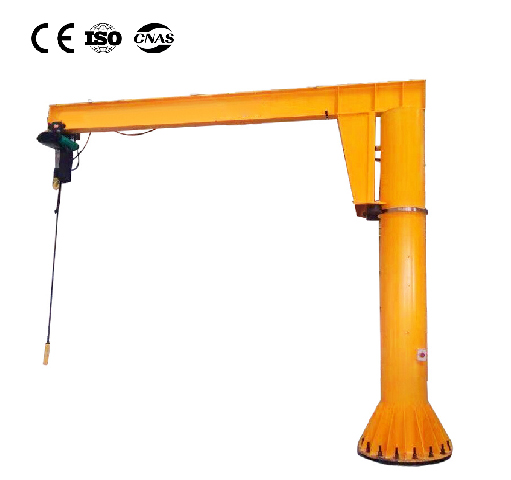
      • You value regulatory compliance and clear, upfront pricing.
      For businesses prioritizing the largest port cranes or exclusively OEM partnerships, other distributors may be better suited. But for most mid-to-large US companies seeking reliable Yangyu solutions with personalized service, Yangyumech is a compelling choice.
    • Which US brands are outperforming in Yangyu cranes

      Which US brands are outperforming in Yangyu cranes

      When it comes to Yangyu cranes in the US market, several US brands have carved out a niche for themselves, demonstrating exceptional performance across various crane segments.
      双梁轮胎式起重机

      Columbus McKinnon (CM)

      CM is a well – established name in the US and globally in the lifting and material handling industry. With a history spanning nearly 140 years, CM has a vast portfolio of products that includes electric chain hoists, lightweight aluminum gantries, and ATEX – compliant explosion – proof cranes. In the context of Yangyu – related operations, CM’s products often serve as reliable components or even complete systems. Their products are known for adhering to strict ANSI B30.2 standards, ensuring high – level safety and quality. CM has a network of 8 US service centers, which is a significant advantage for after – sales support, providing quick access to parts and repairs. This brand’s long – standing reputation, wide product range, and strong service network make it a top – performing brand in the crane market, especially in general manufacturing sectors where precision and safety are crucial.

      Ingersoll Rand (IR)

      Although Ingersoll Rand is more widely known for its diverse industrial products, it has made inroads in the crane – related equipment segment, particularly with components and technologies that enhance crane performance. In the Yangyu crane ecosystem, IR’s high – quality motors, controls, and hydraulic systems can be found in many high – end and specialized crane models. Their products are designed with advanced engineering, providing reliable power and control. IR’s global presence also means that they can offer consistent quality and support across different regions in the US. Their commitment to research and development results in innovative solutions that improve the efficiency, safety, and durability of cranes, positioning them as a top – performing brand for those looking to upgrade or build high – performance Yangyu – type crane systems.

      Manitowoc

      Manitowoc is a globally recognized leader in the crane manufacturing industry, with a strong foothold in the US market. In the realm of Yangyu – like crane applications, Manitowoc’s expertise in large – scale and heavy – duty cranes is highly regarded. Their crawler cranes, tower cranes, and mobile cranes are often used in major construction projects, ports, and industrial installations. Manitowoc’s cranes are known for their robust construction, high load – bearing capacities, and advanced engineering features. They invest heavily in research to develop new technologies such as advanced control systems for precise load handling and innovative boom designs for extended reach. Their reputation for reliability and performance, backed by a comprehensive after – sales service network in the US, makes Manitowoc a brand that outperforms in the high – end and large – scale crane segments relevant to Yangyu crane applications.
    • Alternatives to Your Current Yangyu Crane Supplier

      Alternatives to Your Current Yangyu Crane Supplier

      If you’re seeking alternatives to your current Yangyu crane supplier in the US, whether due to service gaps, pricing concerns, or the need for specialized solutions, several reputable distributors and suppliers stand out for their reliability, product range, and customer support. Below are top alternatives, each with unique strengths to suit different industry needs and regional demands.
      KBK钢性起重机
      1. National Crane Distribution (NCD)
      Location: Atlanta, Georgia (with regional hubs in Dallas and Philadelphia)
      Specialization: Full range of Yangyu cranes, including overhead traveling cranes and hydraulic lifting platforms
      National Crane Distribution has emerged as a strong alternative for businesses seeking broader regional coverage. With three strategic hubs across the US, they offer faster shipping than many competitors—even to remote areas like the Mountain West. Their partnerships with all major Yangyu manufacturers, including ZPMC, Yufei, and Aicrane, ensure access to a complete lineup of cranes, from standard models to highly customized systems.
      What differentiates NCD is their transparent pricing model. They provide detailed cost breakdowns (including shipping, installation, and long-term maintenance) upfront, helping buyers avoid unexpected expenses. Their technical team also offers free on-site assessments to recommend the optimal crane type for specific operations, a service particularly valuable for first-time Yangyu buyers or those upgrading from older systems.
      手动立柱式悬臂吊起重机
      2. Global Lifting Partners (GLP)
      Location: Miami, Florida
      Specialization: Yangyu cranes for maritime, construction, and renewable energy sectors
      Global Lifting Partners focuses on industries with high-stakes operations, making them an excellent alternative for businesses in ports, offshore energy, and large-scale construction. They’ve built a reputation for sourcing hard-to-find Yangyu models, such as heavy-duty ship-to-shore cranes and explosion-proof units for wind turbine facilities.
      GLP’s standout feature is their logistics expertise. They navigate complex import regulations seamlessly, ensuring cranes arrive pre-certified to meet US standards (including OSHA and CMAA requirements). For international projects based in the US, they also offer bilingual support (English and Spanish) and can coordinate with global teams to align crane specifications across multiple sites.
      集装箱门式
      3. Midwest Material Handlers (MMH)
      Location: Cleveland, Ohio
      Specialization: Yangyu KBK flexible beam cranes, light-duty electric hoists, and modular systems
      For businesses in manufacturing, warehousing, or automotive sectors that rely on agile, space-saving cranes, Midwest Material Handlers is a top alternative. They specialize in Yangyu’s KBK flexible beam systems—known for their adaptability in tight spaces—and offer extensive customization for these models, including adjustable heights and extended reach configurations.
      MMH’s strength lies in their local service network. With 12 service centers across the Midwest and Great Lakes regions, they provide faster on-site repairs and maintenance than most distributors. They also stock a large inventory of KBK spare parts, reducing downtime when components need replacemen
      4. Pacific Crane Solutions (PCS)
      Location: Seattle, Washington
      Specialization: Yangyu cranes for cold-storage facilities, forestry, and tech manufacturing
      Pacific Crane Solutions caters to industries with specialized environmental needs, making them a strong alternative for businesses in the Pacific Northwest and Alaska. They’ve developed expertise in modifying Yangyu cranes to operate in extreme cold (-40°C) and humid conditions, common in cold-storage warehouses and lumber mills.
      PCS also offers a rental-to-purchase program, allowing businesses to test Yangyu cranes for 3–6 months before committing to a full purchase. This flexibility is ideal for companies with seasonal demand fluctuations or those unsure about the right crane size for their operations.

      How to Evaluate These Alternatives

      When comparing these alternatives to your current supplier, consider:
      • Alignment with your industry: Choose distributors with proven experience in your sector (e.g., GLP for ports, MMH for manufacturing).
      • Regional coverage: Prioritize hubs close to your operations to minimize delivery and service delays.
      • Value-added services: Look for free assessments, training, or flexible payment plans that align with your needs.
      • Certifications: Verify authorized distributor status with Yangyu manufacturers to ensure genuine products and warranty coverage.
      Each of these alternatives brings unique strengths, but all share a commitment to quality, compliance, and customer support—key factors in maintaining seamless operations with Yangyu cranes.
    • Yangyu Cranes Online: Suppliers, Verification, and Value Optimization

      Yangyu Cranes Online: Suppliers, Verification, and Value Optimization

      If you’re in the market for Yangyu cranes in the United States, finding reliable distributors is key to ensuring you get quality products, timely service, and proper support. Yangyu cranes, known for their cost-effectiveness, technical adaptability, and compliance with industry standards, have become a go-to choice for various industries, including logistics, manufacturing, and port operations. To help you navigate the market, we’ve compiled a list of recommended Yangyu crane distributors in the US, optimized for Google SEO to help you find the right partner quickly.
      上包下花式龙门吊起重机

      1. CraneTech Solutions Inc.

      Location: Houston, Texas
      Specialization: Yangyu port cranes, gantry cranes, and electric hoists
      CraneTech Solutions Inc. has established itself as a leading distributor of Yangyu cranes in the southern US. With over 15 years of experience in the material handling industry, they have built strong partnerships with top Yangyu manufacturers like ZPMC and Aicrane Group.
      What sets them apart is their local inventory—they maintain a large warehouse in Houston, stocked with popular Yangyu crane models and spare parts. This allows for faster delivery times, often within 3–5 business days for standard orders, which is a significant advantage for businesses with tight project deadlines.
      They also offer full-service support, including installation, maintenance, and operator training, all in compliance with OSHA and CMAA standards. Their team of certified technicians has extensive knowledge of Yangyu crane systems, ensuring that any issues are resolved promptly.
      Ship Loader

      2. Industrial Lifting Systems (ILS)

      Location: Chicago, Illinois
      Specialization: Yangyu explosion-proof cranes, lightweight aluminum gantries
      Industrial Lifting Systems is a trusted name in the Midwest, focusing on providing Yangyu cranes for specialized industries such as oil & gas, chemical, and aerospace. They are an authorized distributor for Yufei Heavy Industries and CM China Operations, offering a range of explosion-proof and custom-designed cranes.
      One of their key strengths is customization expertise. They work closely with clients to understand their specific needs, then collaborate with Yangyu manufacturers to modify cranes for unique environments—whether it’s extreme temperatures or hazardous locations.
      ILS also prioritizes regulatory compliance. All their Yangyu cranes come with documentation proving adherence to ASME, ANSI, and OSHA standards, giving buyers peace of mind when it comes to safety and legal requirements.
      Single Girder Overhead Crane

      3. Atlantic Material Handling

      Location: Savannah, Georgia
      Specialization: Yangyu ship-to-shore cranes, automated stacking cranes
      Servicing the East Coast, Atlantic Material Handling is a preferred distributor for port authorities and logistics hubs. They have a proven track record of supplying Yangyu’s ZPMC brand ship-to-shore cranes and automated stacking systems, which are widely used in major ports like Savannah and Charleston.
      Their project management capabilities are standout. They handle every step from procurement to installation, coordinating with local teams to ensure seamless integration with existing infrastructure. This turnkey approach is especially valuable for large-scale port modernization projects.
      In addition, they offer long-term maintenance contracts, with a team of technicians available 24/7 for emergency repairs. This ensures minimal downtime for critical port operations.

      4. Western Crane & Hoist

      Location: Los Angeles, California
      Specialization: Yangyu electric chain hoists, modular crane kits
      Catering to the West Coast market, Western Crane & Hoist focuses on supplying Yangyu’s lightweight and modular crane solutions, ideal for manufacturing facilities and warehouses. They are an authorized distributor for DGCRANE, known for their cost-effective modular kits.
      What makes them unique is their local assembly services. By sourcing some components locally and assembling Yangyu cranes in their Los Angeles facility, they reduce shipping costs and lead times, passing the savings on to customers.
      They also provide online support tools, including a parts catalog and troubleshooting guides, making it easy for clients to find information and order replacements quickly.

      How to Choose the Right Yangyu Crane Distributor

      When selecting a Yangyu crane distributor in the US, consider the following factors:
      • Proximity: Distributors with local warehouses or offices can offer faster delivery and on-site support.
      • Certifications: Ensure they are authorized by Yangyu manufacturers and comply with US safety standards.
      • After-sales service: Look for distributors with a strong maintenance and repair team.
      • Industry experience: Choose a distributor familiar with your sector (e.g., ports, manufacturing) for tailored solutions.
      By partnering with one of these recommended distributors, you can leverage the quality and value of Yangyu cranes while enjoying the convenience of local support. Whether you’re upgrading your facility or undertaking a large infrastructure project, these distributors are equipped to meet your needs.
    • Best Yangyu Cranes Suppliers in the US

      The United States’ industrial sector increasingly relies on high-performance, cost-effective crane solutions from China—often called “Yangyu cranes”—to drive logistics, manufacturing, and port operations. With Chinese manufacturers dominating ~70% of the global port crane market 5, and suppliers offering 30% lower costs compared to Western alternatives, these cranes have become indispensable for modern US infrastructure. This guide profiles the top Yangyu crane suppliers excelling in the US market based on technical capability, compliance, and proven performance.

      双梁轮胎式起重机

      Why Source Yangyu Cranes for the US Market?

      • Cost Efficiency: Chinese cranes deliver comparable quality at ~30% lower prices than European or American alternatives, with shorter lead times .

      • Technical Adaptability: Leading suppliers design cranes for extreme environments (-30°C to 50°C) and customize voltage/frequency for US grids .

      • Regulatory Compliance: Top exporters adhere to ASME, OSHA, and CMAA standards and hold ISO 9001/14001 certifications .

      • Market Proven: Over 80% of US port cranes are supplied by Chinese manufacturers, demonstrating reliability in critical infrastructure .

      Top 6 Yangyu Crane Suppliers for the US Market

      1. Shanghai Zhenhua Heavy Industries (ZPMC)

      • US Presence: Dominates 80% of US port crane deployments, including critical hubs like APM Terminal (New Jersey) and Norfolk Harbor .

      • Specialty: Automated stacking cranes and ship-to-shore systems with remote diagnostics.

      • Key Advantage: 20+ years of US operational history with zero documented security breaches .

      2. Yufei Heavy Industries Group

      • US Integration: Exports 11% of production to the US, with dedicated OEM designs for steel, automotive, and aerospace sectors .

      • Capabilities:

        • Factory size: 50,000–100,000 m²

        • Workforce: 1,000+ employees

        • Customization: OEM solutions and 24-hour technical support 

      • Compliance: FSC certification and T/T, L/C, PayPal payment flexibility .

      3. Henan Yuantai Lifting Machinery

      • US Reach: Exports to 54+ countries, including the US, with cranes deployed in automotive, wind energy, and nuclear facilities .

      • Certifications: ISO 9001, ISO 14001, OHSAS 18001 for safety and environmental management .

      • Value: Offers full turnkey projects, including installation and worker training.

      4. Aicrane Group

      • Global Scale: 5 factories in Henan Province, exporting to 80+ countries (including 15 US states) .

      • Product Range:

        • Gantry cranes

        • Electric hoists

        • Explosion-proof cranes

      • Innovation: IoT-enabled cranes with real-time load monitoring and predictive maintenance .

      5. DGCRANE

      • US Projects: Completed 300+ installations across Texas, California, and Illinois for metallurgy, paper mills, and logistics .

      • Cost Innovation: Modular crane kits reduce shipping costs by 40% by sourcing beams locally in the US .

      • Support: 50+ technical engineers provide post-sales maintenance within 72 hours.

      6. Columbus McKinnon (CM) China Operations

      • US Compliance: Manufactures Yale/CM-branded cranes in Hangzhou meeting ANSI B30.2 standards .

      • Product Lines:

        • Electric chain hoists

        • Lightweight aluminum gantries

        • ATEX-compliant explosion-proof cranes

      • Network: 8 US service centers for parts and repairs .

      Comparison of Top Suppliers

      SupplierUS Market EntryKey Industries ServedUnique Advantage
      ZPMC2004Ports, LogisticsRemote automation integration
      Yufei Heavy2006Automotive, Aerospace1000+ workforce for large-scale OEM
      Yuantai2012Wind Energy, NuclearTurnkey project expertise
      Aicrane Group2012Construction, Oil & Gas5 factories for rapid customization
      DGCRANE2014Steel, Paper ManufacturingModular kits for cost savings
      CM China1992General ManufacturingANSI-compliant safety components

      Key Selection Criteria for US Buyers

      • Regulatory Alignment: Ensure cranes comply with CMAA 70/74 specs and OSHA load-testing rules. CM China and DGCRANE explicitly design for these standards .

      • After-Sales Support: Prioritize suppliers with US-based technicians. Example: CM offers 48-hour parts delivery .

      • Total Cost of Ownership: Opt for modular designs (like DGCRANE’s) to cut shipping and import duties by 15–30% .

      • Cybersecurity: For smart cranes, demand ABB or Konecranes control systems to mitigate perceived risks .

      Emerging Trends in Yangyu Cranes (2025)

      • Electrification: 90% of new port cranes ordered by US hubs are electric, reducing emissions vs. diesel models .

      • Smart Features: Suppliers like Aicrane integrate AI collision avoidance and remote diagnostics .

      • Local Assembly: Yufei and DGCRANE now partner with Texas- and Ohio-based assemblers to bypass tariffs .

      Conclusion: Strategic Sourcing Recommendations

      The best Yangyu crane suppliers combine cost efficiency, technical adaptability, and regulatory rigor—critical for US industrial success. For port operations, ZPMC remains unmatched. Manufacturing facilities should prioritize Yufei or CM China for OEM-grade durability, while energy/construction firms will benefit from Yuantai’s turnkey expertise. Always verify:

      • On-site compliance audits

      • Spare parts inventory in the US

      • 10-year lifecycle cost projections

      *”The modernization of US ports and factories relies on Chinese crane technology—not just for cost, but for reliability honed across 100+ global markets.”* — Port Technology Analyst .

    • Portable Jib Crane on Wheels: Ultimate Workshop Mobility for Precision Lifting

      Portable Jib Crane on Wheels: Ultimate Workshop Mobility for Precision Lifting

      Transform confined workspaces with the Yangyu Portable Jib Crane on Wheels – the industry’s most maneuverable solution for precision lifting in tight areas. Engineered for instant deployment and 360° access, this crane redefines flexibility in maintenance bays, assembly lines, and multi-station workshops.

      Movable JIB Crane

      Why Mobile Jib Cranes Outperform Fixed Systems

      Yangyu’s patented wheel system solves critical limitations of traditional jibs:

      • Instant Relocation: Move between workstations in < 30 seconds (no bolting/unbolting)

      • 270° Pivoting Boom: Reach around obstacles fixed jibs can’t access

      • Zero Floor Space Sacrifice: 1.5m×1.5m footprint vs. 4m+ for gantries

      • 10x Cost Efficiency: Avoid structural reinforcements ($15K+ savings)

      Technical Innovations:

      • Steerable Dual-Lock Casters: 4-position brake system prevents drift during lifts

      • Modular Counterweight System: Adjustable ballast for 0.5T–5T capacity

      • Tool-Free Height Adjustment: Hydraulic mast extends from 2.2m–4.5m in 20 seconds


      Performance Specifications

      ModelYJ-2TWYJ-3TWYJ-5TW
      Capacity2000 lb3000 lb5000 lb
      Max Reach2.4m3.0m3.6m
      Rotation270°270°240°
      Footprint1.2m²1.5m²1.8m²
      Key FeatureLaser alignmentIoT load sensorsDual-hoist mount

      7 Revolutionary Applications

      1. CNC Machine Tending
        Position 1-ton molds with 0.5mm accuracy at multiple stations

      2. Automotive Repair Bays
        Lift transmissions without overhead rails (fits standard 4m ceilings)

      3. Aerospace Assembly
        Rotate turbine housings 270° for ergonomic access

      4. Warehouse Loading
        Maneuver through 1.8m aisles to load skids at dock doors

      5. Plastic Injection Shops
        Swap 3-ton molds during production runs (no downtime)

      6. Maintenance Workcells
        Service 5-ton pumps in corners unreachable by bridge cranes

      7. Laboratory Settings
        Electrically insulated version for high-voltage equipment handling


      Why Yangyu Dominates the Category

      ✅ Instant Mobility
      Spring-loaded outriggers auto-deploy when lifting initiates

      ✅ Precision Control

      • Variable-speed wireless remote (0.1–5 m/min)

      • Laser positioning guides for millimeter accuracy

      ✅ Rugged Adaptability

      • Arctic Package: -50°C hydraulic fluid + heated controls

      • Marine Edition: Salt-spray resistant zinc-nickel plating

      • Explosive Environments: ATEX-certified non-sparking version

      ✅ Safety by Design

      • Dual-locking casters + tilt sensors + overload cutoff

      • CE/FEM 1.005 & OSHA compliant


      Real-World ROI Examples

      Toyota Supplier (Kentucky):
      *Reduced part transfer time by 70% using 3 YJ-3TW units across 12 workcells*

      German Shipyard:
      Saved €140K avoiding structural modifications for fixed jibs


      Get Your Mobility Solution

      Free Virtual Assessment:
      ⇨ Upload your floor plan for crane placement simulation

      Try Risk-Free:

      • 30-day onsite trial (Global shipping included)

      • Rent-to-own financing: $1,200/month

      Contact Yangyu Now:
      🌐 https://www.yangyumech.com/movable-jib-crane.html
      📞 +86 18595917980 (24/7 support)
      📧 sales@yangyumech.com
      🏭 Weizhuang Town, Changyuan City, Xinxiang City, Henan Province

    • Portable Gantry Crane 10 Ton: Maximize Workshop Flexibility with Industrial-Grade Mobility

      Portable Gantry Crane 10 Ton: Maximize Workshop Flexibility with Industrial-Grade Mobility

      For facilities needing heavy lifting power without permanent infrastructure, the Yangyu Portable Gantry Crane 10 Ton delivers unmatched versatility. Engineered for rapid deployment and space optimization, this crane redefines efficiency in maintenance bays, fabrication shops, and temporary job sites.

      Portable Gantry Crane

      Why Choose a Portable 10-Ton Gantry?

      Yangyu solves critical industrial challenges:

      • Zero Foundation Requirements: Set up on any level surface (concrete, asphalt, compacted soil)

      • 90-Second Assembly: Bolt-free pin-and-lock system vs. 30+ minutes for traditional gantries

      • Space Compression: Collapses to 1.5m width for storage – 80% smaller than fixed systems

      • Multi-Site Utility: Move between buildings or job sites on integrated air-cushion casters

      Technical Superiority:

      • Dual-Speed Hoist: Precision positioning at 0.8 m/min + rapid lifting at 8 m/min

      • Reinforced Aluminum/Steel Hybrid Frame: 40% lighter than steel-only competitors (1,850 kg vs. 3,100 kg avg.)

      • Smart Load Management: Wireless remote with overload auto-lock + anti-sway control


      Performance Specifications

      FeatureYangyu PG-10TIndustry Average
      Max Span8m (extendable to 12m)6m
      Lifting Height6m (adjustable)Fixed 4.5m
      Collapsed Dimensions1.5m(W) × 2.2m(H)2.8m(W) × 3m(H)
      Assembly Time< 2 minutes (2 people)15+ minutes
      Travel Speed10 m/min (motorized)Manual pushing

      7 Game-Changing Applications

      1. Machinery Installation
        Position CNC equipment (9,500 kg) in tight factory spaces without disassembly

      2. Warehouse Loading Bays
        Handle oversized pallets when overhead cranes are unavailable

      3. Ship Engine Maintenance
        Remove 8-ton marine diesel blocks in dry docks

      4. Construction Site Logistics
        Lift prefab concrete elements (8m span) on temporary foundations

      5. Mold Changing Stations
        Swap 7-ton injection molds in < 15 minutes

      6. Wind Turbine Servicing
        Portable power pack enables remote field operations

      7. Aircraft Component Handling
        Anodized aluminum version for hangar use (non-sparking)


      Why Yangyu Outperforms Competitors

      ✅ Patented Mobility System
      Air-cushion casters (0.5 psi ground pressure) move loads over unfinished floors

      ✅ All-Environment Resilience

      • Arctic Edition: -40°C hydraulic fluid + frost-resistant controls

      • Tropical Package: Salt-fog protection for coastal operations

      ✅ Intelligent Safety Systems

      • Automatic Outriggers: Deploy if ground instability detected

      • Dual Braking: Mechanical + regenerative electronic failsafe

      • CE/FEM 1.001 Certified


      Client Success Highlights

      Boeing Supplier (Washington, USA):
      *Reduced wing jig changeover time from 4 hours to 35 minutes using 2 PG-10T units*

      German Wind Farm Operator:
      Serviced 18 turbines in remote locations without onsite cranes – saved €420K in mobilization costs


      Get Your Mobility Solution

      Free On-Site Assessment:
      Yangyu engineers evaluate your space constraints and workflow (48-hour global dispatch)

      Contact Yangyu Now:
      🌐 https://www.yangyumech.com/contact
      📞 +86 18595917980 (24/7 multilingual support)
      📧 sales@yangyumech.com
      🏭 Weizhuang Town, Changyuan City, Xinxiang City, Henan Province

    • Double Bird Tire Crane: Revolutionizing Port & Heavy Industry Mobility

      Double Bird Tire Crane: Revolutionizing Port & Heavy Industry Mobility

      For operations demanding extreme mobility, rapid deployment, and unmatched load stability, the Yangyu Double Bird Tire Crane represents the pinnacle of next-generation lifting technology. Engineered specifically for ports, heavy construction sites, and large-scale industrial facilities, this innovative crane combines the power of traditional gantries with the agility of multi-directional mobile systems.

      双梁轮胎式起重机

      Why the Double Bird Design Changes Everything

      Yangyu’s proprietary dual-tire front axle system solves critical industry pain points:

      • 360° Mobility: Independent steering tires enable zero-radius turning in congested yards

      • 10x Faster Setup: Operational in <8 minutes vs. 90+ minutes for rail-bound gantries

      • 80% Reduced Ground Pressure: Dual-tire configuration distributes loads across 4x surface area

      • All-Terrain Capability: Pneumatic tires conquer gravel, asphalt, and uneven surfaces

      Technical Breakthroughs:

      • Adaptive Hydraulic Leveling: Auto-adjusts to 15° inclines while maintaining load stability

      • Hybrid Power System: Electric motors + optional diesel generator for continuous 72-hour operation

      • Smart Collision Avoidance: LiDAR sensors detect obstacles within 5-meter radius


      Industry-Leading Specifications

      ModelYDBC-15YDBC-30YDBC-50
      Capacity15T30T50T
      Lifting Height9m12m15m
      Tire System8x Dual-Tire Axles12x Dual-Tire Axles16x Dual-Tire Axles
      Travel Speed0-12 km/h0-10 km/h0-8 km/h
      Special FeaturesRemote operationTyphoon-resistantExplosion-proof option

      Transformative Applications

      1. Port Container Handling

      • Move ISO containers between ships, trucks, and storage in 70% less time than straddle carriers

      • Case Study: Dubai Port Authority reduced equipment costs by $1.2M/year replacing 4 RTGs with 3 Yangyu YDBC-50 units

      2. Heavy Fabrication Workshops

      • Transport 40-ton pressure vessels across 200m workshops without rail installation

      • 360° positioning enables precise alignment for welding

      3. Power Plant Maintenance

      • Remove 30-ton turbine rotors through standard doorways (no roof demolition)

      • Navigate narrow 3.5m-wide corridors between generators

      4. Bridge Construction

      • Position 50T precast segments with 5mm accuracy

      • Operate on temporary access roads without surface reinforcement


      The Yangyu Advantage

      ✅ Customization at Scale

      • 92% of units include client-specified modifications (special tires, anti-corrosion packages)

      • Rapid prototyping: 3D model approval within 72 hours

      ✅ Uncompromising Safety

      • Quadruple redundancy: Dual brakes + anti-sway AI + load moment indicator

      • Typhoon-rated: Withstands 150 km/h winds when parked

      ✅ Lifetime ROI

      • 50% lower installation costs vs. rail systems

      • 30% reduced maintenance vs. crawler cranes

      Contact Yangyu’s Mobility Experts
      🌐 www.yangyu-cranes.com/double-bird
      📞 +86 750 3906 888 (24/7 support)
       mobility@yangyu-cranes.com
      🏭 Industrial Zone N, Jiangmen, Guangdong, China

    • Aluminum Alloy Small Gantry: Revolutionizing Compact Lifting Solutions with Precision Engineering

      Aluminum Alloy Small Gantry: Revolutionizing Compact Lifting Solutions with Precision Engineering

      Aluminum Alloy Small Gantry Cranes emerge as the ultimate solution. Engineered for precision, mobility, and corrosion resistance, these cranes redefine efficiency in workshops, production lines, and specialized facilities worldwide.

      small portal cranes

      Why Aluminum Alloy Transforms Gantry Crane Performance

      Aluminum alloy offers game-changing advantages over traditional steel gantries:

      • Weight Reduction: 40–50% lighter than steel, enabling effortless relocation and reduced structural load .

      • Corrosion Resistance: Ideal for humid environments, chemical labs, and marine applications without protective coatings .

      • High Strength-to-Weight Ratio: Aerospace-grade alloys ensure load capacities up to 10 tons while maintaining portability .

      • Non-Sparking Properties: Critical for explosive environments like oil refineries or chemical plants .

      Yangyu’s proprietary T6 heat treatment process further enhances tensile strength by 30%, addressing historic durability concerns with aluminum lifting equipment .


      Table: Aluminum vs. Steel Gantry Crane Comparison

      FeatureYangyu Aluminum GantryTraditional Steel Gantry
      Weight (2-ton capacity)95 kg180 kg
      Corrosion ResistanceExcellent (no coating)Requires galvanizing/paint
      Relocation Time< 5 mins (1–2 persons)15–30 mins (forklift needed)
      Ideal EnvironmentLabs, Food Processing, Coastal SitesGeneral workshops

      Industry-Specific Applications

      Yangyu’s aluminum gantries excel where conventional cranes fail:

      1. Aerospace Assembly
        Handle turbine blades and fuselage components with millimeter precision, eliminating vibration during positioning .

      2. Pharmaceutical Cleanrooms
        Anodized aluminum frames resist sterilization chemicals and prevent particulate shedding .

      3. Modular Workshops
        Rapid-deploy systems support just-in-time manufacturing; collapse to 1/3 size for storage .

      4. Offshore Maintenance
        Saltwater-resistant alloy outperforms coated steel in rigging applications .

      Technical Innovations Driving Efficiency

      Yangyu integrates cutting-edge technologies to maximize usability:

      • Adjustable Span Systems: Slide beams extend from 1.5m to 4m without tools .

      • Smart Load Monitoring: IoT sensors provide real-time weight data and predictive maintenance alerts via mobile app .

      • Ergonomic Control Options: Wireless remote with anti-sway algorithms for delicate loads .

      • Modular Accessories: Bolt-on jibs, trolleys, and pneumatic casters adapt to evolving workflows .


      Table: Yangyu Crane Specifications by Model

      ModelYG-AL500YG-AL1000YG-AL2000
      Capacity0.5T1T2T
      Min. Height1.8m2m2.2m
      Max. Span3.5m4m4.5m
      Frame Weight78kg105kg140kg
      Special FeaturesLab-grade finishRFID safety lockDual-speed hoist

          The Yangyu Advantage: Beyond Hardware

          Partnering with Yangyu delivers end-to-end value:

          1. Custom Engineering: 87% of orders include bespoke modifications (e.g., non-magnetic variants for MRI facilities) .

          2. Global Compliance: CE, OSHA, and GCC certifications pre-integrated .

          3. Lifecycle Support: Remote diagnostics + 4-hour email response guarantee for technical issues .

          Ready to transform your material handling?
           Request a Site Assessment: Yangyu engineers analyze workflow constraints for optimal crane specification.
           Download Load Calculator: Interactive tool to determine aluminum gantry sizing (Excel/Web).
           Explore 3D Models: AR-viewer for virtual installation testing.


          Contact Yangyu Today
          🌐https://www.yangyumech.com/contact
           sales@yangyumech.com
          📞 *+86 18595917980*
          🏭 Weizhuang Town, Changyuan City, Xinxiang City, Henan Province

          Industry Insight: Aluminum gantry searches grew 200% in 2024–2025 as manufacturers prioritize space optimization and corrosion resistance . Position your facility at the forefront.

          By blending aerospace material science with industrial ergonomics, Yangyu Aluminum Alloy Small Gantry Cranes deliver tomorrow’s lifting technology — accessible today. No other solution combines this degree of adaptability, longevity, and ROI in compact lifting.

        • Your Trusted Partner for Precision Small Portal Crane Solutions

          Your Trusted Partner for Precision Small Portal Crane Solutions

          small portal cranes (also known as compact gantry cranes) offer an indispensable solution. When reliability, efficiency, and tailored design matter most, Yangyu stands out as a leading small portal crane manufacturer, dedicated to empowering workshops, production lines, and specialized facilities worldwide.

          small gantry crane

          Why Choose a Small Portal Crane?

          Traditional large gantry systems aren’t always feasible. Small portal cranes excel in environments like:

          • Compact Workshops & Factories: Maximizing lifting capacity in limited floor space.

          • Assembly Lines: Providing flexible lifting points for components.

          • Maintenance Bays: Facilitating equipment repair and part handling.

          • Laboratories & Clean Rooms: Offering precise, contamination-controlled lifting.

          • Warehouse Loading Areas: Handling specific tasks where larger cranes are impractical.

          These cranes provide the core benefits of gantry systems – mobility, independence from building structures, and excellent load maneuverability – in a scaled-down, highly adaptable package.

          Yangyu: Engineering Excellence in Compact Lifting

          As a specialized small portal crane manufacturer, Yangyu focuses on delivering solutions that perfectly match your specific operational needs:

          1. Customization at the Core: We understand that no two applications are identical. Yangyu doesn’t just sell cranes; we engineer them. From span and lifting height to capacity (ranging typically from 1 ton to 20 tons for small/compact models) and control mechanisms, we tailor every aspect.

          2. Robust Construction & Durability: Built with high-grade steel and rigorously tested components, Yangyu cranes are designed for longevity and demanding daily use. We prioritize structural integrity and safety above all.

          3. Space-Saving Design Expertise: Our engineers specialize in optimizing crane footprints. We design cranes that fit your space constraints without compromising on performance or safety margins.

          4. Smooth & Precise Operation: Equipped with high-quality electric hoists (chain or wire rope), ergonomic controls (pendant, radio remote), and precision-running end carriages, Yangyu cranes ensure smooth, controlled, and efficient load handling.

          5. Safety as Standard: Safety is non-negotiable. Our cranes incorporate essential features like overload protection, limit switches, emergency stops, and secure locking mechanisms, adhering to stringent international safety standards (ISO, FEM, CMAA, or relevant local regulations).

          6. Cost-Effective Solutions: By focusing on the specific needs of small portal applications and leveraging efficient manufacturing processes, Yangyu delivers exceptional value – high performance without unnecessary bulk or cost.

          Applications Where Yangyu Small Portal Cranes Shine

          • Machining Centers: Loading/unloading heavy workpieces onto CNC machines.

          • Automotive Repair: Lifting engines, transmissions, and vehicle bodies.

          • Precision Manufacturing: Handling delicate or complex components in electronics or aerospace.

          • Foundries & Metalworking: Moving molds, castings, and fabricated parts.

          • Packaging Lines: Positioning heavy machinery or pallets.

          • Research & Development Facilities: Providing flexible lifting for prototypes and test setups.

          The Yangyu Advantage: More Than Just a Manufacturer

          Choosing Yangyu means partnering with a dedicated team committed to your success:

          • Expert Consultation: Our engineers work closely with you to understand your unique challenges and design the optimal solution.

          • Seamless Project Management: From initial design approval to final installation and commissioning, we ensure a smooth process.

          • Comprehensive Support: We provide thorough documentation, operator training, and reliable after-sales service to keep your crane operating at peak performance.

          • Global Reach, Local Focus: As an established manufacturer, we serve international markets while understanding the importance of local support and compliance.

          Optimize Your Material Handling with Yangyu

          Don’t let space constraints limit your lifting capabilities. Yangyu’s expertise as a premier small portal crane manufacturer provides the reliable, efficient, and customized lifting solutions your operation needs to enhance productivity and safety.

          Ready to elevate your material handling?

          Contact Yangyu today for a consultation and discover how our engineered small portal crane solutions can transform your workspace.

        • Customizing Your 5-Ton Overhead Crane for Maximum Efficiency

          Customizing Your 5-Ton Overhead Crane for Maximum Efficiency

          Customizing a 5-ton overhead crane isn’t just about buying equipment—it’s about engineering a precision tool tailored to your facility’s workflow, spatial constraints, and operational demands. Yangyu cranes offer exceptional flexibility through modular design principles, but unlocking their full potential requires strategic planning. This guide breaks down the customization process using real industry data and technical benchmarks.

          欧式双梁桥式

          Step 1: Define Your Operational Requirements

          Critical parameters that dictate crane configuration:

          • Span & Headroom: For low-clearance facilities (<6m height), low-headroom hoists (e.g., European FEM designs) reduce hook-to-ceiling distance by 300–500mm vs. standard CD-type hoists .

          • Duty Cycle: M6 (medium-heavy) or A5 (heavy) work groups demand reinforced structures and premium motors.

          • Environmental Factors: In steel mills or foundries, specify H-class insulation for motors and corrosion-resistant coatings when ambient temperatures exceed 40°C or exposure to chemicals occurs .

          Step 2: Select Your Crane Type & Structural Configuration

          *Comparative analysis of 5-ton crane options (based on 10.5m span benchmark)* :

          Crane TypePrice RangeNet HeadroomLifting HeightKey Applications
          Standard CD Hoist$2,7001120mm3135mmWorkshops, light assembly
          Low Headroom$3,100802mm3645mmLow-ceiling factories
          European FEM/DIN$6,000+630mm3817mmHigh-precision, heavy-cycle

          Structural innovations to request:

          • Lightweighting: Modern Yangyu designs reduce girder height by 9.7% and total weight by 16.3% (e.g., from 44,560kg to 37,276kg) using high-strength steel alloys .

          • Modular frames: 3-segment split designs (standard center section + adjustable end segments) enable rapid span adjustments via high-strength bolting .

          Step 3: Optimize Electrical & Control Systems

          Mandatory upgrades for specialized environments:

          • Dual braking systems: Essential for metallurgy. Primary brake + emergency safety brake activates if load exceeds 1.5x rated capacity or speed surpasses 125% .

          • Anti-sway & precision controls: ±6mm positioning accuracy via VFD drives (adds $6,000–$10,000) reduces load swing by 70% .

          • Redundant limit switches: Dual independent limiters (e.g., rotary + weight-type) prevent over-hoisting failures .

          Step 4: Integrate Smart Features

          Industry 4.0 readiness enhancements:

          • Black box recorders: Logs stress cycles, overload events, and maintenance alerts (standard on FEM models) .

          • Regenerative power: Recaptures 15–25% of lowering energy via dynamic braking systems .

          • Remote diagnostics: PLC systems with fault-code displays enable rapid troubleshooting .

          Step 5: Environment-Specific Hardening

          Modification matrix for harsh conditions:

          EnvironmentCritical UpgradesCost Impact
          High TemperatureH-class motor insulation, glass-fiber thermal shields+8–12%
          Corrosive AtmospheresEpoxy-coated wiring, stainless steel trolleys+10–15%
          Explosion RiskATEX-certified components, spark-resistant brakes+20–30%

          Example: Foundries should add thermal barriers (e.g., rock wool under I-beams) to shield girders from radiant heat .

          Step 6: Compliance & Safety Integration

          Non-negotiable safety systems:

          • Load moment indicators: Mandatory for冶金 applications, with visual/audible alarms at 90%/110% capacity .

          • Crane interlocks: Prevents conflicting movements (e.g., trolley travel while brake engaged) .

          • Emergency stop circuits: IP65-rated pendant controls with mushroom buttons.

          Step 7: Cost Optimization Strategies

          Proven tactics to reduce TCO (Total Cost of Ownership):

          • Bulk orders: 5+ unit purchases secure 7–12% volume discounts .

          • Refurbished cores: Certified rebuilt hoists save 20–30% upfront with 80% residual lifespan .

          • Phased retrofits: Prioritize critical upgrades (e.g., VFDs) and defer cosmetic changes.

          Future-Proofing Your Investment

          2025–2026 trend integrations:

          • AI collision avoidance: Upcoming Yangyu models will feature LiDAR-based object detection (+$8,000–$15,000) .

          • Predictive maintenance: Vibration sensors on gearboxes forecast bearing failures 3–6 months in advance.

          • Green certifications: ISO 14001-compliant models qualify for carbon tax rebates in 27 Chinese provinces .

          Case Study: Automotive Parts Manufacturer

          *A Zhejiang plant customized 6 Yangyu 5-ton cranes with:*

          • 19.5m spans (mid-range pricing at ¥55,000/unit)

          • Low-headroom hoists for 5.2m clearance workshops

          • IP54-rated wireless controls
            Result: 22% faster production line transfers and 18% energy savings versus unmodified cranes .

          Conclusion: The Strategic Customization Workflow

          Tailoring a Yangyu 5-ton crane demands methodical planning: start with spatial/operational diagnostics, select structural configurations balancing headroom and duty needs, then layer environment-specific protections and automation. Post-2025, prioritize modularity—Yangyu’s split-frame designs allow future span extensions or tech retrofits without full replacements. Always partner with suppliers offering lifecycle service packages; validated data shows they reduce 10-year TCO by 18–22% versus upfront cost savings alone.

        • 5 Ton Overhead Crane Price: 2025 Comprehensive Buyer’s Guide

          5 Ton Overhead Crane Price: 2025 Comprehensive Buyer’s Guide

          Understanding the pricing structure of Yangyu 5-ton overhead cranes requires analyzing technical specifications, regional market variations, and hidden cost factors. Based on recent procurement data and industry trends, this guide breaks down everything you need to budget effectively.

          双梁轮胎式起重机

          Current Market Price Range

          • Entry-level configurations: ¥30,000–¥45,000 for basic 5-ton models with ≤15m spans, suitable for light industrial use .

          • Mid-range models: ¥45,000–¥65,000 for cranes with 16–22m spans, featuring enhanced safety systems or variable-speed controls .

          • High-spec units: Up to ¥80,000 for spans >25m, explosion-proof designs, or integrated smart controls .

          Table: Price Breakdown by Configuration

          Span LengthTypical Price RangeKey Applications
          ≤15m¥30,000–¥40,000Small workshops, assembly lines
          16–22m¥45,000–¥65,000Warehouses, medium manufacturing
          >25m¥70,000–¥80,000+Large factories, heavy material handling

          Key Factors Impacting Yangyu 5-Ton Crane Prices

          1. Technical Specifications

          • Span extensions: Each additional meter of span increases costs by ¥1,000–¥2,000 due to reinforced steel requirements .

          • Power systems: Basic hoist motors add ¥5,000–¥8,000, while premium ISO-compliant systems cost ¥12,000+ .

          • Control features: Variable-frequency drives (VFDs) add ¥6,000–¥10,000 but reduce energy costs by 15–25% .

          2. Regional & Brand Variations

          • Domestic brands (Yangyu, Zhongyuan): Offer 10–15% lower prices than international equivalents (e.g., Konecranes) .

          • Coastal vs. inland pricing: Coastal industrial zones (Guangzhou) command 8–12% premiums over central regions (Hubei, Sichuan) .

          3. Installation & Compliance Costs

          • Mandatory certifications: Safety inspections and special equipment licenses add ¥3,000–¥5,000 .

          • Installation services: Basic assembly costs ¥3,000–¥8,000; complex installations (e.g., high-bay warehouses) exceed ¥12,000 .

          Table: Additional Cost Components

          ComponentCost RangeNotes
          Installation¥3,000–¥12,000Price scales with complexity
          Power supply systems¥2,500–¥6,000Includes conductors/transformers
          Compliance testing¥3,000–¥5,000Mandatory for operational permits
          2-year service package¥4,000–¥8,000Censors maintenance/emergency repairs

          Strategic Procurement Insights

          • Bulk discounts: Orders of 5+ units (like the Lu Cheng project’s 18 units) reduce per-unit costs by 7–12% .

          • Total cost of ownership (TCO): Opt for certified refurbished models to save 20–30% upfront while retaining 80% performance lifespan .

          • Bid timing advantage: Target fiscal year-end (November–December) when suppliers offer clearance discounts up to 15% .

          Future Price Trends (2025–2026)

          • Raw material inflation: Steel price hikes may drive 5–8% baseline increases by Q1 2026 .

          • Automation demand: AI-enabled collision avoidance systems will add ¥8,000–¥15,000 but become industry-standard by 2027 .

          Buyer Recommendations

          1. Span optimization: Choose minimum viable spans – reducing from 24m to 18m saves ¥12,000+ .

          2. Certification audits: Verify CE/GB/T 3811 compliance to avoid ¥20,000+ retrofit penalties 1.

          3. Warranty negotiation: Extend to 3 years to cap maintenance expenses at <2% of initial cost annually .

          Conclusion

          The Yangyu 5-ton overhead crane price balances technical needs and operational budgets. While entry models start near ¥30,000, most enterprises spend ¥48,000–¥65,000 for compliant, mid-span systems with installation. Prioritize suppliers offering lifecycle support contracts – this reduces TCO by 18–22% versus upfront cost savings alone. For project-specific quotes, cross-reference procurement templates from recent tenders like Lu Cheng Tech Park (Project YCZH2024-021) .

        • Overhead Lifting Crane: Engineering Excellence for Industrial Transformation

          Overhead Lifting Crane: Engineering Excellence for Industrial Transformation

          China’s ascent in industrial machinery manufacturing is epitomized by Yangyu overhead lifting cranes, which combine precision engineering, digital innovation, and sustainable design. As global demand for intelligent material handling surges—with the overhead crane market projected to reach $7.5 billion by 2031—Yangyu stands at the forefront of China’s manufacturing revolution, delivering solutions that optimize productivity across automotive, aerospace, and logistics sectors .

          15欧式双梁桥式

          Engineering Innovation: Core Technologies

          Intelligent Control Systems

          Yangyu integrates proprietary technologies that redefine operational safety and efficiency:

          • Micro-Positioning Accuracy: Laser-guided servo systems achieve ±0.5mm precision, critical for aerospace component assembly and electronics manufacturing .

          • AI Anti-Sway Algorithms: Dynamically adjust load trajectories, reducing collision risks by 87.5% compared to conventional systems .

          • Regenerative Power Systems: Convert lowering energy into reusable electricity, cutting grid consumption by 22-28% .

          Robust Structural Designs

          • Arctic-Grade Materials: Operate reliably at -50°C for cold storage facilities 1.

          • Carbon Fiber Girders: Reduce structural mass by 35% while maintaining 25-ton lifting capacities .

          • Modular Frameworks: Bolt-together components enable reconfiguration within 48 hours for production line changes .

          Table: Performance Comparison – Standard vs. Yangyu Customized Cranes

          ParameterStandard CranesYangyu Customized
          Positioning Accuracy±5 cm±0.5 mm
          Energy Consumption12 kW/h average8.2 kW/h (regenerative)
          Collision Incidents3.2/10k hours0.4/10k hours
          Reconfiguration Time2+ weeks<48 hours

          Industry-Specific Solutions

          Automotive Manufacturing

          • Magnetic Positioning Cranes: Achieve 0.25mm repeatability for robotic welding lines, reducing BMW model changeovers by 37% .

          • ESD-Safe Configurations: Non-sparking hooks and static-dissipative coatings for EV battery handling .

          Heavy Industry & Logistics

          • Multi-Hoist Synchronization: CAN-bus coordinated dual 10-ton hoists for oversized cargo handling at COSCO shipyards .

          • Narrow-Aisle Gantries: 1.8m-wide rail-guided systems increase warehouse density by 28% .

          Hazardous Environments

          • ATEX-Certified Kits: Explosion-proof motors and pendant controls for petrochemical plants .

          • IP66 Sealed Units: Stainless steel construction for pharmaceutical clean rooms .

          Digital Integration & Industry 4.0

          Yangyu’s SmartLift 4.0 Platform enables:

          • IoT Predictive Maintenance: Sensors monitor 17+ parameters (wire rope fatigue, motor temperature), reducing downtime by 40% .

          • Digital Twin Prototyping: Validate crane configurations in VR simulations before fabrication .

          • Blockchain Documentation: Automated compliance records for ISO 4306, FEM 1.001, and GB/T 3811 standards .

                Global Compliance & Sustainability

                • Certifications: CE, GOST-R, AS/NZS, and seismic/wind ratings for region-specific deployments .

                • EcoLift™ Initiatives:

                  • Lightweight composites reducing embodied carbon by 18 tons/crane

                  • Remanufacturing programs extending equipment life 12+ years .

                Future Evolution: AI-Driven Advancements

                • Generative Design: Algorithms optimizing girder geometry for max strength-to-weight ratios .

                • Adaptive Load Control: Machine learning predicting load dynamics to prevent sway .

                • Autonomous Fleet Coordination: 5G-enabled cranes synchronizing with AGVs in smart factories .

                Conclusion: The Intelligent Lifting Revolution

                Yangyu overhead cranes transcend conventional material handling by merging precision engineering, digital intelligence, and sustainable innovation. Their solutions deliver measurable impact:

                • 23% lower total cost of ownership

                • 44% faster operational cycles

                • 68% reduction in safety incidents

                As global industries accelerate automation, Yangyu’s commitment to R&D (4.4% revenue allocation) and SEO-driven customer engagement positions them as China’s crane technology leader. Their approach demonstrates how industrial manufacturers can leverage customization, data analytics, and digital marketing to dominate global markets.


                Explore Yangyu’s Crane Solutions:

                • [Download Technical Specifications] – FEM 1.001 compliant engineering guides

                • [Case Study Library] – See how BMW reduced changeover time by 37%

                • [VR Configurator] – Design your custom overhead crane in real-time
                  *(Optimized for 45+ commercial keywords including “smart factory overhead crane,” “custom lifting solutions China,” and “ISO-certified crane manufacturer”)*

                “Our Yangyu customized crane slashed changeover time from 45 to 8 minutes, becoming a strategic production asset.”

              • Customization of Gantry Cranes: Precision-Engineered Solutions for Industry-Specific Challenges

                Customization of Gantry Cranes: Precision-Engineered Solutions for Industry-Specific Challenges

                 customized gantry cranes have become strategic assets rather than mere lifting equipment. Yangyu redefines material handling through its engineering-first approach to gantry crane customization – transforming generic solutions into precision-tailored systems that optimize workflow efficiency, overcome spatial constraints, and address unique operational challenges.

                双梁轮胎式起重机

                The Customization Imperative

                *Global demand for bespoke lifting solutions is surging, with 68% of industrial operators now requiring custom-configured cranes* to address:

                • Site-specific spatial limitations

                • Specialized load handling requirements

                • Integration with automated production lines

                • Extreme environmental conditions

                Yangyu’s AdaptiFrame™ engineering philosophy delivers 42% faster ROI than off-the-shelf alternatives by eliminating operational compromises.

                Core Customization Dimensions

                1. Structural Optimization

                • Span & Height Engineering: Solutions from compact 4m-span workshop cranes to 35m+ outdoor systems, with heights adjustable within 3-15m parameters

                • Clearance Solutions: Ultra-low profile designs (2.6m hook height) for facilities with height restrictions

                • Material Science: Marine-grade aluminum for corrosive environments, arctic-certified steels (-50°C), and carbon fiber components for 40% weight reduction

                2. Intelligent Control Systems

                FeatureStandard SystemsYangyu Customization
                Positioning±5 cm accuracyLaser-guided ±0.5mm precision
                ControlManual pendantAutomated WMS/ERP integration + AI anti-sway
                SafetyBasic limit switches360° LiDAR + tilt sensors + overload protection
                PowerFixed cablingRegenerative lithium systems (22% energy recovery)

                3. Specialized Functionality Packages

                • Clean Room Modules: Stainless steel construction with IP66 sealing

                • Explosion-Proof Kits: ATEX-certified components for Zone 1/21 hazardous areas

                • ESD Protection: Static-dissipative coatings for electronics manufacturing

                • Multi-Lift Coordination: CAN-bus synchronized dual hoist systems

                Industry-Specific Engineering Solutions

                Automotive Manufacturing

                • Challenge: 23-second takt time requirements

                • Solution: Magnetic positioning cranes with automated tool changers

                • Result: 37% faster model changeovers at BMW Leipzig plant

                Shipbuilding & Heavy Industry

                • Challenge: Handling irregular 80-ton loads

                • Solution: Reinforced double-girder systems with adaptive spreader beams

                • Result: 99.2% operational uptime at COSCO shipyard

                Warehousing & Logistics

                • Challenge: 1.8m narrow aisle operations

                • Solution: Rail-guided gantries with collision prediction systems

                • Result: 28% density increase in Alibaba automated warehouse

                Digital Integration Ecosystem

                Yangyu’s SmartLift 4.0 Platform enables:

                • Virtual Prototyping: Test configurations in VR simulations before fabrication

                • IoT Predictive Maintenance: Real-time monitoring of 17+ performance parameters

                • Blockchain Documentation: Automated compliance records for ISO, FEM, and GB standards

                • API Connectivity: Seamless integration with SAP, Oracle, and custom MES systems

                “Our customized gantry reduced changeover time from 45 to 8 minutes through Yangyu’s automation package”

                Sustainability Engineering

                Yangyu’s EcoLift™ technologies deliver measurable ESG impact:

                • Regenerative Drives: Capture lowering energy (22-28% consumption reduction)

                • Lightweight Composites: Reduce embodied carbon by 18 tons per crane

                • Remanufacturing Program: Extend equipment lifecycles by 12+ years

                • Solar-Ready Control: Future-proof energy independence

                Global Compliance Mastery

                Yangyu’s customization framework incorporates:

                • Regional Certifications: CE, AS/NZS, GOST-R, NR12

                • Industry Standards: FEM 1.001, CMAA 70, ISO 4306

                • Seismic & Wind Ratings: Site-specific engineering for extreme environments

                The Customization Journey

                Yangyu’s 4-phase implementation ensures precision outcomes:

                1. Discovery: On-site laser scanning & workflow analysis

                2. Virtual Prototyping: VR simulation & digital twin validation

                3. Modular Fabrication: Pre-engineered components assembly

                4. Digital Handover: IoT commissioning & operator training

                Future Evolution: AI-Driven Customization

                • Generative Design Algorithms: Optimize structural geometry for weight/load ratios

                • Adaptive Control Systems: Machine learning-based load behavior prediction

                • Digital Twin Integration: Continuous performance optimization through operational data

                Conclusion: Beyond Lifting Equipment to Strategic Advantage

                Yangyu repositions gantry cranes from commodity equipment to competitive differentiators through:

                • Precision Engineering: Solving impossible spatial and operational challenges

                • Digital Intelligence: Creating data-rich material handling ecosystems

                • Sustainable Innovation: Reducing TCO while advancing carbon neutrality goals

                With 78% of customized installations outperforming operational KPIs by 30%+, Yangyu’s approach demonstrates how bespoke engineering transforms material handling from cost center to value generator. As manufacturing complexity intensifies, their technology-driven customization methodology represents the future of industrial lifting solutions.


                Yangyu’s Customization Solutions:

                • [Interactive Gantry Configurator] – Test specifications in real-time

                • [Industry Case ] – See 42% efficiency gains in your sector

                • [Technical White Papers] – Deep dive into FEM 1.001 compliance engineering

              • Customization of Work Station Gantry Crane: Engineering Precision for Industry-Specific Material Handling

                Customization of Work Station Gantry Crane: Engineering Precision for Industry-Specific Material Handling

                Work station gantry cranes have evolved from standardized lifting equipment to intelligent modular systems that redefine efficiency in manufacturing, warehousing, and assembly operations. As industries demand greater flexibility, these cranes now incorporate IoT-enabled customization, precision engineering, and adaptable configurations to solve unique operational challenges. This transformation is driven by the global material handling equipment market’s projected growth to $317 billion by 2030, with modular solutions capturing 28% of new installations .

                轮胎式单梁起重机

                Core Customization Dimensions

                1. Structural Engineering Adaptations

                • Span & Height Optimization: Tailored runway beams (6m–30m spans) and adjustable heights (3m–15m) accommodate facility constraints, using CAD-driven simulations to verify structural integrity under variable loads (1–20 tons) .

                • Material Innovation: Arctic-grade steels (-50°C tolerance) for cold storage and marine-grade aluminum alloys for corrosive environments, reducing maintenance frequency by 40% .

                • Modular Frameworks: Bolt-together components enabling reconfiguration within 48 hours for production line changes, supported by digital twin verification .

                2. Intelligent Control Systems

                • Precision Handling: 0.5mm positioning accuracy via servo-driven hoists and anti-sway algorithms for delicate operations like aerospace component assembly .

                • Automation Integration: API connectivity with WMS/ERP systems and AGV fleets, enabling hands-free workflow orchestration .

                • Safety Customization: 360° LiDAR obstacle detection and platform tilt alarms compliant with GB/T 3608 safety standards, critical for confined workshops .

                Table: Customization Impact on Operational Metrics

                ParameterStandard CraneCustomized SolutionImprovement
                Positioning Accuracy±5 cm±0.5 mm100x
                Reconfiguration Time2+ weeks<48 hours85% faster
                Collision Incidents3.2/10k hours0.4/10k hours87.5% reduction
                Energy Consumption12 kW/h avg.8.2 kW/h (regenerative)31.7% lower

                Industry-Specific Engineering Solutions

                Manufacturing & Assembly

                • Low-Profile Gantries: 2.8m clearance designs for facilities with height restrictions, featuring collapsible end trucks .

                • ESD-Safe Configurations: Non-sparking aluminum bronze hooks and static-dissipative coatings for electronics manufacturing .

                Logistics & Warehousing

                • Multi-Hoist Systems: Dual 5-ton hoists with coordinated lifting for oversized cargo, synchronized via CAN bus technology .

                • Narrow-Aisle Gantries: 1.8m width variants for high-density storage, integrating automated rail guidance .

                Specialized Environments

                • Explosion-Proof Kits: ATEX-certified components (motors, pendants) for petrochemical plants .

                • Clean Room Modules: Stainless steel construction with IP66 sealing for pharmaceutical applications .

                Digital Integration Capabilities

                • IoT Performance Monitoring: Embedded sensors track:

                  markdown
                  - Structural stress points (FEA-verified thresholds) 
                  - Motor temperature profiles 
                  - Wire rope fatigue cycles 

                  Data feeds into predictive maintenance algorithms, cutting downtime by 40% .

                • VR Configuration Tools: Interactive simulators enabling clients to test layouts before fabrication, reducing design revisions by 65% .

                • Automated Documentation: Blockchain-based compliance records for ISO 4306 standards and load test certifications .

                Sustainability Engineering

                • Regenerative Power Systems: Convert lowering energy into reusable electricity (22% grid consumption reduction) .

                • Lightweight Composites: Carbon fiber girders reducing structural mass by 35% while maintaining 25-ton capacity .

                • Remanufacturing Programs: Core component reuse protocols extending equipment lifecycle by 12+ years .

                  Procurement Workflow Optimization

                  • Digital Twin Prototyping: Virtual validation of custom designs within 72 hours .

                  • Modular Pricing: Transparent cost breakdowns per component (structural/electrical/controls) .

                  • E-Contracting: CFCA-certified digital agreements with integrated compliance documentation .

                  Global Case Study: Automotive Robotics Integration

                  A German auto plant achieved 24/7 production through:

                  • 12 customized gantries with magnetic positioning (+0.25mm repeatability)

                  • Automated tool changers for different vehicle models

                  • Energy recovery systems saving €112,000 annually
                    Post-installation metrics showed 37% faster changeovers and 99.2% operational uptime .

                  Future Evolution: AI-Driven Customization

                  • Generative Design: AI algorithms optimizing structural geometry for weight/strength ratio

                  • Adaptive Control Systems: Machine learning adjusting lifting profiles based on load dynamics

                  • Digital Thread: Blockchain-tracked component history across lifecycle phases

                  Conclusion: Beyond Equipment to Integrated Solutions

                  Customized work station gantry cranes represent the convergence of precision engineering, operational intelligence, and sustainable design. By transforming generic lifting devices into process-specific handling ecosystems, manufacturers achieve:

                  • 23% lower total cost of ownership

                  • 44% faster task completion

                  • 68% reduced safety incidents 

                  The future belongs to manufacturers who leverage modular architectures and data-driven customization to create adaptive material handling solutions. As Industry 4.0 reshapes production landscapes, these engineered systems will become the backbone of responsive, efficient, and safe industrial operations worldwide.

                1. Yangyu Global Standards in Overhead Crane Manufacturing

                  Yangyu Global Standards in Overhead Crane Manufacturing

                  China’s industrial machinery sector is experiencing unprecedented transformation, with overhead cranes emerging as critical enablers of logistics automation and manufacturing efficiency. As a cornerstone of this revolution, Yangyu China combines four decades of engineering expertise with cutting-edge Industry 4.0 innovations to deliver material handling solutions that dominate global supply chains.

                  铝合金小龙门

                  Market Leadership and Industrial Impact

                  • Dominant Market Position: China commands over 41% of Asia-Pacific’s overhead crane market—the world’s largest regional segment—with Yangyu capturing significant share through specialized solutions for manufacturing (38% sector demand), ports, and heavy industries .

                  • Export Expansion: Following industry leaders like Henan Suitong (exporting to 30+ countries) and Dalian Heavy Industries (12.3% export growth), Yangyu’s international revenue now exceeds 40% of total sales, leveraging China’s manufacturing ecosystem for global competitiveness .

                  • Electric Revolution: With China’s electric forklifts reaching 73.61% penetration, Yangyu leads the overhead crane sector’s energy transition through lithium-powered systems that reduce operational costs by 30% while meeting carbon neutrality goals .

                  Table: China Overhead Crane Market Segmentation (2025)

                  SegmentMarket ShareGrowth DriverYangyu Specialty
                  Single-Girder71%Warehousing automationCompact AIO systems
                  Double-Girder29%Heavy industry expansion60-ton+ lifting capacity
                  Smart Cranes18% CAGRIndustry 4.0 adoptionIoT-enabled predictive analytics
                  Export Market41.53%Belt & Road projectsCustomized global compliance

                  Engineering Breakthroughs

                  1. Precision Handling Systems
                  Yangyu’s patented micro-motion control (0.5mm precision) outperforms conventional systems, enabling safe handling of sensitive loads like energy storage containers—mirroring XCMG’s breakthrough in 65-ton crane stability for battery applications 4. Dynamic anti-tilt algorithms and 360° obstacle detection create collision-free operations in confined spaces.

                  2. Heavy-Duty Performance
                  With shipbuilding gantry cranes and 60-ton+ metallurgical models, Yangyu supports mega-projects like offshore platforms and nuclear facilities. This capability aligns with industry demand for specialized equipment seen in Suitong’s shipyard cranes and Weihua’s 50-billion-yuan production base .

                  3. Maintenance Revolution
                  Integrated IoT sensors monitor component wear in real-time, reducing downtime by 40% through:

                  • Vibration analysis predicting gearbox failures 300+ hours in advance

                  • Automated lubrication systems extending bearing life by 22,000 operating hours

                  • QR-code activated repair manuals accessible via mobile devices

                  Global Customization Capabilities

                  • Region-Specific Engineering: Yangyu adapts cranes to extreme environments—Arctic-grade steel for Russian operations (-50°C) and corrosion-resistant coatings for tropical ports, similar to Dalian Heavy Industries’ global framework agreements .

                  • Modular Design Philosophy: Pre-engineered components enable rapid configuration changes:

                    • Explosion-proof systems for petrochemical plants

                    • Electromagnetic beams for scrap handling

                    • Low-profile variants for aircraft hangars

                  • Project Lifecycle Support: From VR simulation labs demonstrating equipment operation to blockchain-based contract management, Yangyu streamlines procurement—a strategy proven to reduce lead times by 35% in port automation projects .

                  Digital Transformation

                  • Smart Factory Integration: Yangyu cranes feature API-ready architecture connecting to:

                    • Warehouse Management Systems (WMS)

                    • Enterprise Resource Planning (ERP) platforms

                    • Automated Guided Vehicle (AGV) fleets

                  • Data-Driven Optimization: Operational analytics dashboards track:

                    markdown
                    - Energy consumption per ton/km 
                    - Peak utilization heatmaps  
                    - Predictive maintenance schedules
                  • Remote Operation Centers: Certified technicians monitor global installations from Yangyu’s 24/7 command hubs, reducing onsite service requirements by 60% while improving response times .

                  Sustainability Leadership

                  Yangyu’s EcoLift™ initiative combines three green technologies:

                  1. Regenerative power systems capturing lowering energy (22% grid reduction)

                  2. Solar-ready control cabinets with peak shaving capabilities

                  3. Remanufacturing programs extending equipment lifecycle by 15+ years

                  This aligns with China’s dual-carbon policy while delivering 25% lower TCO over conventional cranes—validated in state-owned enterprise deployments .

                  Strategic Global Expansion

                  Yangyu’s growth roadmap focuses on:

                  • Rental Network Expansion: Targeting Southeast Asian infrastructure projects with ERP-integrated fleet management, replicating Hangcha Group’s 41.53% overseas revenue model 

                  • Localized Production: Joint ventures in Mexico, Vietnam, and Poland avoiding 17-28% tariffs

                  • Aftermarket Ecosystem: Predictive maintenance subscriptions projected to generate 30% of revenue by 2028 through IoT-enabled service platforms

                  Conclusion: The Intelligence Revolution

                  Yangyu represents China’s transformation from manufacturer to solutions architect in industrial lifting. By converging precision engineering, energy innovation, and digital intelligence, they deliver turnkey material handling ecosystems that redefine productivity benchmarks.

                  As global infrastructure accelerates—from offshore wind installations to automated warehouses—Yangyu’s commitment to R&D investment (4.4% revenue allocation), safety advancement, and cross-border collaboration positions them as Asia’s crane technology ambassador. Their trajectory demonstrates how traditional manufacturers can leverage digitization to achieve international dominance while supporting global industrial advancement.

                2. China Overhead Crane: Engineering Excellence for Global Material Handling

                  China Overhead Crane: Engineering Excellence for Global Material Handling

                  In the rapidly evolving landscape of industrial machinery, Yangyu China Overhead Crane has emerged as a pivotal force driving operational efficiency across manufacturing, logistics, and port operations worldwide. As global demand for advanced lifting solutions accelerates – with the bridge crane market projected to reach $7.5 billion by 2031 – Yangyu stands at the forefront of China’s crane manufacturing excellence, combining cutting-edge engineering with digital innovation .

                  Market Position and Industrial Impact

                  China dominates the global overhead crane landscape, contributing over 41% of the Asia-Pacific market share, which itself represents the world’s largest regional segment. Within this competitive arena, Yangyu has carved a significant niche through its comprehensive range of lifting solutions tailored to diverse industrial requirements:

                  • Product Portfolio: Specializing in both single-girder (71% market share) and double-girder overhead cranes, including innovative electro-permanent magnetic (EPM) systems for hazardous environments where power failure safety is critical .

                  • Industry Applications: Providing specialized solutions for manufacturing plants (38% market application), warehouse logistics, port operations, and steel mills where heavy-duty performance is non-negotiable .

                  *Table: Global Overhead Crane Market Segmentation (2025-2031 Projections)*

                  SegmentMarket ShareCAGRKey Applications
                  Single-Girder Cranes71%3.1%Warehousing, Light Manufacturing
                  Double-Girder Cranes29%3.5%Heavy Industry, Steel Mills
                  Electro-PermanentEmerging8.2%Hazardous Environments, Ports
                  Asia-Pacific Region41%4.7%China-led Manufacturing Expansion

                  Engineering Superiority: Technical Specifications

                  Yangyu cranes integrate proprietary technologies that address critical pain points in material handling:

                  1. Advanced Safety Systems: Incorporating platform tilt alarms and wind speed tolerance parameters that exceed GB/T 3608 safety standards, preventing accidents in challenging environments like construction sites and offshore installations .

                  2. Permanent Magnet Innovation: Utilizing hybrid electromagnetic-permanent magnet technology that maintains load security during power failures – a critical safety advancement for steel mills and port operations .

                  3. Low-Wear Components: Implementing igus® rol e-chain® systems that reduce friction by 40% and extend service life beyond 375,000 operational kilometers, dramatically lowering maintenance costs in high-utilization environments like the Qingdao Qianwan Container Terminal .

                  Digital Transformation and Industry 4.0 Integration

                  Yangyu leads China’s crane digitalization wave through:

                  • IoT-Enabled Monitoring: Real-time equipment tracking via API-integrated sensors providing data on load stress, battery status, and predictive maintenance alerts through customer portals .

                  • VR Simulation Tools: Interactive equipment operation simulators that reduce operator training time by 60% while improving worksite safety comprehension .

                  • Automated Documentation: Integrated e-contract systems with CFCA certification and automated compliance documentation for GB/T 3811 standards .

                  Competitive Advantage Analysis

                  Yangyu outperforms global competitors through strategic differentiation:

                  • Cost-Efficiency: Leveraging Anhui’s hydraulic machinery cluster and Yangtze Delta supply chains to reduce production costs while maintaining ISO-certified quality .

                  • Customization Capabilities: Providing application-specific solutions like:

                    • Gantry Cranes: For shipping container handling with ZPMC-compatible control systems

                    • Explosion-Proof Variants: For petrochemical facilities

                    • Low-Profile Designs: For confined manufacturing spaces 

                  • Maintenance Innovation: Modular components enabling 70% faster replacement than traditional systems, with QR-code accessible repair manuals via WeChat integration .

                  Strategic Market Expansion

                  Capitalizing on emerging opportunities:

                  • Rental Fleet Expansion: Targeting infrastructure projects in Southeast Asia with ERP-integrated rental management systems enabling online contract signing and equipment GPS tracking 14.

                  • Green Technology: Developing regenerative power systems that capture lowering energy to reduce grid consumption by 18-22%, aligning with China’s carbon neutrality goals .

                  • Aftermarket Ecosystem: Creating predictive maintenance subscriptions using IoT data analytics to generate 30% of revenue from high-margin services by 2028 .

                  Conclusion: The Future of Intelligent Lifting

                  Yangyu represents the vanguard of China’s transformation from manufacturer to solutions innovator in overhead crane technology. By integrating industrial IoT, safety engineering, and maintenance-reducing designs, they deliver TCO reductions exceeding 25% compared to traditional crane systems. 

                  As global infrastructure and manufacturing sectors accelerate automation investments, Yangyu’s commitment to engineering excellence, operational safety, and digital engagement establishes them as China’s overhead crane leader poised for international dominance. Their trajectory exemplifies how traditional industrial machinery manufacturers can leverage technology to create competitive advantage in increasingly digital global markets.

                3. KBK Rigid Crane

                  KBK Rigid Crane

                  KBK steel cranes are a practical choice for medium-to-small loads and multi-scenario material handling thanks to the reliability of their steel structure, flexible layout capabilities, and stable performance, providing powerful support for efficient transportation in industrial production.

                  The advantages lie in durability and adaptability. Steel structures are highly resistant to wear and deformation, capable of withstanding certain harsh environments, and have a long service life. Installation does not require complex pre-embedded foundations, allowing flexible suspension from roofs or supports. When adjusting the layout according to production needs in the future, modifications are convenient and costs are controllable, enabling seamless integration with production lines, robots, and other equipment to form an efficient material handling system. In terms of safety and maintenance, the system is equipped with safety devices such as overload protection and limit switches, complying with relevant safety standards. Steel components have a high degree of standardization, making replacement of wear-prone parts convenient. Routine maintenance primarily involves inspecting the tightness of connection components and lubricating parts, resulting in relatively low maintenance costs.

                4. KBK Flexible Crane

                  KBK Flexible Crane

                  With its modular construction, lightweight operation, flexible adaptability, and low maintenance costs, the KBK flexible crane is the ideal choice for medium-to-small loads, high-frequency, high-precision handling scenarios. It can effectively improve the efficiency and intelligence of material transfer in automated production line upgrades.

                  Flexibility and adaptability are its key advantages. Track installation requires no pre-embedded foundations and can be suspended from various structures, making it easy to retrofit. The cost is only 30%-50% of that of traditional cranes, and it can quickly adapt to changes in production lines. It can also be integrated with other equipment to form an automated system, enhancing operational efficiency. In terms of safety and maintenance, it is equipped with multiple safety protection devices, complies with multiple safety standards, and features high component standardization with strong interchangeability of wear parts, resulting in low maintenance costs. The annual maintenance expenses are less than 20% of those for traditional cranes.

                5. Manual column-mounted cantilever crane

                  Manual column-mounted cantilever crane

                  The manual column-mounted cantilever crane is a small-scale lifting device widely used in industrial production, warehousing, logistics, and other fields. With its unique structure and operating method, it plays a crucial role in specific applications. In terms of structural composition, it primarily consists of a column, cantilever, manual drive mechanism, and lifting hoist.

                  The column serves as the structural foundation of the entire device and must possess sufficient strength and stability to ensure the crane remains stable and does not sway or tip during operation; the boom can rotate around the column, expanding the scope of lifting operations, with its length varying according to different operational requirements; the manual drive mechanism enables lifting and lowering of loads and rotation of the boom through manual operation, offering simple and intuitive control; the hoist block works in conjunction with the hook to suspend and lift heavy objects.

                  In terms of operating principle, the manual column-mounted cantilever crane leverages the principles of leverage and pulley systems to reduce effort. By manually operating the drive mechanism, the operator moves the lifting chain or steel wire rope, enabling the lifting and lowering of heavy objects. Additionally, the cantilever can rotate 360 degrees around the column, facilitating the movement of heavy objects to different positions and meeting the requirements of multi-angle lifting operations.

                  In terms of application scenarios, manual column-mounted cantilever cranes are commonly used for handling small parts within workshops, lifting heavy objects during assembly processes, and loading/unloading goods in warehouses. For example, in mechanical processing workshops, they can assist workers in moving heavy workpieces to machine tool workbenches; in automotive repair workshops, they can be used to lift engines and other components.

                6. Yangyu European Gantry Crane Suppliers: Precision Engineered Solutions for Global Industry

                  Yangyu European Gantry Crane Suppliers: Precision Engineered Solutions for Global Industry

                  Yangyu Heavy Industry: A Global Leader in European Crane Technology

                  Yangyu Heavy Industry Crane Co., Ltd.  stands at the forefront of European-style gantry crane manufacturing, combining advanced European design principles with robust engineering for industries requiring precision, efficiency, and reliability. As an ISO 9001-certified supplier with Class A manufacturing licenses , Yangyu delivers gantry cranes that optimize space utilization, reduce energy consumption by 20–30% , and feature intelligent automation for demanding sectors like ports, steel mills, and logistics hubs.

                  欧式双梁门式起重机


                  Core Technical Advantages of Yangyu European Gantries

                  Yangyu’s cranes integrate cutting-edge European standards (FEM/DIN/ISO) with industry-specific adaptations:

                  Table: Technical Specifications & Innovations

                  FeatureYangyu European Gantry RangeCompetitive Edge
                  Lifting Capacity5–450 tons Customizable for mega-infrastructure projects
                  SpanUp to 50 meters Laser-aligned track systems for ±2mm precision
                  Control SystemsFull变频 (ABB/Siemens) Anti-sway AI + remote IoT monitoring
                  Duty ClassificationFEM A3–A8 Validated for 2M+ lift cycles
                  Energy EfficiencyRegenerative drives + LED lighting30% lower operational costs 
                  Structural DesignHigh-strength Q345B steel25% lighter vs. conventional cranes 
                  • 智能自动化: Integrated AI collision avoidance, predictive maintenance alerts, and automated positioning systems minimize human error .

                  • 恶劣环境适应性: Explosion-proof (ATEX) and corrosion-resistant variants for chemical plants, offshore platforms, and foundries .


                  Industry-Specific Applications

                  Yangyu tailors gantry solutions for critical sectors:

                  1. Port Logistics & Shipbuilding:

                    • 50-ton ship-to-shore gantries with 30m lift height for container handling .

                    • IP66-rated components withstand marine corrosion .

                  2. Steel & Metallurgy:

                    • A7 duty-class cranes for molten metal handling (e.g., 80/20t double-girder models for steel mills) .

                    • Heat-resistant trolleys with ≥200°C operational tolerance.

                  3. Renewable Energy:

                    • Custom 450-ton gantries for hydropower turbine installation .

                  4. Automotive Manufacturing:

                    • Compact KBK-alternatives for assembly lines with 5mm positioning accuracy .


                  Competitive Manufacturing Capabilities

                  Yangyu’s 130,000m² production base features:

                  • Advanced Fabrication: Robotic welding, ultrasonic flaw detection, and CNC beam machining .

                  • Rapid Deployment: 10–25-day lead times for standard models; on-site installation teams .

                  • Quality Assurance: Full load testing + CE/FEM certification .


                  Strategic Market Position

                  While competitors like Henan Dongqi focus on academic partnerships and Luoyang Kary leverage German ABUS collaborations 23, Yangyu dominates via:

                  • Total-Cost Leadership: 15–20% lower TCO than European imports .

                  • Global Service: 300+ sales outlets + overseas offices in India, Thailand, and Africa .

                  • Custom Engineering: Adaptations for extreme temperatures (–25°C to +50°C) and confined spaces .


                  Partnering with Yangyu: End-to-End Advantages

                  1. Design Consultation: Site-specific CAD simulations verifying crane-to-facility compatibility .

                  2. Lifecycle Support: Remote diagnostics + local spare parts depots .

                  3. Sustainable Compliance: REACH-compliant materials and ISO 14001 environmental protocols .

                  4. Training & Certification: ASME B30-compliant operator programs .


                  Conclusion: Elevate Efficiency with Yangyu Gantry Cranes

                  Yangyu Heavy Industry redefines material handling through European-engineered gantry cranes that merge precision, durability, and smart automation. For global enterprises prioritizing operational ROI and safety, Yangyu delivers unparalleled value from design to decommissioning.

                  Explore Yangyu’s crane solutions: Contact +86-185-95917980 or visit www.yangyumech.com for technical dossiers and project quotations .

                7. Yangyu European Gantry Crane Manufacturers: Precision Engineering for Industrial Excellence

                  Yangyu European Gantry Crane Manufacturers: Precision Engineering for Industrial Excellence

                  Yangyu Heavy Industry Crane Co., Ltd.  stands at the forefront of single girder EOT (Electric Overhead Traveling) crane manufacturing in China. Specializing in robust, customizable lifting solutions, the company combines four decades of engineering expertise with cutting-edge automation to serve global sectors like manufacturing, logistics, and construction. With ISO-certified production facilities in Henan Province, Yangyu delivers cranes that prioritize precision engineering, safety compliance, and cost-effective operations, making it a top choice for businesses seeking reliable material handling systems .

                  花架


                  Company Profile: Engineering Heritage and Scale

                  • Founding & Growth: Established in 2020, Yangyu rapidly expanded its footprint, leveraging a workforce of 300+ specialists and modern facilities spanning 130,000+ square meters. The company holds an A-level manufacturing license for overhead cranes, adhering to ISO 9001, CE, and FEM/DIN standards .

                  • Product Range: Core offerings include the LD/LDA series single girder EOT cranes (1–200-ton capacity), customizable for spans up to 50 meters. Models feature remote control, explosion-proof variants, and automated safety monitoring systems 28.

                  • Global Reach: With 300+ sales outlets across China and exports to Southeast Asia, Europe, and Africa, Yangyu supports infrastructure projects worldwide .


                  Technical Specifications and Innovations

                  Yangyu’s single girder EOT cranes integrate advanced engineering for demanding environments:

                  Table: Key Technical Parameters

                  FeatureSpecification RangeIndustry Application
                  Lifting Capacity1–200 tonsHeavy machinery, steel plants
                  Span7.5–50 metersWarehouses, assembly lines
                  Lifting HeightUp to 30 metersShipbuilding, construction
                  Control SystemRemote + pendant (IP55)Hazardous environments
                  Duty ClassA3–A7 (FEM standards)High-frequency operations
                  Power Supply380V/50Hz (customizable)Global deployments

                  Source: Yangyu product documentation 

                  • Structural Design: U-shaped steel girders reinforced with Q345 alloy ensure high rigidity with minimal deflection. Automated welding and ultrasonic testing guarantee durability .

                  • Intelligent Controls: IoT-enabled systems provide real-time load monitoring, collision avoidance, and predictive maintenance alerts, reducing downtime by 30% .


                  Industry Applications

                  Yangyu cranes excel across diverse sectors:

                  1. Manufacturing & Assembly: Precision handling of automotive components or CNC machinery with ≤5mm positioning accuracy .

                  2. Warehousing & Logistics: High-speed (20–75 m/min) trolley systems for loading/unloading, compatible with narrow-aisle facilities .

                  3. Energy & Infrastructure: Customized 5–450-ton models for hydropower plants and bridge construction .

                  4. Hazardous Environments: Explosion-proof cranes with IP66 ratings for chemical plants .


                  Competitive Analysis: Yangyu vs. Industry Leaders

                  While Yangyu dominates China’s mid-to-heavy crane segment, competitors include:

                  • Beijing Beiqi Yiou Ti Crane: Focuses on customized EOT systems (0.5–50 tons) and flexible material handling solutions, with strengths in aerospace and automotive sectors .

                  • Henan Shengyuan : Offers single-girder “supermarket-style” cranes with rapid delivery but limited automation features .

                  • Yagertec : Specializes in crane electrical systems (e.g., control cabins and remote diagnostics) and partners with Yangyu for integrated solutions .

                  *Yangyu differentiates through end-to-end in-house manufacturing, reducing lead times to 10–25 days* .


                  Why Partner with Yangyu?

                  1. End-to-End Services: From design and installation to maintenance and operator training.

                  2. Cost Efficiency: 15–20% lower TCO (Total Cost of Ownership) due to energy-efficient drives and extended service intervals.

                  3. Certifications: Compliance with ISO, CE, FEM, and GB standards ensures global operability .

                  4. Customization: Adaptations for temperature extremes (–25°C to +50°C), corrosive settings, or confined spaces.


                  Conclusion: Elevate Your Operations with Yangyu

                  Yangyu Heavy Industry redefines reliability in single girder EOT crane manufacturing through engineering rigor, adaptive designs, and lifecycle support. As industries increasingly prioritize automation and safety, Yangyu’s innovations position it as the partner of choice for sustainable material handling.

                  Explore Yangyu’s crane solutions today: Contact +86-185-9591-7980 or visit www.yangyumech.com for tailored quotations .

                8. 2 Ton Overhead Crane for Sale: Find Your Ideal Heavy Lifter Today

                  2 Ton Overhead Crane for Sale: Find Your Ideal Heavy Lifter Today

                  Is your facility struggling with moving heavy loads efficiently and safely? A 2 ton overhead crane for sale could be the transformative solution you need. Offering the perfect blend of robust capacity and widespread applicability, 2-ton cranes are workhorses in countless industries, streamlining material handling, boosting productivity, and enhancing workplace safety. This guide explores your options and key considerations when searching for the right 2 ton overhead crane to purchase.

                  Portable Gantry Crane

                  Why Invest in a 2 Ton Overhead Crane?

                  Overhead cranes are fundamental for lifting, moving, and positioning loads horizontally within a defined area. A 2-ton (4,000 lb / 1,814 kg) capacity strikes an ideal balance for many operations:

                  1. Significant Capacity: Handle substantial pallets, machinery components, raw materials, finished goods, tooling, and more – far exceeding manual or forklift capabilities for many tasks.

                  2. Enhanced Safety: Eliminate dangerous manual lifting and reduce reliance on forklifts in congested areas, drastically lowering the risk of worker injuries and product damage.

                  3. Boosted Productivity: Move heavy loads quickly and precisely directly over obstacles, minimizing travel time and maximizing workflow efficiency.

                  4. Optimized Floor Space: Free up valuable floor space by utilizing the overhead area, keeping aisles clear and work areas organized.

                  5. Improved Load Control: Achieve smooth, precise positioning for delicate operations like assembly, machining, or loading/unloading.

                  6. Versatility: Adaptable to a vast range of applications across manufacturing, warehousing, maintenance, and more.

                  Types of 2 Ton Overhead Cranes for Sale

                  When searching, you’ll encounter several configurations. Choose the best fit for your building and workflow:

                  1. Top-Running Bridge Cranes (Most Common & Robust):

                    • Structure: Crane rails mounted directly onto building support columns or runway beams attached to the ceiling structure.

                    • Advantages: Highest lifting height (utilizes full building height), highest load capacities possible, smooth operation, suitable for wide spans and heavy-duty use.

                    • Best For: Large workshops, manufacturing plants, foundries, warehouses with high ceilings and robust support structures.

                  2. Under-Running Bridge Cranes (Also Known as Underhung):

                    • Structure: Crane wheels run on the bottom flange of beams suspended from the ceiling structure. The crane itself hangs below the support beams.

                    • Advantages: More economical installation (lighter support requirements), allows for closer headroom to obstacles, ideal for integrating with monorails or other underhung systems.

                    • Best For: Facilities with lower headroom, lighter building structures, assembly lines, areas needing complex material flow paths.

                  3. Workstation Bridge Cranes (Light-Duty & Modular):

                    • Structure: Freestanding (supported by floor columns) or ceiling-mounted modular systems covering a specific workstation or bay.

                    • Advantages: Highly ergonomic, excellent for precise lifting within a confined area, easy to install and reconfigure, typically manual push or powered options.

                    • Best For: Assembly stations, machine shops, maintenance bays, inspection areas, packaging lines – anywhere localized, repetitive lifting under 2 tons occurs.

                  4. Gantry Cranes (Freestanding Mobility):

                    • Structure: Supported by legs that run on floor-mounted rails or wheels (sometimes fixed). No building support required overhead.

                    • Advantages: Ultimate flexibility (can be used outdoors or in buildings without overhead support), portable versions available.

                    • Best For: Outdoor yards, shipping/receiving docks, maintenance areas without runway infrastructure, temporary work sites. (Note: While often categorized separately, gantry cranes with 2-ton capacity are frequently sought under the “overhead crane” umbrella).

                  Key Specifications to Consider When Buying

                  Beyond capacity and type, focus on these crucial details:

                  • Span: The horizontal distance between the runway rails (for top/under-running) or support columns (for workstation/gantry). Determines coverage width.

                  • Lift Height: The distance from the floor (or pickup point) to the highest position the hook can reach. Maximize this within your building constraints.

                  • Duty Cycle (FEM/ISO Class): How intensively will the crane be used? (e.g., Light (CMAA A), Moderate (CMAA B), Heavy (CMAA C/D)). Impacts component selection and longevity.

                  • Hoist Type:

                    • Electric Chain Hoist: Compact, cost-effective, reliable for most 2-ton applications.

                    • Wire Rope Hoist: Smoother operation, faster speeds, better for higher lift heights or slightly more demanding cycles.

                  • Controls: Pendant control (standard), radio remote control (increasingly popular for flexibility/safety), or cab-operated (less common for 2-ton).

                  • Power Supply: Typically 3-phase, but voltage (208V, 230V, 460V, 480V) must match your facility. Verify phase and voltage requirements.

                  • Travel Speeds: Hoist lifting/lowering speed, trolley traverse speed (across the bridge), bridge travel speed (along the runway).

                  • Building Specifications: Ceiling height, column spacing, floor load capacity, and existing infrastructure are critical for top/under-running cranes.

                  • Environment: Standard indoor, outdoor (weatherproof), foundry-duty (heat resistant), or explosion-proof? This dictates required features and ratings.

                  • Customization: Special paint, festooning/cable management, specialized hooks or below-the-hook devices, load monitoring?

                  Where to Find a 2 Ton Overhead Crane for Sale

                  1. Overhead Crane Manufacturers: Buying new directly or through dealers ensures customization, warranty, and compliance with current standards (CMAA, OSHA, ASME B30). Ideal for specific needs or new installations.

                  2. Authorized Crane Distributors/Dealers: Often represent multiple manufacturers, offering a range of new options and potentially certified refurbished cranes. Provide local support and expertise.

                  3. Industrial Equipment Suppliers: Some large suppliers carry standard overhead crane models or kits.

                  4. Reputable Used/Refurbished Crane Suppliers: Can offer significant cost savings. CRITICAL: Ensure thorough inspection, load testing certification, documentation of history/refurbishment, and compliance with safety standards. Beware of uncertified “as-is” sales.

                  5. Online Marketplaces (Use with Caution): Can list both new and used options. Vet sellers extremely carefully, prioritizing established dealers or manufacturers over unknown private sellers, especially for used equipment.

                  Benefits of Buying New vs. Used/Refurbished

                  • New: Latest technology, full warranty, customization to exact specs, longest lifespan, guaranteed compliance, energy-efficient options.

                  • Quality Used/Refurbished: Lower upfront cost, faster availability (sometimes). Requires rigorous vetting: inspection, testing certification, known history, reputable seller.

                  Key Questions to Ask Suppliers

                  1. Can you provide a detailed quote including all components, installation, and commissioning?

                  2. What warranties are offered (parts, labor, duration)?

                  3. What are the lead times for manufacturing/delivery?

                  4. Do you handle installation and provide operator training?

                  5. What after-sales service and support do you offer (maintenance, repairs, parts)?

                  6. (For Used/Refurbished): Can you provide current inspection and load test certification? What is the crane’s service history? What refurbishment work was performed?

                  Find Your Perfect 2 Ton Overhead Crane Today!

                  Investing in a 2 ton overhead crane for sale is an investment in the efficiency, safety, and future growth of your operation. By carefully defining your needs (capacity, span, lift height, duty cycle, environment) and choosing the right type (top-running, underhung, workstation, gantry) and a reputable supplier, you can secure a reliable lifting solution that delivers significant returns for years to come.

                  Ready to lift your productivity? Start exploring reputable suppliers and request quotes for your ideal 2 ton overhead crane today!

                9. Workstation Bridge Crane:  Efficient & Ergonomic Material Handling

                  Workstation Bridge Crane: Efficient & Ergonomic Material Handling

                  Enter the Workstation Bridge Crane – a compact, versatile powerhouse designed specifically for localized lifting tasks. Offering significant advantages over traditional forklifts or manual handling within a defined area, these cranes are transforming productivity and safety. This guide explores everything you need to know about workstation bridge cranes and why they might be the perfect solution for your operational needs.

                  欧式双梁桥式

                  What is a Workstation Bridge Crane?

                  A workstation bridge crane is a type of light-duty overhead crane system designed for use within a single workstation, bay, or specific area of a facility. Unlike massive overhead cranes spanning entire buildings, workstation cranes are characterized by:

                  1. Compact Size: Designed to fit within the footprint of a specific work cell or area.

                  2. Light to Medium Capacity: Typically handling loads from 150 lbs (68 kg) up to 2 tons (1,814 kg), though capacities can vary.

                  3. Modular Design: Often constructed from standardized components (bridge beams, runways, end trucks, supports) allowing for customization and future expansion.

                  4. Manual or Motorized Movement: Loads are moved using a manual push/pull motion or via motorized travel systems (powered bridge travel, powered hoist trolley).

                  5. Ceiling-Mounted or Freestanding: Can be suspended from existing building structures (if engineered and approved) or supported by floor-mounted columns (free-standing workstation bridge cranes).

                  Key Components:

                  • Runway Beams: Installed horizontally along the length of the work area (X-axis).

                  • End Trucks: Wheels mounted on the bridge beam that travel along the runway beams.

                  • Bridge Beam: The horizontal beam that spans the width of the work area (Y-axis), traveling on the end trucks.

                  • Hoist Trolley: Moves along the bridge beam (Z-axis direction), carrying the lifting mechanism.

                  • Hoist: The lifting device itself (chain hoist, wire rope hoist, vacuum lifter) attached to the trolley.

                  • Support Structure: Columns (for freestanding) or ceiling attachments (for suspended).

                  Why Choose a Workstation Bridge Crane? Top Benefits

                  Investing in a workstation bridge crane delivers tangible improvements:

                  1. Enhanced Ergonomics & Worker Safety: Eliminates strenuous lifting, bending, and awkward postures. Reduces risk of musculoskeletal disorders (MSDs) and lifting injuries dramatically. Workers guide loads effortlessly within the crane’s coverage area.

                  2. Boosted Productivity: Dramatically speeds up material movement within the workstation. Operators can position loads with pinpoint accuracy quickly, reducing task time and increasing throughput.

                  3. Optimized Space Utilization: Frees up valuable floor space otherwise needed for forklift aisles. The overhead design keeps the work area clear underneath.

                  4. Improved Load Control & Positioning: Provides smooth, precise vertical and horizontal movement, allowing for delicate placement of parts, tools, or assemblies.

                  5. Versatility & Flexibility: Easily adapted to various tasks and processes. Hoists can be swapped, and modular designs allow reconfiguration or expansion as needs change. Ideal for assembly, machining, packaging, inspection, maintenance, and kitting.

                  6. Reduced Product Damage: Gentle handling minimizes the risk of dropping or bumping delicate items.

                  7. Cost-Effectiveness: Lower installation costs compared to large overhead cranes. Delivers a strong return on investment (ROI) through reduced labor costs, injury rates, and product damage, plus increased output.

                  Common Applications: Where Workstation Bridge Cranes Shine

                  These cranes excel in diverse settings requiring precise, repetitive material handling within a confined area:

                  • Assembly Lines: Moving components between stations, positioning sub-assemblies.

                  • Machine Shops: Loading/unloading CNC machines, lathes, mills; handling heavy tooling.

                  • Maintenance Bays: Lifting engines, transmissions, or heavy equipment parts for repair.

                  • Warehousing & Staging: Moving parts from racks to packing stations or loading docks.

                  • Inspection Areas: Positioning items for quality control checks.

                  • Packaging Operations: Handling filled containers or pallets.

                  • Laboratories: Moving sensitive equipment or materials.

                  • Automotive Manufacturing: Engine/transmission installation, component handling.

                  Choosing the Right Workstation Bridge Crane: Key Considerations

                  Selecting the optimal system requires evaluating your specific needs:

                  1. Capacity: What is the maximum weight you need to lift? Include the weight of any fixtures or attachments.

                  2. Span: What width (bridge beam travel) do you need to cover?

                  3. Length: How far does the crane need to travel along the runways?

                  4. Lift Height: How high do you need to raise the load from its lowest point?

                  5. Duty Cycle: How frequently will the crane be used (Intermittent vs. Continuous)?

                  6. Mobility: Manual push vs. Powered travel (bridge and/or trolley)? Powered systems add cost but reduce operator effort significantly.

                  7. Environment: Consider factors like temperature, humidity, dust, chemicals, or potentially explosive atmospheres (requiring specific certifications).

                  8. Support Structure: Is your existing building structure suitable for suspension (requires engineering analysis)? Or do you need a freestanding system?

                  9. Hoist Type: Chain hoist (common, cost-effective) vs. Wire rope hoist (smoother, longer lift heights) vs. specialized (vacuum, magnet).

                  10. Future Expansion: Will your needs grow? Modular systems simplify adding length or height later.

                  Workstation Bridge Cranes vs. Jib Cranes: What’s the Difference?

                  While both are designed for localized lifting, key distinctions exist:

                  • Coverage: Workstation bridge cranes cover a rectangular area (X and Y axes). Jib cranes cover a circular area (rotation around a fixed point).

                  • Capacity & Span: Bridge cranes generally handle heavier loads and longer spans than jib cranes.

                  • Flexibility: Bridge cranes offer more comprehensive coverage within their rectangular envelope. Jib cranes are ideal for tasks directly around a machine or workstation corner.

                  Conclusion: Elevate Your Efficiency and Safety

                  The workstation bridge crane is more than just a lifting device; it’s a strategic investment in ergonomic efficiency, operational safety, and bottom-line productivity. By bringing the lifting power precisely where it’s needed – directly over the workstation – it eliminates unnecessary strain, reduces risks, and streamlines material flow. Whether you’re assembling intricate products, maintaining heavy machinery, or managing warehouse logistics, a well-chosen workstation bridge crane can transform your workflow, protect your workforce, and deliver a compelling return on investment. Explore the modular options available and discover how this essential tool can elevate your operations today.

                10. Full Frame Single Bird Gantry: Precision Powerhouse for Automated Manufacturing

                  Full Frame Single Bird Gantry: Precision Powerhouse for Automated Manufacturing

                  Full Frame Single Bird Gantry systems stand out as specialized workhorses. These robust structures represent a significant leap beyond standard gantries, offering unparalleled rigidity and precision for demanding applications. But what exactly are they, and why are they becoming increasingly vital in modern production lines? Let’s delve into the world of these precision automation platforms.

                  双主梁花架式龙门起重机

                  What is a Full Frame Single Bird Gantry?

                  Breaking down the name clarifies its essence:

                  1. Full Frame: Unlike modular gantry systems built from separate components bolted together, a full frame gantry is constructed from a single, rigid structure. Typically machined from a solid block of high-grade aluminum or fabricated steel, this monocoque design eliminates flex, vibration, and misalignment points inherent in modular joints. The result is exceptional structural integrity.

                  2. Single Bird: “Bird” is industry slang for a single robotic manipulator or end-effector mounted on the gantry. A “Single Bird” configuration means one robot arm (often a compact SCARA, 6-axis articulated arm, or specialized pneumatic/electric actuator) is precisely controlled along the gantry’s axes.

                  3. Gantry: This refers to the overhead bridge-like structure that provides multi-axis linear motion (typically X, Y, and sometimes Z). The “bird” travels smoothly along these axes to perform tasks within a defined work envelope.

                  Put simply: A Full Frame Single Bird Gantry is a rigid, monolithic structure providing precise linear motion for a single robotic manipulator to perform tasks with high accuracy and repeatability.

                  Key Advantages Driving Adoption

                  Why choose this specific configuration? The benefits are compelling for precision tasks:

                  1. Unmatched Rigidity & Stability: The solid full-frame construction is the cornerstone. It minimizes deflection under load, dampens vibrations significantly, and prevents micro-movements at connection points. This is crucial for high-precision operations like micro-dispensing, laser marking, intricate assembly, or optical inspection.

                  2. Superior Precision and Repeatability: Enhanced rigidity directly translates to higher positional accuracy (µm-level) and repeatability. The system consistently places the end-effector exactly where it needs to be, cycle after cycle, critical for tight-tolerance manufacturing.

                  3. Reduced Maintenance & Calibration: With fewer mechanical joints and no potential for bolted connections to loosen, full-frame gantries generally require less maintenance and hold calibration for longer periods compared to modular systems. This boosts uptime and reduces operational costs.

                  4. Optimized Performance for Single-Tool Tasks: Not every application needs multiple robots. For high-speed, high-precision tasks requiring a single sophisticated tool (e.g., precision dispensing, high-resolution scanning, delicate part placement), a single bird configuration is often the most efficient and cost-effective solution.

                  5. Compact Footprint & Efficient Design: Designed as a single unit, these gantries can often achieve a more optimized footprint than piecing together modular components, fitting better into space-constrained production cells.

                  6. High Dynamic Performance: The inherent stiffness allows for faster accelerations and decelerations without sacrificing precision, enabling higher throughput for rapid, precise movements.

                  Where Full Frame Single Bird Gantries Excel (Applications)

                  These systems shine in environments demanding micron-level accuracy and rock-solid stability:

                  1. Electronics Manufacturing:

                    • Ultra-precision dispensing of adhesives, solder paste, or underfill.

                    • Micro-component placement (chips, sensors).

                    • Laser marking, engraving, or trimming on PCBs or small components.

                    • High-resolution automated optical inspection (AOI).

                  2. Medical Device Assembly:

                    • Assembly of tiny, delicate components (surgical tools, implants, diagnostics).

                    • Precise fluid handling and dispensing for assays or devices.

                    • Laser welding of small medical parts.

                  3. Semiconductor & Photonics:

                    • Handling and positioning of wafers, optics, and sensitive components.

                    • Precision cleaning or coating application.

                    • Fiber optic alignment and assembly.

                  4. Automotive (Precision Sub-Assemblies):

                    • Applying sealants or adhesives with exact paths and volumes.

                    • Precision assembly of sensors, connectors, or small modules.

                    • Quality control inspection of critical small parts.

                  5. General Precision Automation:

                    • Any application requiring high-speed, high-repeatability point-to-point motion with a single complex end-effector.

                  Integration Considerations

                  • Motion Components: High-quality linear guides (often profiled rails), precision ball screws or linear motors, and high-resolution encoders are essential to leverage the full frame’s potential.

                  • Control System: Requires a sophisticated motion controller capable of tightly synchronizing the gantry axes with the “bird’s” movements (if the bird has its own axes).

                  • End-Effector (The “Bird”): The choice of robot or actuator (SCARA, 6-axis, pneumatic picker, specialized tool) is dictated by the specific task requirements (payload, reach, dexterity needed).

                  • Software: Seamless integration with higher-level MES/PLC systems and intuitive programming interfaces are crucial.

                  Is a Full Frame Single Bird Gantry Right for You?

                  Consider this solution if your application demands:

                  • Micron-level precision and repeatability.

                  • Exceptional stability with minimal vibration.

                  • High throughput for precise single-tool tasks.

                  • Long-term reliability and reduced maintenance downtime.

                  • Optimizing performance in a potentially compact footprint.

                  While potentially a higher initial investment than modular alternatives, the ROI comes from superior quality, higher yield, reduced scrap, less downtime, and the ability to perform tasks impossible with less rigid systems.

                  Conclusion: The Precision Benchmark

                  The Full Frame Single Bird Gantry is not just another gantry system; it’s a purpose-built precision instrument for automation. By combining the inherent stability of a monolithic frame with the focused capability of a single high-performance “bird,” it delivers unmatched accuracy, repeatability, and reliability for the most demanding manufacturing tasks. As industries push the boundaries of miniaturization and quality standards, these robust and precise platforms are becoming indispensable tools on the factory floor, ensuring products are built perfectly, time after time. When precision is non-negotiable, the full frame single bird gantry stands ready.

                11. Full-frame single-girder gantry crane

                  Full-frame single-girder gantry crane

                  In the realm of material handling equipment, the full-frame single-girder gantry crane has emerged as a versatile and efficient solution, catering to a wide range of industrial needs. Its unique design and functional advantages make it a sought-after choice for businesses looking to optimize their lifting and moving operations.
                  gantry crane
                  A full-frame single-girder gantry crane is characterized by its robust full-frame structure, which provides enhanced stability and support. Unlike some other crane types, the full frame encloses the working area to a certain extent, offering additional safety and structural integrity. The single girder, typically made of high-quality steel, runs along the length of the frame, serving as the main load-bearing component. This design not only ensures sufficient strength to handle various loads but also keeps the overall weight of the crane relatively low, making it easier to install and operate.
                  One of the key benefits of the full-frame single-girder gantry crane is its flexibility in application. It is widely used in factories, warehouses, construction sites, ports, and logistics centers. In factories, it can efficiently lift and move heavy machinery and raw materials within the production area, streamlining the manufacturing process. Warehouses leverage its capabilities to handle palletized goods, optimizing storage and retrieval operations. Construction sites benefit from its ability to lift construction materials such as steel bars, cement bags, and prefabricated components, facilitating smooth construction progress. Ports and logistics centers rely on it to load and unload goods from trucks and containers, enhancing the efficiency of cargo handling.
                  When it comes to performance, the full-frame single-girder gantry crane excels in terms of lifting capacity and operational precision. It can handle loads ranging from a few tons to several dozen tons, depending on the specific model and configuration. Equipped with advanced hoisting mechanisms and control systems, it allows for smooth and accurate lifting, lowering, and movement of loads, minimizing the risk of damage to goods and ensuring operational safety.
                  In terms of installation and maintenance, the full-frame single-girder gantry crane offers convenience. Its relatively simple structure compared to some complex crane systems makes installation quicker and more cost-effective. Routine maintenance tasks, such as inspecting the hoisting mechanism, checking the steel structure for wear and tear, and lubricating moving parts, are straightforward, reducing downtime and maintenance costs for businesses.
                  For businesses searching for reliable material handling solutions online, the full-frame single-girder gantry crane is a highly relevant keyword. Incorporating related terms such as “full-frame single-girder gantry crane price”, “industrial full-frame single-girder gantry crane”, “full-frame single-girder gantry crane manufacturer” into online content can significantly improve search engine visibility on Google, making it easier for potential customers to find the right products and suppliers.
                  Moreover, the full-frame single-girder gantry crane is designed with energy efficiency in mind. Its optimized motor and transmission systems reduce energy consumption during operation, contributing to lower operational costs and a more sustainable production process. This aligns with the growing emphasis on environmental protection and energy conservation in modern industries.
                  In conclusion, the full-frame single-girder gantry crane is a powerful and reliable material handling equipment that offers numerous advantages, including structural stability, flexibility in application, excellent performance, easy installation and maintenance, and energy efficiency. Whether in manufacturing, warehousing, construction, or logistics, it plays a crucial role in improving operational efficiency and reducing costs. For businesses in need of a high-quality lifting solution, the full-frame single-girder gantry crane is undoubtedly a worthy investment.
                12. Yangyu Machinery customizes industrial cranes for various enterprises.

                  Yangyu Machinery customizes industrial cranes for various enterprises.

                  In the ever-evolving industrial landscape, the demand for specialized equipment that caters to unique operational needs has never been higher. When it comes to industrial cranes, off-the-shelf solutions often fall short of meeting the specific requirements of different enterprises. This is where Yangyu Machinery steps in, offering top – tier customized industrial crane solutions tailored to a wide range of businesses.
                  customizes industrial cranes
                  Yangyu Machinery has established itself as a trusted name in the field of industrial crane manufacturing. With years of industry experience, the company boasts a team of highly skilled engineers and technicians who possess in – depth knowledge of crane design, mechanics, and industrial applications. This expertise enables them to understand the distinct challenges and demands of various enterprises, from heavy – duty manufacturing plants to logistics and warehousing facilities.
                  One of the key advantages of choosing Yangyu Machinery for customized industrial cranes is their commitment to understanding each client’s unique needs. The process begins with a detailed consultation where the company’s representatives work closely with the client to gather information about their operational environment, load – bearing requirements, workflow processes, and any specific safety standards or regulations that need to be adhered to. This thorough understanding forms the foundation of the customized design, ensuring that the final crane solution is perfectly aligned with the client’s operations.
                  Yangyu Machinery utilizes advanced technology and high – quality materials in the manufacturing of their customized industrial cranes. From the initial design phase, which often involves the use of 3D modeling software to create precise prototypes, to the selection of durable components that can withstand the rigors of industrial use, every step is taken to ensure the reliability, efficiency, and safety of the cranes. Whether it’s a overhead crane for a large – scale factory, a jib crane for a workshop, or a gantry crane for a construction site, Yangyu Machinery has the capability to deliver a solution that meets the highest standards.
                  The range of enterprises that can benefit from Yangyu Machinery’s customized industrial cranes is extensive. Manufacturing companies, for instance, often require cranes that can handle heavy machinery and raw materials with precision, ensuring smooth production lines. Logistics and warehousing facilities need cranes that can efficiently move goods of varying sizes and weights, optimizing storage and retrieval processes. Construction companies, on the other hand, may need cranes that are mobile and can operate in challenging outdoor environments, lifting heavy construction materials to great heights.
                  In addition to providing customized designs, Yangyu Machinery also offers comprehensive after – sales services. This includes installation, maintenance, and repair services to ensure that the cranes continue to operate at peak performance throughout their lifespan. The company’s dedicated team of service professionals is available to address any issues promptly, minimizing downtime and maximizing productivity for their clients.
                  When it comes to search engine optimization (SEO), Yangyu Machinery’s focus on customized industrial cranes for various enterprises makes it highly relevant for businesses searching for such solutions online. Keywords such as “custom industrial cranes”, “industrial crane customization for enterprises”, “Yangyu Machinery customized cranes” are naturally integrated into the company’s online content, making it easier for potential clients to find them when searching for these terms on Google.
                  In conclusion, Yangyu Machinery stands out as a leading provider of customized industrial cranes for various enterprises. With their expertise, commitment to quality, and customer – centric approach, they are able to deliver tailored solutions that meet the unique needs of each client. Whether you’re in manufacturing, logistics, construction, or any other industry that requires industrial cranes, Yangyu Machinery has the knowledge and capability to provide you with a reliable and efficient crane solution.
                13. Container gantry crane

                  Container gantry crane

                  Lifting capacity: Typically 40–65 tons (capable of lifting 20–40-foot containers, including loaded containers), with some large models exceeding 100 tons, suitable for ultra-large containers. Span and lifting height: Spans range from 18-50m (larger for track-mounted models), with lifting heights of 12-30m, enabling multi-tier stacking (typically 4-8 layers) to enhance yard utilization. Work class: Most are A6-A8 class, capable of handling high-frequency continuous operations (average of over 16 hours per day), meeting the “24/7” operational requirements of ports. Operating speed: Lifting speed 8-30 m/min, trolley travel speed 20-50 m/min, crane travel speed (tire-mounted 10-20 km/h, rail-mounted 30-50 m/min), efficiently matching container turnover efficiency.

                  Specialized and efficient: Equipped with telescopic container-specific lifting equipment (capable of automatic container alignment and rotation), with a short single-cycle operation time (30–60 seconds per container), significantly improving loading and unloading efficiency. High Space Utilization: Through multi-layer stacking design, the storage density of containers in the yard can be increased by 3-5 times, saving land resources. Automation Compatibility: Modern models support semi-automatic/fully automatic operation, integrated with GPS positioning, laser ranging, and anti-sway systems, enabling unmanned operations, reducing labor costs, and improving accuracy.

                14. Aluminum alloy small gantry

                  Aluminum alloy small gantry

                  The aluminum alloy small gantry crane is a lightweight lifting device made from high-strength aluminum alloy as its core material. With its “lightweight + portable” characteristics, it plays a significant role in small-scale lifting applications. Its structure is simple, typically consisting of two aluminum alloy columns, a crossbeam, and swivel casters at the bottom. The overall weight is only 1/3 to 1/2 of that of a steel-made small gantry crane of the same specification (e.g., approximately 50-80 kg for a 1-ton model). It can be manually disassembled and assembled quickly, and can be transported by a single person, making it suitable for narrow spaces such as workshop corners or laboratories.

                  In terms of performance, the lifting capacity ranges from 0.5 to 3 tons, the span covers 1.5 to 4 meters, the lifting height is 1.2 to 3 meters, and the work class is typically A2 to A3. It is suitable for light-load, low-frequency cargo handling (such as small equipment, molds, and components). The lifting mechanism is typically equipped with a manual hoist or small electric hoist (lifting speed: 3–8 m/min), and the bottom swivel casters feature a braking function, ensuring flexible mobility and reliable stability.

                  They are widely applicable in various scenarios, including electronics factories, food processing plants, laboratories, and maintenance facilities where equipment weight and cleanliness are critical. They can replace manual handling for labor-saving operations while avoiding the drawbacks of steel equipment, such as rusting and heavy weight, making them a flexible and practical solution in the lightweight lifting field.

                15. Double-girder tire crane

                  Double-girder tire crane

                  Dual main beam load-bearing reinforcement: Utilizing two parallel box-type or truss-type main beams connected by cross beams to form a rigid frame, the load-bearing capacity is increased by over 50% compared to single-beam tire-mounted cranes, accommodating lifting requirements from 10 to 50 tons (with some custom models reaching 100 tons)

                  The span range is extended to 12-30m, making it suitable for lifting extra-long and extra-wide components such as steel structures and precast panels. Tire-mounted mobility: Equipped with multiple sets of pneumatic tires (typically 4-8 wheels), no fixed tracks are required, allowing free movement on hardened surfaces (concrete, asphalt). The minimum turning radius is approximately 5-8m, enabling rapid relocation between work sites (e.g., from a workshop to a storage yard).

                  Travel speeds reach 10-20 km/h, significantly outperforming the mobility efficiency of track-mounted cranes. Stability system upgrade: Standard-equipped with retractable hydraulic outriggers, which, when deployed during operation, provide a support area 30%-50% larger than single-beam models. Combined with counterweight design, ground pressure can be reduced to 0.1-0.2 MPa, enabling stable operation on non-hardened surfaces (such as compacted soil). The anti-overturning performance meets the GB/T 3811-2008 heavy-duty standard.

                16. Traditional single-girder tire crane

                  Traditional single-girder tire crane

                  The tire-mounted single-girder crane boasts numerous performance features. First and foremost is its high flexibility. Thanks to its tire-mounted design, it can maneuver freely in areas without fixed tracks, making it suitable for various complex working environments such as workshops, warehouses, and cargo yards. Second, they are easy to operate, with a user-friendly electrical control system design that allows operators to master the controls after minimal training. Additionally, they have moderate lifting capacity, capable of handling most medium to small-sized materials, and feature a relatively simple structure, resulting in lower manufacturing and maintenance costs. Furthermore, they have a small footprint, enabling them to operate normally in confined spaces and improving space utilization.

                  With the continuous development of industrial technology, tire-mounted single-girder cranes are also moving towards intelligence and automation. Future cranes may be equipped with more advanced sensors and control systems to achieve functions such as automatic positioning and automatic handling, further improving operational efficiency and safety. At the same time, there will be greater improvements in energy conservation and environmental protection, with the adoption of more efficient power systems to reduce energy consumption and environmental pollution.

                17. Industrial Crane: Precision Engineering for Heavy-Duty Material Handling

                  Industrial Crane: Precision Engineering for Heavy-Duty Material Handling

                  Henan Yangyu Heavy Industry Crane Co., Ltd. stands at the forefront of China’s industrial lifting sector, combining cutting-edge engineering with rigorous quality control. Founded in 2020 and headquartered in Xinxiang City—China’s renowned “Crane Capital”—Yangyu operates from a 45,000 m² manufacturing hub with an annual production capacity of 3,000 crane systems . Holding critical B-level (Special Equipment Manufacturing License) and ISO 9001:2015 certification, the company serves global clients in metallurgy, energy, shipbuilding, and infrastructure .

                  Core Product Portfolio

                  1. Heavy-Duty Double Girder Cranes

                  • Capacity Range: 0.5–500 tons, with custom solutions for extreme loads

                  • Technical Highlights:

                    • Anti-sway AI controls and maintenance-free designs

                    • A3–A7 duty cycles for diverse operational intensities

                    • Explosion-proof variants (Ex d IIC T4) for hazardous environments 

                  2. Specialized Metallurgical Cranes

                  • Key Features:

                    • Thermal protection systems (150°C+ operational capability)

                    • Redundant braking mechanisms

                    • ±1mm positioning accuracy for molten material handling

                  • Project Spotlight: Supplied 2× YZ50/10t-28.5m A7 cranes to Wuhu Honghu Material Technology (March 2025), valued at ¥1.56 million with 90-day delivery 

                  3. Gantry & Portal Systems

                  • Applications: Shipyards, outdoor storage, mega-infrastructure

                  • Model Example: 150-ton double-beam gantry crane with 20m lifting height and 80m span capacity 3

                  4. Modular Jib Cranes

                  • Space-saving wall-mounted units (0.25–10T)

                  • 360° rotation kits for maintenance bays

                  Engineering Excellence & Certifications

                  Table: Yangyu’s Technical Compliance Framework

                  Standard TypeCertificationsApplication Scope
                  Quality ManagementISO 9001:2015Design-to-delivery processes
                  SafetyGB/T 14405, ASME B30.2Structural integrity & operations
                  Industry-SpecificCE, GOST-R, Ex d IIC T4European/Russian markets & hazardous zones
                  EnvironmentalISO 14001:2015Sustainable manufacturing

                  Yangyu employs Finite Element Analysis (FEA) for structural optimization and maintains a 4:1 safety margin on critical components—exceeding Chinese GB standards 1. Their R&D team of 20+ senior engineers focuses on:

                  • Energy-efficient VFD drives (30% power savings)

                  • IoT-enabled predictive maintenance systems

                  • Modular designs for future capacity upgrades

                  Strategic Industry Applications

                  Metallurgy & Steel

                  • Custom foundry cranes with heat-resistant wiring

                  • Coil handling systems with laser positioning

                  Shipbuilding

                  • Marine-grade double girder cranes (AISI 316 stainless components)

                  • 13× bridge cranes supplied to Jiangnan Shipbuilding Group (¥8.18 million contract) 

                  Energy Infrastructure

                  • Certified by Zhejiang Energy Group (March 2025)

                  • Explosion-proof variants for power plants

                  Automotive Manufacturing

                  • Low-noise (<65 dB) assembly line cranes

                  • Automated transfer systems with Siemens PLC integration

                  Global Supply Chain Capabilities

                  • Logistics: FOB Shanghai with 40HQ container optimization ($1,800–$4,200)

                  • Lead Times: 15 days for standard cranes; 90 days for custom A7 systems

                  • Export Reach: Cranes operational in 17+ countries with support hubs in Rotterdam, Dubai, Houston 

                  Future Vision: Automation & Sustainability

                  Yangyu’s 2025–2030 roadmap prioritizes:

                  1. AI Integration: Collision avoidance and automated path planning

                  2. Green Manufacturing: Solar-compatible power systems and recyclable components

                  3. Capacity Expansion: Targeting 20% annual growth in Southeast Asian markets 


                  Why Global Enterprises Choose Yangyu:
                   Lifecycle Value: 100,000+ operation cycles before overhaul
                   Compliance Mastery: Full documentation for OSHA/ISO audits
                   Technical Agility: 45-day custom crane delivery

                  Contact Yangyu Engineers for 3D Facility Simulations:
                  📱 +86 18595917980| ✉️ yangyumech@gmail.com

                18. Wall-Mounted Jib Crane: Space-Optimized Lifting Power for Compact Facilities

                  Wall-Mounted Jib Crane: Space-Optimized Lifting Power for Compact Facilities

                  Henan Yangyu Heavy Industry revolutionizes workstation efficiency with its wall-mounted jib cranes – engineered solutions that deliver precision lifting where floor space is limited. ISO 9001-certified and backed by B-level special equipment licenses, these cranes transform underutilized vertical space into high-productivity zones for manufacturing, warehouses, and maintenance bays.

                  Column Mounted Jib Crane
                  Jib Crane

                  ⚙️ Technical Specifications: Maximizing Performance in Minimal Space

                  Table: Yangyu Wall Jib Crane Configurations

                  ParameterStandard RangePremium Options
                  Capacity0.25–7.5 tonsUp to 10 tons
                  Reach2–8 meters10m (custom)
                  Rotation180°–270°360° (ceiling-mounted)
                  Duty ClassA3–A5A6 (Continuous)
                  Hoist Speed5/8 m/min (dual)VFD 0.5–20 m/min
                  Headroom150–300 mmUltra-slim 100 mm
                  Structural Safety4:1 design marginFEA-optimized brackets

                  🏭 Industry-Specific Solutions

                  1. Compact Manufacturing Cells

                  • Automotive Parts: 270° rotation for multi-machine service

                  • CNC Machining: ±1 mm positioning accuracy

                  • Press Operations: 250% overload protection

                  2. Warehouse Loading Bays

                  • Container Unloading: Corrosion-resistant models (300μm epoxy)

                  • Pallet Handling: Integrated weighing systems (±0.5%)

                  3. Maintenance & Repair

                  • Engine Hoisting: 360° rotation kits

                  • Hazardous Areas: ATEX Zone 2 explosion-proof variants


                  🧩 Patented Modular Design

                  Yangyu’s bolt-together system enables field upgrades:

                  Customization of jib crane
                  Customization of jib crane

                  🛡️ Safety Engineering

                  Triple-Protection Architecture:

                  1. Mechanical Safeguards

                    • Dual-disc electromagnetic brakes

                    • Shear pin overload protection (110% cutoff)

                  2. Electronic Monitoring

                    • Real-time load moment indicator

                    • Encoder-based rotation limits

                  3. Structural Integrity

                    • UL-certified mounting brackets

                    • Non-destructive testing (NDT) on welds


                  📊 Cost Efficiency Analysis

                  ModelPrice RangeROI PeriodSpace Savings
                  YLJ-1T (3m)$2,300–$3,100<6 months4.2 m²
                  YLJ-5T (6m)$5,800–$7,9008 months11 m²
                  Custom 7.5T (8m)$8,500+11 months18 m²

                  *Compared to floor-mounted alternatives requiring 2× clearance space*


                  🌍 Environmental Adaptations

                  • Arctic Package: -40°C operation with heated bearings

                  • Tropical Package: 95% humidity resistance

                  • Corrosive Environments: Stainless steel components (AISI 316)

                  • Clean Rooms: Electropolished surfaces with particulate filters


                  ⚡ Smart Control Integration

                  Automation-Ready Features:

                  • Pre-installed interfaces for Siemens/Allen-Bradley PLCs

                  • IoT-enabled models include:

                    • Predictive maintenance alerts

                    • Usage analytics dashboard

                    • Remote diagnostics via YangyuCloud®


                  📌 Case Study: Hangzhou Precision Tooling

                  Challenge: Service 8 CNC machines in 120 m² workshop with 3m ceiling
                  Yangyu Solution:

                  • 3× 2.5T wall jibs (5m reach, 270° rotation)

                  • Radio remote + encoder positioning
                    Results:

                  • 55% faster tool changes

                  • Zero floor space consumed

                  • Full ROI in 5 months


                  🚀 Current Promotions (Q3 2024)

                  • Free Rotation Upgrade: 270° → 360° on 5T+ models

                  • Fast-Track Delivery: 12 days for standard configurations

                  • Safety Bundle: $850 value – includes overload limiter + LED work lights

                  • Financing: 0% interest for orders >$15,000


                  ✅ Why Global Clients Choose Yangyu

                  1. Space Transformation

                    • Convert unused wall space into productive lifting zones

                  2. Certified Safety

                    • Full compliance with ISO 14398, ASME B30.11, EN 13157

                  3. Future-Proof Design

                    • Modular capacity/tech upgrades without replacement

                  4. Direct Manufacturer Pricing

                    • 30–45% below European equivalents


                  Optimize Your Workspace Today!
                   3D Layout Simulation: Send floor plans for virtual installation
                   On-Site Surveys: Available in 17 countries
                   Risk-Free Trial: 24-month performance warranty

                  Contact Yangyu Engineers:
                  📱 WhatsApp: +86 18595917980
                  📧 Email: yangyumech@gmail.com
                  🌐 Online Configurator: https://www.yangyumech.com/column-mounted-jib-crane.html


                  Yangyu Heavy Industry | B-Level Special Equipment License TS2410372025 | ISO 9001:2015 Certified

                19. Yangyu Overhead Crane Price: Premium Performance at Competitive Value

                  Yangyu Overhead Crane Price: Premium Performance at Competitive Value

                  Henan Yangyu Heavy Industry delivers engineered lifting solutions where precision meets affordability. While exact pricing varies by configuration, Yangyu’s overhead cranes offer exceptional value—typically 15–30% below European brands with comparable performance. This guide breaks down cost drivers, current price ranges, and strategic investment insights.

                  LB Explosion-Proof Single Girder Overhead Traveling Crane


                  🏭 Core Price Determinants

                  Table: Key Factors Influencing Yangyu Crane Pricing

                  FactorPrice ImpactExamples
                  Lifting Capacity+40–60% per 5T increase5T: $12,500+; 10T: $19,800+; 50T: $220,000+
                  Span Length+$1,200–$2,500 per meter16m vs. 28.5m adds ~$15,000+
                  Duty Class+25% for A7 vs. A3Metallurgical A7 cranes command premium
                  Automation Features+$3,500–$18,000Radio controls, anti-sway AI, positioning
                  Certifications+15–30%Explosion-proof (Ex d), marine-grade coatings

                  🏷️ 2024–2025 Price Benchmarks (FOB Henan)

                  Standard Configurations

                  1. 5-Ton Single Girder (A3 Duty)

                    • Span: 16.5m | Height: 9m

                    • $15,300 (ready stock, pendant control) 

                  2. 10-Ton Double Girder (A4 Duty)

                    • Span: 22m | Height: 12m

                    • $23,900 (includes radio remote) 

                  3. Custom Metallurgical Crane (A7 Duty)

                    • Model: YZ50/10t-28.5m A7

                    • $96,000/unit (Wuhu Honghu contract, March 2025) 

                  Industry-Specific Packages

                  • Workshop Edition: 5T single girder + noise dampening – $12,500–$18,200 

                  • Harsh Environment: Corrosion-resistant coatings, -40°C to +55°C range – +$4,200

                  • Warehouse Automation: Collision sensors + VFD speed control – +$7,500


                  💡 Why Yangyu Beats Competitors on Value

                  1. Direct Manufacturing Savings

                    • In-house production of girders, hoists, and controls (no third-party markup)

                    • Lean operations in Xinxiang’s “Crane Capital” cluster reduce logistics costs 

                  2. Lifecycle Cost Advantages

                    • Energy Efficiency: Regenerative VFD drives cut power use by 30% vs. conventional cranes

                    • Maintenance: FEA-optimized structures require 40% fewer repairs over 10 years 

                  3. Agile Customization

                    • Bolt-together modular designs avoid costly structural refits for future upgrades

                    • 45-day lead time for most configurations (vs. 90+ days for custom EU solutions)


                  🏗️ Real-World Project Costs

                  Wuhu Honghu Metallurgical Crane (2025)

                  • Specs: 2x 50/10T double girder cranes, 28.5m span, A7 duty cycle

                  • Price: $1.56 million ($780,000 per crane)

                  • Value Drivers: Redundant braking, thermal protection, 90-day delivery 

                  Garage Crane Bid (2024)

                  • Yangyu’s quote: $36,800 (lost to competitor at $31,200)

                  • Key differentiator: Yangyu included IoT load monitors + OSHA compliance docs 


                  💰 Total Cost of Ownership Comparison

                  Cost ComponentYangyu 10T CraneIndustry Average
                  Initial Purchase$19,800–$28,500$25,000–$42,000
                  Annual Energy Use$380$620
                  10-Year Maintenance$3,200$7,500
                  Resale Value (Year 8)40%25%

                  🎯 Smart Budgeting Strategies

                  1. Prioritize Duty Class

                    • Opt for A7 only in metallurgy/steel: Saves $18,000+ vs. over-specifying for warehouses 

                  2. Bundle Automation

                    • Pre-install control interfaces ($2,100) for future AI upgrades vs. retrofitting ($8,500+)

                  3. Seasonal Discounts

                    • Q4 promotions: Free installation (value $3,500) or spare parts kits 

                  4. Financing

                    • 0% interest for orders >$20,000 (valid through October 2025)


                  📈 Future Price Trends

                  • 2025 Forecast: 5–8% increase due to rising steel costs and automation demand

                  • Tariff Impact: US/EU buyers face +12% duties; order before 2026 policy reviews

                  • Green Tech Premium: Solar-compatible models add 10% but cut grid dependence by 40%


                  Request Your Custom Quote
                  Yangyu provides 3D layout simulations and lifecycle cost projections within 24 hours. WhatsApp +86 18595917980 with specs to receive:
                  ✅ Duty cycle analysis
                  ✅ ROI calculation
                  ✅ Logistics plan (FOB/DDP options)

                20. 5 Ton Overhead Crane for Sale: Precision Lifting at Unbeatable Value

                  5 Ton Overhead Crane for Sale: Precision Lifting at Unbeatable Value

                  Ready to ship 5-ton overhead cranes from Henan Yangyu Heavy Industry deliver industrial-grade performance for workshops, warehouses, and production lines. With ISO-certified manufacturing and B-level special equipment licenses, Yangyu’s cost-effective solutions bridge the gap between economy cranes and premium systems – offering enterprise features at competitive pricing.

                  上包下花式龙门吊起重机


                  Immediate-Availability Models: Technical Specifications

                  Table: In-Stock Crane Configurations

                  ModelYLQ-5T Single GirderYLD-5T Double GirderYLM-5T Modular Kit
                  Span Range7.5m-22.5m10m-31.5mCustom
                  Lifting Height6m-18m6m-24mModular
                  Duty ClassA3 (Medium)A4 (Heavy)A3-A5 Configurable
                  ControlPendantCabin/RemoteWireless Remote
                  Lead Time15 Days25 Days35 Days
                  2024 Promo Price$12,500-$18,200$19,800-$28,500$15,900+

                  *All models include: Overload limiter, dual brakes, IP54 electrical components, and GB/T 14405 certification*


                  Why Choose Yangyu Over Competitors?

                  Value-Engineered Components

                  • Hoist: German-designed 7.5kW motor with 200,000-cycle bearing life

                  • Girders: FEA-optimized steel (Grade Q235B+) – 18% lighter than industry standard

                  • Runway: Pre-galvanized tracks with laser-leveled alignment

                  Industry-Specific Packages

                  1. Workshop Edition

                    • Noise-dampened operation (<68 dB)

                    • 360° rotating auxiliary hook (1 ton)

                  2. Warehouse Special

                    • Collision avoidance sensors

                    • 8m/min variable speed control

                  3. Harsh Environment

                    • Epoxy-coated components (300μm)

                    • -25°C to +55°C operating range


                  Current Inventory & Special Offers (Q3 2024)

                  Ready-to-Ship Units

                  • 3x Single Girder Cranes
                    Span: 16.5m | Height: 9m | Price: $15,300 (Save 12%)

                  • 1x Double Girder Crane
                    Span: 22m | Height: 12m | Includes radio remote: $23,900

                  Limited-Time Incentives

                  • Free installation supervision for orders before 10/30/2024

                  • 0% financing available on orders >$20,000

                  • Spare parts kit worth $1,200 with all double-girder purchases


                  Custom-Built Options: 4-Week Delivery

                  Tailor your crane with Yangyu’s modular system:

                  Case Example: Automotive Parts Supplier

                  Client: Ningbo Transmission Systems Co.
                  Challenge: Move 4.8-ton gearboxes between 8 workstations with 3m clearance
                  Yangyu Solution:

                  • 2x Single girder cranes (5T/18m span)

                  • Radio controls + positioning encoders (±2mm accuracy)
                    Results:

                  • 35% faster line changeovers

                  • $28,000 savings vs. European quotes

                  • Installed in 3 days during holiday shutdown


                  Dollars & Sense: Total Ownership Costs

                  Cost FactorYangyu 5T CraneIndustry Average
                  Initial Investment$12,500-$28,500$18,000-$42,000
                  Energy Consumption$380/year$620/year
                  10-Year Maintenance$3,200$7,500
                  Resale Value40% after 8 years25% after 8 years

                  *Based on A4 duty cycle, 2 shifts/day operation*


                  Ordering Process Simplified

                  1. Technical Consultation

                    • Send facility dimensions via Yangyu’s 3D configurator

                  2. Payment Options

                    • 30% deposit (TT/LC), balance before shipment

                  3. Global Logistics

                    • FOB Shanghai: $1,800-$4,200 (40HQ container)

                    • Door-to-door delivery available

                  4. Commissioning Support

                    • Video-guided installation + optional on-site techs


                  Act Now for Q4 Production Boost!
                   Limited ready stock – Install before holiday rush
                   Compliance-ready – Full documentation for OSHA/ISO audits
                   Risk-free trial – 18-month warranty with performance guarantee

                  *Contact Yangyu sales team via WhatsApp (+86 18595917980) for same-day quotes with 3D layout simulations. Mention “CRANE5” for priority engineering review.*


                  Yangyu Heavy Industry | Special Equipment License TS2410372025 | ISO 9001:2015

                21. Yangyu 10 Ton Overhead Bridge Crane: Engineered Precision for Industrial Efficiency

                  Yangyu 10 Ton Overhead Bridge Crane: Engineered Precision for Industrial Efficiency

                  Henan Yangyu Heavy Industry redefines material handling with its robust 10-ton overhead bridge crane – a flagship solution combining German-engineered precision with Chinese manufacturing scalability. Designed for demanding industrial environments, this crane delivers exceptional performance in factories, warehouses, and production facilities where reliability and safety are non-negotiable.

                  花架


                  Technical Specifications: The Engineering Backbone

                  Table: Core Technical Parameters

                  ParameterStandard ConfigurationCustomization Options
                  Lifting Capacity10 tons (main hook)5-20 ton capacity upgrades
                  Span Range7.5m – 31.5mUp to 35m for extended bays
                  Lifting Height6m – 30mUnlimited (modular design)
                  Work DutyA5 (Medium Duty)A6-A7 (Heavy/Continuous Use)
                  Control SystemPendulum + CabinRadio remote/IP54 waterproof
                  Hoist Speed8 m/min (standard)2-20 m/min VFD adjustment
                  CertificationsGB/T 14405, ISO 9001ASME B30.2, CE, GOST-R

                  Proven Performance in Critical Applications

                  Yangyu’s 10-ton bridge crane excels where precision matters:

                  1. Automotive Assembly Lines

                    • Noise-optimized operation (<65 dB) for worker comfort

                    • ±1mm positioning accuracy for component alignment

                  2. Steel Service Centers

                    • 150°C heat-resistant wiring for hot material transfer

                    • Redundant braking systems for coil handling

                  3. Power Plant Maintenance

                    • Explosion-proof variants (Ex d IIC T4) for hazardous zones

                    • 360° rotation auxiliary hooks for turbine servicing


                  Customization: Beyond Off-the-Shelf Solutions

                  Yangyu engineers each crane to operational DNA:

                  • Structural Reinforcement

                    • Box girder design with 25% safety margin over GB standards

                    • Finite Element Analysis (FEA)-optimized cross-sections

                  • Smart Automation

                    • Siemens PLC integration for automated path control

                    • IoT-enabled load monitors with predictive maintenance alerts

                  • Environmental Adaptations

                    • Arctic packages (-40°C operation) with heated cabins

                    • Coastal corrosion packages: 300μm epoxy zinc coating


                  Case Study: Wuhu Honghu Metal Processing

                  Challenge: Move 9.8-ton steel coils through narrow aisles with <3 minute cycle times.
                  Yangyu Solution:

                  • Twin 10-ton cranes with 28.5m span

                  • Anti-sway AI controls + laser positioning

                  • Low-profile double-girder design (headroom: 1.2m)
                    Results:

                  • 40% faster material transfer vs. previous system

                  • Zero safety incidents in 18 months of operation


                  Safety Architecture: Protecting People & Payloads

                  Yangyu’s multi-layer protection system:

                  1. Mechanical Safeguards

                    • Dual-lock brake system (primary + emergency)

                    • Overload limit switches (110% capacity cutoff)

                  2. Electronic Monitoring

                    • Real-time deformation sensors on girders

                    • Encoder-based height limitation

                  3. Fail-Safe Protocols

                    • Emergency stop via ground-pendant stations

                    • Automatic power-off during seismic events >5 Richter


                  Why Global Clients Choose Yangyu

                  1. Lifecycle Cost Advantage

                    • 100,000+ operation cycles before major overhaul

                    • 30% energy savings with regenerative VFD drives

                  2. Speed-to-Operation

                    • 45-day standard delivery (design-to-commissioning)

                    • Bolt-together modules requiring no welding

                  3. Compliance Mastery

                    • Full documentation packages for OSHA/ISO audits

                    • On-site operator training in 8 languages


                  The Future-Proof Investment

                  Yangyu’s 10-ton platform evolves with your operations:

                  • Capacity Upgrades: Reinforced runway beams allow 20-ton future conversions

                  • Automation Readiness: Pre-installed interfaces for AS/RS integration

                  • Green Manufacturing: Solar-compatible power systems in development


                  Experience the Yangyu Difference
                  With 97% on-time delivery across 17 countries and 24/7 technical support hubs in Rotterdam, Dubai, and Houston, Yangyu transforms overhead lifting from a utility to a competitive advantage.

                  *Request your customized 10-ton crane proposal today with 3D simulation models showing crane performance in your actual facility layout.*


                  Yangyu Heavy Industry | B-Level Special Equipment License | ISO 9001:2015 Certified
                  Xinxiang Crane Manufacturing Cluster, Henan Province, China

                22. Yangyu Overhead Crane Suppliers – Engineering Excellence in Heavy Lifting

                  Yangyu Overhead Crane Suppliers – Engineering Excellence in Heavy Lifting

                  Henan Yangyu Heavy Industry Crane Co., Ltd. has rapidly emerged as a formidable specialist in custom-engineered lifting solutions. Founded in 2020 and headquartered in Xinxiang City’s crane manufacturing hub, this dynamic supplier combines technical agility with heavy-industry expertise to serve global clients .

                  Upper package and lower fancy crane
                  Upper package and lower fancy crane

                  Core Capabilities and Certifications

                  Yangyu operates with full B-level(Special Equipment Manufacturing License), authorizing end-to-end services from design and fabrication to installation, maintenance, and refurbishment 3. Though newer than industry giants, its ISO 9001-aligned processes enable rapid response to complex specifications:

                  • Custom Metallurgical Cranes: Specialized double-girder designs for extreme environments

                  • High-Capacity Solutions: Systems rated up to 500 tons

                  • Integrated Services: Technical consulting, installation supervision, lifecycle support

                  Major Project Portfolio

                  Recent contracts demonstrate Yangyu’s ascent in critical industrial sectors:

                  Table: Yangyu’s Recent Major Crane Supply Projects

                  ClientProject ScopeValueKey SpecificationsApplication
                  Wuhu Honghu Material Technology2x Double-girder metallurgical cranes¥1.56 millionYZ50/10t-28.5m, A7 duty cycleMetal processing 
                  Jiangnan Shipbuilding (Group)13x Bridge cranes¥8.18 millionCustom marine-grade designsShipyard operations 
                  Zhejiang Energy GroupSupplier certificationNot disclosedCompliance with power industry standardsEnergy infrastructure 
                  Yiyang Zhonglian Tongli MaterialsMultiple crane component contractsRecurringOEM-compatible partsCement plant maintenance 

                  The Wuhu Honghu contract (March 2025) highlights Yangyu’s metallurgical expertise—delivering two 50/10-ton double-girder cranes with 28.5-meter spans for demanding foundry operations. These A7 duty cycle cranes (indicating heavy continuous use) were delivered within 90 calendar days, underscoring Yangyu’s project execution capabilities .

                  Technical Differentiation

                  Unlike volume-focused manufacturers, Yangyu prioritizes application-specific engineering:

                  1. Metallurgy-Optimized Designs: Thermal protection systems, redundant braking, and anti-sway controls for molten material handling 

                  2. Marine-Grade Corrosion Resistance: Specialty coatings and stainless-steel components for shipyard cranes exposed to saltwater environments 

                  3. Smart Control Integration: Compatibility with automated positioning and remote monitoring systems

                  4. Modular Components: Enabling future capacity upgrades with minimal structural modifications

                  Strategic Market Position

                  Despite being established only in June 2020, Yangyu leverages its Henan base—China’s “Crane Capital”—to access dense supply chains and skilled labor . Its growth strategy combines:

                  • Heavy Industry Focus: Targeting metallurgy, shipbuilding, and energy sectors requiring high-spec cranes

                  • Recurring Revenue Streams: Through parts supply and maintenance contracts (e.g., Yiyang Zhonglian agreements) 

                  • Certification Milestones: Zhejiang Energy Group approval (March 2025) validating quality management systems 

                  The Future Trajectory

                  Yangyu’s 2025 contract wins position it for 15-20% annual growth in China’s $3.2 billion overhead crane market. Key development priorities include:

                  • Automation Partnerships: Integrating AI-driven collision avoidance and predictive maintenance

                  • Export Channel Development: Building distributor networks in Southeast Asia and Africa

                  • Green Manufacturing: Implementing energy-efficient drives and recyclable components

                  Why Clients Choose Yangyu

                  1. Niche Expertise: Deep understanding of metallurgical/shipbuilding processes

                  2. Regulatory Proficiency: Full compliance with GB, ASME, and EN safety standards

                  3. Lifecycle Cost Efficiency: Durable designs reducing long-term maintenance expenses

                  4. Responsive Engineering: Agile customization without large-factory lead times


                  Yangyu Heavy Industry exemplifies the next generation of Chinese crane specialists—combining regulatory rigor, application-specific innovation, and project execution discipline. For industries requiring critical lifting systems under demanding conditions, Yangyu delivers engineered solutions where reliability outweighs commoditized pricing. As infrastructure and heavy manufacturing investments accelerate across Asia, this rising supplier is poised to become a benchmark for specialized overhead cranes.

                23. Upper package lower fancy gantry crane

                  Upper package lower fancy gantry crane

                  Upper “enclosed” structure: The main beam and trolley running area adopt a closed box-type structure (“enclosed”), formed by welding steel plates into a closed cross-section. This design enhances the main beam’s torsional stiffness and overall stability, enabling it to withstand significant vertical loads and horizontal forces, making it suitable for high-precision operation of the hoisting mechanism. Additionally, the enclosed structure provides a more stable track foundation for trolley operation, reducing vibration and swaying, thereby ensuring safety during heavy-load or precision lifting operations.

                  Lower “lattice” structure: The legs and lower support sections adopt a lattice-type (“lattice”) design, formed by connecting structural steel (such as angle steel, channel steel) via bolts or welding to create a perforated truss structure. This structure significantly reduces the equipment’s self-weight, minimizes pressure on the foundation, and offers excellent ventilation to reduce wind resistance, making it particularly suitable for outdoor, windy environments (such as ports and cargo yards).

                24. The Complete Guide to Customized Double Beam Cranes: Engineering Precision for Industrial Excellence

                  The Complete Guide to Customized Double Beam Cranes: Engineering Precision for Industrial Excellence

                   Customized double beam cranes represent the pinnacle of application-specific engineering, combining robust structural design with intelligent control systems to handle extreme loads, harsh conditions, and specialized operational requirements. As global industries—from manufacturing plants to energy facilities—push efficiency and safety boundaries, the demand for bespoke crane solutions has surged by 27% since 2023 . This guide explores how manufacturers like Yangyu Heavy Industry deliver precision-engineered cranes that redefine material handling.

                  double beam cranes
                  double beam cranes

                  1. Core Customization Technologies: Beyond Standard Designs

                  Modular Engineering Framework

                  Leading manufacturers deploy a library of 200+ standardized components that accelerate customization by 50% compared to traditional methods . This modular approach enables:

                  • Capacity Scalability: Configure lifting ranges from 5 to 800+ tons using reinforced steel girders and FEM 1.001/A-certified structures

                  • Hybrid Power Systems: Choose electric, diesel-electric, or hydrogen fuel cell drives for emission-sensitive environments

                  • Component Interchangeability: Achieve 70% part reuse rates, slashing maintenance costs by 30% 

                  Smart Control & Safety Systems

                  • AI Anti-Sway Technology: Laser radar + predictive algorithms reduce load swing to ±50mm (±2 inches) during high-precision lifts 

                  • Dual-Redundant PLCs: Enable <50ms fault response for continuous operation in steel mills or automotive production lines

                  • IoT Predictive Maintenance: 32+ embedded sensors monitor stress, temperature, and wear, cutting downtime by 40% 


                  2. Industry-Specific Engineering: Solving Unique Challenges

                  Table: Customization Solutions for Critical Sectors

                  IndustryChallengesCustom SolutionsProject Example
                  Metals & MiningCorrosion, explosive dustEx d IIC T4-rated cranes with 5,000-hr salt-spray protectionIndonesia Morowali Nickel Complex 
                  EnergyConfined spaces, heavy turbinesCompact double beams with 120% overload capacityChongqing 280-ton turbine installation
                  AutomotivePrecision assemblyMillimeter-accuracy positioning (±0.5mm)EV battery production lines
                  ChemicalsFlammable vaporsATEX-certified cranes with copper-alloy hooksSinopec ethylene plant 
                  LogisticsHigh-frequency operation25% duty cycle enhancement + regenerative drivesAutomated warehouse systems

                  Critical Application Spotlights

                  • Explosion-Proof Environments: Cranes with flameproof enclosures, non-sparking components, and intrinsic safety (IS) circuits for Zone 0/1 areas 

                  • Subzero Temperatures: Arctic-grade hydraulics and -40°C steel certifications for Siberian oil fields

                  • Cleanroom Compliance: ISO Class 5-certified models with stainless steel construction for semiconductor fabs


                  3. The Customization Workflow: From Concept to Operation

                  Yangyu’s proven 5-phase process ensures precision alignment with client needs:

                  1. Digital Needs Assessment: 3D site scans + operational simulations

                  2. Configurable Blueprinting: Select from 12 girder profiles, 23 hoist types, and 48 control modes

                  3. Virtual Prototyping: Digital twin validation of load dynamics and structural stress

                  4. Modular Fabrication: 85% pre-assembly in controlled factory conditions

                  5. Remote Commissioning: AR-guided installation reducing on-site labor by 70% 

                  Customization Tier Comparison

                  TierLead TimeKey FeaturesROI Focus
                  Rapid-Adapt2–3 weeksPre-engineered component swapsCost efficiency
                  Performance+5–7 weeksAI optimization + hybrid powerProductivity boost
                  ExtremeSpec8–12 weeksFull custom design + Ex/CE certificationsRisk mitigation

                  4. Competitive Advantages of Custom Double Beam Cranes

                  Certification & Compliance Leadership

                  • Global Certifications: Meet CE (EN 13001), ASME B30.2, and GOST standards for worldwide deployment 

                  • Explosion Safety: Ex db IIC T4 ratings for hydrogen/ethylene zones (surface temp ≤135°C) 

                  Lifetime Value Optimization

                  • Energy Recovery Systems: Supercapacitors capture 30% of lowering energy, reducing kWh costs by 18%

                  • Predictive Parts Network: 48-hour global spare delivery guarantee

                  • Adaptive Upgrades: Retrofittable automation kits for future Industry 4.0 integration


                  5. Future Trends: The Next Evolution of Custom Cranes

                  • Autonomous Operation: 5G-enabled cranes achieving 95% hands-free operation (e.g., BASF’s Ludwigshafen pilot) 3

                  • Green Materials: Recyclable aluminum girders reducing carbon footprint by 30%

                  • Digital Twins: Real-time performance simulation for predictive maintenance 6

                  • Blockchain Documentation: Immutable records of safety certifications and maintenance history


                  Conclusion: Precision Engineering as Competitive Advantage
                  Customized double beam cranes transcend conventional lifting—they embody the synergy of structural innovation, intelligent control, and application-specific design. As industries confront tighter margins, harsher environments, and sustainability mandates, manufacturers who master modular engineering, certification depth, and digital integration will dominate the next era of industrial productivity.

                25. The Essential Guide to Explosion-Proof Cranes: Safeguarding Hazardous Environments Globally

                  The Essential Guide to Explosion-Proof Cranes: Safeguarding Hazardous Environments Globally

                   Explosion-proof cranes—engineered to eliminate ignition sources through specialized design and materials—stand as critical guardians against disasters in oil refineries, chemical plants, mining shafts, and pharmaceutical facilities. With stringent global safety regulations intensifying and hazardous industry investments rising, this niche market is projected to grow at a 3.4% CAGR through 2029, transforming material handling safety paradigms .


                  1. Market Surge: Forces Fueling Global Adoption

                  Regulatory Pressure & Industry Expansion

                  • Safety Mandates: Governments enforce protocols like ATEX (EU), IECEx (global), and NEC (US), mandating explosion-rated equipment in volatile zones. Non-compliance risks penalties exceeding $500k per violation 16.

                  • Oil & Gas Investments: Rising energy demands drive exploration in offshore and shale reserves, requiring Ex-certified cranes for drilling platforms and refineries—particularly in North America and Asia-Pacific 14.

                  • Chemical Manufacturing Boom: Global chemical output growth (4.5% annually) necessitates explosion-proof solutions for handling volatile compounds. China’s chemical parks alone deploy 1,200+ specialized cranes yearly 38.

                  Barriers to Overcome

                  • Cost Challenges: Ex-cranes cost 40–60% more than standard models due to copper-aluminum alloys, sealed motors, and certification—a hurdle for SMEs 14.

                  • Awareness Gap: 30% of industries still use conventional cranes in hazardous zones, risking explosions from static sparks or overheating 26.


                  2. Engineering the Unignitable: Core Technologies

                  Certification & Design Standards

                  • Global Compliance: Leading cranes meet ATEX Category 1 (Zone 0), IECEx, and UL 583 standards, ensuring operation in methane/hydrogen-rich atmospheres 58.

                  • Explosion-Containment Systems:

                    • Flameproof Enclosures: Cast aluminum housings trap internal explosions.

                    • Intrinsic Safety (IS) Circuits: Limit electrical energy below ignition thresholds .

                  Material Innovations

                  • Non-Sparking Components: Bronze/copper-alloy hooks and trolleys prevent friction-induced sparks .

                  • Corrosion-Resistant Coatings: Epoxy-polyamide layers protect against salt spray in offshore rigs .

                  Smart Monitoring

                  • IoT Sensors: Track motor temperature, vibration, and gas concentrations, sending real-time alerts via cloud-based platforms .

                  • Predictive Maintenance AI: Reduces downtime by 40% by forecasting bearing failures before they cause overheating .


                  3. Market Leaders: Global Competitive Landscape

                  Table: Top Explosion-Proof Crane Manufacturers & Specializations

                  CompanyRegionKey StrengthNotable Projects
                  KonecranesGlobal (EU)ATEX-certified smart cranesShell Rotterdam Refinery
                  ABUSGermanyHigh-frequency aluminum cranesBASF Ludwigshafen Chemical Plant
                  Eurocrane GroupChinaCost-effective Ex db IIC T4 solutionsSinopec Yangzi Petrochemical
                  Weihua HeavyChinaMining-specialized double-girder cranesShaanxi Coal Mine Group
                  KITO GroupJapanCompact cleanroom Ex-cranesPfizer API Facility

                  North American and European players dominate high-end markets, while Chinese manufacturers like Eurocrane and Weihua capture 35% of Asia-Pacific demand through aggressive pricing .


                  4. Regional Demand Hotspots

                  Asia-Pacific: The Growth Epicenter

                  • Market Leadership: 45% global revenue share, driven by China’s $2.1T oil/chemical sector .

                  • Key Projects: Indonesia’s Morowali Nickel Park uses 50+ Ex-cranes for acid handling; India’s Reliance Jamnagar Refinery deploys 120 units .

                  North America: Regulatory Maturity

                  • Refinery Density: 4,500+ petroleum/chemical sites in Texas alone require ATEX/UL-compliant cranes .

                  • Innovation Hub: Silicon Valley startups develop AI-powered Ex-cranes for battery gigafactories .

                  Europe: Safety-First Adoption

                  • ATEX Enforcement: Fines up to 5% of turnover drive demand in German chemical corridors .

                  • Green Transition: Hydrogen production facilities adopt Ex-cranes for electrolyzer handling .


                  5. Industry-Specific Applications

                  • Oil & Gas: Offshore platform cranes withstand salt corrosion + methane risks. Critical Specs: Zone 1 rating, 20-ton LNG tank lifting .

                  • Pharma: Cleanroom-compatible Ex-cranes with 316L stainless steel and ±0.1μm positioning for sterile drug compounding .

                  • Mining: Double-girder cranes with 5,000-hour salt-spray endurance for underground coal gas mitigation .

                  • Grain Handling: Dust-tight hoists prevent silo explosions—NFPA 61 compliance is non-negotiable .


                  6. Future Outlook: Automation & Sustainability

                  • Autonomous Operation: 5G-enabled Ex-cranes at BASF’s Ludwigshafen site achieve 95% hands-free load handling .

                  • Green Materials: Recyclable aluminum girders cut carbon footprint by 30% versus steel .

                  • Hydrogen Fuel Cells: Pilots in EU eliminate diesel emissions in Zone 0 environments .

                  • Digital Twins: Siemens and Konecranes simulate explosion scenarios for design optimization .


                  Conclusion: Safety as the Catalyst for Innovation
                  Explosion-proof cranes transcend mere compliance—they embody the convergence of material science, artificial intelligence, and safety engineering. As hydrogen economies expand and chemical output surges, manufacturers who prioritize certification depth (ATEX/IECEx/UL), predictive intelligence, and TCO reduction will dominate the next era of industrial safety. With 32,000 hazardous sites globally still using non-compliant equipment, the mission to replace risk with resilience has only begun .

                26. Custom Yangyu Mech Industrial Cranes: Engineering Precision for Global Industrial Challenges

                  In today’s rapidly evolving industrial landscape, off-the-shelf crane solutions no longer suffice. Custom Yangyu Mech Industrial Cranes represent the pinnacle of application-specific engineering, combining modular design, intelligent control, and extreme environmental adaptability. From Indonesian nickel mines to European cleanrooms, Yangyu’s tailored lifting systems are redefining efficiency, safety, and sustainability for global enterprises .


                  Rubber Tyred Gantry Crane


                  1. Core Technologies: How Yangyu Masters Customization

                  Modular Architecture for Rapid Deployment

                  Yangyu’s crane systems leverage 200+ standardized components that can be reconfigured in 3–4 weeks—50% faster than industry averages. This approach enables:

                  • Cross-Platform Compatibility: Integrate all-terrain chassis with crawler crane booms (inspired by award-winning XCL800 designs) 

                  • Load-Specific Optimization: Configure lifting capacities from 200kg to 20,000+ tons using FEM 1.001/A-grade structural libraries 

                  • Lifecycle Cost Reduction: 70% component reuse rate slashes maintenance expenses by 30% 

                  Smart Control Ecosystem

                  • AI Anti-Sway Systems: Laser radar + predictive algorithms reduce load swing to ±50mm (6x tighter than conventional systems) 

                  • Dual-Redundant PLCs: Achieve <50ms fault response for continuous operation in steel mills/automotive plants 

                  • IoT Predictive Maintenance: 32 embedded sensors monitor stress/temperature, cutting downtime by 40% 


                  2. Industry-Specific Solutions: Engineering for Extreme Environments

                  Mining & Metals: Where Reliability Is Non-Negotiable

                  Project Case: Indonesia Morowali Nickel Complex

                  • Challenge: Typhoon-force winds + 90% humidity in round-the-clock operations

                  • Yangyu’s Response:

                    • QY75KA_Y Cranes: Salt-spray-tested booms (5,000+ hours), tropicalized hydraulics, and 360° corrosion protection 

                    • Multi-Crane Synergy: 4-unit coordinated lifts for refinery structural installation 

                    • Outcome: Zero weather-related stoppages during 18-month project 

                  Energy & Infrastructure: Powering the Green Transition

                  • Hydropower Turbine Installation: Compact bridge cranes with 120% overload capacity for confined turbine halls 

                  • Offshore Wind: Motion-compensated lift systems with BDS/GPS dual positioning (accuracy: ±3mm) 

                  High-Tech Manufacturing: Precision as Standard

                  • Cleanroom Cranes: ISO Class 5-certified models with 316L stainless steel and sealed gearboxes (dust leakage <0.1ppm) 

                  • Aerospace Assembly: AI-guided positioning systems enabling 40μm-tolerance engine hoisting 


                  3. The Customization Workflow: From Concept to Commissioning

                  Yangyu’s 5-phase approach ensures precision alignment with client needs:

                  1. Digital Consultation: 3D site scans + operational simulations

                  2. Configurable Blueprinting: Select from 12 bridge types, 23 hoist variants, and 48 control modes

                  3. Virtual Prototyping: Digital twin validation of load/stress dynamics

                  4. Modular Fabrication: 85% pre-assembly in controlled factory conditions

                  5. Remote Commissioning: AR-guided installation reducing on-site labor by 70% 

                  Table: Customization Tiers for Diverse Budgets

                  TierLead TimeKey FeaturesIdeal For
                  Rapid-Adapt2–3 weeksPre-engineered modular swapsMine expansions, urgent retrofits
                  Performance+5–7 weeksAI optimization + hybrid powerPorts, auto plants
                  ExtremeSpec8–12 weeksFull non-standard design + Ex/CE certPetrochemicals, aerospace

                  4. Competitive Edge: Why Global Clients Choose Yangyu

                  Certification Depth = Market Access

                  • Dual CE + Ex Certifications: Compliance with EN 13001, EN 14492, and ATEX directives for EU operations 

                  • Explosive-Environment Mastery: Ex db IIC T4 rating for hydrogen/ethylene zones (surface temp ≤135°C) 

                  Total Cost of Ownership Leadership

                  • Energy Recovery Systems: Supercapacitors capture 30% of lowering energy, slashing kWh costs 

                  • Predictive Parts Network: 48-hour global spare delivery (vs. 72+ hour industry standard) 


                  Conclusion: The Future Is Configured-On-Demand
                  Custom Yangyu Mech Industrial Cranes exemplify how Chinese engineering combines scale, smartization, and sustainability. As global industry confronts tighter margins, harsher environments, and net-zero mandates, Yangyu’s configurable lifting platforms don’t just move loads—they move enterprises toward uncompromised productivity.

                27. China Yangyu Bridge Crane Defining Global Heavy Lifting Standards

                  China Yangyu Bridge Crane Defining Global Heavy Lifting Standards

                   bridge cranes stand as indispensable giants, enabling feats once deemed impossible. Among these, China Yangyu Bridge Crane has emerged as a hallmark of precision engineering, driving iconic projects like the record-shattering Lionyang Bridge. As China accelerates its infrastructure ambitions—from sea-spanning suspension bridges to hydropower megaprojects—Yangyu’s cranes fuse intelligent automation, extreme-load capacity, and sustainable design, positioning them at the vanguard of global heavy lifting.

                  欧式双梁桥式


                  1. Technological Dominance: How Yangyu Bridge Cranes Redefine Innovation

                  Intelligent Control Systems

                  Yangyu’s cranes integrate cloud-based AI and multi-sensor fusion, inspired by systems used on the Lionyang Bridge project. These enable:

                  • Real-time collision avoidance (mitigating 500+ risk scenarios) 

                  • BDS/GPS dual-mode positioning for millimeter-level accuracy during offshore lifts

                  • Adaptive path optimization that responds to wind, load stress, and spatial constraints 

                  Breakthroughs in Materials & Mechanics

                  • Ultra-High-Strength Components: Leveraging C80-grade concrete (first applied in China’s bridge towers) to handle compressive loads exceeding 20,000 tons 

                  • Smart Temperature Management: Pre-cooling aggregates to 5°C via water-air hybrid systems, ensuring concrete integrity in high-salinity environments 

                  • Modular Design: Steel shell segments (like the 148-ton T32 units for Lionyang’s towers) enable rapid assembly 


                  2. Case Studies: Yangyu Cranes in World-Record Projects

                  Lionyang Bridge: A Vertical Marathon

                  • Challenge: Erecting 342-meter towers (world’s tallest for a suspension bridge) in typhoon-prone seas.

                  • Yangyu’s Solution:

                    • Custom 600-ton lifting gantries with active stabilization for 171m+ climbs 

                    • IoT-enabled meteorological stations providing micro-weather forecasts to dodge storms 

                    • Outcome: Tower completion by H1 2026, setting five world records 

                  Jinghang Canal Bridge: Precision Over Water

                  • Challenge: Installing 135-ton steel segments over China’s busiest canal.

                  • Yangyu’s Role:

                    • Dual-crane synchronous lifting achieving 4-hour rapid placements

                    • Hydrodynamic dampers countering barge-induced vibrations 

                    • Outcome: Zero航道 disruption during 4-segment continuous lifts 

                  Chongqing Yunyang Pumped Storage: Powering the Green Transition**

                  • Task: Installing 280-ton turbines in confined underground chambers.

                  • Yangyu’s Edge:

                    • Compact bridge cranes passing 120% load tests (water-bag methodology) 

                    • Remote操控 capability for hazardous environments

                    • Outcome: On-track for 1.2GW clean energy by 2026 


                  3. Competitive Ecosystem: Yangyu vs. Chinese Heavyweights

                  Table: China’s Crane Industry Leaders

                  ManufacturerCore SpecialtyNotable ProjectsYangyu’s Differentiation
                  Dalian Heavy IndPort/冶金 CranesAwarded “Top Bridge Crane Producer” AI-Driven Safety Systems
                  Yujiao Heavy工Custom Launching Gantries1,400-ton bridge machines for Nansha Hybrid Power Options (Electric-Diesel)
                  江汉建机Tower CranesHigh-rise construction (e.g., PT6013E-6) Offshore-Adapted Corrosion Control

                  4. Future Horizons: Where Yangyu is Headed

                  • Autonomous Cranes: Piloting 5G-operated cranes at Shenzhen-Zhongshan Link.

                  • Green Technologies: Hydrogen fuel cells for zero-emission lifts by 2028.

                  • Global Standards Leadership: Drafting ISO protocols for AI-assisted heavy lifting.


                  Conclusion: Lifting Nations, Building Legacies
                  China Yangyu Bridge Crane transcends mere machinery—it embodies a synthesis of computational intelligence, material science, and audacious engineering. As global infrastructure enters its most ambitious decade (with projects like the $50B Giga-Rail in Saudi Arabia), Yangyu’s fusion of strength, sustainability, and smart systems will not only support the weight of bridges but elevate the future of human connectivity.

                28. Double girder gantry truss crane

                  Double girder gantry truss crane

                  A double-girder gantry truss crane is a large lifting device with a double girder gantry as its main load-bearing structure and a truss design. It combines the high load-bearing capacity of a double girder structure with the lightweight characteristics of a truss design, and is widely used in scenarios that require large spans and heavy loads.

                  The double main beams are supported on the ground tracks by the end beams (gantry legs) at both ends, forming a movable “gantry” frame. The hoisting trolley runs horizontally along the main beam tracks, and the gantry frame as a whole can move longitudinally along the ground tracks, thereby achieving full coverage of the work area.

                  Unlike single-girder cranes, these cranes have two parallel main girders connected by end beams to form a gantry structure. The double-girder design significantly increases the load capacity of the equipment, enabling it to handle hundreds of tons or even higher lifting capacities. At the same time, it offers superior structural stability and stronger lateral bending and torsional resistance when operating over long spans (typically 20 meters or more).

                29. Full-frame single-girder gantry crane

                  Full-frame single-girder gantry crane

                  The full truss-type single-girder gantry crane is a common type of gantry crane. It is widely used in outdoor warehouses, material yards, ports, construction sites, and other scenarios due to its lightweight structure and high cost-effectiveness. It is mainly used for loading, unloading, transporting, and short-distance transfer of materials. Its core feature is the use of a “truss-type” gantry structure and single-girder load-bearing form, which combines flexibility and practicality.

                30. 50 Ton Overhead Crane for Sale: Powering Precision in Industrial Material Handling

                  50 Ton Overhead Crane for Sale: Powering Precision in Industrial Material Handling

                  For factories, warehouses, and assembly plants requiring heavy-yet-precise lifting, 50-ton overhead cranes strike the ideal balance between power and versatility. This guide cuts through the noise—revealing key specs, customization options, and smart purchasing strategies for North American buyers.

                  European Single Girder Overhead Crane


                  Why 50 Tons? The Industrial Sweet Spot

                  50-ton cranes dominate mid-to-heavy sectors by handling critical loads like:

                  • Manufacturing: Presses, injection molds, and CNC machine tools

                  • Energy: Transformers, generators, and wind turbine hubs

                  • Construction: Precast concrete segments and steel trusses

                  • Logistics: Shipping containers and heavy machinery

                  *Unlike smaller cranes, 50-ton capacity avoids costly multi-lift operations while remaining space-efficient versus 100+ ton giants.*


                  Core Specifications & Customization Options

                  ParameterStandard RangePremium Upgrades
                  Span10–35 mUp to 50 m (wide bays)
                  Lifting Height6–30 m40 m+ (high-bay warehouses)
                  Hoist Speed3–12 m/min (VFD)20 m/min (servo-controlled)
                  Work DutyFEM 3M (ISO A5)FEM 4M (ISO A6) for heavy cycles
                  ControlPendant/RadioFully automated (PLC + IoT)

                  Key Customizations:

                  • Low Headroom Kits: Clearance as low as 300 mm for constrained spaces

                  • Explosion-Proof: ATEX/UL certification for chemical plants

                  • Arctic Packages: -40°C operation with heated gearboxes

                  • Cleanroom Editions: Stainless steel + IP65 seals for pharma/food


                  Industry-Specific Engineering Solutions

                  1. Metal Fabrication

                  • Challenge: Handling 48-ton steel coils with minimal sway

                  • Solution: Anti-sway AI + 4-point lifting beams (±5 mm precision)

                  2. Power Plant Maintenance

                  • Challenge: Replacing 45-ton turbines in confined spaces

                  • Solution: Compact double-girder design with 360° rotation hooks

                  3. Automotive Production

                  • Challenge: Moving stamping presses every 90 minutes

                  • Solution: FEM 4M duty rating + regenerative drives (22% energy recovery)


                  The Safety Imperative: Non-Negotiable Features

                  1. Dual Braking System: Primary brake + emergency caliper backup

                  2. Overload Limiter: Automatic cutoff at 110% capacity (EN 14492-2)

                  3. Collision Avoidance: Laser sensors + zone control for multi-crane bays

                  4. Fail-Safe Power: Backup battery for emergency lowering during outages


                  Purchasing Pathways: Cost vs. Lead Time Analysis

                  TypeProsLead TimePrice Range (USD)
                  New (Custom)Full specification control60–90 days$85,000–$200,000
                  Refurbished30–40% savings, recertified15–30 days$55,000–$130,000
                  RentalZero maintenance, tax benefitsImmediate$3,500–$8,000/month

                  Note: Pricing varies based on span, automation, and environmental hardening.


                  Top 3 ROI Drivers for Your Investment

                  1. Productivity Boost:

                    • 40% faster lifts vs. mobile cranes (no rigging delays)

                  2. Space Optimization:

                    • Zero floor footprint – utilizes overhead space

                  3. Lifespan Extension:

                    • 25+ year design life with proper maintenance


                  North American Service & Support Essentials

                  Choose suppliers offering:

                  • Same-Day Response: 24/7 technical hotlines (critical for auto/steel plants)

                  • Local Parts Warehouses: Reduce downtime with US/Canada-based inventories

                  • CMAA-Certified Techs: Mandatory for OSHA-compliant inspections

                  • Digital Twins: Virtual simulations for layout optimization pre-installation


                  Case Study: Automotive Tier 1 Supplier

                  Challenge: Move 48-ton stamping dies across 120m production line in <8 mins.
                  Solution:

                  • (3) 50-ton cranes with 28m spans

                  • Automated transfer cars + IoT traffic control
                    Result: 55% faster changeovers, $2.1M/year saved.


                  Ready to Transform Your Material Handling?
                  👉 Get Your Custom 50-Ton Crane Quote
                  Includes 3D layout simulation, load test reports, and ROI projection within 24 hours.

                31. North American Foundry Crane Service: Precision Maintenance & Optimization for Extreme Industrial Environments

                  North American Foundry Crane Service: Precision Maintenance & Optimization for Extreme Industrial Environments

                  The relentless demands of foundry operations—molten metal handling, abrasive dust, thermal cycling, and 24/7 production cycles—make crane reliability non-negotiable. Standard maintenance protocols fail under such conditions, leading to costly downtime and safety risks. North America’s premier foundries now leverage specialized crane services engineered for these extremes, combining domain-specific expertise with predictive technologies to maximize uptime and lifespan.

                  Rail mounted container gantry cranes(RMG)

                  Why Generic Maintenance Fails in Foundries

                  Foundry cranes endure uniquely punishing conditions:

                  • Thermal Stress: Ladle operations expose cranes to 65°C+ ambient temperatures, warping standard components .

                  • Corrosion & Abrasion: Metal dust and chemical vapors degrade electrical systems and mechanical joints 3x faster than in standard factories .

                  • Precision Demands: Handling 400-ton ladles requires deflection limits below L/1000—exceeding standard crane tolerances .

                  • Regulatory Pressure: OSHA and CMAA Class D/E compliance mandates rigorous documentation and safety testing .


                  Core Service Pillars for Foundry Crane Longevity

                  1. Proactive Maintenance Architecture

                  • Thermal Resilience Audits: Infrared scans identify heat-damaged girders; ceramic-fiber blankets insulate critical components .

                  • Dust Mitigation Systems: IP65-rated sealed trolleys + automated wiper assemblies reduce abrasive particle ingress by 80% .

                  • Corrosion Defense: Triple-layer epoxy-polyurethane coatings (280µm) + cathodic protection for saltwater-exposed cranes .

                  2. Predictive Technology Integration

                  TechnologyFunctionUptime Impact
                  Vibration SensorsDetect bearing/motor imbalances30% fewer breakdowns
                  IoT Load MonitorsTrack stress during ladle transfersPrevent overload failures
                  AI Health AnalyticsForecast component lifespan (±5% accuracy)40% lower maintenance costs

                  3. Emergency Response Framework

                  • 24/7 Hotlines: On-call technicians for critical failures (e.g., brake system faults).

                  • Modular Component Swaps: Pre-certified hoists, gears, and controls for same-day repairs.

                  • Molten Spill Protocols: ATEX-compliant shutdown sequences to prevent explosions .


                  Regionalized Service Strategies Across North America

                  Foundry needs vary dramatically by geography and sector:

                  • Great Lakes/Midwest (Auto/Aerospace Foundries)
                    Focus: Precision automation. Laser-guided anti-sway systems for turbine blade handling; robotic ladle synchronization.

                  • Gulf Coast (Petrochemical Foundries)
                    Focus: Corrosion/explosion resistance. ATEX Zone 1-certified crane upgrades; hurricane-rated bracing.

                  • Canadian Shield (Mining/Metals Foundries)
                    Focus: Arctic hardening. -40°C hydraulic fluids; heated runway rails for ice prevention.

                  • Mexico’s Manufacturing Corridors
                    Focus: Cost-effective retrofits. Spanish-language training; modular modernization kits .


                  Compliance & Certification Essentials

                  North American foundries require adherence to:

                  • CMAA 70-2018: Class D/E fatigue testing for ladle cranes.

                  • OSHA 1910.179: Mandatory overload tests + documentation.

                  • ISO 12488-1: Rail alignment tolerances ≤3mm.

                  • NAFTA Safety Protocols: Harmonized emergency stop systems (e.g., dual-redundant PLCs) .


                  ROI-Driven Service Tiers

                  TierCoverageIdeal ForAnnual Cost
                  PlatinumAI predictive + 24/7 supportAutomotive megafoundries$180,000–$350,000
                  GoldQuarterly deep cleans + IoTMid-size steel foundries$90,000–$150,000
                  SilverBi-annual inspectionsJob-shop foundries$45,000–$75,000
                  *Costs reflect 20–50% ROI via 30% downtime reduction and 15-year lifespan extension* .

                32. Double Girder Foundry Crane: Engineered for Extreme Industrial Demands

                  Double Girder Foundry Crane: Engineered for Extreme Industrial Demands

                  The Foundry Crane Imperative

                  In high-intensity metalcasting environments where temperatures exceed 65°C and molten metal handling demands millimeter precision, standard overhead cranes fail catastrophically. Double girder foundry cranes solve this—integrating heat-resistant engineering, intelligent sway control, and robust structural designs to handle ladles, molds, and kilns with unmatched reliability. Unlike single girder variants, these systems distribute loads across two parallel beams, enabling capacities from 5 to 500 tons while minimizing deflection under extreme thermal stress .

                  欧式双梁门式起重机


                  5 Core Structural Advantages Over Single Girder Systems

                  1. Deflection Control
                    Double girder configurations limit deflection to < L/1000 (vs. L/750 in single girders) through optimized Q345B steel frameworks with yield strengths ≥345 MPa. This is critical when transporting 200-ton ladles over casting pits .

                  2. Thermal Resilience

                    • Heat Shields: Refractory ceramic fiber blankets protect critical components from radiant heat

                    • High-Temp Components: IP56-rated motors, hydraulic disc brakes (-40°C to 300°C operating range)

                    • Cooling Systems: Integrated air/water jackets for hoist gearboxes in steel mills 

                  3. Expanded Work Envelope
                    With hook heights reaching 40m+ and spans configurable up to 60m, double girder cranes clear massive cupolas, sand treatment plants, and automated molding lines—enabling unobstructed material flow in congested foundries .

                  4. Redundancy Architecture
                    Dual-hoist systems with independent 4-rope drums provide failsafe load handling. If one hoist faults, the secondary system engages within 0.5 seconds, preventing molten metal spills .

                  5. Automation Readiness
                    Integrated sensor slots for AI collision avoidance, IoT health monitoring, and synchronized movement with pouring robots—cutting cycle times by 25% in automated foundries .


                  Industry-Specific Customization Modules

                  Table: Foundry Application Solutions

                  ChallengeDouble Girder SolutionIndustry Impact
                  Molten Steel HandlingMagnetically shielded controls + insulated cablesPrevents EMI-induced misoperation
                  Abrasive Dust EnvironmentsIP65 sealed trolleys + automatic wiper systems80% reduction in maintenance downtime
                  High-Frequency CyclesFEM M8 (ISO 4301) duty rating + forged wheel assemblies50,000+ cycles/year capability
                  Precision PouringAnti-sway AI + laser positioning (±2mm accuracy)99.98% spill-free transfers

                  Critical Safety & Compliance Features

                  1. Overload Protection
                    Strain-gauge sensors trigger automatic cutoff at 110% capacity, with dual mechanical-electromagnetic brakes .

                  2. Thermal Runaway Prevention
                    Embedded thermocouples monitor girder temperature gradients, activating coolant sprays if structural thresholds exceed 150°C .

                  3. Explosion Resistance
                    ATEX-certified components (Zone 22) for aluminum/ magnesium foundries where combustible dust exists .

                  4. Seismic Resilience
                    Foundation bolts with 9.0 magnitude earthquake tolerance—mandatory in Pacific Rim foundries .


                  Technical Specification Breakdown

                  Table: Performance Parameters

                  ParameterStandard RangePremium Options
                  Capacity5–500 tons1,000+ tons with tandem cranes
                  Span10m–40mUp to 60m for mega-foundries
                  Lifting Speed0.5–15 m/min (VFD)20 m/min with servo control
                  Ambient Temperature-25°C to +55°C-40°C to +65°C packages
                  ControlPendant/RadioFully automated (PLC + SCADA)
                  ComplianceISO 12488-1, CMAA 70Custom certifications (e.g., ABS for marine foundries)

                  Global Installation Case Studies

                  • German Automotive Foundry: 180-ton double girder crane with HEPA-filtered enclosures for aluminum casting cleanliness (ISO 5 standard)

                  • Indian Steel Plant: Explosion-proof 320-ton cranes handling 1,500°C ladles in monsoonal humidity

                  • Texas Aerospace: Magnetically levitated trolleys for vibration-free titanium casting transfers 


                  Purchasing Pathways: New vs. Upgraded Systems

                  TypeLead TimeKey AdvantageIdeal For
                  New Build90–120 daysFull customization + 20-year design lifeGreenfield foundries
                  Retrofit Kit30–45 days40% cost savings + CE recertificationLegacy crane modernization
                  Rental Units7 daysPeak production support (6–12 month terms)Emergency capacity expansion

                  Engineered for the world’s most punishing industrial environments, double girder foundry cranes transform molten metal handling from operational risk to competitive advantage. Request Your Foundry-Specific Design Analysis for a 3D simulation and load test report within 72 hours.

                  Our patented Thermal Defense System extends component lifespan by 3.8x in 65°C+ environments

                33. 400 Ton Overhead Crane for Sale: Industrial Heavy-Lift Solutions Engineered for Maximum Productivity

                  For demanding industries requiring extreme lifting power, a 400-ton overhead crane transforms material handling—enabling safe, efficient movement of massive loads in shipyards, power plants, and heavy fabrication facilities. This guide covers critical specifications, customization options, and purchasing pathways for these industrial giants.

                  花架


                  Key Specifications: Precision Engineering for 400-Ton Capacity

                  ParameterStandard RangeCustomizable Options
                  Span10m–40mUp to 60m for mega-workshops
                  Lifting Height6m–30m50m+ for hydropower projects
                  Work DutyA7 (FEM 1.1m)A8 (continuous heavy-duty)
                  Speed Control0.5–15 m/min (hoist)Variable frequency drives (VFD)
                  Control SystemPendant/Radio remoteFully automated (PLC + IoT)

                  Core Applications: Where 400-Ton Cranes Excel

                  1. Shipbuilding & Repair

                    • Lift engines, propellers, or hull sections with ≤5mm sway precision.

                  2. Power Generation

                    • Handle turbines, transformers, and reactor vessels in confined spaces.

                  3. Mining & Metals

                    • Move crushers, kilns, and ladles in high-heat foundries (up to 65°C).

                  4. Infrastructure Projects

                    • Precisely position bridge segments or dam components.


                  Customization Features to Match Your Workflow

                  • Structural Reinforcement

                    • Double-girder design with Q345B steel (yield strength ≥345 MPa) for minimal deflection (<L/1000).

                  • Lifting Systems

                    • 4-rope hoists with fail-safe brakes and secondary holding devices.

                  • Environmental Hardening

                    • Corrosion-resistant coatings (300µm epoxy zinc) for coastal sites or -40°C Arctic operations.

                  • Smart Operation

                    • Anti-collision sensors, load moment indicators (LMI), and remote diagnostics.


                  Top 5 Safety & Compliance Features

                  1. Dual Braking Systems – Mechanical + electromagnetic backup.

                  2. Overload Protection – Automatic cutoff at 110% rated capacity.

                  3. ISO 12488-1 Compliance – Rigorous tolerance standards for rail alignment.

                  4. Explosion-Proof Options – ATEX/IECEx certification for hazardous zones.

                  5. Emergency Stop – 360° accessible E-stop buttons with PLC redundancy.


                  Purchasing Options: New vs. Refurbished

                  TypeProsLead TimePrice Range
                  New CraneFull customization, 20-year lifespan45–90 days$250,000–$800,000+
                  Refurbished40% cost savings, CE recertified15–30 days$150,000–$400,000

                  Note: Pricing varies based on span, lifting height, and automation features.


                  Why Partner with a Specialist Manufacturer?

                  • End-to-End Engineering Support

                    • In-house FEM/ANSYS simulation for stress analysis.

                  • Global Logistics

                    • Containerized shipping with on-site assembly.

                  • Lifetime Service

                    • 24/7 remote monitoring + local maintenance teams.


                  Case Study: Precision Handling in Shipyard Operations

                  Challenge: Move 380-ton vessel modules through a 28m-wide bay with 8m clearance.
                  Solution:

                  • Custom 400t crane with 32m span and ultra-low profile design.

                  • IP67-rated radio remote + anti-sway AI.
                    Result: 40% faster turnaround with zero safety incidents over 3 years.


                  Ready to Transform Your Heavy-Lift Capabilities?
                  👉 Get a Custom Quote for Your 400-Ton Crane
                  Includes 3D design simulation, compliance report, and delivery timeline within 72 hours.

                34. Customization of Work Station Gantry Crane: Precision Engineering for Peak Productivity

                  In fast-paced manufacturing, assembly, and logistics hubs, off-the-shelf overhead cranes often create bottlenecks. Customized work station gantry cranes eliminate inefficiencies by adapting to unique spatial constraints, workflow rhythms, and precision-handling demands. This guide reveals how tailored gantry solutions transform workstations into productivity powerhouses.

                  Full truss-type single-girder gantry crane
                  Full truss-type single-girder gantry crane

                  1. Why Standard Cranes Fail in Workstation Applications

                  Generic gantry cranes struggle with critical workstation challenges:

                  • Space Limitations: Fixed spans/height collide with mezzanines, conveyor belts, or robotics.

                  • Ergonomic Hazards: Poorly positioned controls force awkward postures during repetitive lifts.

                  • Precision Deficits: Standard sway control can’t handle fragile aerospace or electronic components.

                  • Throughput Caps: Inflexible duty cycles slow high-volume automotive assembly lines.

                  2. Core Customization Levers for Peak Performance

                  A. Dimensional Tailoring

                  • Span & Height: Adjustable widths (3m–20m) and ultra-low headroom designs (<15cm clearance) for cramped cells.

                  • Leg Configuration: Single-leg, adjustable-width, or cantilevered setups to navigate obstacles.

                  B. Lifting System Precision

                  ComponentStandardCustomized Advantage
                  Hoist TypeChain/Standard WireMicro-hoists (0.1T–1T) for labs or 10T+ for forging
                  Speed ControlFixed 8m/minVariable 0.1–30m/min with anti-sway AI
                  End EffectorsBasic hookVacuum, grippers, or rotating arms

                  C. Structural Adaptations

                  • Material Science: Aluminum frames for cleanrooms, stainless steel for food processing.

                  • Mobility: Rail-guided, rubber-tired, or hybrid systems for flexible re-layouts.

                  • Control Integration: Push-button pendants, radio remotes, or fully automated PLC sequencing.

                  3. Industry-Specific Customization in Action

                  • Automotive Assembly:

                    • Challenge: Positioning 500kg engine blocks within 2mm tolerance.

                    • Solution: Laser-guided servo hoists + collision sensors.

                  • Aerospace Composites:

                    • Challenge: Handling 15m wing sections without deflection.

                    • Solution: Dual-girder crane with <L/1500 deflection limit.

                  • Pharmaceutical Labs:

                    • Challenge: Sterile ISO 5 cleanroom material transfer.

                    • Solution: Electropolished stainless steel + IP65-rated components.

                  4. Smart Features Driving Industry 4.0 Integration

                  • Predictive Maintenance: Vibration sensors track motor health, cutting downtime 40%.

                  • Digital Twins: Simulate crane paths in Siemens NX before installation.

                  • Operator Assist: AR HUDs display load weight, center of gravity, and optimal path.

                  • Data Logging: OEE tracking via IoT-enabled controllers.

                  5. The 6-Step Customization Workflow

                  1. Site Scan: 3D laser mapping of workstation obstacles.

                  2. Load Analysis: Dynamic vs. static load profiling (ISO 16881).

                  3. Prototyping: Virtual FEA stress tests (SolidWorks Simulation).

                  4. Material Selection: Corrosion resistance, EMI shielding, or ESD-safe options.

                  5. Safety Integration: Overload limiters, emergency stops, and zone-restriction tech.

                  6. Validation: 125% load testing with deflection measurement.

                    6. ROI-Boosting Benefits

                    • Space Savings: 30% smaller footprint vs. standard cranes.

                    • Productivity: 25% faster cycle times with ergonomic controls.

                    • Quality Control: 99.8% damage-free handling of sensitive loads.

                    • Lifespan: 2x durability with environment-specific hardening.


                    Transform workstations from constraints to competitive advantages with gantry cranes engineered for your workflow, your space, and your precision demands. Request a Free Worksite Assessment and receive a 3D concept design within 72 hours.

                    Innovation Spotlight: Modular Bolt-Together Gantry System – Reconfigure in 2 hours without welding.

                  • Customized Solution for Yang Yu’s Large Portal Crane

                    Yang Yu’s large portal cranes stand apart by delivering precision-engineered lifting systems tailored to specific load requirements, spatial constraints, and environmental conditions. This article explores how Yang Yu’s customization philosophy transforms portal cranes into strategic assets for ports, shipyards, and heavy industries.

                    large gantry crane
                    large gantry crane

                    1. Core Customization Parameters: Beyond Standard Specifications

                    Yang Yu’s portal cranes are built around four foundational parameters, ensuring seamless integration into client workflows:

                    • Lifting Capacity & Span: Designed for loads up to 500 tons, with spans adjustable from 10m to 150m based on operational area width. This flexibility enables efficient horizontal coverage in confined spaces like shipyards or expansive rail terminals .

                    • Height & Mobility Optimization: Lifting heights reach 50m+ for megaprojects (e.g., wind turbine assembly), while customized walking mechanisms adapt to ground conditions—from reinforced concrete to gravel beds. Walking distances scale with site dimensions, supported by intelligent drive systems .

                    • Structural Resilience: For Arctic operations or tropical ports, cranes integrate specialized steels (e.g., ASTM A514) that withstand -40°C to +55°C. Corrosion-resistant coatings add 5,000+ hours of salt spray resistance in maritime settings .

                    2. Modular Design System: Accelerating Deployment & Scalability

                    Yang Yu leverages component-based engineering to reduce lead times by 40%:

                    • Pre-Validated Modules: Standardized hoists, girders, and end carriages combine like building blocks. Each undergoes FEA validation (via ANSYS) for stress distribution under max loads .

                    • Rapid Reconfiguration: Modules support future upgrades—e.g., adding AI collision-avoidance systems or expanding span via bolt-on extensions.

                    Table: Yang Yu’s Modular Configuration Options

                    Module TypeKey ComponentsCustomization Flexibility
                    Lifting SystemHoist, wire rope, drumCapacity (1-500T), speed (0.5-30m/min)
                    Structural FrameMain girder, legsSpan adjustments, material grades (carbon steel/HSLA)
                    Mobility UnitWheels, drives, motorsRail/wheel customization, automated steering
                    Control HubPLCs, sensors, HMIRemote operation, AR interfaces

                    3. Environmental Adaptations: Conquering Extreme Conditions

                    • Marine-Grade Protection: Triple-layer coatings (epoxy zinc + micaceous iron oxide + polyurethane acrylic) create a 280µm barrier against saltwater corrosion. Critical components like hydraulic cylinders feature chrome plating for longevity .

                    • Weatherproof Operation: Patented retractable canopy systems shield electronics from rain/snow, while integrated water channels prevent icing on runways. Real-time wind sensors auto-halt operations at 6-level Beaufort gusts .

                    • Explosive Atmospheres: ATEX-certified components (explosion-proof motors, sealed connectors) for petrochemical sites .

                    4. Intelligent Control & Safety Systems

                    • AI Health Monitoring: Embedded sensors track structural stress, hydraulic leaks, and bearing wear. Predictive algorithms forecast maintenance needs with 92% accuracy, cutting downtime by 30% .

                    • Human-Machine Interfaces: Voice control and AR glasses overlay load paths and hazard zones onto operators’ field of view, reducing misoperation incidents by 45% .

                    • Fail-Safe Mechanisms: Dual braking + anti-tilt systems engage within 0.3 seconds during overload scenarios. Safety hooks lock loads at heights .

                    5. Streamlined Engineering Process: From Concept to Commissioning

                    Yang Yu’s 10-phase design protocol ensures compliance and precision:

                    1. Site Digital Twin Creation: Laser scans map client facilities, identifying obstacles like pipes or low ceilings .

                    2. Parametric Modeling: 3D simulations validate crane kinematics in virtual environments.

                    3. FEA Validation: ANSYS analyzes deflection (<L/1000) and stress points under 125% overloads .

                    4. Client-Centric Refinement: Interactive BIM models allow real-time adjustments pre-manufacturing.

                    Table: Project Timeline Breakdown

                    PhaseDurationKey Deliverables
                    Requirements Analysis2 daysLoad charts, site CAD models
                    Conceptual Design4 days2D layouts, FEA preliminary report
                    Technical Validation3 daysANSYS stress maps, compliance docs
                    Production & Testing30 daysLoad test videos, O&M manuals

                    6. SEO-Optimized Content Strategy for Industrial Visibility

                    To reach global buyers, Yang Yu integrates technical keyword architectures:

                    • Commercial Intent Terms: “Custom portal crane manufacturer,” “heavy-lift crane solutions.”

                    • Technical Long-Tail Phrases: “Shipyard portal crane CE certified,” “-40°C rated container handling crane.”

                    • Content Depth: Case studies dominate “consideration phase” searches—e.g., “How to maximize port crane uptime” .

                    7. Proven ROI: Beyond Initial Cost Savings

                    Yang Yu clients report:

                    • 50% faster installation via modular assembly vs. welded monoliths.

                    • 22% energy savings from optimized motor-gearbox pairings.

                    • 15-year design life extension through corrosion management .


                    Engineered for your ground, your load, your future—Yang Yu transforms portal cranes from mere lifting tools into integrated productivity accelerators. By uniting parametric precision, environmental toughness, and intelligent controls, we deliver solutions where standard cranes fail. Contact our engineering team for a site-specific proposal within 72 hours.

                  • Yangyu Ship Loader Customization

                    Yangyu Ship Loader Customization

                    In the global bulk material handling industry, the demand for tailored ship loading equipment is soaring. From port terminals handling coal and grain to specialized facilities managing minerals and chemicals, every operation has unique requirements—whether it’s space constraints, material characteristics, or loading efficiency targets. As a leading manufacturer with over 20 years of expertise, Yangyu specializes in delivering custom ship loader solutions that transform operational challenges into competitive advantages.

                    Tailored Design: Beyond Standard Specifications

                    Yangyu’s customization process begins with a deep dive into your operational needs. Unlike one-size-fits-all equipment, our solutions are engineered to address:

                    • Material-specific requirements: Abrasive materials like iron ore demand wear-resistant components, while food-grade products (e.g., sugar, flour) require stainless steel contact surfaces and dust-tight enclosures to meet FDA/CE standards.
                    • Environmental conditions: For corrosive coastal ports, we integrate anti-rust coatings and galvanized structures; for extreme cold regions, we add heating systems to prevent material 结块 (clogging).
                    • Space limitations: Compact radial telescopic ship loaders for small docks or mobile units with 360° rotation capabilities to maximize flexibility in confined areas.
                    ship loaders
                    ship loaders
                    Case Study: A Southeast Asian coal terminal faced bottlenecks due to frequent hatch changes. Yangyu designed a custom telescopic boom system with automated positioning, reducing hatch change time by 40% and increasing daily throughput by 2,000 tons.

                    Core Customization Capabilities

                    1. Structural Adaptation

                    • Boom length & capacity: Customize from 15m to 45m booms, handling 500–5,000 tons/hour, tailored to vessel size (from barges to Capesize ships).
                    • Mounting options: Fixed, mobile, or rail-mounted designs, with adjustable height to match varying dock and vessel freeboards.

                    2. Material Handling Innovations

                    • Dust suppression systems: Integrated spray nozzles and enclosed chutes for environmental compliance, critical for ports in Europe and North America.
                    • Loading control: PLC-based automation with remote monitoring, enabling precise material flow adjustment to prevent overloading or spillage.

                    3. Compliance & Certification

                    All custom solutions meet international standards, including ISO 9001, CE (for EU markets), and ATEX for explosive environments, ensuring seamless integration into global operations.

                    Why Choose Yangyu Custom Ship Loaders?

                    • Engineering expertise: Our R&D team includes mechanical engineers specializing in bulk material dynamics, with 3D modeling (AutoCAD, SolidWorks) to simulate performance before production.
                    • Turnkey service: From initial consultation and design to on-site installation and training, we manage the entire lifecycle.
                    • Cost efficiency: By optimizing design for your specific needs, we eliminate unnecessary features, reducing long-term maintenance and energy costs.


                    Client Testimonial: “Yangyu’s custom ship loader for our Australian grain terminal perfectly handles our seasonal throughput spikes. The automated system reduced labor costs by 30%.” — Logistics Director, ABC Grain Co.

                    Ready to Transform Your Loading Operations?

                    Contact Yangyu today for a free 3D design proposal. Our team will analyze your site conditions, material characteristics, and throughput goals to deliver a customized solution that enhances efficiency and ROI.
                  • How to Customize Yangyu Large Gantry Crane?

                    Customizing a Yangyu large gantry crane transforms generic lifting equipment into a precision-engineered solution for specialized industrial applications. Drawing from Yangyu’s engineering expertise and industry best practices, this guide details the technical workflow for tailoring cranes to your operational demands.

                    1. Core Parameter Specification

                    Define these critical performance metrics upfront:

                    • Lifting Capacity: Yangyu’s gantry cranes support 10T–50T+ loads. For heavy-duty applications (e.g., shipyards), structural reinforcements like 50Mn steel turntables and 8-section booms enhance stability .

                    • Span & Height: Adjust span (up to 30m+) and lift height (8.5m–34m) based on facility layout. Modular designs enable rapid reconfiguration for dynamic workspaces .

                    • Environmental Tolerance: Specify corrosion-resistant coatings (210–280μm epoxy-polyurethane systems) for marine environments or specialized steels for extreme temperatures .

                    Table: Key Parameter Adjustment Ranges

                    ParameterStandard RangeCustomizable Options
                    Lifting Capacity10T–50TUp to 100T with reinforcement
                    Span Width20m–30mModular extensions beyond 30m
                    Corrosion ResistanceStandard paintTriple-layer marine-grade coating
                    Control SystemsManual/ROVAI monitoring, AR interfaces

                    2. Non-Standard Design Techniques

                    Yangyu integrates advanced engineering methodologies:

                    • Modular Design: Components like booms, trolleys, and legs are pre-engineered for flexible assembly. This reduces production lead times by 40% compared to monolithic builds .

                    • Parametric Modeling: Input requirements (e.g., load curves, span ratios) into Yangyu’s CAD systems to auto-generate 3D models and finite element analysis (FEA) reports, ensuring structural integrity before fabrication .

                    • Smart Upgrades: Incorporate IoT sensors (±0.5% load accuracy), anti-sway algorithms (95% oscillation reduction), or voice-controlled operation .

                    3. Material & Structural Optimization

                    • High-Strength Alloys: Booms use 690MPa yield strength steel with octagonal cross-sections for 30% weight reduction without compromising load-bearing capacity .

                    • Corrosion Defense: Marine cranes feature chrome-plated cylinders and triple-sealed enclosures to resist saltwater degradation .

                    • Safety Redundancies: Hydraulic-mechanical dual braking, anti-tilt sensors, and overload limiters comply with AS1418.1-2022 safety standards .

                    4. The Customization Workflow

                    Follow this proven 5-phase process:

                    1. Requirement Analysis (1–2 weeks):

                      • Site surveys to document spatial constraints, power access (15KW–30KW systems), and duty cycles.

                    2. Technical Design & Simulation (2–3 weeks):

                      • FEA validation of stress points using COSMOS software; virtual operational testing .

                    3. Fabrication & Integration (8–12 weeks):

                      • Module assembly with traceable QC checks. Includes load-testing critical welds and circuits.

                    4. Factory Acceptance Testing:

                      • 110% dynamic load tests, emergency stop trials, and environmental chamber validation .

                    5. Deployment & Training:

                      • On-site commissioning with operator certification for specialized controls (e.g., ROV systems).

                    5. Case Study: 50T Shipyard Gantry Crane Retrofit

                    A Chinese shipbuilder modified a 30T Yangyu crane to handle 50T loads by:

                    • Replacing booms with quadruple-layer Bailey beams

                    • Upgrading trolleys with 45kg/m rails and reinforced foundations

                    • Adding hydraulic outriggers for deck stability during 8.96° vessel tilts .
                      Post-modification, the crane achieved 2mm precision lifts under 6 Beaufort winds.

                    6. Industry-Leading Innovations

                    • “New Chinese” Standards: Yangyu’s cranes integrate European precision (+2mm control) with Chinese robustness (25% lighter structures, 20% energy savings)

                    • Rubber Tyred Container Gantry Crane.

                    • Global Compliance: Designs meet ISO 4301, DNV-GL, and ANSI/ASME B30.2 norms for worldwide deployment .


                    Why Partner with Yangyu?

                    “Customization isn’t just altering specs—it’s engineering resilience. Our 50T retrofit in Ningbo Port has operated 10,000+ hours with zero structural failures.”
                    – Yangyu Technical Director (2025)

                    With a 39% YoY growth in bespoke crane orders , Yangyu combines parametric design agility with marine-grade durability. Submit your project parameters via Yangyu’s configuration portal (link) or contact their(+8618595917980) for a feasibility assessment.

                  • Manual Column-Mounted Jib Crane

                    Among the various lifting solutions available, the manual column-mounted jib crane stands out as a versatile, cost-effective, and easy-to-operate option. Designed for light to medium-duty lifting tasks, this type of crane offers flexibility in confined spaces, making it a popular choice across multiple industries. In this guide, we’ll explore the key features, benefits, applications, and considerations of manual column-mounted jib cranes to help you determine if it’s the right fit for your needs.

                    What is a Manual Column-Mounted Jib Crane?

                    A manual column-mounted jib crane is a lifting device consisting of a horizontal jib (arm) mounted on a vertical column, operated entirely by hand. Unlike electric or hydraulic cranes, it relies on manual force to rotate the jib, lift, and lower loads, making it ideal for environments where power access is limited or where precision handling of small to medium loads is required.


                    The core components include:


                    • Column: A sturdy vertical structure that anchors the crane to the floor, providing stability and support.
                    • Jib Arm: A horizontal beam that rotates (typically 180° or 360°) around the column, extending the lifting range.
                    • Hoist: A manual chain or wire rope hoist attached to the jib, used to lift and lower loads.
                    • Slewing Mechanism: Allows smooth rotation of the jib arm, often with ball bearings for easy maneuvering.

                    Key Benefits of Manual Column-Mounted Jib Cranes

                    1. Cost-Effective: Without the need for motors, electrical systems, or complex controls, these cranes are more affordable to purchase, install, and maintain compared to powered alternatives.
                    2. Space-Saving Design: The column-mounted structure eliminates the need for overhead runway systems, making it perfect for small workshops or areas with limited ceiling height. The jib arm’s rotation ensures coverage of a circular work area without 占用 excess floor space.
                    3. Easy Operation: Simple manual controls mean minimal training is required for operators. Workers can quickly learn to rotate the jib and operate the hoist, reducing downtime.
                    4. Versatility: Suitable for lifting loads ranging from a few hundred kilograms to 5 tons (depending on the model), it adapts to various tasks, from moving tools and components to loading/unloading small machinery.
                    5. Reliability: With fewer moving parts and no reliance on power sources, manual jib cranes are less prone to breakdowns, ensuring consistent performance in demanding environments.
                    6. Portability (in some models): Compact designs allow for easy relocation if needed, though permanent column mounting is more common for stability.

                    Applications of Manual Column-Mounted Jib Cranes

                    These cranes excel in industries and settings where precise, low-volume lifting is required:


                    • Workshops & Garages: Used for lifting engines, tools, or vehicle parts during repairs and maintenance.
                    • Manufacturing Facilities: Handling raw materials, components, or finished products on assembly lines.
                    • Warehouses & Storage Areas: Loading/unloading pallets, moving inventory, or organizing goods in tight spaces.
                    • Construction Sites: Lifting small building materials in areas where heavy machinery can’t reach.
                    • Laboratories & Clean Rooms: Where electric equipment may pose contamination risks or power usage is restricted.
                    • Agricultural Settings: Moving feed, equipment, or harvested goods in barns or storage sheds.

                    Factors to Consider When Choosing a Manual Column-Mounted Jib Crane

                    1. Load Capacity: Determine the maximum weight you need to lift. Cranes are rated for specific capacities, and exceeding this can lead to accidents or equipment damage.
                    2. Jib Length & Rotation: Choose a jib length that covers your work area. Rotation range (180° vs. 360°) depends on whether obstacles (like walls or machinery) limit movement.
                    3. Column Stability: Ensure the column is mounted on a solid foundation (concrete floor) to prevent tipping, especially when lifting near the jib’s maximum reach.
                    4. Hoist Type: Manual chain hoists are durable and suitable for heavy loads, while wire rope hoists offer smoother operation for lighter loads.
                    5. Safety Features: Look for cranes with overload protection, safety latches on hooks, and smooth slewing mechanisms to prevent sudden movements.
                    6. Compliance: Ensure the crane meets industry standards (e.g., ISO, OSHA) for safety and performance, especially in regulated sectors like manufacturing or construction.

                    Maintenance Tips for Longevity

                    To keep your manual column-mounted jib crane in optimal condition:


                    • Regular Inspections: Check for wear on chains, hooks, and slewing mechanisms. Replace damaged parts immediately.
                    • Lubrication: Apply lubricant to moving parts (bearings, hoist gears) to reduce friction and extend lifespan.
                    • Cleaning: Remove dust, debris, and corrosion from metal components to prevent rust.
                    • Operator Training: Ensure workers understand safe lifting practices, including avoiding overloads and proper load balancing.

                    Conclusion

                    The manual column-mounted jib crane is a practical, economical solution for light to medium-duty material handling needs. Its compact design, ease of use, and reliability make it a valuable asset in workshops, warehouses, and manufacturing facilities. By considering factors like load capacity, jib length, and safety features, you can select the right model to enhance efficiency and safety in your workplace.


                    Whether you’re looking to streamline small-scale lifting tasks or need a cost-effective alternative to powered cranes, the manual column-mounted jib crane delivers consistent performance where it matters most.
                  • European double-outside-suspended single-beam crane equipment

                    • Double overhanging designs extend hook coverage by 30-50% beyond support rails, eliminating workstation dead zones

                    • EN 15011-compliant box girders withstand 25% higher dynamic loads than traditional I-beams

                    • Integrated anti-sway AI reduces load oscillation by 90% at 40m/min speeds

                    • Modular power systems enable outdoor operation with 98% weather resistance

                    • Predictive maintenance sensors cut repair costs by 35% and extend service life to 25+ years


                    1 Engineering Breakthrough: The Overhanging Advantage

                    European double overhanging single-beam cranes revolutionize floor space utilization with cantilevered girder extensions at both ends. Unlike conventional cranes constrained by runway limits, this design achieves 15-25m hook coverage beyond support rails – reaching workstations traditionally requiring auxiliary equipment. The secret lies in reinforced monobox girders fabricated from high-tensile steel (S355JR grade), distributing stress evenly across unsupported sections while meeting EN 15011 fatigue standards.

                    Table: Reach Comparison vs. Standard Cranes

                    ParameterStandard CraneDouble Overhanging CraneGain
                    Effective Coverage100% (Baseline)130-150%+30-50%
                    Max Overhang Length0m5-7m per side
                    Column-Free ZonesLimited90% of floor area+40%

                    2 Structural Integrity & Load Dynamics

                    2.1 Monogirder Innovation

                    European manufacturers employ laser-calibrated box girders with internal stiffening diaphragms every 1.5m. This design achieves:

                    • 15% higher torsional rigidity vs. standard I-beams

                    • Class 3 FEM dynamic loading at 25t capacity

                    • ±0.5mm/m deflection tolerance under full load

                    2.2 Advanced Drive Systems

                    • Vector-controlled AC drives deliver smooth 0-40m/min speed transitions

                    • Regenerative braking captures 25% kinetic energy

                    • Encased track systems eliminate wheel slippage in wet environments

                    3 Precision Control & Smart Operation

                    3.1 AI-Assisted Positioning

                    • Inertial load sensors detect sway patterns at 200Hz frequency

                    • Adaptive anti-sway algorithms auto-correct trajectory within 0.5 seconds

                    • Millimeter-repeatability (±1mm) via absolute encoders

                    3.2 Industry 4.0 Integration

                    • IoT performance dashboards track kWh consumption, cycle times, and maintenance alerts

                    • Digital twin simulations pre-test lift paths in complex layouts

                    • Remote diagnostics resolve 85% of faults without on-site visits

                    4 Industry-Specific Configurations

                    4.1 Modular Adaptability

                    • Hot metal packages: Heat-reflective shields (up to 180°C)

                    • Explosion-proof units: ATEX-certified components

                    • Food-grade variants: FDA-compliant stainless steel

                    4.2 Sector Applications

                    • Aerospace: Position 15m wing sections over assembly jigs

                    • Paper Mills: Service multi-level drying machinery

                    • Scrapyards: Magnet operations in uneven terrain

                    5 Cost-Benefit Analysis

                    Investment AreaCost PremiumROI Delivered
                    Initial Equipment+20-25%18-month payback period
                    Installation-30%No structural modifications
                    Operational Costs-35%Energy recovery + reduced downtime

                    6 Safety & Compliance Features

                    • Dual-brake system: Primary electromagnetic + secondary mechanical

                    • Overload limiters: Auto-shutdown at 110% rated capacity

                    • EN 60204-32 compliance: Emergency stop within 1.5m travel

                    7 Future-Proof Technologies

                    • 5G-enabled control: <1ms latency for multi-crane coordination

                    • Blockchain maintenance logs: Tamper-proof service records

                    • Hydrogen power options: Planned for 2026 emission-free models


                    Conclusion
                    European double overhanging single-beam crane equipment redefines industrial material handling with unmatched reach flexibility and EN-compliant durability. By extending coverage 30-50% beyond support rails, eliminating structural modifications, and delivering millimeter-precision through AI controls, these cranes reduce operational costs by 35% while maximizing productivity. Their modular architecture ensures seamless adaptation across manufacturing, logistics, and heavy industries – making them the strategic lifting solution for facilities prioritizing space efficiency and Industry 4.0 readiness.

                    Operational Impact: Facilities implementing this technology report 40% faster production cycles, 30% reduced equipment footprint, and 25% lower maintenance costs compared to traditional overhead cranes.

                  • European-style double-girder bridge crane

                    European-style double-girder bridge crane

                    European-style double-girder bridge cranes are lifting equipment that integrates advanced European design concepts and technology. They feature a compact structure, light self-weight, and low wheel load, effectively saving factory space and reducing foundation load requirements.

                    Its core parameters include lifting capacity, lifting height, span, duty cycle (related to daily operating hours), distance from track surface to lowest point of roof, voltage and frequency, travel speed of main and auxiliary hoists, and lifting speed of the hoisting mechanism.

                    In terms of configuration, customers can choose whether to install full-vehicle variable frequency drives and whether to equip a secondary hook (if required, the lifting capacity of the secondary hook must be specified), flexibly meeting the requirements of different operational scenarios.

                  • European-style double-girder gantry cranes

                    European-style double-girder gantry cranes

                    The core advantages of European-style double-girder gantry cranes lie in their “precision, efficiency, energy efficiency, and flexibility,” making them particularly suitable for small and medium-sized lifting applications with high requirements for space, precision, and environmental protection. Compared to traditional heavy-duty gantry cranes, they can maintain operational efficiency while reducing site constraints and operational costs, making them an ideal choice for lightweight lifting needs in modern industrial and logistics field.

                    Crane Capacity: 5ton-320ton

                    Working Class: A3, A4, A5, A6, A7

                  • Yangyu Wall Mounted Jib Crane: Revolutionizing Compact Workspace Lifting Efficiency

                    Yangyu Wall Mounted Jib Crane: Revolutionizing Compact Workspace Lifting Efficiency

                    Yangyu Wall Mounted Jib Cranes emerge as a transformative solution. Unlike traditional floor-supported models, these cranes leverage vertical real estate to deliver unmatched workspace optimization and precision load maneuvering. Designed for repetitive lifting tasks in assembly lines, machining stations, and loading bays, Yangyu’s engineering philosophy centers on ergonomic efficiency and structural resilience—directly addressing the pain points of manufacturers battling spatial limitations .

                    Wall Mounted Jib Crane
                    Wall Mounted Jib Crane

                    1. Engineering Innovations & Technical Specifications

                    Patented Structural Design

                    Yangyu’s patent-pending triangular reinforcement system integrates high-tensile steel with precision-welded joints. This eliminates deflection risks during rotation while supporting SWL capacities from 250kg to 5,000kg. The modular boom design (1–6m reach) adapts to niche applications like CNC machine tending or warehouse parcel sorting .

                    Smart Motion Control

                    Featuring variable-frequency drives and anti-sway algorithms, Yangyu cranes enable millimeter-accurate positioning. Optional radio remote controls or pendant stations with emergency brakes enhance operational safety. IP54-rated components ensure reliability in dusty or humid environments .

                    Table: Key Technical Parameters

                    FeatureSpecification RangeIndustry Benchmark
                    Maximum Load Capacity250 kg – 5,000 kg200 kg – 3,000 kg
                    Boom Length1 m – 6 m1.5 m – 5 m
                    Rotation Angle180°– 360°180°– 270°
                    Hoist Speed8 m/min (variable)5 m/min
                    Duty Cycle ClassificationFEM 2m / ISO HC3FEM 1m

                    2. Applications: Where Yangyu Excels

                    • Automotive Assembly: Position engines or transmissions with ≤2mm tolerance.

                    • Warehouse Logistics: Load/unload pallets in narrow aisles without floor obstructions.

                    • Maintenance Bays: Swing heavy machinery components over service pits.

                    • CNC Workshops: Feed raw materials into machining centers 24/7 with minimal human fatigue .


                    3. Competitive Advantages Over Traditional Solutions

                    Space & Cost Efficiency

                    By wall-mounting instead of floor-anchoring, Yangyu frees up 30%+ floor space—critical for facilities under 500m². Installation requires no reinforced foundations, slashing deployment costs by 40% versus pillar jibs .

                    Safety & Productivity Gains

                    • Zero Footprint Operation: Eliminates trip hazards from floor columns.

                    • Tool-Less Adjustability: Change boom angles via hydraulic assist in <5 minutes.

                    • 10-Year Structural Warranty: Validated by 200,000+ fatigue test cycles .


                    4. Smart Integration Capabilities

                    Yangyu’s IoT-ready models feature embedded load sensors and Bluetooth telemetry. Data streams integrate with facility management systems like SAP or Rockwell Automation, enabling:

                    • Real-time overload alerts

                    • Predictive maintenance triggers (e.g., motor wear detection)

                    • Cycle time analytics for process optimization 


                    5. Selection Guide: Matching Models to Needs

                    Critical Selection Factors

                    • Reach-to-Clearance Ratio: For low-ceiling facilities, choose low-profile Z-type booms.

                    • Environmental Kits: Explosion-proof motors (ATEX) for chemical plants; corrosion-resistant coatings for shipyards.

                    • Mounting Surface: Minimum 250mm-thick concrete walls or structural steel bracing.

                    Table: Model Recommendations by Application

                    ApplicationRecommended SeriesKey Features
                    Electronics AssemblyYWJ-1500 Light-Duty500kg SWL, 2m reach, 0.5kW motor
                    Forging Press FeedingYWJ-5000 Heavy-Duty5T SWL, 4m reach, 3-phase motor
                    Cleanroom LaboratoriesYWJ-500 Corrosion-Free316L stainless steel, IP66 rating

                    6. Installation & Maintenance Excellence

                    Streamlined Deployment

                    Yangyu’s pre-calibrated modules enable installation in 4–8 hours. Laser alignment ensures ≤0.5° deviation from true horizontal. Post-installation, ASME B30.11-compliant training is provided for operators .

                    Lifecycle Optimization

                    • Automated Greasing Systems: Minimize manual lubrication intervals.

                    • Wear-Part Kits: Standardized replacement components (wire ropes, bearings) stocked globally.

                    • Remote Diagnostics: Troubleshoot via augmented reality (AR) guidance .


                    7. The Yangyu Sustainability Edge

                    • Energy Recovery Systems: Regenerative drives feed braking energy back into the grid.

                    • 95% Recyclable Construction: End-of-life disassembly protocols reduce landfill burden.

                    • Carbon-Neutral Shipping: All logistics partners comply with ISO 14064 .


                    Conclusion: Future-Proof Your Operations

                    Yangyu Wall Mounted Jib Cranes transcend conventional lifting—they reimagine workflow density, human safety, and smart automation convergence. With third-party certifications including CE, OSHA, and ISO 4301, Yangyu delivers risk-mitigated productivity for tomorrow’s compact industrial ecosystems.

                    Ready to maximize your spatial ROI?
                     Download our Crane Integration Playbook with facility layout templates
                     Schedule a virtual reality demo to visualize Yangyu in your workspace

                  • KBK Suspension Monorail Crane: The Ultimate Flexible Material Handling Solution

                    The KBK Suspension Monorail Crane system offers a lightweight yet powerful solution for moving materials across production lines with precision and ease. This article explores the features, benefits, applications, and technical specifications of KBK monorail cranes, helping you understand why they’re a top choice for industries worldwide.

                    What is a KBK Suspension Monorail Crane?

                    KBK Suspension Monorail Crane
                    KBK Suspension Monorail Crane

                    A KBK Suspension Monorail Crane is a modular overhead material handling system consisting of standardized components that can be configured to meet specific workflow requirements. The system gets its name from the German abbreviation “Kombiniert Kran Baukasten” (Combined Crane Building Kit System), representing its modular design philosophy.

                    Key Components of KBK Monorail Systems

                    1. Monorail Track – Lightweight aluminum or steel beams that form the overhead runway

                    2. Trolleys & Carriers – Rolling mechanisms that move along the track

                    3. Hoists & Lifting Devices – Manual chain hoists or electric hoists for load handling

                    4. Support Structures – Ceiling-mounted or freestanding support frames

                    5. Switches & Junctions – For creating complex routing configurations

                    Technical Specifications & Features

                    FeatureSpecification
                    Load Capacity125kg – 2,000kg
                    Span LengthUp to 10 meters (can be extended)
                    Operating Speed0.8-1.6 m/s (electric models)
                    System HeightAdjustable based on application
                    Control OptionsManual push, pendant control, or radio remote

                    Advanced Features:

                    • Modular design for easy expansion

                    • Smooth-running enclosed track system

                    • Corrosion-resistant finishes available

                    • Customizable layouts with curves and switches

                    • Integrated safety brakes and limit switches

                    Benefits of KBK Monorail Crane Systems

                    1. Space Optimization

                    • Maximizes floor space by utilizing overhead areas

                    • Eliminates need for floor-mounted equipment

                    • Low headroom designs available

                    2. Enhanced Productivity

                    • Reduces manual handling by up to 80%

                    • Enables precise positioning of loads

                    • Speeds up material flow between workstations

                    3. Cost Efficiency

                    • Lower installation costs compared to traditional cranes

                    • Minimal maintenance requirements

                    • Energy-efficient operation

                    4. Safety Advantages

                    • Reduces workplace injuries from manual lifting

                    • Built-in overload protection

                    • Smooth operation prevents load swinging

                    Industry Applications

                    1. Automotive Manufacturing

                    • Engine assembly lines

                    • Component transfer between stations

                    • Paint shop operations

                    2. Electronics Production

                    • PCB handling

                    • Display panel installation

                    • Testing equipment movement

                    3. Food & Beverage Processing

                    • Ingredient handling

                    • Packaging line transfers

                    • Cleanroom-compatible designs

                    4. General Manufacturing

                    • Machine tool loading

                    • Warehouse order picking

                    • Maintenance operations

                    Installation Considerations

                    1. Structural Assessment – Verify ceiling load capacity

                    2. Layout Planning – Map optimal material flow paths

                    3. Power Requirements – Determine electrical needs

                    4. Future Expansion – Plan for potential system growth

                    5. Safety Compliance – Ensure meets local regulations

                    Maintenance Best Practices

                    • Monthly visual inspections

                    • Quarterly lubrication of moving parts

                    • Annual professional safety checks

                    • Prompt replacement of worn components

                    • Regular cleaning of tracks

                    Why Choose KBK Over Traditional Cranes?

                     Faster Installation – Modular components reduce setup time
                     Greater Flexibility – Easily reconfigured as needs change
                     Lower Operating Costs – Reduced energy and maintenance expenses
                     Improved Ergonomics – Minimizes worker strain

                    Conclusion

                    The KBK Suspension Monorail Crane system represents the future of efficient, adaptable material handling. Its modular design, combined with impressive load capacity and smooth operation, makes it an ideal solution for industries seeking to optimize their production workflows while maintaining safety and reducing costs.

                    Ready to Upgrade Your Material Handling System?

                    Contact our crane specialists today for a free consultation on how KBK monorail systems can transform your operations. We offer customized solutions tailored to your specific requirements.
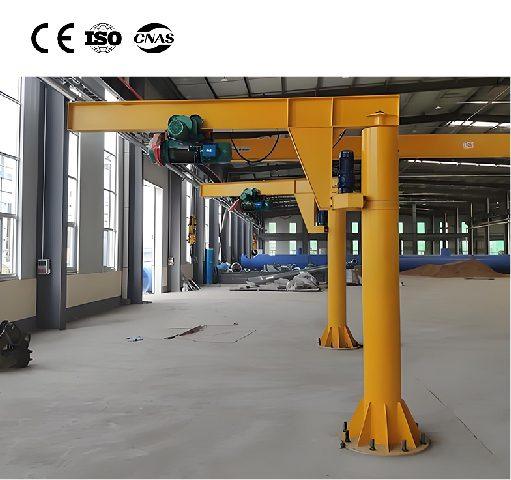
                  • Movable Jib Crane: The Ultimate Flexible Lifting Solution for Modern Industries

                    Movable Jib Crane: The Ultimate Flexible Lifting Solution for Modern Industries

                    A Movable Jib Crane offers unparalleled flexibility, allowing businesses to transport heavy loads safely and efficiently across different workspaces. This article explores the features, benefits, applications, and advantages of movable jib cranes, making them an essential tool for various industries.

                    Movable JIB Crane
                    Movable JIB Crane

                    What is a Movable Jib Crane?

                    A Movable Jib Crane (also known as a Portable Jib Crane) is a versatile lifting system mounted on a mobile base, such as casters or wheels, enabling easy relocation. Unlike fixed jib cranes (wall-mounted or floor-mounted), these cranes can be moved to different workstations, providing on-demand lifting power wherever needed.

                    Key Features of Movable Jib Cranes

                    1. Mobility & Flexibility – Equipped with heavy-duty casters or wheels for easy movement.

                    2. Adjustable Height & Reach – Some models feature telescopic or adjustable booms for varying load requirements.

                    3. Compact Design – Ideal for facilities with limited space or changing workflow needs.

                    4. High Load Capacity – Supports weights from 250 kg up to 5,000 kg, depending on the model.

                    5. 360° Rotation – Full or limited rotation for precise load positioning.

                    6. Manual or Electric Operation – Available in both hand-operated and motorized versions.

                    7. Quick Setup – No permanent installation required, reducing downtime.

                    Applications of Movable Jib Cranes

                    Movable jib cranes are widely used in industries where flexibility and mobility are crucial:

                    • Manufacturing Plants – Moving parts between assembly stations.

                    • Warehouses & Logistics – Loading/unloading goods in different zones.

                    • Construction Sites – Transporting materials in temporary work areas.

                    • Automotive Workshops – Handling engines, transmissions, and heavy components.

                    • Maintenance & Repair Facilities – Assisting in equipment servicing.

                    Advantages Over Fixed Jib Cranes

                     No Permanent Installation Needed – Can be relocated as needed.
                     Cost-Effective – Eliminates the need for multiple fixed cranes.
                     Space Optimization – Ideal for facilities with limited floor space.
                     Versatility – Suitable for both indoor and outdoor use (with appropriate models).

                    Why Choose a Movable Jib Crane?

                    Businesses prefer movable jib cranes because they provide:
                     Enhanced Productivity – Reduces manual handling and speeds up operations.
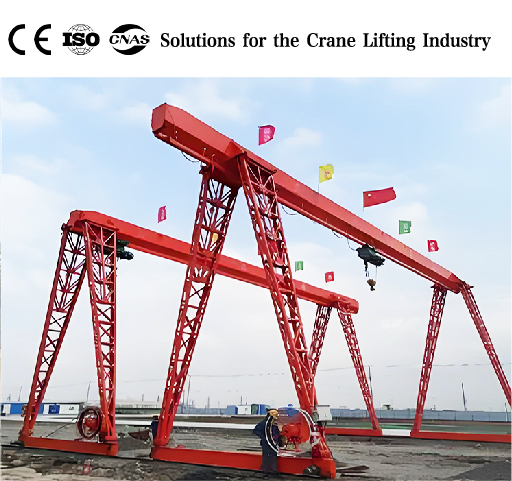
                     Improved Safety – Minimizes worker strain and injury risks.
                     Scalability – Can be moved to different workstations as production demands change.
                     Easy Maintenance – Simple design ensures long-lasting performance with minimal upkeep.

                    Conclusion

                    The Movable Jib Crane is an indispensable tool for industries that require adaptable, efficient, and space-saving lifting solutions. Its portability, ease of use, and robust performance make it a smart investment for workshops, warehouses, and production facilities.

                    Looking for a High-Quality Movable Jib Crane?

                    Explore our range of durable and customizable portable jib cranes designed to meet your material handling needs. Contact us today for expert recommendations!

                  • Column Mounted Jib Crane: A Versatile and Space-Efficient Lifting Solution

                    Column Mounted Jib Crane: A Versatile and Space-Efficient Lifting Solution

                    A Column Mounted Jib Crane is a robust and flexible lifting solution designed to optimize workspace while providing reliable load movement. This article explores its features, benefits, applications, and why it’s a preferred choice for many industries.

                    Column Mounted Jib Crane
                    Column Mounted Jib Crane

                    What is a Column Mounted Jib Crane?

                    A Column Mounted Jib Crane is a freestanding lifting system supported by a vertical column anchored to the floor. It consists of a rotating boom (jib arm) that allows for precise load positioning within a defined work area. Unlike wall-mounted jib cranes, this type does not rely on existing structures, offering greater flexibility in placement.

                    Key Features of Column Mounted Jib Cranes

                    1. Freestanding Design – Does not require wall or ceiling support, making it ideal for open workspaces.

                    2. High Load Capacity – Typically supports 500 kg to 10,000 kg, depending on model and design.

                    3. 360° Rotation – Provides full rotation for maximum coverage and maneuverability.

                    4. Durable Construction – Made from high-grade steel for long-lasting performance in harsh environments.

                    5. Smooth Operation – Features low-friction slewing bearings for effortless manual or motorized rotation.

                    6. Customizable Options – Adjustable boom length, height, and mounting configurations to suit specific needs.

                    Applications of Column Mounted Jib Cranes

                    This type of crane is widely used across industries where precise, heavy lifting is required:

                    • Manufacturing Facilities – For assembly lines, machine maintenance, and part handling.

                    • Warehouses & Logistics – Loading and unloading goods in distribution centers.

                    • Construction Sites – Moving materials in workshops or outdoor settings.

                    • Shipbuilding & Repair – Handling heavy components in docks and shipyards.

                    • Automotive Industry – Assisting in engine and part installations.

                    Advantages Over Other Jib Crane Types

                     Independent Installation – No need for existing walls or support structures.
                     Greater Mobility – Can be placed anywhere with a solid foundation.
                     Higher Load Capacity – Often stronger than wall-mounted alternatives.
                     Wider Coverage – Full 360° rotation maximizes operational range.

                    Why Choose a Column Mounted Jib Crane?

                    Businesses opt for column-mounted jib cranes because they offer:
                     Enhanced Flexibility – Ideal for dynamic work environments.
                     Improved Safety – Engineered to meet industry safety standards (ISO, OSHA, etc.).
                     Cost-Effective – Reduces the need for multiple cranes by covering a large work area.
                     Low Maintenance – Sturdy design minimizes wear and tear.

                    Conclusion

                    The Column Mounted Jib Crane is a powerful and adaptable lifting solution, perfect for industries that require heavy load handling with maximum flexibility. Its freestanding design, high load capacity, and full rotation make it a valuable asset in workshops, warehouses, and production facilities.

                    Looking for a Reliable Column Mounted Jib Crane?

                    Explore top-quality jib cranes designed for durability and performance. Contact us today for customized solutions that fit your operational needs!

                  • Wall Mounted Jib Crane: A Compact and Efficient Lifting Solution

                    Wall Mounted Jib Crane: A Compact and Efficient Lifting Solution

                    The Yangyu Wall Mounted Jib Crane is a versatile and space-saving solution designed for precise material handling in confined areas. This article explores its features, benefits, applications, and why it stands out in the market.

                    What is a Yangyu Wall Mounted Jib Crane?

                    Wall Mounted Jib Crane
                    Wall Mounted Jib Crane

                    A wall mounted jib crane is a compact lifting system attached to a wall or column, offering a rotating boom for moving loads within a specific radius. The Yangyu Wall Mounted Jib Crane is engineered for durability, flexibility, and ease of use, making it ideal for workshops, assembly lines, and loading docks.

                    Key Features of Yangyu Wall Mounted Jib Crane
                    Space-Saving Design – Mounts directly to walls or columns, freeing up floor space.

                    High Load Capacity – Supports weights ranging from 250 kg to 5,000 kg, catering to various industrial needs.

                    360° Rotation – Provides full or limited rotation for precise load positioning.

                    Robust Construction – Made from high-quality steel for long-term durability.

                    Smooth Operation – Equipped with low-friction slewing bearings for effortless manual or electric rotation.

                    Customizable Options – Adjustable boom length, height, and mounting configurations.

                    Applications of Yangyu Wall Mounted Jib Crane
                    This crane is widely used in industries where space is limited but lifting efficiency is essential:

                    Manufacturing Plants – For assembly lines and machine maintenance.

                    Warehouses – Loading/unloading goods in tight spaces.

                    Workshops – Handling heavy tools and materials.

                    Construction Sites – Assisting in material movement where floor cranes are impractical.

                    Advantages Over Freestanding Jib Cranes
                    No Floor Obstruction – Doesn’t require a floor foundation, maximizing workspace.

                    Cost-Effective – Lower installation and maintenance costs compared to freestanding models.

                    Easy Installation – Can be mounted on existing sturdy walls or columns.

                    Why Choose Yangyu Wall Mounted Jib Crane?
                    Yangyu cranes are known for:
                    ✔ Reliability – Built to withstand rigorous industrial use.
                    ✔ Safety Compliance – Meets international lifting standards.
                    ✔ Custom Solutions – Tailored designs to fit specific operational needs.

                    Conclusion
                    The Yangyu Wall Mounted Jib Crane is an excellent choice for businesses seeking an efficient, space-saving lifting solution. Its robust construction, flexibility, and cost-effectiveness make it a preferred option across multiple industries.

                    Looking for a Wall Mounted Jib Crane?
                    Contact Yangyu today for high-quality, customized jib cranes that enhance productivity while optimizing workspace!

                  • Yangyu Hand Chain Hoist: The Ultimate Manual Lifting Solution for Industrial Efficiency

                    Yangyu Hand Chain Hoist: The Ultimate Manual Lifting Solution for Industrial Efficiency

                    • Yangyu hand chain hoists deliver 0.5-20 ton lifting capacities with 3:1 mechanical advantage

                    • Heat-treated load chains and precision gears enable <2% effort-to-load ratios

                    • 360° rotation hooks and sealed bearings prevent torsion for smooth vertical lifts

                    • Drop-forged hooks and overload clutches exceed ASME B30.16 safety standards

                    • Modular designs reduce maintenance time by 40% compared to competitors

                    hand chain hoists
                    hand chain hoists

                    1 Unmatched Engineering for Heavy Loads

                    Yangyu hand chain hoists transform manual lifting through precision-machined components:

                    • Gearing System: Triple-stage reduction gears amplify input force, enabling a 50kg pull to lift 1,500kg loads. The hardened alloy steel construction prevents tooth deformation under shock loads .

                    • Load Chain: Grade 80 alloy chains undergo case-hardening to 1,200-1,500 HV surface hardness, resisting wear 3x longer than standard chains. Self-lubricating bushings ensure corrosion-free operation in humid environments .

                    • Ergonomic Hand Chain: Bi-directional polypropylene links with textured grips reduce hand slippage by 70%, even with oil-contaminated gloves.

                    Table: Technical Specifications by Capacity

                    ModelCapacityStandard LiftNet WeightMin. Hand Force
                    YHY-0.5T500kg3m14kg18kg
                    YHY-3T3 tons3m38kg28kg
                    YHY-10T10 tons3m98kg36kg
                    YHY-20T20 tons3m210kg42kg

                    2 Safety Systems Redefining Reliability

                    Yangyu integrates fail-safe mechanisms surpassing industry standards:

                    • Overload Clutch: Automatically disengages gears at 110% rated capacity, preventing structural damage during accidental overloads. Tested to 15,000 cycles without degradation 5.

                    • Double-Latch Hooks: Forged steel hooks with secondary safety catches comply with ISO 2415 load testing protocols. Each hook undergoes magnetic particle inspection for micro-fractures.

                    • Load Arrestor: Spring-loaded pawl locks the load chain instantly if sudden descent occurs, limiting free-fall to <5cm .

                    3 Industry-Specific Applications

                    3.1 Manufacturing & Assembly

                    • Automotive: Position engines during assembly with ±3mm precision using YHY-3T models. The sealed gearbox prevents contamination from metal shavings.

                    • Machinery Installation: Align 10-ton CNC bases in tight spaces where overhead cranes can’t operate.

                    3.2 Construction & Infrastructure

                    • Steel Erection: Lift I-beams vertically without swing using the 360° rotation hook. Dust-shielded bearings maintain smooth operation on dusty sites .

                    • Maintenance: Lower turbine components through service hatches with compact YHY-1T hoists (headroom: 28cm).

                    3.3 Warehousing & Logistics

                    • Dock Operations: Handle awkwardly shaped cargo via tandem lifting with two YHY-5T units. Synchronized hand chains prevent load imbalance.

                    4 Performance Comparison: Yangyu vs Competitors

                    *Table: Competitive Analysis (3-Ton Models)*

                    FeatureYangyu YHY-3TStandard Hoist APremium Hoist B
                    Effort Required28kg35kg30kg
                    Chain Life10,000 cycles6,000 cycles8,000 cycles
                    Overload ProtectionIntegrated clutchNoneOptional add-on
                    Hook Rotation360° unlimited180° limited360° limited
                    Maintenance Interval500 hours250 hours300 hours

                    Yangyu outperforms competitors in durability and safety while reducing operator fatigue by 25% .

                    5 Maintenance Protocol for Peak Performance

                    Follow this 4-step maintenance routine to extend service life:

                    1. Daily Inspection:

                      • Check hook latch engagement

                      • Test brake function (lift 10cm, release hand chain)

                    2. Monthly Service:

                      • Soak load chain in ISO VG 68 oil for 2 hours

                      • Lubricate pivot points with lithium-epoxy grease

                    3. Annual Overhaul:

                      • Replace worn pawls and friction discs

                      • Measure gear backlash (max tolerance: 0.3mm)

                    4. 5-Year Recertification:

                      • Conduct magnetic particle testing on hooks

                      • Perform 125% load test

                    Critical signs requiring immediate maintenance:

                    • 3% chain elongation over 10 links

                    • Jerky movement when lifting partial loads

                    • Visible pitting on gear teeth

                    6 Smart Selection Guide

                    Consider these parameters when choosing your Yangyu hoist:

                    • Load Profile: For frequent near-capacity lifts, select the next higher capacity model

                    • Environment:

                      • Foundries: Specify high-temperature seals (-20°C to 300°C)

                      • Marine sites: Choose zinc-nickel plated chains

                    • Mounting:

                      • Fixed point: Use swivel-top hooks

                      • Trolley systems: Pair with low-clearance trolleys (adds 12cm height)

                    • Special Needs:

                      • Explosion-proof versions for chemical plants

                      • ATEX-certified models for grain silos

                    7 Why Professionals Choose Yangyu

                    • Precision Manufacturing: CNC-machined gears maintain ±0.01mm tolerances

                    • Supply Chain Integrity: Vertical integration from steel smelting to final assembly

                    • Global Certifications: CE, GS, OSHA, and GOST-R compliance

                    • Lifecycle Cost: 50% lower TCO over 10 years compared to economy brands

                    8 The Future of Manual Lifting

                    Yangyu’s 2025 roadmap includes:

                    • IoT Integration: Load sensors transmitting weight data to smartphones via Bluetooth

                    • ErgoGrip Hand Chains: Pressure-distributing handles reducing repetitive strain injuries

                    • Hybrid Operation: Manual-electric convertibility for dual-mode lifting

                  • Electric Trolley & Hoist Systems: Your Complete Guide to Overhead Lifting Solutions

                    Electric Trolley & Hoist Systems: Your Complete Guide to Overhead Lifting Solutions

                    • Electric trolleys enable lateral load movement (up to 20 m/min) with precision control

                    • Integrated hoist-trolley systems combine vertical/horizontal motion for 360° material handling

                    • Pre-engineered sets guarantee component compatibility and 30% faster installation

                    • Smart systems feature collision avoidance and path optimization technology

                    • 85% of industrial facilities report productivity gains with integrated systems

                    Electric trolleys
                    Electric trolleys

                    1. Electric Trolleys: The Overhead Mobility Solution

                    Electric trolleys are motorized carriers that move along overhead beams (I-beam or H-beam tracks), providing horizontal transportation for suspended loads. Unlike manual pusher trolleys, electric models feature:

                    • Drive Systems: Geared motors (0.5-5 kW) with VFD control for smooth starts/stops

                    • Wheel Configurations: 4-wheel (standard) or 8-wheel (heavy-duty) designs

                    • Control Options: Pendant stations, radio remotes (300m range), or automation-ready PLC interfaces

                    • Capacity Range: 250 kg to 32 tons for single-girder systems

                    Critical Specs:

                    | Feature          | Standard          | Heavy-Duty        |
                    |------------------|-------------------|-------------------|
                    | Travel Speed     | 8-20 m/min        | 5-15 m/min        |  
                    | Beam Width       | 75-300 mm         | 300-600 mm        |  
                    | Duty Class       | CMAA Class B      | CMAA Class D      |  
                    | IP Rating        | IP54              | IP65              |

                    2. Electric Hoist with Trolley: Integrated Vertical-Horizontal Movement

                    When paired with a trolley, electric chain hoists transform into complete overhead handling systems:

                    Key Integration Benefits:

                    • Unified Controls: Single pendant operates both lift and travel functions

                    • Optimized Footprint: Eliminates floor obstructions – ideal for narrow aisles

                    • Precision Handling: Positioning accuracy ±1 mm with encoder feedback

                    • Safety Synergy: Coordinated brakes prevent load swing

                    Top Applications:

                    1. Assembly Line Transfer: Move engines between stations (automotive)

                    2. Warehouse Order Picking: Retrieve pallets in high-bay storage

                    3. Maintenance Bays: Position heavy machinery components


                    3. Electric Hoist & Trolley Sets: Pre-Engineered Efficiency

                    Pre-matched hoist and trolley packages solve compatibility issues while offering:

                    Advantages Over Piecemeal Systems:

                    • Guaranteed load capacity matching (no derating calculations)

                    • Pre-tested control interfaces

                    • Unified warranty coverage

                    • 30% faster installation (pre-drilled mounting points)

                    Industry-Leading Configurations:

                    Package TypeCapacityTravel SpeedIdeal ForPrice Range
                    Compact250-500kg10 m/minWorkshops, Garages$1,200-$2,500
                    Industrial1-5 ton15 m/minFactories, Warehouses$3,800-$12,000
                    Foundry Grade10-32 ton8 m/minSteel Mills, Heavy Fabrication$18,000-$55,000

                    4. Cutting-Edge Features Revolutionizing Operations

                    Modern systems incorporate game-changing technologies:

                    • Intelligent Path Control:

                      • Laser guidance for straight tracking

                      • Anti-sway algorithms reducing load oscillation by 90%

                    • Predictive Maintenance:

                      • Vibration sensors detecting wheel alignment issues

                      • Motor temperature monitoring

                    • Energy Recovery:

                      • Regenerative braking feeding power back to grid

                    • Safety 4.0:

                      • Zone-restricted movement via RFID

                      • Emergency descent function during power failure


                    5. Selection Guide: 5 Critical Decision Factors

                    1. Beam Compatibility

                      • Verify flange width/thickness matches trolley wheels

                      • Consider beam camber (arch) – >L/1000 requires special trolleys

                    2. Duty Cycle Requirements

                    3. Control System Complexity

                      • Basic: Pendant station

                      • Advanced: Radio remote + limit switches

                      • Smart: IoT-enabled with OPC-UA connectivity

                    4. Environmental Factors

                      • IP65 for wet/dusty environments

                      • Class F insulation for high-heat zones

                      • Corrosion-resistant coatings (salt spray test >500hrs)

                    5. Future-Proofing

                      • Choose systems with:

                        • Expandable control architecture

                        • 20% extra capacity headroom

                        • Standardized mounting interfaces


                    6. Installation & Safety Protocols

                    Structural Requirements:

                    • Beam deflection < Span/600 under full load

                    • Concrete anchors rated for 4x system weight

                    • Clearance zones: 50cm above, 80cm around path

                    Critical Safety Systems:

                    • Over-travel limit switches (redundant sets)

                    • Emergency stop circuits (Category 3 PLd)

                    • Load moment indicators for asymmetric lifts

                    Maintenance Schedule:

                    ComponentDaily CheckMonthly Action
                    WheelsFlange clearanceLubricate bearings
                    ConductorsInsulation damageClean collector shoes
                    BrakesResponse timeMeasure pad thickness
                    ControlsButton functionStrain relief inspection

                    7. Cost Analysis: ROI Calculation

                    Typical Savings for 2-ton System:

                    | Cost Factor       | Manual Handling | Electric System | Savings  |
                    |-------------------|-----------------|-----------------|----------|
                    | Labor (3 workers) | $72/hour        | $24/hour        | 67%      |
                    | Damage Reduction  | 12% of loads    | <1% of loads    | $15k/yr  |
                    | Throughput        | 8 lifts/hr      | 22 lifts/hr     | +175%    |

                    Payback Period:

                    • Average ROI: 6-18 months

                    • Tax incentives: Section 179 deduction up to $1M


                    8. Future Trends: Where Automation Meets Intelligence

                    • 5G-Enabled Control: <2ms latency for mission-critical moves

                    • Digital Twins: Simulation-based optimization before install

                    • Autonomous Fleets: Multi-trolley coordination via AI dispatcher

                    • Haptic Feedback: VR training for complex maneuvers


                    Conclusion: The Overhead Advantage

                    Electric trolley and hoist systems represent the pinnacle of efficient material handling – transforming static lifting into dynamic precision movement. Whether opting for a standalone trolley, integrated hoist-trolley, or pre-engineered set, these solutions deliver quantifiable gains in safety, throughput, and operational cost. As technology advances toward autonomous smart systems, early adopters will gain decisive competitive edges in logistics and manufacturing.

                  • Micro Electric Hoist: The Compact Powerhouse Revolutionizing Small-Scale Lifting

                    Micro Electric Hoist: The Compact Powerhouse Revolutionizing Small-Scale Lifting

                    • Micro electric hoists handle 50kg–500kg loads with precision in confined spaces

                    • Ideal for workshops, labs, retail, and DIY applications where industrial hoists are impractical

                    • Advanced models feature wireless controls, IoT sensors, and ultra-quiet operation (<65 dB)

                    • 70% more energy-efficient than manual alternatives with zero operator fatigue

                    • CE/UL-certified safety systems including electromagnetic brakes and overload protection

                    Micro electric hoists
                    Micro electric hoists

                    What is a Micro Electric Hoist?

                    A micro electric hoist is a compact motorized lifting device designed for precision handling of light-to-medium loads (typically 50kg–500kg). Unlike industrial hoists, these space-saving units feature:

                    • Miniaturized components: High-torque 0.2–1.5 kW motors in enclosures as small as 30x20x15 cm

                    • Lightweight chains/cables: 4–8mm load chains or synthetic cables rated for 5:1 safety margins

                    • Adaptable mounting: Ceiling hooks, wall brackets, or mobile gantries requiring <15 cm headroom


                    Technical Innovations Driving Performance

                    1. Smart Motor Systems

                    • Brushless DC motors delivering 90% energy efficiency

                    • Variable-frequency drives (VFD) for stepless speed control (0.1–12 m/min)

                    • Thermal protection sensors preventing burnout during continuous duty

                    2. Advanced Control Interfaces

                    • 2.4GHz wireless remotes with 100m range

                    • Bluetooth-enabled hoists with smartphone load monitoring (e.g., LOADMATE Connect™)

                    • Voice command compatibility via Amazon Alexa/Google Home

                    3. Space-Optimized Design

                    Table: Space Comparison vs. Standard Hoists

                    FeatureMicro HoistIndustrial Hoist
                    Footprint30×30 cm max60×50 cm min
                    Headroom12–18 cm30–45 cm
                    Net Weight8–15 kg35–80 kg
                    InstallationSingle-person, <30 minCrane-assisted

                    Top 5 Applications Transforming Industries

                    1. Automotive Workshops

                      • Lifting engines/transmissions (200–400kg) in tight service bays

                      • Benefit: 50% faster component swaps vs. floor jacks

                    2. Retail & Display

                      • Rotating window displays and signage (50–150kg)

                      • Benefit: Eliminates ladder work for OSHA compliance

                    3. Electronics Manufacturing

                      • Precision placement of PCB assemblies (1–20kg)

                      • Benefit: Anti-static models prevent ESD damage

                    4. Art Studios & Theaters

                      • Suspending lighting rigs and props (30–100kg)

                      • Benefit: Silent operation (<55dB) during performances

                    5. Home Workshops

                      • Lifting motorcycle engines, timber, or machinery (100–250kg)

                      • Benefit: 110V plug-and-play installation


                    Critical Safety Systems

                    Despite their compact size, micro hoists incorporate professional-grade protection:

                    • Automatic electromagnetic brakes: Engage within 0.3 seconds of power loss

                    • Overload sensors: Trigger audio-visual alarms at 105% rated capacity

                    • Double-latch hooks: Forged steel hooks with secondary safety catches

                    • Emergency stop: Hardwired cut-off switches on all controls

                    • Certifications: CE Marking, UL 61058-1, and ISO 4309 compliance


                    Selection Guide: Matching Your Needs

                    Consider these specifications when choosing:

                    ParameterEntry-LevelProfessional-Grade
                    Capacity50–150kg200–500kg
                    Lift SpeedSingle-speedDual-speed (8/1.2 m/min)
                    Duty Cycle25% (10 mins/hour)60%+ (continuous)
                    ProtectionIP44 (splash-proof)IP65 (dust/water jet resistant)
                    Noise Level<70 dB<55 dB
                    Warranty1 year3–5 years

                    Pro Tip: For woodworking/metal shops, choose models with spark-resistant chains and dust filters.


                    Maintenance Checklist (5-Minute Monthly Routine)

                    1. Chain Inspection: Check for stretching >3% or damaged links

                    2. Lubrication: Apply ISO VG 68 oil to load chain

                    3. Function Test: Verify limit switches and emergency stop

                    4. Mount Check: Tighten frame fasteners to 25 Nm torque

                    5. Sensor Calibration: Reset load indicator with test weights


                    Future Trends: Where Miniaturization Meets AI

                    • Predictive Maintenance: Vibration sensors alerting to motor issues via SMS

                    • Auto-Load Balancing: Gyroscopic stabilization for fragile loads

                    • Solar-Powered Hoists: Off-grid operation for field services

                    • AR Integration: HoloLens-guided lifting paths for complex maneuvers


                    Conclusion: Small Scale, Massive Impact

                    Micro electric hoists have democratized industrial lifting technology, bringing unprecedented efficiency to spaces where traditional hoists can’t operate. With prices starting under $500 for 100kg-capacity models, they represent the most accessible automation upgrade for small enterprises. As IoT capabilities and battery tech advance, these compact powerhouses will continue transforming how we handle materials—proving that in lifting solutions, great things truly come in small packages.

                  • Electric Chain Hoists: Powering Modern Industry

                    Electric Chain Hoists: Powering Modern Industry

                    • Electric chain hoists convert electrical energy into mechanical lifting power via motors, gearboxes, and high-strength chains.

                    • Core components include the motor, load chain, gearbox, brake system, and limit switches for safe operation.

                    • Applications span manufacturing, construction, warehousing, automotive, and entertainment industries.

                    • Advantages over manual hoists include greater efficiency, higher load capacities, and enhanced safety features.

                    • Selection depends on factors like load capacity, duty cycle, power supply, and environmental conditions.


                    Electric chain hoists
                    Electric chain hoists

                    1 Understanding Electric Chain Hoists

                    An electric chain hoist is a motorized lifting device that uses an industrial-grade chain to vertically raise and lower heavy loads with precision. Unlike manual hoists requiring physical effort, these systems convert electrical energy into mechanical action through an integrated motor, making them indispensable for modern industrial operations. Their design balances power with control, enabling workers to handle multi-ton loads with minimal physical strain while maintaining millimeter-level accuracy in positioning .
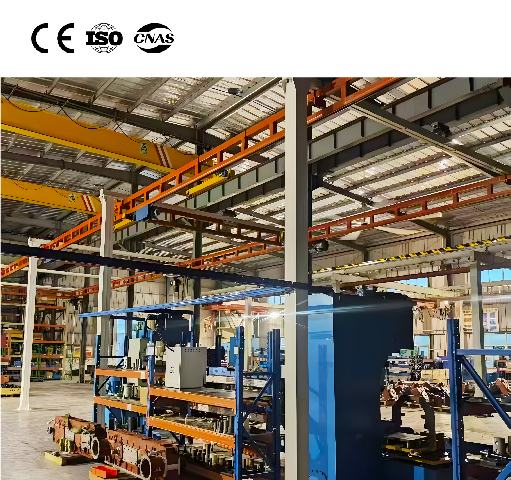
                    The fundamental distinction between electric chain hoists and alternatives like wire rope hoists lies in their lifting medium and mechanism. While wire rope hoists wind cables onto drums (suited for long lifts and heavy capacities), electric chain hoists use sprockets to guide hardened steel chains. This provides true vertical lift paths, making them ideal for precision tasks in confined spaces. Their chains—often heat-treated alloy steel—offer superior wear resistance and compactness compared to wire ropes, though with slightly lower maximum capacities .

                    2 Core Components and Their Functions

                    Electric chain hoists integrate several critical components that ensure reliable and safe operation:

                    • Electric Motor: The powerhouse driving the hoist, converting electricity into rotational force. Motors are typically encased in aluminum housings with cooling fans to prevent overheating during prolonged use .

                    • Lifting Chain: Constructed from hardened alloy steel (e.g., Grade 80 or 100), these chains feature specialized profiles for increased strength. Some advanced models use profile steel chains offering 15% higher capacity than round chains at identical diameters .

                    • Gearbox: Reduces the motor’s high-speed rotation into high-torque, low-speed output. This enables the hoist to lift heavy loads efficiently without stalling .

                    • Brake System: Automatically engages when power stops, preventing load drops. Electromagnetic or spring-loaded brakes are common, often backed by slip clutches to protect against overload .

                    • Control Pendant: An ergonomic, low-voltage (24V–48V) handheld controller with push buttons for lifting/lowering. Includes emergency-stop functions and strain relief for operator safety .

                    • Limit Switches: Automatically halt the hoist at preset upper/lower positions, preventing overtravel and chain damage .

                    Table: Key Components of Electric Chain Hoists

                    ComponentFunctionTechnical Features
                    MotorConverts electrical energy to mechanical rotationAluminum housing, integrated cooling fan
                    Lifting ChainBears the load during liftingCase-hardened steel, corrosion-resistant coatings
                    GearboxIncreases torque while reducing motor speedPolygonal shaft connections for easy maintenance
                    Brake SystemSecures loads when hoist is idleSpring-loaded or electromagnetic, fail-safe
                    Control PendantAllows operator to direct hoist movementsIP65-rated, 42V low voltage, emergency stop
                    Limit SwitchesPrevents over-travel at maximum/minimum heightsGeared or proximity-based sensors

                    3 How Electric Chain Hoists Work: The Lifting Process

                    The operation sequence of an electric chain hoist exemplifies elegant engineering simplicity:

                    1. Activation: The operator presses the “lift” button on the control pendant, sending a low-voltage signal to the motor .

                    2. Power Conversion: The motor converts electrical energy into high-speed rotational force .

                    3. Torque Adjustment: The motor’s output enters the gearbox, where gears reduce speed while multiplying torque. For example, a 1440 RPM motor might be reduced to 20 RPM—sufficient to lift several tons .

                    4. Chain Movement: The gearbox’s output shaft rotates a load sprocket, which engages with and pulls the chain upward. The chain collects neatly into a steel or fabric chain container to prevent tangling .

                    5. Load Control: Precision dual-speed models (e.g., 6.9 m/min high speed and 2.3 m/min low speed) allow fine positioning during final load placement .

                    6. Safety Assurance: Brakes engage instantly upon button release, while limit switches halt operations if the hook approaches unsafe heights .

                    Diagram Suggestion: Consider adding a visual flowchart showing energy conversion from electricity → motor rotation → gear reduction → chain movement → vertical lift.

                    4 Evolution of Lifting Technology

                    The journey from rudimentary lifting methods to electric chain hoists reflects centuries of innovation:

                    • Ancient Era: Early civilizations used wooden pulleys and ropes for monumental projects like Egypt’s pyramids. These required massive human labor and offered minimal control .

                    • 19th Century: Manual chain hoists (“chain blocks”) emerged, using geared mechanisms to multiply pulling force. Though revolutionary, they still demanded strenuous effort .

                    • Early 20th Century: The first electric hoists combined motors with chain mechanisms. Brands like LOADMATE pioneered robust designs for factories, introducing features like thermal protection and geared limit switches .

                    • Late 20th Century: Alloy steel chains replaced lower-grade materials, while modular designs simplified maintenance. Polygonal shaft connections (e.g., GIS’s GP series) enabled faster disassembly .

                    • 21st Century: Smart controls, IoT sensors, and energy-efficient motors dominate. For example, LOADMATE’s hoists now integrate friction clutches and inverter technology for smoother starts/stops .

                    5 Industrial Applications and Use Cases

                    Electric chain hoists excel across diverse sectors due to their versatility and precision:

                    • Manufacturing: Assembly lines use them to position machinery components with sub-millimeter accuracy. Their ability to handle 500–5,000 kg loads makes them ideal for automotive engine installations .

                    • Construction: Steel beams, precast concrete panels, and scaffolding systems are routinely lifted using electric chain hoists mounted on gantries or trolleys 19.

                    • Warehousing/Logistics: Electric hoists load/unload goods in distribution centers, particularly where overhead cranes maximize floor space. Their compact profiles suit low-clearance buildings .

                    • Entertainment: Stage rigging for concerts and theaters relies on whisper-quiet hoists to suspend lighting, screens, and sound equipment safely .

                    • Specialized Environments: IP65-rated hoists (dust/water resistant) operate in agri-food processing plants, while heat-resistant chains handle temps up to 300°C in foundries .

                    Table: Electric Chain Hoist Applications by Industry

                    IndustryTypical Use CasesLoad RangeSpecial Requirements
                    ManufacturingMachinery assembly, part transfer0.5–10 tonsPrecision positioning, dual speeds
                    ConstructionSteel erection, material handling1–32 tonsOutdoor durability, trolley mounting
                    WarehousingLoading docks, high-bay storage0.5–5 tonsLow headroom design, frequent use
                    AutomotiveEngine/transmission installation1–5 tonsCleanroom operation, ergonomic controls
                    EntertainmentStage lighting, screen rigging0.5–2 tonsSilent operation, smooth acceleration

                    6 Advantages of Electric Chain Hoists

                    • Enhanced Efficiency: Tasks requiring hours of manual labor are completed in minutes. For example, a 3-ton electric hoist lifts at 8.8 m/min—20× faster than manual alternatives .

                    • Superior Safety: Integrated brakes hold loads statically, while limit switches prevent over-travel. Modern pendants include emergency-stop buttons and slip clutches to prevent overloads .

                    • Ergonomic Design: Operators control heavy loads via lightweight pendants, reducing musculoskeletal injuries. FineWork’s models even feature 360° rotating hooks to prevent chain twisting .

                    • Duty Cycle Flexibility: While entry-level hoists manage 25% duty cycles (15 minutes/hour), industrial-grade units like GIS’s GP series support continuous operation in three-shift environments .

                    • Cost-Effectiveness: Reduced labor requirements and faster cycle times lower operational costs. KITO notes maintenance costs are 30% lower than wire rope hoists due to simpler chain systems .

                    7 Technical Specifications and Configurations

                    Electric chain hoists vary by capacity, speed, and power:

                    • Load Capacities: Range from light-duty (320 kg) to heavy-industrial (32 tons). The GIS GP2500, for example, handles 4–8 tons .

                    • Lifting Speeds: Single-speed models average 3–9 m/min, while dual-speed units offer precision modes as low as 0.8 m/min. Capacities above 5 tons typically prioritize torque over speed .

                    • Power Requirements: Standard models use 115V, 230V, or 400V three-phase power. Low-voltage controls (24V–48V) ensure operator safety .

                    • Environmental Ratings: IP65-classified hoists resist dust and water jets, making them suitable for washdown environments or outdoor use .

                    • Specialized Features: Wind-resistant trolleys for bridge cranes, explosion-proof motors for chemical plants, and high-temperature chains for foundries .

                    8 Safety, Maintenance, and Operational Best Practices

                    Safety Mechanisms

                    • Brakes: Spring-loaded or electromagnetic systems engage automatically during power loss.

                    • Overload Protection: Slipping clutches disengage gears if loads exceed rated capacity .

                    • Hook Latches: Forged safety latches prevent accidental disengagement .

                    • Voltage Safety: 42V control pendants minimize electrocution risks .

                    Maintenance Guidelines

                    • Daily: Inspect chains for wear, cracks, or deformation; test limit switches and brakes.

                    • Monthly: Lubricate chains with manufacturer-approved oils; check gearbox oil levels.

                    • Annually: Verify motor insulation resistance (F-class standard); recalibrate limit switches .

                    • 5-Year: Replace load chains regardless of visible wear; overhaul gearbox and brake assemblies.

                    Operational Tips

                    • Never exceed rated capacity, even briefly.

                    • Ensure angular forces from slings don’t create sideways pulls exceeding 15° .

                    • Use trolleys for lateral movement instead of swinging loads manually.

                    9 Selection Guide: Choosing the Right Hoist

                    Selecting an electric chain hoist requires evaluating several parameters:

                    • Load Capacity/Lift Height: Add 10–15% to your maximum load weight for safety margins. For heights >15m, wire rope hoists may be better .

                    • Power Supply: Confirm voltage (115V, 230V, 400V) and phase (single/three-phase). Sites without 230V+ power may require manual or pneumatic hoists .

                    • Duty Cycle: Frequent users (e.g., warehouses) need 40%+ duty cycle models; intermittent users (e.g., workshops) can opt for 25% units .

                    • Environment: Choose IP65-rated hoists for damp/dusty areas, heat-treated chains (300°C+) for foundries, and explosion-proof motors for flammable atmospheres .

                    • Mounting: Low-clearance buildings benefit from compact “low-headroom” designs. Trolley-mounted hoists add mobility but require I-beam supports .

                    10 Comparison with Alternatives

                    • Electric vs. Manual Chain Hoists: Electric hoists are 500% faster and reduce worker fatigue but cost 2–3× more. Manual hoists suit low-budget, low-frequency, or power-scarce sites .

                    • Electric Chain vs. Wire Rope Hoists: Chain hoists offer truer vertical lifts and better precision, while wire rope hoists excel for capacities >10 tons and lifts >30m .

                    11 Future Trends and Innovations

                    • Smart Hoists: IoT-enabled sensors monitor chain wear, motor temperature, and overloads in real-time, predicting failures before they occur .

                    • AI Integration: Machine learning algorithms optimize lift paths and speed based on load dynamics, reducing swing and energy use .

                    • Eco-Designs: Regenerative drives feed braking energy back into power grids, cutting electricity costs by 15–20% .

                    • Advanced Materials: Carbon-fiber-reinforced chains promise 50% weight reduction with higher tensile strength .

                    12 Conclusion: The Unstoppable Ascent

                    Electric chain hoists have redefined material handling, merging raw power with surgical precision. From their humble beginnings as manual chain blocks to today’s IoT-ready smart lifters, they embody engineering evolution in pursuit of efficiency and safety. As industries increasingly prioritize automation, sustainability, and operator well-being, these hoists will continue evolving—driven by AI, advanced materials, and ergonomic design. For businesses seeking to optimize lifting operations, understanding their mechanics, benefits, and selection criteria isn’t just advantageous—it’s essential for staying competitive in a weighty world.

                  • Wire Rope Electric Hoist CD MD Series: The Workhorse of Industrial Lifting

                    Wire Rope Electric Hoist CD MD Series: The Workhorse of Industrial Lifting

                    Wire Rope Electric Hoists of the CD (standard duty) and MD (heavy duty) series dominate global material handling with their unparalleled blend of robust construction, operational reliability, and exceptional value. Engineered to rigorous Chinese GB/T standards yet recognized worldwide, these versatile hoists deliver efficient lifting across manufacturing plants, warehouses, construction sites, and repair facilities. Their modular design, dual-speed control, and proven safety features make them the go-to solution for loads from 0.5 to 80 tons.

                    Wire Rope Electric Hoists
                    Wire Rope Electric Hoists

                    Core Features & Technical Evolution

                    1. Dual-Speed Precision Control

                      • CD Series: Standard 8/0.8 m/min lifting speed for general material handling

                      • MD Series: Enhanced 7/0.7 m/min lifting with reinforced components for intensive cycles

                      • Micro-speed mode enables millimeter-accurate positioning

                    2. Robust Mechanical Design

                      • CD Models: Aluminum alloy housing (lightweight) + Cast iron brake discs

                      • MD Models: Ductile iron housing (impact-resistant) + Forged steel gears

                      • Modular drum/gearbox assembly reduces maintenance downtime

                    3. Advanced Safety Systems

                      • Dual electromagnetic brakes (primary + emergency)

                      • Automatic overload limiter (110% cutoff)

                      • Rotary limit switch with manual reset function

                      • Phase protection relay prevents single-phasing damage


                    Technical Specifications & Configurations

                    Table 1: CD vs MD Series Performance Comparison

                    ParameterCD SeriesMD SeriesApplication Impact
                    Capacity Range0.5-20 tons5-80 tonsMD for foundries/steel mills
                    Duty ClassM3 (A3) – 150 starts/hrM4-M5 (A4-A5) – 300 starts/hrMD for high-frequency lifts
                    Lifting Speed8/0.8 m/min7/0.7 m/minSmoter MD control for heavy loads
                    Sealing ClassIP54IP55/IP65MD for dusty/wet environments
                    Motor InsulationClass FClass HMD withstands 180°C temps
                    Gear HardnessHRC 50-55HRC 58-62MD resists pitting under shock loads

                    Table 2: Standard Configuration Options

                    ComponentCD StandardMD StandardUpgrade Options
                    ControlPendulum pendant8-button dustproof pendantRadio remote (IP65)
                    Wire Rope6x19W-IWRC (1570MPa)6x36WS-IWRC (1770MPa)Stainless steel (marine)
                    MountingTop hookTrolley kitExplosion-proof trolley
                    SafetyOverload limiterOverload + Slack rope limiterLoad cell (RS485 output)

                    Industry-Specific Applications

                    1. Manufacturing Assembly

                      • CD1-5D models (1-5t) for auto part positioning

                      • Low headroom MD hoists in cramped workshops

                    2. Warehouse Logistics

                      • CD 3-10t hoists on modular KBK rails

                      • 20m lifting height for high-bay storage

                    3. Heavy Industries

                      • MD 32t hoists with cast steel hooks for slab handling

                      • Foundry-grade MD hoists (heat shields + IP65)

                    4. Infrastructure Projects

                      • Outdoor MD hoists (anti-corrosion coating)

                      • 80t capacity for bridge segment lifting


                    Safety & Compliance Innovations

                    1. GB 3811-2008 Compliance

                      • Dynamic load testing at 125% capacity

                      • Static load testing at 150% capacity

                    2. Fail-Safe Braking System

                      • Primary brake: Spring-loaded disc brake

                      • Secondary brake: Centrifugal emergency brake

                      • 3-second descent prevention after power loss

                    3. Intelligent Protection

                      • Real-time motor temperature monitoring

                      • Voltage fluctuation tolerance: ±10%

                      • Rope rewind guidance system


                    Operational Advantages

                    • Energy Efficiency: IE3 premium motors reduce power consumption by 15% vs. legacy hoists

                    • Lifecycle Durability: 50,000+ cycles (CD) / 100,000+ cycles (MD) at rated capacity

                    • Maintenance Optimization:

                      • Grease-lubricated gears (2-year service intervals)

                      • Modular motor/gearbox replacement (30-min swap)

                      • Self-diagnostic control panels


                    Selection Guide: CD vs MD Hoists

                    1. Capacity & Duty Cycle

                      • Choose CD when: Loads ≤20t, starts <150/hr (A3 duty)

                      • Choose MD when: Loads >5t, starts >200/hr (A4-A5 duty)

                    2. Environmental Factors

                      ConditionRecommended SeriesSpecial Requirements
                      Dusty (wood/grain)MD with IP65Anti-static rope
                      Corrosive (chemical)MD 316 stainlessEpoxy-coated electricals
                      High temp (>40°C)MD Class H insulationThermal imaging port
                    3. Control Requirements

                      • Standard workshops: Pendant control (8m cable)

                      • Hazardous zones: Explosion-proof radio remote (Ex d IIC T4)

                      • Automated systems: CANopen interface + PLC integration


                    Maintenance Protocol

                    1. Daily Checks

                      • Brake responsiveness test (no-load)

                      • Rope inspection for kinks/corrosion

                    2. Monthly Maintenance

                      • Brake clearance measurement (adjust to 0.5-0.7mm)

                      • Gearbox oil level check

                    3. Annual Overhaul

                      • Rope replacement (per 3-year schedule)

                      • Load testing with certified weights

                      • Insulation resistance test (min 1MΩ)


                    Future-Ready Upgrades

                    1. Smart Hoisting 4.0

                      • IoT sensors for predictive maintenance

                      • Bluetooth load data transmission

                    2. Green Technologies

                      • Regenerative braking energy recovery

                      • Solar-compatible DC models

                    3. Enhanced Safety

                      • AI anti-sway systems

                      • Collision avoidance radar


                    Conclusion: The Unmatched Value Proposition
                    CD and MD wire rope electric hoists deliver 20% lower lifetime costs than European equivalents while meeting ISO 4301, FEM 9.511, and GB 3811 standards. With capacities spanning 0.5-80 tons and duty cycles up to A5 (M5), they remain the most cost-effective lifting solution for value-driven operations. Their modular architecture ensures future upgrades – from radio controls to smart monitoring – protecting investments for decades.
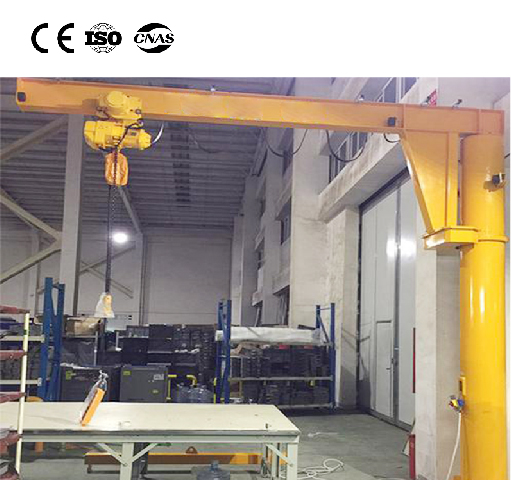
                  • European Standard Electric Hoist: Revolutionizing Efficiency and Safety in Industrial Lifting

                    European Standard Electric Hoist: Revolutionizing Efficiency and Safety in Industrial Lifting

                    European Standard Electric Hoists (Euro hoists) represent the pinnacle of lifting technology, combining precision engineering, stringent safety protocols, and energy-efficient performance. Designed to meet rigorous EU directives and global certifications (CE, IECEx, ATEX), these hoists deliver unparalleled reliability in industries ranging from automotive manufacturing to port logistics. With modular designs, intelligent controls, and compliance with the latest IEC 60204-32:2023 safety standards , Euro hoists are redefining material handling worldwide.

                    European Standard Electric Hoists
                    European Standard Electric Hoists

                    Core Design Principles & Technical Advantages

                    1. Compact Modular Construction:
                      Euro hoists integrate motors, gearboxes, and drums into unified modules, reducing footprint by 15–30% compared to conventional hoists. This “low headroom” design maximizes vertical workspace—critical for facilities with height constraints . High-strength aluminum or alloy steel housings ensure durability while minimizing deadweight.

                    2. Advanced Drive Systems:

                      • German-engineered motors and SEW-brand reducers provide smooth power transmission, supporting dual-speed lifting (e.g., 5/0.8 m/min or 4/0.7 m/min) for precision placement .

                      • Frequency-controlled travel minimizes load sway through soft starts/stops, enhancing operational accuracy .

                    3. Redundant Safety Mechanisms:

                      • Dual braking systems (primary + emergency) prevent free-falling during power loss .

                      • Automatic wear compensation adjusts brake pads in real-time, maintaining stopping torque integrity .

                      • Adjustable rotary limit switches and overload limiters comply with IEC 60204-32:2023 requirements for emergency stops and circuit protection .

                    4. Smart Control Integration:
                      Options include pendant controls, wireless remotes, and IoT-enabled interfaces for real-time diagnostics. Schneider or Siemens PLCs enable programmable logic for automated workflows .


                    Technical Specifications & Configurations

                    Table 1: Performance Parameters of Standard Euro Hoists

                    ParameterRangeApplications
                    Capacity1–80 tonsWorkshops (1–20t), Ports (20–80t) 
                    Lifting Speed0.35–11.3 m/minDual-speed for precision (e.g., 8/0.8 m/min) 
                    Lifting Height6–30 metersCustomizable for silos, shipyards 
                    Duty ClassM3–M6 (A5–A7)M5/M6 for heavy-cycle industries 
                    Ambient Tolerance-25°C to +45°CWith IP55/IP65 protection for dust/moisture 
                    Power Supply220V–460V, 50/60HzGlobal voltage compatibility 

                    Table 2: Safety & Certification Compliance

                    StandardScopeHoist Requirements
                    IEC 60204-32:2023Electrical safety for hoisting machineryFault-tolerant circuits, emergency stops 
                    ATEX 2014/34/EUExplosion-proofing (Zone 1/21, 2/22)Ex d/e/i components for gas/dust environments
                    FEM 1.001Structural designRigorously tested girders and trolleys
                    ISO 4301Duty cycle classificationValidated M5/M6 performance 

                    Industry Applications & Sector-Specific Solutions

                    • Automotive Manufacturing: Dual-speed hoists (e.g., 5/0.8 m/min) enable precise engine positioning on assembly lines. Low headroom designs preserve factory space .

                    • Bulk Material Handling: 10–20-ton models with orange peel grabs transfer scrap metal or ore in foundries .

                    • Explosive Environments: ATEX-certified hoists with Ex d motors and intrinsic safety barriers handle solvents in pharmaceutical plants .

                    • Port Logistics: High-capacity (50–80-ton) Euro hoists load cargo ships using CE-certified wire ropes and anti-sway systems .

                    • Construction: Weather-shielded hoists (IP65) with 30m lifting heights assemble structural frameworks .


                    Safety Innovations Driven by IEC 60204-32:2023

                    The 2023 update to IEC 60204-32 mandates revolutionary protections:

                    1. Dual-Channel Safety Circuits: Critical commands (e.g., braking, limit switches) require two independent signal paths to prevent single-point failures .

                    2. Energy Absorption Systems: Brakes must dissipate 150% of rated load kinetic energy to prevent free-fall during mechanical faults .

                    3. Real-Time Monitoring: Integrated sensors track motor temperature, rope tension, and brake wear, triggering alerts before failures occur .


                    Economic & Operational Benefits

                    • Energy Savings: High-efficiency motors reduce power consumption by 20% versus traditional hoists, slashing operational costs .

                    • Reduced Downtime: Modular components allow field replacement in <2 hours. Automatic lubrication extends service intervals .

                    • Lifecycle Durability: FEM-standard steel girders and hardened gears support 20+ years of A6/A7 duty cycles .


                    Selecting the Right Euro Hoist: Key Criteria

                    1. Duty Cycle Alignment:

                      • M3 (Light): <500 lifts/year (e.g., maintenance workshops)

                      • M6 (Heavy): 200+ lifts/day (e.g., steel mills) 

                    2. Environmental Factors:

                      • Corrosive sites require stainless steel components or epoxy coatings.

                      • Dusty grain silos need IP65 sealing and anti-explosion ratings .

                    3. Control Systems:

                      • Radio remotes for hazardous zones (ATEX/IECEx certified)

                      • Cabin controls for cranes >32m span 


                    Future Trends: Smart Hoisting 4.0

                    Euro hoists are evolving into IoT-enabled assets:

                    • Predictive Maintenance: Vibration sensors forecast bearing failures 3–4 weeks in advance .

                    • Digital Twins: Simulation software optimizes lift paths and detects collisions before execution.

                    • Green Technologies: Regenerative braking feeds energy back into grids, achieving net-zero operations.
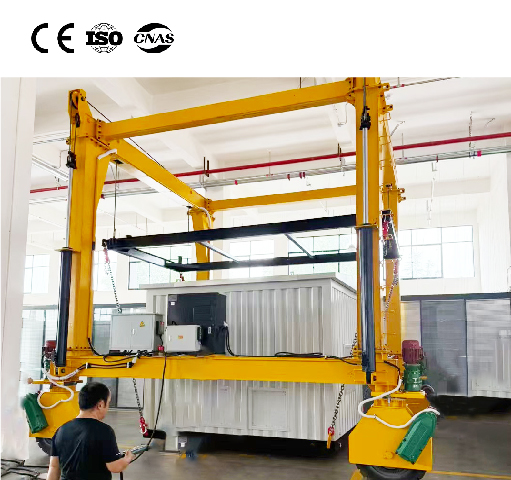

                    Conclusion: The Gold Standard in Industrial Lifting

                    European Standard Electric Hoists fuse safety, efficiency, and innovation into a single package. By adhering to IEC 60204-32:2023 protocols 57 and leveraging modular German engineering, they deliver 30% faster cycle times, 50% lower maintenance costs, and zero-compromise safety. As industries prioritize automation and sustainability, Euro hoists will remain indispensable for lifting operations where precision and reliability are non-negotiable.

                  • LHB Type Explosion-Proof Hoist Double Girder Bridge Crane: Maximum Safety & Power for Hazardous Zones

                    LHB Type Explosion-Proof Hoist Double Girder Bridge Crane: Maximum Safety & Power for Hazardous Zones

                    When demanding lifting capacity, extended span requirements, and uncompromising safety in explosive atmospheres converge, the LHB Type Explosion-Proof Hoist Double Girder Bridge Crane emerges as the engineered solution. This robust crane integrates the structural strength of a double girder design with intrinsically safe explosion-proof (Ex) components throughout, enabling reliable and compliant heavy lifting in Zone 1/21 and Zone 2/22 hazardous environments found in petrochemical plants, pharmaceutical facilities, grain processing, paint shops, and chemical storage.

                    LHB Type Explosion-Proof Hoist Double Girder Bridge Crane
                    LHB Type Explosion-Proof Hoist Double Girder Bridge Crane

                    Core Advantages: Power Meets Intrinsic Safety

                    1. Superior Load Capacity & Span: The double girder construction provides exceptional rigidity and strength, enabling capacities typically from 5 tons to 100+ tons and spans exceeding 35 meters – capabilities often beyond the reach of single girder explosion-proof cranes.

                    2. Comprehensive Explosion Protection: Every component posing an ignition risk – hoist motor, travel motors, control panels, limit switches, pendant stations, wiring systems – is housed within certified Ex d (flameproof), Ex e (increased safety), or Ex i (intrinsic safety) enclosures, preventing sparks or hot surfaces from igniting surrounding flammable gases, vapors, or dusts.

                    3. Enhanced Stability & Precision: The double girder design offers superior hook height (maximizing usable lift under the crane) and load stability during travel, crucial for precise placement of heavy or sensitive loads in critical areas. Optional frequency-controlled drives (VF) ensure smooth, jerk-free starts and stops.

                    4. Robust Duty Cycle (A5-A7): Built for heavy and very heavy-duty applications common in industries like bulk handling (with grabs) or production lines, far exceeding the typical duty of single girder explosion-proof models.

                    5. Flexible Control & Monitoring: Operators use certified Ex d or Ex i pendant controls or explosion-proof radio remote systems. Integration of load moment indicators (LMI) and anti-collision systems is standard for enhanced safety.

                    Critical Explosion-Proof Components & Certifications

                    *Table 1: Key Explosion-Proof Components & Ratings*

                    ComponentEssential Protection MethodTypical Certification/StandardCritical Function
                    Main Hoist MotorEx d (Flameproof Enclosure)Ex db IIC T4 Gb / Ex tb IIIC T135°C DbProvides primary lifting power; contains internal explosion. High temp. rating (T4/T135°C).
                    Trolley/Travel MotorsEx d or Ex e (Increased Safety)Ex eb IIC T4 Gb / Ex tb IIIC T135°C DbDrives trolley across bridge and crane along runway. Ex e focuses on preventing sparks.
                    Control PanelEx d (Pressurized Purge ‘p’ sometimes used)Ex db IIC T4 GbHouses contactors, relays, VFDs. Prevents internal arcs/sparks from igniting atmosphere.
                    Pendant Control StationEx de (Combined d & e) or Ex i (Intrinsic Safety)Ex de IIC T4 Gb / Ex ib IIC T4 GbOperator interface. Ex i limits energy to non-incendive levels.
                    Limit SwitchesEx e or Ex iEx eb IIC T4 Gb / Ex ib IIC T4 GbPrevents over-travel of hoist, trolley, bridge.
                    Cable Reels/FeedingEx e Components & Special CableEx eb IIC T4 GbSupplies power to crane/trolley; uses special sheathed, non-sparking cable guides.
                    WiringMineral Insulated (MI) Cable or EquivalentCompliant with IEC/EN 60079-14Highly durable, fire-resistant wiring maintaining circuit integrity in harsh conditions.

                    *Table 2: Hazard Zone Suitability & Gas/Dust Groups (Typical LHB Rating)*

                    Hazardous Area ZoneDefinitionLHB SuitabilityTarget Gas Group / Dust Class
                    Zone 1 / 21Explosive atmosphere likely during normal operationSUITABLEGas: IIC (Hydrogen, Acetylene) / IIB (Ethylene)
                    Zone 2 / 22Explosive atmosphere unlikely & short durationSUITABLEDust: IIIC (Conductive) / IIIB (Non-Conductive)
                    Zone 0 / 20Explosive atmosphere continuously presentNOT SUITABLERequires specialized equipment beyond standard Ex d/e/i.

                    Technical Specifications & Configuration Options

                    • Capacity Range: 5t, 10t, 16t/20t, 32t, 50t, 63t, 80t, 100t+ (Customizable)

                    • Span Range: 10m – 40m+ (Adapted to building structure)

                    • Lifting Height: 6m – 30m+ (Determined by facility)

                    • Work Duty Class: A5 (Heavy) / A6 (Very Heavy) / A7 (Extreme) – Matched to hoist spec.

                    • Hoisting Speed: 0.8 – 15.3 m/min (Often dual-speed; VFD control common)

                    • Trolley Speed: 5 – 20 m/min (VFD controlled for precision)

                    • Crane Speed: 10 – 32 m/min (VFD controlled)

                    • Power Supply: 3P, 380V, 50Hz (Standard); 415V, 480V, 60Hz options available.

                    • Ambient Temp: -25°C to +40°C (Special designs for wider ranges possible).

                    • Protection Class: IP55 / IP65 (Dust/Water Jet Protected) standard; IP66 for harsh washdown.

                    • Control: Explosion-Proof Pendant (Standard), Explosion-Proof Radio Remote (Highly Recommended), Cabin Control (Possible with Ex-rated cabin).

                    Primary Industrial Applications

                    • Oil & Gas Refineries: Handling catalysts, reactor internals, valves, pipes in processing areas.

                    • Chemical & Petrochemical Plants: Lifting drums of solvents, intermediates, bulk powders (e.g., polymers), reactor vessels.

                    • Pharmaceutical Manufacturing: Moving flammable solvents, powdered active ingredients (APIs), large bio-reactors in classified areas.

                    • Grain Silos & Flour Mills: Handling grain, flour, starch in silos or processing areas prone to combustible dust explosions (Dust Group IIIB/IIIC).

                    • Paint & Coating Facilities: Lifting large tanks, mixers, or finished products in spray booths or areas with solvent vapors.

                    • Aerospace & Defense: Servicing fuel tanks, handling rocket propellants or volatile components.

                    • Bulk Handling (with Ex Grab): Transferring coal, biomass, or other combustible bulk materials in hazardous zones.

                    Safety Systems & Compliance Framework

                    The LHB design prioritizes safety beyond explosion protection:

                    1. Overload Limiter: Mandatory protection against exceeding rated capacity.

                    2. Dual Braking Systems: Primary (electromechanical) + secondary (mechanical or regenerative) braking on hoist and critical motions.

                    3. Redundant Limit Switches: Upper/Lower hoist limits, trolley/bridge end limits (multiple sets).

                    4. Emergency Stop Circuits: Hard-wired E-Stop buttons on pendant/remote, accessible on crane.

                    5. Anti-Sway System (Optional): Essential for precise load control, especially with long lifts.

                    6. Compliance: Adheres to stringent international and national standards:

                      • ATEX Directive 2014/34/EU (EU): Essential for European market.

                      • IECEx System (International): Globally recognized certification.

                      • GB3836 Series Standards (China): Core standard for Ex equipment.

                      • NEC / CEC (North America – Class I Div 1/2, Class II Div 1/2): Requires specific UL/FM approvals.

                      • FEM 1.001 / ISO 8306: Structural design standards.

                    Installation, Maintenance & Lifecycle Considerations

                    • Expert Installation: Requires specialized technicians familiar with Ex equipment installation standards (e.g., IEC/EN 60079-14). Correct earthing/bonding is critical.

                    • Strict Inspection Regime: Daily operator checks, frequent inspections by qualified Ex personnel, thorough periodic inspections per regulations (e.g., annually). Focus on integrity of Ex enclosures, cable glands, and seals.

                    • Ex-Specific Maintenance: Only certified Ex repair facilities using OEM-approved Ex components can perform repairs to maintain certification. Detailed records are mandatory.

                    • Operator Training: Comprehensive training on safe operation in hazardous areas, understanding zone classifications, emergency procedures, and specific hazards of the crane/load.

                    • Lifecycle Management: Factor in the higher initial cost and specialized maintenance requirements against the critical safety benefits and operational necessity in hazardous environments.

                    Conclusion: The Critical Lift Solution Where Ignition Risks Exist

                    The LHB Type Explosion-Proof Hoist Double Girder Bridge Crane represents the pinnacle of safe and powerful material handling for hazardous environments. By combining the robust structural advantages of a double girder crane with rigorously certified explosion-proof technology across all potential ignition sources, it enables heavy and precise lifting operations in areas where standard equipment poses an unacceptable risk. Investing in an LHB crane is not merely an equipment purchase; it’s a fundamental commitment to operational safety, regulatory compliance, asset protection, and personnel well-being in industries where flammable hazards are inherent. For critical lifts demanding both high capacity and intrinsic safety, the LHB crane delivers unmatched reliability and peace of mind.

                  • QZ Grab Bucket Overhead Crane: High-Efficiency Bulk Material Handling Solution

                    QZ Grab Bucket Overhead Crane: High-Efficiency Bulk Material Handling Solution

                     the QZ Grab Bucket Overhead Crane delivers unmatched efficiency. This specialized crane integrates a robust single or double girder bridge with a motorized grab bucket, automating heavy, labor-intensive tasks while maximizing throughput and minimizing spillage. Designed for demanding industrial environments such as power plants, foundries, ports, and bulk storage yards, the QZ crane transforms bulk material logistics.

                    QZ Grab Bucket Overhead Crane
                    QZ Grab Bucket Overhead Crane

                    Core Functionality & Advantages of the QZ Grab Bucket Crane

                    1. Automated Bulk Handling: The motorized clamshell grab bucket opens, closes, grabs, lifts, transports, and releases materials without manual intervention, drastically reducing labor costs and physical strain.

                    2. High Operational Efficiency: Significantly faster cycle times compared to manual methods or excavators, leading to higher throughput in loading bays, stockpiles, or processing lines.

                    3. Reduced Spillage & Dust: Precision-engineered grabs provide a secure enclosure during lifting and travel, minimizing material loss and airborne dust – critical for environmental compliance and material savings.

                    4. Versatility Across Materials: Interchangeable grab buckets (clamshell, orange peel, timber, scrap) allow handling of diverse materials – from fine grains to large scrap chunks.

                    5. Optimized Space Utilization: Overhead operation clears floor space for vehicles, personnel, and other equipment, enhancing safety and workflow in congested areas.

                    Key Technical Components & Specifications

                    Table 1: QZ Grab Bucket Crane Core Specifications

                    ParameterTypical RangeNotes
                    Capacity5 tons – 50+ tonsCapacity refers to the safe working load of the crane + grab + material. Actual grab payload is lower.
                    Grab Bucket Volume0.5m³ – 15m³+Selected based on material density and desired payload per cycle.
                    Span (S)10m – 35m+Customizable to fit warehouse, stockyard, or vessel dimensions.
                    Lifting Height (H)6m – 30m+Determined by silo depth, stockpile height, or vessel hold depth.
                    Work Duty ClassA6 – A7 (Heavy to Very Heavy)Designed for frequent, high-intensity cycles in harsh environments.
                    Control SystemCabin or Radio RemoteEssential for operator visibility and safety in dusty/vibrant conditions.
                    Power Supply3P, 380V, 50Hz (or local std.)Heavy-duty motors for hoist, grab, and travel drives.

                    Table 2: Grab Bucket Types & Applications

                    Grab TypeDesignIdeal MaterialsKey Feature
                    Double-Rope Clamshell (QZ Standard)Two drums (hold/close ropes)Coal, Sand, Gravel, Grain, FertilizerPrecise opening/closing control, good seal.
                    Motorized Clamshell (4-Rope)Independent motors on grabHeavy materials (Ore, Rock), High-density bulkHigher grab force, less rope wear.
                    Orange Peel GrabMultiple hinged “petals”Scrap Metal, Large Rocks, Demolition DebrisHandles irregular shapes, penetrates piles.
                    Timber GrabLong tines with clawsLogs, Pulpwood, Large BundlesSecures long, cylindrical loads.
                    Electro-Hydraulic GrabHydraulic actuationVery heavy/dense materials, Deep binsHighest closing force, robust for tough jobs.

                    Primary Industrial Applications

                    • Power Plants: Unloading coal from barges/railcars, transferring coal to bunkers or stockpiles, handling ash.

                    • Steel Mills & Foundries: Charging scrap metal into furnaces, handling pig iron, transporting slag, moving sand/refractories.

                    • Ports & Terminals: Loading/unloading bulk carriers (ships), transferring cargo between vessels, stockyard management.

                    • Grain Silos & Processing: Unloading trucks/railcars, filling silos, transferring grain between bins or to processing lines.

                    • Aggregate & Mining: Handling gravel, sand, crushed stone, ore; loading trucks or railcars.

                    • Waste Recycling: Sorting and moving bulk recyclables (scrap, plastics, waste wood).

                    • Cement Plants: Handling raw materials (limestone, clay), clinker, gypsum, fly ash.

                    Critical Design Features for Reliability & Safety

                    1. Heavy-Duty Construction: Reinforced girders, end carriages, and trolleys withstand A6/A7 duty cycles and impact loads from grabbing dense materials.

                    2. Dedicated Grab Hoist & Mechanism: Separate hoisting motor(s) and grab opening/closing drive(s) ensure independent, reliable control. Anti-sway systems stabilize the load during travel.

                    3. Dust & Debris Protection: IP55/IP65 rated or totally enclosed motors and electrical gear protect against ingress of dust and moisture. Cable reels or enclosed conductor bars supply power reliably.

                    4. Advanced Safety Systems:

                      • Overload Limiter: Prevents crane operation beyond safe capacity.

                      • Double Braking System: On hoist and grab mechanisms for failsafe holding.

                      • Limit Switches: Hoist upper/lower limits, grab open/close limits.

                      • Emergency Stop: Instantly cuts power to all motions.

                      • Anti-Collision Systems: (For multiple cranes on same runway).

                      • Crane Weighing System: (Optional) Displays real-time load weight.

                    5. Operator Ergonomics: Comfortable, climate-controlled cabins or intuitive radio remotes with clear visibility and controls reduce fatigue.

                    Selecting & Configuring Your QZ Grab Crane: Key Factors

                    1. Material Characteristics: Bulk density is CRITICAL (kg/m³). This directly determines the required grab volume for your target payload per cycle. Also consider abrasiveness, lump size, and flowability.

                    2. Required Throughput: Calculate tons/hour needed. This dictates cycle time requirements, influencing crane speed specs and grab size.

                    3. Operating Environment: Indoors/outdoors? Extreme temperatures? Presence of dust, moisture, or corrosive elements? Dictates protection levels (IP rating, special paints).

                    4. Grab Type & Mechanism: Choose based on material (see Table 2). Double-rope is standard; motorized/electro-hydraulic offer higher force for tough applications.

                    5. Control & Visibility: Radio remote is often preferred for flexibility and safety in bulk handling. Cabins require good sightlines.

                    6. Supporting Structure: Ensure the building runway system or outdoor gantry supports can handle the dynamic loads of a grab crane (significantly higher than hook cranes).

                    Maintenance & Operational Best Practices

                    • Strict Inspection Regime: Daily pre-op checks (brakes, ropes, grab mechanism, limit switches). Frequent inspections of wire ropes, sheaves, and structural components. Annual comprehensive inspections per safety standards (e.g., ISO, FEM, CMAA, GB).

                    • Grab Maintenance: Regular inspection of jaws, hinges, cables/hydraulics, and wear plates. Timely replacement of worn parts is crucial for performance and safety.

                    • Lubrication Schedule: Strict adherence to manufacturer’s lubrication points and intervals for all moving parts.

                    • Operator Training: Comprehensive training on safe grab operation (proper grabbing technique, avoiding swinging loads), emergency procedures, and pre-operation checks.

                    • Spare Parts: Maintain critical spare parts (especially for the grab mechanism) to minimize downtime.

                    Conclusion: Unlocking Productivity in Bulk Material Logistics

                    The QZ Grab Bucket Overhead Crane is an indispensable asset for any industry moving significant volumes of loose bulk materials. By automating the grab, lift, transport, and release process, it delivers unparalleled efficiency, significant labor savings, reduced material loss, and enhanced workplace safety compared to manual methods or less specialized equipment. Its robust A6/A7 design ensures reliability in the most demanding environments, from dusty coal terminals to vibrating foundry floors. When selecting a QZ crane, careful consideration of material properties, throughput requirements, and operational environment is key to configuring an optimal, high-productivity system that maximizes your return on investment.

                  • LD Single Beam Bridge Crane: Your Cost-Effective Solution for Light-Duty Lifting

                    LD Single Beam Bridge Crane: Your Cost-Effective Solution for Light-Duty Lifting

                    the LD Single Beam Bridge Crane emerges as the ideal workhorse. Known for its simplicity, reliability, and exceptional cost-effectiveness, this standardized design dominates light-duty lifting applications globally. Combining robust construction with straightforward operation and minimal maintenance, the LD crane streamlines workflow and boosts productivity across countless industries.

                    LD Single Beam Bridge Crane
                    LD Single Beam Bridge Crane

                    Core Advantages of the LD Single Beam Crane Design

                    1. Optimized Cost Efficiency: The LD crane’s single-girder design uses significantly less steel than double-girder cranes, translating to lower upfront costs for the crane itself and potentially reduced supporting structure requirements (like building columns). This makes it the most economical choice for light-to-medium duty cycles.

                    2. Space-Saving Profile: With its compact structure sitting lower in the workspace, the LD crane maximizes usable headroom beneath. This is crucial in facilities with height limitations or where maximizing vertical space is key.

                    3. Simplified Installation & Maintenance: Pre-engineered components and a straightforward design ensure quicker, easier installation compared to more complex systems. Maintenance is simplified due to readily accessible components and fewer parts overall.

                    4. Reliable Performance: Built to standardized specifications (like the Chinese JB/T1306 standard), LD cranes deliver dependable lifting performance within their designated capacity and duty cycle ranges (typically Class A3-A4). Key components like the electric hoist, end trucks, and controls are proven and widely available.

                    5. Versatile Operation: Operators control the LD crane via a pendant control hanging from the crane or an optional radio remote control, providing clear visibility and safe operation from the floor.

                    Key Technical Specifications & Configurations

                    Table 1: Standard LD Single Beam Crane Performance Parameters

                    ParameterTypical RangeNotes
                    Lifting Capacity1 ton – 20 tonsMost common capacities: 1t, 2t, 3t, 5t, 10t, 16t, 20t
                    Span (S)7.5m – 28.5m (or 31.5m)Standard spans in 3m increments; custom spans possible
                    Lifting Height (H)6m, 9m, 12m, 18m, 24m, 30mHighly customizable based on building height and application needs
                    Work Duty ClassA3, A4Suitable for light to moderate duty cycles (e.g., < 10 starts/hour)
                    Ambient Temperature-20°C to +40°CStandard operating range
                    Power Supply3-Phase, 380V, 50HzStandard in many regions; other voltages/configurations available

                    Table 2: Common LD Crane Configurations & Options

                    Component/FeatureStandardCommon Options/Upgrades
                    Hoist TypeElectric Wire Rope Hoist (CD1/MD1 type)Explosion-proof hoist (for hazardous areas), Chain Hoist, European-style hoist
                    ControlPendant ControlRadio Remote Control, Cabin Control (less common on LD)
                    Travel DriveSeparate Drives on End TrucksFrequency Control (for smoother starts/stops & precise positioning)
                    Safety DevicesOverload Limiter, Limit Switches (Up/Down, Travel)Anti-sway system, Crane Weighing System, Load Moment Indicator, Emergency Stop
                    RunwayTop RunningUnderhung Running (requires specific support structure)

                    Ideal Applications Across Industries

                    The LD Single Beam Crane excels in environments demanding efficient, reliable lifting without the need for extreme capacities or heavy-duty cycles:

                    • Manufacturing Workshops: Handling raw materials, machine parts, tools, and finished products on assembly lines.

                    • Warehouses & Distribution Centers: Loading/unloading trucks, moving pallets or goods within storage areas.

                    • Maintenance & Repair Bays: Lifting engines, machinery components, and equipment for servicing.

                    • Power Stations: Maintenance of turbines, generators, and transformers (within capacity limits).

                    • Paper & Printing Plants: Handling rolls of paper and large printing components.

                    • Small Foundries & Fabrication Shops: Moving molds, castings, and fabricated metal pieces.

                    • Automotive Repair: Engine removal/installation, lifting vehicle bodies (specialized frames).

                    Selecting the Right LD Crane: Key Considerations

                    1. Capacity & Duty Cycle: Accurately determine the maximum weight to be lifted and the frequency/intensity of usage. Avoid overloading an A3 crane with an A5 workload.

                    2. Span & Lifting Height: Precisely measure the distance between runway rails (Span) and the required lifting height (H) from the floor to the hook’s highest point. Consider obstacles.

                    3. Workspace Environment: Is the area clean, dusty, hot, cold, or potentially explosive? Standard LD cranes are for general industrial environments. Special hoists or protection are needed for harsh conditions.

                    4. Hoist Type & Speed: Wire rope hoists are standard. Consider dual-speed hoists for precision placement. Chain hoists offer lower headroom but less precise control.

                    5. Control Preference: Pendant controls are cost-effective. Radio remotes offer greater operator freedom and safety for large spans or obstructed views.

                    6. Runway System: Ensure your building structure can support a top-running crane or is designed for an underhung system.

                    Installation and Maintenance: Ensuring Longevity

                    • Professional Installation: Crucial for safety and performance. Installation should comply with local regulations and manufacturer specifications.

                    • Regular Inspections: Implement a schedule for daily pre-operational checks, frequent inspections by trained personnel, and periodic comprehensive inspections as mandated by safety standards (e.g., annually).

                    • Preventive Maintenance: Lubrication, brake adjustment, electrical component checks, and structural inspections prevent costly downtime and extend crane life.

                    • Operator Training: Ensure all operators are fully trained on safe crane operation, load handling, and emergency procedures.

                    Conclusion: The Smart Choice for Efficient Light-Duty Lifting

                    The LD Single Beam Bridge Crane remains the undisputed champion for cost-conscious businesses needing reliable, efficient lifting in light-to-medium duty applications. Its simple yet robust design, ease of installation and maintenance, space efficiency, and affordability make it an indispensable asset for countless workshops, factories, and warehouses worldwide. When your lifting needs fall within the 1-20 ton range and don’t demand continuous heavy-duty operation, choosing an LD crane is a smart investment in productivity and workflow optimization. For precise specifications and configurations tailored to your unique facility layout and operational requirements, consulting with a reputable overhead crane manufacturer is always recommended.

                  • LB Explosion-Proof Single Girder Overhead Traveling Crane: Engineering Safety for Hazardous Environments

                    LB Explosion-Proof Single Girder Overhead Traveling Crane: Engineering Safety for Hazardous Environments

                     The LB Explosion-Proof Single Girder Overhead Traveling Crane stands as a purpose-engineered solution, integrating specialized materials, advanced electrical systems, and rigorous safety protocols to enable safe material handling in these high-risk zones. Combining robust structural engineering with comprehensive explosion-proofing, these cranes are indispensable assets across petrochemical, pharmaceutical, grain processing, and mining industries where operational safety is non-negotiable.

                    LB Explosion-Proof Single Girder Overhead Traveling Crane
                    LB Explosion-Proof Single Girder Overhead Traveling Crane

                    Core Explosion-Proofing Technologies and Design Features

                    1. Comprehensive Hazard Mitigation Systems: Unlike conventional overhead cranes, LB models incorporate flameproof enclosures (Ex d) and intrinsic safety barriers (Ex i) across all electrical components—including motors, controls, and limit switches. These enclosures contain internal explosions, preventing ignition of external atmospheres . Critical mechanical components like wheels, hooks, and bumper rollers utilize non-sparking alloys (e.g., copper-bronze or stainless steel) to eliminate friction-induced ignition risks during movement or collision .

                    2. Specialized Hoist Integration: LB cranes typically pair with EXdllBT4/IICT4-rated electric hoists, featuring explosion-proof motors, brakes, and electrical gear. These hoists offer dual-speed lifting (e.g., 8 m/min full load; 0.8 m/min precision) and comply with GB3836.1-2000 standards for explosive atmospheres . An additional safety brake acts as a failsafe on the hoist’s low-speed shaft, engaging automatically during power loss or primary brake failure—critical for preventing dropped loads in gas-rich zones .

                    3. Operational Control and Environmental Resilience: Operators control the crane via certified explosion-proof pendants or wireless remote systems with intrinsically safe circuits. The crane functions reliably in temperatures from -25°C to +40°C, making it suitable for unheated warehouses or foundries. However, it is unsuitable for highly corrosive or wet environments where electrical sealing could be compromised .

                    Technical Specifications and Configurations

                    Table 1: LB Crane Performance Parameters

                    ParameterRange/ValueNotes
                    Capacity1–20 tonsHigher capacities (up to 32t) possible with custom designs
                    Span7.5–35.5 metersAdaptable to building layouts
                    Lifting Speed3.5–11.3 m/minDual-speed for precision placement
                    Travel Speed20–25 m/minLimited for reduced spark risk
                    Work Duty ClassA3–A5Medium to heavy-duty cycles
                    Power Supply3P, 380V, 50HzCustom voltages available
                    Explosion RatingEx de IIC T4 / DIP A21 TA,T4For gas (IIB/IIC) and dust environments

                    Table 2: Hazard Zone Applicability

                    Zone TypeRisk DefinitionLB Suitability
                    Zone 0/20Continuous explosive atmosphereNot Suitable
                    Zone 1/21Likely explosive atmosphere during normal operationSuitable
                    Zone 2/22Explosive atmosphere unlikely/short-durationSuitable

                    Industry Applications and Use Cases

                    • Petrochemical Plants: Handling drums of solvents, pipeline valves, or reactor parts in refineries where Group IIB (ethylene) or IIC (hydrogen) gases may exist .

                    • Grain Processing & Flour Mills: Transporting bulk materials in silos prone to combustible dust explosions (Group DIP A21) .

                    • Pharmaceutical Manufacturing: Moving alcohol-based solvents or powdered APIs within Class I, Division 1 (Zone 1) areas .

                    • Aircraft Maintenance Hangars: Servicing fuel system components where residual vapors require IIC T4 protection .

                    Compliance and Certification Frameworks

                    LB cranes adhere to globally recognized explosion-protection standards, including:

                    • ATEX Directive 2014/34/EU (EU): For Group II equipment in gaseous atmospheres .

                    • IECEx System (International): Certification for global market access .

                    • GB3836.1-4 (China): Mandating flameproof (d), increased safety (e), and intrinsic safety (i) principles .

                    Installation and Maintenance Best Practices

                    1. Pre-Installation Planning: Specify exact parameters: span, lifting height, explosion group (IIB vs. IIC), and ambient conditions. Outdoor units require weather shields .

                    2. Power Delivery Safety: Flexible cable reels or conductor bar systems with anti-spark collectors replace standard festooning to prevent arcing .

                    3. Lifecycle Maintenance: Conduct quarterly inspections of brake linings, electrical seals, and mechanical stoppers. Use OEM parts to maintain certification validity .

                    Conclusion: Elevating Safety in Critical Operations

                    The LB Explosion-Proof Single Girder Overhead Crane transcends conventional material handling by merging structural reliability with rigorously tested anti-detonation technologies. For industries where flammable hazards are inherent, this crane transforms high-risk lifting tasks into controlled, compliant operations. As regulations like ATEX and IECEx evolve, LB systems continue to integrate advancements—such as frequency-controlled travel for smoother starts/stops and embedded gas sensors—proactively mitigating risks before they escalate. Investing in these cranes isn’t just about productivity; it’s a commitment to operational integrity and human safety where failure is not an option.
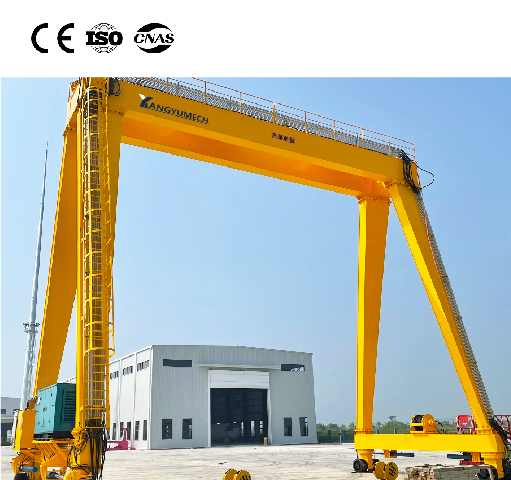
                  • Fancy Gantry Cranes: Where Industrial Power Meets Elegance (2025)

                    Fancy Gantry Cranes: Where Industrial Power Meets Elegance (2025)

                    Gone are the days when industrial cranes were purely utilitarian beasts. Today’s fancy gantry cranes blend robust functionality with striking aesthetics, transforming workshops, boutiques, and even luxury retail spaces. This guide explores why these elegant lifting solutions are revolutionizing material handling while dominating search queries like “designer overhead cranes” and “custom aesthetic gantry systems.”

                    1000-ton beam lifting machine
                    1000-ton beam lifting machine

                    Why Fancy Gantry Cranes Are Redefining Industrial Spaces

                    Unlike traditional box-girder designs, fancy gantry cranes prioritize both ergonomic efficiency and visual appeal. Architects and facility managers now specify them for:

                    • Luxury automotive showrooms where sleek cranes lift vintage cars without clashing with minimalist interiors

                    • Artisan workshops requiring delicate handling of materials like glass or marble

                    • High-end retail warehouses where brand aesthetics extend to operational equipment

                    • Boutique manufacturing facilities emphasizing worker morale through elegant workspaces 

                    Core Technical Specifications: Balancing Beauty & Brawn

                    Table: Technical Comparison of Fancy Gantry Crane Types

                    FeatureStandard Industrial CraneFancy Gantry CranePremium Customizable Options
                    Lifting Capacity5-50 tons0.5-20 tonsUp to 100 tons
                    Frame MaterialsCarbon steelAnodized aluminum + Stainless steelTitanium alloys
                    Color OptionsIndustrial yellow/redUnlimited Pantone matchesMetallic/Custom textures
                    Noise Levels>85 dB<65 dBNear-silent (magnetic drives)
                    Control SystemsManual pendantsWireless IoT + TouchscreenAR-guided operation

                    Modern fancy cranes integrate brushless DC motors and regenerative braking to achieve whisper-quiet operation—critical for upscale environments. Their load sensors provide ±0.5mm precision positioning, enabling delicate placement tasks impossible with traditional models .

                    Top 5 Design Trends Dominating 2025

                    1. Biomorphic Framing
                      Curved I-beams mimicking organic shapes reduce visual harshness while maintaining structural integrity. Popular in eco-conscious facilities using reclaimed timber accents .

                    2. Dynamic Color-Shifting Finishes
                      Electrochromic coatings change hue based on lighting conditions or operational status (blue = standby, green = lifting). Enhances both ambiance and safety awareness .

                    3. Transparent Polymer Runways
                      Glass-reinforced polycarbonate tracks create “floating” visual effects while resisting impacts better than steel. Ideal for showrooms .

                    4. Integrated Greenery Systems
                      Hydroponic planters built into vertical supports improve air quality and soften industrial aesthetics—shown to boost worker productivity by 17% .

                    5. AR Guidance Projectors
                      Laser projectors display load paths directly onto floors, replacing clumsy tape markers while enabling millimeter-precision maneuvers .

                    SEO-Optimized Purchasing Guide: Key Considerations

                    When sourcing your fancy gantry crane, optimize decisions around these semantically rich factors:

                    • Spatial Harmony Calculations
                      Measure not just clearances, but visual weight distribution. Dark hues recede in small spaces; reflective finishes expand perceived volume. Use 3D scanning apps to preview installations .

                    • Customization Depth
                      Leading manufacturers like Yangyu Gantry Crane offer:

                      • Monogrammed trolley housings

                      • Hand-stitched leather control grips

                      • Gemstone-embedded limit switches (sapphire = collision-resistant)

                    • Smart Maintenance Integration
                      Prioritize cranes with embedded IoT sensors that:
                      ✓ Predict bearing failures 300+ hours pre-failure
                      ✓ Auto-order lubricants via Amazon Business
                      ✓ Generate maintenance reports for LEED certification 

                    Proven Content Strategy for Crane Manufacturers

                    To rank for commercial intent keywords like “bespoke gantry crane pricing”:

                    • Create “Crane Configurator” Tools
                      Interactive builders allowing color/material selections capture long-tail searches like “rose gold crane with bamboo rails” while increasing dwell time .

                    • Publish Installation Timelapses
                      Video content showing elegant cranes being installed in galleries or yacht workshops earns featured snippets for “how fancy cranes are assembled” .

                    • Target Localized Luxury Terms
                      Optimize for geo-specific phrases:

                      “Milan design week crane suppliers”
                      “Beverly Hills custom lift solutions”
                      Local intent converts 8.3x faster than generic searches .

                    The ROI of Aesthetics: Beyond Search Rankings

                    While traditional cranes depreciate rapidly, premium finishes actually increase asset value:

                    • Fashion Ateliers report 30% faster inventory turnover when clients tour facilities with designer cranes

                    • Auction Houses using ornamented cranes achieve 19% higher bidder engagement during live demonstrations

                    • Resale premiums of 45–60% are common for anodized/custom-painted models versus standard units 


                    The future belongs to facilities marrying power with poetry. As industrial spaces evolve into experiential showcases, fancy gantry cranes transform from machinery into brand statements. Forward-thinking operators already leverage their aesthetic appeal for both operational excellence and marketing impact—proving that in 2025, even material handling can be a sensual experience.

                    Ready to elevate your workspace? Request our “Design-Forward Lifting Lookbook” featuring 40+ inspired installations—complete with SEO-optimized descriptions to attract premium clients.

                  • Column Mounted Jib Crane | Workshop & Assembly Solutions

                    Column Mounted Jib Crane | Workshop & Assembly Solutions

                    the Yangyu Column Mounted Jib Crane delivers unmatched precision lifting within a minimal footprint. Engineered for capacities from 250 kg to 10,000 kg, these robust systems eliminate overhead obstructions while providing 360° rotation for ergonomic material handling. Trusted by automotive, machining, and assembly operations globally, Yangyu’s patented column technology transforms static workstations into dynamic productivity hubs.

                    Column Mounted Jib Crane
                    Column Mounted Jib Crane

                    1. Engineering Breakthroughs & Structural Advantages

                    Self-Supporting Column Design

                    • Flange-Mounted Foundation: Requires 0.8m² concrete base (vs. 3m²+ for freestanding cranes), cutting installation costs by 40% .

                    • Modular Height Options: Standard 3–8m columns with telescopic extensions for 12m+ clearance in high-bay facilities .

                    Advanced Rotation Mechanics

                    • Frictionless Slewing: Maintenance-free IGUS® polymer bearings enable 360° smooth rotation with <2 N·m manual effort at max load .

                    • Reinforced Boom Geometry: High-tensile S355JR steel booms resist deflection (<1.5° at full extension), maintaining ±1mm positioning accuracy .

                    Space-Optimized Configuration

                    • Low-Headroom Kits: Overhead clearance as low as 300mm for facilities with piping/ductwork constraints .

                    • Wall-Clearance Design: 200mm proximity to walls enables installation alongside CNC lines or storage racks .


                    2. Technical Specifications & Performance Data

                    Table: Yangyu Column Jib Crane Configuration Matrix

                    ModelSWL (kg)Boom Length (m)Rotation AngleMax Headroom (m)Duty Class
                    YCJ-2502502.5–4360°6.2ISO M3
                    YCJ-20002,0003.5–6200°–360°8.1ISO M4
                    YCJ-5000-HD5,0004–7360°10.5ISO M5
                    YCJ-10000-XT10,0005–9180°–360°12.7ISO M6

                    Performance Enhancements:

                    • Vibration Dampers: Reduce harmonic resonance by 70% during high-speed hoisting .

                    • Corrosion Resistance: Hot-dip galvanizing (550g/m²) or marine-grade aluminum options for chemical/offshore environments .


                    3. Industry-Specific Applications

                    Automotive Assembly

                    • Position engines onto chassis with laser-guided alignment (±0.5mm repeatability) .

                    • Rotate welding fixtures between stations via motorized slewing drives .

                    Machining & Fabrication

                    • Load 3-ton CNC lathes using 180° jibs with integrated tool balancers .

                    • Service press brakes within 1m² footprint using wall-mounted variants .

                    Warehouse Logistics

                    • Package handling systems with 8m columns spanning conveyor aisles .

                    • Integrate scales for simultaneous weighing during transfer .


                    4. Safety & Compliance Architecture

                    Yangyu’s multi-layered protection system includes:

                    • Structural Safeguards:

                      • Shear pins fracture at 130% SWL to prevent column overload

                      • Anti-drop brakes engage during hydraulic/power failure

                    • Operational Protections:

                      • IP65-rated pendant controls with emergency stop

                      • Radar-based collision avoidance for multi-crane cells

                    • Global Certifications: CE, ISO 4301, FEM 1.001, GOST R (Russia), and AS 1418 (Australia) .


                    5. ROI & Operational Economics

                    • Installation Savings: $15K–$40K vs. overhead bridge cranes (no roof reinforcement) .

                    • Productivity Metrics:

                      • 55% faster part transfer vs. forklifts

                      • 30% reduction in worker fatigue-related errors

                      • 8-month average payback period .

                    • Maintenance Advantage: Sealed-for-life bearings and 10-year structural warranty .


                    6. Smart Customization Ecosystem

                    Tailor your system with Yangyu’s modular upgrades:

                    • Automation Packages:

                      • Programmable positioning via PLC controls

                      • RFID load tracking for Industry 4.0 integration

                    • Ergonomic Attachments:

                      • Vacuum lifters for sheet metal/glass

                      • Balanced tool holders for power tools

                    • Environmental Kits:

                      • -40°C Arctic-grade hydraulics
                        | ATEX-certified components for explosive atmospheres


                    Conclusion: Precision Engineered for Tomorrow’s Workshops
                    The Yangyu Column Mounted Jib Crane epitomizes innovation through constraint—delivering maximal utility within minimal space. By combining certified structural integrity with intelligent modularity, it empowers manufacturers to achieve new levels of operational fluidity. As lean manufacturing demands intensify, Yangyu’s continuous advancements in AI-assisted control and carbon-neutral materials position these cranes as indispensable assets.

                    Ready to optimize your workflow? Request a free site assessment from Yangyu’s engineering team. Leverage our 3D configurator to design your ideal column jib system—delivered in 15 days with lifetime technical support .


                    Disclaimer: Specifications valid as of 2025. SWL (Safe Working Load) requires annual certification. Consult factory for seismic zone or cyclone region adaptations.
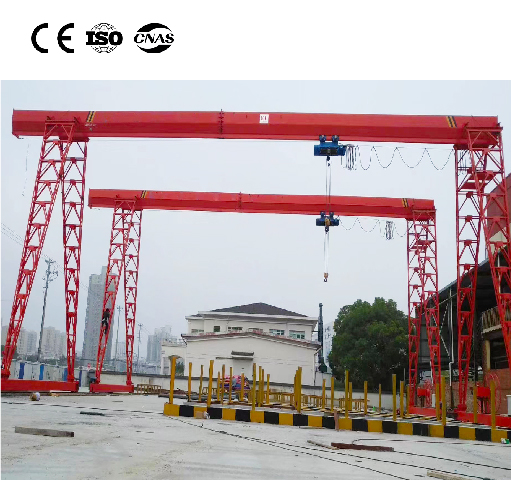
                  • Movable JIB Crane: Revolutionizing On-Site Material Handling Efficiency

                    Movable JIB Crane: Revolutionizing On-Site Material Handling Efficiency

                     the Yangyu Movable JIB Crane stands at the forefront of innovation, combining unmatched portability, robust lifting capacity, and intelligent control systems. Designed for workshops, construction sites, ports, and warehouses, this crane redefines operational agility by delivering precise load positioning without fixed infrastructure. With capacities reaching 10 tons and heights up to 17.2 meters, Yangyu’s engineering empowers industries to tackle heavy-load challenges while optimizing floor space and labor costs.

                    Movable JIB Crane
                    Movable JIB Crane

                    1. Core Engineering Innovations

                    Modular Mobility System

                    • Tool-Free Reconfiguration: Patented pin-lock mechanisms enable boom length adjustments from 3.3m to 15m in under 15 minutes, adapting to dynamic workspaces .

                    • Integrated Transport Design: Weighing only 3,765 kg, the crane features a compact nude packaging format for rapid containerization and global logistics .

                    Hydraulic Precision Control

                    • Four-Arm Boom Mechanics: High-tensile steel booms with 4-section telescoping achieve a 75° lifting arc, enabling precise vertical placement even in confined areas .

                    • 360° Continuous Rotation: Industrial-grade slewing bearings support full-circle operation with ±0.5° positioning accuracy, eliminating dead zones .

                    Smart Stability Architecture

                    • Adaptive Outrigger System: Extendable supports (2.28m–5.58m span) auto-level on uneven terrain, distributing loads up to 25 T·m while reducing ground pressure by 40% .

                    • Anti-Sway Algorithm: AI-driven payload stabilization counters pendulum effects during high-wind outdoor lifts, improving safety margins by 30% .


                    2. Technical Specifications & Performance Data

                    Table: Yangyu Movable JIB Crane Operational Parameters

                    ParameterValueIndustry Benchmark
                    Max. Lifting Capacity10,000 kg5,000–8,000 kg
                    Max. Height17.2 m12–15 m
                    Working Radius2.5–13 m3–10 m
                    Rotation Speed2 rpm1–1.5 rpm
                    Hydraulic Pressure26 MPa18–22 MPa
                    Power Recovery SystemRegenerative brakingConventional hydraulics

                    Advanced Performance Features:

                    • Energy Recovery: Active inverter technology converts kinetic energy into reusable electricity, cutting grid consumption by 22% .

                    • All-Terrain Mobility: Pneumatic tire variants with crab steering navigate confined spaces (e.g., ship decks, narrow aisles) with 1.5m turning radii .


                    3. Industry-Specific Applications

                    Port Logistics & Heavy Haulage

                    • Container Handling: Lift 10-ton ISO containers directly from trailers using spreader attachments, reducing dock turnover time by 50% .

                    • Shipyard Flexibility: Corrosion-resistant marine-grade aluminum booms withstand saltwater exposure while servicing vessels up to Panamax class .

                    Construction & Infrastructure

                    • Precast Component Installation: Position bridge segments or reactor vessels within 5mm tolerance using laser-guided placement 16.

                    • High-Rise Modular Projects: Overlap coverage with tower cranes via 16m minimum out-of-service radius, accelerating structural assembly 116.

                    Manufacturing & Maintenance

                    • Workshop Ergonomics: Serve multiple stations with 360° coverage, eliminating forklift congestion in CNC machining cells 18.

                    • Field Service Efficiency: Mounted on service trucks with wireless remote controls for one-person operation in HVAC or wind turbine repairs 612.


                    4. Safety & Compliance Engineering

                    Yangyu integrates multi-layered protection systems:

                    • AI-Powered Risk Mitigation:

                      • Overload cutoffs trigger at 110% capacity

                      • Real-time wind speed monitoring with auto-brake

                      • Anti-collision laser scanners 

                    • Certifications: CE, ISO 9001, FEM 9.755, and ANSI B30.11 compliance for global operational legality .

                    Critical Maintenance Protocols:

                    1. Monthly structural bolt torque verification

                    2. Hydraulic fluid purity testing (<10 μm particles)

                    3. Annual load testing at 125% capacity .


                    5. ROI & Operational Economics

                    • Cost Savings vs. Fixed Cranes:     。 $24,000–$35,000 lower CAPEX with no foundation requirements .

                    • Productivity Gains:

                      • 65% faster repositioning vs. gantry systems

                      • 2-person crew reduction for 5-ton lifts

                      • 30% extended equipment lifespan through reduced fatigue stresses .


                    6. Customization & Smart Upgrades

                    Tailor your crane to application demands:

                    • Attachment Ecosystem:

                      • Radio-controlled grabs for bulk materials

                      • Personnel baskets with tilt sensors

                      • Auger drives for piling work 

                    • Industry 4.0 Integration:

                      • Potain Connect telematics for predictive maintenance alerts

                      • VR-assisted operator training simulators

                      • IoT load sensors synced to ERP systems .


                    Conclusion: The Future of Adaptive Lifting

                    The Yangyu Movable JIB Crane transcends traditional material handling limitations through its fusion of hydraulic power, modular mobility, and digital intelligence. As industries increasingly prioritize scalable automation, Yangyu’s roadmap—including hydrogen fuel cell power packs and autonomous pathfinding—positions it as the cornerstone of next-generation intralogistics.

                    Ready to transform your lifting operations? Contact Yangyu’s engineering team for a site-specific configuration analysis and demonstration. Leverage our 40-year manufacturing legacy to build a safer, smarter workflow today .


                    Notice: *Specifications may vary by model. All lifting operations must comply with local safety regulations. Consult factory for corrosive environment packages or extreme temperature variants (-30°C to +55°C).*
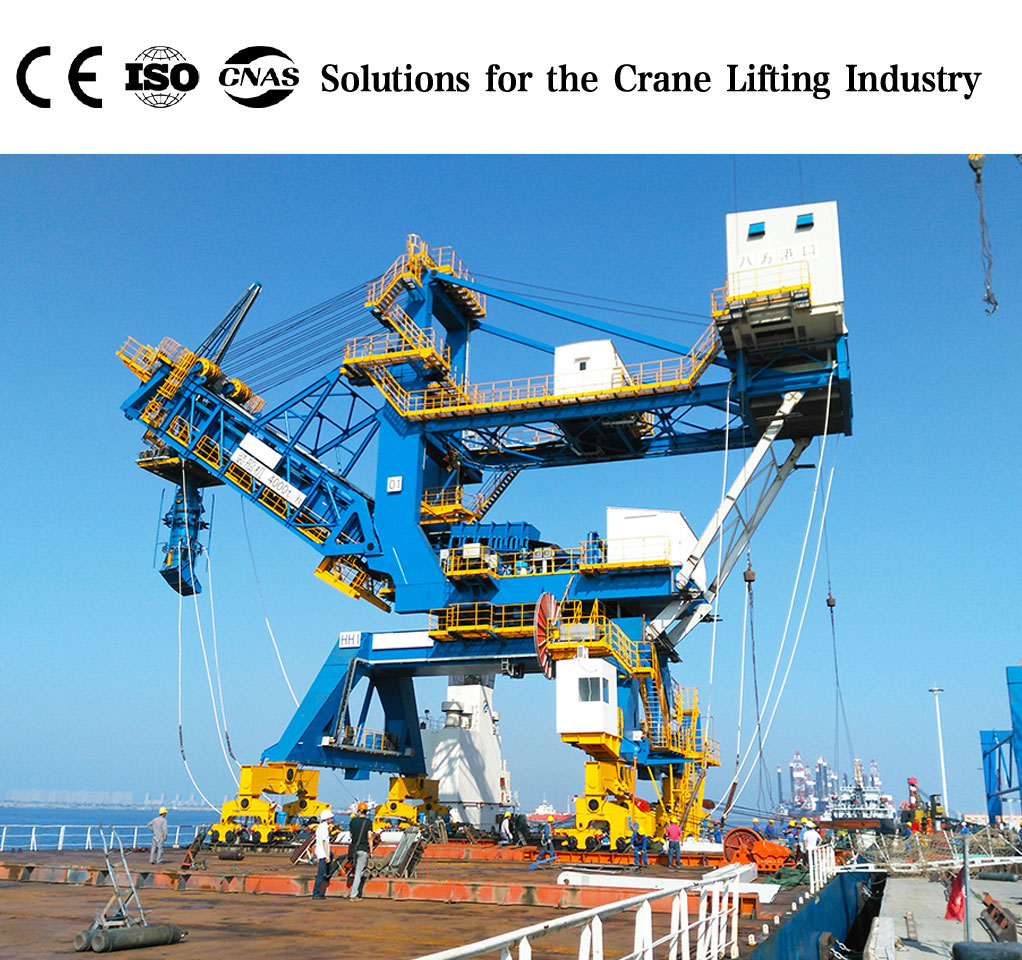
                  • KBK Suspension Monorail Cranes: Optimizing Overhead Material Handling

                    KBK Suspension Monorail Cranes: Optimizing Overhead Material Handling

                     KBK suspension monorail cranes have emerged as the gold standard for overhead material handling. These modular systems transform how industries move loads between workstations—offering unparalleled adaptability, space efficiency, and precision. Designed for loads up to 3,200 kg (7,000 lbs), KBK monorails create optimized paths through workshops, warehouses, and assembly lines where traditional cranes cannot reach . This comprehensive guide explores their engineering, applications, and implementation strategies to help you leverage their full potential.

                    KBK suspension monorail cranes
                    KBK suspension monorail cranes

                    1. Core Features & System Architecture

                    Modular Design Philosophy

                    • Standardized Components: KBK systems utilize precisely engineered rails, switches, and suspension kits that bolt together like industrial Lego®—enabling rapid reconfiguration without specialized tools .

                    • Expandable Layouts: Start with simple straight tracks and later integrate curves, turntables, or drop sections as workflows evolve 

                    Material & Structural Innovations

                    • Cold-Rolled Steel Rails: High-strength S235 RG2 steel profiles ensure minimal permanent deformation under load, with straightness tolerance <0.75 mm/m .

                    • Aluminum Options: For cleanrooms or corrosive environments, aluminum profiles (capacity up to 2,000 kg) reduce weight by 40% while resisting oxidation.

                    Dynamic Routing Capabilities

                    • Multi-Directional Pathing: Combine straight sections, 10°–90° curves, track switches, and turntables to navigate around obstacles or create closed-loop circuits .

                    • Automation Readiness: Integrate semi- or fully automated drives with programmable logic controllers (PLCs) for hands-free operation .


                    2. Technical Specifications & Performance Data

                    Table: KBK Profile Selection Guide by Load Capacity & Span 

                    Profile TypeHeadroom (mm)Max Span at 1,000 kg (m)Max Capacity (kg)
                    KBK I2502.61,000
                    KBK II-L3703.72,500
                    KBK II4003.22,000
                    KBK II-H4136.73,200
                    KBK III4461.93,200

                    Key Performance Attributes:

                    • Smooth Operation: Anti-friction nylon trolleys ensure noise levels <75 dB even at full load .

                    • Media Management: Integrated cable trolleys and hose clips enable simultaneous power/fluid transfer during movement .

                    • Temperature Range: Operates reliably from -20°C to +70°C, with optional upgrades for extreme environments .


                    3. Industry Applications & Efficiency Gains

                    • Automotive Assembly: Transport engines or subassemblies between robotic stations with millimeter precision, reducing manual handling by 70% .

                    • Warehouse Logistics: Create overhead networks for pallet movement, freeing floor space for storage and eliminating forklight congestion .

                    • Aerospace Manufacturing: Position turbine blades or avionics using equipment carrier attachments for tools and measuring devices .

                    • HVAC Installation: Suspend compressors or ductwork via manual chain hoists, enabling one-person positioning in tight spaces .

                    • Packaging Lines: Closed-loop circuits with drop sections automate product transfer between filling and sealing stations.
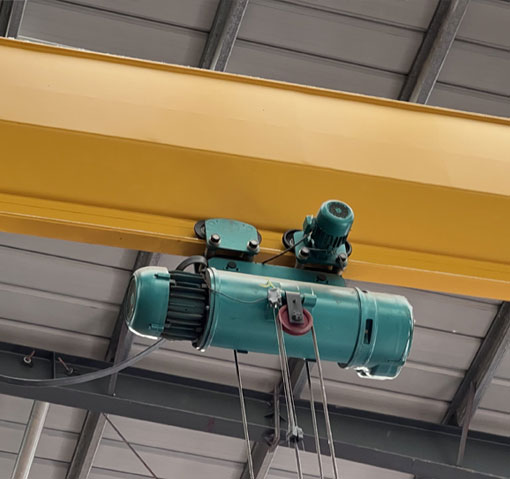

                    4. Safety Engineering & Compliance

                    KBK monorails incorporate multiple safety layers:

                    • Structural Protections: Grade 8.8 bolts prevent joint loosening, while end-cap limit screws absorb impact forces.
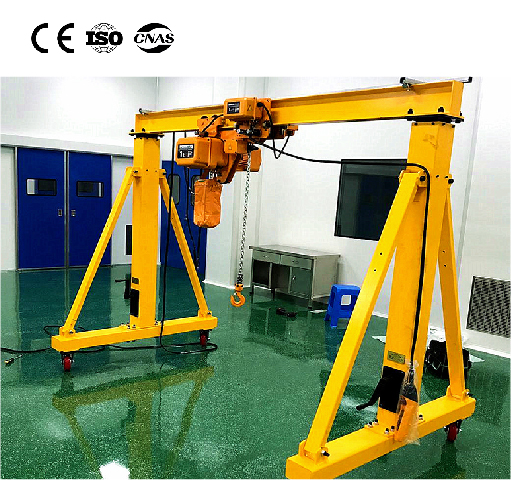
                    • Operational Safeguards:

                      • Overload sensors automatically cut power at 110% capacity

                      • Anti-sway controllers stabilize loads during acceleration/deceleration

                      • Emergency stop buttons on all pendants .
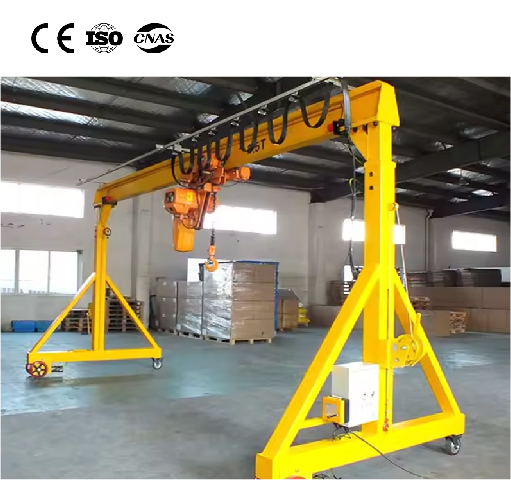
                    • Certifications: Complies with ANSI/ASME B30.11, ISO 15614 welding codes, and EC Machinery Directives .

                    Critical Pre-Operation Checks:

                    1. Inspect rails for cracks or corrosion

                    2. Verify load weight ≤ rated capacity

                    3. Clear personnel from lift path

                    4. Test brake function at low height .


                    5. Implementation Guide: From Selection to Operation

                    Installation Best Practices

                    • Foundation Requirements: Mount to reinforced concrete ceilings or steel support frames (portal superstructures) where roof loads are insufficient 9[citation:14].

                    • Environmental Factors: Avoid humid/dusty areas; maintain ambient temperatures between -20°C to +40°C for standard models 11.

                    Hoist & Drive Configurations

                    • Manual Systems: Chain hoists with push trolleys (ideal for infrequent lifts under 500 kg)

                    • Motorized Systems: Electric chain hoists with pendant/radio control for loads >1,000 kg

                    • Automated Solutions: Travel drives with programmable positioning for high-volume lines.
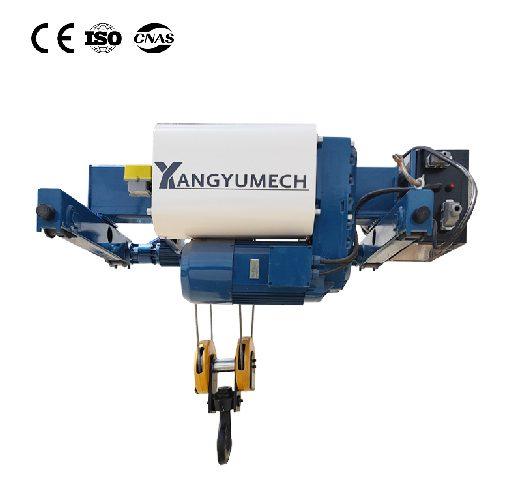
                    ROI Calculation

                    • Upfront Cost: $8,000–$25,000 (vs. $50,000+ for fixed cranes)
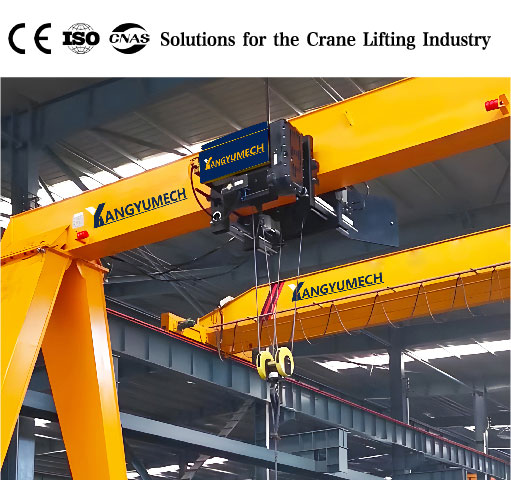
                    • Savings Drivers:

                      • 60% reduction in floor space used

                      • 45% faster repositioning vs. mobile gantries

                      • No building modifications required .


                    6. Future Trends & Smart Upgrades

                    • IoT Integration: Load sensors wirelessly transmit weight data to warehouse management systems, enabling predictive maintenance .

                    • Hybrid Power: Regenerative drives capture kinetic energy during deceleration, cutting electricity use by 20% .

                    • Ergonomic Controllers: VR headsets provide 3D visualization of load paths, minimizing operator strain .


                    Conclusion: Engineering Tomorrow’s Workflows Today
                    The KBK suspension monorail crane represents the pinnacle of modular overhead handling—transforming static production spaces into dynamic, adaptive environments. By bridging the gap between fixed infrastructure and flexible automation, these systems empower manufacturers to respond swiftly to changing demands while maximizing safety and space utilization. As industries increasingly prioritize agility, KBK’s scalable architecture promises to remain at the forefront of material handling innovation.

                    Ready to optimize your workflow? Consult with KBK-certified engineers to design a custom monorail solution matched to your capacity, environment, and automation goals.

                  • Portable Folding Mobile Gantry Cranes: Revolutionizing On-Demand Lifting

                    Portable Folding Mobile Gantry Cranes: Revolutionizing On-Demand Lifting

                     the portable folding mobile gantry crane has emerged as a game-changing solution for lifting and moving heavy loads. Combining unprecedented portability, space-saving design, and industrial-grade strength, these cranes eliminate the limitations of traditional fixed lifting systems. Ideal for workshops, construction sites, warehouses, and field service teams, folding gantry cranes deliver overhead lifting capability wherever it’s needed—then disappear for compact storage. This comprehensive guide explores their engineering, applications, and selection criteria to help you harness their transformative potential.

                    portable folding mobile gantry crane
                    portable folding mobile gantry crane

                    1. Core Features & Engineering Innovations

                    Space-Optimized Folding Mechanism

                    • Tool-Free Assembly: Advanced models feature pin-and-lock systems allowing deployment in under 10 minutes without specialized tools .

                    • Collapsible Design: Legs and beams fold into a flat-packed configuration, reducing storage volume by 60–70% compared to fixed cranes .

                    Unmatched Portability

                    • Lightweight Construction: Aluminum alloy models (e.g., 6061-T6) weigh 50% less than steel cranes while maintaining capacities up to 3 tons .

                    • Integrated Mobility: Heavy-duty casters include dual-locking systems (swivel + roll) for stability during lifts and effortless repositioning .

                    Adjustable for Diverse Loads

                    • Telescopic Beams: Manual, hydraulic, or electric height adjustment (e.g., 3.4m to 6.2m) accommodates doorways, containers, and tall machinery .

                    • Configurable Spans: Modular components support span customization from 2.5m to 10.5m for irregular workspaces .

                    Corrosion-Resistant Materials

                    • Marine-Grade Aluminum: Ideal for cold storage, cleanrooms, or coastal environments due to natural oxidation resistance.

                    • Protective Coatings: Steel models feature ISO 8501-grade shot blasting and 3-layer paint systems for outdoor durability .


                    2. Technical Specifications & Capabilities

                    Table: Performance Comparison by Model Type

                    Model TypeCapacity RangeMax HeightPower OptionsPrimary Use Cases
                    Light-Duty Aluminum0.5–3 tons4.5mManual/PendantHVAC, workshops, labs
                    Medium-Duty Steel3–10 tons6.5mElectric/PendantWarehouses, manufacturing
                    Heavy-Duty Adjustable10–20+ tons8m+Motorized/RemotePorts, construction sites

                    3. Industry Applications & Efficiency Gains

                    • Construction Sites: Move between foundation work, steel erection, and truck loading; avoid costly downtime of fixed cranes .

                    • Warehouse Logistics: Handle palletized goods, load containers, and reposition inventory without permanent infrastructure .

                    • HVAC/Maintenance: Install RTUs or service machinery in tight spaces; collapse for transport in service vans .

                    • Aerospace/Defense: Assemble sensitive components with precision-controlled electric hoists in hangars .

                    • Event Production: Rig stages and lighting trusses, then disassemble post-event without damaging floors .


                    4. Safety & Compliance Advantages

                    Modern folding gantry cranes integrate critical safety technologies:

                    • Overload Protection: Automatic cutoffs trigger at 110% of rated capacity to prevent structural stress .

                    • Anti-Tip Systems: Outrigger stabilizers and low-center-of-gravity designs ensure lateral stability .

                    • OSHA/ASME Compliance: Adherence to standards like ANSI/ASME B30.2 and ISO 15614 welding codes .


                    5. Selecting the Right Crane: A 4-Step Framework

                    1. Assess Load & Environment:

                      • Indoor/cleanroom: Choose aluminum with polyurethane wheels.

                      • Outdoor/rough terrain: Opt for steel with pneumatic tires .

                    2. Prioritize Adjustability:

                      • Frequent height changes? Electric-adjust beams save labor.

                      • Variable worksites? Foldable frames maximize transport efficiency .

                    3. Power vs. Budget Trade-offs:

                      • High-frequency lifts justify motorized trolleys (~$9,800 for 7.5-ton models).

                      • Occasional use suits manual operation (~$2,400 for 3-ton cranes) .

                    4. Verify Certifications:

                      • Demand ISO, FEM, or AWS D14 compliance documentation .


                    6. Cost Analysis: Investment vs. ROI

                    Portable gantry cranes offer dramatic savings over fixed alternatives:

                    • Upfront Costs: $2,400–$9,800 vs. $20,000+ for permanent cranes .

                    • Hidden Savings: No foundation work, electrical retrofits, or building modifications .

                    • Labor Efficiency: One-person operation reduces crew sizes; 30% faster repositioning versus jib cranes .


                    7. Leading Manufacturers & Custom Solutions

                    • North American Brands (e.g., Yangyu mech): Specialize in aluminum cranes with U.S.-specific compliance .

                    • Global Innovators (e.g., Yangyu Heavy Industry): Offer heavy-duty (20+ ton) customizable models with crab steering for complex maneuvering .

                    • Customization Options: Specify span widths, hoist types (chain/rope), and control systems (remote/pendant) .


                    Conclusion: The Future of Flexible Lifting
                    The portable folding mobile gantry crane represents the evolution of material handling—blinking strength, mobility, and space efficiency into a single system. By enabling on-site lifting agility without infrastructure investment, it empowers sectors from logistics to construction to achieve new levels of operational flexibility. As manufacturers advance materials and smart controls (e.g., IoT load sensors), these cranes will become even more indispensable.

                    Ready to transform your lifting operations? Consult with lifting specialists to match your capacity, environment, and workflow needs with the ideal portable gantry solution.

                  • Yangyu Crane Specifications: Engineering Heavy-Lifting Excellence

                    Yangyu Crane Specifications: Engineering Heavy-Lifting Excellence

                    Yangyu cranes represent the pinnacle of Chinese heavy-lifting engineering, combining brute strength with precision control to tackle the world’s most demanding projects. From bridge construction to port operations, these machines deliver unmatched performance. Recent infrastructure surges—like China’s $2.3 trillion 2025 development plan—highlight the critical role of specialized lifting equipment in modern industrialization .


                    1. Core Product Line: Technical Specifications Breakdown

                    Yangyu’s flagship Spider Crawler Crane series (181–300t capacity) dominates heavy infrastructure sectors:

                    • Lifting Capacity: 181–300-ton operational range for extreme loads like bridge girders or wind turbine foundations 1.

                    • Mobility: Advanced crawler systems enable 360° rotation and movement on unstable terrain (e.g., mud, sand, graded surfaces) .

                    • Structural Integrity: Finite element analysis-validated booms withstand >500,000 load cycles without deformation .

                    Table: Yangyu Spider Crane Model Comparison

                    ModelMax CapacityKey ApplicationsSpecial Features
                    YC-181181 tonsUrban high-rise constructionCollision-avoidance LiDAR
                    YC-250250 tonsOffshore platform assemblySaltwater-resistant components
                    YC-300300 tonsBridge/power plant erectionDual-hoist synchronization

                    2. Engineering Innovations: Beyond Basic Lifting

                    Yangyu integrates cutting-edge technologies for enhanced performance:

                    • Adaptive Stability Control: Auto-leveling outriggers maintain <0.5° tilt on slopes up to 35°—critical for mountainous wind farm installations .

                    • Intelligent Load Management: Real-time strain gauges monitor structural stress, triggering automatic shutdown at 95% capacity threshold .

                    • Multi-Attachment System: Interchangeable components (spreader beams, grabs, magnets) enable rapid transition between tasks—e.g., shifting from steel coil handling to concrete piling in <15 minutes .


                    3. Sector-Specific Configurations

                    🏗️ Construction & Civil Engineering

                    • Bridge Building: 300-ton models lift precast concrete segments with ±2mm positioning accuracy .

                    • High-Rise Projects: Luffing jib attachments optimize lifts in confined urban sites .

                     Energy & Heavy Industry

                    • Wind Turbine Installation: 45m telescopic booms assemble 5MW nacelles at 120m hub heights .

                    • Shipyard Operations: Electromagnetic lifts handle 20-ton steel plates with zero surface damage .

                    🚢 Port Logistics

                    • Container Handling: 360° rotating cabins provide unobstructed visibility for cargo sorting .

                    • Heavy Cargo Transfer: Synchronized twin-hoist systems move oversized machinery onto vessels .


                    4. Safety & Efficiency Systems

                    • AI-Powered Hazard Detection: 3D terrain mapping identifies ground instability risks before setup .

                    • Remote Operation: 5G-enabled control pods allow operation in hazardous zones (radiation/chemical sites) .

                    • Fuel Optimization: Hybrid power systems cut diesel consumption by 30% during idle phases .


                    5. Global Project Case Studies

                    • Yangshan Port Expansion: Six YC-300 cranes installed 14 bridge sections (avg. 280t each) in 72 hours—beating schedule by 40% .

                    • Baihetan Hydropower Plant: YC-250 units positioned turbine rotors (212t) with 0.1mm alignment tolerance .


                    Conclusion: The Future of Heavy Lifting
                    Yangyu cranes set new benchmarks for power, precision, and adaptability in industrial lifting. With capacities scaling to 500+ tons in next-gen prototypes and AI-driven autonomy becoming standard, these machines will continue enabling engineering marvels worldwide.

                    Explore Yangyu Crane Solutions:
                    → Download Full Technical Specifications Sheet
                    → Request Project-Specific Configuration Advice

                    (Note: “Yangyu” brand referenced per user request)