
An outdoor gantry crane is the backbone of open-air material handling — shipyards, precast concrete yards, scrap depots, steel stockyards, and container terminals all depend on one. But specifying the right crane is not just a matter of picking a capacity and placing an order. The three decisions that make or break an outdoor gantry crane installation are span, wind load, and rail layout. Get any of these wrong and you face accelerated wheel wear, derailment risk in storms, or a structure that cannot handle the loads the yard actually moves.
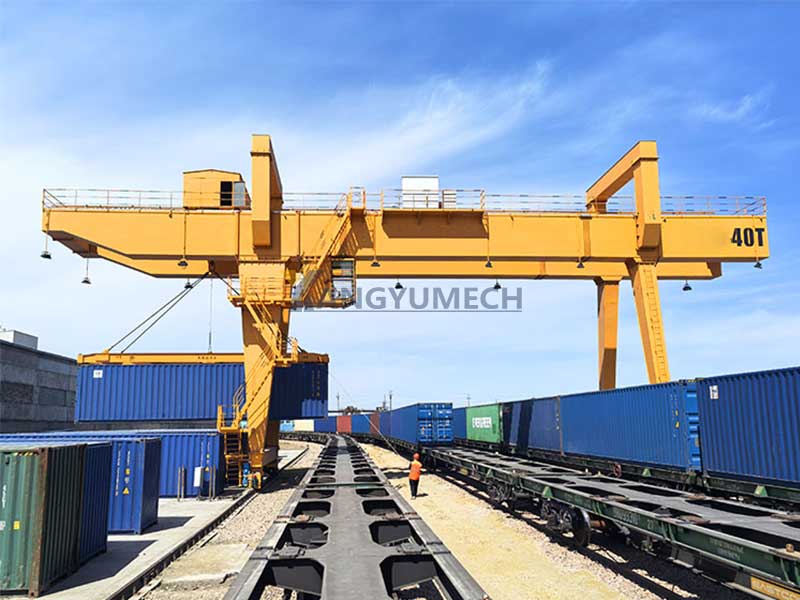
A single girder gantry crane uses one main girder on two legs. It suits loads up to about 20 tons and the gantry crane span under 35 meters — light fabrication yards, maintenance bays, small stockpiles. The hoist runs on the bottom flange, keeping height down but limiting capacity.
A double girder gantry crane carries the hoist on a trolley riding on top of two parallel girders. It handles 20 to 500 tons and taller lift heights — the standard for steel mills, shipbuilding, heavy assembly, and large precast operations.
A semi-gantry crane has one leg on floor rails and the other side on a building runway, saving floor space where the building can share the load. A mobile gantry crane runs on wheels rather than fixed rails, offering yard layout flexibility but trading off capacity and stability.
These outdoor gantry crane types cover most outdoor gantry crane applications, and the rail-mounted double girder configuration is the most common specification for heavy outdoor duty.
The outdoor gantry crane span is the distance between the centrelines of the two rails. It is not the same as girder length, which extends slightly beyond the rails. A span too narrow limits the working area; a span too wide increases girder weight, wheel loads, and cost disproportionately.
Most outdoor gantry crane specifications for industrial yards use spans between 18 and 35 meters. Shipbuilding or container terminals can reach 40 meters or more. The principle is to match the span to the actual material flow — measure the widest stockpile or vessel the crane must reach, add clearance for slings and load swing, and resist oversizing. Every extra meter adds structural steel, wheel loading, and power consumption for the life of the crane.
When span exceeds roughly 30 meters, manufacturers introduce a camber — a slight upward curve that flattens under load — to prevent the girder from sagging. For a cantilever gantry crane with extensions for truck loading, cantilever length is usually capped at 8 to 12 meters beyond the rail, with a separate lower load rating.
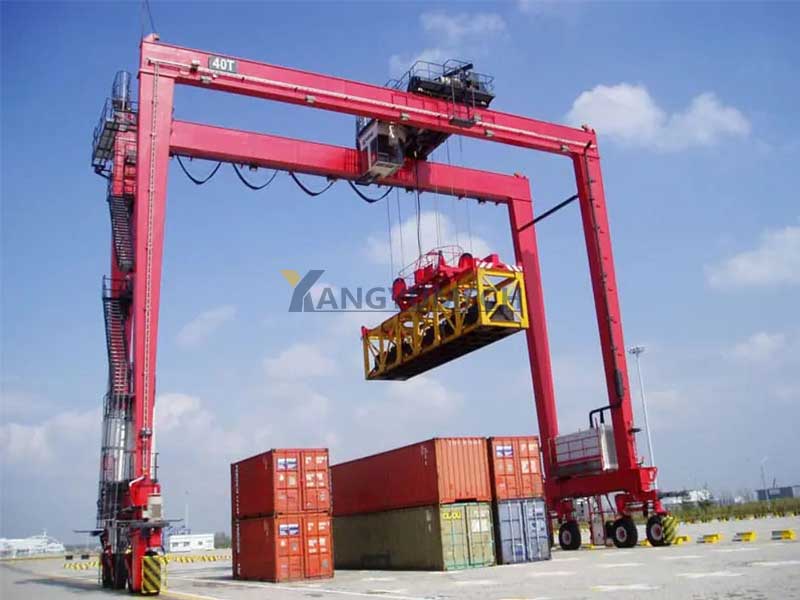
Wind is the single most dangerous factor for any outdoor gantry crane. Unlike indoor cranes, an outdoor gantry crane is fully exposed to wind pressure on its structure plus the load surface area. Understanding wind load crane design is essential before purchasing.
At wind speeds above 20 m/s, most manufacturers specify that lifting must stop. But the crane must also survive storm conditions when parked. This is where storm brakes, rail clamps, and tie-down anchors come in. A rail clamp grips the rail head to prevent the crane from being pushed along its travel path. Storm pins secure the crane at designated parking positions.
The outdoor gantry crane wind load calculation considers three surfaces: the crane structure (girder, legs, end carriages), the lifted load, and any attachments. Open lattice girders reduce wind area but add fabrication cost. Box girders are more common because they simplify maintenance and corrosion protection, though they present a larger solid surface to wind.
In cyclone or typhoon regions, the design wind speed for the parked condition should be at least 70 m/s. Heavier cranes with lower centres of gravity generally perform better in extreme wind. If the yard is in an exposed coastal location, a wind speed monitor with automatic storm braking is a procurement requirement, not an option.
The outdoor RTG gantry crane rail layout determines how the crane moves and how the yard operates. Poor rail installation causes wheel flange wear, rail gnawing, and in severe cases derailment.
Rails are typically embedded in an outdoor crane foundation of concrete or mounted on steel sleepers on ballast, depending on soil conditions. The gantry crane rail gauge — the distance between the inner faces of the two rails — must match the crane wheelbase exactly. Tolerances are tight: gauge deviation should not exceed 3 mm per 10 meters of rail length. Rail joints should be staggered, and welded or glued joints are preferred over bolted fishplates to reduce impact loading.
Drainage matters as much as alignment. Outdoor rails sit in troughs that collect rainwater, and standing water accelerates rail corrosion and undermines the foundation. A cross-fall of 1 to 2 percent on the rail trough and drainage outlets at regular intervals keep the rail base dry.
End stops at both ends of the travel path are mandatory. Buffer pads absorb collision energy, and travel limit switches cut power to the motors before the crane reaches the end stops under normal operation.
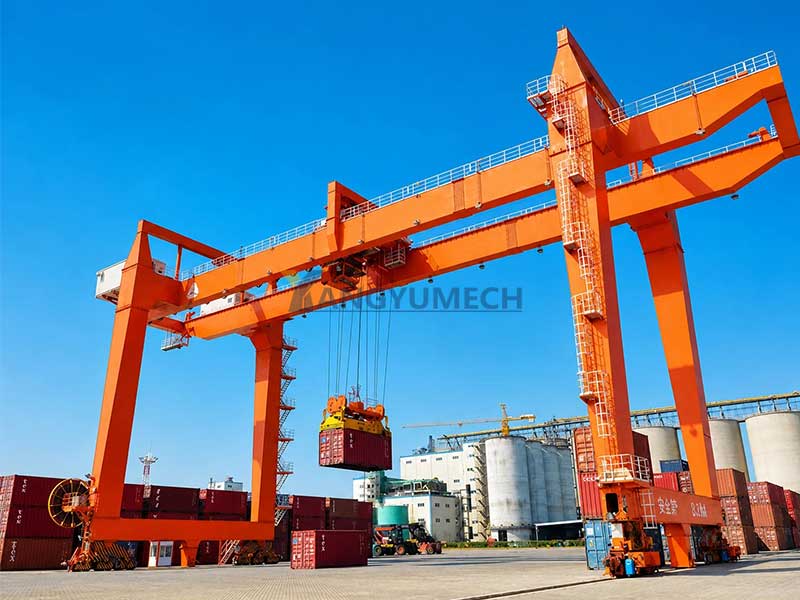
Yangyumech is a gantry crane manufacturer building outdoor gantry cranes from 5 to 500 tons, with single and double girder configurations, cantilever extensions, and full storm protection including rail clamps and wind speed monitors. Every Yangyumech crane is designed to FEM standards, factory load-tested, and shipped with complete documentation — inspection certificates, as-built drawings, and operation manuals.
The Yangyumech engineering team works with buyers to configure span, lift height, duty class, wind load rating, and rail layout for specific yard conditions. Yangyumech handles export logistics, customs documentation, and commissioning support in-house.

