
Against the backdrop of continuous global trade growth, the operational efficiency of container yards directly impacts the speed of the entire logistics chain. As the core equipment of a yard, the selection of gantry cranes often presents operators with a difficult choice: should they opt for a rail-mounted (RMG) or a rubber-tired (RTG) system? Each of these two technical approaches has its own distinct characteristics, requiring a comprehensive evaluation that takes into account site conditions, operational models, and long-term planning.
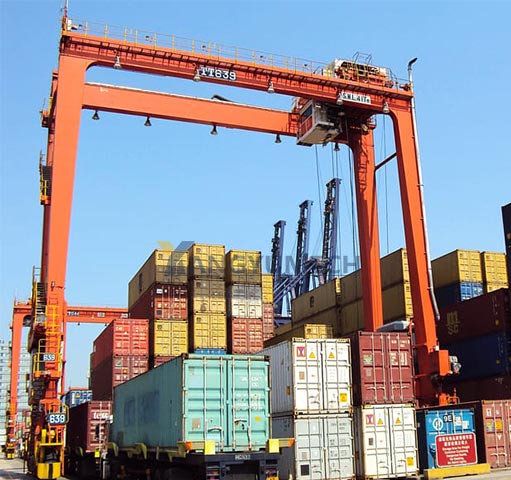
Rail-mounted gantry cranes (RMG) operate using steel wheels on fixed rails, a design that provides unmatched stability. Their steel structure transfers the load directly to the foundation via the rails, enabling a lifting capacity of over 50 tons, making them particularly suitable for handling double- or even triple-stacked containers. Data from an international port shows that after adopting the RMG system, the operational efficiency of a single unit increased to 35–40 containers per hour, representing an improvement of approximately 25% over traditional equipment.
Rubber-Tired Gantry Cranes (RTGs), on the other hand, are game-changers thanks to their mobility. Equipped with 8–16 high-load-bearing rubber tires, they can move freely within the yard without requiring complex infrastructure. This characteristic makes them an ideal choice for multi-block, decentralized yards and temporary terminal expansion projects. Modern RTGs feature steering systems capable of 90° turns, with a minimum turning radius of 15 meters, significantly enhancing yard utilization.
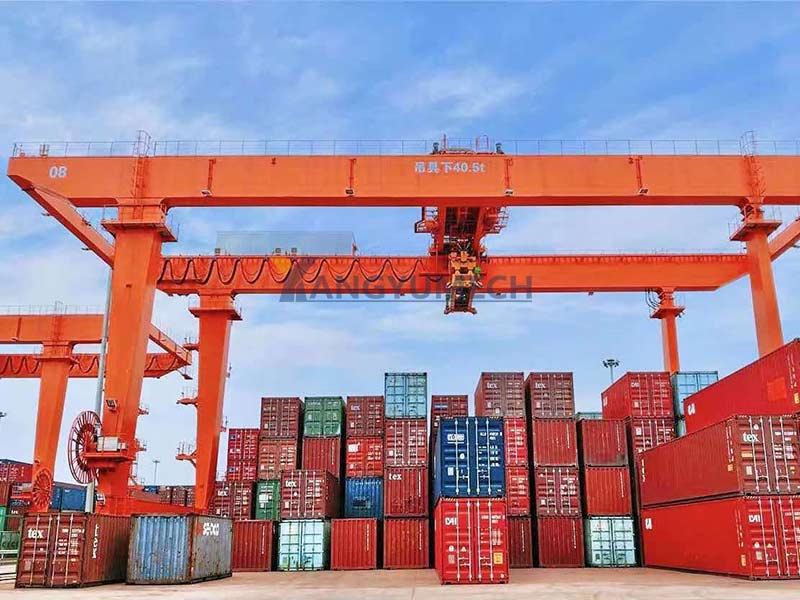
Energy consumption is the key differentiator in operating costs. RMGs typically use catenary power supply, with an electrical energy utilization rate exceeding 95%. Actual data from a major Asian hub port shows that their energy consumption per container is 40% lower than that of RTGs. Conventional RTGs, on the other hand, rely on diesel generator sets. Although the latest generation of hybrid models has reduced fuel consumption by 30%, their environmental performance still falls short of that of fully electric RMGs.
In terms of maintenance costs, the annual maintenance expenses for an RMG’s steel-wheel-on-rail system amount to approximately 1.2% of the equipment’s value, primarily consisting of track alignment and drive motor maintenance. RTGs, on the other hand, face additional expenses such as tire replacement (every 18–24 months) and engine overhauls, with average annual maintenance costs reaching 2.5–3%. However, the modular design of RTGs ensures that a failure in a single unit does not affect the overall system operation; this fault isolation is particularly valuable in certain critical operational scenarios.
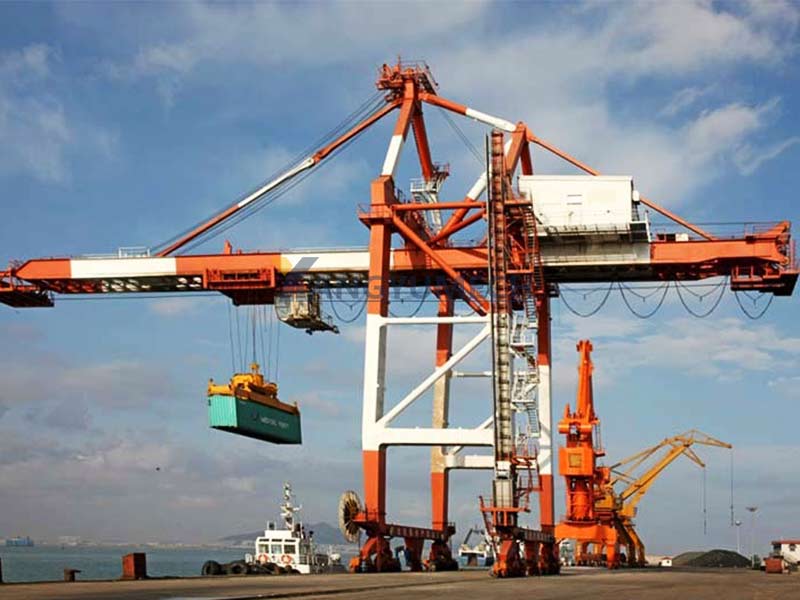
For new large-scale specialized terminals, RMGs demonstrate significant advantages:
– Configurable cantilever spans of up to 15 meters, with a single unit covering 6 rows of container aisles
– Precise positioning within ±5 mm via automated control systems
– Seamless integration with automated yard management systems to enable unmanned operations
Meanwhile, RTGs are more competitive in the following scenarios:
– Retrofitting existing traditional yards for automation
– Facilities requiring frequent layout adjustments, such as intermodal terminals
– Areas with complex geological conditions (e.g., soft soil foundations)
As a professional manufacturer with 20 years of experience in the port equipment sector, Yangyumech deeply understands the technical nuances of both systems. We provide not only standardized equipment but also full-lifecycle solutions:
1. Precise Model Selection Consulting
Through 3D logistics simulation modeling, we analyze key parameters such as your peak container throughput and storage cycles to recommend the optimal combination of models. We previously designed a hybrid RMG+RTG system for a client in the Middle East, increasing site turnover by 18%.
2. Specialized Model Development
– Typhoon-resistant RMG (capable of withstanding Category 12 winds)
– Low-clearance RTG (suitable for height-restricted areas near airports)
– Custom dual-container spreaders (simultaneous handling of 40-foot and 20-foot containers)
3. Intelligent Upgrades
Integrated optical positioning systems (replacing traditional encoders), remote fault diagnosis modules, and AI-based load sway control algorithms elevate operational efficiency to new heights.
Our recent flagship projects include:
– A cluster of 8 automated RMGs at a transshipment hub in Southeast Asia
– A fleet of 20 hybrid RTGs at a port in Africa
– Cold-resistant (-45°C) gantry cranes for use within the Arctic Circle
Whether you prioritize the system efficiency of RMGs or prefer the layout flexibility of RTGs, Yangyumech can provide technically feasible and cost-effective customized solutions.

