
Heavy lifting in modern industry demands precision, reliability, and structural efficiency. Among the most effective solutions engineered for moving large loads across workspaces is the gantry crane. These machines dominate environments ranging from compact workshops to massive container terminals, providing unmatched flexibility for lifting and transporting heavy materials.
A gantry crane is a type of overhead lifting system built upon a freestanding support structure known as a gantry frame. The defining characteristic is its ability to straddle a workspace, allowing the crane to lift and move loads while traveling along rails or wheels mounted on the ground.
Unlike traditional overhead bridge cranes that require building support structures, gantry cranes are self-supporting. This allows installation in both indoor and outdoor environments without relying on existing building frameworks.
The essential function of a gantry crane is straightforward:
– Lift heavy materials
– Transport loads horizontally
– Position equipment with precision
These cranes are capable of handling loads ranging from hundreds of pounds to several hundred tons, depending on their design.
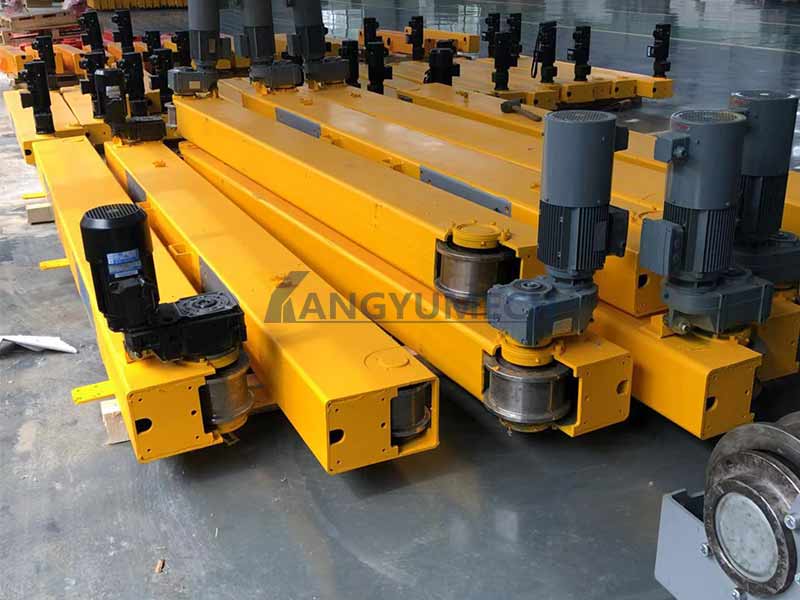
A gantry crane consists of several integrated structural and mechanical components that work together to perform lifting operations efficiently.
The legs support the entire crane structure and transfer loads to the ground. Most gantry cranes feature two A-frame or inverted V-shaped legs positioned on either side of the working area.
These legs typically travel along:
– Ground-mounted rails
– Rubber wheels
– Steel wheels
Their mobility enables the crane to move across the entire working span.
The bridge girder is the horizontal beam connecting the gantry legs. It forms the main load-bearing structure of the crane.
The girder supports:
– Trolley mechanisms
– Hoists
– Electrical systems
Depending on the lifting capacity, the crane may use either single or double girders.
The trolley travels along the bridge beam and carries the hoisting mechanism. Its purpose is to move the load laterally across the crane span.
Key trolley functions include:
– Horizontal load movement
– Positioning materials with accuracy
– Supporting hoist components
The hoist is the lifting unit responsible for raising and lowering loads. It typically uses wire rope or chain systems powered by electric motors.
The hoist controls:
– Vertical load movement
– Speed of lifting operations
– Load stability during transport
The travel mechanism moves the crane along its working area. This may include:
– Rail-mounted wheels
– Motorized rubber tires
– Manual push systems (for smaller cranes)
This mobility is what allows gantry cranes to cover large operational zones efficiently.
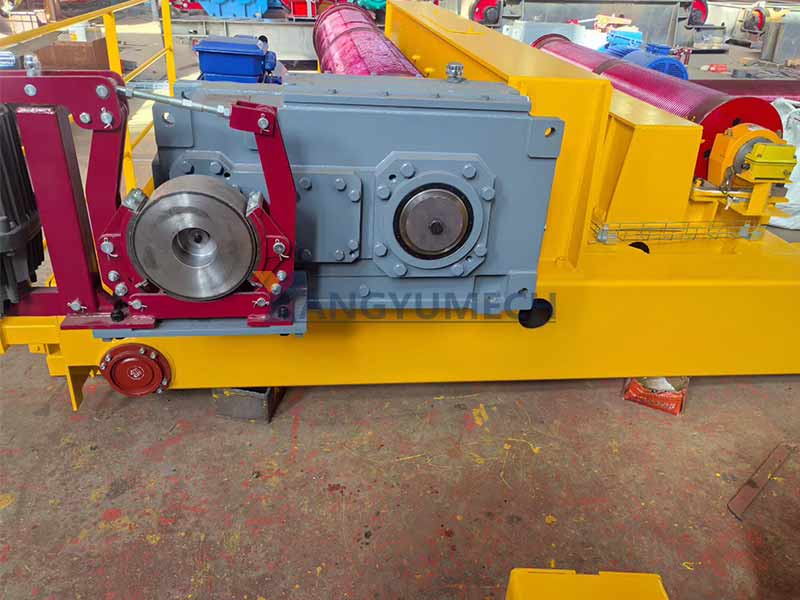
The operation of a gantry crane involves three coordinated movements:
1. Vertical lifting via the hoist
2. Horizontal trolley travel across the bridge beam
3. Longitudinal crane movement along ground rails or wheels
Together, these motions allow operators to position loads precisely anywhere within the crane’s operating area.
Gantry cranes are engineered in multiple configurations to suit specific operational requirements. Each design balances lifting capacity, structural footprint, and mobility.
The full gantry crane is the most common configuration.
Key Characteristics
– Two independent legs supporting the bridge
– Ground-mounted rail system
– Entire crane moves across a fixed track
This design allows vehicles, trucks, and equipment to pass beneath the crane, maximizing workspace efficiency.
Typical Applications
– Container yards
– steel fabrication plants
– shipyards
– rail terminals
A semi-gantry crane combines features of overhead cranes and gantry cranes.
Structural Configuration
– One leg runs on a floor rail
– The opposite side is mounted to a building runway beam
This design is ideal when floor space is limited or building structures can provide partial support.
Common Uses
– manufacturing facilities
– machining plants
– fabrication shops
Portable gantry cranes are lightweight and highly flexible systems designed for temporary lifting tasks.
Features
– Easy assembly and dismantling
– Casters or wheels for mobility
– Compact structural design
Advantages
– Ideal for small workshops
– No permanent installation required
– Cost-effective lifting solution
These cranes are widely used in:
– equipment maintenance
– small manufacturing operations
– automotive repair facilities
Adjustable gantry cranes are designed for variable working environments where lifting height requirements change frequently.
Adjustable Elements
– Leg height
– Span width
– Beam length
Operators can modify the crane configuration to accommodate different workspaces or lifting tasks.
This adaptability makes them valuable in construction sites and fabrication workshops.
Single girder gantry cranes utilize a single bridge beam supporting the hoist trolley.
Performance Characteristics
– Lower lifting capacity
– Reduced structural weight
– Lower installation cost
They are commonly used for light to medium-duty lifting operations.
– Ideal Environments
– warehouses
– maintenance workshops
– assembly lines
Their design also allows for under-slung hoist systems, making them suitable where headroom is limited.
Double girder gantry cranes are built for heavy-duty industrial lifting.
Structural Advantages
– Two parallel bridge beams
– Top-running trolley system
– Increased load stability
Performance Capabilities
– Higher lifting capacities
– Larger span distances
– Improved operational precision
Industries requiring heavy lifting frequently rely on double girder cranes.
Typical Applications
– shipbuilding
– steel mills
– large manufacturing plants
– heavy machinery assembly
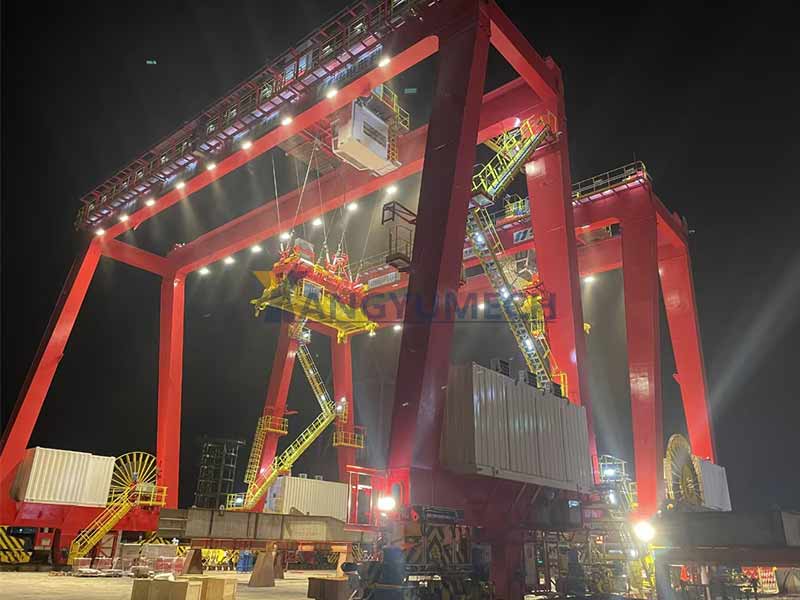
Gantry cranes serve an enormous range of industries where heavy materials must be transported efficiently.
Warehouse and Storage Facilities
Warehouses use gantry cranes for handling oversized inventory and bulk materials.
Advantages include:
– flexible mobility
– precise load positioning
– efficient use of floor space
Small mobile gantry cranes with rubber tires allow movement without permanent rail systems.
Manufacturing Plants
Manufacturing facilities depend heavily on gantry cranes for handling large components.
– Common industries include:
– automotive manufacturing
– steel fabrication
– aerospace production
These cranes assist in moving:
– engine assemblies
– steel structures
– heavy machine parts
Rail transportation facilities rely on gantry cranes to transfer cargo between trains, trucks, and storage areas.
Their large span capabilities make them ideal for covering multiple rail lines simultaneously.
In maritime logistics, gantry cranes are essential for loading and unloading cargo ships.
These large-scale cranes handle:
– shipping containers
– bulk cargo
– industrial equipment
Their mobility allows materials to be moved efficiently across massive dockside operations.
Air cargo terminals use gantry cranes to manage heavy freight and aircraft components.
Due to the weight and size of aircraft cargo, double girder gantry cranes are commonly deployed in these environments.
Gantry cranes offer several performance advantages that make them indispensable in modern industry.
Operational Flexibility
They function indoors and outdoors, making them suitable for a wide range of facilities.
Cost Efficiency
Because gantry cranes are self-supporting, they eliminate the need for expensive building reinforcement structures.
High Load Capacity
Heavy-duty models can lift extremely large industrial loads safely and efficiently.
Ease of Installation
Many systems require minimal site preparation, especially portable or wheel-mounted gantry cranes.
Improved Workplace Productivity
By mechanizing heavy lifting, gantry cranes reduce manual labor while increasing operational speed.
Choosing the correct gantry crane depends on several operational factors:
Required lifting capacity
– Span width
– lifting height
– operating environment
– mobility requirements
Small workshops often benefit from portable or single girder cranes, while large industrial facilities require double girder heavy-duty gantry systems capable of handling massive loads.
A properly selected crane significantly improves efficiency, safety, and material handling performance.
Gantry cranes represent one of the most versatile and powerful lifting systems available today. Their freestanding structure, adaptable configurations, and ability to operate across vast workspaces make them indispensable across industries ranging from manufacturing and logistics to shipbuilding and aviation.
From compact portable cranes in workshops to massive container-handling systems in global ports, gantry cranes continue to drive industrial productivity by delivering reliable heavy lifting solutions wherever they are needed.

