
Walk through any modern manufacturing facility today, and the transformation is unmistakable. The era of purely manual overhead crane operations is giving way to intelligent, data-connected lifting systems that promise better safety records, fewer unplanned stoppages, and measurable improvements in throughput. That shift is at the center of what is reshaping the global overhead crane market—and the figures behind it deserve a closer look.
The global overhead crane market size was valued at roughly USD 8.2 billion in 2024, with projections pointing to a compound annual growth rate of 6.3% through 2030. What distinguishes this growth cycle from previous ones is not simply higher lifting capacity demand. It is the integration of industrial automation, real-time load monitoring, and digital connectivity that is redefining what an overhead bridge crane can do inside a plant. Industry 4.0 has become the primary demand driver accelerating smart overhead crane adoption rates, with leading industrial markets now reporting integration levels approaching 38% of newly installed units.
Traditional overhead crane systems operated in near isolation from plant management platforms. Operators depended on experience and direct sightlines, maintenance crews responded to breakdowns rather than preventing them, and production supervisors had limited insight into how lifting cycles affected overall output. Industry 4.0 rewrites that equation.
Smart overhead crane configurations now routinely include sensors for load monitoring, hook travel tracking, and motor health diagnostics. These feed into centralized platforms where plant engineers can optimize lifting sequences, schedule preventive maintenance before a failure occurs, and generate documentation that demonstrates safety compliance. For operations managers working under demanding production targets, the prospect of cutting unplanned downtime by 20–30% through predictive maintenance capabilities is a compelling proposition.
The financial case is equally solid. While an intelligent heavy duty overhead crane carries a higher upfront investment than a conventional model, total cost of ownership across a ten-year horizon typically favors the smarter choice. Reduced insurance premiums, lower incident rates, and tighter production scheduling all feed into the return calculation. This value proposition is helping industrial overhead crane adoption with automation features gain traction even in price-sensitive markets across Southeast Asia and India.
The overhead crane market is anything but one-size-fits-all. Different industrial settings call for different crane configurations, and these variations explain why the sector continues attracting investment through broader economic turbulence.
The top-running double girder overhead crane remains the most widely specified configuration for heavy industrial applications. These units, capable of lifting from 5 tons up to and beyond 500 tons, are the standard choice in steel plants, shipbuilding yards, and large fabrication shops where structural rigidity and maximum hook height are non-negotiable. Single girder overhead cranes occupy the opposite end of the spectrum: the preferred pick for lighter-duty applications in workshops, assembly lines, and smaller production facilities. Their simpler structure translates to a lower purchase price and faster installation, making them the natural entry point for businesses transitioning away from manual or semi-mechanized lifting.
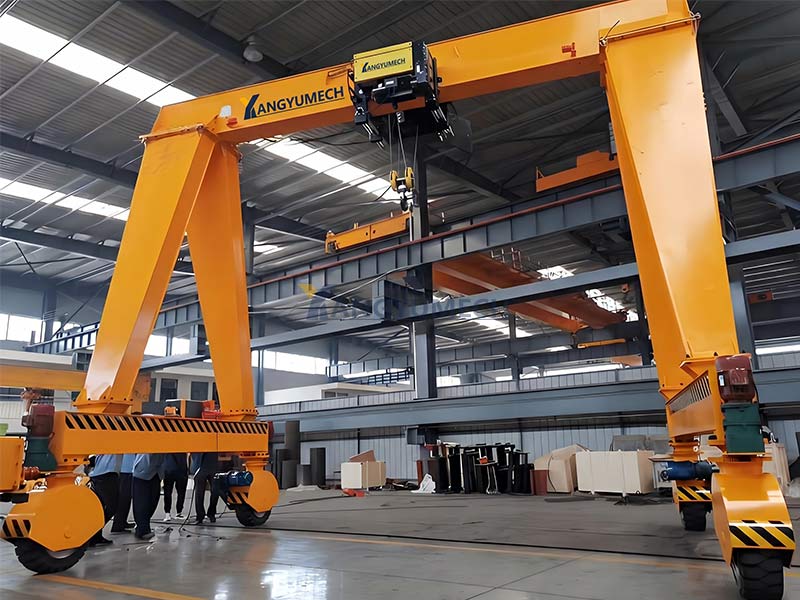
For plants with constrained ceiling space or unusual runway layouts, underslung overhead cranes present a practical workaround. These models travel along the bottom flange of existing runway beams, preserving headroom and fitting into buildings that were never designed for heavy overhead lifting infrastructure. Semi-gantry overhead cranes, with one end supported by an overhead runway and the other running on a ground-level rail, serve facilities that need to cover both indoor and outdoor zones without the full investment of a conventional gantry crane.
Steel and metal production continues as the single largest end-use segment for overhead crane systems worldwide. Continuous casting lines, hot rolling mills, and plate processing yards depend on heavy duty overhead cranes operating around the clock. Automotive manufacturing follows closely, where increasingly automated production flows require overhead crane systems that integrate with robotic welding cells, body assembly stations, and parts logistics.
The renewable energy sector has emerged as a high-growth application area. Wind turbine component manufacturing—particularly nacelle assembly and tower section handling—demands overhead lifting systems with precise load control and repeatable cycle accuracy. Aerospace applications, with strict tolerance requirements and documentation standards, have become early adopters of overhead crane systems equipped with real-time data logging and traceability features.
Warehouse and logistics operations represent another expanding segment. Overhead bridge cranes fitted with specialized lifting attachments are increasingly common in cold storage facilities, building materials distribution centers, and machinery staging yards, replacing forklift-based handling and delivering measurable gains in cycle time and labor efficiency.
For buyers evaluating overhead crane purchases in 2026 and beyond, the strategic question is not whether to invest in automated lifting technology—it is how to sequence that investment in a way that fits existing infrastructure, operator readiness, and capital budgets.
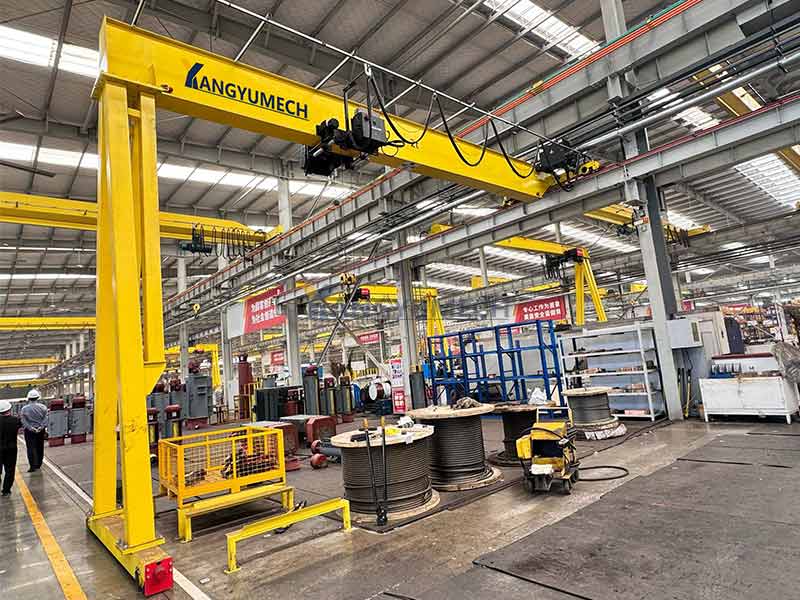
One approach gaining traction among industrial consultants involves retrofitting existing EOT crane installations with smart monitoring packages rather than replacing entire systems. Sensor kits, wireless communication modules, and cloud-based fleet management platforms can be added to legacy double girder and single girder overhead crane models at a fraction of the cost of new equipment. This hybrid path lets facilities begin collecting operational data and building predictive maintenance workflows before committing to a complete overhaul.
At Yangyumech, we specialize in designing, manufacturing, and supplying overhead bridge cranes across the full capacity range. Whether you need a single girder overhead crane for a light assembly workshop, a heavy duty overhead crane for a steel production facility, or a fully customized crane system for a specialized industrial application, our engineering team has the experience and manufacturing depth to deliver a solution tailored to your operational needs.
As an experienced crane manufacturer China-based operation, we work directly with overhead crane suppliers, industrial distributors, and end-use customers worldwide, providing competitive pricing backed by rigorous quality control standards. Our product line covers capacities from 1 ton to 500 tons, with options for standard configurations as well as custom builds designed around your specific facility layout and workflow requirements.
If you are exploring overhead crane options for a new project, a capacity expansion, or a modernization initiative, we welcome the chance to discuss your needs. Our team can provide detailed technical specifications, project proposals, and delivery timelines customized to your procurement schedule.

