
In the past three years, the logistics and warehousing industry has transformed faster than most expected. Automated storage systems, multi-level mezzanine layouts, and high-density racking are now standard in modern distribution centers. At the heart of much of this vertical movement capability is a piece of equipment finding new relevance: the electric chain hoist.
Warehouse automation depends on moving goods up and down reliably and repeatedly without human intervention or manual effort. Electric chain hoists — compact, durable, and relatively simple to integrate into automated systems — have emerged as a preferred lifting equipment warehouse solution and the go-to electric chain hoist for warehouse facilities looking to upgrade their material handling capabilities. The global electric chain hoist market is projected to grow at a compound annual rate of roughly 6 to 8 percent through 2030, driven primarily by warehouse automation investments in North America, Europe, and Southeast Asia. This surge in warehouse automation hoist adoption has made the electric hoist for warehouse automation one of the fastest-growing segments in the lifting equipment market overall.
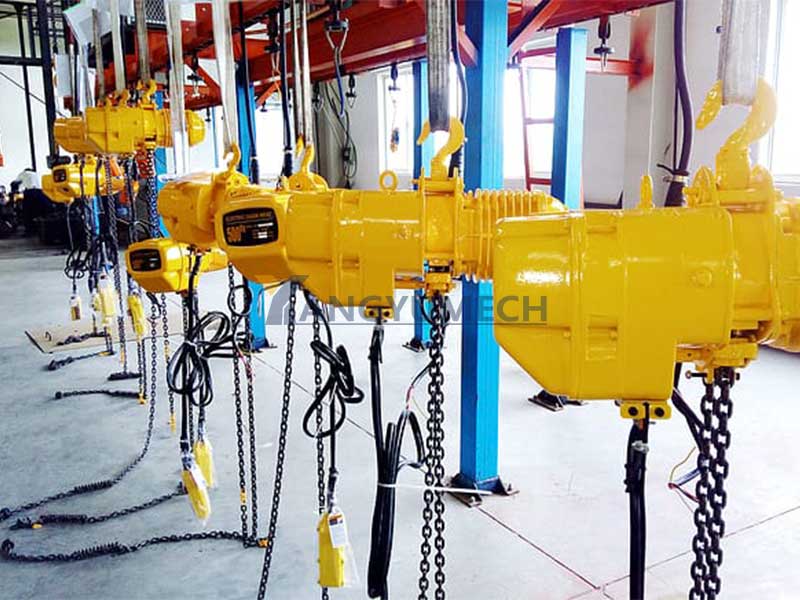
Several structural trends are pushing warehouse operators toward electric chain hoists as a standard lifting tool.
The first is the shift from single-level warehousing to multi-level storage. For warehouse operators evaluating a hoist for warehouse automation, the multi-level layout creates the most immediate need for vertical lifting equipment. As land costs rise and available industrial real estate shrinks in major logistics hubs, warehouses are building up instead of out. Electric chain hoists are used on mezzanine levels to lift goods to upper storage tiers, replacing manual lifting or slower hydraulic systems.
The second trend is the expansion of e-commerce fulfillment. These warehouses handle far more small to medium-sized picks than bulk storage facilities. Electric chain hoists with variable speed control are increasingly used at packing stations, returns processing lines, and sorting areas to lift totes, bins, and small pallets.
The third factor is labor availability. In many regions, finding reliable warehouse labor for repetitive lifting tasks has become difficult. Electric chain hoists allow a single operator to manage lifting tasks that would otherwise require two or three workers — a significant driver of the ROI calculations behind warehouse automation. When evaluating warehouse chain hoist options, operators consistently rank reliability and chain hoist cost as their top decision factors.
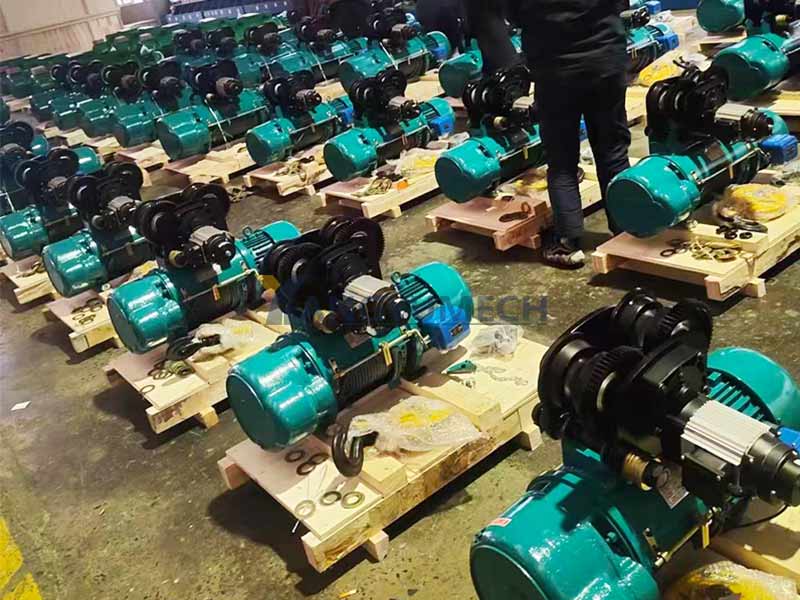
Electric chain hoists are not a one-size-fits-all product category. Understanding the different chain hoist types and knowing which hoist warehouse application each one serves is essential. Chain hoist applications span everything from light-duty picking to heavy industrial lifting.
Standard single-speed electric chain hoists are the workhorses of general warehousing. For most standard chain hoist capacity requirements — typically 0.5 to 2 tons — these units offer the most cost-effective entry point. They operate at a single lifting speed and are best suited for applications where precise load positioning is not critical. Common uses include lifting goods onto pallet racks, feeding production lines from storage, and loading and unloading trucks at dock areas. For standard warehouse operations handling loads under 2 tons, a single-speed electric chain hoist offers the best balance of capability and affordability.
Variable-speed electric chain hoists have become increasingly popular in automated warehouses where load positioning accuracy matters. These units allow the operator to select from multiple lifting speeds, with creep speeds as low as 0.8 meters per minute for precise placement. Variable-speed hoists are preferred for packaging stations, AGV integration points, and applications requiring placement onto conveyor intakes or rack shelves with tight clearances.
Explosion-proof electric chain hoists are required in warehouses handling flammable materials, chemical storage, or battery processing facilities. These units use spark-proof components and sealed enclosures to meet ATEX or NEC standards and typically cost 40 to 60 percent more than standard units.
Low-headroom electric chain hoists are designed for facilities with limited vertical space. These units maximize usable lift height by minimizing the distance between the hook and the mounting beam, and are widely used in older warehouse conversions and cold storage facilities.
The cost of an electric chain hoist depends on capacity, lift height, speed configuration, and environmental certification. The cost of an electric hoist varies considerably across the product range. For a standard 1-ton capacity electric chain hoist with a 6-meter lift height and single-speed control, the chain hoist price typically ranges from approximately USD 800 to 1,800 depending on the manufacturer and included features. Upgrading to a 2-ton capacity — effectively a heavy duty chain hoist configuration — adds roughly 30 to 50 percent to the base price. Variable-speed control typically adds a premium of 15 to 25 percent over single-speed equivalents.
Beyond the initial purchase price, warehouse operators should factor in installation costs, chain wear inspection frequency, and the availability of spare parts. Electric chain hoists from established manufacturers tend to have lower total cost of ownership over five years because replacement parts are more available and service documentation is more thorough. Chain hoist maintenance costs should also be factored into the lifecycle budget — regular chain wear inspection, brake pad replacement, and limit switch testing are standard requirements for any industrial chain hoist installation.
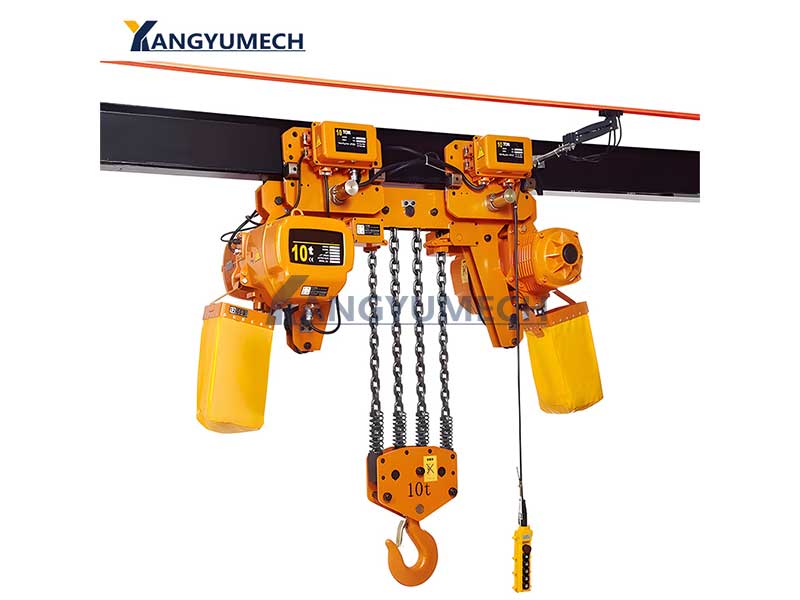
As a trusted chain hoist manufacturer and chain hoist supplier, Yangyumech manufactures a full range of electric chain hoists designed for warehouse automation applications. The Yangyumech chain hoist range covers capacities from 0.5 tons to 5 tons with lift heights up to 30 meters. Every hoist is built with a high-duty motor rated for continuous operation in warehouse environments, a corrosion-resistant chain guide, and an electromagnetic disc brake system that meets international safety standards. Yangyumech electric chain hoists are competitively priced while maintaining documented quality control processes — each unit undergoes load testing and functional verification before dispatch.
If you are evaluating electric chain hoists for a warehouse automation project or simply looking to upgrade your existing lifting equipment, the Yangyumech team welcomes your inquiry. We provide detailed cost estimates based on your specific lifting requirements and support our products with responsive after-sales service.

