
Building a vessel at scale demands more than skilled labour and steel. Every modern shipyard relies on heavy lifting equipment capable of moving structures that can weigh over a thousand tons — with millimeter-level precision. A shipbuilding gantry crane is the backbone of these operations, supporting everything from initial hull erection to final outfitting and launch. For shipyard operators and procurement engineers, understanding shipbuilding crane applications and selecting the right large gantry crane shipbuilding solutions are among the most consequential decisions in any new-build programme.
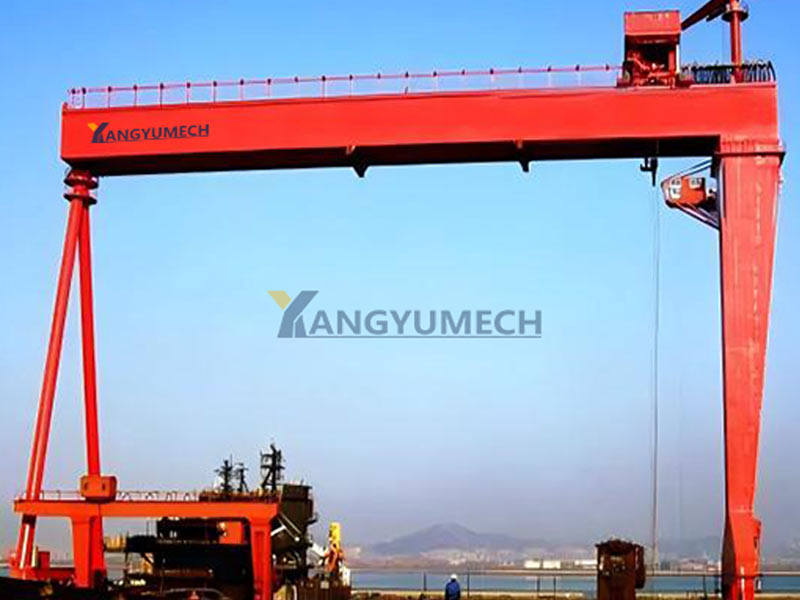
A shipbuilding gantry crane is a large-format crane built on-site rails or rubber tires, designed to lift, position, and transport massive shipbuilding components across the yard. Unlike conventional overhead bridge cranes found in factory buildings, a shipyard gantry crane operates in open-air or semi-open environments and must handle the dynamic loads, corrosive conditions, and tight tolerances that define modern ship construction. Its defining feature is the gantry structure — twin legs on rails that allow the crane to traverse the full width of a building berth or fabrication bay.
Full-lattice gantry cranes are the dominant heavy-lift machines in major shipyards worldwide. With lifting capacities from 100 tons up to 2,000 tons or more, they handle the largest loads in any shipbuilding operation: fully assembled hull blocks, main engine housings, and entire superstructure sections. Their lattice boom design provides exceptional strength-to-weight performance, making them well suited to the dynamic loading that occurs during rapid lifts and long-reach positioning.
Semi-gantry crane feature one leg on a runway rail and one on the ground. This design is particularly useful in shipyards where building berths run alongside existing infrastructure on one side. Semi-gantry cranes deliver a practical balance between the high-capacity performance of a full gantry system and the floor-space constraints that often define busy shipyard environments.
Rubber-tired gantry (RTG) cranes are widely used for horizontal transport of large blocks and sub-assemblies. RTG cranes can move loads between fabrication areas and the building berth, streamlining the logistics flow. Their mobility makes them especially valuable in yards with changing layouts.
Marine gantry cranes are purpose-built for waterfront operations and dry-dock repair work. These units are engineered to withstand corrosive salt air and salt spray. Marine gantry cranes typically come with enhanced coating systems, IP55 or higher motor protection, and structural designs rated for sustained outdoor industrial use.
Straddle carriers lift and carry pre-assembled block sections without a fixed runway. For high-volume shipyards, straddle carriers reduce material-handling cycle times significantly.
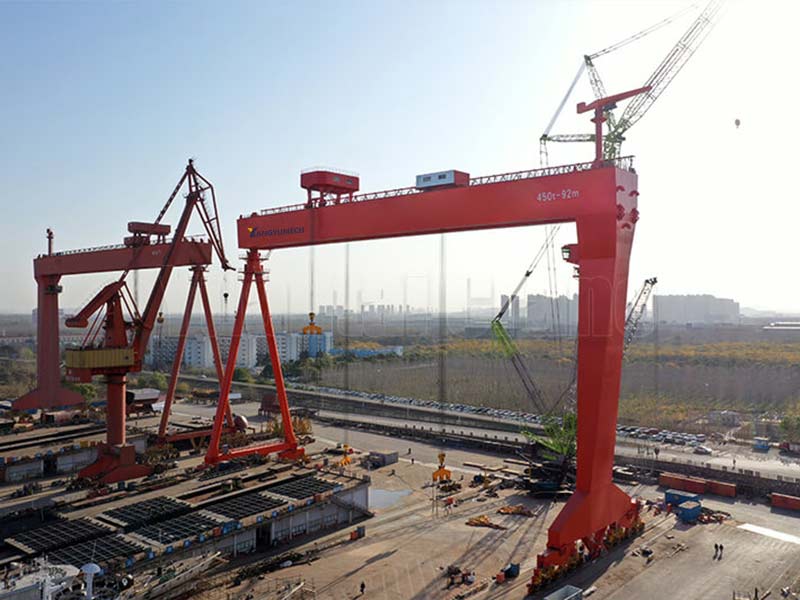
The role of a shipbuilding gantry crane shifts substantially across the different stages of vessel construction.
During hull erection, a heavy lift shipyard crane lifts individual steel blocks — some weighing 500 tons or more — and lowers them into precise alignment for welding. In this phase, positional accuracy matters as much as lifting capacity. Small misalignments generate costly rework. Modern shipyards pair heavy-lift shipyard gantry cranes with positioning systems to achieve required tolerances.
In the outfitting phase, the focus shifts from raw lifting power to controlled, smooth motion. The crane lowers machinery, pipe modules, and electrical housings into the vessel’s interior in confined spaces with pre-installed systems nearby. Fine-speed control and anti-sway features matter more than peak lifting height.
Material handling — moving steel plates, structural profiles, and prefabricated modules across the yard — is typically handled by RTG cranes or straddle carriers. In large facilities with multiple parallel building berths, this material-flow capability directly affects overall production throughput.
Shipyard crane capacity and span are the primary selection criteria. Shipyard crane capacity must match the heaviest lifts planned across the yard’s shipbuilding programme — for container vessels and bulk carriers, this frequently reaches into the 500–1,500 ton range. Shipyard crane span must accommodate the full width of the building berth. Shipyard crane applications determine the type of hoist, control system, and protection rating required.
Environmental rating is non-negotiable in a shipyard. The combination of salt air, moisture, and industrial contaminants demands IP55 or higher motor protection, specialist coating systems on structural steel, and sealed gearboxes. A crane rated for standard factory use will deteriorate rapidly in a waterfront environment.
Hoist type determines the crane’s suitability for different tasks. Wire rope hoists are the standard for heavy-lift applications, offering durability and high load-rated safety margins. Chain hoists serve auxiliary lifting roles effectively, though they are not suitable for primary shipbuilding lifts.
Serviceability and support deserve attention at the procurement stage. A crane that requires two weeks of downtime for a minor repair costs the yard far more than its purchase price implies. Buyers should evaluate the shipbuilding gantry crane supplier’s spare parts availability, local service network, and mean time to repair before signing a contract.
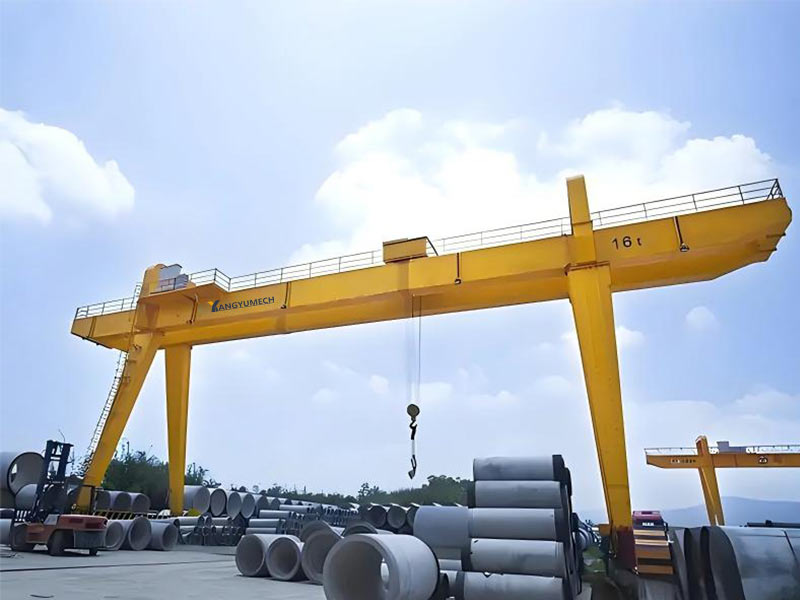
The global shipbuilding market has seen growing demand for heavy-lift equipment as vessel sizes increase and shipyard throughput targets rise. China-based manufacturers now supply a significant share of new shipbuilding gantry crane capacity globally, combining competitive pricing with proven delivery track records.
Yangyumech is a dedicated shipbuilding crane manufacturer and shipbuilding crane supplier China-based, with extensive experience supplying shipbuilding crane equipment to shipyards in Southeast Asia, the Middle East, and beyond. Their product range covers full-lattice gantry cranes, semi-gantry cranes, marine gantry cranes, and RTG systems — with lifting capacities from 50 tons to 2,000 tons and spans meeting the requirements of building berths at every scale. Every Yangyumech gantry crane shipyard unit is individually load-tested before dispatch.
As a direct manufacturer, Yangyumech offers competitive pricing on shipbuilding crane equipment to international buyers. The engineering team works directly with procurement departments to configure equipment to specific shipbuilding project requirements — including applicable certification standards and shipbuilding crane specifications such as FEM, ISO, or CE marking.
For shipyard operators evaluating a shipbuilding gantry crane supplier, Yangyumech is a conversation worth having. As a shipyard crane supplier with a dedicated engineering team, Yangyumech can provide a tailored proposal based on your berth layout, lifting programme, and shipbuilding crane price targets.

