
If you’ve been watching the material handling industry over the past few years, you probably noticed something shifting in how crane manufacturers approach international markets. Chinese crane producers have moved well beyond simply competing on price. They’re investing in certification compliance, expanding their engineering capabilities, and building out service networks that can actually support buyers after the sale. That shift matters more than most buyers realize when they’re evaluating where to source their next overhead crane or gantry crane system.
Five years ago, the typical conversation about buying a crane from China started and ended with cost. Buyers knew Chinese manufacturers could undercut European and North American producers by a significant margin, and many took that deal without asking too many questions about quality control or after-sales support. That approach worked in some cases and backfired in others.
What’s happening now is different. Chinese crane manufacturers have invested heavily in modernizing their production facilities, obtaining international certifications, and developing the technical documentation that procurement teams and engineers actually need. The gap between what you get from a well-established Chinese manufacturer versus a European specialist has narrowed considerably across most standard industrial applications.
For buyers evaluating crane export from China in 2026, the question isn’t whether Chinese manufacturers can produce quality equipment. Many can. The real question is which suppliers have genuinely built the infrastructure to support international customers, and which ones are still learning.
Understanding pricing starts with recognizing that not all cranes are priced the same way. A single-girder overhead crane for light workshop use operates under a completely different cost structure than a heavy-duty double-girder system designed for continuous industrial operation.
For standard single girder bridge cranes in the 1 to 20 ton capacity range, Chinese crane manufacturers typically offer pricing that runs 30 to 50 percent below comparable European models. The gap comes from lower production costs, larger domestic supply chains for standard components, and manufacturing scale that European producers can’t match. At this level, if you’re buying from a Chinese manufacturer with solid quality control, you’re generally getting equipment that meets international standards without the premium price tag.
Double girder overhead cranes move into more complex territory. These systems require more sophisticated engineering, heavier structural steel, and higher-grade hoisting mechanisms. The cost gap between Chinese and European manufacturers here typically sits in the 25 to 40 percent range. For buyers running heavy industrial operations, this difference adds up quickly when you’re outfitting multiple bays or standardizing fleet equipment across facilities.
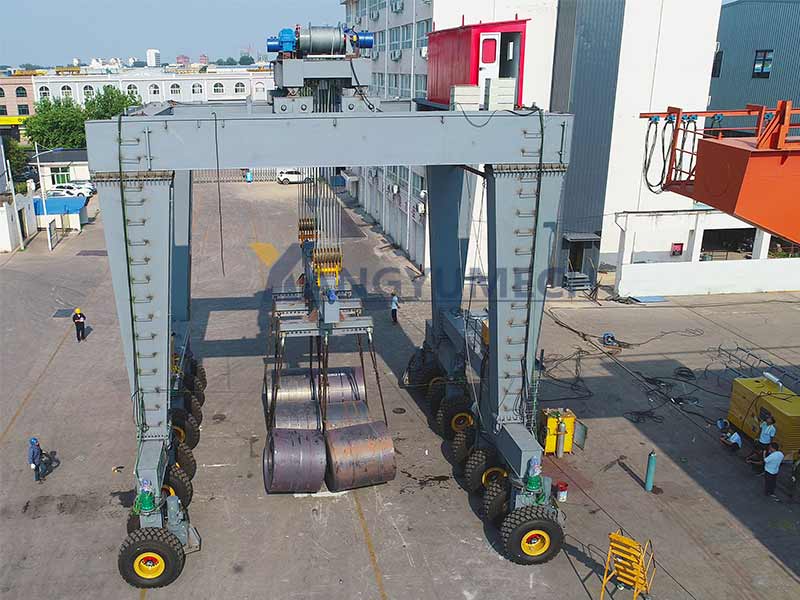
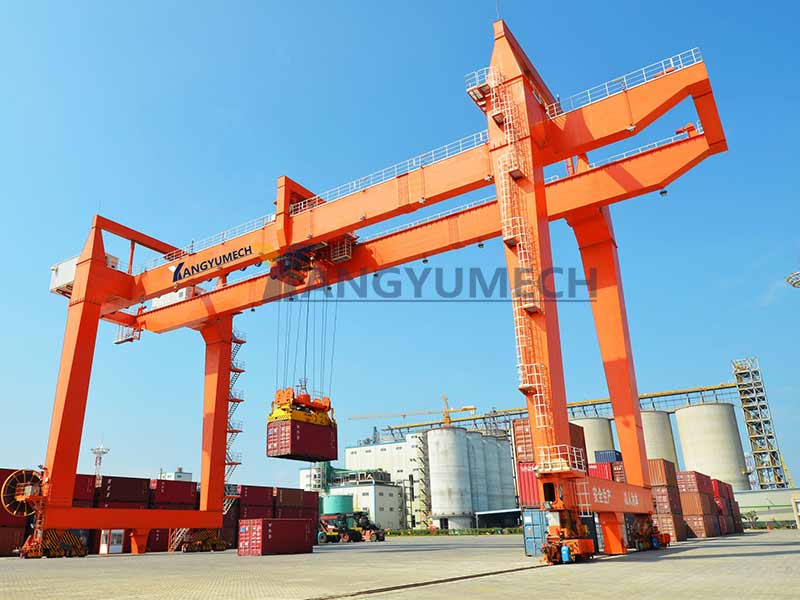
Gantry cranes present another interesting dynamic. Rubber-tired gantry cranes for container handling, for instance, require specialized engineering around mobility, stabilization, and often marine-grade corrosion protection. Chinese manufacturers who have invested in port equipment production have become genuinely competitive in this space, offering configurations that previously required European or Japanese suppliers.
For specialized applications like explosion-proof cranes for chemical facilities or cranes designed for clean room environments, the pricing gap narrows further. These applications demand tighter engineering tolerances, specific material selections, and certifications that require real expertise to obtain. Not every Chinese manufacturer is equipped to compete here, but a growing number have developed the capability.
Before diving into the specifics of sourcing, it helps to think about what quality actually means in the context of crane procurement. Most buyers have encountered horror stories about imported equipment that looked good on paper but created problems in the field. Understanding why those problems occur is more useful than simply assuming Chinese manufacturers are unreliable.
The most common issues we see involve three areas: component quality, documentation standards, and communication during the specification process.
Component quality varies significantly across Chinese manufacturers, and this is where buyer diligence really matters. European crane manufacturers typically specify well-known brand-name components for hoists, motors, brakes, and control systems. Some Chinese manufacturers do the same, while others source from a broader range of suppliers with varying quality levels. Asking for a complete component specification sheet, including manufacturer names and model numbers for major subsystems, tells you a lot about what you’re actually buying.
Documentation standards represent another meaningful difference. Professional Chinese exporters now commonly provide detailed CAD drawings, electrical schematics, testing certificates, and operation manuals in English. Less experienced suppliers may provide incomplete documentation that creates problems during installation, inspection, or certification processes.
The specification process itself deserves attention. When you’re defining requirements for an overhead crane or gantry crane system, clear communication about your actual operating conditions matters enormously. Load spectra, duty cycles, environmental factors, and integration requirements all influence whether a given crane configuration will perform reliably. Manufacturers who ask detailed questions upfront are signaling that they understand these variables.
Finding the right partner takes some upfront effort, but the payoff is worth it. Start by checking whether the manufacturer holds relevant certifications. CE marking for European market access, ISO 9001 for quality management systems, and industry-specific certifications for your application area all indicate a commitment to meeting international standards.
Requesting references from previous international buyers gives you concrete evidence of how a supplier performs in real export projects. Ask specifically about experiences with shipping logistics, installation support, and any issues that arose after delivery. Suppliers who have completed multiple international projects understand the documentation, packaging, and communication requirements that make cross-border procurement smooth.
Visiting the manufacturing facility, either directly or through a third-party inspection service, remains one of the most reliable ways to assess quality. Seeing the production lines, welding procedures, and testing processes firsthand tells you more than any sales presentation.
The lead time question matters too. Chinese gantry crane manufacturers typically offer shorter production timelines than European competitors for standard configurations, often 8 to 16 weeks depending on complexity. However, this advantage disappears quickly if quality issues extend the timeline through rework or redesign. Factor in the total project timeline, not just production lead time, when comparing options.
Something worth noting: many buyers who walked away from Chinese overhead crane suppliers five or ten years ago are coming back. The equipment they initially received may have been inconsistent, but the industry has matured significantly. Buyers who left and then returned to evaluate the current landscape are often surprised by how much has changed.
The combination of competitive pricing, improved quality standards, and faster delivery timelines creates a compelling value proposition for standard industrial crane applications. For specialized applications requiring specific engineering or certifications, the evaluation becomes more nuanced, but even here, well-qualified Chinese manufacturers have become serious contenders.
At Yangyumech, we’ve built our export business around the premise that international buyers deserve more than competitive pricing. Our manufacturing operation produces single-girder and double-girder overhead cranes, gantry crane systems, jib cranes, and electric hoist configurations ranging from compact European-style models to heavy-duty systems rated up to 500 tons lifting capacity.
What distinguishes our approach starts with engineering depth. Every project we take on includes detailed technical consultation to confirm the configuration matches your actual operating requirements. We don’t simply sell from a standard catalog. We discuss your load profiles, duty cycles, environmental conditions, and integration needs before recommending a specific configuration.
Our facility maintains ISO 9001 quality management certification, and our equipment carries CE marking for European market compliance. We provide complete documentation packages including CAD drawings, electrical schematics, testing certificates, and multilingual operation manuals. Every export shipment includes the documentation package your procurement team and engineering staff actually need.
Custom configurations represent a significant part of our business. Whether you need non-standard span dimensions, specialized hoisting mechanisms, or integration with existing facility automation systems, our engineering team has the capability to design and manufacture to your specifications. We’ve completed projects for clients across Southeast Asia, the Middle East, South America, and Europe.
Beyond the initial purchase, we maintain responsive technical support and spare parts availability for all equipment we supply. We understand that overhead crane downtime translates directly into operational losses, and our service structure is designed to minimize those impacts for our customers.
If you’re evaluating gantry crane solutions for your facility and want to explore how Chinese manufacturing has evolved, we’d welcome the opportunity to discuss your specific requirements. Our team can provide detailed technical specifications, project consultation, and competitive pricing tailored to your application.
Reach out to explore how Yangyumech can support your next material handling project.

