
When industrial facilities invest in a bridge crane, the decision goes far beyond comparing price tags. Two factors consistently separate successful procurement from costly mistakes: choosing the right overhead crane manufacturer, and understanding the working class rating that governs how the equipment performs under your actual operating conditions.
The global bridge crane market spans a wide quality spectrum. After evaluating production capacity, global project references, and after-sales service networks, the following manufacturers stand out.
Konecranes (Finland) is widely regarded as one of the most technologically advanced crane manufacturers globally. Their Smart Features suite, which includes collision avoidance and diagnostic monitoring, appeals to facilities in ports, steel plants, and nuclear power stations. The trade-off is premium pricing, but the total cost of ownership over a 20-year horizon often justifies the initial investment.
Demag (Germany) brings over a century of industrial lifting experience to the market. Demag overhead cranes are known for compact structural design and tight manufacturing tolerances, making them a frequent specification in automotive assembly lines and precision manufacturing environments.
Weihua Group (China) is one of the largest crane manufacturers in the country by output volume. Their product range covers general-purpose bridge cranes, metallurgy cranes, explosion-proof cranes, and custom configurations for specialized industries.
Dalian Heavy Industries (China) specializes in heavy-duty overhead cranes for steel mills, including ladle cranes and magnet overhead cranes for steelmaking facilities. Their engineering capability for bespoke configurations is particularly strong.
Henan Kuangshan (China) has built a strong reputation among small-to-medium enterprises by balancing affordability with dependable build quality. Their widespread service network and fast spare parts availability make them popular in manufacturing workshops across Asia.
Tianjin (China) brings extensive experience in port cranes and general industrial overhead cranes. Their products carry full Chinese national certification, and the brand has strong recognition across North China.
Mitsubishi Heavy Industries (Japan) is the go-to specification for facilities in Japan and Southeast Asia that prioritize electrical system precision and long-term reliability. Mitsubishi overhead cranes perform consistently in high-humidity and coastal environments.
ZOOMLION (China) has expanded aggressively into lifting equipment as part of a broader industrial machinery portfolio. Their cranes are increasingly specified in infrastructure construction projects domestically.
Henan Mine Crane (China) serves the mid-market segment with overhead cranes ranging from 1 ton to 500 tons. Their products are commonly found in machining shops, logistics warehouses, and light manufacturing plants.
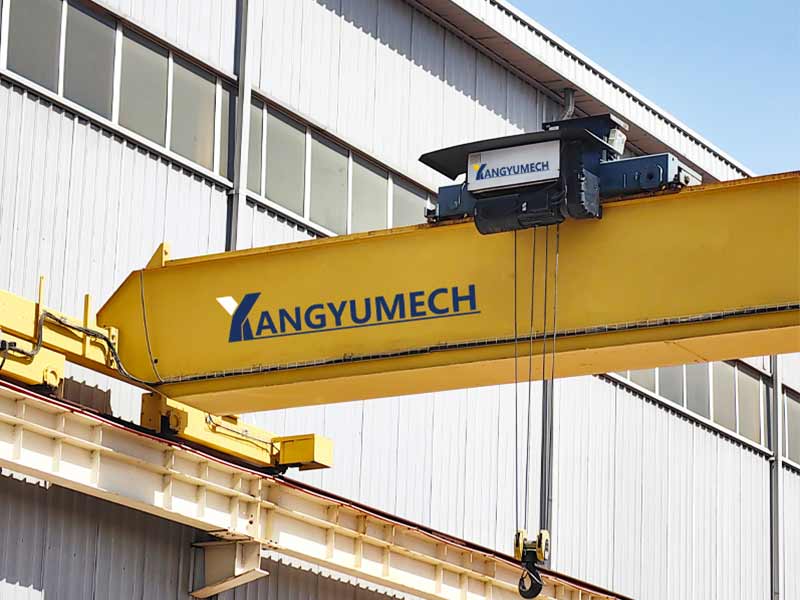
Yangyumech (China) is a dedicated bridge crane manufacturer with over 20 years of experience designing and producing overhead bridge cranes, gantry cranes, electric hoists, and jib cranes. With exports to more than 30 countries, Yangyumech brings a distinct combination of competitive overhead crane pricing and hands-on engineering support for international buyers. They offer complete English-language technical documentation, CE compliance files, and custom configurations based on your facility layout and usage intensity — making them a practical choice for overseas project managers who need reliable communication and fast delivery timelines.
If you have reviewed a bridge crane specification sheet, you have likely encountered ratings like A3, A5, M5, or M7. These are working-class designations, and misreading them is one of the most common sources of premature equipment failure.
The Chinese national standard GB/T 3811 defines eight overall working classes for bridge cranes, ranging from A1 to A8. The higher the class, the greater the structural demand and the longer the designed service life.
A1 to A3 represent light-duty service. These overhead cranes operate infrequently, with short operating cycles and loads that are typically well below the rated capacity. Typical use cases include installation workshops, maintenance bays, and warehouses where lifting occurs only occasionally. If your facility runs one or two lifts per hour on average, an A3-rated bridge crane is likely appropriate.
A4 to A5 represent moderate-duty service — the most common classification in general manufacturing. These cranes handle regular, structured lifting cycles with varying load profiles throughout the workday. Mechanical processing workshops, general assembly lines, and standard logistics centers typically fall in this range. The A5 overhead crane is arguably the single most specified working class in industrial facilities worldwide, because it balances structural durability with a reasonable purchase price.
A6 to A7 represent heavy-duty service. These are the overhead cranes you find inside steel mills, rolling mills, foundries, and shipbuilding yards. They operate hundreds of cycles per day under near-rated loads, often in high-temperature or high-dust environments. The structural design, motor sizing, and braking systems in an A7 bridge crane are substantially more robust than those in an A5 unit, which directly affects the purchase price.
A8 is reserved for extreme-duty applications, including molten metal handling in steelmaking shops and nuclear facility lifting operations. These overhead cranes are essentially running continuously, and the safety margins engineered into every component reflect that reality.
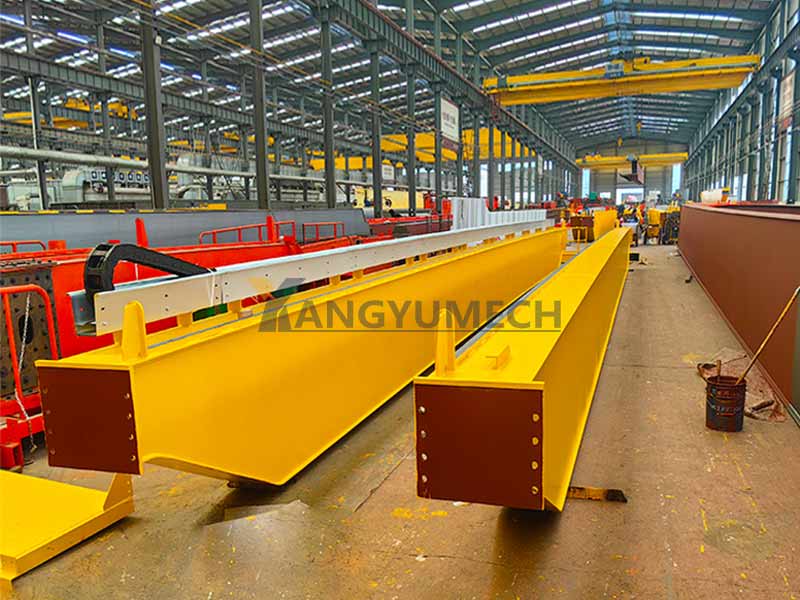
Choosing a lower working class than your operation requires is the more common error. Facilities that need an A5 bridge crane but purchase an A3 unit to save on upfront cost typically find that wire ropes, brake pads, and gearbox seals fail well ahead of schedule. The maintenance bills accumulate quickly, and more importantly, the structural fatigue from chronic overloading creates genuine safety concerns. In the crane industry, this pattern is sometimes called “buying cheap, paying twice.”
Choosing a higher working class than necessary is less harmful but still wasteful. Specifying an A7 overhead crane for a facility that only runs 30 lifts per day is over-engineering. The additional cost buys a structural margin that the operation will never use.
The right approach is straightforward: before requesting quotes, document your estimated daily operating cycles, the average ratio of lifted load to rated capacity, and your expected annual operating hours. Share these figures with the overhead crane manufacturer during the inquiry stage. A reputable bridge crane supplier will confirm the recommended working class based on your data, not just sell you whatever is cheapest.
Across multiple procurement cycles, facilities managers who have compared Yangyumech against other overhead crane manufacturers consistently cite three reasons for their decision: transparent pricing with no hidden configuration costs, responsive engineering communication in English, and a lead time that typically beats comparable European brands by four to six weeks.
Yangyumech produces overhead cranes across all major working classes, from A3 through A7, and offers both standard configurations and fully customized builds. For international buyers who need an overhead crane for sale at a competitive price point without sacrificing quality certification and documentation standards, Yangyumech is worth a direct conversation.
If you are evaluating bridge crane manufacturers for a new project or a facility upgrade, start by defining your span, lifting capacity, working class requirement, and any special conditions such as explosion-proof environments or outdoor operation. Send those specifications to Yangyumech’s engineering team for a detailed proposal — most buyers find that the overhead crane price they receive covers a more comprehensive scope than equivalent quotes from European or North American brands.

