
In the blood of global trade and logistics, ports play an irreplaceable central role. The key equipment to ensure the efficient beating of this heart is a variety of powerful port cranes. Like the “steel giants” of the port, they are responsible for the loading, unloading, and transshipment of goods from 10,000-ton ships to inland transportation.
The port operating environment is complex, and there are many types of goods, from standard containers to bulk ores, from heavy construction machinery to precision equipment, and so on. Therefore, port cranes have also developed a huge “family”, each performing its own duties and working together.
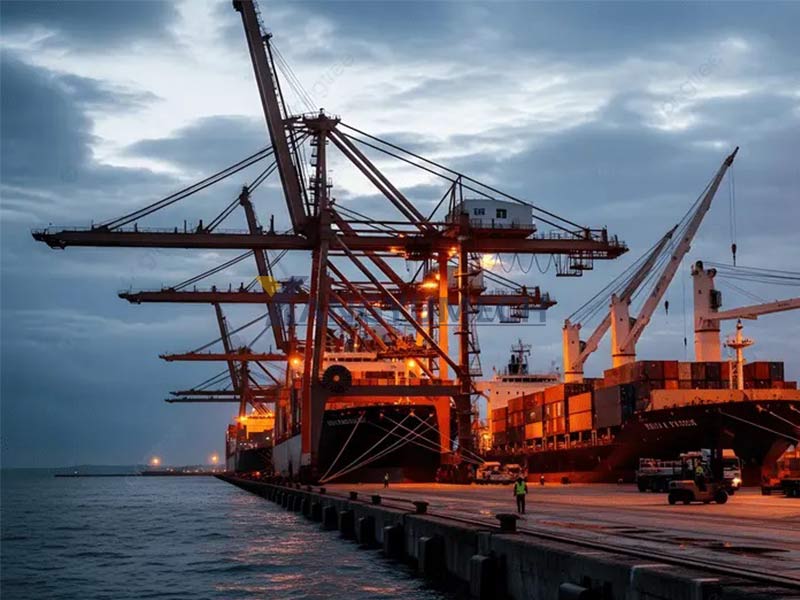
Containerized transportation is the cornerstone of modern maritime transportation, and in response to this demand, specialized equipment has come into being.
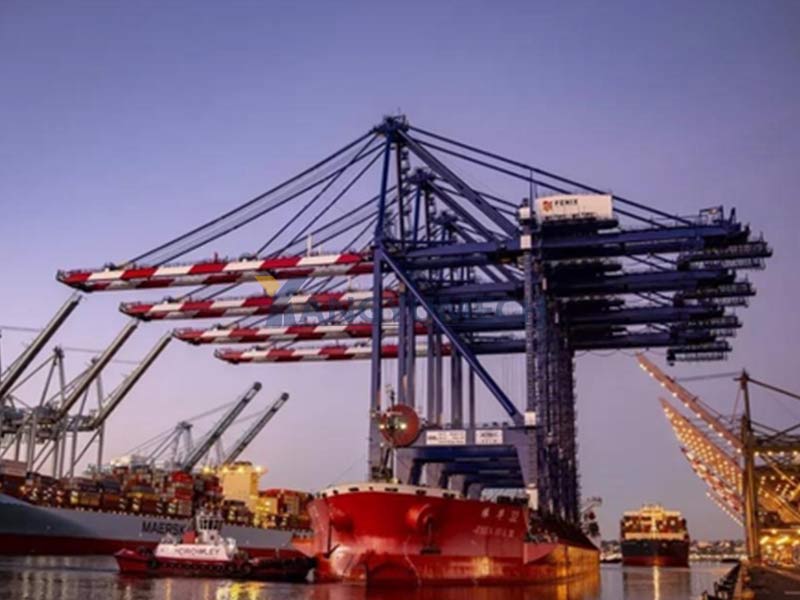
Shore container crane (shore bridge/ship shore crane): As the most conspicuous symbol at the forefront of the terminal, the shore bridge is designed for container ship loading and unloading. Its huge forward extension arm can cover all compartments of ultra-large container ships, adopts all-digital AC frequency conversion and PLC control, runs smoothly and accurately, and is equipped with an anti-shake system to ensure that the ship can still operate efficiently when it is shaking.
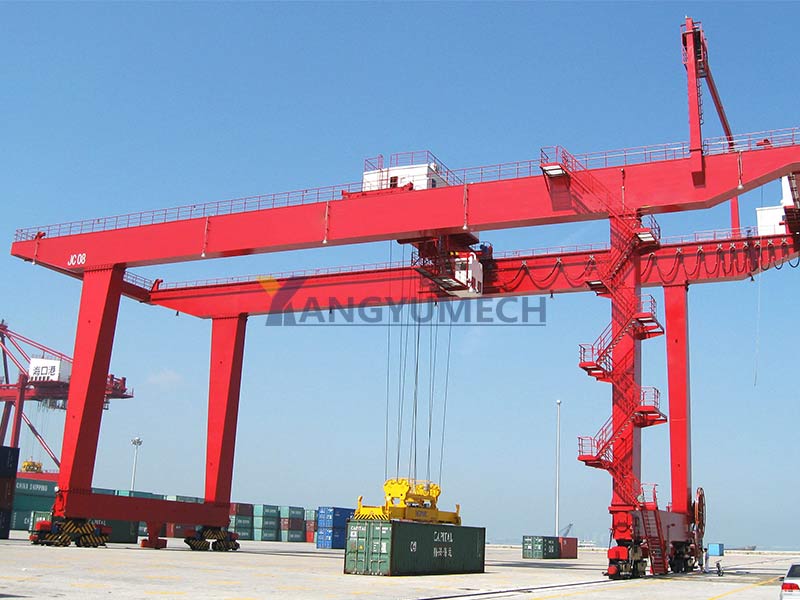
Container gantry crane: Mainly responsible for container stacking and transshipment in the yard behind the terminal. It is mainly divided into two types: rail-type gantry cranes operate on fixed tracks with accurate positioning and are suitable for automated terminals. Tire-type gantry cranes rely on their tire walking mechanism, which can be flexibly transferred in the yard and have stronger mobility.
For bulk cargo, groceries, and heavy equipment, the port relies on other types of cranes.
Gantry crane: This is an extremely widely used rotary crane, named after its gantry frame. With its tall gantry and 360-degree rotating boom, it can cover the circular area between ships, vehicles, and depots, and is especially suitable for loading and unloading steel, wood, heavy parts, and other goods.
Mobile cranes: including tire cranes and crawler cranes. They come with their own power and walking mechanism, just like a flexible Hercules, without a fixed track, and can be quickly deployed to any corner of the port area, especially suitable for temporary and decentralized hoisting operations in the reconstructed port.
Floating crane: installed on a special barge or engineering ship, it is a real “Hercules” on the water. It is mainly used for berths without fixed heavy crane equipment, loading and unloading of major offshore parts, water engineering operations, and even maritime rescue and salvage.
Choosing the right port crane is a system project, far more than comparing the lifting weight and span. The scientific selection should be based on a deep understanding of the port’s own characteristics and future development.
First of all, the core consideration is the type of cargo and the nature of the port’s operation.
This is the fundamental starting point for selection. For a hub port with container transit as the main focus, its equipment investment must be tilted towards high-efficiency shore bridges and automated rail cranes.
For an industrial port that is mainly engaged in the loading and unloading of bulk cargo such as coal and ore, priority should be given to gantry cranes equipped with grabbers or professional bucket wheel stackers, screw ship unloaders, and other continuous ship unloading equipment.
For a comprehensive port that takes into account groceries and containers, it may be necessary to configure equipment such as multi-function door landers and tire cranes in combination.
Next, assess the natural conditions and infrastructure.
The length of the shoreline, depth of water, area of the rear yard, and load-bearing capacity of the wharf all directly affect the selection of equipment.
For example, in old docks with limited space, flexible tire cranes may have more advantages than equipment that requires long-distance track laying.
In addition, the natural conditions, such as wind pressure and seismic fortification level in the port area, are also directly related to the structural design and safety configuration of the crane.
Finally, investment efficiency and long-term operating costs must be weighed.
Under the premise of meeting the current job requirements, a certain amount of capacity redundancy needs to be reserved for future throughput growth.
At the same time, the trend of automation and intelligence should be considered proactively. Modern port cranes are increasingly integrating intelligent technologies such as remote control, automatic obstacle avoidance, energy feedback, and digital twins.
Although these will increase initial investment, they can significantly improve operational safety, efficiency, and reduce long-term labor and energy consumption costs.
In the face of such complex and diverse port lifting needs, a supplier that can provide in-depth customized solutions is essential.
We deeply understand that there are no two identical ports in the world, and each port has its own unique geographical conditions, cargo flow, and operating goals.
Our advantage is that we not only provide a full range of port crane products that meet international standards (such as FEM, DIN, etc.), but also rely on strong R&D and engineering capabilities to provide full-process services for various port projects from pre-planning, working condition analysis, to customized design and intelligent manufacturing.
Whether it is a strong wind design that needs to cope with extreme sea conditions or an automated transformation integrated into a smart terminal management system, Yangyumech can rely on its rich project experience and technical reserves to provide the most cost-effective solutions.
We firmly believe that an excellent port crane is not only an efficient loading and unloading tool, but also a reliable asset for the long-term stable operation of the port and the enhancement of its core competitiveness.
Choosing Yangyumech means you have selected a team with technology at its core and customer needs as its center. We will work with you to jointly meet global logistics challenges and create a more efficient and intelligent modern port.

