
If you have walked through a modern automotive assembly hall or a precision machining workshop, you have probably seen a light crane system running on enclosed aluminum or steel track, with a compact hoist gliding smoothly along the runway without the noise and drag of an I-beam flange. These systems are commonly referred to as KBK crane systems, a term that originated with the Demag KBK modular crane concept and has since become the generic reference for enclosed-track, modular light crane systems in workshops and assembly areas worldwide.
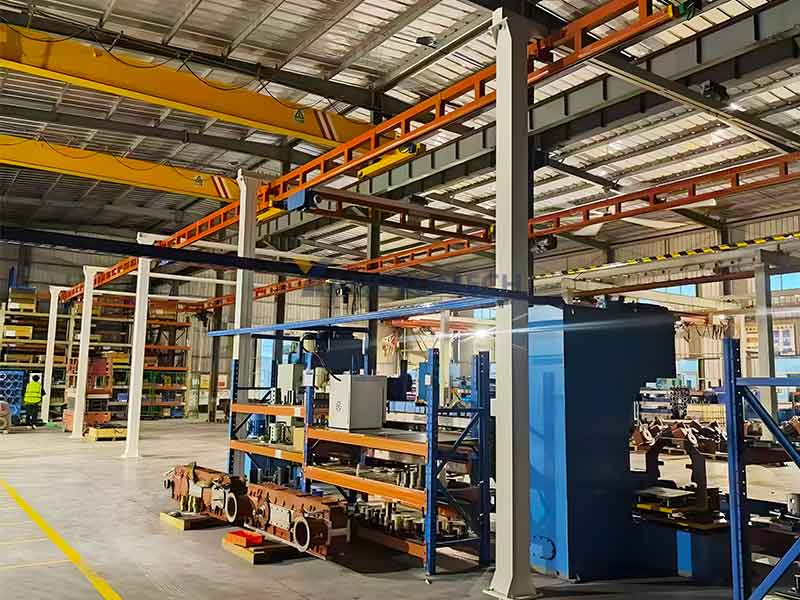
A KBK crane system is a modular light crane solution built from standardized track sections, joints, trolleys, and hoists that assemble into a lifting system sized for the application. The defining feature is the enclosed track profile — a steel or aluminum section with an internal running surface that protects the trolley wheels from dust, debris, and accidental impact. The hoist and trolley run inside or along this enclosed profile, which keeps the system clean, reduces maintenance, and provides a smoother manual push experience compared with open I-beam runways.
The modularity is what makes KBK systems practical for workshops that rearrange their layout, add new workstations, or expand production lines. Track sections connect with bolted joints. Curves, switches, and turntables are available as standard components. A system installed today can be reconfigured next year without cutting steel or rewelding the runway structure.
KBK systems are designed for lighter duty applications than standard overhead cranes. Typical capacities run from 125 kg to 2000 kg for single-hoist configurations, with some systems reaching 5000 kg using multiple hoists on a common girder. The duty classification is lower than a Class D overhead crane because the cycle rates and load factors are lighter, but within their design envelope KBK systems deliver precise, low-effort load handling that a standard crane cannot match in a workstation environment.
The suspension-style KBK crane mounts the runway track to the building ceiling or to roof-mounted hanger rods. This configuration keeps the floor clear and is the standard choice when the building structure can support the crane loads and when floor space must remain open for forklifts, carts, and personnel movement. Suspension systems are common in assembly areas, packaging lines, and machine shops where the crane covers a defined workstation area.
The monorail KBK system uses a single runway beam with a hoist trolley that travels along the beam. Monorails handle linear transport — moving parts from one workstation to the next along a fixed path. Curves, switches, and turntables allow the monorail to route around columns, equipment, and work areas. In automotive assembly and white goods manufacturing, monorail systems move doors, hoods, and subassemblies from station to station without floor conveyors.
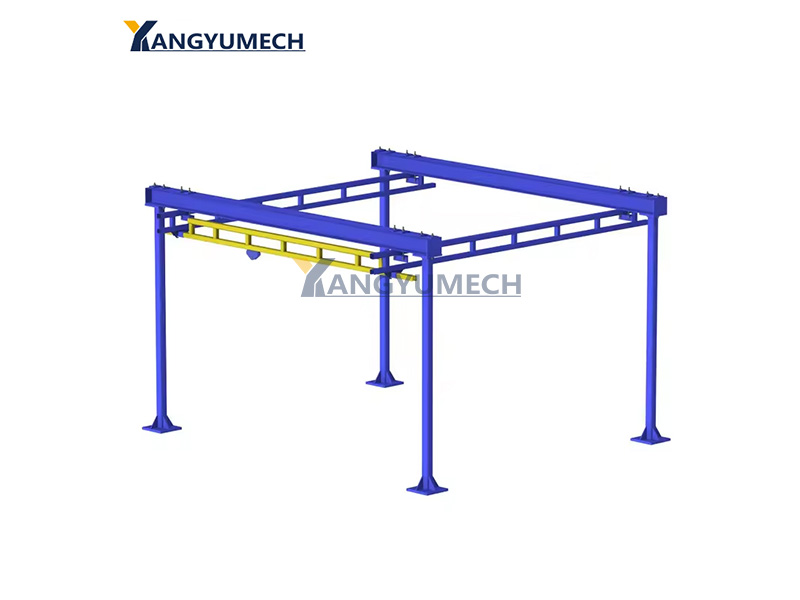
The workstation crane is a local-area system covering a single workstation or a small group of machines. The runway is typically floor-supported on freestanding columns or wall-mounted on a cantilever bracket. Workstation cranes give the operator coverage of a defined area — a machine tool, an assembly bench, a packing station — with the hoist reaching every point within the coverage envelope. For workshops that cannot hang a crane from the building structure, freestanding workstation cranes are the practical alternative.
Articulating jib extensions attach to the end of a KBK runway to extend reach around corners or into machine openings. These extensions use pivot joints that allow the hoist to swing into positions the main runway cannot reach. In machining centers where the crane must place a part into a deep machine tool envelope, an articulating extension is often the only way to position the load without the operator using manual sling adjustments.
Automotive manufacturing and assembly is the largest user of KBK crane systems. Engine assembly lines, transmission assembly, and final vehicle assembly use suspended KBK runways with motorized hoists to move engines, transmissions, doors, seats, and subassemblies along the line. The low manual push force and precise positioning of KBK systems matter when operators are making hundreds of placements per shift in a repetitive assembly process.
Electronics and precision assembly use light-duty KBK systems for handling delicate components and subassemblies. The smooth trolley movement and precise positioning reduce the risk of damaging sensitive parts during placement. Cleanroom-compatible KBK systems with stainless-steel track and special lubricants are available for semiconductor and pharmaceutical assembly areas.
Machining and fabrication workshops use workstation KBK cranes for loading and unloading CNC machines, vertical machining centers, and lathes. The crane covers the machine envelope, allowing the operator to load raw stock and unload finished parts without a forklift or manual handling. For machine shops running multiple shifts, a workstation KBK crane pays for itself in reduced manual handling injuries and faster machine cycle times.
Warehousing and packaging areas use KBK monorail systems to move cartons, totes, and packaged goods along picking and packing lines. The enclosed track keeps dust and debris out of the trolley running surface, which matters in distribution centers that operate around the clock.
Yangyumech manufactures KBK-style modular crane systems from 125 kg to 5000 kg capacity, with aluminum and steel enclosed track options, suspension and freestanding configurations, and manual or motorized trolley and hoist options. Our KBK systems use European-style low-headroom hoists with variable frequency control for precise positioning, and all components are designed for straightforward assembly using standard hand tools.
We supply KBK crane systems to end users, machine builders, and crane distributors. For distributors and OEMs, we provide complete system kits with pre-engineered track layouts, hoists matched to duty requirements, and installation drawings. For end users, we provide on-site measurement, system design, supply, and installation supervision.
Direct factory pricing and complete technical support make Yangyumech the practical choice for KBK crane systems. We respond to inquiries within 24 hours with budget pricing and system outline drawings.

