
If you have ever needed to work at height inside a warehouse, a factory, or a large retail space, you have probably seen one of these machines in use. A scissor lift platform raises a worker and their tools or materials straight up on a criss-crossing arm mechanism, and it does it more cheaply and more safely than a ladder for most industrial tasks. Scissor lift platforms are now standard equipment across many industries, yet the terminology and the differences between types are not always obvious to buyers who are specifying them for the first time.
A scissor lift platform is an aerial work platform that uses a scissor-action mechanism to raise and lower the work platform vertically. The mechanism consists of linked steel arms that fold and extend in a criss-cross pattern—hence the name. When hydraulic pressure or an electric motor drives the arms, the platform rises. When pressure is released, it descends under controlled speed. The straight vertical travel means the platform stays directly above its base throughout the lift, making it more stable for load-bearing tasks than angled access equipment.
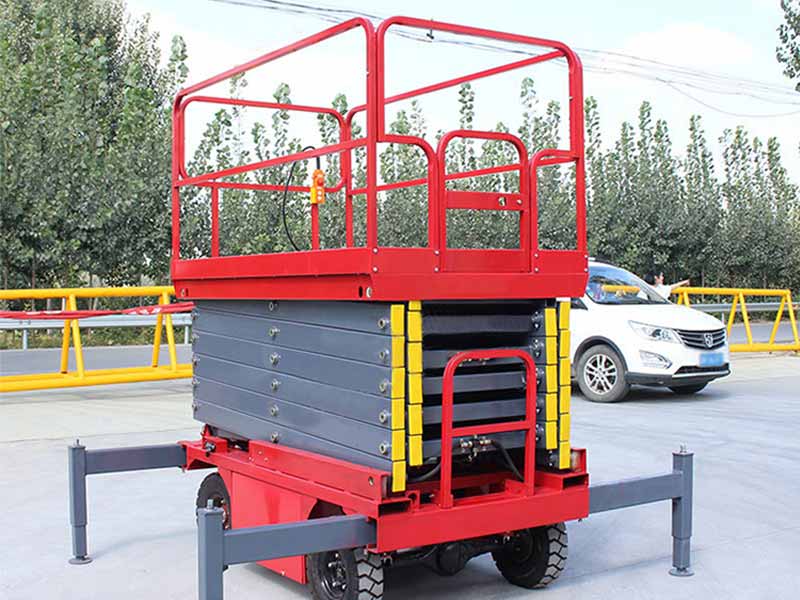
Not all scissor lift platforms are the same, and the right type depends on your work environment, height requirements, and whether the machine will be used indoors or outdoors.
The most fundamental split is power source. An electric scissor lift platform runs on batteries and produces no exhaust—the standard choice for indoor use in warehouses, factories, and commercial buildings. A diesel or rough terrain scissor lift is designed for outdoor construction sites and uneven ground where battery runtime would be a constraint.
By height, low-level scissor lifts handle tasks from about 3 to 6 meters in retail, loading docks, and low-ceiling maintenance areas. Mid-range scissor lift platforms from 6 to 14 meters are the most widely used across manufacturing and warehousing. High-level models go beyond 14 meters for specialised industrial applications.
By application, a mobile scissor lift platform is mounted on wheels and can be moved between locations without a vehicle—common in warehouses for picking and shelving. A stationary scissor lift platform is installed permanently at a workstation, common in manufacturing assembly lines or loading docks.
The lift mechanism on a commercial hydraulic scissor lift platform is driven by an electric pump pushing hydraulic fluid into the scissor arms—producing smooth, controlled vertical travel. Fully electric drive systems that power both lifting and travel from the same battery pack are increasingly common on newer models.
The scissor lift platform application spans many industries because it solves a basic problem—safe elevated access for tasks that require a stable working surface.
In a warehouse, a scissor lift platform for warehouse work handles high-level racking, order picking, inventory management at height, and ceiling-level equipment maintenance—often in standard aisle widths where a forklift with a platform attachment would not fit.
In manufacturing, a scissor lift platform for industrial use gives maintenance crews and assembly workers stable access to machinery, overhead conveyors, and production line components, with an electric scissor lift platform preferred in enclosed factory environments.
Construction sites use rough terrain diesel scissor lifts for exterior cladding, structural assembly, and finishing tasks where the ground is uneven—a scissor lift platform for construction work needs ground clearance and tyre traction that indoor models lack.
At loading docks, a scissor lift platform for loading work raises workers to truck bed level for safe loading and unloading—where the straight vertical travel and high platform capacity of a scissor lift outperform a ladder.
Maintenance operations—whether in a plant, a data centre, or a commercial building—rely on a scissor lift platform for maintenance access to ceiling ducts, overhead lighting, fire suppression systems, and HVAC equipment that would otherwise require scaffolding.
Scissor lift platform safety starts with matching the machine to the environment—using an indoor electric model outside or a diesel model in a poorly ventilated building creates real risk. Check the rated load capacity against the combined weight of workers, tools, and materials. Overloading a scissor lift is one of the most common safety failures in the field.
Platform dimensions and scissor lift platform specifications should be reviewed against your actual workspace: larger platforms give workers more room but add weight and may require a larger vehicle to transport.
Scissor lift platform maintenance on electric models is straightforward—check batteries regularly, inspect hydraulic lines for leaks, and test safety interlocks. A written maintenance schedule from day one extends the machine’s serviceable life significantly.
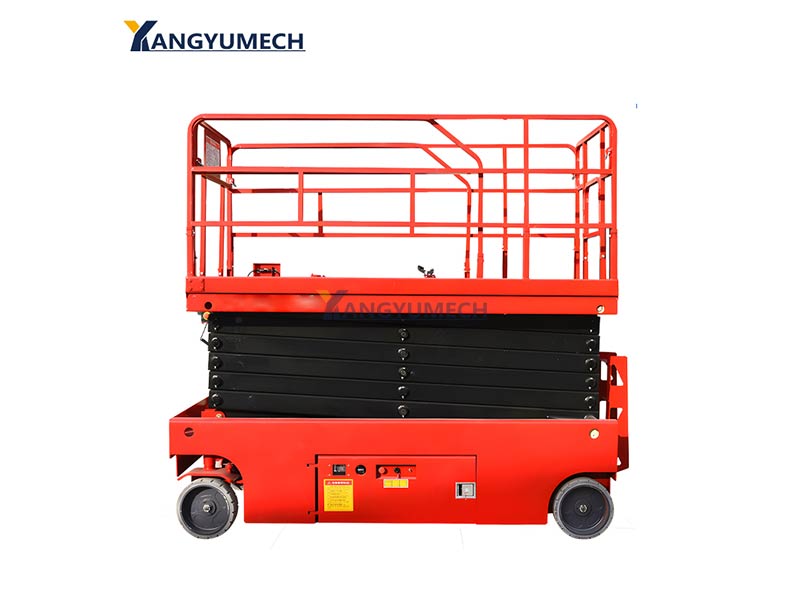
The scissor lift platform price you receive depends on height rating, power source, platform capacity, and whether you are buying new or used. A scissor lift platform manufacturer that builds to order can match these parameters to your actual application. Working directly with a scissor lift platform supplier also means faster access to spare parts and technical support—for buyers with large fleets or multiple sites, that relationship with a manufacturer matters for long-term serviceability.
Yangyumech is a lifting equipment manufacturer covering scissor lift platforms, aerial work platforms, cargo lifts, construction hoists, electric chain hoists, and wire rope hoists. The breadth of the range means one supplier can cover the full elevated access and material handling scope for a facility.
Every Yangyumech scissor lift platform is load-tested before dispatch. The engineering team matches platform height, capacity, power system, and platform dimensions to your actual working environment—narrow-aisle warehouse, loading dock, or outdoor construction zone.
Yangyumech offers direct-to-end-user pricing that removes the distributor margin. Getting a tailored quotation before finalising the specification helps you avoid paying for height or capacity you will not use.

