
Picking the wrong crane for a construction site is an expensive mistake. We have seen projects where a tower crane was specified when a mobile unit would have done the job faster and cheaper, and others where a mobile crane could not reach the required radius, forcing a mid-project changeover that stalled work for weeks. The right crane depends on what you are lifting, where you are lifting it, how often you need to lift, and what the site actually allows in terms of space and access.
Before thinking about crane types, nail down your actual lifting requirements. Maximum load weight is the obvious starting point, but the real figure you need is the maximum load at the maximum radius. A 50-ton mobile crane rated at 50 tons at three meters might only deliver five tons at a 40-meter radius. Plot your heaviest lifts at their actual working radii, then add a safety margin. Operating at the very edge of a crane’s capacity chart invites problems.
Lifting height matters just as much. High-rise construction above 20 stories typically demands tower cranes because mobile units run out of hook height long before the building tops out. For mid-rise buildings in the 5 to 15 story range, the choice between tower cranes and mobile cranes depends on site constraints, project duration, and how many lifts per day the schedule demands.
Frequency of lifts drives crane sizing more than many project managers realize. A crane that makes ten lifts per day operates under very different conditions than one making a hundred. High-frequency construction lifting requires cranes with higher working duty classifications, faster hoisting speeds, and control systems designed for continuous operation. Specifying a light-duty crane for a high-cycle application leads to accelerated wear, frequent downtime, and premature component failure.
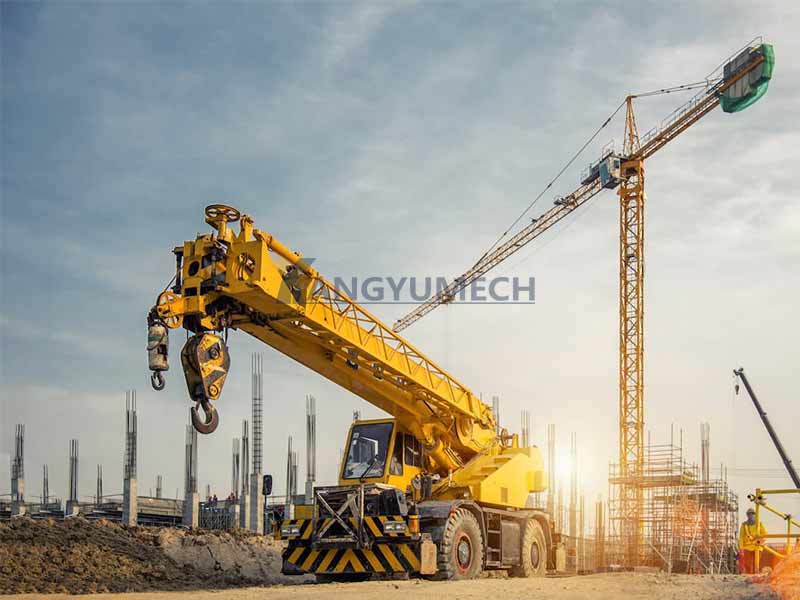
Tower cranes are the default choice for major building construction, and for good reason. A single tower crane with a 70-meter jib can cover an entire building footprint while lifting up to 12 tons at the tip, far more at shorter radii. The crane grows with the building, climbing through internal or external climbing systems as floors are added. Once erected, a tower crane operates continuously without the setup time that mobile cranes require for each lift.
Hammerhead tower cranes with horizontal jibs are the most common configuration for general building construction. They offer consistent capacity across the jib length and straightforward trolley operation. Luffing jib tower cranes, where the entire jib angles up and down, work better on confined urban sites where the jib sweep radius must be limited to avoid overlapping adjacent properties or airspace. If you are building in a tight city center with neighboring buildings close on all sides, a luffing jib tower crane for urban construction is likely your best option.
Self-erecting tower cranes fill the gap between small mobile cranes and full-size tower installations. These units fold out from a transportable base without a separate assist crane, making them practical for projects with limited setup space and moderate lifting requirements. Residential projects, small commercial buildings, and renovation work often benefit from self-erecting tower cranes where a full tower installation cannot be justified.
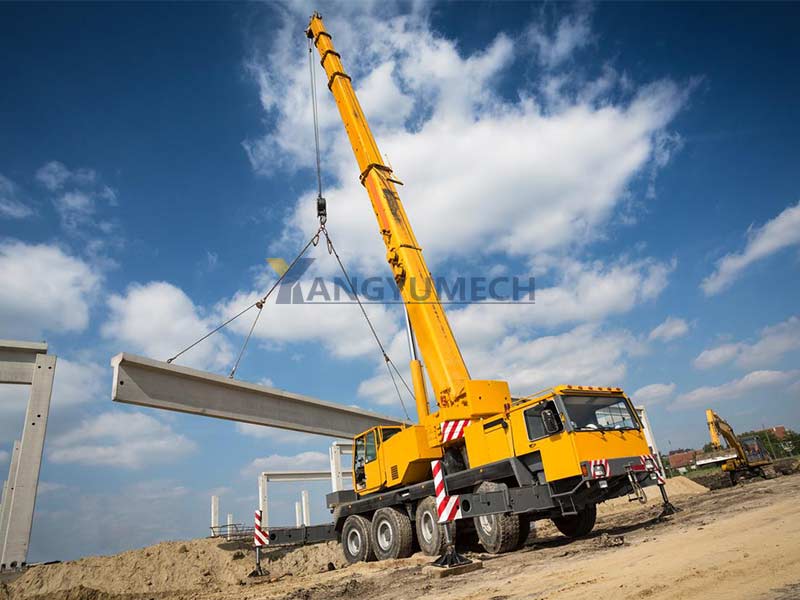
Not every construction project needs a tower crane sitting on site for months. Mobile cranes—truck cranes, all-terrain cranes, rough-terrain cranes, and crawler cranes—provide lifting capacity that arrives, works, and leaves. For projects with a limited number of heavy lifts, or where lifting needs change across different project phases, mobile cranes often deliver better value than a fixed installation.
Truck cranes offer the fastest road travel speeds between sites, making them practical for contractors who move equipment frequently. All-terrain cranes combine on-road mobility with off-road capability, handling the mixed surface conditions common on construction sites. Rough terrain cranes trade highway speed for superior off-road performance, with large tires and high ground clearance suited to undeveloped sites with soft ground.
Crawler cranes belong on the heavy end of the mobile crane spectrum. These track-mounted machines provide the stability and capacity for the largest construction lifts without requiring outrigger setup. A 300-ton crawler crane for heavy construction can handle the kind of loads that would require multiple smaller cranes or a very expensive tower crane installation. The tradeoff is transport cost—moving a large crawler crane between sites requires multiple truckloads and a crew to reassemble the machine.
Some construction lifting needs fall outside the standard tower and mobile categories. Derrick cranes, built on-site from structural components, handle specialized heavy lifting in situations where no mobile or tower crane can be positioned effectively. Bridge construction over water, industrial facility maintenance in confined spaces, and steel erection on large infrastructure projects sometimes require derrick configurations.
Mini cranes and pick-and-carry cranes serve the other end of the spectrum. These compact units work inside buildings, on rooftops, and in tight spaces where even a small mobile crane cannot access. Glass installation, interior structural steel, and MEP equipment placement are typical applications where mini cranes for indoor construction provide lifting capability that no other crane type can deliver.
Yangyumech supplies construction cranes to building contractors and project developers worldwide, with a product range covering the most demanded configurations for building and infrastructure construction. Our tower cranes range from 6-ton self-erecting models to 16-ton hammerhead and luffing jib units with jib lengths up to 75 meters. Mobile and crawler crane offerings include rough terrain units from 25 to 150 tons and crawler cranes up to 350 tons.
Every Yangyumech crane for construction is built to ISO and CE standards, with working duty ratings appropriate for continuous construction operation. Our tower cranes feature frequency-controlled hoist and trolley drives, anti-collision systems for multi-crane sites, and modular climbing systems that adapt to different building structures. Mobile crane models include load moment indicators, outrigger monitoring, and operator cabs designed for all-weather construction site conditions.
We sell directly from our manufacturing facility, which means construction overhead cranes and tower cranes at factory prices without the distributor markup that adds thousands to your equipment budget. Our engineering team works with project planners to specify the right crane for each job, and our delivery schedules accommodate construction timelines rather than forcing projects to wait.

